Year
Geng
Yin
Shang Guan
Zheng Cai
Hidden Stems
Jia (Zheng)Bing (Zheng)Wu (Zheng)
- Star Luck
- Si
- Sitting Branch
- Jue
- Void
- Wu Wei
- Na Yin (Elemental Sound)
- Song Bai Mu
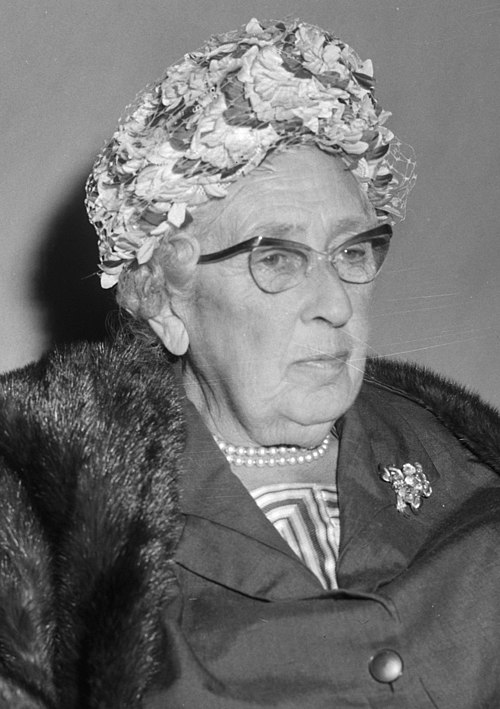
Agatha Christie (15 September 1890 – 12 January 1976), born Agatha Mary Clarissa Miller, was a British writer. She is renowned for writing 66 detective novels and 14 short story collections, notably featuring the fictional detectives Hercule Poirot and Miss Marple, and is hailed as the "Queen of Crime".
Christie was born into a wealthy upper-middle-class family in Torquay, Devon, England, and was educated at home. In 1920, her first detective novel, The Mysterious Affair at Styles, was published, launching her writing career. In 1926, following her mother's death and her husband's infidelity, she disappeared for 11 days, causing a media sensation. In 1930, she married archaeologist Max Mallowan, and thereafter frequently participated in Middle Eastern archaeological digs, incorporating her experiences into her novels.
Christie's most celebrated works include And Then There Were None, Murder on the Orient Express, and Death on the Nile. Her play The Mousetrap has held the record for the longest continuous run of any stage play in the world since its premiere in 1952. She received the Mystery Writers of America Grand Master Award and was made a Dame in 1971. According to UNESCO, she is one of the best-selling authors in human history, with total sales exceeding 2 billion copies, translated into 44 languages. Her works have been widely adapted for film and television, leaving a profound legacy.
The Day Master, Ji Earth, is born in the month of You (Rooster), in the season of Shi Shen (Talent Star). Metal is prosperous and drains the Earth, making the Day Master undoubtedly weak. The Year Pillar of Geng Yin has Shang Guan (Rebellious Talent) sitting on Zheng Guan (Zheng Guan (Direct Officer)); the Hour Pillar of Xin Wei has Shi Shen (Talent Star) supporting the Self. The Month Pillar of Yi You has Qi Sha (Indirect Officer) cutting the branch beneath the stem. Overall, the Shi Shang and Guan Sha (Output and Officer/Aggressor) interweave, and the Day Master has only the Wei Earth in the Hour as its root. This is a pattern of a weak Day Master with strong Shi Shang, requiring Yin (Resource) and Bi (Peer) stars. This energy state is like a person who is naturally sensitive and highly active mentally, with a strong inner urge for expression and analysis, but whose physical or emotional strength often cannot keep pace with mental exertion. The native gives an overall impression of intelligence, sharpness, and keen observation of details, yet may appear reclusive or immersed in her own spiritual world. Her greatest advantage lies in using a delicate touch to deconstruct complex human puzzles with clarity and depth; the potential challenge is a tendency to overthink, leading to mental and physical exhaustion. She needs spiritual faith or stable interpersonal support to balance her inner dissipation.
The Month Branch You Metal is the season of Shi Shen, but the Shi Shen does not reveal itself in the Heavenly Stems. Instead, the Shi Shen emerges on the Hour Stem, as Xin Metal (Shi Shen). In the Year and Month, Yi and Geng combine to transform into Metal. The Shi Shang force is extremely strong, forming a Shi Shang (Output Star) Structure. The Qi Sha (Indirect Officer) represented by Yi Wood reveals on the Month Stem and is combined and controlled by the Geng Metal Shang Guan, forming 'Shi Shang Controlling Qi Sha' — achieving success through skill and strategic intelligence. The primary Favorable Element is Fire (the Yin Star, Resource), which transforms the Qi Sha, nourishes the Day Master, and warms the chart. The Beneficial Element is Earth (the Bi Jie, Peer and Rival stars), which assist the Day Master and resist the draining. It is unfavorable for Metal, Water, or Wood to be overly strong. The Favorable Element Fire represents warmth, learning, elders, or spiritual faith. Environments favorable to the native are those of deep study and stable emotional support. The Beneficial Element Earth represents peers, foundation, physical strength. In life, Agatha Christie used detective novels (the creation of Shi Shang) to bestow order (Qi Sha) upon chaos (mysteries). The addition of Fire enabled her to heal through writing and transform after her 1926 disappearance, while the energy of Earth was reflected in her stable marriage to an archaeologist, which gave her a solid rear base, allowing her to continue producing high-quality works.
Shi Shang controlling Qi Sha, Shang Guan clashing with Zheng Guan, and the hidden interplay of Qi Sha generating Yin. Shi Shang controlling Qi Sha means using talent and strategy to dissolve pressure and overcome difficulties. This shaped her core motivation to transform real-life anxiety and fear (Qi Sha) into detective novels — each novel was an elegant taming of 'danger.' Shang Guan clashing with Zheng Guan (the Geng Metal in the Year Pillar overcoming the Bing Fire Zheng Guan hidden in Yin) brings rebellion against traditional rules. She was unwilling to follow the conventional female role, choosing to earn an independent living through writing, and in her works, 'order' is subverted and then rebuilt. The hidden combination of Qi Sha generating Yin is latent in the chart: Ding Fire (Pian Yin, Indirect Resource) is hidden in the Wei branch. When fortune brings Fire to the surface, it can sublimate pressure into profound philosophical insight. This is reflected in her works as a cold-eyed examination of human nature and moral deliberation, elevating detective stories beyond mere puzzle-solving.
The chart carries Hua Gai (Arts/Spirituality Star), Tian Yi Gui Ren (Noble Helper), Jie Sha (Crisis Star), and Wang Shen (Void Star); the Wei in the Hour and the Hai in the Day form an arch combination. Hua Gai (in the Hour Branch Wei) is a star of art and solitude, granting her a transcendent observer's perspective and unique creative inspiration, infusing her works with a sense of fate and psychological depth. Tian Yi Gui Ren (Noble Helper, also in the Hour Branch) is the redemption in crisis, best exemplified by her safe reappearance after disappearing for 10 days in 1926; the outside world said it was amnesia from a mental breakdown, but in destiny terms, it was the hidden assistance of the Noble Star, a life-saving turn. The coexistence of Jie Sha (Day Branch Hai) and Wang Shen (Year Branch Yin) indicates a constant inner sense of insecurity and fear of the unknown, which is exactly the deep psychological root of her preference for murder themes — to master the threat of death through writing. The arch combination of Wei and Hai strengthens the Qi Sha force, enabling her to maintain vigorous creativity and the ability to handle complex plots well into middle age and beyond.
The Day Master Ji Earth is the earth of the fields, signifying trustworthiness and generosity. However, being born in the You month when Metal is strong and surrounded by Shi Shang, she presents a disposition that is outwardly gentle but inwardly firm, delicate and overthinking. Her mind is like a precise deconstruction machine, adept at capturing details missed by ordinary people and weaving them into a web with great patience. Emotionally, she needs deep security but dislikes intimate constraints, which is reflected in her fascination with secrets and lies in interpersonal relationships. Under pressure, she retreats into her own spiritual world (the effect of Hua Gai), using writing or fantasy as a buffer; when the environment is comfortable, she may fall into lethargy due to lack of challenge. Her psychological portrait is like that of an ever-observant hermit, wrapping a quiet exterior around a burning curiosity and a desire for truth.
The robust Shi Shang with effective control over Qi Sha represents extraordinary abilities in logical deduction, linguistic expression, and pattern recognition. These talents allow her to reassemble fragmented clues like a jigsaw master, creating ingenious tricks that leave readers amazed. Her competitive edge lies in integrating medical knowledge (from her experience as a nurse in WWI) and toxicology with insights into human nature, making murder not just a plot device but a means of psychological dissection. The Xin Metal Shi Shen emerging on the stem endows her with a delicate touch and enduring stamina, producing over 80 novels and plays throughout her life. It was the Fire and Earth in her fortune that ignited the flame of her talent, earning her the crown of 'Queen of Detective Fiction.'
The clash of Shang Guan with Zheng Guan and Qi Sha unbridled (when luck is unfavorable) constitute the core conflict, leading to tension with authority and identity crises. Shang Guan with Zheng Guan made it difficult for her to tolerate traditional marital constraints (she divorced after her first husband's infidelity), and she had an instinctive resistance to social expectations. With Qi Sha on the Month and insufficient Yin, she was prone to anxiety and suspicion; the disappearance in 1926 was an extreme manifestation of the Yin star being damaged and psychological defenses collapsing. The blind spot in her character is an excessive desire for control: when reality fails to follow her inner logic, she may withdraw (disappearance, seclusion for writing). This pattern protected her but also caused intermittent interpersonal distance.
Agatha Christie's life chart is a tapestry woven with the threads of Shi Shang controlling Qi Sha and the transcendent Hua Gai. Her core theme is the transformation of inner fears of chaos and death into the art of creating order. She was not a passive recipient of fate but, through relentless writing, turned the clashes and punishments of destiny into dramatic tension in her stories. Ultimately, in the eyes of the world, she became both the creator of classic mysteries and the eternally smiling 'old lady who specializes in murder' — precisely the complete state of a weak Day Master with Shi Shang and Yin finding their spiritual home: conquering reality through fiction, illuminating the world with enduring intelligence.
Zheng Guan (Zheng Guan (Direct Officer)) appears in the Heavenly Stems while Shang Guan (Hurting Officer) clashes in the Earthly Branches: Official discipline coexists with creative spontaneity. This decade lays the foundation for personality and talent. The native seeks balance between family rules and inner rebellion, experiencing a relatively stable childhood while displaying acute observation skills and a gift for storytelling.
Zheng Guan merges with the Day Master, Shang Guan hidden: The early environment centers on family education and norms, with no independent career yet. However, the latent Shang Guan represents budding writing talent; though not generating income, it plants the seeds for a sharp narrative style later.
Guan Star protects the Day Master, Shang Guan expresses vitality: Harmonious family relations; parents value education. The native is obedient and well-behaved on the surface but restless inside. In interactions with siblings or playmates, often plays the role of "Storyteller King."
Metal-Wood conflict, watch lungs and liver: Childhood constitution is somewhat weak, prone to colds and fevers; needs to boost immunity. Energetic but should avoid overexertion.
Pian Cai (Indirect Wealth) appears in the Heavenly Stems and Bi Jian (Peer) governs the period: The emergence of the Wealth star prompts early exposure to society and money, while Bi Jian brings peer influence. This decade is a time of adolescent self-discovery; the native leaves home to study music in Paris and begins writing short stories, gathering life material.
Pian Cai generates Guan, Yi Ma (Mobility Star) stirs: Studying music involves considerable expense, but Pian Cai is flowing wealth, mainly supported by family. Bi Jian represents peer circles, fostering collaborative creation or exchanges. No stable income in this phase, but it builds a cross-cultural vision for future creativity.
Bi Jian competes for wealth, Guan Star hidden: Close relationships with peers but occasional rivalry; early romance emerges (meets first husband in 1912). Social activities increase, personality gradually opens up. At home, mother supports artistic pursuits.
Water-Earth mixture, watch digestion and skin: Adolescence prone to indigestion or allergies, occasional low moods, which can be channeled through music and writing.
Zheng Cai (Direct Wealth) merges with the Day Master and Pian Yin (Indirect Resource) nourishes the self: The Wealth star triggers marriage and income, while Pian Yin brings wisdom and depth of thought. This decade marks a major turning point: works as a nurse during World War I, gets married, has a child, and officially begins writing detective novels. Publishes her first book The Mysterious Affair at Styles in 1920, establishing the writer's path.
Zheng Cai fortune strong, Shang Guan pairs with Yin: Nursing work brings stable income, while writing earns additional royalties. Pian Yin symbolizes books and inspiration; completes first novel in 1916, published in 1920 to recognition. Wealth star emerges, financial situation improves, but expenses are also high (caring for family).
Wu Fire Peach Blossom, Spouse Palace activated: Marries in 1914 to Archibald Christie, an officer; early relationship is sweet. But separation due to his military duties; the Day Branch Hai Water clashes with Wu Fire, hinting at future crisis. Social circle expands, connecting with publishing figures.
Fire-Earth dryness, watch heart and emotions: Exhaustion from wartime nursing, mental stress. Postpartum weakness, requires recuperation. In Pian Yin period, overthinking leads to insomnia.
Shi Shen (Eating God) appears in the Heavenly Stems and Zheng Yin (Direct Resource) sits on Lu: Shi Shen expressing vitality indicates sustained output of works; Zheng Yin represents reputation and fame. This decade sees career ascent but personal life collapse: mother's death and husband's infidelity in 1926 trigger a notorious disappearance event in Britain, followed by divorce. Yet, creation continues; remarries in 1930 and begins new chapters with archaeological themes.
Shi Shen generates wealth, Yin Star protects self: Publishes breakthrough works like The Murder of Roger Ackroyd (1923-1926), sales soar, income floods. Briefly distracted by the 1926 event, but quickly resumes writing. Zheng Yin signifies stable publisher cooperation; after remarriage in 1930, travels to Middle East with second husband Max Mallowan, greatly enriching creative material.
Si-Hai clash, Spouse Palace upheaval: Husband's affair and mother's death in 1926 cause mental breakdown; goes missing for 11 days. After divorce, departs; meets archaeologist Max Mallowan in Turkey 1929, marries in 1930, harmonious relationship. In Shi Shen period, limited child luck (one daughter from first marriage, no children after remarriage).
Si Fire clashes Metal, watch lungs and nerves: Intense mental stress, disappearance reflects psychological crisis. After remarriage, lifestyle improves, but beware of acclimatization during archaeological travels.
Shang Guan (Hurting Officer) appears in the Heavenly Stems and Jie Cai (Rob Wealth) sits on Storage: Shang Guan represents breakthrough creativity; Jie Cai brings competition and expansion. This decade is the golden era of creation, with both quantity and quality peak, producing classics like Murder on the Orient Express, Death on the Nile, and And Then There Were None. Meanwhile, World War II breaks out, social upheaval, but the native copes through writing.
Shang Guan rides Sha, Jie Cai utilized: Shang Guan's expressive drive is strong; new works surge, each a bestseller. Jie Cai symbolizes collaboration and teamwork; scriptwriting and adaptations begin. Income skyrockets, becoming one of Britain's top-earning authors. But Jie Cai also means high expenses and emergence of tax issues.
Chen Earth clashes Xu, watch social changes: Stable relationship with second husband, joint archaeological travels. Social circle expands to include publishing and theater circles. However, Jie Cai period prone to gossip or disputes, possibly facing imitators.
Earth dominant buries Metal, watch digestion and bones: Midlife weight gain, digestive burden. During archaeological trips, beware of accidental falls. Emotionally, Shang Guan period prone to anxiety, but writing serves as outlet.
Bi Jian (Peer) aids the self and Qi Sha (Indirect Officer; technically: Qi Sha (Indirect Officer)) attacks the self: Bi Jian represents peer competition and self-persistence; Qi Sha brings pressure and challenges. This decade solidifies career; despite late WWII and post-war recovery turmoil, the native cements literary status with high output, while venturing into drama. The Mousetrap premieres in 1952, setting a record for continuous performances.
Bi Jian controls Sha, Shi Shen feedback: Writing continues as usual, but Qi Sha brings changes in publishing market and tax pressures. Bi Jian helps manage relationships, maintaining good cooperation with publishers. After 1945, film adaptations increase, continuous copyright income. In 1950s, The Mousetrap brings huge theatrical revenue.
Mao-You clash, Spouse Palace stirred: Qi Sha represents husband Mallowan's archaeological work often away, but marriage remains strong. In Bi Jian period, co-creates drama with friends, socially active. Daughter marries and has children, family harmony.
Wood-Earth conflict, watch liver and blood pressure: Desk-bound writing leads to cervical spine issues, irritability. Qi Sha period brings mental stress, need rest.
Jie Cai (Rob Wealth) appears in the Heavenly Stems and Zheng Guan (Zheng Guan (Direct Officer)) in the Earthly Branches: Jie Cai represents sociability and sharing; Zheng Guan is status and reputation. This decade brings honors but slightly diminished creative energy. Now past sixty, the native continues writing tirelessly; works are widely adapted for film and TV, and she is appointed Dame Commander of the Order of the British Empire in 1971 (though the honor falls partly in the next decade). This period mainly continues theatrical success and compiles earlier works.
Jie Cai generates Guan, Guan Yin accompany: The Mousetrap continues to perform, bringing steady royalties. In Jie Cai period, co-authors or licenses adaptations, income diversified. Zheng Guan signifies social recognition; receives several literary awards. But Jie Cai also means high expenses or possible copyright disputes.
Yin-Shen clash, Yi Ma stirs: Frequent travels to Middle East with husband for archaeology. At home, daughter and son-in-law harmonious, grandchildren born. Social circle centered on literati and archaeologists, reputation solid.
Wood Qi overabundant, watch joints and nerves: Aging brings weakness, back and leg pain. Emotionally, Jie Cai period prone to loneliness, but writing serves as sustenance.
Pian Yin (Indirect Resource) transforms Sha and Bi Jian (Peer) aids the self: Pian Yin represents late-life wisdom and rest; Bi Jian is the company of old friends. This decade is a phase of summation and harvest; appointed Dame in 1971, reaching the peak of honors. Health gradually declines, but writing never stops, mainly revising earlier works. Final novel Curtain (published 1975).
Pian Yin nourishes self, Shang Guan effective: In Pian Yin period, compiles autobiography Agatha Christie: An Autobiography (published 1965). Bi Jian represents cooperation, good relations with publishers. Awarded Damehood in 1971, official recognition. Income stable, but in Pian Yin period, indifferent to fame and fortune.
Chou-Wei clash, watch family changes: Husband Max Mallowan dies in 1972, a major blow. In Bi Jian period, close relations with daughter and grandchildren. Social engagements gradually reduce, but keeps in touch with a few old friends.
Earth dampens Fire, watch heart and bones: Advanced age prone to cardiovascular disease; mobility decreases after 1970. Emotionally, Pian Yin period prone to depression, but writing is a comfort.
Zheng Yin (Direct Resource) protects the self and Pian Cai (Indirect Wealth) dissipates spirit: Zheng Yin is late-life blessings; Pian Cai represents past wealth. This cycle lasts only three years until passing; the final stage of life. The native dies peacefully on January 12, 1976, maintaining writing habits but physically weakened, focusing on rest.
Zheng Yin transforms Sha, Pian Cai stored in Treasury: Last novel published in 1975, passing early 1976; career concludes gracefully. Pian Cai signifies a substantial legacy, but no longer relevant. Zheng Yin period solidifies social standing; widespread mourning.
Zi-Chou integration, reunion with departed: Spiritually connected to late husband; family at bedside, daughter present in final moments. Grand public mourning, glorious farewell.
Water-Fire disharmony, watch kidney water exhaustion: Decline of bodily functions in late age; passes away from complications following a cold in early 1976. Emotionally calm, without pain.
Siblings Palace (Ji Chou), no main star, auxiliary star Tian Kui. The Siblings Palace has no main star; Tian Kui is a Benefactor star, indicating that siblings or peers can provide indirect assistance, but the relationship is ordinary. The chart owner had a sister and a brother: her sister Margaret was 11 years older, and her brother Louis ... Actually, Agatha had siblings, but early relationships were not close: her sister was clever but married early, her brother was eccentric. Tian Kui here represents the encouragement from her sister in the early days of her writing (her sister also wrote novels but never published) and later help from benefactors among publishers and peers.
No Four Transformations activated. The absence of Four Transformations in the Siblings Palace indicates that siblings had limited direct influence on the chart owner's life trajectory, serving more as a subtle background support. Agatha's family environment was relatively traditional and conservative; her siblings did not become core factors in her career, but her sister's reading habits sparked her interest in detective fiction (they discussed detective stories), which can be seen as the invisible nourishment of Tian Kui.
Agatha's relationship with her brother was distant; he clashed with her over inheritance after their mother's death. After her mother died in 1926, Agatha, overwhelmed by stress, disappeared for 11 days; her brother lacked understanding of her situation. In contrast, her sister Margaret, though not in frequent contact, provided emotional support. The beneficial power of Tian Kui in the Siblings Palace is more reflected in non-blood-related 'quasi-siblings'—such as her long-time editors and agents, who accompanied her throughout her writing career like family.
The Destiny Palace (Yin Wood Tiger) has no main star, borrowing the stars from the Travel Palace: Tai Yang (Sun) in Attained state and Hua Lu (Transforming into Wealth), Ju Men (Great Gate) in Temple, Tian Ma (Heavenly Horse), Huo Xing (Fire Star) in Falling, and Lu Cun (Salary Store). This forms a ‘Star-Shifting’ structure: the Destiny Palace is empty, so the main life energy is projected from the Travel Palace. Tai Yang Hua Lu (Sun Transforming into Wealth) indicates a radiating brilliance and generosity, while Ju Men in Temple strengthens linguistic talent and deductive ability. Tian Ma and Huo Xing bring relentless action and sudden inspiration. On the surface, the native may appear passive and reserved, but inwardly burns like a star, radiating wisdom and influence outward—this is the astrological root of the Queen of Detective Fiction’s ‘precise mind beneath a quiet exterior.’
Tai Yang transforms into Lu (Wealth) and enters the Travel Palace, simultaneously influencing the Destiny Palace. Hua Lu (Wealth Transformation) symbolizes an endless outpouring of giving and accumulation of fame. Tai Yang inherently rules light and dissemination; with Hua Lu, the native’s life achievements are all built on the path of ‘going out and being seen.’ Agatha Christie’s frequent travels and her works being translated into over a hundred languages are exact manifestations of Tai Yang Hua Lu’s global reach. Huo Xing accelerates action, Ju Men transforms observations into bestselling stories, and Tian Ma keeps her inspiration and life constantly on the move—marrying in 1914 and following her husband to America, traveling alone in the Middle East after divorce in 1928, and remarrying an archaeologist in 1930—all are the live unfolding of this configuration.
An empty Destiny Palace borrowing from Travel means the native does not grow within a fixed framework, but instead comes to know herself through constantly changing environments and interacting with different people. Agatha did not receive formal education as a child, being taught at home by her mother, yet she loved reading; as a young girl, she lived with her family in France and Switzerland; after her first marriage broke down due to her husband’s infidelity, she boarded the Orient Express alone—an experience that gave birth to Murder on the Orient Express. Her later works are often set in enclosed, mobile spaces (trains, ships, islands), which is exactly the portrayal of an empty Destiny Palace and a full Travel Palace—her life itself was a moving theater of deduction.
Spouse Palace (Wu Zi), no main star, no auxiliary stars. Empty palace, needs to borrow stars from the opposite palace (Career Palace): Tian Tong (Declining) transformed by Ji, Tai Yin (Weak) transformed by Ke, and Di Jie. This palace reflects that the spousal relationship is heavily influenced by career and emotional fluctuations. Tian Tong Hua Ji represents emotional dissatisfaction and setbacks, Tai Yin Hua Ke brings artistic perception, but Di Jie brings separation and sudden changes. Her first marriage (1914 to Archibald Christie) corresponds to this palace: the husband's war trauma and extramarital affair led to the marriage's breakdown, resulting in divorce in 1928, a huge blow to Agatha.
Borrows Tian Tong Hua Ji and Tai Yin Hua Ke from Career Palace. Tian Tong Hua Ji leads to emotional repression and disappointment; Tai Yin Hua Ke allows the chart owner to gain artistic inspiration from the marriage (her husband once encouraged her writing); but Di Jie breaks the surface stability. In the later stage of her first marriage, Agatha suffered the dual blows of her mother's death and her husband's infidelity. She disappeared for 11 days before being found and then decisively divorced, an act catalyzed by Hua Ji's 'breakthrough'. This palace suggests that marriage is a path of cultivation and a source of material, rather than a destination.
Her second marriage (1930 to archaeologist Max Mallowan) shows another facet of the empty Spouse Palace borrowing stars: the shadow of Tian Tong Hua Ji was replaced by the gentleness of Tai Yin Hua Ke, and Di Jie turned into cross-cultural integration. Max was 14 years younger; they bonded through shared travels in the Middle East. The marriage lasted 45 years, with Max supporting her writing and she often accompanying him on archaeological digs. This palace subtly reflects two vastly different marriages: the first as a trial of Hua Ji, the second as a long-term partnership fostered by Hua Ke, confirming the flexibility of an empty Spouse Palace 'determined by borrowed stars'.
Children Palace (Ding Hai), Zi Wei (Prosperous), Qi Sha (Balanced), Zuo Fu, Wen Qu (Prosperous). Zi Wei and Qi Sha in the same palace form the 'Zi Sha Transforms Authority' pattern, indicating that children (or creative works) possess authority, independence, and a rebellious nature. Zuo Fu provides assistance, while Wen Qu enhances literary and artistic talent. This palace strongly corresponds to Agatha's creative output: her detective novels are like her 'children,' each work embodying both imperial confidence (Zi Wei) and decisive, incisive reasoning structures (Qi Sha), with Wen Qu ensuring elegant and fluent writing. Her only biological daughter, Rosalind, was independent but had a strained relationship in early years, reflecting the solitude of Qi Sha.
No Four Transformations, but Zuo Fu and Wen Qu form the 'Fu Bi Chang Qu' pattern. With Zi Wei and Qi Sha receiving assistance from Zuo Fu and refinement from Wen Qu, the chart owner can transform the imperial star's dominance and Qi Sha's sharpness into elegant writing. Throughout her life, Agatha created 66 detective novels, 14 short story collections, as well as plays and autobiographies. As the Children Palace represents creative output, the power of Zi Wei and Qi Sha allowed her to establish the rules of the 'Golden Age' in detective fiction, while Wen Qu ensured its literary quality, elevating her works beyond genre fiction into the classics.
In reality, Agatha's relationship with her daughter Rosalind was strained due to the breakdown of her first marriage. Rosalind felt fear during her mother's disappearance, though later they reconciled. However, the Children Palace more profoundly reflects her 'literary children': the combination of Zi Wei, Qi Sha, Zuo Fu, and Wen Qu gave her creations both dominance (e.g., And Then There Were None pioneered the closed-circle mystery) and artistic appeal (e.g., the complex humanity in Murder on the Orient Express). Wen Qu's prosperity is especially evident in the six romance novels she published under the pseudonym Mary Westmacott in her later years, proving her writing transcends genre limitations.
Wealth Palace in Bing Xu, Tian Ji (Favorable), Tian Liang (Flourishing), Ling Xing (Flourishing). The combination of Tian Ji and Tian Liang belongs to the 'Ji Yue Tong Liang' system; because Tian Liang has a lofty nature, Tian Ji governs wisdom and stratagem, and Ling Xing is a hidden fire, forming a pattern of 'wisdom generating wealth with instability factors.' Tian Ji and Tian Liang in the same palace mainly indicate seeking wealth through professional knowledge, planning, medical care (Tian Liang), or academia (Tian Ji), rather than commercial speculation. Ling Xing in Flourishing means there are sudden losses or pressures in wealth, but because it is strong, there can also be sudden gains.
No Four Transformations. Lack of Lu, Quan, Ke, Ji activation in Wealth Palace indicates the native's attitude toward money is relatively indifferent, and wealth mainly comes from stable royalty income, not from windfall speculation. Tian Ji and Tian Liang naturally have colors of public welfare and wisdom. Agatha's royalties were substantial, but she lived simply and donated many manuscripts and legacy in her later years, matching Tian Liang's nature of 'benefiting the world.' Ling Xing corresponds to the financial pressure from her mother's death in 1926 (she had to pay inheritance tax) and the economic straits in her early writing days.
Agatha's wealth accumulation model is a typical 'slow fire, long flow': when she wrote her first novel 'The Mysterious Affair at Styles' in 1916, the payment was only £25; it wasn't until the big sale of 'The Murder of Roger Ackroyd' in 1926 that she achieved financial freedom. The wisdom attribute of Tian Ji and Tian Liang made her good at designing the unique subgenre of 'closed-space crime,' which became the core IP for continuous output. Ling Xing in Flourishing indicates several financial upheavals: after the 1926 disappearance, she set up a company for copyright to avoid taxes; during WWII, due to heavy taxes, she transferred some royalties to a trust. But overall wealth was stable, and she became one of the richest female writers in Britain in her later years.
Health Palace in Yi You, Tian Xiang (Declining), Qing Yang (Declining). Tian Xiang is the Seal star; when declining, the constitution is relatively weak and prone to nervous and endocrine system diseases; Qing Yang in Declining increases risks of trauma and acute illnesses. Does Tian Xiang in Declining clash with Sun transforming into Lu in the Migration Palace? Do the two palaces form the 'Xing Ji Jia Yin' (Punishment and Worry sandwich Seal) pattern? Need to check surroundings: Tian Xiang is influenced by Ju Men (Ju Men in Migration Palace) and Sun, but here Qing Yang directly resides in the same palace, forming 'Qing Yang Jia Tian Xiang' (Qing Yang sandwiching Tian Xiang), indicating heart and blood system problems or illnesses due to mental stress.
No Four Transformations. But Qing Yang's malefic already causes turbulence. Tian Xiang in Declining indicates the native's health foundation is weak and requires careful maintenance. Agatha suffered from heart disease (died of heart disease in later years) and also had unexplained headaches and depression in her early years. She mentioned in her autobiography that during pregnancy (1919) she experienced severe hypertension. Qing Yang in Declining also corresponds to the brief mental breakdown or amnesia she may have experienced during her disappearance in 1926, which is related to the 'damage of the Seal star' when Tian Xiang is in Declining.
Health issues manifested multiple times in Agatha's life: in 1917 she suffered severe mumps complicated by arthritis; her mother's death and marital crisis in 1926 led to psychogenic amnesia, disappearing for 11 days and even unable to clearly recall her actions. The combination of Tian Xiang in Declining and Qing Yang makes her stress easily somatize into physical symptoms. However, it's worth noting that she lived to 85 (died in 1976), and although she had heart disease later, she wasn't long-term frail, indicating that despite Tian Xiang in Declining being affected by Qing Yang, her health maintained decent in her later years after the major cycle passes. This palace also reveals the frequent theme of 'poisoning' in her works—her knowledge of diseases and drugs far exceeded the average.
The Parents Palace (Yin Earth Rabbit) contains Lian Zhen (Purity) in Level state, Po Jun (Vanguard Star) in Falling state, You Bi (Right Assistant), and Wen Chang (Literary Star) in Advantageous state. The Lian Zhen–Po Jun combination suggests family reform or upheaval; Po Jun in Falling indicates an unstable early home environment. You Bi provides hidden support, while Wen Chang in Advantageous implies parents valued culture and education. Agatha’s father, Frederick Miller, was a wealthy American but a poor investor; her parents’ marriage was not entirely harmonious. Her father died in 1901 (when she was 11), after which the family’s fortunes declined, and her mother raised her alone.
No Four Transformations. Lian Zhen Level and Po Jun Falling in the Parents Palace indicate rebellious or stubborn traits in the parents, with a tendency for conflict in the relationship. Her father was mild-mannered but lacked financial acumen, while her mother Clara was a cultured but neurotic woman who often told macabre stories to young Agatha, sparking her imagination. You Bi suggests the mother’s support: after the father’s death, she insisted on homeschooling Agatha, encouraged her reading and writing, and even gave ongoing moral support when her submissions were rejected. Wen Chang in Advantageous represents the mother’s love of literature influencing her daughter.
The Lian Zhen–Po Jun combination in the Parents Palace directly reflects Agatha’s childhood: her father died too early, her mother was long melancholic, and the family finances were strained. Po Jun Falling made her experience decline and upheaval early on: they moved from a comfortable villa to a small apartment. Yet her mother’s approach to education (You Bi + Wen Chang) was remarkably enlightened: allowing free reading and even supporting piano and dance lessons, rare in England at the time. Agatha wrote in her autobiography that her mother told her, ‘Don’t marry someone you don’t love,’ which influenced her two marriages. The Parents Palace also gave her an interest in family secrets—the murders in her books often revolve around inheritance and family history, a deep deconstruction of family change through Lian Zhen and Po Jun.
The Fortune Palace (Yang Metal Dragon), also the Body Palace, contains Di Kong (Earth Void). With the Body Palace here, Di Kong sits alone. Di Kong governs spiritual spaciousness, fantasy, and transcendence of the mundane. This palace has no main star, only Di Kong—the native’s inner world is extremely rich but may often feel lonely or detached. Having the Body Palace here indicates that her life’s core task is to find a spiritual anchor—writing became the way to fill the void in her heart; through imagination she created countless shrewd detectives while she herself stayed behind the scenes.
No Four Transformations, but Di Kong itself acts as a trigger for ‘spiritual emptiness and transcendence.’ Having Di Kong in the Fortune Palace, the native often has transcendent, abstract thoughts and may feel distant from worldly norms. Agatha admitted in her autobiography that she often immersed herself in fantasy and created imaginary game stories as a child. Di Kong allowed her to break out of conventional deductive frameworks and devise shocking endings (such as in The Murder of Roger Ackroyd, where the narrator is the murderer). However, Di Kong also brings anxiety—under stress she would fall into a trance-like state (the 1926 disappearance), which was a psychological self-healing mechanism.
The Body Palace in the Fortune Palace with Di Kong kept Agatha at a distance from crowds all her life; even when famous, she still preferred quiet writing and rejected much social activity. She once said, ‘My best friend is a book.’ The emptiness of Di Kong projected into her creativity: the detectives she created, Hercule Poirot and Miss Marple, both possess a kind of otherworldly wisdom—Poirot’s ‘little grey cells’ and Marple’s insight into the dark side of human nature are manifestations of the Di Kong way of thinking. In her later years, she began writing her autobiography, reviewing her life, which was the spiritual summation required by the Body Palace in the Fortune Palace. Di Kong is not negative; rather, it granted her a unique creative perspective.
Tian Zhai (Field and Dwelling) Palace in Xin Si, Tian Fu (Treasury Star) sits alone in its favorable position, without support or afflictions. Tian Fu is the star of wealth and treasury in the South Dipper, its transformative energy is that of a repository, governing conservatism, savings, and stability. In the Field and Dwelling Palace in its favorable position, it means the native has a natural ability to manage home and property, able to accumulate real estate and maintain its long-term value. With Tian Fu stationed here, there are extremely high demands for the living environment – emphasizing privacy, functional zoning, and aesthetics, with an aversion to frequent relocation. This palace has no afflictions, so the home luck is stable without great ups and downs, but the tripartite convergence of the Migration Palace’s Tai Yang (Sun) Hua Lu (Prosperity Transformation) and Lu Cun (Wealth Keeper) forms the 'Lu Ma Jiao Chi' (Prosperity and Travel Stars Intersecting) pattern, suggesting that property is often acquired through income from travel or purchases after career success. Furthermore, the Caibo (Financial Affairs) Palace has Tian Ji (Wisdom Star), Tian Liang (Blessing Star), and Ling Xing (Annoyance Star); Tian Ji governs change and intellectual pondering, Tian Liang is a blessing star, and Ling Xing brings occasional financial stress, but the combination of Tian Ji and Tian Liang allows the native to resolve crises through wisdom (writing) and convert gains into real estate. Overall, Tian Fu in its favorable place provides a foundation of permanent assets, while the auspicious transformation in the Migration Palace bestows diversity in sources of property.
The Tian Zhai Palace has no self-transformations (Zi Hua), but is directly illuminated by the Tai Yang (Sun) Hua Lu (Prosperity Transformation) from the Migration Palace (year stem Geng). Tai Yang Hua Lu in the Migration Palace indicates that the native gains wealth and fame from faraway places or through public activities (such as publishing works); this Lu energy strongly projects into the Tian Zhai Palace, tightly linking her property purchases to her career success. Concrete manifestation: after her remarriage in 1930, she used the huge royalties from works like The Murder of Roger Ackroyd to purchase Greenway House in Oxfordshire in 1938. Tai Yang Hua Lu also carries the meaning of 'bringing glory to the family', and this mansion became the social hub where she entertained publishers and archaeologist friends. Meanwhile, the Caibo (Financial Affairs) Palace’s Tian Ji and Tian Liang have no Four Transformations, but within the tripartite alignment, Tian Tong (Heavenly Harmony) Hua Ji (Adversity Transformation) and Tai Yin (Moon) Hua Ke (Fame Transformation) in the Career Palace form 'Ke Ji entanglement' (fame intertwined with adversity). Tian Tong Hua Ji would bring career setbacks (such as the double blow of her divorce and her mother’s death in 1926), forcing her to sell her ancestral home Ashfield; and Tai Yin Hua Ke endowed her with literary respectability, so afterwards she used royalties to repurchase property, achieving a reconstruction of assets by 'breaking before rebuilding'.
The stability of Tian Fu guarding the Tian Zhai Palace and the ambitious drive of Tai Yang Hua Lu in the Migration Palace form a distinct rhythm in Agatha’s life. She was born into a fairly comfortable family; her mother inherited a manor house (Ashfield), but after her father’s early death, finances were tight. After her first marriage in 1914, she and her husband rented in London, then moved back to Ashfield due to her mother’s illness and began writing there. In 1926, her mother died, and she was faced with high inheritance taxes; coupled with her divorce, she was forced to sell the house that held childhood memories at a low price. This was a 'period of deficiency' for Tian Fu – the treasury star faced disruption, but the energy of Tai Yang Hua Lu in the Migration Palace lay hidden: she had already published several novels, and royalties could relieve pressure but not enough to keep the house. After remarrying archaeologist Max Mallowan in 1930, her career peaked: in 1938, she used royalties from works like And Then There Were None and Death on the Nile to buy Greenway House (Oxfordshire), personally designing the garden and setting up a separate writing cottage. This property became the epitome of Tian Fu in its favorable place – she lived there for 40 years, wrote most of her works, and even refused suggestions to move. In later years (1953), she also bought a Chelsea apartment in London, used for winter socializing and attending theatre events, but Greenway remained the core. The Migration Palace’s Tai Yang Hua Lu + Lu Cun + Tian Ma (Heavenly Horse) brought her wealth through travel related to publishing (trips to the U.S., archaeology in the Middle East), but she always transformed the wealth into permanent homes. The absence of afflictions in the Tian Zhai Palace also reflects her steadfastness in holding onto property in later years: even though Greenway was requisitioned during WW2, she managed to keep ownership.
Guan Lu (Career) Palace in Ren Wu, Tian Tong (Heavenly Harmony) (in Weakness) Hua Ji, Tai Yin (Moon) (not strong) Hua Ke, Di Jie (Interruption). The core of the career palace is Tian Tong Hua Ji: Tian Tong is originally a star of blessings, but with Hua Ji, blessings turn into hardship and toil; Tai Yin Hua Ke bestows artistic aesthetics and literary talent; Di Jie brings periodic interruptions and upheavals in career. This combination is called 'Literary stars dimly trapped, talent faces many trials' – the native’s career is not smooth but full of ups and downs and uncertainties.
Tian Tong Hua Ji and Tai Yin Hua Ke. Hua Ji made the early career difficult: Agatha’s first novel The Mysterious Affair at Styles was rejected many times; completed in 1916, it wasn’t published until 1920, and the market response was muted until the breakthrough of The Murder of Roger Ackroyd in 1926. Hua Ke allowed her literary talent to shine amidst difficulties: she used the delicate descriptions of Hua Ke to cover the gloom of Tian Tong Hua Ji; while people thought she was just a popular mystery writer, she demonstrated literary depth with works like Curtain. Di Jie corresponds to her disappearance in 1926 – a bizarre incident at the peak of her career almost ruined her reputation, but she recovered from it and instead became more focused on the quality of her works.
The ups and downs in the Career Palace ran through Agatha’s entire writing career. She changed publishers twice over compensation issues; during WW2, her writing pace slowed but she produced historical novels like Death Comes as the End. In the late 1950s, critics began to criticize her as a popular writer, but she regained popularity with works like Murder on the Orient Express. The Di Jie-type career of Tian Tong Hua Ji + Tai Yin Hua Ke is best operated in a way that 'lets the works speak for themselves and not be shaken by external evaluations'. In her later years, she received the title of Dame Commander (1971); Di Jie in the Career Palace was not completely eliminated – she had initially declined the title due to health reasons but eventually accepted, which can also be seen as recognition brought by Tai Yin Hua Ke.
Migration Palace in Jia Shen, Sun (Gaining) transforms into Lu, Ju Men (Flourishing), Lu Cun, Tian Ma, Huo Xing (Declining). This palace is extremely full: Sun transforming into Lu shines universally, Ju Men in Flourishing state governs language and eloquence, Lu Cun and Tian Ma form 'Lu Ma Jiao Chi' (galloping together), while Huo Xing in Declining brings impulsive travel energy. The overall pattern is 'the sun at its zenith, galloping across the world,' indicating the native's life footprints spread globally, and fame is broadcast through travel.
Sun transforms into Lu, Lu Cun in the same palace, Tian Ma also present. Sun transforming into Lu is the core: radiating fame, charity, and communication power outward. Lu Cun and Tian Ma together in Shen Palace form 'Lu Ma Pei Yin' (Lu and Horse match the Seal), indicating wealth follows the mobility star—each journey may bring new inspiration and income. Huo Xing in Declining increases rush and toil, but also continuously propels action. Agatha accompanied her husband to the British Empire Exhibition in 1922 (Australia, New Zealand, etc.), and in 1930 went to the Middle East with Max for archaeology, thereafter living several months each year in Iraq, Syria, etc. These experiences were directly transformed into novels like 'Appointment with Death' and 'Murder in Mesopotamia'.
The Migration Palace almost defines Agatha's life and creative style: Sun transforming into Lu made her the 'Queen of Mystery,' with globally published works making her name synonymous with detective fiction. Ju Men in Flourishing state endowed her with keen observation and dialogue writing talent, from which the brilliant dialogues in novels originated. The combination of Lu Cun and Tian Ma explains why she often chose long-distance travel for relaxation and inspiration—in 1934, while traveling alone on the Orient Express, she heard a story in a compartment and created a classic. Huo Xing in Declining also brought some travel mishaps: in 1941 she was misdiagnosed with pneumonia in Cairo but continued writing. The energy of this palace persisted into her later years of global travel for awards.
Nupu (Servants/Companions) Palace in Gui Wei, Wu Qu (Finance Star) (in Prosperity) Hua Quan, Tan Lang (Desire Star) (in Prosperity), Tian Yue (Auspicious Star), Tuo Luo (Slowdown/Entanglement) (in Prosperity). Wu Qu Hua Quan governs decisive executive ability; Tan Lang in Prosperity governs socializing and artistic talent; Tian Yue indicates a helpful star; Tuo Luo represents persistent entanglements and slow progress. This palace clearly shows that among partners, subordinates, or social circles there are many powerful individuals (Wu Qu Hua Quan) and those with artistic nature (Tan Lang). Tuo Luo in Prosperity indicates relationships that are slow to warm up but stable.
Wu Qu Hua Quan in the Nupu Palace. Hua Quan makes partners or teams have strong executive power and a desire for control. Agatha’s editors, agents, and publishers are typical Wu Qu Hua Quan figures – she had a long-term collaboration with William Collins, Sons, signing in 1930 and maintaining the relationship for over forty years; they gave her great creative freedom and also promoted the commercialization of her works. Tian Yue indicates noble helpers appearing at critical moments: for example, her first novel was rejected by multiple publishers and finally accepted by John Lane at The Bodley Head, but the terms were harsh, and later renegotiated with an agent’s help. Tan Lang in Prosperity corresponds to her literary circle; she corresponded with detective novelists like Dorothy L. Sayers and built cross-disciplinary friendships with archaeologists (such as Leonard Woolley). Tuo Luo represents relationships that lasted a lifetime – the collaboration with her husband Max (who helped her fact-check archaeological background) lasted from 1930 until her death in 1976.
The configuration of Wu Qu Hua Quan + Tan Lang in the Nupu Palace manifested in Agatha’s career as follows: her relationships with publishers and agents often involved power struggles but ultimately led to long-term win-win outcomes. She once sued The Bodley Head over royalties and later obtained a fairer contract through agent W. G. Churchill (Tian Yue noble helper). Tan Lang in Prosperity brought many artistic and intellectual figures into her social circle, but the presence of Tuo Luo meant she did not socialize widely, preferring a few deep friendships. This palace also explains how she could manage her team – the decisiveness of Wu Qu Hua Quan allowed her to quickly regain control over her work and life after the 1926 crisis.
Generate your personal chart in under a minute. Sign up free and get 30 credits — enough for two or more AI readings. No credit card.
Generate my free BaZi chartPlease sign in to join the discussion
Sign In