Year
Ji
Mao
Shang Guan
Zheng Yin
Hidden Stems
Yi (Zheng)
- Star Luck
- Mu Yu
- Sitting Branch
- Bing
- Void
- Shen You
- Na Yin (Elemental Sound)
- Cheng Tou Tu
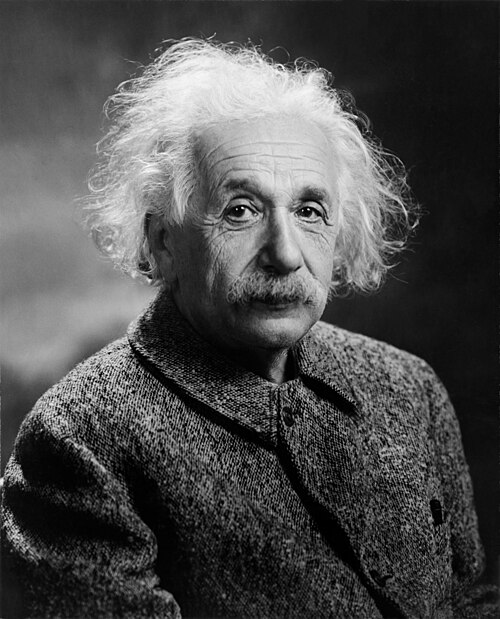
Albert Einstein (March 14, 1879 – April 18, 1955) was a German-born theoretical physicist, widely regarded as one of the greatest scientists of the 20th century.
In 1905, he published four groundbreaking papers, respectively explaining the photoelectric effect, Brownian motion, special relativity, and mass–energy equivalence (E=mc²). This year is known as his 'annus mirabilis' (miracle year). In 1915, he formulated the general theory of relativity, interpreting gravity as the curvature of spacetime. The 1919 British solar eclipse observation confirmed the predictions of general relativity, bringing him worldwide fame. In 1921 (awarded in 1922), he received the Nobel Prize in Physics, primarily for his discovery of the law of the photoelectric effect.
Einstein also made significant contributions to quantum theory, introducing the concept of light quanta and advancing wave–particle duality, though he engaged in a long-standing debate with Niels Bohr over the completeness of quantum mechanics. He was a lifelong opponent of war and nationalism. In 1933, persecuted by the Nazis, he emigrated to the United States and later became a professor at the Institute for Advanced Study in Princeton. In 1939, he co-signed a letter with Leó Szilárd to President Roosevelt, which helped initiate the Manhattan Project. In his later years, he pursued a unified field theory without success.
Einstein was also active in social causes, supporting Zionism (though opposing a Jewish state), the civil rights movement, and the idea of a world government. After his death in 1955, his brain was removed for study and his ashes were scattered in a secret location. His ideas and image have become a cultural symbol of genius and creativity.
The Day Master is Bing Fire (Yang Fire), born in mid-spring during the Mao month, when Wood energy is strong. It receives the month ruler Mao Wood as Zheng Yin (Direct Resource) and the stem of the hour Jia Wood as Pian Yin (Indirect Resource) closely supporting it. Additionally, month stem Ding Fire as Jie Cai (Rob Wealth) assists the self, and the hour branch Wu Fire as Yang Ren (Blade of Strength) provides a root. Thus, Wood and Fire are mutually illuminating, and the chart is undeniably strong in self. This energy state indicates an inherently energetic, active-minded, passionate, and uninhibited individual with strong creativity and idealism. The overall impression is radiant and unconventional, like an unquenchable flame of wisdom. The greatest strength lies in the powerful Yin Xing (Resource Stars), endowing an extraordinary capacity for learning and deep concentration, enabling sustained exploration in abstract realms. The potential challenge is that the strong Fire lacks restraint, leading to arrogance, impatience with worldly constraints, emotional volatility, and frequent friction with reality due to excessive idealism. The month ruler Zheng Yin holds authority, further supported by Yin Xing in the year and hour branches, forming a cluster of Resource Stars, a classic "Yin Shou Ge" (Resource Structure) with a strong self, concentrating energy on the spiritual and intellectual plane, embodying a philosopher's temperament and a revolutionary's sharpness.
The chart is a strong Yin Shou Ge (Resource Structure) with overly strong Yin Xing. The Yong Shen (Useful God) is to use Cai Xing (Wealth Star) to damage the Yin, and Xi Shen (Joyful God) likes Shi Shang (Output Stars) to generate Wealth. Therefore, the day branch Shen Metal as Pian Cai (Indirect Wealth) serves as the Yong Shen, favoring Wu and Ji Earth as Shi Shang. Wood and Fire are Ji Shen (Unfavorable Element) that further strengthen the self. Guan Sha (Officer and Killing) Water stars, while acting as Tiao Hou Xi Shen (Climate Adjusting Favorable Deity), are too weak in the original chart and must be used cautiously. The Yong Shen Shen Metal represents rigorous logic, empirical spirit, and precise mathematical tools, most beneficial for the native. The Ji Shen Wood and Fire represent excessive subjective speculation, impulsive rashness, and unrealistic imagination. Throughout his life, the native used rational thinking (Metal) to challenge authority and traditional concepts (Wood), embodying the struggle between Yong Shen and Ji Shen. He employed outstanding mathematical ability (Metal as Pian Cai also symbolizes precise calculation and skeptical spirit) to provide a framework for theoretical physics, using thought experiments (the function of Yin Xing) to break free from classical mechanics, achieving the relativity revolution. The Shi Shang, Wu and Ji Earth, as Xi Shen, drain Fire and generate Metal, manifesting as his creativity being concretized into equations and papers, continuously producing disruptive scientific output.
The core Shi Shen (Ten Archetypes) combination features multiple Yin Xing (Zheng Yin in command, Pian Yin close to the self) with Shang Guan (Hurting Officer) appearing on the year stem (Ji Earth), forming the "Yin Shou with Shang Guan" pattern. Simultaneously, the day branch hosts Pian Cai, creating a hidden chain of "Shang Guan generates Wealth" and "Wealth damages Resource." This combination shapes a personality deeply immersed in constructing knowledge systems (Yin) yet eager to break free from old paradigms (Shang Guan). In decision-making, he distrusts authority (Shang Guan quality) but requires rigorous mathematical anchoring (Wealth function), so his revolutions are built on solid theoretical foundations. Interpersonally, the strong Yin and Shang Guan make him solitary and blunt, averse to socializing, cherishing lifelong solitary intellectual wanderings. Career-wise, his becoming a theoretical physicist is no coincidence: the Yin Xing provides macro ambition to explore the essence of time and space, the Shang Guan supplies thought lightning to challenge conventions, and the Cai Xing cements these insights into equations—the three harmonize into the strongest chorus in scientific history.
The chart abounds with Gui Ren (Noble Helpers): the day pillar Bing Shen sees Hai as Tian Yi Gui Ren, Shen contains Ren Water as Tian Chu Gui Ren, the hour pillar Jia Wu has Wu as Yang Ren, the month branch Mao is Jiang Xing (General Star) and Tai Ji Gui Ren (Grand Extreme Noble Star), and the year and hour also carry Zai Sha (Calamity Star) and Jie Sha (Robbery Star). The earthly branches involve Mao-Wu Harm and Shen-Mao covert combination. Numerous Gui Ren signify frequent opportunities and support throughout life, an extraordinary mental realm (Tai Ji Gui Ren), and innate authority (Jiang Xing). Yang Ren intensifies competitiveness and courage to defy norms, while Zai Sha and Jie Sha foretell sudden upheavals, such as the two world wars disrupting his peaceful research and forcing exile. The Mao-Wu Harm represents constant self-subversion and internal conflict, both a source of creativity and the psychological root of his uncompromising stance in academic debates. The Shen-Mao covert combination is a private collusion between Wealth and Resource, indicating that his great theories were born from the mysterious union of the most abstract mathematics (Shen Metal) with the most intuitive physical phenomena (Mao Wood). This also led to his obsession in later years with a unified field theory, attempting to subconsciously reconcile gravity and electromagnetism, which ultimately ended in failure.
The Bing Fire Day Master, akin to the sun's fire, is the Yang of Yang, fierce by nature, illuminating all things. Supported by strong Wood, Jie Cai (Rob Wealth) and Yang Ren (Blade of Strength), it becomes even more scorching and unstoppable. Bing Fire individuals are naturally charismatic and inspiring, outwardly passionate. However, in this chart, the overwhelmingly strong Yin Xing (Resource Stars) redirects this heat inward toward contemplation, creating a contradictory temperament of "outwardly warm, inwardly cool": affable and humorous in public social matters, yet intensely focused and even aloof in private academic pursuits. The thinking style is typically intuitive and leap-based: the powerful Yin Xing absorbs existing human knowledge, Shang Guan (Hurting Officer) bursts forth with inspirations to shatter old frameworks, and finally Cai Xing (Wealth Star, representing mathematical logic) provides cold verification. Emotionally, he craves deep intellectual resonance, but the competitive Jie Cai and aloof Yin make it hard to lower his guard, maintaining distance. Under pressure, he retreats entirely into his inner abstract kingdom (Yin defense), while in comfort zones occasionally reveals a childlike cunning and world-weary humor (Shang Guan's wit).
The chart's greatest strengths are the Yin Xing's concentration, Shang Guan's disruptive creativity, and the extraordinary mathematical talent represented by the day branch Shen Metal. The Yin allows him to shut out external noise, engaging in decades of deep reflection to build grand, rigorous theoretical systems. Shang Guan provides the courage to ignore the "impossible," daring to challenge Newton's absolute space-time and propose epochal thought experiments like "chasing a light beam." Shen Metal, as Pian Cai (Indirect Wealth), is a precise tool that turns fleeting physical intuitions into stern mathematical equations, forming irrefutable theories. The combination of these three talents makes him almost born for theoretical physics. In fields requiring high abstraction, philosophical speculation, and mathematical modeling, he flourishes. From special to general relativity, each progression showcases the perfect synergy: from Yin's philosophical inquiry, Shang Guan's unorthodox rebellion, to Cai's geometric construction—ultimately transforming humanity's understanding of the universe.
The core conflict lies in strong Yin and self, while Cai Xing is isolated and weak, forming the "Wealth Star robbed" pattern. Simultaneously, Shen's hidden Ren Water Qi Sha (Indirect Officer) is combined and controlled by Wu Earth Shi Shen (Eating God), causing Guan Sha suppression. Shang Guan on the year stem also implicitly restrains Qi Sha (hidden stem), creating the hidden danger of "Shang Guan seeing Guan." These conflicts lead to frequent financial mismanagement and interpersonal estrangement. Cai Xing is sandwiched by two Mao Yin branches, and Jie Cai contends openly, so he lacked money sense throughout life and struggled with intimate relationships, with both marriages tumultuous. The biggest character flaw is stubbornness from excess Yin: once an opinion forms, it's hard to sway, leading to a lifelong adversarial stance against mainstream quantum mechanics interpretations, insisting on God not playing dice (determinism) and ignoring accumulating experimental evidence. The disconnect between inner ideals (Yin) and outer reality (Cai) marked his life with solitude. Chasing the perfect unified field theory while ignoring new-era "Cai" information like weak nuclear forces, he exhausted his later years fruitlessly—exactly the "excess Wood choking Fire" image: hyper-creativity snuffed out his own scientific progress.
Einstein's destiny is a process of solitary burning amid Wood and Fire, ultimately transforming into a giant of wisdom. His life's core theme is using his own flame of wisdom to incinerate the temple of old physics, and on its ruins, personally establish a new cosmic order. The profound Yin endowed him with foresight to perceive the essence of all things; Shang Guan's rebellion drove him to deliver a lethal blow to absolute space-time; Cai's precision solidified revolutionary ideas into immortal equations. Yet, excessive Wood and Fire brought irreparable blind spots: his lifelong quest for unified field theory, by arrogantly neglecting subtle phenomena like weak and strong nuclear forces (Shen Metal Cai was drained by Wood and Fire), ultimately became a beautiful castle in the air. This is precisely the fate revealed by the combination of Tai Ji Gui Ren, Yang Ren, and Zai Sha in the chart—thought ahead of its time, fulfilled only posthumously. In the end, he was not merely a scientist but a cultural icon, embodying the proverb: 'The classic Bing Fire Day Master, drawing the Qi of heaven and earth, radiates brilliantly; even in disappointment, still illuminates millennia.'
Peer supports the Day Master, Indirect Resource generates fire; both Resource and Peer flourish, a childhood dedicated to learning. This decade spans childhood and adolescence. In the chart, the Bing Fire Day Master receives strong support from the Heavenly Stem Bing Fire in the Da Yun (same element as the Day Master, representing the self and peers) and the Jia Wood (Indirect Resource, representing learning and special talents) within the Earthly Branch Yin. The overall energy is vibrant, indicating that the native showed exceptional talents in early intellectual development, language, and music interests. However, the overly strong Resource Star also tended to foster an introverted and independent personality.
Resource Star is favorable, Shang Guan (Talent) is not prominent; academics are founded, resources begin to appear. During this cycle, although the Shang Guan (representing creativity and unconventional thinking) in the Year Pillar is present, it is suppressed by the Da Yun's Resource Star (representing traditional education and knowledge absorption). The native excels in formal schooling, particularly emerging in mathematics and physics. Although the family lacks prominent resources, the Peer (Bi Jian) represents support from contemporaries, and the environment provides a relatively free learning atmosphere, laying a knowledge foundation for a future scientific career.
Resource Star flourishes, social life is somewhat weak; family support, appreciation from teachers. Interpersonal relationships dominated by the Indirect Resource tend toward deep communication with elders and teachers rather than wide-ranging peer friendships. The native is close to the mother (Resource Star) and relatively distant from the father. He receives special attention and encouragement from individual teachers at school, building later academic confidence.
Wood and fire are overly strong, Metal and Water are relatively deficient; watch for heart and nervous system issues. The Wood-Fire energy is somewhat excessive, easily leading to emotional sensitivity or excessive energy and difficulty sleeping. During childhood, attention should be paid to eye hygiene and spinal development, avoiding heart palpitations or neurasthenia from overusing the brain.
Direct Resource transforms pressure, Shang Guan expresses brilliance; transformation erupts, intellectual enlightenment. The combination of the Heavenly Stem Yi Wood (Direct Resource, representing orthodox knowledge and protection) and the Earthly Branch Chou Earth (Shang Guan, representing rebellion and innovation) creates a dynamic of conflict and reconciliation between Resource and Shang Guan. This decade marks the critical transition from adolescence to young adulthood. He begins to question authority while being attracted by Euclidean geometry and Newtonian mechanics. He wavers between passive acceptance and active exploration, ultimately embarking on a self-driven academic path.
Direct Resource protects the Self, Shang Guan generates Wealth; academic brilliance, early publications. Within Chou, the hidden Xin Metal (Wealth Star) and Gui Water (Officer Star) indicate that the Earthly Branch's Shang Guan generates Wealth, meaning the native begins to gain initial recognition through his unique insights. In 1896 (Bing Shen year) he enters ETH Zurich; in 1900 (Geng Zi year) he graduates but fails to obtain a professorship, making a living by tutoring. The Shang Guan energy makes it hard for him to fit into the orthodox system, but the Resource Star supports his persistence in theoretical exploration.
Shang Guan overcomes Officer, romance is bumpy; friendship supports, social circle expands. The Shang Guan energy makes the native appear unconventional in interpersonal relations, leading to tensions with mentors. In 1898 (Wu Xu year) he meets Mileva Marić (his first wife); romantic feelings sprout but are accompanied by conflict during this cycle. Peers (Bi Jian) become his academic partners, forming an early academic circle.
Earth energy increases, Fire is drained; digestive issues and emotional stress. The Chou Earth Shang Guan drains the Day Master; academic and job-search pressures increase, making him prone to indigestion, bloating, and other spleen-stomach related symptoms. Emotionally he tends to be anxious, so he must balance work and rest.
Indirect Officer and Resource generate each other, Officer Star enters the chart; profound accumulation leads to a burst, the miracle year. The Da Yun's Jia Wood (Indirect Resource, special talents) produces Zi Water (Zheng Guan (Direct Officer), status and constraints), forming the auspicious pattern of Indirect Officer and Resource mutually generating each other. This decade marks the glorious starting point of his life: from a clerk in the patent office to a world-class physicist. The Zheng Guan (Direct Officer) represents a stable job within the establishment (the patent office), while the Indirect Resource stimulates his subversive thinking. In 1905 (Yi Si year) he publishes five epoch-making papers in succession, among which 'light quanta' and 'Special Relativity' completely rewrite physics.
Resource and Officer generate each other, fame and profit begin; stable job, results erupt. In 1902 (Ren Yin year) he enters the Patent Office in Bern, obtaining a stable income and social status (Zheng Guan (Direct Officer)); in 1905 (Yi Si year) the annual influence is strong with fire supporting the body, and the Indirect Resource exerts its utmost effect. He completes his doctoral thesis and publishes Special Relativity, and his reputation soars. However, the Shang Guan (in the Year Pillar) remains, causing his achievements to be highly controversial.
Zheng Guan (Direct Officer) appears, marriage is established; social connections expand. In 1903 (Gui Mao year) he marries Mileva; the Zheng Guan (Direct Officer) represents the wife's constraints and support. In 1909 (Ji You year) he leaves the patent office and obtains a position as an adjunct professor at the University of Zurich, establishing his academic network. The Children (Shi Shang) are suppressed by the Officer Star; in 1904 his eldest son is born, and family responsibilities increase.
Water and Wood generate each other, Fire is dampened; watch for spleen-stomach issues and energy overconsumption. Water thrives while Fire weakens, so the native's long hours of desk work lead to early signs of indigestion and gastric ulcer. After intense work in 1905, symptoms of neurasthenia appear, requiring rest.
Mixed Officer and Killing, strong Water attacks the Self; survival from desolation, theoretical masterpiece. The Da Yun's Gui Water (Zheng Guan (Direct Officer)) and Hai Water (Indirect Officer) are extremely strong, directly controlling the Day Master Bing Fire and creating immense pressure. This decade is the most difficult period academically, yet it is when General Relativity is born. The Officer and Killing represent academic skepticism, war, and family crises. The native resolves them with his creativity (Shi Shang), transforming pressure into motivation. He completes General Relativity in 1915 (Yi Mao year), and its successful verification in 1919 (Ji Wei year) brings his fame to its zenith.
Officer and Killing are inauspicious, fortunately Resource transforms them; academic turning point, international fame. In 1911 (Xin Hai year) he moves to become a professor at the German University in Prague; in 1912 (Ren Zi year) he returns to Zurich; in 1914 (Jia Yin year) he is appointed professor in Berlin and is elected a member of the Prussian Academy of Sciences. Under the pressure of Officer and Killing, the General Relativity equations are completed in 1915 (Yi Mao year), and the solar eclipse observation confirms it in 1919 (Ji Wei year). He becomes famous overnight, receiving numerous honors and a world position.
Indirect Officer overcomes the Self, marriage breaks down; social controversy and support coexist. The mixed Officer and Killing cause his relationship with Mileva to deteriorate; they separate in 1914 and officially divorce in 1919. The same year he marries his cousin Elsa. Public fame skyrockets, but hostility remains in academic circles, such as attacks from Lenard and others. The Indirect Officer represents rumors; the native responds with Shang Guan (humor and papers).
Water strong Fire weak, heart and kidney risks. Strong Water overcomes Fire, leading the native to multiple physical crises: in 1917 (Ding Si year) he suffers from liver disease; in 1918 (Wu Wu year) his gastric ulcer reoccurs and he loses weight, requiring long-term convalescence. Emotionally, stress also causes depressive tendencies.
Indirect Officer attacks the Self, Shi Shen controls the Killing; peak controversy, Nobel crowning. The Da Yun's Heavenly Stem Ren Water (Indirect Officer, pressure and challenge) and Earthly Branch Xu Earth (Shi Shen, wisdom and expression) form the favorable combination of 'Shi Shen controlling the Killing'. During this decade the native is at the peak of worldwide fame but is attacked due to war and nationalism. Shi Shen resolves the Indirect Officer, meaning he transforms controversy into influence through public speeches and peace activities (like Zionism). In 1921 (Xin You year) he is awarded the Nobel Prize in Physics (conferred in 1922), but the honor comes with political trouble.
Indirect Officer is controlled, authority and wealth both attained. With Shi Shen controlling the Killing, the native gains huge income from global speeches and writing books, while serving as a chaired professor at the University of Berlin and a core member of the Prussian Academy of Sciences, enjoying prominent social status. The 1921 (Xin You year) Nobel Prize bonus eases financial pressure, but in 1923 (Gui Hai year) German hyperinflation shrinks his property. Before Hitler comes to power in 1933 (Gui You year), he senses danger and decides to emigrate to America.
Shi Shen controls Killing, friends and foes clear; family restructured, frequent social activities. The Indirect Officer represents hostile forces like the Nazis, while Shi Shen signifies peaceful resistance. His relationship with his wife Elsa is stable, but conflicts arise over the children's education (Shi Shen generates the Day Master, emphasizing free development). He is closely involved with international friends like Niels Bohr and Ehrenfest, forming the 'Einstein–Bohr debates'.
Earth generates Metal, Metal generates Water; watch for liver-gallbladder and lung issues. Shi Shen drains and Indirect Officer exhausts the body, reducing energy. In 1928 (Wu Chen year) overwork triggers heart problems, diagnosed as a precursor to heart failure. Emotionally, political persecution generates tension.
Wealth Star destroys Resource, Shang Guan generates Wealth; separation and reorganization, rooting in the New World. The Da Yun's Heavenly Stem Xin Metal (Direct Wealth, resources and material) and Earthly Branch You Metal (Direct Wealth) with pure Metal energy control the original chart's Resource Star (Jia Wood), forming the pattern of Wealth destroying Resource. This decade sees a cross-border migration from Germany to America, abandoning the original social foundation (Resource) in pursuit of material security and personal freedom (Wealth). Direct Wealth also represents stable income, and he obtains a tenured position at the Institute for Advanced Study in Princeton.
Wealth Star is strong, Resource Star is damaged; career transition, economic stability. In 1933 (Gui You year) he formally resigns from his Berlin post and accepts the invitation to Princeton, with a generous annual salary and financial security. But Wealth destroys Resource, so the academic environment changes; he fails to complete his unified field theory and is marginalized by mainstream quantum mechanics. In 1940 (Geng Chen year) he signs a letter to President Roosevelt, pushing the Manhattan Project (though reluctantly), and wealth grows alongside moral pressure.
Wealth Star overcomes Resource, family scatters; new social circle forms. In 1936 (Bing Zi year) his wife Elsa passes away; the material bond represented by the Wealth Star weakens family warmth. He develops close relationships with his stepdaughter Margot and assistant Helen Dukas. Initially the American academic circle is cold, but later unites due to anti-Nazi sentiment, bringing contact with Gödel, Oppenheimer, and others.
Metal strong overcomes Wood, liver qi stagnation; digestive system deteriorates. With Wealth Star overly strong, Wood (liver and gallbladder) is suppressed, causing severe digestive problems. In 1940 (Geng Chen year) he is diagnosed with liver disease, gradually turning into cirrhosis. Emotionally he becomes depressed due to the war and the outcome of the atomic bomb development.
Double Indirect Wealth appear, consuming Self and damaging Resource; final years of toil, a symbol of peace. The Da Yun's Geng Metal (Indirect Wealth, unexpected wealth and fluctuations) and Shen Metal (Indirect Wealth) are both strong Metal, completely controlling the original Jia and Yi Wood, damaging the Resource Star and isolating the Bing Fire Day Master. In this decade the native enters old age with declining health, but his social reputation reaches its highest point. Indirect Wealth represents non-primary income (such as royalties, lecture fees) and also material and spiritual wandering. He is widely sought after by the media and becomes the 'sage of the atomic age'.
Wealth strong body weak, excess resources; career conclusion, political voice. After 1945 (Yi You year) he frequently gives speeches on world government and nuclear disarmament, earning substantial income (Indirect Wealth) but physically exhausted. In 1946 (Bing Xu year) he leads the Emergency Committee of Atomic Scientists; in 1952 (Ren Chen year) he declines the presidency of Israel. Academically he still persists with unified field theory but achieves no results.
Indirect Wealth overcomes Resource, relatives and friends decline; social prosperity yet loneliness. In 1948 (Wu Zi year) his former wife Mileva dies; one of his two sons (Eduard) suffers from schizophrenia and their relationship is tense. In 1950 (Geng Yin year) his sister Maja passes away, and only a few close ones remain. The public sees him as an idol, but he feels deep loneliness.
Abundant Metal extinguishes Fire, heart failure; life span nears end. Strong Metal drains Earth (spleen) and overcomes Wood (liver). After 1950 (Geng Yin year) he has multiple critical conditions; in 1951 (Xin Mao year) his spleen is removed. Emotionally he is pessimistic but continues working until the end.
Shang Guan drains the Self, Shi Shen controls Killing; the soul returns to science, a giant star falls. The Da Yun's Ji Earth (Shang Guan, creativity and depletion) and Wei Earth (Shang Guan) doubly drain the Day Master Bing Fire, further weakening the Fire. Abundant Earth generates Metal, strengthening the Wealth Star, but Shang Guan and the Day Master have a yin-yang generating relationship. Shortly after this cycle begins, the native dies. Shang Guan represents a final academic summary and release. In 1955 (Yi Wei year) he passes away from a ruptured abdominal aortic aneurysm, and his remains are cremated. Shang Guan also implies that his reputation retains posthumous controversy.
Shang Guan expresses brilliance, remaining heat burns out; will and academic legacy. This cycle is very short, only 4 years. In 1952 (Ren Chen year) he publishes articles like 'My Worldview'; in 1954 (Jia Wu year) he is under surveillance due to McCarthyism but maintains his pacifist stance. After his death, his brain is studied (symbol of Shang Guan), and royalties are left to his descendants.
Shang Guan sees Officer, public opinion; will and family arrangements. During this cycle, he publicly opposes the death penalty and supports socialism, triggering right-wing attacks (Shang Guan overcomes Officer). His relations with his son Hans Albert improve, but there are slight ripples within the family concerning the inheritance. At his death the world mourns; his funeral is simple, and his ashes are scattered at an undisclosed location.
Heavy Earth dims Fire, systemic failure; acute condition fatal. Wei Earth is the grave warehouse, aggravating the original liver disease and arteriosclerosis. On April 18, 1955 (Yi Wei year), he dies from an aneurysm rupture; Shang Guan excessively drains the body, and his lifespan ends.
Lian Zhen (Political Star) and Qi Sha (The General Star) together in the Palace of Chou (Ox), exalted and prosperous, constituting a variation of the 'Sha Po Lang' transformative pattern. Lian Zhen, the secondary peach blossom star, associated with officialdom and talent; Qi Sha, the general, symbolizes breakthroughs and reform. Their exalted conjunction indicates groundbreaking achievements in academia/public office, coupled with authority and a combative nature. Einstein's career trajectory mirrors this: from a clerk in the patent office (Lian Zhen's regulatory nature) to a revolutionary in theoretical physics (Qi Sha's destruction of the old and establishment of the new), ultimately becoming a global icon (Lian Zhen's fame). The Career Palace is at the Emperor's Prosperity stage, sustaining a career peak into his later years.
The Career Palace has no Four Transformations; it draws strength from the stars' exalted state. Lian Zhen and Qi Sha, without transformations, maintain their pioneering essence. However, they are activated by Major Cycles. Einstein's miraculous year of 1905 corresponds to the Major Cycle entering the Career Palace (around age 26-35), when Qi Sha exerted its force. The 1922 Nobel Prize corresponds to the Ren Zi Major Cycle (age 36-45), when Lian Zhen and Qi Sha received support from Hua Ke. Without Hua Lu (wealth transformation), it shows he did not pursue money; without Hua Quan (authority transformation), he did not actively seek power, yet Qi Sha naturally brought high status.
The Career Palace's combination of Lian Zhen and Qi Sha perfectly matches: In 1905, he published five groundbreaking papers (Qi Sha's breakthrough), overthrew Newtonian mechanics (Qi Sha demolishes the old), and established relativity (Lian Zhen's renown). In the 1930s, as a professor at the Institute for Advanced Study, Qi Sha's influence continued but mellowed (into ease). Lian Zhen's 'imprisonment' aspect also reflects his later entanglement in politics (e.g., restricted involvement in nuclear weapons). This palace explains why he could achieve such a singular outburst, yet later produce no equally stunning results (Qi Sha's power had been spent).
In the Nu Pu Gong (Friends Palace), there is no main star; only Mars from the opposite palace, Qian Yi Gong (Travel/Migration Palace), illuminates, and the heavenly stem 'Bing' of the three directions has no auxiliary stars. As an empty palace, it relies on the opposite palace or the three directions; Mars shining in brings people with fiery and intense temperaments into his social circle. Friends are mostly academic peers, but relationships fluctuate between good and bad. The absence of a main star also indicates that he does not rely heavily on connections, preferring solitude. Einstein's circle of friends included Solovine, Haber, and others, with initial enthusiasm (Mars) that later cooled due to ideological disagreements (such as debates with Bohr).
The Nu Pu Gong (Friends Palace) has no Si Hua (Four Transformations), so it is treated as an empty palace. The empty palace indicates that friendships are superficial and do not serve as a significant support or obstacle. In fact, Einstein's achievements relied more on personal talent than on cliques. Assistants around him changed frequently (reflecting the instability of Mars), but close friends like Grossmann provided sustained support. Since Hua Ji (Transformation to Obstacles) is not present in this palace, there is no obvious intrusion by petty people.
The empty Friends Palace illuminated by Mars reflects Einstein's approach to friendships: He engaged in heated discussions with friends when founding the 'Olympia Academy' in Bern (Mars), but contact dwindled after his close friend Solovine emigrated. In his later years, he corresponded with many physicists (the empty palace relying on the Travel Palace), but maintained a distance. Mars also led him to maintain a neutral stance with students (such as refusing to take on doctoral students), avoiding long-term entanglements.
Tian Liang (Blessing Star) with Hua Ke in the Palace of Zi (Rat), exalted and prosperous, accompanied by Tian Kui (Noble Helper), forming the noble configuration 'Liang Ke Kui'. Tian Liang, the star of blessings, governs longevity, protection, and scholarship; Hua Ke enhances renown and honorable reputation. The Property Palace governs family, real estate, and later life. This configuration indicates a stable residence, academic patronage, respect in old age, and a peaceful home. After settling in Princeton, Einstein's housing was provided by the institute (Tian Kui, the noble helper), and he lived simply (Tian Liang's rustic style), while Hua Ke further highlighted his academic integrity and fame.
Tian Liang with Hua Ke entering the Property Palace is the ultimate destination of his life's achievements. Hua Ke transforms Tian Liang's protective blessings into social honor and a stable environment. During his time in America, although his home was modest, young scholars often visited (Tian Liang nurtures the next generation). Hua Ke also indicates that his former residence became a commemorative site (e.g., 112 Mercer Street in Princeton was designated a National Historic Landmark).
The Property Palace's Tian Liang with Hua Ke mirrors his later years: settling in Princeton in 1933, living in a white wooden house (Tian Liang's rural charm), frequently inviting students over for chats (Tian Liang's benevolent virtue). Tian Kui reflects the American academic community's protection (such as the director's invitation to the Institute for Advanced Study). He didn't acquire luxurious properties (Tian Liang is not materialistic), but Hua Ke transformed his home into an academic pilgrimage site. This palace also resonates with his final wish not to have a grave (Tian Liang's transcendence).
Tian Xiang (Seal Star) sits alone in the Palace of Hai, achieving a grounded position, forming the 'Authority of the Seal' configuration. Tian Xiang, the Seal Star, governs assistance, coordination, and material comfort; a grounded position strengthens its fairness and stability. The Fortune Palace governs spiritual enjoyment and blessings; with Tian Xiang here, the native's inner world seeks harmony and fairness, preferring ease over conflict. Einstein loved peace and opposed war (Tian Xiang's harmonizing nature), enjoyed listening to music and playing the violin (Tian Xiang's artistic side). While he occasionally experienced anxiety (as the grounded position is not fully exalted, and Di Jie in the Wealth Palace forms an opposition), overall he remained calm.
The Fortune Palace has no Four Transformations, purely star configuration. Tian Xiang in a grounded position gives a sense of inner order and aversion to chaos. In his later years, his dissatisfaction with the probabilistic interpretation of quantum mechanics ('God does not play dice') perfectly reflects Tian Xiang's pursuit of stability. Hua Ji (Transformation to Obstacle) in the Parents Palace indirectly affects the Fortune Palace, bringing spiritual pressure from family ties.
The Fortune Palace's Tian Xiang reflects Einstein's spiritual world: from childhood, he detested military discipline (Tian Xiang opposes authoritarianism), advocated socialism (the ideal of fairness), yet maintained independent thinking. Music was his spiritual solace (Tian Xiang's artistry), and correspondence with friends alleviated anxiety. This palace allowed him, even amid turmoil (political persecution), to retain a peaceful inner sanctuary (supported by the grounded position).
Ju Men (Great Gate) in a trapped position in the Palace of Xu, with Wen Qu (Literary Talent) transforming to Hua Ji (Transformed Obstruction) in the same degree. Ju Men is the dark star, associated with arguments and disputes, with its negative traits intensified in a trapped position; Wen Qu is literary talent, and its transformation to Hua Ji disrupts its balance. The Parents Palace governs parental bonds and early education. This combination suggests poor communication with parents and early family sorrow or insufficiency. Einstein's father, Hermann, had business failures (Ju Men trapped), and his mother, Pauline, was domineering (Wen Qu Hua Ji causing disappointment in artistic expectations). As a youth, he resented German education (Ju Men's pressure), differed with his parents, and later left home to study.
Wen Qu transforming to Hua Ji in the Parents Palace is the only Hua Ji in the chart, directly pointing to parental deficiency. Wen Qu Hua Ji represents impediments in verbal and thought expression, projected onto his parental relationship: his father doubted his abilities (Ju Men), and his mother worried about his late speech (Wen Qu Hua Ji). Hua Ji also symbolizes parental suppression in academics, leading to his later rebellion and self-reliance. This obstruction star accompanied him throughout life; he rarely spoke of his family publicly, as if hiding something.
Ju Men and Wen Qu Ji in the Parents Palace correspond to: family discord after his father's business failure (Ju Men disputes), and his mother forcing him to learn violin (Wen Qu talent) yet criticizing his playing (Hua Ji). He dropped out of school early and renounced German citizenship (rebelling against his father's plans). Wen Qu Ji also reflects his mother's stroke in old age, with even less communication. This palace lacks warmth and indirectly spurred his pursuit of independence and an academic utopia.
Zi Wei (Imperial Star) and Tan Lang (Desire Star) with Hua Quan (Transformed Authority) in the prosperous Palace of You, with You Bi (Right Assistant) in the same degree, forming a variant of the 'Zi Tan Chang Qu' structure. Zi Wei is the emperor star, representing leadership, authority, and nobility; Tan Lang is the peach blossom star, governing talent, sociability, and desires, and when transformed by Hua Quan, its pioneering drive and control are strengthened. You Bi is an assistant star, enhancing the emperor's interpersonal harmony and coordination. This configuration endows the subject with both regal presence and artistic genius—the boldness to break norms (Tan Lang's extravagance) and the vision to command the big picture (Zi Wei's structure), forming the astrological foundation for Einstein's revolutionary theories and unique personal charisma. However, the Zi Tan combination also inclines toward romantic affairs and pleasure-seeking, needing moderation from other palaces.
Tan Lang transforming to Hua Quan in the Destiny Palace directly strengthens the subject's control over his desires and abilities. Hua Quan converts Tan Lang's diffuse talents into practical execution and authority. In his youth, Einstein was unconventional, yet at 26 he published five groundbreaking papers in rapid succession, showing how Hua Quan channels rebellion and creativity into systematic breakthroughs (like the early draft of relativity). This transformation made him more than a dreamer—it turned him into a pragmatic genius swiftly establishing authority in academia.
Zi Wei, Tan Lang with Hua Quan, and You Bi in the Destiny Palace manifest in Einstein's life as: his early rebellion against traditional education yet self-study of advanced mathematics (Tan Lang's self-learning ability); his persistence in physics research while working at the patent office (Zi Wei's stability and Tan Lang's side pursuit); his attraction of many followers and friends after fame (You Bi's assistance); and his unorthodox lifestyle and rich emotional life (Tan Lang's peach blossom, like two marriages). In the 1940s, he publicly opposed nuclear weapons, using his influence (Zi Wei's authority) to advocate for peace. This palace shapes his contradictory unity of transcendence and worldly engagement.
Mars sits alone in the Mao palace in a favorable position, forming a single star of the 'Fire Bell' system. Mars is a star of impatience and explosiveness; its favorable position enhances its power. The Qian Yi Gong (Travel/Migration Palace) governs travel, environmental changes, and interpersonal relations abroad; with Mars here, it foretells that the native would be constantly on the move, and every change would be sudden and dynamic. Einstein experienced multiple migrations across countries: Germany→Italy→Switzerland→Germany→USA, each triggered by political or academic shifts. Mars also brings fame during travels (like Mars burning through the darkness); his global lectures and travels always caused a sensation.
The Qian Yi Gong (Travel Palace) has no Si Hua, so it is dominated purely by Mars' energy. Mars' explosive nature made each of Einstein's migrations a turning point: returning to Germany in 1914 (accelerating conflicts with Mileva), moving to the USA in 1933 (escaping the Nazis). Mars also represents a confrontational personality when abroad, such as openly criticizing German policies, leading to forced departures. The absence of Hua Ke (Transformation to Reputation) and Hua Lu (Transformation to Wealth) indicates that his travels were not primarily for wealth but for ideals.
Mars in the Travel Palace showcases Einstein's life in exile: visiting the USA in 1921 to fundraise for Jewish causes, settling in Princeton in 1933, and being monitored during WWII due to anti-war remarks. Mars' fiery temperament manifested in his writing the theory of relativity on trains (though constrained by his patent office job) and his refusal to return to Germany in later years. Mars' favorable position allowed him to adapt quickly to new environments, yet each migration was accompanied by storms of public opinion.
Tian Tong (Comfort Star) sits in its balanced position in the Chen palace, Wen Chang (Literary Star) in its prosperous position, and Ling Xing (Bell Star) in its weak position, forming a 'Tong Wen Ling' combination. Tian Tong is a star of fortune, governing enjoyment and leisure; its balanced position weakens its blessings. Wen Chang governs literary talent and learning; its prosperous position strengthens these. Ling Xing is a fire baleful star; its weak position indicates hidden ailments. This configuration in the Ji E Gong (Health Palace) suggests that the native's health was passable in early life, but in later years he could easily suffer from issues related to stress or the circulatory system (Ling Xing governs fire, heart and blood). Einstein had stomach problems (Tian Tong belongs to water, suppressed by fire), and later died of a ruptured abdominal aortic aneurysm (triggered by Ling Xing's weakened fire). Wen Chang in its prosperous position shows that his illness did not overshadow his genius; he could still think while bedridden.
The Ji E Gong (Health Palace) has no Si Hua, so it is evaluated based on the stars within. Tian Tong in its balanced position indicates insufficient blessings, requiring proactive health maintenance. Ling Xing hints at chronic illness, while Wen Chang represents the ability to divert attention from illness through scholarly activities. Einstein had few major illnesses in his life, but there were warning signs before the aneurysm rupture in 1955; Ling Xing in its weak position points to an irreversible hidden threat. Tian Tong in its balanced position made him relatively content, not troubled by minor ailments.
The Health Palace reflects Einstein's lifelong health: he was lean in youth (Tian Tong in balance, not overweight), suffered stomach bleeding in middle age (Ling Xing's fire burning), and refused surgery for the aneurysm in old age (Tian Tong following nature). Wen Chang in its prosperous position allowed him to continue working on the unified field theory even while bedridden. This palace did not directly limit his lifespan (he lived to 76), but it hinted at the cause of his final acute illness.
Wu Qu (Finance Star) and Po Jun (Devastation Star) in the Si Palace in a balanced state, with Hua Lu (Prosperity Transformation), Zuo Fu (Left Assistant), Tian Ma (Traveling Horse), Di Kong (Void), Di Jie (Calamity), and Tuo Luo (Delay Star) converging to form the 'Wu Po Luan Shi' (Wu-Po Chaotic World) and 'Kong Jie Jia' (Emptiness-Calamity Clamp) configurations. Wu Qu is an asset star and Po Jun is a depletion star; together they signify volatile wealth. The balanced position weakens their force, while Hua Lu slightly increases financial inflow. Zuo Fu adds support from helpers, Tian Ma indicates movement and change, Di Kong and Di Jie point to illusory gains and financial loss, and Tuo Luo brings delays. Overall, the Wealth Palace pattern is turbulent—acquiring wealth often involves dramatic ups and downs and easy losses from risk-taking or sudden events. Einstein's main income came from salary, Nobel prize money, and lecture fees, not speculative fortune; this aligns with the balanced Wu-Po plus Hua Lu (steady income) and the Void/Calamity (staying away from risk). His late-life donation of copyright royalties further illustrates Po Jun’s 'breaking outward' trait.
Wu Qu transforms Hua Lu into the Wealth Palace, the sole Hua Lu in the chart, directly indicating monetary fortune. Wu Qu Hua Lu brings stable financial sources, yet under the influence of Void, Calamity, and Delay, the process of earning is fraught with obstacles. During his patent-office years (1902–1909), Einstein’s income was modest (balanced Wu Qu); in 1922, he received the Nobel Prize money (Hua Lu manifesting as a windfall), but it was soon used for alimony and investments, and Void/Calamity caused investment failures (such as war-bond devaluation). Hua Lu did not make him rich, only ensured life without worry.
The Wealth Palace’s complex combination reflects Einstein’s financial reality: his salary was not high (patent office), but the Nobel prize was a large sum (Hua Lu). He often gave public lectures and donated proceeds to charity (Po Jun’s exhaustion). Di Kong and Di Jie manifest as his indifference to money, even ignoring manuscript fees (freely sharing copyrights from Relativity). Tuo Luo caused him to procrastinate on financial matters, often forgetting to pay taxes. Zuo Fu and Tian Ma symbolize frequent moves (e.g., from Germany to America) and associated travel costs. Overall, it is a pattern of 'not seeking great wealth but never lacking funds.'
Tai Yang (Sun) alone in the Wu Palace at its most powerful position, with Lu Cun (Fortune Storage) in the same degree, forming an early shape of 'Rizhao Leimen' (Sun Shining on the Thunder Gate). Tai Yang is the main star of career and status; its radiance is magnified in a prosperous position, indicating warmth, nobility, and honor. Lu Cun acts as a treasury, bringing blessing and protection. This combination in the Children Palace suggests intelligent and progressive children who achieve social success and can provide financial or emotional support. Einstein had two sons and a daughter (eldest Hans, younger Eduard, adopted Margot): Hans became a hydraulic engineering professor (Tai Yang’s academic influence), Eduard suffered from mental illness (Lu Cun’s blessing, yet Tai Yang obscured), and Margot remained healthy (Lu Cun’s stability). Tai Yang in a strong position also made him open-minded, encouraging independence in education.
No Four Transformations (Si Hua) in the Children Palace; its strength comes purely from the stars’ Temple-Wang (Exalted) power. Tai Yang Wang plus Lu Cun implies overall good fortune for children, but challenges arise if negative stars interfere. In reality, the eldest son succeeded while the younger one fell ill, exactly corresponding to the positive side of Tai Yang Wang (Hans) and the weakened condition when Tai Yang turns adverse (Eduard not explicitly in the chart; must be inferred from borrowed palaces or decade cycles). Lu Cun ensured no financial worry—Einstein later gave his Nobel prize money to Mileva as child support.
The Tai Yang–Lu Cun configuration in the Children Palace made Einstein’s parenting warm yet distant: he encouraged Hans to pursue science but was often absent due to work (Tai Yang’s brightness shining widely). After Eduard fell ill, he sought the best treatment (Lu Cun’s material support) yet still felt guilt. Adopted daughter Margot accompanied him in his old age. This house explains his 'long-distance love' mode in family relationships.
Tian Ji (Celestial Advisor) and Tai Yin (Feminine Moon) in the Palace of Shen, with Tian Yue (Auxiliary Support) in the same degree, forming a variation of the 'Ji Moon Tong Liang' configuration. Tian Ji is the strategist star, governing wisdom, change, and contemplation; Tai Yin is the wealth star, governing inwardness, emotion, and art; Tian Yue is a benefactor star, providing assistance. This combination in the Siblings Palace indicates clever, sensitive siblings or peers, supported by benefactors. However, the soft nature of Tian Ji and Tai Yin suggests emotional detachment or divergent views among siblings, without forced harmony.
No Four Transformations activate the Siblings Palace; it mainly reflects the stars' intrinsic meanings. The absence of Hua Lu (Prosperity), Hua Quan (Authority), and Hua Ke (Fame) indicates smooth sibling relationships with no major financial or power entanglements. Combined with the fact that the subject had only one younger sister, Maya, and their deep, supportive bond, Tian Yue manifests as her helping influence—her husband once funded his publication.
Tian Ji and Tai Yin in the Siblings Palace mirror Einstein's close yet not overly enmeshed bond with his sister Maya. She was his early intellectual sounding board; Tian Ji symbolizes her clever advice, Tai Yin her gentle support. Tian Yue represents her quiet guarding after he became famous. This palace shows no sibling rivalry or disputes, consistent with reality.
Tian Fu (Celestial Treasury) alone in the Wei Palace, accompanied by Qing Yang (Yang Blade), forming the 'Fu Yang' combination. Tian Fu is a treasury star, indicating stability, conservatism, and tolerance; Qing Yang is a penalty star, symbolizing conflict, impatience, and sudden incidents. With this configuration in the Spouse Palace, the partner is usually upright and steady, but Qing Yang brings friction and unexpected quarrels. Early marriage may be stable, but later cracks often appear due to personality clashes or external pressures—exactly mirroring Einstein’s first marriage (to Mileva): initial collaboration in academics, later divorce caused by his neglect after fame and long-distance strains.
No Four Transformations in the Spouse Palace; only the innate qualities of the stars apply. Tian Fu’s conservative nature alongside Qing Yang’s disruptive force indicates marriage must endure trials. The second marriage (to cousin Elsa) was more stable but not without troubles—Elsa took care of his daily life, and Qing Yang here manifested as friction from her controlling tendencies. Without Hua Lu or Hua Ke (Fame Transformation), the spouse did not directly bring fame or wealth, serving primarily as a life companion.
Tian Fu and Qing Yang in the Spouse Palace perfectly map to Mileva: she was a mathematically talented woman (Tian Fu’s steadiness), but after marriage she sacrificed her career to support Einstein, while Qing Yang triggered fierce arguments over academic dominance, household roles, etc. After their 1919 divorce, Einstein married Elsa, yet her poor health (Qing Yang affecting health) led to an early death. This house underscores structural conflicts in marriage rather than warmth.
Generate your personal chart in under a minute. Sign up free and get 30 credits — enough for two or more AI readings. No credit card.
Generate my free BaZi chartPlease sign in to join the discussion
Sign In