Year
Ren
Wu
Zheng Guan
Bi Jian
Hidden Stems
Ding (Bi)Ji (Shi)
- Star Luck
- Lin Guan
- Sitting Branch
- Tai
- Void
- Shen-You
- Na Yin (Elemental Sound)
- Yang Liu Mu
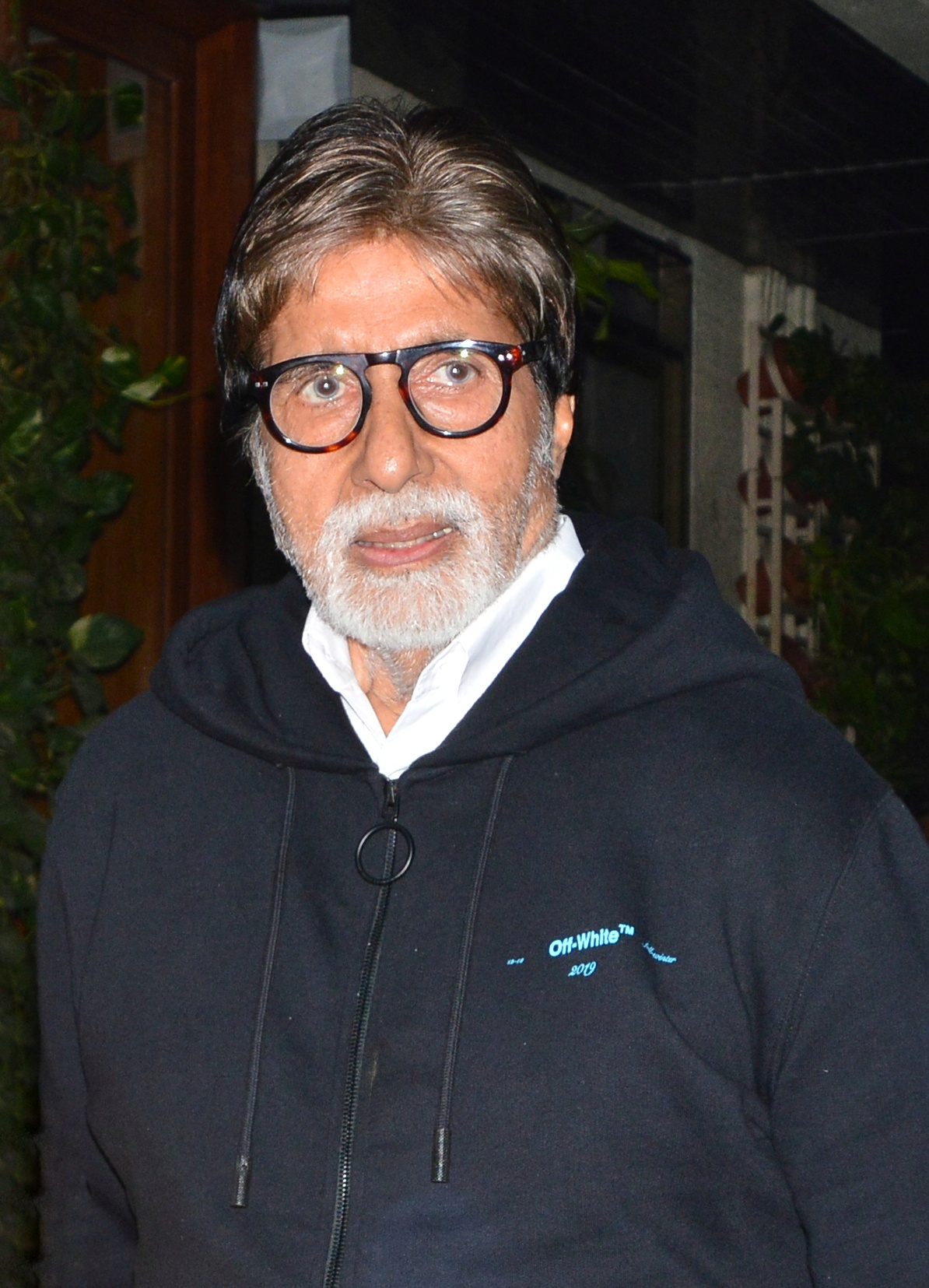
Amitabh Bachchan is widely regarded as one of the greatest and most influential actors in the history of Indian cinema. His career spans more than five decades, with appearances in over 200 films. Born in 1942 in Allahabad, he came from a literary family; his father was the renowned poet Harivansh Rai Bachchan. Before entering the film industry, he studied at Sherwood College in Nainital and Kirori Mal College, University of Delhi. Although his early career was once labeled as that of a “failed newcomer,” he made his official debut in 1969 and steadily established himself in Bollywood through resilience and perseverance.
The 1970s and 1980s marked the peak of Bachchan’s career. In 1973, he created the iconic “angry young man” persona in Zanjeer, a role that precisely captured the frustration of India’s underprivileged toward poverty, corruption, and injustice, resonating widely with audiences. He then starred in enduring classics such as Deewaar and Sholay, cementing a commanding position within the industry. French director Francois Truffaut praised him as “a one-man industry.” During this period, he received repeated recognition at the Filmfare Awards.
Beyond acting, Bachchan also ventured into politics, production, and television hosting. In the 1980s, he briefly entered politics and later became the long-running host of India’s version of Who Wants to Be a Millionaire. Although he experienced a career downturn in the 1990s, he made a successful comeback in 2000 with Mohabbatein, and went on to demonstrate remarkable range and craft in films such as Black, Paa, and Piku, winning the National Film Award for Best Actor four times. His influence extends well beyond India, reaching audiences across Africa, the Middle East, and Europe and North America.
Bachchan is also internationally honored. He was appointed an Officer of the French Legion of Honour and appeared in the Hollywood film The Great Gatsby. The Government of India has conferred upon him the Padma Shri, Padma Bhushan, and Padma Vibhushan, and in 2018 awarded him Indian cinema’s highest honor, the Dadasaheb Phalke Award. As a humanitarian and brand ambassador, he remains an enduring symbol of Indian culture and is often celebrated as “Bollywood’s Millennium Star.”
Ding Fire (Day Master) is born in the Xu (Dog) month, sits on You Metal, and the Year Pillar contains Wu Fire as a root. Overall, this shows “wealth is abundant while the self is relatively weak, yet still rooted,” forming a pattern of Fire–Metal tension.
Ding Fire is like a candle flame in an autumn wind, or the fire within a smelting furnace. Born in late autumn (the ninth lunar month, Xu month), warmth still lingers, but nature’s momentum has already shifted toward cool, dry Earth-and-Metal dominance. For this chart, Ding Fire is indeed “relatively weak” (the environment’s forces outweigh the Day Master), yet it is far from extinguished—because the Year Branch carries a strong Wu Fire root as a foundation (Lu Shen, Prosperity Star). It resembles someone living under harsh, high-pressure conditions while holding an innate, family-given resilience deep inside. This energy profile produces an outwardly modest, gentle demeanor (Ding Fire’s refined quality), paired with powerful inner burst-strength and endurance (Wu Fire’s intensity). The person can feel cultured and mild, yet hard to fully measure. A key advantage is the ability to recover and restart after setbacks; a potential challenge is that external pressures and temptations around money and status (Wealth Star and Officer Star themes) can become excessive, making it easier to overdraw physically and mentally—especially during low cycles, when major health or financial strain may arise.
This enters a Shang Guan generating Wealth structure, with a Ding–Ren combination toward Officer themes; take Jia Wood Zheng Yin (Resource; Proper Seal) as the primary Yong Shen, with Bi Jie (Peers/Companions: Bing/Ding Fire) as favorable; avoid damp Earth that dulls Fire and strong Metal that drains the Day Master.
Although the month command Xu is often called a “Fire storage,” its core qi is Earth, and it supports the Month Stem Geng Metal—creating the directional flow of “Shang Guan generating Wealth.” In classical terms, Shang Guan represents expressive talent, performance drive, and a nonconforming edge; the Wealth Star represents commercial value and worldly achievement. This structure suggests a natural ability to convert talent into substantial wealth—well-suited to shining on an entertainment or business stage. Yet when Metal (wealth) becomes too heavy, it resembles a furnace refining metal: excess metal can smother fire. In practice, the person may need to “burn themselves” to forge wealth, and can also become burdened by wealth itself. Therefore, the chart strongly needs “Wood” (the Resource/Seal star) as fuel to keep the flame continuous—signifying support from elders/mentors, cultural grounding, and inner cultivation; and it also benefits from “Fire” (Bi Jie, peer energy) as allies to share pressure. This helps explain why early immersion in a poet father’s influence (Resource/Seal indicating culture and learning) was so important, and why—after the bankruptcy crisis involving “ABCL” (a classic timing expression of wealth-heavy vs. self-weak)—returning to the performing arts (Fire-type industry) and leveraging television media (Fire-type medium) helped him regain firm footing.
The Ding–Ren combination does not successfully transform into Wood; instead it tends toward a private, entangling bond. The Earthly Branches form a Wu–Xu half-combination toward Fire, while Geng Metal (Zheng Cai, Proper Wealth) is revealed in the stems, “splitting” Jia and drawing upon Ding.
The Heavenly Stem combination “Ding joins Ren” is a highly consequential signal. Ding Fire (the Day Master) combines with Ren Water (Zheng Guan, Direct Officer / authority themes), revealing an inner inclination toward mainstream values, recognized status, and institutional power. Zheng Guan signifies dignity and reputation; this pairing shapes a personality foundation that is extremely careful about image and strongly oriented toward a polished public persona. However, in late autumn this combination often carries a binding quality—suggesting the person can be pulled into power-and-politics currents and feel constrained or ill-suited there (as reflected in a brief, contested foray into politics). Meanwhile, the Wu–Xu half-combination toward Fire is the lifeline of vitality: Xu Earth as Shang Guan (performance/expressive output) is supported by Wu Fire (the root of the self), indicating that the acting is not merely surface technique but backed by deep emotional ignition. This is the chart-root behind the classic “angry young man” screen archetype: within the compressed Earth-and-Metal atmosphere lies a fiercely hot Fire core.
The Day Branch sits with Tian Yi Gui Ren (Noble Helper) and Wen Chang Gui Ren (Academic/Mentor Star); the Year carries Peach Blossom (Charisma/Romance) and Lu Shen (Prosperity Star); the Branches You and Xu form a “harm” (You–Xu harm).
The Day Branch You Metal is not only a Wealth Star; it is also Tian Yi Gui Ren, one of the highest-ranking auspicious Auxiliary Stars in classical practice. This aligns with why the spouse (the Day Branch as the partner palace) comes from a distinguished background, is notably talented, and functions like an anchor at key turning points. “Noble Helper seated on Wealth” often indicates gaining resources or status through a spouse or supportive female allies. The Year Pillar’s Peach Blossom adds strong on-screen magnetism and excellent audience affinity. However, the You–Xu harm between month/day branches is a risk marker that should not be ignored. Xu often correlates with the digestive/abdominal region, while You can correlate with the lungs, bones, or sharp metal instruments; this harm suggests vulnerability in the body’s midsection to injury associated with metal or cutting forces. Historically, the severe intestinal rupture accident during the filming of Coolie in 1982 matches this signature when activated by annual timing—an intense, high-stakes manifestation where elemental conflict and strain converge at the edge of life and death.
Ding Fire is gentle yet centered, luminous within; calm on the outside, warm on the inside—showing a strong “candlelight effect” and a service-oriented personality.
Unlike Bing Fire, which shines broadly like the sun, Ding Fire is more like a lamp or a furnace flame—focused, sensitive, and willing to consume itself for a purpose. This profile suggests the person is not domineering or aggressive in manner, but rather a cultivated, courteous gentleman who values etiquette. The thinking style is reserved yet deep, highly attuned to subtle emotional shifts—making complex inner drama feel natural and precise in performance. Under pressure, Bing Fire may erupt; Ding Fire more often endures silently and keeps burning until the very last drop of oil. This “burning oneself to light others” quality can make him a spiritual beacon to admirers, while also placing heavy family obligations and social expectations on his private life. He remains tightly wound and finds it difficult to truly relax, because when Ding Fire goes out, it is darkness; fear of “going out” can drive continued high-intensity work even at an advanced age.
Shang Guan paired with Seal (though the Seal is not prominent, it is stored within the “warehouse”), together with the precision of Zheng Cai (Proper Wealth), builds top-tier talent as a “commercial artist.”
The strongest advantage lies in the creative force hidden inside Xu Earth (month command) and the exacting execution represented by You Metal (day branch). Shang Guan brings the courage to break conventions, enabling him to pioneer the counter-traditional hero archetype of the “angry young man”; Zheng Cai reflects a deep understanding of real-world rules and how to operate within them. This combination points not only to an actor, but to a savvy operator who understands capital, branding, and long-term positioning. His gift in voice control (Metal governing tone and resonance) stands out in particular: the deep baritone is the result of Metal qi resonating through the body, becoming an unmistakable signature. In domains that require both emotional depth (Fire/Earth expressive output) and monetization (Output generating Wealth), he holds exceptional competitive advantage.
The “carrying a heavy load” effect from wealth being strong while the self is relatively weak, plus the “reputation-and-recognition burden” brought by the Ding–Ren Officer combination.
The core conflict is a mismatch between “momentum” and “capacity.” Wealth Star (Metal) is too strong—signaling abundant external opportunities, money, and demands—while the Day Master (Fire) is comparatively weaker, meaning he can often feel stretched beyond capacity, or must overextend to sustain a large commercial empire. This pattern repeats across life phases: early striving, and the later bankruptcy crisis, both reflect carrying more “wealth load” than the self can comfortably bear. In addition, the Ding–Ren Officer combination can make him overly concerned with outside evaluation and official validation; this personality blind spot contributed to setbacks in a political arena that did not match his strongest competencies. Across life, he is pulled between “being true to himself (Ding Fire)” and “meeting society’s expectations (Ren Water),” and this inner tearing becomes both a source of pain and a source of artistic depth.
A late-autumn flame: not extinguished even near its limit—tempered through repeated refinement, ultimately becoming a master of his era.
Viewed as a whole, Amitabh Bachchan’s chart reads like an epic of resilience. The life trajectory is not a smooth path of effortless privilege, but a classic “refining” process—requiring high heat and repeated hammering (clash, penetration, harm dynamics) before a lasting brilliance emerges. The central themes are “guardianship” and “rebirth”: guarding family honor, guarding artistic dignity, and—each time fate nearly blows the flame out (accident, bankruptcy, scandal)—rekindling through tenacious root qi (Wu Fire) and support from Noble Helpers (You Metal). In later years, timing cycles moving into southern Fire territories help compensate for the chart’s self-weakness, allowing the late-autumn candlelight to evolve into a sweeping flame that illuminated Indian cinema for half a century.
Wealth and authority support each other; the Authority star is well-rooted—youthful fortunes tend to be steady and well-structured.
Pian Cai (Opportunistic Wealth) points to visible talent and the father’s influence, while Zheng Guan (Direct Officer) reflects a disciplined, rule-based academic environment. This decade forms the foundational stage of Bachchan’s character. Although the natal chart shows relatively strong Fire and Earth, the arrival of Hai Water in the luck cycle helps to “moisten” and balance the overall configuration, enabling him to receive a solid British-style education at the prestigious Sherwood College. This kind of “Authority-star” restraint nurtured the rigor, self-discipline, and gentlemanly bearing he later became known for—rather than the spoiled, dissipated habits often associated with privileged heirs.
The sign of the bad seal of the wealth star has not yet appeared, indicating that the person has a family background and is protected by his father's generation.
This period is still in the stage of studying and has not really entered the society to create wealth. Xingjin's partial wealth is revealed, which symbolizes that the reputation of his father (the famous poet Harivansh Rai Bachchan) had a profound impact on him and provided him with high-quality educational resources. Although there is no direct explosion of wealth, he has accumulated a rich cultural capital and network foundation, paving the way for entering the upper class society in the future.
The official star guard, the peach blossom has not yet bloomed, mainly reflected in the fate of the teacher.
At this stage, interpersonal relationships mainly revolve around school and family. Under the guidance of official officials, he behaves more like a top student who obeys the guidance of his teachers. Although the Year Pillar carries peach blossoms, due to the restraint of the official star of Universiade, the emotional life in the early years is in a budding or suppressed state, and the focus is on establishing intellectual personality charm.
Water and fire are both harmonious, metal and water are in harmony, and the body is in the growth stage.
Although Haishui restrains the Nian Zhi Wu Fire, this restraint manifests itself as a kind of "sharpening" rather than destruction in his youth. Full of energy and rapid growth in height. It should be noted that Hai Water is the Gate of Heaven, which may cause slight respiratory sensitivity, but overall health is not in danger, and it is a golden period for improving the body.
Authority mixed with Qi Sha / Pian Guan (Indirect Officer); the Zi–Wu clash brings intense upheaval and hardening through trials.
This is the darkest yet most pivotal decade of Bachchan’s life. The luck-cycle branch Zi Water collides fiercely with the natal Wu Fire in a classic “Zi–Wu clash,” shaking the chart’s foundational root. In practical terms, it often correlates with leaving one’s home base, giving up stability, and taking heavy hits. Resigning from a white-collar job in Kolkata to pursue film in Mumbai—only to face repeated rejection for being “too tall” and having “too deep” a voice—captures the harsh test associated with Qi Sha pressing the person: major responsibilities are often preceded by the forging of resolve through adversity.
Qi Sha (Indirect Officer) are uncontrollable, financial resources are blocked, and the career is in the throes of collapse and re-establishment.
In the first five years, the chief official still had a stable job in a shipping company. In the next five years, he entered the game and hit the Ke Lu Shen, and his career fell to the bottom. He lived rough on the streets of Mumbai, and his film debut, Seven Indians, received critical acclaim but failed at the box office. This is a typical phenomenon of "being weak and being killed". The external environment is under great pressure, resources are scarce, and there is almost no ability to realize commercial value. It is all supported by willpower.
opposes Tai Sui, and the six relatives are weak. Although there are noble people, their help is slow.
Ziwu Chong also impacted the Nian Zhu Elder Palace, which meant that he could not rely on direct assistance from his family in the past ten years and had to work independently. Emotionally, his turbulent fortune makes it difficult for him to establish stable intimate relationships. Although he got acquainted with some people in the industry, before he became famous, these relationships were mostly casual acquaintances.
The battle between water and fire damages the root energy and requires prevention of cardiovascular and eye diseases.
Ziwu Chong is an extremely fierce battle between water and fire. The noon fire represents the heart and eyes. In the past ten years, he has been under great mental pressure, accompanied by insomnia and anxiety. Although the young and strong body withstood the impact, this long-term psychological pressure paved the way for future health risks. Care should be taken to avoid mental and physical exhaustion caused by overexertion.
Shi Shen (Expressive Output) restrains Qi Sha; the ‘Sha–Seal’ dynamic supports a breakthrough—an era-defining star rises.
This decade solidifies Bachchan’s “angry young man” persona. Gui Water, as Qi Sha / Pian Guan (Indirect Officer), surfaces to signify rebellious pressure and a steely edge; Chou Earth, as Shi Shen, represents talent and artistic expression. When Shi Shen restrains Qi Sha, suppressed intensity can be refined into powerful on-screen presence. In 1973 (Gui Chou), the year and the decade align strongly; with Zanjeer he became famous in one stroke, exemplifying the classical principle that “Qi Sha, when properly managed, transforms into authority and command,” opening his era of dominance in Bollywood.
The warehouse door is wide open, fame and fortune are gained, and an unshakable industry position is established.
The Earthly Branch Choutu is the treasury (treasury), and it is a semi-alloy with the Rizhi Youjin. In these ten years, not only did he become famous, but he also gained wealth. From "Sholay" to "Deewaar", he almost monopolized the box office of Indian movies. The God of Cookery makes money and has a treasury of wealth, which means that his income is not only high, but he has also begun to accumulate substantial assets. This was the golden period during which he accumulated the most rapid wealth in his life.
The wife's palace is combined, a good match is determined by fate, and the red luan star moves.
In 1973, the fleeting time formed a good interaction with great luck and destiny. In this year, he married Jaya. Ugly and You are half-combined, and combined in the wife palace, it shows that the wife is not only a partner, but also a noble person and stabilizer in career. During this period, his status in the hearts of the people was elevated from "actor" to "god", and his interpersonal reputation reached its peak.
Damp earth suppresses fire, and heavy earth buries gold. It is necessary to prevent hidden dangers to the spleen, stomach and respiratory system.
Although the career is prosperous, the Chou soil is wet soil, which easily dims the light of Ding Fire. This means that under high-intensity work, his constitution is cold and damp, and he is prone to spleen and stomach disharmony or chronic fatigue. Especially the physical damage caused when filming action scenes is a direct reflection of the confrontation between the God of Cookery (body) and the Seven Kills (risk).
The Yin–Wu–Xu Fire combination intensifies; Seal energy strengthens the self—followed by a turning point where excess reverses.
With the cycle entering Jia Yin, Wood and Fire become bright and supportive, seemingly favorable for the Day Master. Yet Yin Wood joins the natal Wu and Xu to form the “Yin–Wu–Xu Three-Harmony Fire frame,” making Fire excessively strong—an example of extremes tending to reverse. This decade includes a life-and-death ordeal (the severe on-set injury in 1982) and a brief rise-and-fall in politics. Overabundant Seal (resource/reputation) often suggests that “fame becomes a burden”: he was elevated onto a pedestal and drawn into public office, then withdrew as it proved ill-suited—echoing the maxim that too much can be as problematic as too little.
The Seal Star consumes money, makes wrong decisions, and causes the career to turn from real to weak.
Although the reputation is still prominent (the main name of the Seal Star), the substantial wealth creation begins to decline. The box office of his movies began to decline in the late 1980s due to the popularity of the film and the robbery of money. Although his brief involvement in politics (1984-1987) allowed him to gain huge political influence, this was not the right path for a "financial official". Instead, he was involved in the Bofors scandal, which led to his reputation being damaged. This is a typical misalignment of the five elements caused by "abandoning art and pursuing politics".
robs wealth, brothers turn against each other, and interpersonal relationships become complicated.
The Three Combination Fire Bureau enhances the power of Bi Jie (friend/peer). That means both having the support of countless ardent fans (who prayed when he was injured) and being vulnerable to betrayal or exploitation by those around him. His experience in the political arena has allowed him to see clearly the warmth and warmth of human relationships. Former allies can turn into political enemies in an instant, and interpersonal relationships have changed from a simple showbiz world to a turbulent one.
Fire, fire, earth dryness, bloody disaster, violent burning of life energy.
In 1982 (Renxu), there was a fierce battle between fire and earth with the Universiade Jiayin and Yuanju. Fire overpowers metal, and metal governs the lungs and large intestine, as well as the muscles and bones. He almost died from a ruptured intestine on the set of "Coolie", which was exactly the time when the fire was so strong that it dried up the wet soil and killed the metal energy. This decade requires extreme vigilance against trauma, surgery, and inflammation.
Mao–You clash; Pian Yin (Indirect Resource) disrupts Shi Shen—life’s darkest stretch followed by a decisive comeback.
The luck-cycle branch Mao Wood forcefully clashes the Day Branch You Metal (the wealth star / spouse palace). This is a textbook case of “Pian Yin competing with Shi Shen” and a broader wealth–resource conflict. In the first half, he founded ABCL, only to see it fail through poor management—ending in bankruptcy, heavy debt, and reputational damage. Yet Pian Yin also signifies unconventional pathways. In 2000, he broke the then-common taboo of film stars avoiding television by hosting Kaun Banega Crorepati (KBC), turning desperation into a second spring.
The treasury was washed away and everything was ruined. Later, it relied on new media to turn around.
Maoyou Chong directly shattered the fortune star in the destiny. Between 1995 and 1999, his business venture failed completely and he lost almost all his savings and real estate (his fortune was shattered). This was the worst financial crisis of his life. But in 2000 (Gengchen), the golden year of prosperity, Chenyou's alloy was unblocked. He obtained huge cash flow by relying on the "side door" (partial characteristics) of TV variety shows, miraculously paid off his debts and returned to the top.
The house is under attack, and the family is under pressure. A friend in need is a friend indeed.
The Rizhi Youjin represents the wife and family, and it is overcome by the Dayun Uomu, which means that family assets and tranquility are seriously threatened. During the period of bankruptcy, the cynicism from the outside world and the pressure from creditors (money gangs killed him) made him feel the harshness of the world. However, it was this impact that verified the strength of the family, and the perseverance of his wife and family became the last pillar of his spirit.
Metal and wood are at war, muscles and bones are aching, and the nervous system is under great pressure.
Maoyou Chong is the conflict between metal and wood, and it mainly deals with injuries to the limbs, muscles and bones, neuralgia, or liver and gallbladder problems. Mental anxiety caused by huge debt pressure has been the main theme of this decade. It is necessary to use meditation, yoga and other methods to resolve the tendency of isolation and depression caused by partial seals.
Chen–You combine into Metal; Jie Cai (Peer/Competitive force) lends momentum—the master’s honor returns.
Bing Fire appears as Jie Cai, which can look like competition; but for a storm-tested Bachchan, Bing Fire is more like sunlight—signaling the consolidation of his ‘patriarch’ status in the industry. Chen Earth combines with the Day Branch You Metal, transforming toward Metal (wealth), while Shang Guan (Creative Output) generates wealth. This decade he successfully pivoted into father/elder roles (such as Mohabbatein and Black), achieving both artistic prestige and restored commercial value.
Hurt officials to make money, combine the situation to make money, a double harvest of wealth and reputation.
The Chenyou Alloy Bureau greatly enhances the power of the fortune star. In the past ten years, his income sources have been diversified, not only limited to film remuneration, but also including huge brand endorsements. Shang Guan represents the sublimation of artistic expression. His performances in films such as "Black" have transcended the scope of commercial films and won a high artistic reputation. The financial situation has changed from being heavily in debt to being extremely rich, completing a V-shaped reversal.
The peach blossoms are reunited, the children and grandchildren are full, and they enjoy the happiness of family relationships.
When Chen and You merge into the wife's palace, the family relationship will be stable and harmonious. The son Abhishek got married (2007) and the granddaughter was born, marking the family's multiplication and prosperity. His status in the circle has also changed from "competitor" to "godfather". He is respected and loved by the entire industry, and his interpersonal relationships are full of harmony and respect.
Fire and earth are in harmony, and the earth is heavily buried with gold. The digestive system needs to be carefully maintained.
Chen is a damp earth. Although it generates metal, it can easily lead to deficiency and coldness of the spleen and stomach. As we age, the digestive system and metabolic function (earth) become the focus of health management. In addition, the exposure of wealth also means frequent social activities, so you need to be careful not to overdraw your energy due to too many social activities.
Peer stars support the self; an ‘imperial strength’ phase—an aging steed still aims far.
The stems and branches are strongly Fire: the Ding Si cycle powerfully boosts Ding Fire of the Day Master. For someone past seventy, a strong self often corresponds to resilient vitality and sharp spirit. During this decade he remains active on screen with remarkable output, showing little sign of retirement. Fire governs propriety and reputation; his high activity and influence on social platforms (including Twitter follower growth) also reflect the substantial energy brought by peers—interpretable as the broad public and fans.
Lu Shen has acquired land, integrated resources, and its liquidity is still strong.
Fire is the place of longevity for gold (wealth), and it is a semi-alloy bureau. Although he has great luck, he is not eliminated by the market because of his old age because of his relationship with the fortune star (Siyou). Instead, he has obtained a higher premium because of his seniority (fire). In the past ten years, it has been more about enjoying the fun of work rather than simply surviving. The accumulation of wealth has reached a state of perfection.
are as close as each other, stars are holding the moon, and the family's influence is expanding.
Compare yourself to peers and friends. In these ten years, he has been surrounded by a large number of industry juniors and admirers. He is also joined by the international influence of a family member (daughter-in-law Aishwarya Rai). He plays the role of spiritual leader in the family and has strong family cohesion.
Excessive fire energy will consume water, so you need to prevent inflammation and blood problems.
Too much fire can easily lead to "dry heat" in the body, manifesting as inflammation, blood pressure fluctuations or blood-related problems. If you have been punished by fire and will receive gold (although your fortune is not good, you should pay attention to the maintenance of your respiratory system (lungs)). After all, as you are getting older, strong fire may also mean excessive consumption, so you should reduce your workload appropriately to avoid "running out of gas".
Shang Guan (Creative Output) releases brilliance; Wu Fire returns to ‘rooted support’—late-life talent remains, but overwork must be watched.
Entering the Wu Wu cycle, Wu Earth as Shang Guan becomes prominent, and Wu Fire marks the Day Master’s return to strong rooted support. Shang Guan indicates strong expressive drive and creativity, suggesting that even in his eighties he retains momentum and will not vanish from public view. However, Wu–Wu self-penalty and overly dry Fire–Earth point to a pattern of “burning the candle,” so conserving energy becomes essential.
Famous realization, spiritual inheritance, from the front to the spiritual leader behind the scenes.
Despite Guanzhu's reputation, his wealth in the past ten years has come more from copyrights, honorary authorizations and dividends from past works. Although the high-intensity shooting may be reduced, the commercial value as a "legend" still exists. The focus of the business will completely shift to maintaining the family legacy and charity, and giving back to the society with the compassion of an "injured official".
Glory in the evening scene, highly respected, need to guard against loneliness.
Although surrounded by crowds, wounded officers often have a sense of aloofness and loneliness. The departure of peers may cause a psychological gap. The family is still the core, but it is necessary to pay attention to the communication method with the younger generation to avoid the generation gap caused by the "picky" of the injured officer.
Fire and earth are dry and strong, and kidney water is restricted. Focus on the maintenance of urinary and cardiovascular and cerebrovascular systems.
The fire at noon is extremely strong, and the earth Wu is dry, which seriously inhibits the weak water (kidney, bladder, blood circulation) in the horoscope. This is a decade of extremely high health risks. Dehydration, overload on the kidneys, and sudden cardiovascular and cerebrovascular diseases must be strictly guarded against. It is recommended to focus on resting and avoid emotional ups and downs.
Shi Shen in both stem and branch; Hua Gai (Solitary/Contemplative Star) enters—returning to simplicity and quiet.
In the Ji Wei cycle, Earth energy is dense. Shi Shen represents enjoyment and blessings, but also restraint and drawing inward. Wei Earth is a Wood storehouse and also dry Earth. This decade tends to be a period of fully letting go of worldly turbulence and settling into peaceful later years. With Hua Gai active, there may be deeper spiritual anchoring in religion or philosophy; the grand drama of life gradually closes, returning to a calm, grounded quiet.
Scatter wealth and gather blessings, leaving a legacy to future generations.
We no longer pursue the appreciation of wealth, but focus on the inheritance and distribution of wealth. The god of food brings wealth, and family funds or estate planning will be the focus of this stage.
Playing with grandson with pleasure, the spirit is detached.
The interpersonal circle is extremely narrowed and is limited to close relatives. The spiritual world will transcend worldly emotional entanglements.
The soil is heavy and gold is buried, and the vitality is stored away.
The whole earth is strong, the metal energy is buried, and the water energy is dried up. The various functions of the body naturally decline, comply with the destiny, and maintain a peaceful life.
Lian Zhen (Confinement Star / Secondary Peach Blossom [Charisma/Romance]). With Lian Zhen in the Friends/Networks Palace, the social circle tends to be complex and fluid, often involving people on the edges of politics, law, or the entertainment world. Lian Zhen carries themes of entanglement and complicated ties, suggesting that friends can be highly supportive yet may also bring reputational or legal risk.
Influenced by annual (flow-year) Four Transformations (Si Hua). In certain years, Lian Zhen’s “confinement” tendency can be activated, pulling the native into disputes or public controversies due to friends or subordinates. This configuration advises against placing excessive trust in political allies.
Bachchan’s close friendship with the Gandhi family (Rajiv Gandhi) reflects a classic Lian Zhen pattern—this relationship elevated him to political prominence, yet the “Bofors scandal” also drew him into legal and public-pressure turbulence (a manifestation of Lian Zhen’s confinement theme). His network can be both a springboard in political circles and a source of reputational strain.
Tian Tong (Blessing Star / Pleasure Star). Tian Tong tends to signify gentleness, harmony, and strong social rapport. In the Travel/Mobility Palace, it suggests that when the native is away from home, networking, or facing the public, they come across as “non-threatening,” approachable, and naturally fortunate. This contrasts with his early “angry young man” screen persona, indicating a notably warm and personable presence in private life or public interactions.
No direct Four Transformations (Si Hua). However, Tian Tong’s “blessing” quality can soften outward sharpness. In practice, even if his films feature intense conflict, he tends to enjoy strong audience goodwill—meeting Gui Ren (Mentors / Helpful People) while on the road, and receiving an instinctive fondness and tolerance from the public.
Whether across India or overseas, Bachchan often receives near-legendary treatment. Tian Tong’s influence makes him appear not only as a star, but more like a beloved elder cherished by a large extended family (“Big B”). Even when controversies arise, the public may be more inclined to forgive—an expression of Tian Tong’s protective “blessing” dynamic.
Tian Fu (Southern Dipper Commander / Treasury Star). Tian Fu represents a “wealth storehouse” (Lu Ku). In the Career Palace, it points to steadiness, caution, and durability. Unlike Zi Wei’s pioneering drive, Tian Fu excels at consolidation and long-term management. This suggests a career with an exceptionally long lifecycle, with status becoming increasingly stable over time—developing into an industry benchmark or a hub of resources.
Paired with the Sun in the Wealth Palace as an inner–outer complement. Tian Fu prioritizes stability, while the Sun prioritizes recognition. In career expression, this can look like a “patriarch” style of authority. Tian Fu dislikes an “empty treasury,” which can help explain why, during downturns, he may have needed to take on a high volume of film projects to keep the storehouse “filled” and maintain position.
From the 1970s to the present, Bachchan’s enduring standing in Bollywood aligns with Tian Fu’s “unbroken continuity.” He is not only an actor, but has become a symbolic “treasury” of the Indian film industry—an anchoring resource and authority that is difficult to displace. His later transition into television hosting also reflects Tian Fu’s managerial and operational strengths.
Tai Yin Star (Wealth Star / Property & Estates). Tai Yin is inherently associated with property and real assets; entering the Property/Real Estate Palace is considered a strong, well-placed configuration. It suggests the native has a strong inclination to acquire assets and can accumulate substantial wealth through real estate. Tai Yin favors quietness and consolidation, implying that a luxury home is not only a residence, but also a source of inner security and a reservoir for wealth.
Strong palace support. With Tai Yin in the Property Palace, real estate is likely to appreciate over time. As Tai Yin relates to “yin,” it often points to female relatives (such as the mother or wife) playing an important role in the household’s overall fortune and asset-building.
Mumbai’s iconic residences such as “Jalsa” and “Prateeksha” are not only Bachchan’s homes; they have become tourist landmarks. This aligns closely with Tai Yin in the Property Palace—themes of “abundance” and “accumulation.” During the ABCL bankruptcy crisis, this real-estate foundation (even though it faced a period of mortgage risk) helped preserve the conditions for a comeback.
Tan Lang Star (Desire Star / Peach Blossom (Charisma & Romance)). Tan Lang in the Well-Being (Blessings) Palace indicates strong inner desire and a pursuit of both spiritual and material enjoyment. The native tends to think quickly, shows multi-talented potential, and often has deep interest in religion, mysticism, or the arts. This “restless” inner drive is a key reason he remained active on the front line well into his eighties.
Opposition: Wu Qu transforms to Ji (Obstruction). While Tan Lang favors enjoyment, the opposing impact from the Health Palace’s Wu Qu Hua Ji suggests significant psychological pressure and anxiety linked to physical discomfort. His sense of happiness is often built on busyness and competition (Tan Lang’s drive to advance); when he slows down, he may instead feel unwell.
Bachchan is not only an actor—he has also worked in singing, production, and painting—reflecting Tan Lang’s versatility and exploratory nature. His later-life devotion to religion and his persistent promotion of his father’s poetry also show Tan Lang’s higher expression on the spiritual level: transforming worldly desire into cultural legacy.
Ju Men Star (Obscuring Luminary / Speech & Disputes). Ju Men governs speech, language, and deep inquiry. In the Parents Palace, it often suggests parents (especially the father) are engaged in fields related to eloquence, research, or academia, and that they are strict in guidance. It can also indicate a certain “distance” or a profound sense of authority between father and child.
No Hua Ji; steady. Ju Men may be “obscuring,” but without Hua Ji it tends to indicate focused specialization. This suggests the father had a deep—sometimes subconscious (Ju Men’s hidden quality)—influence on the native’s worldview, transmitted through language and writing.
His father, Harivansh Rai Bachchan, was a renowned Hindi poet—an exact match for Ju Men’s themes of “language” and “scholarship.” Bachchan’s signature baritone and precise command of dialogue can, to some extent, be seen as an inheritance of this Ju Men gift. His father’s verses also served as a lifelong source of inner strength.
Wu Qu (metal star / commander star). Wu Qu corresponds to the Metal element; in the Health Palace it often points to vulnerabilities involving the respiratory system, lungs, or bone-related injuries. More importantly, as a “commander” archetype it carries a sharp, forceful quality, suggesting the body may be prone to physical harm from metal or sharp objects—classically described as “metal-related trauma.”
Wu Qu Hua Ji (Ren stem). This is among the most hazardous signals in the chart. Hua Ji indicates deficit, obstruction, and crisis. Wu Qu Hua Ji directly points to “severe bodily trauma caused by metal” or “decline in the respiratory system / decisiveness mechanisms.” It is a classic marker associated with accidents and surgery.
The near-fatal accident while filming Coolie in 1982—being struck in the abdomen by the corner of a metal table (metal-related trauma), leading to emergency surgery and long-term health risks—matches this indication closely. The severe myasthenia gravis and respiratory issues in later years also align precisely with Wu Qu Hua Ji’s Metal-element correspondences (lungs/respiration/muscles and bones).
Tai Yang (Sun) star (noble star / dispersing-wealth star). Tai Yang favors status and recognition more than sheer accumulation. In the Wealth Palace, it suggests that money must be built on “reputation” and “giving/effort.” With its “illuminating” nature, it indicates that wealth sources tend to be public-facing and transparent (e.g., performance, media), often showing a “spend first, gather later” pattern—high outflow and difficulty in retaining wealth.
No main-star Hua Ji (transformative affliction), but mirrored by Tian Fu in the Career Palace. The Sun’s light must keep burning—meaning once visibility stops, income can quickly dry up. This is not a sit-back-and-collect type of “storehouse” structure; it exchanges sustained energy output for returns.
The bankruptcy crisis of ABCL in the 1990s reflects the downside of “Sun favors status over wealth”—enormous fame paired with weak cash-flow management. Later, he rebuilt through the TV program KBC (with the Sun signifying media/spotlight), showing that his wealth is best generated by “shining before the public,” rather than through behind-the-scenes capital operations.
Tian Ji + Po Jun (turbulence / depletion-star pairing). Note: In standard charts, Tian Ji does not typically share a palace with Po Jun; this reflects a specific chart configuration. Tian Ji points to strategy, adaptability, and change; Po Jun points to dismantling and rebuilding. When this pairing falls in the Children Palace, it suggests children with changeable, independent or rebellious temperaments, or life paths markedly different from the parental generation—often needing to go through a “break down then rebuild” process. The parent–child bond may also involve long periods of separation or clashes in values.
Indirectly influenced by the opposite palace and the Three Directions / Four Transformations. Such an inherently unstable star combination often indicates major upheaval and pressure when children attempt to take on a family legacy. It is hard to simply “maintain what already exists”; instead, they tend to find their place through repeated trial-and-error and ongoing transitions.
His son Abhishek’s acting career has seen pronounced ups and downs, long living under his father’s immense shadow, and experiencing multiple cycles of “breaking and rebuilding,” which aligns with Po Jun’s signature. His daughter, though away from the entertainment industry, has also gone through significant life restructuring. This configuration points to a complex karmic dynamic where a smooth handover between two generations is difficult to achieve.
Zi Wei with Qi Sha / Pian Guan (Indirect Officer; technically: Qi Sha (Indirect Officer)) in the same palace (regal seat meeting a warrior star; turning pressure into authority). This is a configuration with strong presence and explosive drive: Zi Wei represents the sovereign archetype, while Qi Sha represents the strategist-warrior. Together, it suggests the spouse is unlikely to be dependent; rather, she tends to be highly independent and may even outmatch the native in personal aura. This points to a marriage dynamic that is more 'evenly matched' and can lean toward the spouse holding greater authority.
Zi Wei Hua Quan (under Ren). Hua Quan further strengthens the spouse’s command, influence, and social standing. Beyond indicating strong decision-making power at home, it can also suggest real-world authority in public domains (such as politics or civic affairs), adding leverage and status to the native through partnership.
Jaya Bachchan is not only a veteran actress but also a long-serving Member of Parliament; her political status and strong character closely align with Zi Wei Hua Quan. During periods such as the Bofors controversy or financial stress, the wife’s resilience and influence became a key pillar in maintaining the family’s standing.
Tian Xiang (Seal-of-Office Star; supportive/assisting archetype) sitting alone. In Zi Wei Dou Shu, Tian Xiang is often described as the one who 'holds the official seal', with a talent for smoothing tensions and maintaining order. Unlike trailblazing, forceful leadership, it emphasizes image, balance, and propriety. This helps explain why the native could transition steadily from the 'angry young man' to a 'Bollywood godfather': the core drive is being well-composed and playing a supportive, facilitating role. Even when portraying rebellious characters, there is often a tragic-hero sense of justice aligned with Yin Xing (Resource Star), rather than pure disruption.
Flanked by Tian Liang Hua Lu (to the Siblings Palace) and Zi Wei Hua Quan (to the Spouse Palace) under Ren. Although the Life Palace itself has no primary-star transformations, the influence from the adjacent palaces indicates that life development is strongly supported by networks and family influence. This kind of 'flanked configuration' suggests he is not operating alone, but within a robust support system.
Amitabh Bachchan's baseline temperament is not that of a born sovereign-leader (as Zi Wei might indicate), but rather an exceptional executor and public-facing representative. He places great importance on reputation and public image; this 'cherishing one’s feathers' quality helped him rebound after a bankruptcy crisis, leveraging accumulated credibility to return to the top through the show KBC.
Tian Liang (Protective Canopy Star; elder/mentor archetype). Tian Liang signifies protection and principles. Placed in the Siblings Palace, it suggests siblings or close collaborators are strongly protective, often mature and steady. This combination forms a natural breakwater, implying that when he was breaking into the entertainment industry early on, a rational stabilizing force was consistently supporting him from behind the scenes.
Tian Liang Hua Lu (under Ren). Hua Lu points to deep affinity and tangible benefits. This not only indicates strong sibling bonds, but also directly reflects that his brother Ajitabh, in the early stage of his career, was not just family but also effectively served as manager and financial adviser, turning kinship into practical 'Lu' support for career and resources.
In Bachchan’s biographies, his younger brother Ajitabh setting aside his own plans to fully support his elder brother is a classic expression of Tian Liang Hua Lu: siblings provide not only emotional backing but also concrete resources and financial coordination, giving him a solid foundation to focus on acting in his early years.
Generate your personal chart in under a minute. Sign up free and get 30 credits — enough for two or more AI readings. No credit card.
Generate my free BaZi chartPlease sign in to join the discussion
Sign In