Year
Ji
Si
Jie Cai
Pian Yin
Hidden Stems
Bing (Pian)Geng (Shi)Wu (Bi)
- Star Luck
- Lin Guan
- Sitting Branch
- Di Wang
- Void
- Xu-Hai
- Na Yin (Elemental Sound)
- Da Lin Mu
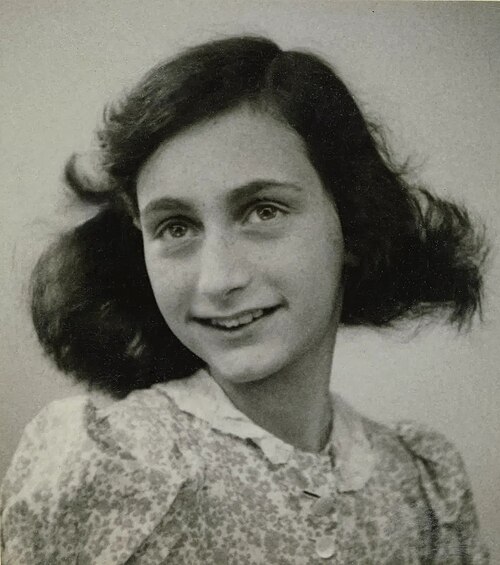
Anne Frank was a German-born Jewish diarist and Holocaust victim. She was born on June 12, 1929, in Frankfurt. In 1934, to escape Nazi persecution, her family moved to Amsterdam, the Netherlands. After the German occupation of the Netherlands in 1940, the situation for Jews worsened. On July 6, 1942, the Frank family, together with the Van Pels family and Dr. Pfeffer, went into hiding in the secret annex of her father Otto's office building. During their time in hiding, Anne kept a diary, chronicling her daily life and inner thoughts. On August 4, 1944, the secret annex was discovered by the Gestapo, and all its occupants were arrested. Anne was first imprisoned at Auschwitz and later transferred to the Bergen-Belsen concentration camp, where she died of typhus in February or March 1945, at the age of 15. After the war, her father Otto, the sole survivor, compiled and published Anne's diary. It was initially published in the Netherlands under the title "Het Achterhuis" (1947) and later translated into many languages, becoming a world-renowned literary work. The diary reveals Anne's literary talent and her reflections on humanity, establishing her as one of the most iconic symbols of the Holocaust. The Anne Frank House museum in Amsterdam has welcomed millions of visitors, and its foundation continues to promote anti-racism education.
The Day Master Wu Earth is born in the Wu month, when Fire is prosperous and Earth is strong. It receives support from the Zheng Yin (Direct Resource) in the month, and with Fire and Earth forming a powerful configuration in the year and hour pillars, the Chen branch in the hour serves as its root storage—making this a robust body constitution. However, Geng Metal's Shi Shen (Talent; lit. Eating God) in the month stem drains excess and reveals talent, while Zi Water as Wealth star in the branch adjusts the climate. The whole chart shows blazing Fire and dry Earth with Water too weak, presenting a parched and unbalanced image. This energy configuration represents Anne Frank as a person of extremely tenacious vitality, with a fiery and pure spiritual world. She gave those around her an impression of warmth, candor, and idealism, as if an unquenchable flame burned perpetually within her. Her greatest strength lay in powerful faith and a strong urge to express herself, enabling her to maintain active thoughts and the motivation to record even in extreme hardship. The potential challenge was the imbalance between emotions and reality; her spirit soared too high while her physical endurance was limited, like a candle burning at both ends, eventually consuming her life in years of excessive Fire and Earth.
This chart is of the Shi Shen with Yin (Talent wearing Resource) pattern. It uses Geng Metal's Shi Shen to express talent, favors Water to adjust the climate and moisten the chart, and avoids Fire and Earth which intensify the dryness and heat. The Yong Shen Geng Metal represents expression, creativity, and talent; the favorable element Water represents calmness, wealth, and channels to reality; the inauspicious elements Fire and Earth symbolize blind optimism, stubbornness, and environmental oppression. In Anne's life, writing (Shi Shen) became her way of releasing emotions and confronting fear, like piercing the darkness of the secret annex with her pen. The weakness of Water (Zheng Cai Zi Water) diminished her sense of control over the real world, but the Tian Yi Gui Ren (Heavenly Mentor) hidden in Zi Water also contained hidden vitality. That her diary survived corresponds to Water's energy as wisdom and transmission. The inauspicious Da Yun (major cycle) of excessive Fire and Earth, which spanned her period in hiding until her arrest, precisely mirrored the tightening environment and loss of freedom. It ultimately manifested in the year 1944 (Jia Shen), when Bing Fire's Pian Yin (Indirect Resource) was inauspicious. Although it was a year of strong Metal and the Yong Shen could have emerged, the annual and cycle energies clashed, and she still perished in a concentration camp.
The core combination is the month pillar of Geng Metal Shi Shen sitting on Wu Fire Yin star, forming a "Shi Shen with Yin" structure, complemented by the hour pillar's Bing Fire Pian Yin that steals the Shi Shen (Talent). The Shi Shen with Yin granted her delicate sensitivity and a precocious talent for writing, allowing her to observe her surroundings with clarity and transform pain into philosophical narrative. The Pian Yin Bing Fire in the hour pillar represents post-natal spiritual refuge (books, contemplation), but also brings isolation, bias, and a vulnerable digestive system. This configuration made her in relationships both crave understanding (Shi Shen) and instinctively maintain distance (Pian Yin). Living with her family in the annex, she was emotionally connected to them yet built her own inner world through her diary. Her personality was that of a sensitive and clear-eyed observer, relying on intuition and moral sense in decision-making; vocationally, she was destined to be bound to words, becoming a witness of her time.
The day pillar Wu Zi contains Tian Yi Gui Ren (Heavenly Mentor) on the Wealth position, secretly combining with the year branch Si Fire's Jie Cai (Peer Wealth). The month pillar Wu Fire's Yang Ren (Blade/Excess) clashes with the hour branch Chen Earth's Gua Su (Solitude Star). The day and hour branches Zi and Chen half-combine into a Water frame but are distant; the whole chart forms a party of Fire and Earth. The Tian Yi Gui Ren in the Spouse Palace (day branch) represents hidden protection in life; the Gui Water Zheng Cai within Zi also suggests her spiritual legacy will nourish future generations like a spring. The Yang Ren clashing with Gua Su foretold her isolation from others and becoming a victim of collective violence, but the Hua Gai (Canopy Star) also granted her an artistic and solitary temperament. The year and hour Si and Chen secretly enfold Wu Fire, intensifying the Fire's oppression; the Zi-Chen half-combination of Water is broken by Wu Fire clashing with Zi, symbolizing the failure of adjustment. These Shen Sha and clashes manifested one by one in her short life: the Wu month with Peach Blossom (Charisma) and Yang Ren brought adolescent stirrings and an annex romance; Kong Wang (Void) made many daily efforts fruitless; only the Yue De Gui Ren (Monthly Virtue) in the hour pillar guarded her final dignity and humanity, allowing her to retain compassion even in extremity.
The Day Stem Wu Earth is an elevated Yang Earth. With the month's Wu Fire and Zheng Yin (Direct Resource) close by, plus the dry Earth of Si and Chen in the year and hour, it forms the "Jia Se" (Harvest) nature of thick Earth and blazing Fire. Her temperament is honest but stubborn, yet the Geng Metal Shi Shen (Talent) and Zi Water Wealth star endow her with agility and deep thought. She is typical rampart earth: steady, trusting intuition, and deeply committed; once set, she is as firm as a rock. Her thinking carried a strong moral filter, starting from "ought" in all matters; the recurring reflections on human good and evil in her diary are precisely a manifestation of this Yin star quality. Her emotional need was to be seen, recorded, and understood. Alone, she completed self-dialogue through writing; under pressure, she clung more tightly to her inner beliefs, like a sapling in the annex yearning for sunlight—though confined to a tiny space, it always climbed upward, refusing spiritual surrender.
The chart's most dazzling talent comes from Geng Metal's Shi Shen, located in the month pillar representing youth. It protrudes on the stem with strength, draining Earth to generate Wealth, typifying a spring of creativity that nourishes self and others with cultural sustenance. The Shi Shen gave her insight and humor beyond her years, able to capture the glimmers of humanity in the simplest language. This energy was maximally expressed in the extreme deprivation of the secret annex and camp—when there was no paper, she used an account book; with no listener, she spoke to an imaginary friend named "Kitty." Her competitive advantage lay in distilling the everyday into parables, sublimating personal suffering into universal empathy. Meanwhile, the Wu Fire Zheng Yin provided memory and learning ability, enabling her to master multiple languages and freely reference classics in her diary; all these helped her leave an indelible mark on literary history.
The core conflict is Yin thriving while Shi Shen protrudes weakly, planting the hidden danger of "Pian Yin stealing Shi Shen," along with the Wealth star being clashed and controlled, causing a rift between ideals and survival. The hour stem Bing Fire Pian Yin, rooted in Chen, represents excessive self-protection and mental drain. Whenever she wanted to express freely (Shi Shen), an inner censor (Pian Yin) would jump out to criticize, and her diary often showed self-doubt about becoming a writer. The day branch Zheng Cai Zi Water is remotely clashed by the year branch Si Fire and directly clashed by the month branch Wu Fire, indicating extreme material instability and lack of freedom—summing up her displacement and eventual total loss. Her blind spot was placing security excessively in the spiritual world while ignoring danger signals in reality, sometimes almost stubbornly believing in innate human goodness. This contradiction was most poignant when, moments before the annex was discovered, she was still recording her plans for a beautiful future—a sight both moving and heartbreaking.
Anne Frank's life was a flower of words blooming from the tempering of Fire and Earth. Her fate theme was "bearing a fiery soul in a frail vessel, completing an eternal testimony in extremity." The battle between Shi Shen and Yin stars was never reconciled, yet it gave birth to a private history that changed the world. She was not a soldier, but with her pen she dissected the human heart in wartime; she longed to live, yet she offered her life to memory. In the chart, strong Fire refines Metal, and the Metal finally becomes a vessel—her diary, published after her death, touched hundreds of millions of hearts, symbolizing that the Shi Shen Yong Shen, though weak, was purified by time. She is the ultimate expression of the Wu Earth Day Master: solid, bearing, even when crushed becomes part of the earth, becoming soil for later generations who live.
Shang Guan (Injury Officer) emerges, Jie Cai (Rob Wealth) sits firmly, with creative energy blocked—earth and metal generate each other but bring fiery dryness. This decade marks the native's transition from childhood to adolescence. Xin metal Shang Guan represents talent and rebelliousness, while Jie Cai indicates competition and peers. However, the deep-rooted Wu fire Zheng Yin (Direct Resource) in the natal chart suppresses Shang Guan, causing her thoughts to be active yet constrained. The Da Yun's Wei earth combines with the month branch's Wu fire to form more fire and earth, intensifying dryness and heat. Her living environment feels strongly oppressive, placing her in a phase of being heavily regulated and restrained.
Shang Guan matches Yin (Resource), but the natal chart lacks wealth stars. The Da Yun's Wei earth clashes with the Chen storage, breaking the chain of creative energy generating wealth. In career, she expresses herself through writing (Shang Guan), but the excessively strong fire and earth constitution prevents her talents from yielding tangible results, leaving her diary (Bing fire Pian Yin / Indirect Resource) as her sole outlet. Wealth stars are suppressed, leading to material scarcity. The family's finances tighten due to war, with no income sources and wealth only enough for basic survival.
Jie Cai (Rob Wealth) commands, with many Bi Jian (Peer) stars; Yin (Resource) protects the self but breeds loneliness. Her interpersonal world centers on family and fellow refugees. Jie Cai represents peers and competitors, like her sister Margot; but the day branch's Zi water Zheng Cai (Direct Wealth) secretly harmonizes, creating an emotional reliance on her father. She has a tense relationship with her mother (conflict between Jie Cai and Zheng Yin) but is closer to her father. Regarding reputation, her diary later brings her posthumous fame, but at the time it was just a private record. The family goes into hiding in 1942, and communal living sparks conflicts.
Fire flames and earth parches; water is clashed and drained—heart fire is strong while kidney water weakens. She has abundant energy but is prone to anxiety and emotional swings, often suffering insomnia or loss of appetite due to stress. She must guard her respiratory system (fire overcomes metal) and digestive system (earth strong, water weak). After 1944, her constitution declines, and the risk of infectious diseases increases.
Tian Ji (Heavenly Mechanism) debilitated in Chou Palace, sitting alone with no auxiliary stars accompanying. Tian Ji is a star of intelligence and change; when debilitated, it indicates excessive thinking and weak action, governing shallow affinity with siblings or distant relationships. Anne had an older sister Margot, and their personalities were quite different: Margot was quiet and obedient, while Anne was lively and rebellious. Tian Ji's debilitation corresponds precisely to the sister's forbearance and Anne's own restlessness—she often compared the two in her diary, revealing both jealousy and understanding of her sister being favored by their parents. The absence of auxiliary stars means a lack of support between siblings; during hiding, though they shared a room, the psychological distance grew.
The Primary Palace has no Four Transformations. The Four Transformations are not activated, indicating a static Siblings Palace with no major shifts or prominent events. This corresponds to reality: Anne's relationship with her sister remained peaceful, without major conflicts, and did not become a key force in her life.
The Siblings Palace's Tian Ji debilitated in the Yang (Nourishment) position shows that siblings were mentally 'objects of comparison' rather than supporters. In her diary, Anne repeatedly mentioned that her mother favored Margot, while she herself strove to prove her worth through writing. She once wrote, 'I have a good sister, but no one will understand the difference between us,' precisely the emotional alienation brought by Tian Ji's debilitation. In the later period of hiding, Margot fell ill, and Anne tried her best to care for her, but her inner loneliness was not relieved.
Zi Wei and Tian Fu reside together in Yin Palace, accompanied by Ling Xing. Life Master is Lu Cun, Body Master is Tian Ji. Zi Wei is the emperor star, Tian Fu is the treasury star, together forming the 'Zi Fu Tong Gong' pattern, indicating nobility, stability, and grand presence. However, Ling Xing is a fire-type malefic star, bringing aloofness and inner anxiety. This combination suggests the native naturally possesses leadership qualities and organizational skills, yet often harbors restlessness and loneliness within. Corresponding to Anne Frank: although only 13, she displayed maturity and leadership beyond her years, managing daily affairs while in hiding and revealing profound insights into human nature through her writing, yet always under the shadow of war and death—Ling Xing symbolizes that ever-present sense of foreboding.
This palace has no direct Four Transformations activation, but the opposing palace of Qian Yi (Migration) houses Wen Qu Hua Ji, forming the pressure of 'Hua Ji in the opposing palace'. Hua Ji represents deficiency and ordeal. Wen Qu Hua Ji entering the Migration palace implies communication setbacks or damage to reputation in external affairs or public life. Anne, due to her Jewish identity, was forced into hiding, unable to socialize or study normally—this directly mirrors Wen Qu Hua Ji: her literary talent (Wen Qu) was stifled by circumstances, only able to write in secret, gaining recognition only posthumously.
The Ming Palace (Destiny Palace) houses Zi Wei and Tian Fu at the 'Chang Sheng' (Growth) phase, signifying that life's beginning carries inherent nobility and resilience. Anne was born into a middle-class Jewish family; her father Otto Frank was an entrepreneur, providing a privileged childhood. But the presence of Ling Xing made her early sensitive to world injustice. Her diary's intense self-analysis is a product of Zi Wei Tian Fu's high self-regard and Ling Xing's sharp insight. Her Destiny Palace pattern essentially means 'a flower blooming inside but fragrant outside'—unrecognized in life, gaining immortal fame after death; this is the delayed eruption of Zi Wei Tian Fu's 'nobility'.
Po Jun (Vanguard Star) in Miao (flourishing) state in Zi Palace, guarded together with Tian Kui (Heavenly Chief). Po Jun is a star of initiation and subversion, powerful in its flourishing state; Tian Kui is a benefactor star. The Spouse Palace with such a configuration suggests the native's romantic pattern is 'first destruction then construction' or 'brief but intense', while Tian Kui points to meeting helpers in difficult situations. In her diary, Anne had a crush on Peter van Daan (son of the co-hiders), and this relationship was her emotional anchor during adolescence. Po Jun's impulsiveness and destructiveness correspond to how this relationship abruptly ended with the hiding, and since Anne died young, she never experienced a long-term marriage. Tian Kui symbolizes the emotional comfort and companionship Peter gave her.
The Primary Palace has no Four Transformations. The Spouse Palace lacks Hua Lu, Hua Quan, Hua Ke, or Hua Ji, indicating that the romantic line did not become the main theme of life; it was more of a decoration. This fits the fact that Anne only had a brief first love before dying at age 15.
Po Jun in its flourishing state plus Tian Kui caused Anne to develop strong feelings for Peter during hiding; her diary is filled with descriptions of his eyes, character, and their private conversations in the attic. This relationship was her only romantic outlet in that confined space, like Po Jun's imagery of 'breaking through the dullness'. Yet Po Jun also symbolizes endings: Anne was separated from Peter in the camps, each dying in different gas chambers, never formally establishing a relationship. Although the benefactor Tian Kui was present, it could not change the tragic outcome, only providing a moment of warmth.
Tai Yang (Sun) debilitated in Hai Palace, conjunct with Tian Ma (Heavenly Horse), Fire and Water mutually restrain. Tai Yang in Hai Palace is debilitated, its radiance dimmed, like the setting sun over the western hills, symbolizing weak affinity with children or difficulty in continuing the lineage; Tian Ma is a star of galloping and upheaval, and the combination of the two means the native lacks a stable foundation in matters of children or offspring. For Anne Frank, she went into hiding in the Secret Annex in July 1942 (at age 13), was arrested in August 1944, and died of typhus in the Bergen-Belsen concentration camp in March 1945 at age 15, naturally having no biological children. But the deeper impact of Tai Yang's debilitation did not vanish: Tai Yang represents universal love, ideals, and legacy; its debilitation prevented her from continuing life as a mother, but instead she projected that care onto all of humanity—in her diary she wrote, 'I still believe that people are truly good at heart,' precisely an aspiration for the spiritual world of future generations. Tian Ma corresponds to the many migrations in her life: born in Frankfurt in 1929, the family moved to Amsterdam in 1933, went into hiding in 1942, and was transported to Westerbork, Auschwitz in 1944, finally dying in Bergen-Belsen. This forced wandering completely severed the possibility of raising a normal family.
The Primary Palace has no Four Transformations, but the Opposite Palace Spouse Palace has Po Jun transforming into Authority (Hua Quan) in Zi, and the Migration Palace has Wen Qu transforming into Obstacle (Hua Ji) in Shen, forming a pull. Po Jun Hua Quan introduced into the opposite palace of the Children Palace intensifies the Children Palace as a field of 'destruction and reconstruction': Anne's childhood was destroyed by the violence of war (Po Jun), but through her diary she rebuilt a spiritual legacy (the proactive nature of Hua Quan). The Migration Palace's Wen Qu Hua Ji connects to the Children Palace via Tian Ma; Wen Qu governs artistry and diary, and Hua Ji represents the pain and loss in the record—during hiding she wrote Anne Frank's diary, filled with dependence on her father Otto and imaginings of future children (e.g., on May 11, 1944, she wrote, 'I want to be a writer or a journalist, and to go on living after my death'), but Wen Qu Hua Ji tints these hopes with sorrow and a sense of unfulfilled regret. Additionally, the Primary Palace's Tian Ma is pulled by the Flying Star of Wu Qu transforming into Prosperity (Hua Lu) in Xu from the Major Limit (ages 49-58), but Anne did not live to that age, so this set of Four Transformations suggests that had she survived, the Children Palace might have indirectly affected offspring through finance (Wu Qu) or career (Career Palace), but the reality was premature death.
Fictional rejection of fertility vs. a heavy care for children. In her diary, Anne repeatedly expressed dissatisfaction with her mother Edith and fantasized about being a gentler mother herself (January 6, 1944: 'I want my children to know that they can trust me completely'). However, Tai Yang debilitated and Tian Ma in the Jue (Extinction) stage (the Children Palace is in Hai Palace, where the Twelve Life Stages is 'Jue') completely negated this possibility. After her arrest on August 4, 1944, she was separated and sent to Auschwitz; in October of the same year, she and her sister Margot were transferred to Bergen-Belsen, where she died of typhus in March 1945. Tian Ma's Jue Palace means wandering to the end—her body and mind were exhausted in the camps, with no hope of bearing children. But Tai Yang's debilitation did not make her entirely give up on a broader sense of 'children': after the diary was published (in 1947, compiled by her father Otto), she became a spiritual icon for countless adolescents; Tai Yang's universal love radiance was magnified after death, and Tian Ma allowed her thoughts to cross borders. More cruelly, her parents had hoped to have another child but were unable (no more children after 1933), which indirectly influenced her understanding of family.
Wu Qu in its temple (strong) state and transformed into Prosperity (Hua Lu) stands alone in the Xu Palace, with the Body Palace located here. Wu Qu is a star of wealth; in temple and transformed into Prosperity, it indicates steady wealth derived from professional skills or assets. The Body Palace falling in the Wealth Palace means one's core life pursuit is linked to wealth, or one accumulates assets through some means. Anne was not wealthy during her lifetime, but after her death, the copyright of her diary became a huge family fortune — exactly the 'delayed effect' of Wu Qu Hua Lu: the fruit of Hua Lu was realized across a dislocation of time and space, and the Body Palace reinforced the decisive impact of this property on her family's fate.
Wu Qu transformed into Prosperity enters the Wealth Palace, and the Body Palace is in the same degree. Hua Lu enhances the capacity for wealth accumulation, but the time dimension must be considered. Anne's family wealth was wiped out by the war, but after her diary was published in 1947, it became a long-selling book, with cumulative royalties exceeding millions of dollars. The 'metallic nature' of Wu Qu Hua Lu manifested posthumously. The Body Palace here also indicates that Anne herself had a strong sense of 'value' — in her diary, she often calculated the distribution of hidden food, yearning to 'earn an independent life' through writing.
Wu Qu Hua Lu in the tomb (storage) position: the tomb connotes storage and delay. Anne moved with her family to Amsterdam in 1933; her father Otto ran a pectin company, and the family was fairly well-off (the foundation of Wu Qu). But after going into hiding in 1942, their wealth was cut off (the image of the tomb). She persisted in writing, leaving the diary as an 'intangible asset.' After the war, Otto compiled and published the diary, and Wu Qu Hua Lu began to be realized: the diary has been translated into more than 70 languages, sold tens of millions of copies, and became a 'perpetual source of wealth' for her family. The Body Palace in the Wealth Palace also explains why Anne herself had a strong desire for financial independence — she wrote in her diary, 'One day I will earn money to support my family with my pen,' which came true ironically.
Tian Tong in its balanced (fair) state sits in the You Palace, with no auxiliary or baneful stars. Tian Tong is a star of blessings; its balanced position weakens its ability to resolve misfortune, indicating weaker constitution and susceptibility to emotional illness or chronic depletion. Anne, during hiding, developed depressive tendencies due to malnutrition and the oppressive environment, and ultimately died of typhus in the concentration camp — this is exactly the manifestation of Tian Tong's balanced position being breached in its health baseline. The absence of baneful stars suggests her illness was not an abrupt catastrophe but a long-term attrition.
No Four Transformations in this palace (Health Palace). The Health Palace has no Four Transformations to trigger, indicating the illness was not caused by a major external force but was the result of natural attrition from environment and constitution. This matches Anne's death: no gruesome trauma, but physical exhaustion combined with an infectious disease.
Tian Tong in its balanced position in the death-related palace signifies a slow decline in vitality. Anne mentioned in her diary many times that she was 'getting thinner and thinner,' 'always catching colds,' and 'feeling low,' which were omens of Tian Tong being afflicted. In March 1945, she died in the Bergen-Belsen concentration camp, cause of death typhus and malnutrition. About a month before, she witnessed her sister Margot die, which mentally collapsed and accelerated her physical collapse. The absence of baneful stars indicates the entire process, though tragic, was not a dramatic sudden death, consistent with the chronic fading nature of a balanced Tian Tong.
Tai Yin in fall (declining) in Mao Palace, joined by Di Jie. Tai Yin is the mother star; in fall, the mother's image is dim or the relationship strained; Di Jie signifies setbacks and separation. Anne's mother, Edith Frank, is depicted in the diary as 'cold and not understanding me.' Tai Yin in fall exactly reflects the mother-daughter estrangement. Di Jie symbolizes the internal divisions within the hiding group in 1944, as well as the forced separation of mother and daughter in the camps (Edith died in Auschwitz in early 1945; Anne was in Bergen-Belsen; they never saw each other again).
This palace has no Four Transformations. The Parents palace lacks auspicious transformations, indicating that parental relationships did not bring obvious assistance or prominent events. Although Anne's father Otto was kind, Tai Yin in fall primarily points to the mother, while the father is already represented through Zi Wei Tian Fu in the Destiny Palace.
The Parents palace with Tai Yin in fall plus Di Jie paints a picture of Anne's filial relationships. She clashed constantly with her mother, writing in her diary, 'Mother has died twice in my heart.' Edith tried to get close but was rejected by Anne, and this regret could not be resolved during the camp period. Di Jie further caused the cruelest separation: in 1943, Anne dreamed of her mother's death; after the 1944 arrest, the family was split up, and her mother, not selected for the Auschwitz labor camp, was sent to the gas chamber. Her father Otto was the sole survivor, but his protection of Anne came mainly from the Destiny Palace's Zi Wei Tian Fu, not the Parents palace. The maternal absence indicated by Tai Yin in fall likely accelerated Anne's maturity and independence.
Tan Lang in temple (flourishing) with Hua Quan guards Chen Palace. Tan Lang is a star of charisma and talent; flourising and empowered by Hua Quan, it indicates strong aesthetic pursuit and creativity, and the ability to manage situations through talent. The Fu De Palace (Palace of Fortune and Virtue) represents the spiritual world and blessings. Anne's inner world was extremely rich; she fantasized about becoming a dancing star, writing novels, and opening a film company with friends—this is the artistic romance of Tan Lang in temple. Hua Quan enabled her to harness these fantasies in her own way: she set writing plans, disciplined herself, and absorbed knowledge from limited books. This spiritual strength sustained her through two years of hidden life.
Tan Lang Hua Quan enters Fu De. Hua Quan enhances control over the mental realm, meaning 'settling the mind through talent.' Anne often expressed in her diary that writing made her feel free; although her body was imprisoned, her spirit could fly—a concrete manifestation of Tan Lang Hua Quan. She actively planned revisions and polishing of her diary, hoping for publication; Hua Quan gave her willpower beyond her years.
With Tan Lang in temple Hua Quan in the Fu De Palace, Anne could maintain creativity and a sense of humor even under extreme adversity. She invented an imaginary girlfriend named 'Kitty' in her diary, engaging in one-sided dialogues to dispel loneliness; she wrote Christmas skits for everyone's entertainment; she studied royal family trees and dreamed of becoming a movie star. Hua Quan even allowed her to assess her mother's personality and her father's weaknesses, demonstrating psychological insight beyond her age. In May 1944, she wrote, 'I've become smarter, and my understanding of human nature has deepened'—this is the progression from technique to principle under Tan Lang Hua Quan. However, Tan Lang's desires ultimately could not be realized—she was arrested in August 1944, and her spiritual paradise was destroyed.
Ju Men (Argument Star) exalted and Tuo Luo (Delay Star) fallen co-inhabit. Ju Men governs verbal disputes, concealment, and secrecy; in exalted state, it amplifies the desire to express and attracts gossip; Tuo Luo, a dark malefic, signifies procrastination and hidden pain. The Field Palace represents family environment and sense of security. Anne's 'home' before 1933 was a villa in Frankfurt, afterwards a canal house in Amsterdam, and after 1942 a 'Secret Annex'—Ju Men's exaltation corresponds to the hidden space filled with discussion and debate (her diary teems with dialogues), while Tuo Luo's fall turns the space into a cage, forcing her to endure fear in immobility. The quarrels within the family (with her mother, with Mr. Dussel) are precisely the outbursts of Ju Men's contentious nature.
No Four Transformations in this palace. Without transformations, the Field Palace remains relatively constant, with no major property changes or unexpected wealth. Anne's family properties were all confiscated during the war and never returned after the war, corresponding to the absence of beneficial transformations in the Field Palace.
The Field Palace with Ju Men exalted + Tuo Luo fallen perfectly describes her life in hiding: the location was 263 Prinsengracht, Amsterdam, the back house—a narrow, dark space reliant on blackout curtains. Ju Men exalted made it a hub of communication: Anne talked with Peter, argued with her parents, and clashed with Mr. Dussel (in her diary, she scolds him for unwillingness to share supplies). Tuo Luo fallen rendered the days dull and repetitive; she wrote, 'Time sticks like glue.' On August 4, 1944, this 'sanctuary' was raided by the Gestapo, causing the Field Palace to completely collapse. After the war, the building was turned into the Anne Frank House museum, becoming the world's most famous hiding-place relic—Ju Men's 'verbal disputes' ultimately transformed into a 'silent testimony' for a global audience.
Lian Zhen (Peach Blossom/Political Star) balanced, Tian Xiang (Minister Star) exalted, with You Bi (Auxiliary Star), Wen Chang (Literature Star) fallen, and Lu Cun (Wealth Storage Star) co-present. Lian Zhen, a secondary peach blossom and political star, slightly muted in balanced state; Tian Xiang exalted represents a seal of authority, denoting a stable career platform; You Bi boosts collaboration; Wen Chang fallen restricts literary expression; Lu Cun provides sustained financial support. Anne aspired to be a writer or journalist, but Tian Xiang exalted + Lu Cun suggests her 'career' was actually part of the family business (her father's company), while Lian Zhen balanced with Wen Chang fallen prevented her from realizing her writing ambitions in life—her 'office' was hidden in the annex, making diary-writing a semi-underground endeavor. Lu Cun corresponds to the steady royalties from her diary, but only posthumously.
No Four Transformations in this palace, but Lu Cun is present. Absence of transformations indicates a career lacking strong impetus or sudden changes, developing step by step. Anne's career was a slow accumulation of expressive desire, never erupting in her lifetime. Lu Cun can be seen as posthumous copyright earnings.
The Career Palace with Tian Xiang exalted + Lu Cun allowed Anne to maintain a 'sense of order' even in hiding: she followed a daily routine of study, writing, and helping with household chores, as if going to a regular job. You Bi facilitated cooperation with Mrs. van Daan, who shared the hiding place. Wen Chang fallen reflects her writing being confined—solely in diary form, unable to go public, and in August 1944 she was revising a manuscript into a book when arrested and thus interrupted. Lu Cun is ironic: her 'career achievements' accumulated over six decades after her death, making her the most influential diarist of the 20th century. She never held a formal job, yet the Career Palace's configuration points to a monumental 'atypical career.'
Qi Sha in its temple sits in the Shen Palace, accompanied by Zuo Fu, Wen Qu transformed into Obstacle (Hua Ji), and Tian Yue. Qi Sha is a star of pioneering and change; in its temple (strong) position, it indicates achievements amid turbulence. The dual assistance of Zuo Fu and Tian Yue foreshadows receiving help from noble people during long journeys. However, Wen Qu Hua Ji brings communication obstacles and paperwork troubles. Anne's life was a forced migration: from Germany to the Netherlands, from home to hiding places, then to concentration camps — Qi Sha in temple enabled her to remain resilient in exile, Zuo Fu and Tian Yue brought her shelter from kind Dutch people while hiding (such as colleagues who assisted in concealing her), and Wen Qu Hua Ji corresponds to her predicament of being unable to write in her mother tongue due to her Jewish identity (the diary was originally in Dutch, with German mixed in).
Wen Qu Hua Ji enters the Migration Palace. Hua Ji in the Migration Palace signifies difficulties during long journeys, disputes, or obstruction of written communication. Anne's diary could only be written secretly during hiding and could not be disseminated; and her final journey in the concentration camp is the ultimate manifestation of Wen Qu Hua Ji — the written record was interrupted, and her life ended in a foreign land.
Qi Sha in temple combined with Zuo Fu and Tian Yue enabled Anne to gain crucial assistance during her flight: in 1942, the diary she received on her birthday (a sign of Zuo Fu); in 1944, Miep Gies, who helped hide them, rescued the diary manuscript after the Gestapo search (Tian Yue, the noble helper). Wen Qu Hua Ji persisted throughout: she had to suppress her desire to write while hiding, even hiding her pen name, and the last unfinished entry was dated August 1, 1944. Ultimately, Qi Sha in temple pointed to her death — she was still selected as a laborer in the camp, showing strong vitality, but the typhus epidemic in early 1945 took away this 'Qi Sha General'.
Tian Liang (Elder Star) exalted and Hua Ke (Transformation of Authority) with Di Kong (Void), Huo Xing (Fire Star) favorable, and Qing Yang (Sharp Edge Star) exalted co-present. Tian Liang, a star of protection and seniority, in exalted state with Hua Ke, brings nobility and tends to attract help from elders or groups; but Di Kong, Huo Xing, and Qing Yang form a cluster of malefics, causing turbulent interpersonal relationships and susceptibility to betrayal or conflicts. During hiding, Anne lived with seven others in the secret annex: Tian Liang Hua Ke manifested as her deep bond with her father Otto (his protection), while Di Kong, Huo Xing, and Qing Yang correspond to the strained relationship with her mother Edith, quarrels with Mr. Dussel (another hider), and the ultimate betrayal. Qing Yang exalted is particularly sharp, hinting at a lethal betrayal—the informant remains a mystery to this day, but it was this person who caused the group's destruction.
Tian Liang Hua Ke enters the Servant Palace. Hua Ke adds prestige and nominal assistance, but surrounded by malefic stars, its quality is corrupted. Anne's father Otto is her 'auspicious star,' sparing no effort to publish her diary after the war—a positive manifestation of Tian Liang Hua Ke; while the quarrels in hiding and the final betrayal are the malefics' destruction of the Hua Ke.
The Servant Palace with Tian Liang Hua Ke dancing among malefics creates a complex situation of 'benefactors turning foes' or 'kindness mixed with resentment.' Anne's diary entries about her disgust with her mother Edith (Huo Xing), accusations of Mr. Dussel's selfishness (Qing Yang), and fear of air raids on neighbors (Di Kong) all find their origins in this palace. Most dramatic is: on August 4, 1944, the Gestapo raided the warehouse and arrested all eight hiders; the never-captured informant was likely someone familiar (Qing Yang exalted's 'close-range knife wound'). Yet, her father Otto was the sole survivor; after his release, Miep Gies (Tian Liang's protective star) handed him the diary manuscript, eventually preserving it for posterity—Tian Liang Hua Ke's shelter ultimately pierced through the malefic shadows.
Generate your personal chart in under a minute. Sign up free and get 30 credits — enough for two or more AI readings. No credit card.
Generate my free BaZi chartPlease sign in to join the discussion
Sign In