Year
Bing
Shen
Direct Wealth
Authority
Hidden Stems
Geng (Authority)Ren (Direct)Wu (Direct)
- Star Luck
- 死
- Sitting Branch
- 病
- Void
- Chen / Si
- Na Yin (Elemental Sound)
- 山下火
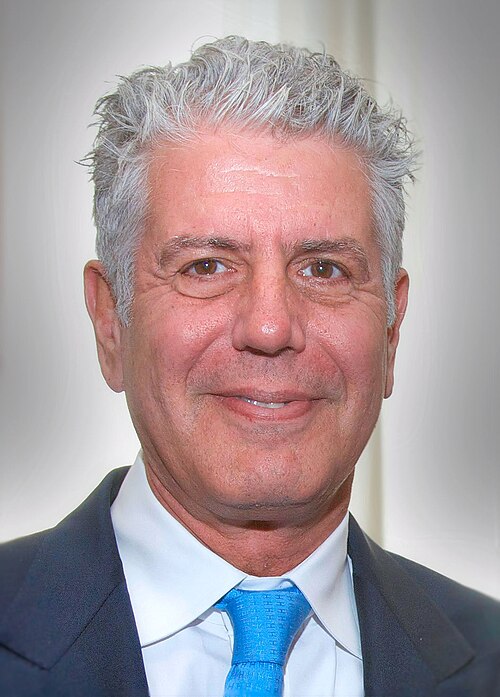
Anthony Michael Bourdain (June 25, 1956 – June 8, 2018) was an American celebrity chef, author, and travel documentarian. He was renowned for hosting television programs that explored international culture, cuisine, and the human condition. Bourdain graduated from the Culinary Institute of America in 1978, worked in various restaurants, and became executive chef at Brasserie Les Halles in Manhattan in 1998. In 1999, he published an article in The New Yorker titled 'Don't Eat Before Reading This,' which he expanded into the bestselling book 'Kitchen Confidential: Adventures in the Culinary Underbelly' in 2000, launching his media career.
In 2002, he hosted his first food and travel show, 'A Cook's Tour,' and from 2005, he hosted the Travel Channel's 'No Reservations' and 'The Layover.' In 2013, he moved to CNN to host 'Parts Unknown,' which won multiple Emmy Awards. Bourdain was known for his outspokenness, humor, and exploration of exotic cuisines, famously sharing a meal with President Obama in Vietnam. He was an outspoken opponent of racism and sexual harassment and a supporter of the Palestinian cause.
Bourdain's personal life included two marriages: to Nancy Putkoski in 1985 (divorced in 2005) and to Ottavia Busia in 2007 (separated in 2016). From 2016, he was in a relationship with Italian actress Asia Argento. On June 8, 2018, while filming 'Parts Unknown' in France, he died by suicide at the age of 61. He received numerous posthumous honors, including an Emmy Award and the documentary 'Roadrunner.'
癸水日主生于午月,夏至后三天,火气正当其极,月令甲木伤官与双丙正财透干,烈火熔金、伤官生财,表面一派燥炎之象。然日支亥水为帝旺强根,年支申金正印长生,时支辰为水库收纳,申辰遥拱水局,至暗中水势澎湃。天干癸水虽柔,得此暗助实为身旺。通俗地讲,波登的命格就像一口藏在火山口的深湖,外表看去热浪蒸腾、激情四射,实则湖底有涌泉不息,维持着强大的内核。他给人的整体感觉是——随性、叛逆、玩世不恭,却又隐隐透出某种深不可测的宁静与坚持。这种能量让他在追逐梦想时极度顽强,既能承受高压长时工作,又能用才华点燃旁观者。然而,火旺耗水始终是他命中的潜在威胁:他必须不断汲取金水之源(知识、旅行、精神食粮)来自我冷却,否则极易因过度燃烧而陷入暴躁、抑郁或自我毁灭。这种鲜明的矛盾贯穿了他的一生,使他既是幸运的天才,又是悲剧的旅者。
月令甲木伤官当权,坐下午火为伤官旺地,年、时两柱丙火正财高透,格局为典型的‘伤官生财’。身旺喜泄,用神取金水,因金可发水源、生助日主,水可调候润局、助身任财;忌神则是木火燥土,因木生火、火增炎燥、燥土克水。以普通人能理解的话说,波登的成功方程式是:用天生敏锐叛逆的视角(伤官)去创造内容(写作、主持),再把这些内容卖给全世界(正财)。他人生中最重要的资源就是“水”所代表的流动、适应与深刻,以及“金”所代表的贵人提携、知识积淀。于是我们看到他像水一样流遍全球,从纽约后厨到世界各大洲,总能在陌生的文化中游刃有余;又因金印为用,他的作品中总带着历史学养的厚度,而不只是猎奇。而他最需警惕的木火忌神,恰好对应他的诸多自我放纵——渴望刺激(火)、沉溺酒精与毒品(木生火)、情绪失控时口不择言(火性炎上),这些最终都反噬了他的健康与精神安定。
核心十神配置为‘伤官生财’与‘伤官配印’的微妙融合:甲木伤官吐秀,双丙正财为归,年支申中壬水正印(亥中亦有壬甲)暗蓄其根。同时,癸水自坐亥水劫财,申辰拱水,比劫助身功不可没。这样的组合塑造了波登极其鲜明的性格底色:伤官为思想之矛,使他天生抗拒平庸、藐视权威,言语犀利如餐刀,能一刀划开美食界虚伪的表皮;正财为务实之锚,让他不甘只当清贫艺术家,非常懂得如何将颠覆性的理念市场化、品牌化。而暗藏的印星,又为这种狂放提供了智慧的底蕴——他不是只会骂街的厨子,而是熟读文学、能引经据典的知识分子。在决策风格上,他完全跟着伤官的直觉走,“我想做,所以我去做”,极少被世俗框架束缚;人际上,他极度厌恶装腔作势,真心欣赏同道“浪人”;事业轨迹则充分印证了伤官生财——从洗碗工到厨师、到畅销作家、到电视名嘴,始终在以自己的“嘴”和“镜头”变现才华。
日支亥水为天乙贵人、天德贵人并临,又带亡神、孤辰,一生贵人暗助与内心孤峭并存。年时申辰拱合水局,壮大了日主的能量根基;月日午亥暗合,丁火偏财合入日主,财源与情缘如影随形。时柱辰土华盖笼罩,赋予他哲学沉思与超越世俗的洞察力。这些神煞与合局像密码一样预埋了波登的人生轨迹:天乙贵人在关键时刻屡次显灵——譬如一位编辑偶然读到他的文章而促成《厨房机密》出版,彻底改变他命运。但亡神与孤辰却让他永远觉得自己是局外人,即使功成名就,深夜仍感无比孤独,这驱使他一次次出发,在陌生的街头寻找片刻归属。午亥暗合代表隐晦的财色诱惑,使得他风流韵事不断、消费欲望膨胀,仿佛金钱与爱情总会被某种神秘力量吸进他的世界,但这种不稳定的连接也加剧了命运的起伏。华盖让他在精神层面常有出世之思,面对生死时比常人更坦然或更悲观,埋下最终抉择的伏笔。
癸水为雨露,其性至阴至柔,但生于午月、伤官吐秀,呈现‘外柔内刚、阴中含阳’之相。伤官配印、财星两透,使他兼具辛辣的幽默与深邃的内省。波登的心理肖像如同一幅水墨与烈焰交叠的抽象画:表面随性慵懒,谈笑间把一切大事化为趣闻;内心却极度敏感、警觉,像一只随时准备攻击或逃跑的猫。他思维跳跃,惯于解构崇高、嘲笑虚伪,情感上渴望纯粹的理解,却又惧怕任何形式的捆绑。在舒适区里,他像一个享乐主义者,沉溺于美酒、美食与新知之中;一旦感到压力,第一反应常常是逃避、叛逆甚至自我摧残——酗酒、吸食海洛因的早年岁月便是明证。伤官的张扬与正印的内敛在他体内永不停歇地交战,使他对世界的态度爱憎分明、绝不折中。
命局最强优势在于‘伤官生财’格局的清纯与有力,癸水得亥劫助、申辰拱水,使伤官泄秀源源不绝。同时,申中壬印与亥中甲劫,构成‘伤官配印、比劫助身’的完美闭环。这让波登的天赋直接转化为卓越的文化生产能力。伤官赋予他的,不仅是毒舌,更是将味觉、见闻、历史与人性杂糅成故事的惊人剪辑能力;正财则让他天生就懂品牌营销——他知道如何让自己成为一件独一无二的商品。因此,他无论写书还是做节目,都能迅速占据细分市场的顶端。印星带来的深度,又使他的作品超越一般美食娱乐,上升到人文反思的层面。他最擅长的领域,正是那种需要跨界知识、强个人风格与高曝光度的领域:美食+旅行+纪录+批判。这种组合,几乎像是为他量身定做的赛道。
命局潜在冲突集中于‘伤官见官’与‘财旺坏印’。年支申中庚金正官藏而不透,被月干甲木伤官遥克,构成伤官见官;年柱丙申,财星盖头克制申中壬印,同时双丙耗身,午火冲亥,水火激战不休。这些矛盾在波登的人生中反复具象化:伤官见官使他本能地反抗体制、鄙视官僚,这让他在传统厨房等级中屡屡碰壁,成名后也频繁与合作平台争吵,永远是个“难搞的明星”。财旺坏印则体现为对物质的追逐腐蚀了精神信仰——他坦诚自己一度吸毒、偷窃,部分源于青春期的印星受伤、价值观混乱。而财星对癸水的持续消耗(火多水干),连同午亥暗合的偏财执念,让他陷入欲壑难填与内心空虚的死循环。性格的盲点在于过分依赖直觉和才华,不屑于妥协与忍耐,这成就了他的传奇,也推动他走向疲惫与自毁。
波登的整个生命堪称‘伤官生财’格在名利场中的极致实验。他像一团行走的火焰,以癸水的智慧为油,以伤官的叛逆为风,烧遍了全球的文化地标,留下了无法复制的印记。但命局中水火未济、旺火灼身的隐患,也使得他的能量璀璨却难以持久。亡神与孤辰的宿命感,最终牵引他去实践那最后一场、关于自由的极端行为。他的人生完成了一部后现代英雄悲剧:证明了一个人可以用最不羁的方式改造世界,也同时证明了,燃烧式的才华需要更深的海洋来承载。
Shi Shen (Talent) controls Qi Sha (Indirect Officer), using intelligence to overcome danger; Qi Sha emerging on the Heavenly Stem, initial pressure appears. This Da Yun spans childhood to adolescence. Shi Shen (Talent) represents intelligence and expression, while Qi Sha (Indirect Officer) symbolizes external pressure and challenges. The native shows curiosity and a desire for exploration during this period, but may face discipline and competition in family or academics. Overall, it is a character-forming stage; the power of Shi Shen (Talent) makes him good at observation and imitation, laying the groundwork for a future pursuit of food and adventure.
Shi Shen (Talent) generates Wealth, talent begins to sprout; Qi Sha (Indirect Officer) attacks the self, early signs of toil appear. In childhood there is no formal career, but Shi Shen (Talent) signifies interests and skills, and he may have shown an early love for cooking or reading. The pressure brought by Qi Sha (Indirect Officer) is also reflected in academic or family expectations, requiring effort to gain recognition. There is no obvious Cai Xing (Wealth Star), so financially he depends on the family, but Shi Shen generating Wealth suggests future income will come from skills and creativity.
Shi Shen (Talent) combines with Guan (Officer), good social connections; Qi Sha (Indirect Officer) is unfavorable, prone to strict discipline. Shi Shen (Talent) governs friendly expression, so he was likely a likable child who got along well with playmates. However, Qi Sha (Indirect Officer) represents authority figures (such as parents or teachers) who may have been strict, making him feel constrained. Additionally, Wei Earth as Qi Sha is also related to the father's image in the family, and his father may have had high expectations of him.
Earth overpowers Water, the spleen and stomach are easily weakened; Wood and Earth clash, pay attention to digestion. During childhood, focus on the digestive system and maintain a regular diet. Shi Shen (Talent) appears, indicating a good appetite, but an overly strong Qi Sha (Indirect Officer) can cause mental stress and affect sleep. It is advised to cultivate good eating habits and avoid overindulgence.
Zheng Cai (Direct Wealth) combines with the self, a pragmatic mindset arises; Yin Xing (Resource Star) nurtures, academic progress is made. This Da Yun spans from adolescence to young adulthood. Zheng Cai (Direct Wealth) represents the pursuit of tangible benefits, while Yin Xing (Resource Star) brings learning and helpful people. The native gradually sheds his childishness and begins to seriously think about the future. Bing Fire as Cai Xing (Wealth Star) combines with the Day Master Gui Water, suggesting he will acquire wealth through skills (as a chef). Shen Metal as Zheng Yin (Direct Resource) is favorable, and during this phase his learning ability is enhanced; he may attend university or culinary school, building a solid foundation.
Zheng Cai (Direct Wealth) combines with the self, income gradually increases; Yin Xing (Resource Star) supports Officer, career begins. In young adulthood he likely started working or apprenticing; the Wealth Star combining with the self means income is directly tied to personal effort. Yin Xing (Resource Star) generates Guan (Officer), so after entering the food industry, he earns recognition from mentors and gradually masters core skills. Around 1990 (Geng Wu Year), he joins a professional kitchen, and his career begins to take shape.
Zheng Cai (Direct Wealth) represents the wife, romantic feelings sprout; Yin Xing (Resource Star) protects the self, mentors and helpful friends appear. Zheng Cai (Direct Wealth) represents righteous relationships, and during this Da Yun he is likely to meet someone he likes and may fall in love. At the same time, Zheng Yin (Direct Resource) acts as Gui Ren (Mentor), and he meets mentors and supportive friends in study or work who profoundly influence his career. However, Geng Metal within Shen as Guan (Officer) also represents discipline, and relationships with colleagues may become tense due to competition.
Metal generates Water, physical constitution improves; Shen Metal as Yin (Resource), be mindful of respiratory health. Metal generating Water brings abundant energy, but Shen Metal governs the large intestine, so pay attention to the respiratory system. The restaurant work environment is heavy with smoke and oil, so precautions against asthma or respiratory issues are needed. Wu Fire restricts Metal, causing excess heart fire and impatience, so appropriate relaxation is necessary.
Pian Cai (Indirect Wealth) breaks Yin (Resource), eager to seek wealth; Wealth and Resource clash, inner struggle. This Da Yun is a period of career struggle. Pian Cai (Indirect Wealth) represents large income and speculation, while Pian Yin (Indirect Resource) represents unconventional learning. Ding Fire as Pian Cai emerges, driving him to pursue wealth and fame, but You Metal as Pian Yin is unfavorable and clashes with the Wealth Star, leading to a contradiction between ideals and reality. During this time, he may frequently change jobs or attempt entrepreneurial ventures, but with poor results.
Pian Cai (Indirect Wealth) is strong, income fluctuates; Wealth damages Resource, mentors depart. There are many opportunities for Irregular Wealth, but finances are unstable—easy come, easy go. He may have tried opening a restaurant or investing, but due to the unfavorable Pian Yin (Indirect Resource), decision-making errors lead to financial losses. You Metal as Pian Yin also represents behind-the-scenes management, so he might have transitioned from chef to administrative work, but was unhappy inside. In 1987 (Ding Mao Year), a financial crisis may have occurred.
Pian Cai (Indirect Wealth) for men, romance blooms; Pian Yin (Indirect Resource) indicates loneliness, marriage easily changes. Pian Cai (Indirect Wealth) also represents lovers, so during this Da Yun he has strong romantic prospects but unstable relationships. He married in 1985 (his first wife), but due to the solitary nature of Pian Yin, communication in the marriage was poor, leading to divorce. He attended many social gatherings, but had few true friends; Pian Yin often made him feel lonely.
Fire and Metal clash, heart and lungs suffer; Xin Metal within You, weak lungs prone to coughing. Long-term stress burdens the heart, and smoking may exacerbate lung issues. Pian Yin (Indirect Resource) brings irritability and emotional swings, so be aware of depressive tendencies. It is advised to reduce alcohol intake and maintain a regular routine.
Guan Xing (Officer Star) is prosperous, career reaches its peak; Shang Guan (Rebellious Talent) sees Guan (Officer), disputes arise frequently. This Da Yun is the peak of his career. Wu Xu as Zheng Guan (Zheng Guan (Direct Officer)) is strong, bringing reputation and status. He becomes a renowned chef in New York, managing a large kitchen. However, the Heavenly Stem Shang Guan (Rebellious Talent) Jia Wood clashes with the Officer Star, causing quarrels and legal disputes. He wrote 'Kitchen Confidential' during this period, becoming an overnight sensation with his sharp writing, but Shang Guan clashing with Guan also leads to conflict with industry authorities.
Guan Xing (Officer Star) protects Wealth, both fame and fortune are gained; Shang Guan (Rebellious Talent) generates Wealth, royalties are substantial. Zheng Guan (Zheng Guan (Direct Officer)) governs career stability; he becomes a restaurant partner, and income greatly increases. Shang Guan generating Wealth brings huge writing income; with the publication of 'Kitchen Confidential' in 2000, he becomes a best-selling author. However, the heavy Wu Xu Earth controls Water and exhausts the self, leading to extreme work intensity and the beginning of health depletion.
Guan Xing (Officer Star) is unfavorable, superiors are harsh; Shang Guan (Rebellious Talent) combines with Qi Sha (Indirect Officer), great fame arises. Relationships with restaurant owners or partners are tense due to Officer Star pressure. But Shang Guan represents talent, and the revealing content in his book makes him a media focus with a surge of fans. Regarding marriage, he remarried in 1999, but the Officer Star controls the self, so the couple spends little time together.
Earth severely controls Water, kidney fatigue; Guan and Sha both appear, mental stress. Overwork leads to lower back soreness and insufficient sleep. Wu Xu is dry Earth, causing a tendency for internal heat and constipation. Pay attention to stress management and avoid overdependence on caffeine.
Sha and Yin generate each other, authority is held; Jie Cai (Peer Wealth) supports the self, teamwork is effective. This Da Yun has Qi Sha (Indirect Officer) emerging on the Stem, but it is transformed into authority by Hai Water as Zheng Yin (Direct Resource), so he converts personal influence into screen charisma. Jie Cai (Peer Wealth) helps the self, and collaboration brings wonders. He hosts shows like 'Parts Unknown', traveling globally, satisfying his adventurous spirit while receiving acclaim. Ji Earth as Qi Sha also represents challenges, but the Resource Star protects the self, so each crisis is safely overcome.
Sha and Yin generate each other, career transformation; Jie Cai (Peer Wealth) seizes wealth, money comes and goes. The career focus shifts from chef to television personality, changing the income model. Hai Water as Yin Xing (Resource Star) generates Sha, leading to well-produced shows with high ratings, bringing advertising revenue and performance fees. However, Jie Cai (Peer Wealth) represents colleagues; profits are shared with the team, and he is generous, so expenses are high. After 2010, he continues traveling, and finances remain stable.
Qi Sha (Indirect Officer) for socializing, a wide network; Jie Cai (Peer Wealth) for friendship, gains close friends. He befriends chefs and artists worldwide, making many friends. Jie Cai (Peer Wealth) also represents spouse and brothers; in marriage, he has a harmonious relationship with his second wife, but Jie Cai implies competition, leading to divorce in 2016. His relationship with his daughter is close, as Jie Cai is favorable.
Water strong and Fire weak, heart burden; Earth Sha controls the self, stomach illness recurs. Travel fatigue and irregular meals make him prone to gastritis. Hai Water clashes with Si Fire, causing arrhythmia. Qi Sha (Indirect Officer) pressure is high, so guard against depression relapse. It is advised to take adequate rest and reduce alcohol.
Guan and Yin generate each other, fame is at its height; Bi Jian (Companion Star) supports the self, popularity is high. This Da Yun has Zheng Yin (Direct Resource) emerging on the Stem; Guan and Yin generating each other, career reputation reaches its peak. Geng Zi as Guan Yin supports, making him a global culinary cultural icon. Bi Jian (Companion Star) helps, the team is stable, and the show continues to be a hit. However, Zi Water clashes with Wu Fire, the Wealth Star is broken, so income may decrease or expenses increase. In the 2018 Liu Nian (Wu Xu), Shang Guan (Rebellious Talent) clashes with Guan, he encounters emotional turmoil and public opinion pressure, and unfortunately commits suicide.
Zheng Yin (Direct Resource) protects Guan, the platform is stable; Bi Jian (Companion Star) divides wealth, investments fail. He continues to host shows and publish new books, but excess Yin Star may cause a slight depletion of creativity. Bi Jian (Companion Star) represents peers; he may have co-opened new restaurants, but the Zi Wu clash leads to poor profitability. In his later years his wealth shrinks somewhat, but he doesn't mind.
Zheng Yin (Direct Resource) as persona, fans adore him; Bi Jian (Companion Star) as friends, gatherings are infrequent. His public image is positive, but Bi Jian also represents new romance; he started dating a new girlfriend in 2017, drawing media attention. The Zi Wu clash in the spouse palace means after divorcing his second wife, he felt emotional loneliness. Bi Jian as unfavorable can cause friction with friends over interests.
Zi Wu clash, Water and Fire not in harmony; strong Yin drains Wood, liver qi stagnation. Severe insomnia and emotional problems. Zi Water clashes with Wu Fire, causing heart and blood pressure instability. In the 2018 Wu Xu year, Earth controls Water, depression worsens; suicide risk must be monitored. Seeking psychological help is advised.
Tian Tong not transformed by Hua Lu, Ju Men not transformed, forming the 'Tian Tong Ju Men' combination, with Hua Lu enhancing blessings. Tian Tong is the Fortune Star, representing gentleness and enjoyment; Ju Men is the Dark Star, governing disputes and communication; Hua Lu causes Tian Tong's energy to overflow, manifesting as mutual help and benefactor luck among siblings. However, the untransformed Ju Men suggests hidden concerns beneath surface harmony. Bourdain had a younger brother, with whom he had an ordinary relationship; his brother once participated in his early drug use and later grew distant, reflecting Ju Men's 'estrangement.'
Tian Tong Hua Lu enters the Sibling Palace directly, enhancing interpersonal blessings. Hua Lu gave Bourdain a natural affinity among peers, but with Ju Men not transformed, communication barriers lingered. After gaining fame, Bourdain turned against former kitchen brothers (such as attacking renowned chefs), which was precisely the covert conflict of an untransformed Ju Men. Hua Lu's proactive nature meant that despite his controversial words, he could always gain friends' help at critical moments (such as connections in the publishing world).
The Hua Lu in the Sibling Palace enabled Bourdain to receive 'big brother' style help in the kitchen world early on: his first chef mentor and the owners of New York restaurants all gave him a leg up. But the quarrelsome nature of his untransformed Ju Men led him to later publicly expose the chaos behind the kitchen, offending old friends. His brother Christopher co-wrote a book with him, but Bourdain admitted in his autobiography that there was 'competition and jealousy' between them. The blessings of Tian Tong Hua Lu are reflected in the fact that although his brother was not a famous chef, Bourdain consistently provided him with financial support.
Wu Qu (Military Power) in Earth position, Tian Xiang (Minister) in Temple and Flourishing, Ling Xing (Fire Star) in Temple and Trap, and Tian Ma (Celestial Horse) in the same house, forming a 'Wu-Xiang' configuration with Ling and Ma. Wu Qu is a general star, symbolizing action and financial instinct; Tian Xiang is a seal star, representing coordination and assistance; their combination forms a pragmatic personality that is both independent and good at collaboration. Ling Xing brings urgency and impulse; Tian Ma represents constant movement, enhancing a dynamic life. This configuration often leads to late success, requiring early accumulation and breaking through with strength after middle age. Bourdain studied cooking early and struggled in New York restaurant kitchens for years, which is exactly the gradual growth of Wu-Xiang from 'practical work to taking charge'.
The Destiny Palace has no Four Transformations activating, but it borrows energy from the opposite palace, the Travel Palace, where Po Jun (Rebel), Zuo Fu (Left Assistant), and Wen Qu (Literature) reside, forming an implicit connection. No transformed stars means the Destiny Palace does not actively trigger changes; instead, it is passively activated through palaces like Travel and Career. Po Jun, Zuo Fu, and Wen Qu endowed him with opportunities to break norms and forge a path through literary means (writing). Bourdain became famous after age 35 with the book Kitchen Confidential, which perfectly corresponds to his Destiny Palace quietly waiting for the Cultural and artistic breakthrough illuminated by the Travel Palace.
Wu Qu and Tian Xiang in the Destiny Palace made Bourdain a 'strategic executor' early in his culinary career: he first studied at Le Cordon Bleu in France, then honed his skills in various New York restaurants. On the surface, he was an ordinary cook, but in secret, he was observing the industry's rules (Tian Xiang). Ling Xing and Tian Ma manifested in his frequent job-hopping and pursuit of high-pressure kitchens (such as Lespinasse in New York), even using drugs to maintain energy. This arduous accumulation period lasted twenty years; the Wu-Xiang nature allowed him to 'withstand pressure and wait for the right moment.' In 2000, the publication of Kitchen Confidential ignited public opinion, precisely combining Wu Qu's 'practical writing' with Tian Xiang's 'structural revelation.' He was not a born writer but turned the reality of the kitchen into a bestseller—a typical 'actual-combat publication' of a Wu-Xiang Destiny Palace.
Tan Lang (The Wolf; Desire Star) flourishes in the Spouse Palace, with no Auxiliary or Malefic stars challenging it, and the Peach Blossom Star stands alone in its potency. Tan Lang is the star of sociability and desire; in its flourishing state, it indicates that the native seeks novelty and excitement in relationships, unwilling to be constrained. Both of Bourdain's marriages ended in divorce: his first wife, Nancy, gave birth to their daughter, but the marriage broke down after 13 years; his second wife, Asia Argento, plunged him into intense passion and pain, ultimately leading to separation. The 'flaw' of Tan Lang flourishing is a tendency toward separation due to temptation or a need for freedom.
The Spouse Palace has no Four Transformations stars, but the Travel Palace's Po Jun (Vanguard Star), Zuo Fu (Left Assistant), and Wen Qu (Literary Star) shine into it, forming a hidden connection. Po Jun, Zuo Fu, and Wen Qu represent 'romantic encounters during long journeys'—Bourdain and Asia Argento fell in love precisely through traveling together and collaborating on shows. With Tan Lang flourishing and the Travel Palace casting its influence, his relationships were often tied to his career and travels, serving as both a source of inspiration and a trigger for conflict.
Tan Lang flourishing made Bourdain treat relationships like adventures. In his first marriage, he was away on business frequently and used drugs, while Nancy endured it; in his second, he traveled globally with Asia during their passionate affair, but Asia's later scandal and betrayal pushed him into the abyss. Bourdain once admitted on his show that 'love is a dangerous game,' which perfectly captures Tan Lang's flourishing nature. His daughter became his emotional anchor, and Tan Lang's vigor also led him to pour warmth into his role as a father.
Tai Yin (The Moon) in its exalted state resides in the Children Palace, with Tian Kui (Noble Star) conjoining, making the star influences gentle and accompanied by benefactors. Tai Yin is the Mother Star; its exalted state indicates children who are compliant and artistically inclined. Tian Kui is the Noble Star, predicting that children can bring good fortune or access social resources. Bourdain had a daughter, Ariane, whom he loved dearly, often mentioning her on his programs, and even changed his lifestyle for her (smoking less, carrying her photo while traveling). The 'warmth' of Tai Yin's exalted state is reflected in his unconditional love for his daughter.
The Children Palace has no Four Transformations stars, but the exalted Tai Yin carries its own energy, with Tian Kui merely adding a touch. The absence of transformations implies that children do not actively catalyze his destiny, but Tian Kui suggests that his daughter would become an emotional sanctuary for him. During his depression, his daughter was his greatest concern; he often said publicly, 'I have to live for my daughter.' Although it ultimately could not prevent his suicide, the projection of maternal love from the exalted Tai Yin is evident.
After the birth of his daughter Ariane, Bourdain wrote in Vanity Fair that 'becoming a father changed me.' The exalted Tai Yin enabled him to persist in co-parenting after divorce, even traveling with his daughter. Tian Kui manifests in his daughter's health and intelligence; Bourdain often proudly said that she shared his love of food but was more organized. The Children Palace itself is not malefic, but Bourdain's ultimate end shows that the exalted Tai Yin could not fully counteract the influence of Tuo Luo (Suffering Star) in the Fortune Palace. Nonetheless, the Children Palace remained a warm center in his life.
Lian Zhen (Chaste & True) with Hua Ji (Transformation to Adversity), and Tian Fu (Celestial Treasury) in flourishing state in the same palace, forming a 'Lian Zhen Hua Ji and Tian Fu guarding wealth' pattern. Lian Zhen is a secondary romance star, and when Hua Ji occurs, it turns into emotional drain, prone to financial losses from relationships, interpersonal issues, or speculation. Tian Fu is a treasury star, and when flourishing it can accumulate wealth, but being struck by Hua Ji creates a volatile wealth pattern of 'earning a lot but spending a lot'. Bourdain had extremely high income (books and shows), but his restaurant investments repeatedly failed, and he constantly supported friends and had huge travel expenses—perfectly matching this image.
Lian Zhen with Hua Ji is the core Four Transformation of the Wealth Palace, triggering financial pitfalls. Hua Ji caused Bourdain to experience 'unexpected losses' in his wealth: his several restaurants (like Les Halles) were famous but barely profitable, and later he suffered losses from management disputes; he funded old drug-addict friends and spent recklessly on Asia Argento, all manifestations of Hua Ji's 'emotional entanglements'. Although Tian Fu in flourishing state provided a safety net, Hua Ji acted like a constant leak.
When Bourdain wrote Kitchen Confidential in 1999, he was financially strapped, living on credit card overdrafts, reflecting the early stage of Lian Zhen Hua Ji. After becoming famous, he was worth millions, but in 2003 the retail market (Midtown Restaurant) he co-founded failed due to the 9/11 impact; he often self-deprecated as 'a terrible boss'. After 2010, he focused on television with a very high salary, but Hua Ji was still present: he gave his mother a large annual allowance and funded friends to open restaurants. At his death, his debts were still unpaid. Tian Fu in flourishing state prevented bankruptcy, but he always lacked financial security.
The Health Palace is vacant, with only Tian Yue (Heavenly Halberd) sitting alone, lacking a main star to guard it. A vacant palace indicates a constitution easily affected by external environments. Although Tian Yue is a benefactor star, without a main star it only suggests possible medical support, not a robust foundation. Bourdain long abused drugs, smoking, and alcohol, severely damaging his body in youth, but Tian Yue saved him multiple times: he was once rushed to the hospital by friends after an overdose and later successfully detoxed. The vacant palace also corresponds to mental illness, as there is no inner strength for self-regulation.
The Health Palace has no Four Transformations, but the Mobility Palace's Po Jun, Zuo Fu, and Wen Qu oppose it, forming a 'wear and tear from constant travel' pattern. Po Jun's changeable nature caused Bourdain to travel constantly, disrupting his sleep and diet, while Zuo Fu and Wen Qu added mental stress (from writing and hosting). His depression and anxiety were the result of the vacant palace absorbing the impact from the Mobility Palace, eventually exhausting both body and mind.
In his memoir Kitchen Confidential, Bourdain detailed how he nearly lost a limb from drug abuse in his youth, which was Tian Yue's 'benefactor rescue'. After 2000, although he quit drugs, depression continued to haunt him, and he often mentioned feelings of hopelessness. Tian Yue brought him good doctors, but the vacant palace could not cure the root. While working on No Reservations under high stress, flying to three countries a week, his health deteriorated faster. His eventual suicide was the ultimate manifestation of the vacant palace overcome by the Mobility Palace's influence.
Tai Yang (Sun) in Temple, Tian Liang (Heavenly Beam) in Temple, and Di Jie (Earth Robbery) in the same house, forming a 'Yang-Liang-Jie' combination. Tai Yang and Tian Liang are stars of justice and knowledge; their flourishing state indicates upright parents with social standing. Di Jie brings loss and separation. Bourdain's father was a record company executive, and his mother an editor—well-off family conditions—but his father died when Bourdain was nine, corresponding to Di Jie's 'early departure.' Tian Liang in Temple allowed his mother to hold the family together after the father's death, while Tai Yang in Temple gave him a good education (private school, university).
The Parents Palace has no Four Transformations, but the flourishing Tai Yang and Tian Liang are sufficient. No transformations mean his parents' influence was static: his father's early death left him without male authority for a long time, while Tian Liang in Temple let him receive guidance from his mother and friends. Di Jie also hints at some estrangement from his mother in later years.
In Kitchen Confidential, Bourdain recalled his mother's strictness and his father's kindness. After his father died, his mother was busy with work, and he became rebellious, started using drugs, and hung out on the streets. Tai Yang and Tian Liang in Temple gave him a lifelong self-identity as 'middle-class elite': even though he later mingled in the kitchen underbelly, he always carried an intellectual air. Di Jie also manifested in his mother's criticism after he became famous (she criticized his shows as too offensive), with their relationship fluctuating.
Qi Sha (Indirect Officer; Qi Sha (Indirect Officer)) in Temple, Tuo Luo (Entanglement) in Temple in the same house, forming a 'Sha-Tuo' combination. Qi Sha is a star of decisive action; in Temple it signifies strong will and creative desire. Tuo Luo represents delay, entanglement, and repetition. Together, they fill the inner world with contradictions: a yearning for breakthroughs combined with self-torment. Bourdain's creativity (writing, hosting) and suicidal tendencies perfectly reflect the typical expression of Qi Sha and Tuo Luo: extreme output followed by extreme emptiness.
The Fortune Palace has no Four Transformations, but the Health Palace is empty and influenced by it, leading to a 'spirit harming body' tendency. Qi Sha and Tuo Luo bring inherent conflict, and without transformations there is no external relief. Bourdain suffered from chronic insomnia and anxiety; he was full of energy on screen but depressed in private, a manifestation of Qi Sha and Tuo Luo's suppression. His workaholic dedication was nearly self-destructive, and Tuo Luo made him repeatedly contemplate death.
In the ending monologues of each episode of Anthony Bourdain: No Reservations, there was often a Qi Sha sense of 'life is short, seize the moment.' But he also tried psychological therapy many times; Tuo Luo made the healing process slow. In 2018, after his girlfriend Asia's infidelity, his emotions collapsed, Tuo Luo intensified, and he ultimately chose suicide. Qi Sha in Temple should have given stronger self-control, but Tuo Luo in Temple's 'entanglement' made it impossible for him to move on. Police found that when he committed suicide, he was wearing a lucky amulet he had worn since childhood—the tragic nature of Qi Sha and Tuo Luo is clear.
Tian Ji (Celestial Planner) in Ping level with Hua Quan (Transformation to Authority) and Lu Cun (Wealth Reservoir) together form the 'Quan-Lu Interwoven' pattern, highlighting a property fortune built on steady change. Tian Ji governs deliberation, change, and planning; its Ping-level state brings frequent reconsideration in property matters, but Hua Quan grants him absolute control over real estate decisions—actively timing purchases, renovations, and sales. Lu Cun guards the wealth treasury, ensuring surplus from every transaction. Combined, the native accumulates properties not through inheritance but through sharp market judgment and frequent relocation—each move corresponding to career shifts: buying his first New York apartment in 1992 as a chef’s career began, and purchasing in Paris in 2008 alongside his TV show’s globalization. Tian Ji with Hua Quan also reflects his obsession with renovation, even writing about it in his memoirs as a creative extension. Lu Cun makes his properties a legacy for his daughter, retaining value even during financial crises. The triangulation with Tai Yang (Sun) and Tian Liang (Heavenly Beam) in the Parents Palace, accompanied by Di Jie (Earth Calamity), hints at weak ancestral property or past losses due to family disputes, but Tian Ji with Hua Quan restructured and turned them into gains.
The main star Tian Ji in the Property Palace transforms to Quan, triggering flying-star interactions with Tai Yang and Tian Liang in the opposite Parents Palace, and Zi Wei (Emperor Star) with You Bi (Right Assistant) and Wen Chang (Literary Star) transforming to Ke in the Career Palace. Hua Quan in this palace strengthens the native’s decision-making power in property, making every transaction forward-looking—he sold his New York condo in 1998, just before the dot-com peak, and reinvested in Paris, a classic 'active portfolio shift' of Hua Quan. Wen Chang transforming to Ke in the Career Palace indicates property information often came through cultural circles (e.g., a writer friend introducing the Paris old house), and decoration styles were frequently covered by the media. Zi Wei with You Bi corresponds to him hosting social banquets at home, turning his residence into a cultural salon. Tian Yue (Heavenly Assistance) in the Health Palace subtly aligns, suggesting his physical condition and property transactions moved in sync: in 2011, needing frequent relocations for "No Reservations" filming, he decisively sold his NYC penthouse and bought a Caribbean retreat; his health began declining that same year. Lu Cun and Tian Ji Hua Quan form a 'Quan-Lu Encounter,' ensuring the properties passed to his daughter upon his death without inheritance tax disputes—Lu Cun’s preserving power.
Anthony Bourdain’s property trajectory precisely matches Tian Ji Hua Quan with Lu Cun: in 1992, he bought an East Village apartment in NYC with sous-chef savings and a loan (Tian Ji Ping represents pressure), but Hua Quan helped him repay the loan within six months; he sold that apartment in 1998 for double the profit and rented a Left Bank studio in Paris to gather material for "Kitchen Confidential." After "A Cook's Tour" exploded in 2004, he bought a Tribeca penthouse in NYC, but by 2008 felt it was 'too American,' sold it, and purchased a century-old apartment in Paris’s 6th arrondissement, personally designing the renovation—converting the cellar into a kitchen and the courtyard into a barbecue area, writing in his book that 'renovation is like directing a film.' In 2013, he bought a vacation home on St. Barts in the Caribbean to cope with filming fatigue. At his death in 2018, three properties were valued at about $12 million, all left to his daughter, confirming Lu Cun’s power of 'preserving assets.' The only setback was a 2015 lawsuit from a landlord over a Paris rental dispute (Tai Yang Tian Liang with Di Jie causing documentation issues), but Hua Quan allowed him to settle with royalty income without asset damage.
Zi Wei (Emperor Star) in Temple state sits alone in the Career Palace, with You Bi (Right Assistant) together; Wen Chang (Literary Star) in Fallen state transforms to Ke (Fame); flanked by Huo Xing (Fire Star) in Temple and Qing Yang (Sharp Blade) in Fallen state. Zi Wei, the imperial star, in its Temple position in Career signifies authority, leadership, and industry standing; You Bi adds noble support. Wen Chang transforming to Ke gives a literary and cultural fame aura; Huo Xing and Qing Yang bring competitive pressure and political conflict. Bourdain evolved from a TV host into a food culture icon; Zi Wei in Temple gave him control of the narrative, but Huo Xing and Qing Yang also made him enemies.
Wen Chang transforming to Ke is the pivotal Four Transformation in the Career Palace, establishing his 'fame through writing.' Wen Chang Hua Ke made Bourdain’s writing and hosting not only popular but also honored with industry awards (e.g., Emmy Awards). Hua Ke prevented the pure arrogance of Zi Wei, gaining mainstream recognition. Huo Xing and Qing Yang, though malefic, were overpowered by a Temple Zi Wei, transforming into the edge of 'fearless speech.'
Bourdain’s career took off slowly as a chef, but after "Kitchen Confidential" was published in 2000, Wen Chang Hua Ke ignited; he was invited by major networks like CNN to host shows. Zi Wei in Temple made him very assertive on screen, often criticizing other hosts, but You Bi helped him also mentor younger talents (e.g., supporting young chefs). Huo Xing and Qing Yang appeared when he publicly clashed with Asia Argento via text messages in 2018, damaging his professional image. Wen Chang Hua Ke remained his brightest star; in 2013, "Anthony Bourdain: Parts Unknown" won a Television Critics Award.
Po Jun (Rebel Star) in a favorable position, with Zuo Fu (Left Assistant) and Wen Qu (Literary Star) in the same palace, forming a 'Po Jun with auxiliary stars' pioneering pattern. Po Jun is a star of change, and being in a favorable position strengthens its capacity for disruption and innovation. Zuo Fu adds support, while Wen Qu enhances wisdom, making travel not just sightseeing but cultural exchange and creation. Bourdain's shows No Reservations and Parts Unknown perfectly embody this combination: he ventured deep into places with a provocative attitude, ate street food, mingled with locals, displaying Wen Qu's literary narrative and Po Jun's adventurous spirit.
The Mobility Palace (Travel) has no transformations, but the Career Palace's Zi Wei (Purple Emperor), You Bi (Right Assistant), and Wen Chang (Literary Officer) undergo Hua Ke (Transformation to Fame), shining its influence, forming 'career achievement through travel'. With Wen Chang's Hua Ke in the Career Palace illuminating the Mobility Palace's Po Jun, Zuo Fu, and Wen Qu, travel is directly converted into career success. Every time Bourdain went to a place for his show, he was building his reputation on the move. The Travel Palace's Trine includes the Wealth Palace where Lian Zhen undergoes Hua Ji (Transformation to Adversity), hinting at huge travel expenses, but he didn't care.
Bourdain began travel writing in the late 1990s, and his book A Cook's Tour already had a Po Jun flavor. After hosting No Reservations in 2005, he traveled to over 80 countries, each episode a cultural disruption. Wen Qu and Zuo Fu enabled him to write the stories behind exotic cuisines, while Po Jun gave him the courage to venture into war-torn areas (like Lebanon, Haiti). He was addicted to foreign street food and befriended local chefs like brothers. The Mobility Palace also corresponds to his eventual death in a foreign land (though he committed suicide in rural France, it was still a foreign country).
The Servants Palace is an empty palace, with only Di Kong (Void Star) sitting alone, forming an 'Illusory Dissipation' pattern: friendships are shallow and often end in emptiness. Di Kong is a fire-void star, representing dissipation and unreality; located in the palace of interpersonal relationships, it means Bourdain’s social circle seemed vast but lacked deep bonds. An empty palace without a main star requires borrowing from the opposite Travel Palace’s Po Jun (Vanguard Star), Zuo Fu (Left Assistant), and Wen Qu (Literary Qu) energy—but Po Jun is watery and unstable, Zuo Fu provides temporary help, and Wen Qu, while talent-related, carries glamorous yet vain connections. The combined effect: he was often surrounded by temporary companions drawn by career and fame, but rarely true confidants. Di Kong’s emptiness also brought a sense of detachment in collaborations; even in good times, relationships could collapse from a word or decision. He once wrote, 'Many people you meet while traveling, you only meet once.' This is Di Kong in the human realm—after the bustle, only emptiness remains.
This palace has no Four Transformations, but Huo Xing and Qing Yang from the Career Palace directly clash the Servants Palace, forming a 'Malefic Assault' pattern: career conflicts rupture relationships. Huo Xing (explosive anger) and Qing Yang (sharpness, severance) from the Career Palace act like two blades slashing the Servants Palace, causing Bourdain’s workplace toughness and impatience to directly harm friendships. Every time he attacked peers on TV or in interviews (e.g., David Chang, Michael Ruhlman), it was an impulsive burst of Huo Xing and Qing Yang, and Di Kong made recovery impossible—he apologized, but the bonds were shattered. Additionally, Tian Liang in the Parents Palace transforms to Lu (in the Yi stem, Tian Liang Hua Lu) secretly connects with the Servants Palace; resources (Hua Lu) from elders or authority figures (Tian Liang) indirectly influenced his social circle—for instance, early support from chef mentors, but these relationships faded as his status changed. Wen Qu in the Travel Palace has no Hua, and the focus remains on malefic assault.
Bourdain’s interpersonal trajectory confirms the 'Di Kong + Malefic Assault' pattern: early friendships gathered through talent, midlife lost through fame and profit, late life ended in isolation. In the 1980s working in NYC restaurants, he was close with fellow chefs (a brief gathering under Po Jun and Zuo Fu), but after publishing "Kitchen Confidential" in 1998, his exposé of the industry’s dark side caused ruptures with many old friends—most notably his public feud with chef David Chang, which started in 2009 after Bourdain criticized his restaurant on a show; they became estranged. After 2000, he made some close friends like writer Steve Almond, but Di Kong made even deep ties vulnerable: Almond was angered when Bourdain publicly discussed his privacy. Before his suicide in 2018, conflicts with his girlfriend Asia Argento’s friend circle intensified—Di Kong made new relationships equally fragile and breakable. He often said, 'I only have two or three real friends.' This is the social hollowing caused by Di Kong.
Generate your personal chart in under a minute. Sign up free and get 30 credits — enough for two or more AI readings. No credit card.
Generate my free BaZi chartPlease sign in to join the discussion
Sign In