Year
Jia
Xu
Qi Sha
Bi Jian
Hidden Stems
Wu (Bi)Xin (Shang)Ding (Zheng)
- Star Luck
- Mu
- Sitting Branch
- Yang
- Void
- Shen-You
- Na Yin (Elemental Sound)
- Shan Tou Huo
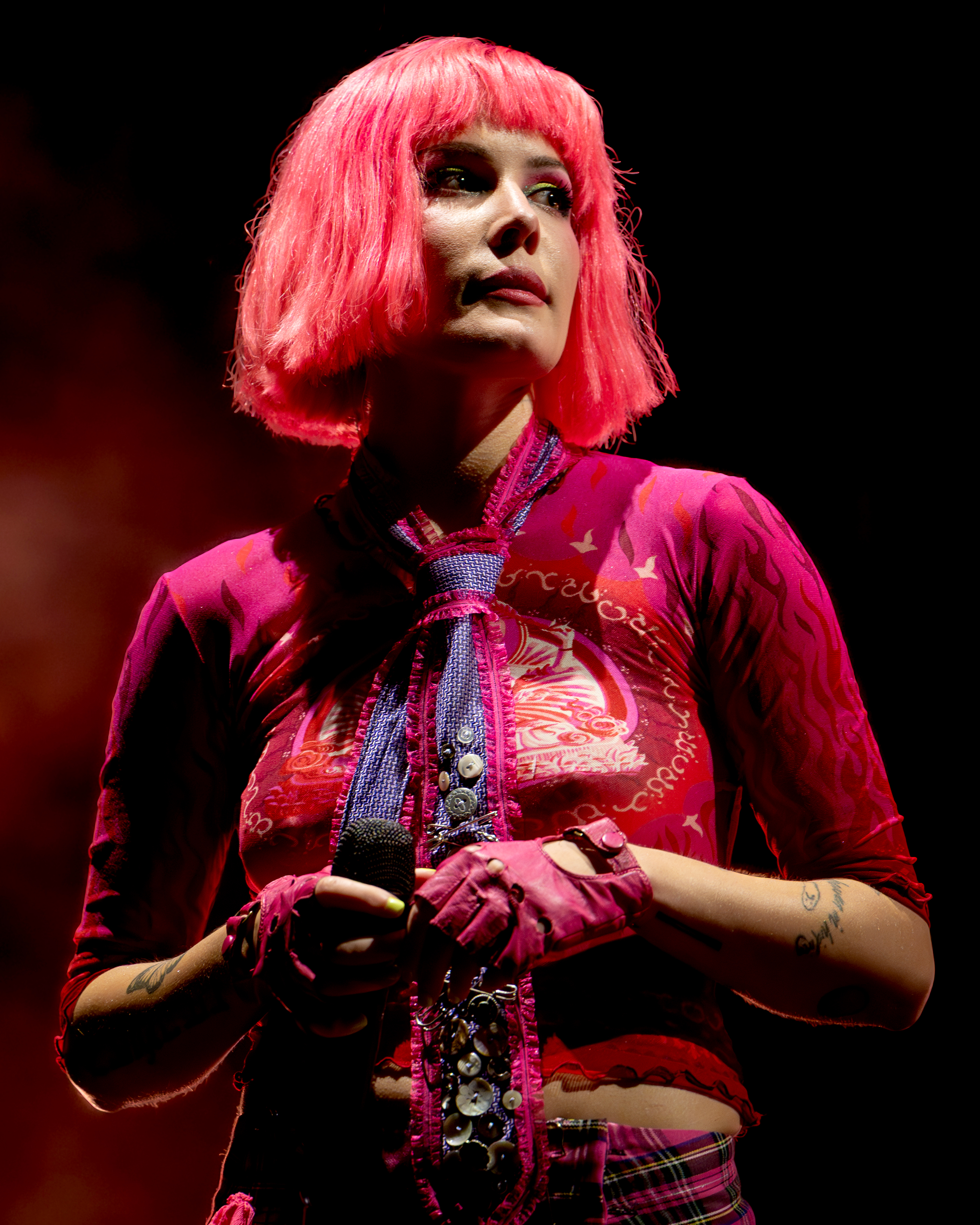
Halsey (real name Ashley Nicolette Frangipane), born in 1994 in New Jersey, USA, is a renowned singer-songwriter and actress. She comes from a diverse background, with Italian, Hungarian, African-American, and Irish heritage. During her teenage years, Halsey faced frequent moves, bullying at school, and serious mental-health challenges. At 17, after a suicide attempt, she was diagnosed with bipolar disorder. The hardships of that period—including episodes of homelessness and financial strain—profoundly shaped her later songwriting, giving her work a strongly autobiographical and confessional tone.
Halsey’s career began on social media. In 2014, her single “Ghost,” released on SoundCloud, drew interest from multiple record labels, and she ultimately signed with Astralwerks. That same year, she released her debut EP, “Room 93.” In 2015, her first studio album, “Badlands,” came out; with its distinctive vocal style and dystopian themes, it reached No. 2 on the Billboard 200 and earned double-platinum certification. In 2016, her collaboration with The Chainsmokers on “Closer” became a global hit, topping the Billboard Hot 100 for 12 consecutive weeks and elevating her profile to an international level.
In 2017, Halsey released her second album, “Hopeless Fountain Kingdom,” which debuted at No. 1 on the Billboard 200 and demonstrated her ability to craft work with stronger commercial appeal. She later moved to Capitol Records in 2018. In 2020, her third album, “Manic,” was released; its lead single “Without Me” became her first No. 1 hit as a lead artist and received diamond certification. In 2021, she explored a more industrial sound on her fourth album, “If I Can’t Have Love, I Want Power,” which received widespread critical acclaim.
However, Halsey’s relationship with her record label was not without setbacks. In 2022, controversy surrounding the release of the single “So Good” ultimately led to her parting ways with Capitol Records in 2023. She subsequently signed with Columbia Records and released her fifth studio album, “The Great Impersonator,” in 2024. Beyond her musical achievements, Halsey has been actively engaged in social causes, speaking out on suicide prevention, advocacy for survivors of sexual assault, and racial justice. In 2020, Time magazine named her one of the 100 most influential people in the world.
The Day Master is Wu Tu (Yang Earth), born in the You month (Rooster) and thus out of season; however, it sits on Wu Fire (Horse) with Yang Ren (Blade Edge / Extremity Star) as a strong root, and the year pillar Jia Xu brings Bi Jie (Peers/Companions) support. Even without an hour pillar, the first three pillars already show a strong, dry configuration. Wu Tu is like a high mountain or dense earth. In autumn metal season its energy would normally disperse, yet the day branch’s Wu Fire is an intense power source—classically labeled Yang Ren—suggesting magma moving beneath the mountain. This structure often produces a personality that may appear steady on the outside (an Earth quality), while internally running extremely hot, with the potential for sudden, forceful release (the fiery Yang Ren signature). A strong chart typically indicates high stress tolerance and a pronounced sense of self; it also means that without healthy channels for release, pressure can accumulate and show up as sharp emotional swings or physical agitation.
With You Metal as the month command, the chart leans toward a Shang Guan (Output; Hurting Officer) structure. Fire and Earth are abundant, so Metal (Output) is the key element to vent and refine the excess, while Water (Wealth) is favorable to moisten the dryness; the least helpful scenario is additional Fire and Earth. Shang Guan points to talent, nonconformity, and a strong drive to break norms through expression. For a dry, heated Wu Tu “mountain,” You Metal functions as the main outlet—suggesting a need to discharge inner pressure through art-making, singing, or bold public expression. When the key element is well-supported, it often indicates natural suitability for visibility and for presenting an unconventional edge. Water as a favorable element represents emotional nourishment and tangible resources; with dryness and a lack of Water implied, it can suggest a strong longing for emotional soothing and grounding while pursuing achievement, though that support may not always be easy to secure.
At its core, the chart shows a complex blend often described as “Shang Guan with Yin (Resource) support” alongside “Bi Jie resisting Sha,” with the most critical risk being Wu Fire (Yin/Resource) pressing against You Metal (Shang Guan)—the classic concern of Xiao Shen (Indirect Resource; ‘Owl Star’) overwhelming Output, sometimes summarized as “Xiao Shen Duo Shi (Owl Star Seizing Output).” Yin (Resource) relates to inner world, cognition, and maternal imprints; Shang Guan relates to expression and action. Fire controlling Metal sketches a baseline of intense friction between thought and expression. This tension often translates into creative work infused with pain, struggle, and self-dissection—achievement built on excavating difficult material. Meanwhile, the year’s Qi Sha / Pian Guan (Indirect Officer; archetype: the Warrior/Strategist) attempts to restrain the Day Master, yet is countered by strong Earth, indicating that external authority and pressure may be met not with submission but with heightened resistance and a stronger oppositional instinct.
The day sits on Yang Ren, the year carries Hua Gai (Solitude/Artistic Star), the branches You and Xu form a harm (You-Xu harm), and Wu Fire Yang Ren directly presses the month command Shang Guan. Yang Ren is an extreme indicator in traditional practice, associated with sharp, blade-like temperament and—depending on context—greater likelihood of surgical themes, blood-related incidents, or intense mood volatility (for example, manic-depressive swings in a modern psychological framing). Hua Gai emphasizes solitude and artistry, deepening a sense of inner distance. The You-Xu harm occurs between the year branch (often read as roots/foundation) and the month branch (often read as career/social arena), suggesting the possibility of subtle injury, mismatch, or discord in early family environment or formative background; such early instability can become a psychological seed for a later rebellious public image.
Wu Tu (Yang Earth) as the Day Master is nourished by Wu Fire, forming a “Fire blazing, Earth drying” temperament pattern—combining Earth’s steadfastness with Fire’s impatience. The baseline can resemble rock in an arid desert: hard, less flexible, and reactive to stimulation in a direct and forceful way. Wu Tu’s nature is weighty and can feel reliable, yet the internal dryness can reduce patience and amplify emotional fluctuation. Under pressure, the tendency is less toward avoidance and more toward an all-or-nothing confrontation style. Emotional needs can be strong and straightforward—like dry earth craving rain—yet overly intense expression may scorch close relationships.
The month command Shang Guan is timely and well-placed, and it is powered by a strong Day Master, forming a high-end “strong self, venting brilliance” talent profile. Shang Guan is a classic indicator favored in performance and creative fields: it points to an infectious voice, distinctive aesthetics, and the courage to challenge taboos. Because the Day Master’s energy is robust, it can continuously feed the Output function—helping explain sustained high-intensity production and striking stage-level explosiveness. In many cases, this type of configuration draws inspiration from turbulence and nonconformity; excessive calm and sameness can dull the edge that fuels creativity.
The chart’s main tension is an “Yin (Resource) disrupting the structure” risk—Wu Fire in the branches potentially damaging You Metal—creating a latent “Water-Fire conflict” theme. Over-strong Resource can show up as an overactive mind, anxiety, and heightened sensitivity, constantly pressuring the part of the chart that governs joy, release, and expression (Shang Guan). In lived experience, this can look like a tug-of-war between mental health and artistic creation: to create (Metal), one may repeatedly mine inner pain (Fire), yet too much pain can erode clarity and stability. In addition, the chart’s dryness and relative lack of Water suggests weaker self-regulation; emotional management may be prone to overshooting, and recurring difficulties may correlate with emotional overwhelm or with heat-type physical patterns such as inflammation or hormonal imbalance.
Overall, this is a profile often summarized as “forged by Fire, refined through wounds.” Life themes may be less about coasting in calm and more about cycles of intense strain followed by reconstruction. Shang Guan becomes the “blade” of expression used to cut through the psychological weight implied by Yang Ren. This configuration often describes an artist who must continually convert inner heat into work—seeking balance at the extremes and rebuilding the self through what has been broken.
Pian Cai (Indirect Wealth) appears on the stems; Shi Shen (Output/Creative Star) releases brilliance; Metal and Water are both strong. Ren Water acts as Pian Cai, pointing to highly fluid, non-fixed resources; Shen Metal is Shi Shen, highlighting outwardly expressed talent and the expenditure of mental energy. For the native, this decade is a time when talent begins to sprout but the foundation is not yet steady. Excess Metal and Water drain the Day Master (self), suggesting a changeable early environment, a rich and sensitive inner world, yet limited security and support—making one prone to a sense of drifting or burnout.
Shi Shen generates wealth, but a weak self cannot hold wealth; excessive drain. Shi Shen indicates artistic gifts and the urge to express; the Shen–You Metal configuration amplifies this expressive energy and lays the groundwork for musical creation. However, because the self-energy (Earth) is heavily drained by Metal and Water, this talent is difficult to convert into stable, worldly achievement early on, and may instead show up as financial strain or limited family resources. This helps explain why, in the later teen years, she experienced unstable housing and tight finances—talent present, but hard to monetize.
Wealth star harms the Seal; early fortunes tend toward drifting. Over-strong wealth restrains the Seal star (associated with mother and family protection), implying limited support from the family during this period or a comparatively distant dynamic with elders. Social circles in early years can be complicated; one may meet people from many walks of life. While these experiences enrich creative material, they can also bring interpersonal volatility.
Excess Metal with weak Earth; strong Water washes Earth away. Earth corresponds to the spleen/stomach and digestion; with strong Metal draining it and strong Water agitating it, the constitution may be relatively delicate. Pay attention to digestion, nutrient absorption, and emotional swings; early signs of anxiety or mood instability are possible.
Shang Guan (Expressive/Rebellious Output) emerges; Wu–Wei combine into Fire; dry Earth supports the self. Xin Metal is Shang Guan, linked to defiance, visibility, and a burst of talent; Wei Earth combining with the Day Branch Wu Fire can transform into Fire (Seal), providing strong backing. This decade is a “breakthrough highlight” marked by qualitative change. The sharp edge of Shang Guan matches the era’s aesthetics, while the Earthly-branch combination helps her sustain the surge after fame—turning rebellious talent into tangible standing.
Shang Guan matched with Seal: both fame and gain. Shang Guan Xin Metal appearing from the month’s qi suggests a distinctive voice and non-mainstream creative style being widely recognized—classic “fame luck.” Wu–Wei combining into Fire strengthens the Seal, pointing to signing with major companies, stronger IP/copyright protection, and devoted fan support. From 2014 (Jia-Wu), annual Fire strengthens the self; career momentum rises rapidly. Talent is fully leveraged, wealth accumulates quickly, and a strong position in the music world is established.
Shang Guan meets Zheng Guan (Direct Officer): mixed romance signals. While Shang Guan supports career, in a woman’s love life it can indicate higher standards for partners and greater relationship instability. Emotional life may be intense yet hard to sustain, with entanglements arising from strong personalities and mutual friction. Publicly, she may be known for being candid and bold—consistent with Shang Guan’s “unafraid of convention.”
Strong Fire and dry Earth; dryness can injure Metal. Even with outstanding career fortunes, overly dry Fire/Earth can predispose one to inflammation and issues involving the reproductive system or blood. Wei Earth is also a “Wood storehouse,” which may relate to gynecological vulnerabilities—closely aligning, in timing, with publicly mentioned challenges such as endometriosis.
Shi Shen controls Qi Sha; the day pillar self-punishes; Seal protects the self. Geng Metal as Shi Shen points to a gentler, deeper creative mindset; Wu Fire repeating (Fu Yin) triggers “self-punishment.” The theme of this decade shifts from “outward rebellion” to “inward struggle and rebuilding.” While career remains steady, “self-punishment” suggests inner knots, bodily hardship, and deeper inquiry into life’s essence—growing pains of a profound transformation.
Shi Shen generates wealth; Seal as a storehouse; expansion of the commercial map. Compared with prior Shang Guan, Geng Metal Shi Shen leans toward steady output and brand building (e.g., beauty brands). The entertainment trajectory may be less explosively upward than the prior decade, but overall commercial value becomes more stable. Strong Wu Fire Seal supports asset accumulation and behind-the-scenes control. However, pauses or a slower pace due to health concerns are a notable feature of this decade.
Seal becomes strong: awakening of the maternal role. Wu Fire is Zheng Yin (Direct Seal), associated with nurturing and a sense of home. The biggest shift is identity—becoming a mother. Although emotions may still fluctuate (self-punishment), the child/posterity sector (Shi Shen) is well-positioned; children become a key spiritual anchor. Interpersonally, she may seek partners who offer deeper emotional value and a stronger sense of safety.
Wu–Wu self-punishment; strong Fire restrains Metal; the strain of Fu Yin. This is the most severe decade for health risk. Wu–Wu self-punishment can activate Yang Ren (Edge/Surge Star); excessive Fire restrains Lung Metal (respiratory/immune functions) and can overheat Earth (blood and cellular processes). This corresponds directly to autoimmune conditions involving lupus, lymphatic, or blood-related immune disorders. With Fire heat affecting the Heart, strong attention to immune regulation and psychological support is essential.
Jie Cai (Peer-Resource/Competitive Partner) supports the self; Si–You form a partial Metal combination; Lu is strong and the body is robust. Ji Earth Jie Cai appears to bolster the self; Si Fire in the branches acts as the Day Master’s Lu (root). This decade enters a phase of strong confidence and control. Earlier weakness and health burdens receive powerful support (Fire/Earth backing), making the overall energy more grounded. Life shifts from “struggling against fate” to “steering one’s course”—a golden period for consolidating status and expanding influence.
Peers compete for wealth; Si–You combine Metal: collaboration for shared wins. Jie Cai can signify both competitors and partners. The career model may shift from solo effort to team-based or capital-based operations. Si–You combining Metal not only strengthens talent output (Metal), but also realizes commercial value through collaboration (Si). While large expenses or profit-sharing may occur (Jie Cai), the overall scale grows—beyond performance into investing or a mentor/leader role.
Many peer stars: filtering out the superficial. Jie Cai luck often reshuffles one’s circle—insincere connections fade, and what remains are truly loyal allies. In intimacy, with strong self-focus (peak-strength territory), she tends to hold a dominant position; partnership feels more like an evenly matched “comrades-in-arms” model than a traditional dependent dynamic.
Fire and Earth both strong; qi flow improves. Compared with the prior decade’s self-punishment crisis, physical vitality rebounds noticeably. With the Lu star entering the chart, life-force is strong. Still, watch for cardiovascular strain from excessive Fire and slower metabolism from heavy Earth.
Bi Jian (Peer/Self Star) repeats; Chen–Xu clash; foundations are shaken. Wu Earth Bi Jian appears on the stems; Chen Earth clashes with the year branch Xu Earth. This decade blends “maintenance” with “change.” Bi Jian indicates firmness and persistence, while the Chen–Xu clash opens the wealth and authority storehouses, implying major shifts in living environment, family foundations, or long-held assets—an upheaval that breaks the old to build the new.
Storehouse gates open through clash: money in, money out. Chen–Xu clash often points to changes in real estate or large assets. Career may face a transformation bottleneck, relying less on personal talent output (Metal) and more on accumulated resources (Earth). Competition can be intense (strong Bi Jian), yet an opened wealth storehouse also suggests opportunities for windfalls or asset restructuring—suited to moving behind the scenes for asset management.
Clashing the year influence: shifts in ties with close kin. The year branch reflects elders and roots; Chen–Xu clash suggests possible family changes or a turning point in connection with elders. Temperament becomes more steadfast and grounded; the social circle stabilizes, with less interest in flashy external networking.
Heavy Earth restrains Wood; restless agitation from clash. Chen–Xu clash can make Earth qi overly dominant, leading to stagnation. Prioritize the spleen/stomach and digestion, and be mindful of growths/hyperplasia-type concerns (Earth corresponds to flesh and cellular tissues). Heavy Earth can also restrain Water; kidney and endocrine care are advised.
Officer and Seal support each other; Mao–Xu combine into Fire; a smooth landing. Ding Fire Zheng Yin (Direct Seal) appears; Mao Wood Zheng Guan (Direct Officer) combines with the year branch Xu Earth. This decade enters a more traditional “prestige phase.” Officer–Seal mutual support is a high-status configuration, suggesting that youthful rebellious branding fully matures into respected industry standing. Life pace slows, with greater focus on inner peace and social recognition.
Fame converts to authority; enjoying stability. Zheng Guan signifies status and governance; Zheng Yin signifies reputation. Career focus shifts away from maximizing commercial gain toward roles such as philanthropy, education, or industry advisory. Mao–Xu combining into Fire strengthens the Seal; royalties and the long-tail value of past works can support a comfortable life—classic “living off one’s legacy,” with benefits that can deepen over time.
Peach Blossom meets a combination: harmonious family life. Mao Wood is the Peach Blossom (Charisma/Romance) star and combines with the year branch, indicating continued goodwill and likable presence in later years, often through respected connections. Family dynamics trend stable and warm; ties with children or younger generations become closer, bringing enjoyment of family life.
Wood and Fire are clear and bright; watch the liver and gallbladder. Overall energy flows smoothly, but a Mao–You clash (if the natal month branch clashes the decade luck) could bring minor liver/gallbladder or nervous-system issues. Watch for tendon/joint soreness or declining eyesight; gentle health practices are suitable.
Qi Sha (Indirect Officer) and Seal support each other; Yin–Wu form a partial Fire combination; mentally vibrant. Bing Fire Pian Yin (Indirect Seal) points to distinctive thinking; Yin Wood Qi Sha / Pian Guan (Indirect Officer) reflects strong vitality. With Yin–Wu–Xu forming a Fire triad (if including year/day), a powerful Fire/Seal configuration emerges. This decade brings a richly active inner life—possibly deep engagement with religion, philosophy, or metaphysical studies. Though advanced in years, ambition and spirit remain high, and there may even be a surprising artistic echo late in life.
Strong Seal nourishes the self: spiritual wealth. Material wealth is no longer the priority; focus shifts to organizing and passing on spiritual and creative legacy. Qi Sha with Seal indicates continued authority in later years—possibly as a cultural symbol. Strong Fire favors publishing memoirs or curated collections.
Fire triad: supported by many. The Yin–Wu–Xu combination suggests a circle of like-minded people or admirers gathering around. Later life can be lively rather than lonely, with close-knit relationships and strong care and respect from younger generations.
Strong Fire with dry Earth: cardiovascular concerns. The Fire configuration can make Fire qi excessive; guard against hypertension, cardiovascular/cerebrovascular issues, and eye conditions. Too much Fire can also lead to emotional overexcitement; prioritize rest and avoid excessive stimulation.
Officer star sits in a storehouse; Chou–Xu form a penalty; returning to simplicity. Yi Wood Zheng Guan appears on the stems, but it sits on Chou Earth—damp soil that can dim Fire warmth. Energy begins to contract, shifting from strong Fire to damp Earth. Life enters a final recuperative phase; older conditions may recur (Chou–Xu penalty). With Zheng Guan still present, a dignified later-life image is maintained.
Officer protects wealth: asset succession. The focus is on allocating and passing on family assets. Zheng Guan represents order, suggesting she will arrange matters carefully to ensure an orderly transfer of inheritance. Finances remain stable without major swings.
Penalty activates the “tomb/storehouse”: nostalgia and remembrance. Chou–Xu penalty stirs the tomb-storehouse symbolism, making one more prone to reminiscing about those who have passed. Social activity decreases significantly; more time is spent alone or with a very small circle of intimates.
Damp Earth obscures Fire: insufficient yang warmth. Chou Earth dims Fire, weakening the chart’s warming force. Guard against cold-damp invasion, reduced heart function, and cold-weakness patterns of the spleen/stomach. Warmth and supporting yang are key.
Wealth and Qi Sha support each other; Zi–Wu clash; a longevity threshold. Jia Wood Qi Sha / Pian Guan (Indirect Officer) appears on the stems; Zi Water in the branches clashes the Day Branch Wu Fire (the native’s root). For someone of advanced age, this decade is a major challenge. Water and Fire in conflict, with the foundation being struck, often marks a period when vitality is severely tested—life’s curtain may gradually fall during this stage.
Worldly possessions: passing clouds. By now, secular achievements are already part of the record. Qi Sha can signify a final echo of reputation—such as lifetime-achievement recognition—yet substantive wealth operations have largely come to a stop.
Clash stirs Yang Ren: a rise in loneliness. Zi–Wu clash not only hits the root but also activates the spouse-palace/inner-palace symbolism. Later years may bring a stronger sense of loneliness or mental fog, with the connection to day-to-day reality gradually weakening.
Water–Fire confrontation: heart risk. Zi Water forcefully striking Wu Fire (heart/spirit) is the most concerning signal. Sudden cardiovascular failure or neurological shutdown becomes more likely. The best approach is to keep things gentle and natural, and focus on comfort and peace.
Tian Fu in supportive aspect, forming the foundation of the classic “Fu–Xiang aligned to the court” structure. Tian Fu is a stabilizing Southern Dipper lead star, often called a “wealth vault,” associated with containment, conservatism, and solidity. In the Parents/Ancestry sector, it suggests that her family of origin or elders provided a certain underlying security—often not in the form of obvious huge wealth, but as steady genetics, resources, or a relatively permissive and stable upbringing.
Tian Fu is inherently steady and typically does not engage in the Four Transformations, indicating that the family influence is consistent and enduring. As a “vault,” it also absorbs the residual momentum of Lian Zhen transforming into Lu (from the Well-Being sector), implying that family background or parental education indirectly nourished her inner life and creative/spiritual resources.
Even if her personal path feels challenging, Tian Fu in the Parents sector suggests there is always a place she can mentally and practically “return to.” Parents or elders may function in her subconscious as a “bank” or “shelter,” offering a margin for error and a baseline sense of safety that gave her early independence or rebelliousness more room to unfold without catastrophic consequences.
With Tai Yin seated in this palace, it reflects the classic potential known as "Yue Lang Tian Men" (Moonlight at the Heavenly Gate) or "Yue Sheng Cang Hai" (Moon Rising over the Vast Sea). Tai Yin corresponds to the Water element; its qi-transformation is associated with prosperity, and in Zi Wei Dou Shu it is both a wealth star and a maternal archetype. This suggests the native is naturally endowed with exceptionally fine emotional perception and an artistic sensibility. Their temperament carries the Moon’s yin softness and changeability, with moods rising and falling like tides—an sensitivity that often becomes a direct source of creative inspiration.
Influenced by the Jia stem, although there are no direct Si Hua (Four Transformations) in this palace, it receives an aspect from "Lian Zhen Hua Lu" (Lian Zhen transformed to Prosperity) from the Fu De (Well-Being) palace. Lian Zhen’s Peach Blossom (Charisma / Romance) and secondary Peach Blossom qualities, refracted through the spiritual domain, indirectly nourish Tai Yin’s artistic expressiveness, giving the person’s image a strong sense of allure and a slightly dreamlike pull.
This configuration helps explain why she can write lyrics with strong empathy and a direct emotional impact. She is not the forceful, hard-driving type of pioneer; instead, she connects with the world through emotional permeation and by revealing her own vulnerable side. Her recognition is built on an exceptionally deep exploration of feminine qualities and nuanced feeling.
Lian Zhen stationed here, showing qualities of “secondary Peach Blossom (Charisma/Romance)” and “heightened psychological sensitivity.” Lian Zhen is often linked with inner complexity, tension, perfectionism, and a tendency toward self-imposed constraints. In the Well-Being (Mental/Spiritual) sector, it points to an exceptionally rich inner life, while also indicating a risk of getting trapped in self-critique or emotional overprocessing.
With the Jia heavenly stem, Lian Zhen transforms into Lu (Prosperity/Attraction). This is an excellent conversion. Lu emphasizes gains, relationship affinity, and smoother flow. Here, Lian Zhen’s “tension” and “sensitivity” are refined into steady creative drive and psychological fulfillment. She can distill joy and value from complex emotional experiences.
This is one of the most premium artistic signatures. She can channel inner chaos and anxiety (Lian Zhen’s core tone) into talent and output (Lu). She may even find the emotional “roller coaster” intrinsically rewarding—her happiness can come from artistically reframing and deconstructing painful feelings. The Lu transformation helps prevent burnout from internal friction; instead, it becomes something she can benefit from.
Tian Tong stationed here, suggesting a trajectory of “building from scratch” followed by “settling into a blessed, stable home.” Tian Tong is a well-being star, associated with ease, comfort-seeking, and sensitivity. In the Property & Home sector, it indicates a strong preference for a cozy, tasteful living environment—often with artistic touches or a youthful, playful aesthetic. It can also hint at more frequent housing changes earlier in life, with greater domestic stability and comfort developing later on.
Tian Tong corresponds to the Water element and is influenced by the opposing Tian Liang (a protective/supportive star), suggesting a residence more likely to be near places with historical depth or a quieter, more secluded atmosphere. While there are no sharp, direct transformation triggers here, Tian Tong’s supportive quality can buffer external turbulence, allowing the home to function as an emotional harbor.
For someone whose outward (Travel/Movement) presentation is intense and forceful (Po Jun transforming into Power), Tian Tong in the Home sector provides essential counterbalance. Home is where she can take off the armor and return to a more childlike, softer self. She is inclined to shape her space into a calm, dreamlike refuge away from noise, using it to soothe the wear and tear brought by the outside world.
Wu Qu sitting alone, a career configuration associated with "diamond-hard perseverance". Wu Qu is linked to tangible value, discipline, and action; its nature is Metal—resolute and decisive. In the Career Palace, this suggests a doer: she does not rely on hollow reputation, but builds her position through solid output, high-intensity touring, and hard-core execution.
With the Jia heavenly stem comes "Wu Qu Hua Ke". Hua Ke (Recognition/Accolades) relates to reputation, credentials, and formal acknowledgment. For the "hard" quality of Wu Qu, this is a meaningful refinement and elevation: her intense effort (Wu Qu) is more likely to convert into reputation and awards (Hua Ke). Her commercial value (Wu Qu) can be amplified by public recognition (Hua Ke).
She shows striking execution power in her career. "Wu Qu Hua Ke" indicates that her success is not only commercial (how much she earns), but also professional—establishing standing as respected and reputable within the industry. She is the kind of artist who treats "making music" with the rigor of a campaign, and ultimately earns formal honors for it.
Tai Yang in a weakened placement, further shaped by a pattern often described as "many Yin influences diminishing Yang". Tai Yang relates to giving, generosity, and the broader public. In the Jiao You Gong (Networks/Friends/Audience Palace), it suggests she is willing to expend herself to illuminate others. When Tai Yang is weakened, however, that giving may not be met with equal return and can more easily lead to exhaustion.
Most challenging is the Jia heavenly stem bringing "Tai Yang Hua Ji". Hua Ji (Obstruction/Entanglements) points to misunderstandings, friction, and a sense of "owing" or being burdened. With Tai Yang Hua Ji entering the followers/associates sector, it indicates she may be more prone to attracting unhelpful people or experiencing backlash from fans and public opinion. Good intentions can be misread, making public relationships a major source of pressure.
This helps explain a love-hate dynamic with social media and fandom. She cares deeply (Tai Yang) about the public voice, yet can be hurt by it (Hua Ji). She may often feel misunderstood, or face online attacks due to being overly candid—"burning herself" only to encounter controversy.
With Tan Lang seated alone in this palace, it forms a social field often described as "Tan Lang Ru Miao" (Tan Lang in a favorable position) or "Fan Shui Tao Hua" (Peach Blossom over Flowing Waters). Tan Lang is regarded as the foremost Peach Blossom (Charisma / Romance) star, governing desire, talent, and social finesse. This suggests the native’s peer circle (including collaborators and competitors) often consists of highly talented, flamboyant, or strongly ambitious people, creating an environment full of competition and temptation.
Tan Lang itself does not directly transform into Lu/Quan/Ke/Ji, but it receives a three-directional aspect from "Po Jun Hua Quan" (Po Jun transformed to Authority). This implies that partners or rivals tend to be disruptive yet pioneering in energy, pushing her to keep evolving in a high-intensity competitive landscape and making it difficult to remain complacent.
This aligns well with the Western pop music scene she operates in, where distinct personalities are everywhere. Her relationships with peers are both collaboration and strategic contest. A social sphere where "desire" and "talent" collide can, in turn, awaken and amplify her wilder, more untamed side.
Ju Men enters this palace, carrying an undercurrent often associated with "Ge Jiao Sha" (angular clash influence) or "kou she shi fei" (verbal disputes and controversy). Ju Men governs the hidden and the verbal; it is a star linked to a shadow side and communication friction. In relationship patterns, this can indicate partnerships that frequently involve intense arguments, difficulty communicating, or a partner’s identity that is in some way contentious.
Ju Men is highly sensitive to Si Hua (Four Transformations) and is indirectly affected by "Tai Yang Hua Ji" (Tai Yang transformed to Obstruction) in the Nu Pu (Associates) palace (as the spouse’s illness/strain sector). This suggests that one’s love life may be pulled into the public spotlight (Tai Yang) and attract criticism or misunderstanding (Hua Ji), with private relationships easily becoming public talk.
This corresponds closely to several of her highly visible and dramatic romances. There is often an impulse to "say it out loud"—whether through arguments or by turning relationship experiences into songs. Her love life tends to be intertwined with expression and controversy, making quiet, uneventful endings less likely.
Tian Xiang Star in residence, presenting the auspicious sign of 'Cai Yin Jia Yin' (Wealth Support flanking the Seal) or 'Yin Xing Hu Zhu' (Seal Star protecting the self). Tian Xiang’s qi transforms into Yin (Seal/Support), associated with loyalty, assistance, and order. This suggests the native relates to children or “spiritual creations” (such as works, protégés, or subordinates) with a strong protective instinct and sense of duty, tending to provide a steady support system.
Tian Xiang’s nature is steady and is not easily thrown off by dramatic Four Transformations, though it is highlighted by Wu Qu Hua Ke (Academic/Recognition Transformation). This implies her children—or the newcomers and works she cultivates—can gain public reputation and recognition, and that such recognition is achieved through mainstream, formal, and properly sanctioned channels.
Even if her personal image reads as rebellious, in the role of a mother—or in how she treats her life’s work—she displays Tian Xiang’s more traditional, guardianship-oriented qualities. This helps explain why, after becoming a mother, she showed notable warmth and steadiness, regarding her child as a “seal of authority” that must be carefully protected.
Tian Liang Star in residence, forming the pattern of 'Yin Xing Ru Cai' (Support Star entering Wealth). Tian Liang is a refined, reputable star, linked with elders’ support, oversight, and principled standards. In wealth matters, this does not point to sudden windfalls, but rather to income gained through reputation, credentials, copyrights, or some form of established professional standing—often with a trajectory of difficulty first, then ease later.
Influenced by Tai Yang Hua Ji (Sun Transformation to Challenge), Tian Liang’s “prestige and integrity” qualities may be tested by public opinion. Although Wu Qu Hua Ke (Academic/Recognition Transformation) shines in from the Career Palace, ensuring the income stream is tied to recognized reputation, the process may still come with controversy or public disputes.
Her wealth accumulation is more likely to come from standing-driven passive income after her “position” is established (such as royalties or brand endorsements), rather than speculation. Tian Liang also suggests she may allocate part of her wealth to public-good causes or supporting others, as a way to soften the more isolating, pressuring tendencies sometimes associated with wealth indicators.
Tian Ji + Po Jun in the same degree (note: a special configuration), suggesting a "restless, unconstrained" pattern. Tian Ji is associated with change and strategic thinking; Po Jun with dismantling and rebuilding after a break. Positioned in the Qian Yi Gong (Travel/External Image Palace), this indicates that, in the public eye, she comes across as constantly evolving, hard to predict, and highly capable of overturning conventions—often perceived as a "rule-breaker."
With the Jia heavenly stem, "Po Jun Hua Quan" appears. This is a crucial catalyst. Hua Quan (Empowerment/Authority) points to control, presence, and influence. It suggests that her "disruptive" moves (such as drastic image changes, switching musical styles, or headline-making statements) are not random—they can translate into public authority and stronger narrative control. She establishes status by breaking the mold.
Her core persona is built around "change." From blue hair at debut to a shaved head, from alternative pop to rock, she sustains attention through continuous Po Jun-style reinvention (disruption). Hua Quan helps her keep the initiative in a volatile media environment—the more unconventional she is, the more recognition she can attract.
Zi Wei + Qi Sha in the same palace, forming an internal-tension pattern often described as 'Di Zuo Shou Zhi' (the imperial seat under constraint) and the 'Sha Po Lang' dynamic. Zi Wei is the emperor star, associated with Earth; Qi Sha / Pian Guan (Indirect Officer; technically: Qi Sha (Indirect Officer)) is a forceful, decisive star associated with Metal. When they share a palace, Earth and Metal can be mutually supportive, yet it also signals strong, competing “dominant” energies within. Qi Sha is associated with blades and surgery; Zi Wei corresponds to the spleen–stomach axis and assimilation.
This palace carries very strong intensity. Qi Sha / Pian Guan (Indirect Officer; technically: Qi Sha (Indirect Officer)) has a naturally sharp, high-impact quality and can show its strength even without Four Transformations. This points to the body potentially having gone through intense internal “battles” or “rebuilding,” such as surgery requiring a blade, or prolonged, persistent chronic conditions (Zi Wei often leans toward long-term patterns).
This closely aligns with her publicly known health struggles (such as endometriosis and multiple surgeries). With “Zi Wei + Qi Sha” in the Health Palace, the body becomes a primary arena of life training: maintaining balance at the “imperial seat” may require going through painful, intensive cycles of intervention and recovery, and health issues can at times present abruptly and with force.
Generate your personal chart in under a minute. Sign up free and get 30 credits — enough for two or more AI readings. No credit card.
Generate my free BaZi chartPlease sign in to join the discussion
Sign In