Year
Ji
Si
Bi Jian
Zheng Guan
Hidden Stems
Bing (Zheng)Geng (Jie)Wu (Zheng)
- Star Luck
- Di Wang
- Sitting Branch
- Di Wang
- Void
- Xu Hai
- Na Yin (Elemental Sound)
- Da Lin Mu
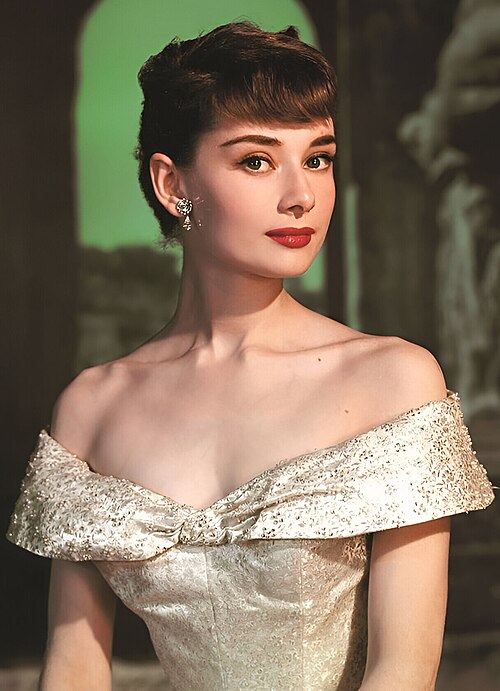
Audrey Hepburn (May 4, 1929 – January 20, 1993) was a British actress and philanthropist. Born into an aristocratic family in Ixelles, Belgium, she spent her childhood moving between Belgium, England, and the Netherlands. During World War II, she studied ballet in Arnhem, Netherlands, and raised funds for the resistance. After the war, she went to London to study ballet and transitioned into acting.
In 1953, Hepburn starred in Roman Holiday and rose to fame, becoming the first actress to win an Academy Award, a Golden Globe Award, and a BAFTA Award for the same role. She subsequently starred in classic films such as Sabrina (1954), Funny Face (1957), The Nun's Story (1959), Breakfast at Tiffany's (1961), Charade (1963), and My Fair Lady (1964). She received five Academy Award nominations and won one Oscar for Best Actress. She also won an Emmy Award, a Grammy Award, and a Tony Award, making her one of the few entertainers to achieve EGOT status.
In her later years, Hepburn devoted herself to charity work, serving as a UNICEF Goodwill Ambassador from 1988 onward, traveling to impoverished areas in Africa, South America, and Asia. In 1992, she was awarded the Presidential Medal of Freedom. She died of appendix cancer at her home in Switzerland in 1993 at the age of 63. Remembered for her elegance and philanthropic contributions, Hepburn was ranked by the American Film Institute as the third-greatest female actress in American cinema history.
The Day Master is Ji Earth, born in the Chen month and thus in command; with the Earthly Branches Si Fire and Yin Wood providing support, the Day Master is undoubtedly strong. Ji Earth is thick and substantial, like the soil of the fields, moistened by the Chen month and illuminated by the Bing Fire Zheng Yin (Direct Resource), giving an overall impression of warm jade bursting with vitality. Her energy is solid yet not rigid, capable of bearing pressure and transforming it into nourishment for growth. Her greatest strengths are remarkable adaptability and artistic sensitivity, but the potential challenge is that the excessively strong Earth element can make her somewhat stubborn, prone to inner struggles when upholding principles, and in need of Water to harmonize when Fire blazes and Earth dries.
With a strong Day Master, Shi Shen (Output Star) is used to release excess energy; she favors Metal, Water, and Wood, and avoids Fire and Earth. In the Ba Zi (Four Pillars), the Shi Shen, represented by the You Metal in the Day Branch, strongly drains the Day Master, signifying talent, artistic expression, and creativity, and is the Yong Shen (Favorable Element). Water, as the Wealth Star, can regulate the dry Earth and provide refreshment to the chart, making it a Xi Shen (Supportive Element). Wood, as the Guan Sha (Officer Archetype), can loosen the Earth but is weak. Fire and Earth should be avoided as they would intensify the already strong Day Master and lead to stagnation. This configuration means she needs to channel her energy into creative pursuits (such as acting or art) throughout her life to achieve inner balance. Metal and Water cycles boost her career, while Fire and Earth cycles bring suppression.
The hidden Shi Shen controlling Sha (Output Star controlling Indirect Officer), Bi Jie (Peers and Rivals) generating Shi Shen, and the Resource Star protecting the Day Master form an elegant structure where the Shi Shen releases talent. The hidden Yi Wood Qi Sha (Indirect Officer) within Chen is secretly controlled by the You Metal Shi Shen, creating a "Shi Shen Controlling Sha" combination, indicating she can use talent to dissolve pressure and conflict. The Year Pillar Bi Jian (Peer) and the Month Pillar Jie Cai (Rival) assist the Day Master, while the Day Branch Shi Shen establishes a pathway where Bi Jie generate Shi Shen, signifying that she is adept at leveraging interpersonal support to transform team energy into personal artistic output. The Bing Fire Zheng Yin (Direct Resource) in the Hour Stem closely supports her, endowing her with an elegant aura and sustained motivation for learning. This combination shapes a personality that is outwardly gentle yet inwardly resolute, overcoming strength with softness; in decision-making she relies on intuition and aesthetics, and in career she tends toward fields that unleash creativity, such as the arts and charity.
The You Metal in the Day Branch houses the Wen Chang Gui Ren (Literary Star), Jiang Xing (General Star), and Xue Tang (Academy Star); the Month Pillar holds the Gua Su (Loneliness Star); and the Hour Pillar contains the Jie Sha (Calamity Star) and Kong Wang (Void). Wen Chang and Xue Tang enhance her learning ability and artistic talent, while Jiang Xing bestows a leadership quality and independent spirit. However, the Gua Su in the Month Pillar symbolizes emotional loneliness, suggesting possible childhood experiences of family separation or inner isolation. The Jie Sha and Kong Wang in the Hour Pillar imply sudden upheavals in life, where good things may come to naught; yet Kong Wang also enables her to view fame and fortune lightly and turn toward spiritual pursuits. These Shen Sha depict a theme behind her brilliant starlight: a lifelong quest for love and family repeatedly thwarted, yet ultimately finding spiritual anchor in charitable work.
With Ji You as the Day Master, sitting on Shi Shen (Output Star) generating wealth, the Five Element is Yin Earth, embodying inclusiveness, gentleness, and meticulousness. She resembles warm jade, outwardly dignified and graceful, yet inwardly sensitive and contemplative. Ji Earth represents cultivated fields—never striving or competing, yet capable of nourishing all things—which inclines her to show dedication and care in interpersonal relationships. The You Metal Shi Shen endows her with lively creativity and an extreme pursuit of beauty; her thoughts are agile, and she excels at transforming emotions into artistic expression. Under pressure, she tends to internalize and cope through work; when comfortable, she reveals a childlike innocence. Emotionally, she yearns for stability and profound spiritual resonance, but the sense of detachment brought by the Shi Shen makes her both desirous of intimacy and accustomed to maintaining an elegant distance.
The Shi Shen, represented by You Metal, serves as Yong Shen (Favorable Element), releasing outstanding talent and signifying an unparalleled artistic gift and fashion sense. The Shi Shen drains the Earth energy, making her talent flow like a gentle stream that nourishes the heart. In acting, she can precisely capture a character's emotions and bring them off the screen—this is the ultimate expression of Shi Shen releasing talent. Her fashion taste (such as the classic collaboration with Givenchy) is also a reflection of the pure and clear Metal energy. The Fire Resource star, though technically unfavorable, can become supportive through temperature regulation, granting her a noble temperament, but health requires attention when Fire is excessive. In fields that demand aesthetics, creativity, and empathy (such as actress or charity ambassador), she can easily build competitive advantages, connecting with people through art and love.
Multiple Bi Jie (Peers and Rivals) seize wealth, the hidden Guan Sha (Officer Archetype) is restrained, and an overly strong Resource Star suppresses the Shi Shen. The abundance of Bi Jian (Peer) and Jie Cai (Rival) suggests frequent competitors in life or being implicated by peers, and romantically, experiences of love being snatched away (such as the two marital setbacks). The hidden Yi Wood Qi Sha (Indirect Officer), which represents the spouse star, is secretly controlled by the You Metal Shi Shen; while this transforms into career success, it also reflects that in intimate relationships she sustains bonds through talent and giving, yet struggles to find traditional reliance. The excessively strong Bing Fire Zheng Yin (Direct Resource), though it nourishes the Day Master, also dries the Earth, causing her to sometimes overly pursue perfection and high moral standards, leading to internal repression. This conflict results in her, behind a glamorous public image, frequently falling into self-doubt and emotional emptiness, with health issues concerning the digestive system and emotional distress.
Audrey Hepburn's Ba Zi is a classic model of a strong Earth Day Master whose Shi Shen releases excess energy. Her life theme was "nourishing the world with art and healing herself with love." Destiny allowed her to leave an indelible elegant mark on film history, but at a cost to personal relationships. With the talent embodied by Shi Shen, she captivated global audiences; with the compassion bestowed by the Resource Star, she devoted herself to children's charity. Ultimately, during a period of intense Fire and Earth, she succumbed to colon cancer. Her natal chart is like a meticulously polished piece of jade—its glow restrained yet enduring—proving that even with rampant Bi Jie and a weak Officer Star, by skillfully utilizing the power of Shi Shen, one can achieve legend. Her late-life charity work was the deepest transcendence of Kong Wang (Void) and Gua Su (Loneliness).
Bi Jian (Peer) and Jie Cai (Rivalry) with Zheng Yin (Direct Resource) protecting the self, foundation is stable but competition gradually emerges. This decade is the early growth period of the native, with relatively stable circumstances. Because the Day Master Ji Earth is strong and flourishing, Bi Jian brings peers and self-awareness, while Zheng Yin represents mother, education, and shelter. Hepburn was born in Belgium, moving with her mother through England and the Netherlands; despite the shadows of war, her family provided a fine artistic initiation (ballet study). The overall luck is smooth, laying the groundwork for her future acting career.
Zheng Yin (Direct Resource) emerges to the Heavenly Stem while Cai (Wealth) stars are not prominent; academic and artistic potential begins to show. In career development, there is no clear direction yet, but the Zheng Yin star is strong, indicating she received a good education and artistic training. From childhood, Hepburn studied ballet and showed talent. Bi Jian and Jie Cai also mean she collaborated with peers (such as participating in student performances), but competition was not obvious. Financially, she depended on her family and had no independent income. This luck cycle is more about accumulation and initiation.
Yin (Resource) star shines and cares, family relationships are harmonious, but Bi Jie (Peers) subtly move, bringing minor ripples. Zheng Yin represents the mother; Hepburn had a close relationship with her mother, who fully supported her artistic dreams. Bi Jian also represents siblings or same-age friends, and she got along well with classmates. However, during the war years (after 1940), she suffered malnutrition and was physically thin, but her interpersonal relationships were simple.
Earth strong, Fire blazing, Water weak, Metal injured, pay attention to digestion and lungs. The Day Master being overly strong can cause spleen-stomach burdens; with Fire engendering Earth, the environment is dry, requiring attention to dietary regularity. Hepburn experienced hunger in childhood (during the war), leading to malnutrition and a somewhat weak constitution. It is advised to pay attention to gastrointestinal maintenance.
Shang Guan (Hurting Officer) emerges to the Heavenly Stem, Pian Yin (Indirect Resource) generating the self, talent is revealed but the times are turbulent. Shang Guan represents art, expression, rebellion; Pian Yin symbolizes unconventional learning. During this decade, Hepburn was a teenager, overshadowed by war, yet the energy of Shang Guan made her persist in ballet training despite adversity. After the war ended in 1945, she turned to acting, Shang Guan generating Cai (Wealth), paving the way for her future acting career. The luck fluctuates greatly but is highly pioneering.
Shang Guan (Hurting Officer) paired with Yin (Resource), skills improve, but Fire blazes and Earth is dry, opportunities are mixed with setbacks. In 1948, Hepburn appeared in a short film and began modeling work. Shang Guan allowed her to dare to express herself, and Pian Yin assisted in dance study. However, Wu Fire overcomes the useful gods Metal and Water, so her career started slowly; even by 1949, she had not become famous. Financially, she could barely make ends meet, but the potential of Shang Guan generating Cai (Wealth) began to emerge.
Pian Yin (Indirect Resource) generating the self, helpful people appear, but Shang Guan (Hurting Officer) offends superiors, causing friction in interpersonal relations. Her mother remained an important supporter; Pian Yin also represents teachers, and Hepburn received guidance from ballet instructors. However, the Shang Guan temperament made her stubborn by nature, and estrangement from her father (who left the family when she was young) was a life-long mark. Romantic relationships gradually blossomed but remained secondary to her career.
Fire blazes and Earth is dry, Metal and Water are under attack, beware of energy depletion and respiratory system. Wu Fire intensifies dryness and heat; due to malnutrition and over-training, Hepburn was physically weak. Shang Guan consumes Spirit, making her prone to neurasthenia. It is advised to replenish Water and rest; in this cycle, she suffered from illnesses such as jaundice.
Shi Shen (Eating God) drains and reveals brilliance, Bi Jian (Peer) supports the body; talent blossoms, achieving both fame and fortune. This decade was the golden period of Hepburn's acting career. The Shi Shen star represents art, elegance, creativity, and it is a useful god (Shi Shen generates Cai), while Bi Jian also brings fans and supporters. In 1950, she first starred in the film 'Roman Holiday' and won the Academy Award for Best Actress, rocketing to fame. The luck was smooth, Shi Shen generating Cai, and income surged.
Shi Shen (Eating God) generates Cai (Wealth), gaining both fame and wealth, but Bi Jian (Peer) divides wealth, requiring caution in collaborations against others vying for interests. Hepburn became a mega-star through films such as 'Roman Holiday' (1953), 'Sabrina' (1954), and 'Funny Face' (1957). The Shi Shen star makes her acting natural and appealing, endearing her deeply to audiences. However, Bi Jian also represents peer competition; her collaboration (friendship) with Givenchy and Hollywood factional struggles were present, but overall her career ascended. Wealth poured in with high film salaries.
Shi Shen (Eating God) subdues Sha (Killing), romance is sweet, but Bi Jian (Peer) subtly moves, marriage has changes. Hepburn married Mel Ferrer in 1954; Shi Shen governs happiness, making the early relationship sweet. However, Bi Jian also represents the partner's own development; Ferrer's career lagged behind hers, gradually creating distance. In terms of reputation, she was hailed as an 'angel fallen to earth,' maintaining an excellent public image.
Earth and Metal mutually engender, body is strong and sturdy, but Shi Shen (Eating God) drains and reveals brilliance, beware of overwork. Hepburn was full of energy, but continuous filming took a toll; Shi Shen can also lead to irregular eating (she once had tendencies toward anorexia). It is advised to pay attention to rest and nutritional balance.
Zheng Cai (Direct Wealth) merges with the self, Shang Guan (Hurting Officer) generates Cai (Wealth); career climbs higher, but Metal and Water engender each other, emotional volatility intensifies. Zheng Cai star represents stable income and career achievements, while Shang Guan brings transformation and challenges. During this decade, Hepburn continued to star in classic works such as 'Breakfast at Tiffany's' (1961) and 'My Fair Lady' (1964), reaching the peak of her career. However, Shang Guan also signifies self-breakthroughs and inner struggles; her marriage faced crisis.
Zheng Cai (Direct Wealth) emerges to the Heavenly Stem, income rises steadily, but Shang Guan (Hurting Officer) overcomes Guan (Officer), career has both controversy and breakthroughs. Hepburn cemented her status as a fashion icon with 'Breakfast at Tiffany's' and commanded top salaries. Shang Guan generating Cai led her to try producing (e.g., 'The V.I.P.s'). But Shang Guan also brought conflicts with directors and her husband; after 1967, she reduced filming to focus on family. Wealth accumulated richly, but psychological stress was great.
Shang Guan (Hurting Officer) subdues Guan (Officer), marriage is troubled; Zheng Cai (Direct Wealth) as Husband Star is overcome, romantic ups and downs. Hepburn divorced Mel Ferrer in 1968; Shang Guan governs pickiness and dissatisfaction, and Zheng Cai as husband was overcome by Shang Guan, causing the marriage to break down. In 1969, she married Andrea Dotti, but new problems emerged in the latter part of this cycle. In public relations, her retirement from acting drew attention.
Metal and Water flourish while Earth is drained, pay attention to kidney Water and reproductive system. Shang Guan consumes Spirit; Hepburn experienced migraines and tendencies toward depression. A miscarriage experience in the early 1960s also aligns with Metal and Water impairment. It is advised to rest more; in this cycle, she began smoking (damaging Metal), and health risks began to surface.
Pian Cai (Indirect Wealth) emerges to the Heavenly Stem, Shi Shen (Eating God) generates Cai (Wealth); financial freedom, but Metal is strong and Wood is weak, family focus shifts. Pian Cai represents unstable income, investments, children; Shi Shen governs enjoyment and art. During this decade, Hepburn basically retired from acting, focusing on family and charity. She gave birth to two sons but her marriage faltered again (divorced in the late 1970s). Pian Cai allowed her to have continuous income through real estate investments and royalties, living in comfort.
Pian Cai (Indirect Wealth) generates Sha (Killing), investments yield gains, but Shi Shen (Eating God) drains the body, no major career achievements. In the 1970s, Hepburn acted very little (only coming out of retirement for 'Robin and Marian' in 1976); income mainly came from past film salaries and real estate. Pian Cai represents unexpected wealth; she was adept at financial management, but the pattern of Shi Shen generating Cai made her more inclined to enjoy life. This was a period of career rest.
Pian Cai (Indirect Wealth) as Husband Star, Shi Shen (Eating God) subdues Sha (Killing), emotions stir again, children become the focus. Hepburn's marriage to Dotti broke down in the late 1970s; Pian Cai represents the second husband, Shi Shen subduing Sha indicates she devoted herself to her sons. Family conflicts arose from frequent separation. She became close to her children Luca and Sean, and her public image transformed into that of a loving mother.
Metal strong, Wood weak, impairing liver and gallbladder; emotions easily stagnate. Hepburn smoked for many years, leading to declining lung function; Pian Cai and Shi Shen also represent rich diet, making her prone to metabolic issues. She was later diagnosed with colon cancer (confirmed in 1992), and premonitions were already present in this cycle. It is advised to soothe the liver and regulate Qi.
Zheng Guan (Zheng Guan (Direct Officer)) emerges to the Heavenly Stem, Jie Cai (Rivalry) accompanies; career transforms, philanthropy as the foundation. Zheng Guan represents prestige and responsibility, while Jie Cai represents teams and the public. In this decade, Hepburn dedicated herself to UNICEF as a Goodwill Ambassador, using her fame to aid impoverished children. Zheng Guan elevated her social status to a humanitarian level, and Jie Cai allowed her to win public affection. The luck shifted from acting to charity.
Zheng Guan (Zheng Guan (Direct Officer)) merges with the self, fame greatly increases, but Jie Cai (Rivalry) drains money, wealth used for charity. Hepburn no longer acted but gained global respect through her philanthropic activities. Zheng Guan represents official recognition (cooperation with UNICEF), while Jie Cai signifies that she contributed her financial resources and influence. Income sources included royalties, but most were donated. Career-wise, she created a second life.
Zheng Guan (Zheng Guan (Direct Officer)) presides over fate, helpful people support; Jie Cai (Rivalry) emerges to the Heavenly Stem, deep friendships with partners. Hepburn met Robert Wolders (her partner) in 1981, and they stayed together until the end. Jie Cai represents the partner or companion; their relationship was stable. She had close relationships with UNICEF colleagues, and her sons understood and supported her. Her public image was elevated to a 'saintly mother.'
Earth strong, Wood broken, Fire blazes and Earth is dry, pay attention to digestion and immune system. In the 1980s, Hepburn traveled frequently to impoverished regions such as Africa, leading to extreme fatigue and declining health. Jie Cai also means physical consumption; she once suffered from malaria. Zheng Guan overcomes the self, increasing stress. It is advised to take care of her body; in the latter part of this cycle, she already showed signs of aging.
Qi Sha (Indirect Officer) attacks the self, Zheng Cai (Direct Wealth) generates Sha (Killing); fate takes a sharp turn downward, illness and the end. Qi Sha represents pressure, disease, disaster; Zheng Cai consumes energy. In this decade, Hepburn was diagnosed with colon cancer and passed away in 1993. Qi Sha is strong and vigorous, severely overcoming the self, making the luck perilous. Zheng Cai generates Sha, and she did not cease her charitable work, but her body kept deteriorating.
Qi Sha (Indirect Officer) uncontrolled, career interrupted; Zheng Cai (Direct Wealth) consumes the body, income diminishes. In the 1990s, Hepburn's only public activities were charity speeches and fundraisers, but her cancer prevented continuation. Qi Sha emerges to the Heavenly Stem, representing enormous career pressure (global travel), while Zheng Cai generating Sha means she poured her wealth into charity but had little yield. This was the final struggle of life.
Qi Sha (Indirect Officer) clashes with the self, family warmth but the disease steals life. Her partner Robert and her sons were by her side, providing immense support. Qi Sha also represents external public opinion, but Hepburn faced it with fortitude. She was awarded the Academy Humanitarian Award in 1992 but died in January 1993. In relationships, she left eternal love.
Wood strong, Earth weak, liver and spleen develop lesions; Qi Sha (Indirect Officer) as cancer, extremely perilous. Yi Wood and Hai Water are vigorous, overcoming and draining the Day Master Ji Earth, corresponding to colon cancer. Hepburn had surgery in 1992, but it metastasized. Qi Sha uncontrolled, the illness worsened rapidly. In this cycle, health warnings were futile to reverse.
Zi Wei (Emperor Star) and Po Jun (Destruction Star) together in a prosperous palace, encountering Di Jie (Earth Calamity), forms the turbulent combination of 'Zi Po with Calamity.' Zi Wei as the emperor star combined with Po Jun as the vanguard signifies revolution and breaking old to establish new, but in the Siblings Palace, it means sibling relationships are full of change; Di Jie symbolizes separation, loss, or resource seizure. This configuration often corresponds to siblings who die young, move far away, or become estranged. Hepburn had two half-brothers, but family dispersal during WWII led to distant relationships. Zi Po's 'harem-opening' quality also made her play a similar disruptive role in the family — her father left in her childhood, her mother was strict, and she became independent early.
No Four Transformation stars activate the Siblings Palace, but Zi Wei in Chou is prosperous and Po Jun is strong, concentrating energy in the native palace. Without Four Transformations, changes in this area stem mainly from the nature of the stars themselves, not external catalysts. Zi Po concentrates qi, while Di Jie scatters wealth, potentially leading to financial disputes or inheritance battles among siblings. However, due to the early family breakup, Hepburn had little contact with brothers, so conflicts were not apparent.
Zi Wei and Po Jun in the Siblings Palace hint at a 'Zi Wei'-type authoritative figure (mother) and a 'Po Jun'-type challenger (father) in the family. Hepburn's father was a British banker, her mother a Dutch aristocrat. They divorced when she was six; her father left, profoundly impacting her. Di Jie directly corresponds to the absence of paternal love and family rupture. As an adult, her relationship with her mother was tense but eventually reconciled; Po Jun's destructive power later transformed into family reconstruction. She valued family deeply all her life, but both her own marriages failed — Zi Po's 'revolutionary' trait extended into her intimate relationships.
The Destiny Palace has no main star; it borrows the stars of the opposite palace: Tian Tong (Mercy Star) flourishing, Tian Liang (Sagacity Star) debilitated with Hua Ke (Transformation of Fame), complemented by You Bi (Right Assistant), Wen Chang (Literary Star) strong, and Tian Yue (Celestial Support), forming a configuration of 'You Bi and Wen Chang flanking the Destiny Palace,' a naturally noble pattern. Tian Tong governs blessings, harmony, and artistic sensitivity; its flourishing state strengthens her gentle and tolerant character. Tian Liang debilitated but with Hua Ke deeply links good deeds with reputation—explaining why Audrey Hepburn could leave a lasting legacy through her elegant image and charitable work. The convergence of the three auxiliary stars You Bi, Wen Chang, and Tian Yue symbolizes a lifetime of noble support (Gui Ren) and outstanding talent, especially suitable for fields requiring aesthetics and communication. Tian Tong's auspicious quality allowed her to remain optimistic and dignified even in turbulent times (such as WWII), while Tian Liang with Hua Ke brought her fame to its peak when she devoted herself to charity in her later years.
The Tian Liang Hua Ke in the Travel Palace directly determines the 'Ke star' (Fame Transformation) quality of the Destiny Palace. Moreover, Tian Tong flourishing transforms its energy into blessings, forming a combination of 'blessing and fame.' Hua Ke governs reputation, literary talent, and artistic skill. Tian Liang Hua Ke further imparts a reputation of 'quiet philanthropy'—the ultimate expression of this Ke star energy was Hepburn's role as a UNICEF Goodwill Ambassador in her later years. The Tai Yin (Moon) debilitated in the Spirituality Palace indicates inner sentimentality, but the Ke star in the Travel Palace allowed her to transform emotions into care for the outside world.
The Destiny Palace having no main star and borrowing Tian Tong and Tian Liang from the Travel Palace indicates that her life path heavily relied on external opportunities and noble support. Hepburn studied ballet from a young age, but the war shattered her dreams. After the war, she turned to film and shot to fame with 'Roman Holiday'—an explosion of the noble support luck and artistic talent from You Bi, Wen Chang, and Tian Yue. The auspicious quality of Tian Tong also allowed her to maintain a pure image in the entertainment industry with very few negative news. In her later years, she stepped away from the screen and devoted herself wholeheartedly to charity. Tian Liang Hua Ke elevated her from a screen idol to a symbol of humanitarianism.
Tian Ji (Wisdom Star) in its prosperous position resides in the Spouse Palace, accompanied by Tian Kui (Mentor Star) and Ling Xing (Annoyance Star) in a fallen state, forming the combination of 'Tian Ji prone to change encountering Ling Xing.' Tian Ji is the strategist star; when prosperous, it signifies intelligence and discernment, but in the Spouse Palace, it implies a clever, restless spouse, requiring wisdom to manage the marriage. Ling Xing in a fallen state brings hidden troubles, deception, or insecurity. Tian Kui as a noble star indicates that the spouse may offer crucial help at key moments. Hepburn's first husband, Mel Ferrer, was a Tian Ji-type director — talented but controlling. Her second husband, Andrea Dotti, a doctor, was younger and philandering, reflecting the hidden currents of Ling Xing's fallen nature.
There are no Four Transformations in the Spouse Palace, but Ling Xing's fallen state inherently carries 'taboo' characteristics, and the ripples from Tian Ji transforming into Taboo (Hua Ji) in the Career Palace affect the Spouse Palace. Tian Ji Hua Ji in the Career Palace creates a tug-of-war between career and marriage: Hepburn once sacrificed part of her career for family, yet marriages still failed. Tian Kui as a noble star reflects her later years with Robert Wolders (a soulmate), which exemplifies the 'good affinity' effect of Tian Ji in prosperous state + Tian Kui.
With Tian Ji prosperous in the Spouse Palace, Hepburn had a rational understanding of marriage, but Ling Xing in a fallen state repeatedly exposed her to hidden emotional issues. The first marriage lasted 14 years, but Ferrer's chauvinism and professional rivalry led to divorce. The second was a whirlwind romance that ended quickly due to infidelity. Tian Ji's changeable nature meant her criteria for a partner evolved: in youth, she admired talent; in middle age, stability; in later years, companionship. Tian Kui's noble support manifested in Robert Wolders, with whom she never married but stayed until her death, soothing the emotional wounds of her earlier life.
The Children Palace has no main stars, only Tian Ma (Mobility Star), forming the 'Tian Ma traveling alone' empty palace pattern. Tian Ma governs movement, long journeys, and separation. In the Children Palace, it indicates a relatively thin affinity with children, or children living far away with rare meetings, or the native neglecting children due to career. The empty palace without main stars requires borrowing stars from the opposite Parents Palace (Tian Fu). Even so, Tian Fu in an auspicious position can still provide some protection for children. Hepburn had only one son, Sean, and later adopted orphans. She loved children deeply, but her busy acting career limited her time with them. Tian Ma's dynamic nature also manifested as Sean living in the US as an adult, while Hepburn settled in Switzerland in her later years.
There are no Four Transformations in the Children Palace, but Lian Zhen Tan Lang transforming into Authority (Hua Quan) in the Property Palace shines on it, hinting that children may be related to the arts or entertainment industry. Hua Quan signifies authority and control. Lian Zhen Tan Lang with Hua Quan suggests that children may receive strict education in early life (Hepburn had high expectations for Sean), but ultimately Sean did not enter the entertainment industry, working in publishing instead — a slight deviation. Tian Ma's energy is more reflected in Hepburn adopting two orphans in her later years, expanding the definition of 'children,' aligning with the flexibility of an empty palace that can borrow stars.
With Tian Ma traveling alone in the Children Palace, Hepburn continued filming during pregnancy (e.g., War and Peace) and frequently traveled with the crew after Sean's birth. Tian Ma kept her constantly moving between motherhood and career. In her later years, she extended maternal love to children worldwide, beautifully compensating for the emptiness of the Children Palace — through charity, she made up for her absence with her biological child. The palace borrows Tian Fu from the Parents Palace; her own childhood lacked paternal love, yet she gave doubly to her son. However, Tian Ma always persisted, and her son chose an independent life as he grew up.
Tai Yang (Sun) weakened in the Xu palace within the Wealth Palace, forming the 'Setting Sun over Western Hills' wealth pattern. The Sun governs expansion and openness; when weak, its radiance is insufficient, wealth comes and goes easily, making it hard to amass great riches. However, the Sun in Xu (the Tomb) also implies some accumulation. The Wealth Palace has no auxiliary stars, so it borrows from the opposite Fortune Palace, where Tai Yin (Moon) is weakened, creating a 'Sun and Moon Reversed' pattern of financial fluctuation. Although Hepburn was a top superstar, her film salaries were not the highest (compared to contemporary actresses). She spent substantial wealth on charity and family, and in later years even had to work to sustain her lifestyle. The weakened Sun also corresponds to her early financial struggles (interrupting ballet studies, working as a model to make a living).
The Wealth Palace has no Four Transformations, but the Health Palace's Wu Qu Hua Lu illuminates it, creating a positive connection of 'wealth nurturing the body'. Wu Qu Hua Lu in the Health Palace indicates stable wealth gained through health, physical strength, or professional skills—Hepburn's acting and dance foundation exemplify this. However, the weakened Sun makes wealth accumulation difficult; she often spent money on charity or family expenses, such as paying high tuition for Sean and donating assets to UNICEF.
With the Sun weakened in the Wealth Palace, Hepburn's lifelong attitude toward money was 'enough is enough'; she valued spiritual wealth more. In her early days, she filmed commercials to make a living; after gaining fame, her salary increased, but it was far less than that of sex symbols like Marilyn Monroe. For 'Breakfast at Tiffany's', she sang 'Moon River' and even reduced her fee to keep the song in the picture, showing her dedication to artistic integrity. In later years, she reduced her acting work, living off savings and real estate while continuing to donate. Wu Qu Hua Lu in the Health Palace meant that although she wasn't rich, income from her health and skills sufficed to maintain a dignified life.
Wu Qu (Finance Star) sharp, transformed into Hua Lu (Wealth), and Qi Sha (Pioneer Star) flourishing in the same palace, with Di Kong (Void of Earth) present, forming the 'Wu Qu and Qi Sha Hua Lu encountering Void' configuration. Wu Qu is a wealth star; Hua Lu enhances physical strength and wealth. Qi Sha governs decisiveness and surgery; when flourishing, the body is strong. However, Di Kong dissipates qi, making one prone to sudden illnesses or periods of weakness. The combination of Wu Qu and Qi Sha in the Health Palace indicates diseases of the bones, lungs, and digestive system. Hepburn suffered from colon cancer in her later years; Wu Qu, associated with metal, governs the lungs and large intestine, Qi Sha, also metal, governs surgery, and Di Kong implies the sudden onset and consuming nature of illness. She had an appendectomy earlier (influence of Qi Sha), but Wu Qu Hua Lu gave her strong recovery ability, and she persisted with charitable work even while ill in her later years.
Wu Qu Hua Lu in this palace is one of the rare Hua Lu placements in the chart, carrying great significance. Hua Lu in the Health Palace means that physical health is supported by 'blessings'; even if severe illness occurs, it can be prolonged or good medical care obtained. After her cancer diagnosis, she improved for a time with treatment, and finally passed away peacefully at home in Switzerland, surrounded by family (the protective grace of Hua Lu). Additionally, Wu Qu Hua Lu allowed her to maintain her figure through dance and exercise, shaping her elegant physique.
In her Health Palace with Wu Qu, Qi Sha, Hua Lu, and Di Kong, Hepburn displayed Wu Qu's fortitude and Qi Sha's discipline from a young age: she persisted in ballet training. After the war, malnutrition led to anemia (a minor affliction from Qi Sha and Di Kong), but she recovered quickly. After giving birth to Sean in 1964, she was momentarily weak (Qi Sha at childbirth), but Hua Lu enabled her swift comeback. When diagnosed with colon cancer in 1992, she still visited disaster areas in Somalia; Qi Sha's decisiveness led her to choose conservative treatment over radical surgery. Di Kong ultimately dissipated her vitality, but Wu Qu Hua Lu allowed her to maintain dignity and peace during her illness.
Tian Fu (Heavenly Treasury) strong in the Parents Palace indicates that her parents had prestige and the family was well-off. Tian Fu is the treasury of the emperor star; when strong, it means parents have high social status, can provide material support but may be emotionally distant. Hepburn's mother was a descendant of Dutch nobility, and her father was a banker, giving her a privileged background. However, Tian Fu strong also tends toward conservatism: her mother had high expectations and strict discipline, while her father neglected the family due to his career. The Parents Palace has no afflictive stars (Sha Ji), indicating a stable but emotionally cool family structure, which matches Hepburn's recollection of 'a serious mother and an absent father.'
The Parents Palace has no Four Transformations, but the Siblings Palace is influenced by Zi Wei (Emperor Star) and Po Jun (Destroyer), suggesting that her father embodied the authority of Zi Wei and the upheaval of Po Jun. Her father left when she was six, a manifestation of Po Jun's destructive force. With Zi Wei in the Siblings Palace, her mother assumed the father's role and became the authority in the family. Tian Fu strong allowed her mother to provide an elite education (ballet, multiple languages), but also restrained her freedom. Hepburn's relationship with her mother was complex, and they only fully reconciled shortly before her mother's death.
Tian Fu strong in the Parents Palace: Hepburn was born into an upper-class family; both parents were well-educated. Her father's work in finance required them to live in various countries, so she grew up in a multilingual environment. Her mother Ella was of noble descent and emphasized etiquette and skills, sending her to study ballet. But when the war broke out, their assets were confiscated, her father left, and her mother struggled to raise the children. The stability of Tian Fu strong was shattered, forcing Hepburn to work to support the family. This experience left her both yearning for and fearing family life. The Tian Fu strong ultimately manifested when she became a mother herself, striving to provide a stable environment for her children to compensate for her own childhood deficiencies.
Tai Yin (Moon) debilitated in the Spirituality Palace forms a mental configuration of 'Moon setting, crows crying' (a poetic metaphor for melancholy). Tai Yin represents yin softness, emotion, and maternal nature; when debilitated, it brings sentimentality, inner sensitivity, and lack of security. Tai Yin debilitated tends to depression, nostalgia, and difficulty letting go of the past. Hepburn's childhood experiences of abandonment by her father and wartime hunger cast shadows that lasted a lifetime. Her longing for a perfect family drove her to invest heavily in marriage, and the failures left her emotionally wounded. Yet Tai Yin debilitated also endowed her with exquisite perceptivity, enabling her to deeply portray character emotions in acting, such as the innocence and sorrow in 'Roman Holiday.'
The Spirituality Palace has no Four Transformations, but although Tai Yin is debilitated in the Travel Palace, borrowing Tian Tong and Tian Liang Hua Ke from that palace, her spiritual support came from external recognition. She transformed her inner fragility into care for others (Tian Liang Hua Ke), healing herself through charity. In her later years, she often spoke of her father's absence; Tai Yin debilitated gave her an attachment to love, but Tian Tong's innocence helped her remain optimistic. She once wrote in her memoirs: 'I have a garden in my heart, and although sometimes it is cloudy, the sun always comes out.' That is the waxing and waning of the debilitated Tai Yin.
With Tai Yin debilitated in the Spirituality Palace, Hepburn sought spiritual peace. In her youth, malnutrition from the war kept her mentally strained; after fame, her hectic schedule left her little respite. She enjoyed reading, gardening, and music, nourishing the Tai Yin with art. After her second divorce, she fell into a low point, but after witnessing children's suffering in Africa firsthand, she found new spiritual purpose. Tai Yin debilitated made her smile often in front of the camera but cry in private. She once said: 'I am like a migratory bird, always searching for a warm perch.'—This is precisely the security craving of the debilitated Tai Yin.
Lian Zhen (Fallen) and Tan Lang (Fallen) Hua Quan, Huo Xing (Bright) and Tuo Luo (Fallen), forming the 'Lian Tan Malefic Assembly' in the Property Palace. Lian Zhen is the secondary romance star, Tan Lang is the primary romance star; both fallen indicate a tendency to indulge in pleasure or property changes. Hua Quan in the Property Palace increases the desire for control, but may also lead to investment mistakes due to greed. Huo Xing bright and Tuo Luo fallen bring sudden destruction and prolonged delays. Hepburn purchased multiple properties in her life, but few truly stable homes. She once bought a villa in Lausanne, Switzerland, but her ex-husband Mel Ferrer also bought property, leading to an unpleasant division of assets. In her later years, she settled in La Paisible in Tolochenaz, Switzerland, sharing it with her soulmate, which brought true peace.
Tan Lang Hua Quan in the Property Palace gives her dominance over the decoration and control of her homes. Hua Quan gave her extremely high aesthetic requirements for her home (like planting flowers and trees at La Paisible), but also led to enormous spending on renovations. Huo Xing bright signifies spark-like actions; she once instantly bought an apartment in Paris she liked, but Tuo Luo fallen caused repeated delays in handling property paperwork.
With Lian Tan Hua Quan, Huo Xing, and Tuo Luo in the Property Palace, Hepburn had no fixed residence in her youth, moving frequently due to war and career, and only became able to purchase property after becoming a superstar. Her most famous property is La Paisible in Switzerland, a place where she secluded herself from the media in her later years and enjoyed tranquility, with a garden she personally designed. Huo Xing bright corresponds to her impulsive spending on home decoration; Tuo Luo fallen caused her trouble when selling properties (for example, her Los Angeles mansion was listed for sale for years without a deal). Hua Quan made her the nominal dominant figure over properties, but Lian Zhen fallen and Tan Lang fallen also brought excessive social engagements; she later chose seclusion as a way to rein in the romance stars.
Ju Men (flourishing) in the Career Palace (Body Palace), with Zuo Fu, Wen Qu (fallen) Hua Ji, and Lu Cun in the same palace, forming a combination of 'Ju Men Zuo Fu Lu Cun' but with Wen Qu Hua Ji. Ju Men governs eloquence, analysis, and communication; its flourishing state benefits acting, public speaking, and media industries. Zuo Fu is an esteemed auxiliary star that increases cooperation opportunities and leadership. Lu Cun is a wealth repository, providing stable income sources. Wen Qu Hua Ji brings flaws in documents, reputation, or temporary lows in artistic expression. The overall configuration shows her career was built on communication, but with twists and turns along the way. Hepburn became a top actress thanks to her sweet voice and strong line delivery (Ju Men), but Wen Qu Hua Ji caused her to decline classic roles such as The Sound of Music, which was a regret.
Wen Qu Hua Ji in the Career Palace is the only Hua Ji in the chart, with enormous influence. Hua Ji signifies troubles, changes, and imperfection. Wen Qu Hua Ji in the Career Palace means self-doubt or external criticism in artistic expression. During the filming of My Fair Lady, Hepburn clashed with the studio over dubbing issues; ultimately, she insisted on singing some songs herself, but there were technical imperfections (Wen Qu Hua Ji). This Hua Ji also made her indifferent to awards—she never deliberately pursued an Oscar, winning on her first nomination for Roman Holiday, but although she received many nominations later, she never won again, exactly reflecting the decline in honors caused by Wen Qu Hua Ji. Zuo Fu and Lu Cun helped her maintain stable box office appeal and high salary.
With Ju Men flourishing in the Career Palace, Hepburn was renowned for her distinctive voice and line delivery charisma, excelling in both comedies and dramas. With the Body Palace here, she saw her career as the focus of her life; in the 1950s and 60s, she released films almost every year, maintaining high productivity. Wen Qu Hua Ji made her conservative in role choices; for example, she initially hesitated to take Breakfast at Tiffany's, but fortunately accepted it and it became a classic. Lu Cun provided economic stability, so even with reduced output in her later years, she had no financial worries. Zuo Fu gave her good relationships with producers and directors, rarely troubled by negative press. Her career had extremely high quality, with enduring reputation and influence of her works.
Tian Tong (Mercy Star) flourishing, Tian Liang (Support Star) weakened but transformed into Hua Ke (Recognition), with You Bi (Right Assistant), Wen Chang (Literary Star) in place, and Tian Yue (Auspicious Assistance) in the same palace, forming the 'Tian Tong & Tian Liang Hua Ke meeting Wen Chang & Wen Qu' pattern, a highly auspicious migration configuration. Tian Tong flourishing resolves the hardships of travel; Tian Liang weakened with Hua Ke causes her to perform virtuous deeds abroad and gain fame. You Bi, Wen Chang, and Tian Yue increase assistance from benefactors and enhance artistic/cultural reputation. This palace is one of the strongest in the chart, directly corresponding to Audrey Hepburn's international renown and humanitarian endeavors. Tian Tong's star of blessing allows her to thrive in foreign lands like a fish in water. Tian Liang Hua Ke gives a philanthropic hue to all her journeys (such as visiting children in Africa and South America). The enhancement of Wen Chang and Tian Yue let her captivate the world with elegance, becoming a fashion icon.
Tian Liang Hua Ke (Recognition) in this palace, and influenced by the borrowed stars from the Destiny Palace, the Hua Ke energy reaches directly to the Destiny Palace. With Hua Ke in the Travel Palace, it signifies building reputation while traveling or abroad. Hepburn starred in 'Roman Holiday', which made her an instant sensation in Rome, and thereafter fans across Europe, America, and Asia were captivated. She attended various international events (Oscars, UN), with Tian Tong's energy turning into blessings, allowing her to skillfully use charm to resolve crises during journeys, such as maintaining friendly relations with the media. With Wen Chang and Tian Yue present, she frequently encountered cultural celebrities while traveling; for example, her friendship with Givenchy represents the benefactor connection brought by the Travel Palace.
The Travel Palace is a lifelong theme for Hepburn. She was born in Belgium, moved to England at age six, settled in the Netherlands at ten, and after World War II moved to London to study dance, finally establishing herself in Hollywood, USA. Tian Tong flourishing gave her exceptional adaptability; she moved around during the war but avoided major disasters. After achieving fame, she traveled globally for filming, and in her later years frequently visited impoverished countries as a Goodwill Ambassador. Tian Liang weakened with Hua Ke brought her high praise for her charity work in Latin America and Africa; she did not just make appearances but genuinely immersed herself in the local communities, eating and living with the children. Wen Chang and Tian Yue endowed her with an artistic temperament; her every smile and gesture, and her fashion style were imitated worldwide.
Tian Xiang (in favorable position) in the Servants Palace, with Qing Yang (exalted) in the same palace, forming the authoritative interpersonal combination of 'Tian Xiang Qing Yang'. Tian Xiang is a seal star, governing coordination and assistance; in a favorable position, it greatly enhances supportive abilities. Qing Yang is a punishment star; when exalted, it increases authority and competitiveness. This configuration indicates that the person's subordinates and collaborators are mostly highly capable but with tense relationships; she is adept at leveraging others' strength, but also prone to conflicts due to principled issues. Hepburn was known for her professionalism and strictness on set; when cooperating with directors and actors, she was both proper (Tian Xiang) and assertive (Qing Yang), such as her disputes with George Cukor, the director of My Fair Lady, over creative differences.
There is no Four Transformation in the Servants Palace, but the Hua Quan from Lian Zhen and Tan Lang in the Property Palace reflects onto it, implying she holds the power of discourse in interpersonal relationships. Hua Quan puts her in a dominant position in collaborations; although Tian Xiang is an auxiliary star, Qing Yang exalted reinforces her persistence. Hepburn's collaboration with Givenchy is classic: Tian Xiang made her respect Givenchy's designs, but Qing Yang gave her clear demands regarding film costumes. In her later years, collaborating with UNICEF colleagues, Tian Xiang's coordination ability in a favorable position was brought to perfection, with the team reporting to her.
Tian Xiang and Qing Yang in the Servants Palace gave Hepburn a friendship principle in the entertainment industry: 'professionalism first.' She and Gregory Peck became lifelong friends after Roman Holiday; Peck was exactly a Tian Xiang-type benefactor, introducing her husband to her. But Qing Yang also brought opposition, such as the discord with director Cukor, and work conflicts with her husband in her first marriage. In her later years as a Goodwill Ambassador, Qing Yang exalted made her unafraid of power, daring to criticize governments for neglecting children's rights. Tian Xiang in a favorable position earned her colleagues' respect; many described her as 'graceful and firm'.
Generate your personal chart in under a minute. Sign up free and get 30 credits — enough for two or more AI readings. No credit card.
Generate my free BaZi chartPlease sign in to join the discussion
Sign In