Year
Geng
Chen
Qi Sha
Pian Cai
Hidden Stems
Wu (Pian)Yi (Jie)Gui (Zheng)
- Star Luck
- Shuai
- Sitting Branch
- Yang
- Void
- Shen-You
- Na Yin (Elemental Sound)
- Bai La Jin
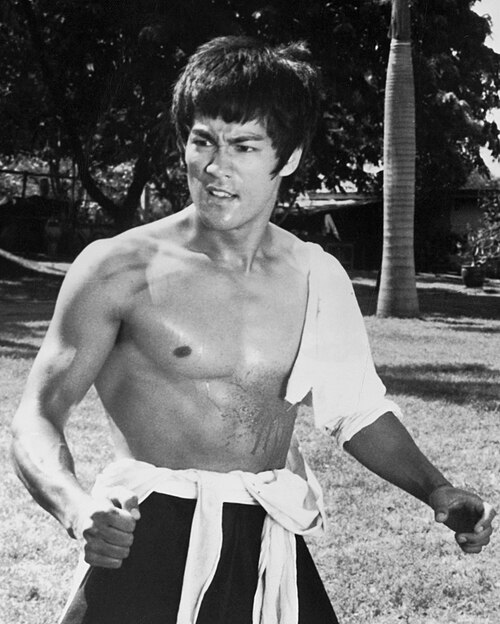
Bruce Lee (November 27, 1940 – July 20, 1973), born Lee Jun-fan, was a Chinese martial artist, actor, director, and film producer with dual identities from Hong Kong and the United States, born in San Francisco. He was the founder of Jeet Kune Do, widely recognized as one of the most influential martial artists of the 20th century and the first globally renowned Chinese film star.
Bruce Lee returned to Hong Kong with his family as a child and began learning Tai Chi from his father at age 7, then studied Wing Chun under Ip Man at age 13. In his early years, he was frequently involved in street fights. After winning the Hong Kong inter-school boxing championship in 1958, he moved to the United States in 1959 to stay with his sister, attending high school in Seattle and later the University of Washington. Enrolling at the University of Washington in 1961, he began teaching martial arts and gradually developed his own martial philosophy. In 1964, he gained fame performing feats like the one-inch punch at the Long Beach International Karate Championships. That same year, a private bout with Wong Jack-man prompted him to reflect on the limitations of traditional martial arts, ultimately leading to the founding of Jeet Kune Do in 1967, which emphasizes "Using no way as way, having no limitation as limitation."
In 1966, Bruce Lee entered the American audience’s view by starring as Kato in the TV series "The Green Hornet." Returning to Hong Kong in 1971, he shot to fame with "The Big Boss." Subsequent films like "Fist of Fury" (1972) and the self-directed "The Way of the Dragon" (1972) successively broke box office records across Asia. In 1973, he starred in the first Sino-American co-production "Enter the Dragon," cementing his status as an international superstar. However, six days before the film’s release, Bruce Lee died suddenly from cerebral edema at the age of 32. The cause of his death remains controversial to this day.
Bruce Lee’s legacy is profound: he shattered Western stereotypes of Asian men, popularized kung fu films globally, and laid the philosophical groundwork for mixed martial arts (MMA). His Jeet Kune Do philosophy inspired countless fighters and athletes, and he is hailed by the UFC president as the "Father of MMA." Time magazine listed him as one of the 100 most important people of the 20th century. After his death, his films continue to have a significant cult following, and his image and philosophy permeate popular culture in film, television, comics, games, and beyond.
Jia Wood born in the Hai month, the month's Resource Star is in command, seemingly obtaining support; however, the overall chart has heavy Earth overwhelming Wood, the year stem Geng Metal Qi Sha (Indirect Officer) attacks the self, the hour stem Wu Earth Pian Cai (Indirect Wealth) drains the Day Master, the Day Master is weak, favoring Water and Wood for support, avoiding Earth, Metal, and Fire. This suggests that Bruce Lee's overall energy state is like a tall tree growing in a swamp—although there is water nourishment (Hai Water as Yin Xing / Resource, representing wisdom, family, helpful people), the surrounding earth and rocks are heavy (Chen-Xu Earth heavy, signifying pressure, practical affairs, wealth burden), above is the chopping axe (Geng Metal Qi Sha, representing competition, violence, challenges), below is the draining of branches and leaves (Ding Fire Shang Guan / Hurting Officer, representing talent, expression, consumption). When the Day Master is weak, it favors Resource and Peer, just as a tree needs more sunlight (Wood) and water (Water) to thrive. He appears strong, yet his inner foundation is unstable; he must constantly draw nourishment from philosophy, family, and learning; otherwise, he can be easily overwhelmed by external challenges and material desires. This inner-outer contradiction forms the essence of his lifelong struggle and propensity to overextend himself.
The hidden Ren Water in the Hai month is the Yong Shen (Useful God) as Pian Yin (Indirect Resource); Jia Wood Bi Jian (Peer) is the Xi Shen (Favorable God). The structure is Qi Sha pattern with Shang Guan, using Yin to transform Sha, and Shang Guan to control Sha as a supplement. Ji Shen (Aversive Gods) are Earth (Pian Cai) and Metal (Qi Sha). The Yong Shen Yin Xing (Resource Star) is akin to the most critical resource and refuge in life. For Bruce Lee, it represents deep thinking, philosophical insights, maternal support, and mentor luck. When he founded Jeet Kune Do, integrating Eastern and Western philosophies, it was a brilliant embodiment of Yin transforming Sha—transforming external pressure into an inner system of wisdom. The Xi Shen Jia Wood Bi Jian signifies assistance from peers and friends, as well as his own vigorous will to survive. However, the chart has heavy Earth and prosperous Wealth, where the Ji Shen Wealth Star overcomes the Yong Shen Resource Star, implying that the pursuit of wealth may harm his foundation of wisdom or health (Wealth harming Resource). Meanwhile, Qi Sha Geng Metal is close by, making pressure ever-present. If Da Yun (Major Life Cycle) or Liu Nian (Annual Influence) brings Earth or Metal again, crises abound. Throughout his life, he balanced this tension: using the Water of philosophy to dissolve the Metal of violence, and the Wood of innovation to dredge the overwhelming Earth. This was the core driving force of his achievements.
The core combination is Sha transforming with Yin, and Shang Guan encountering Sha: the year stem Geng Metal Qi Sha is pressure, transformed by the hidden Ren Water Yin Xing in the Hai month, forming Sha-Yin mutual generation; the month stem Ding Fire Shang Guan controls Geng Metal Qi Sha, constituting Shang Guan controlling Sha. Sha-Yin mutual generation is like turning an oncoming threat into a whetstone, sharpening wisdom and strategy instead. Bruce Lee’s philosophy of “be like water” is the ultimate resolution of Qi Sha pressure—not resisting directly, but guiding, embracing, transforming—exactly the function of Yin Xing. Shang Guan encountering Sha is like an unconventional reformer who dares to challenge old martial arts conventions (Qi Sha represents authority, rules), using skill and innovation (Shang Guan) to break and reshape. This combination shaped his deeply contradictory yet unified character: both the profoundly far-sighted philosopher temperament (Yin) and the sharply rebellious warrior spirit (Shang Guan). In decision-making, he would instinctively first resolve with Yin and then strike with Shang Guan. This was reflected in his founding of Jeet Kune Do: first immersing himself in traditional martial arts, then breaking away, unrestricted by any single form. In interpersonal relationships, he supported those on his wavelength like Bi Jian, but toward oppressors, his Shang Guan pride was fully displayed, possibly making many enemies.
The day branch Xu clashes with the year and hour branches Chen, forming a dual Chen clash with one Xu, causing Earth to be unrestrained. At the same time, the day seat carries Hua Gai (Canopy Star) and Yue De Gui Ren (Monthly Virtue Nobleman), while the year and hour have Jin Yu (Golden Carriage). The Chen-Xu clash is a strong earthly branch turmoil, symbolizing major changes and wandering in life. Bruce Lee’s moves from Hong Kong to America and back, with multiple relocations, and constant drastic changes in career and living environment, are a manifestation of this clash. The dual Chen clashing Xu makes Earth extremely flourishing, greatly damaging Wood Qi, burying hidden health risks, especially vulnerable spleen, stomach, and limbs, and also hinting at the sudden interruption of his life. The layered Hua Gai gives him a solitary, lofty, and spiritually transcendent quality; he was immersed in philosophy and poetry, often feeling lonely amidst the bustling film industry—this is the philosophical contemplation and solitude of Hua Gai. The Yue De Gui Ren is an auspicious star that turns danger into safety, allowing him to always emerge from crises with luck in fierce competitions. The Jie Sha (Robbery Sha) and Wang Shen (Death Spirit) carry danger, but they also help him break through conventions and win great fame. All these are like a net woven by destiny: the clash ignited his perpetual motion, Hua Gai gave him depth of contemplation, and Gui Ren extended a helping hand in danger, together composing a short but magnificent life poem.
The Day Master is Jia Wood, nourished by the Resource Star in the Hai month, with an image of an upright tree; Shang Guan Ding Fire emerges, and Qi Sha Geng Metal hangs overhead, forming a complex personality that is firm yet gentle, wise and brave. This configuration is like a tree growing toward sunlight, needing both roots (Jia Wood’s innate integrity and responsibility) and the desire for branches and leaves to spread (Shang Guan’s expressiveness, creativity). Hai Water as Yin makes him deep internally, fond of thinking, keenly perceptive to the outside world, like tree roots continuously absorbing nutrients. Ding Fire Shang Guan is the fiery side of his character, representing talent, skill, and uninhibitedness, making him charismatic, sharp-tongued, and swift in action. Meanwhile, Geng Metal Qi Sha is like a whip hanging overhead, pushing him to constantly advance, and also giving his temperament a strong assertiveness and competitive drive. Under pressure, he would quickly use the wisdom of Yin Xing to cool his emotions, then seek breakthroughs with Shang Guan techniques; in comfort zones, he might fall into overthinking and hard-earned wealth due to heavy Earth. His emotional needs are complex: longing for understanding and recognition (Yin), needing a stage to shine (Shang Guan), and constantly overcoming inner fear (Qi Sha). This multi-layered psyche created the philosophical yet wild Bruce Lee on stage.
The greatest favorable energy in the chart lies in the pairing of Ding Fire Shang Guan and Hai Water Yin Xing—Shang Guan equipped with Yin, where talent and wisdom complement each other. Shang Guan is the star of skill, representing extraordinary physical coordination, artistic expression, and rebellious innovation. Bruce Lee’s martial arts talent, film performances, and iconic shouts and movements are all ultimate expressions of Shang Guan. Yin Xing is knowledge, theory, and the ability to absorb and transform; he elevated martial arts to a philosophical level and wrote “The Tao of Jeet Kune Do,” which is the achievement of Yin Xing. Shang Guan equipped with Yin is like a genius artist with the mind of a theoretician, making his competitiveness not only in “technique” but also in “principle.” Furthermore, although the year pillar Geng Metal Qi Sha is afflictive, when controlled and transformed, it becomes authority, granting him exceptional tenacity and leadership. In the ring and on set, that imposing aura without anger is the positive manifestation of Qi Sha tamed by Shang Guan and Yin Xing. The areas where this combination most easily gives competitive advantage are careers that require a perfect integration of concept and practice: martial arts reform, film directing and acting, and cultural export—all of which he took to the extreme.
The core conflicts in the chart lie in the mix of Guan and Sha (year Geng Qi Sha and day branch Xin Zheng Guan), the clash between Wealth and Resource (hour Wu Pian Cai overcoming Hai’s Ren Yin), and the day and hour branches containing hidden Bi Jian (Peer) and Jie Cai (Rob Wealth) snatching wealth. The mix of Guan and Sha makes him sometimes decisive (Qi Sha) and sometimes hesitant (Zheng Guan), leading to inner tug-of-war during major life choices, such as his early oscillation between traditional martial arts and innovation. Wealth destroying Resource is the most fatal conflict: Wu Earth Pian Cai represents the pursuit of fame and wealth, overcoming Hai Water Yin Xing, meaning the desire for external success can erode inner wisdom and health. In reality, his excessive training and drug use for his career are extreme manifestations of Wealth destroying Resource—damaging the body’s protection (Resource) to achieve goals (Wealth). The Xin Metal Zheng Guan in the day branch Xu also constitutes Guan-Sha attacking the self, indicating the constraints of office and reputation. The hidden Yi Wood Jie Cai in the earthly branches Chen suggests struggles with collaborators and financial disputes, corresponding to his tense relationships with producers and partners. These conflicts are like double-edged swords, both forcing him to break through and becoming the last straw that broke the camel’s back. The blind spot in his personality was being too competitive (Qi Sha), enduring excessive Earth and Metal pressure beyond the chart’s capacity, while neglecting the need of Yin Xing for rest and recovery.
Taking the whole chart into account, Bruce Lee’s destiny is a stirring elegy of a weak Day Master with strong Sha, and Shang Guan equipped with Yin. The core theme of his life was using extreme physical and mental talent to counter the pressing pressure of fate, and in the process, reshaping the world’s imagination of martial arts and the East. Although Jia Wood was weak, it reached a peak unattainable by ordinary people because of Shang Guan and Yin Xing—this was his fortune; yet with Water and Earth at war, and Chen-Xu clashes shaking the foundation, the Yong Shen was overcome, leading to his decline—this was his doom. He was like a lightning bolt splitting the night sky, briefly illuminating an entire era, then returning to silence. Fate made him refine Metal with Fire and nourish Wood with Water, yet took away the life force of the Wood at its most brilliant. Bruce Lee’s life was a perfect combustion of talent and will, and also a ruthless demonstration of natural law—when the individual overconsumes, the Dao of Heaven balances. His name has become a cultural symbol, proving that Shang Guan equipped with Yin can transcend eras, while the tragedy of Wealth destroying Resource also warns posterity: even the brightest flame needs to anchor its roots in Water.
Pian Cai (Indirect Wealth) sits on Zheng Yin (Direct Resource), Wealth and Resource clash but Resource transforms pressure to nourish the Self. In this Da Yun, the Heavenly Stem Wu Earth Indirect Wealth emerges, while the Earthly Branch Zi Water Direct Resource supports the Day Master. For Bruce Lee, childhood was stable, with his father Lee Hoi-Chuen being a Cantonese opera star providing artistic influence and financial support. Zi Water Direct Resource represents education and helpful people, but Wu Earth Indirect Wealth also hints at early awareness of money-making opportunities. Overall, a stage of learning and foundation-building, laying the groundwork for his future kung fu and film career.
Indirect Wealth emerges on the stem, Resource star transforms pressure, showing early talent. Bruce Lee practiced martial arts with his father and appeared in films like 'Golden Gate Girl' in 1946, entering the entertainment circle early. The Wealth star represents material drive and expressiveness, while the Resource star represents learning and shelter. At this stage, he received paternal resources (Resource) and earned income from performances (Wealth). However, with a weak Jia Wood Day Master, the clash between Wealth and Resource needed balance; his childhood constitution may have been weak, but the Resource star protected him without major issues.
Zheng Yin is the mother, Pian Cai is the father, harmonious family relations but with much change. Bruce Lee traveled back and forth between Hong Kong and the US with his parents; relationships mainly focused on family and early teachers/friends. Zi Water is a Peach Blossom Star, showing liveliness and likability in childhood. However, the Zi-Chen Half Water Combination indicates strong Resource, which could lead to dependency, requiring attention to fostering independence.
Strong Water generates Wood, Resource star protects the self, but Zi-Chen Water Combination causes excessive dampness. Childhood health was acceptable, but attention needed to respiratory and digestive systems. Zi Water Direct Resource also represents rapid recovery of energy, suitable for martial arts training to strengthen the body.
Zheng Cai (Direct Wealth) is pure in stem and branch, Wealth star extremely strong, restraining Resource and draining the Self, pressure coexists with opportunity. Ji Earth Direct Wealth sits on Chou Earth, greatly increasing Wealth power, directly restraining Hai Water Direct Resource, with Chou-Xu Harm and Chen-Chou Destruction, excessive Earth crushing Wood. This decade was a crucial transition from adolescence to young adulthood: he studied, practiced martial arts, fell in love, started his own business, accumulating wealth and fame but under immense stress, testing both body and spirit.
Strong Wealth destroys Resource, abandoning academia for martial arts, seeking wealth through skills. In 1954 Bruce Lee became a disciple of Ip Man to learn Wing Chun, later founded the 'Jun Fan Gung Fu Institute'. He went to the US in 1959, studied philosophy at the University of Washington while teaching martial arts. Direct Wealth represents stable income; he earned money through teaching and competitions. Wealth star harms Resource; his philosophy studies inspired his thinking but were not traditional scholarly achievements. In the early 1960s, his victory over Wong Jack Man and others made him famous in martial arts circles. With strong Wealth and weak self, he relied on Bi Jian (comrades, students) to support him, which also led to conflicts.
Zheng Cai is the wife, Chou is the Metal storage, sprouting of marriage and romance. He met Linda Emery (married in 1963); Zheng Cai merging with the self indicates stable affection. However, the Earthly Branch Chou-Xu Harm caused friction with senior fellow apprentices, such as the conflict with Wong Jack Man. Rising fame brought external attention and expanded networks, but strong Wealth also signifies competition.
Strong Earth restrains Water, Resource star impaired, great energy consumption. Intense martial arts training made him prone to injuries in the lower back and legs (Earth governs muscles and bones). Chou-Xu Harm: watch for gastrointestinal digestion. Emotional pressure was high, guard against impatience.
Qi Sha (Indirect Officer) sits on its own Lu (prosperity), strong Killing attacks the self, using Bi Jian to resist the Killing, reaching the peak of achievement but fraught with danger. The Heavenly Stem Geng Metal Qi Sha (representing pressure, authority, challenges) directly attacks the Jia Wood Day Master, while the Earthly Branch Yin Wood is the Day Master's Lu Shen (vital energy multiplier), forming a pattern of Killing with Resource (Bing Fire in Yin) and Bi Jian coexisting. 1964-1973 was Bruce Lee's golden decade: returning to Hong Kong, filming 'The Big Boss', 'Fist of Fury', 'Way of the Dragon', and 'Enter the Dragon', achieving international fame as a kung fu superstar. However, Qi Sha also represents accidents and bloodshed. In 1973, the Yi Mao Liu Nian (Annual Influence), Mao Wood Jie Cai assisted the self, but Mao-Xu Fire Combination and Chen-You Combination ultimately led to sudden death from drug allergy.
Qi Sha matched with Bi Jian, entering film through martial arts, founding a school and style. Geng Metal Qi Sha represents innovation and breakthrough, Yin Wood Bi Jian represents partners and team. He founded Jeet Kune Do, broke box office records with his films, and brought Chinese kung fu to the world. Qi Sha transforming into authority, he controlled the film crew, wrote scripts, and made decisive career moves. However, with Qi Sha uncontrolled (no Fire emerging in the original chart), behind the success was overwork and a high-pressure environment. Bi Jian supported him with partners like Raymond Chow, but competition was fierce. Wealth increased rapidly but came and went, mostly invested in film production.
Qi Sha is fame, Bi Jian is siblings, extreme interpersonal relationships. Fame was at its zenith, attracting fans and followers but also criticism and jealousy from peers. He had close relationships with disciples like Lam Ching-ying, but conflicts with companies like Shaw Brothers. In family, wife Linda was supportive but they were often apart, children were young. Qi Sha governs disputes, causing conflicts with media and critics.
Clash between Metal and Wood, severe damage to the liver-gallbladder system and musculoskeletal system. Frequent injuries during filming, such as a serious spinal injury in 1970. Qi Sha attacks the self, immense mental pressure requiring sleeping pills. In 1973 Yi Mao Liu Nian, Jie Cai supported the self but Mao Wood clashed with You (Xin You in Chen branch), triggering an accident. Ultimately died from an allergic reaction to painkillers for a headache, fulfilling the danger of uncontrolled Qi Sha.
Zi Wei is at Miao (exalted) and Po Jun is at Wang (prosperous) in the Chou palace, joined by Zuo Fu, You Bi, and Tian Kui. Zi Wei, the Emperor star, and Po Jun, the general who destroys the old to establish the new, together with the three auspicious assistants, form the high-pattern 'Zi Po Chao Yuan' (Imperial Breaker in the East). The strong Travel Palace indicates he was destined to leave home to develop, to carve out an empire in foreign lands, and to receive help from benefactors. Bruce Lee was born in America, returned to Hong Kong to become famous, and later went back to Hollywood for filming—his life repeatedly crossing the Pacific perfectly embodies Zi Po's nature of migration and transformation. Po Jun in its prosperous state made him dare to break conventions, earning him the title of a revolutionary in kung fu films.
This palace has no Four Transformations, but Zi Wei and Po Jun themselves possess immense power, and Wu Qu Hua Quan in the Fortune Palace and Tai Yang Hua Lu in the Property Palace shine their influence distantly. Wu Qu Hua Quan adds to Po Jun the sharpness to achieve through authority, while Tai Yang Hua Lu brings continuous wealth and fame when away from home. Bruce Lee's four consecutive box-office hits in Hong Kong, and the commemorative stamp from Hollywood, all manifest the international reputation brought by Tai Yang Hua Lu. With no Hua Ji impact, the Travel Palace is purely auspicious, so his overseas development was overall smooth.
Bruce Lee returned to Hong Kong from America at 3 months old, went back to America for school at 13, returned to Hong Kong at 27 for filming, and planned to film 'Game of Death' in America at 33—all three major relocations in his life were driven by Zi Po in the Travel Palace. Zuo Fu, You Bi, and Tian Kui ensured he met benefactors everywhere: in America, he was introduced by James Yimm Lee; in Hong Kong, discovered by Raymond Chow; in Hollywood, collaborated with Warner Bros. Po Jun in its prosperous state made him never content with existing achievements, constantly wanting to break new ground, as evidenced by his founding of Jeet Kune Do and hybrid kung fu films.
No dominant star, accompanied by Tian Ma (Mobility Star) and Ling Xing in its exalted state (Mishap Star). The Health Sector is empty, receiving illumination from the opposite Parents Palace's ruling stars Tian Tong (Calm Star) and Tian Liang (Support Star); Tian Ma governs mobility and physical activity, Ling Xing is associated with Fire, governing inflammation and sudden mishaps. In terms of health, Tian Ma endowed him with abundant energy and a dynamic nature, making him exceptionally suited for a martial arts career; Ling Xing, on the other hand, indicated sudden injuries or excess internal heat. Bruce Lee's prolonged high-intensity training led to physical overexertion, and his death in 1973 from cerebral edema reflected the 'Fire' nature of Ling Xing in its exalted state corresponding to brain inflammation, while Tian Ma echoed his excessive physical consumption.
There are no Four Transformations (Si Hua) in this Palace. However, the Parents Palace's Tian Tong transforms into Ji (Obstacle) and opposes this palace. Tian Tong transforming into Ji governs emotional depression or endocrine disorders. Bruce Lee was under constant stress and emotional tension (Tian Tong Ji), combined with cerebral edema (Ling Xing), forming a deadly combination.
In his youth, Bruce Lee was as strong as an ox, but later overtraining, often taking muscle-enhancing drugs, irregular diet, and frequent headaches led to his collapse on set in May 1973 and sudden death two months later, the direct cause being cerebral edema. Ling Xing in its exalted state corresponded to 'inflammatory edema', and Tian Ma reflected 'excessive physical activity'. The Parents Palace's Tian Tong Hua Ji suggested long-term emotional stress related to family (parents) — due to competition in Hong Kong's film industry and his obsession with proving himself, he constantly pushed his body beyond its limits, which is reflected in the Health Palace being empty and opposed by the Obstacle Star.
Tian Ji is at Miao (exalted) in the Zi palace, with no auxiliary stars. Tian Ji is the star of intelligence, change, and analysis; in its exalted state, it brings agility and responsiveness. The Friends Palace represents subordinates, friends, and collaborators. Tian Ji at Miao indicates he was good at leveraging advisors and subordinates, but Tian Ji's Wood nature makes it changeable, causing frequent shifts in partnerships. Bruce Lee, in his martial arts schools and film sets, always had a group of loyal disciples and staff, but the core team often changed (e.g., distancing from core disciple Taky Kimura), reflecting Tian Ji's instability.
This palace has no Four Transformations. But Tian Ji at Miao is already strong enough, needing no transformation trigger. There were always intelligent people around him to advise and plan, but the lack of transformations suggests these relationships did not bring qualitative leaps; they were more transactional assistance.
Bruce Lee's martial arts schools were managed by disciples while he focused on teaching and creation. During 'The Big Boss', he insisted on real fights against all objections, benefiting from team execution; but during 'Fist of Fury', conflicts with director Lo Wei escalated, and he eventually directed himself. Tian Ji at Miao allowed him to quickly adjust collaborators, but the changeability led to a lack of long-term trust among partners. After his death, the people around him scattered, exactly manifesting Tian Ji's dispersion nature.
The Career Palace (Guan Lu) has no main star; the Hai palace is empty. It borrows stars from the opposite Spouse Palace (Lian Zhen and Tan Lang), but Lian Zhen and Tan Lang are in fallen positions, lacking strength. With an empty Career Palace, one must look to the Travel Palace's Zi Wei and Po Jun, and the Destiny Palace's Tian Xiang. In practice, the Travel Palace becomes the primary palace for career achievement. Bruce Lee's career achievements came entirely from developing externally and through transformation; the empty Career Palace instead freed him from fixed patterns, allowing him to forge his own path through effort. An empty palace also implies great career fluctuations—no main star means no fixed track.
This palace has no Four Transformations, but Tian Tong Hua Ji in the Parents Palace and Tai Yang Hua Lu in the Property Palace have indirect influence. Tai Yang Hua Lu in Property means wealth and fame from career can be materialized into family/real estate. Tian Tong Hua Ji in Parents suggests early career was not recognized by tradition (e.g., his father Li Hai Quan opposed his martial arts study). After Bruce Lee became famous in Hong Kong, he purchased properties (Tai Yang Hua Lu), but long-term work pressure caused physical and mental imbalance (Tian Tong Hua Ji).
Bruce Lee's career trajectory: opening martial arts schools in America (driven by Travel Palace) → returning to Hong Kong for films → back to Hollywood. The empty Career Palace allowed him to switch tracks flexibly; no main star means no ceiling, making him the first international Chinese superstar. However, the empty palace also led to a lack of stable teams, doing everything himself, overdrawing his health. His Jeet Kune Do philosophy emphasizes 'using no way as way,' which perfectly mirrors the empty Career Palace—no fixed moves, adapting to circumstances.
Tai Yang (Sun) in a diminished state (not shining) transforming to Lu (Prosperity) in Xu Palace, no auxiliary stars. Tai Yang is a star of brightness and dispersion; not shining indicates insufficient brightness. Transforming to Lu (Prosperity) increases wealth and resource accumulation. With Tai Yang transforming to Lu in the Property Palace, it signifies favorable real estate luck and the ability to gain fame through the home. Bruce Lee purchased a luxurious house in Hong Kong (Kowloon Tong) and converted it into the 'Jun Fan Gung Fu Institute,' spreading his name from his residence. However, Tai Yang not shining means the property was not grand enough or had underlying issues (his family sold it due to inheritance disputes after his death).
Tai Yang transforming to Lu (Prosperity) directly enters the Property Palace. Lu (Prosperity) causes continuous appreciation of real estate, and the home becomes a career base. Bruce Lee's residence in Hong Kong was also a martial arts school where many students learned. Tai Yang transforming to Lu also symbolizes that through 'light' (movies) he illuminated his household, making the Lee family a public figure. But because Tai Yang is not shining, this light also had shadows—after his death, family disputes were incessant.
The residence Bruce Lee purchased after returning to Hong Kong served as both home and martial arts school; he often trained in the courtyard and took promotional photos. After buying it in 1972, it became a mecca for kung fu. Tai Yang transforming to Lu endowed the property itself with brand value, but because Tai Yang was not shining, the property's value declined after his death, and his family sold it without a good price. His father, Lee Hoi-chuen, also lost property due to war. The family's property luck, combining 'not shining' and 'transforming to Lu,' shows that wealth comes easily but can also be lost due to 'fading light.'
Wu Qu (Military Song) sharp, transforming to Quan (Authority), Qi Sha (Qi Sha (Indirect Officer); Indirect Officer) flourishing in You Palace, assisted by Qing Yang (Sheep Knife) fallen. Wu Qu is a wealth and career star, representing resoluteness and decisiveness; Qi Sha is a general star, signifying action and revolution. With both stars in the Fortune Palace, his spiritual world is filled with aggression, desire for power, and impulsive action. Quan (Authority) makes Wu Qu more dominant, and Qi Sha flourishing amplifies execution ability, but Qing Yang fallen brings impatience and anxiety. Bruce Lee's core philosophy was 'be water,' yet in reality he had a fiery temper and pursued extremes, exactly reflecting the aggressive and fierce energy of the Wu Qu - Qi Sha pair plus Qing Yang.
Wu Qu transforming to Quan (Authority) directly enters the Fortune Palace. Quan (Authority) drives him to seek dominance and control at the spiritual level, and Qi Sha flourishing puts this pursuit into action. He founded Jeet Kune Do and made groundbreaking films, all driven by the inner conviction born from Quan. However, Qing Yang fallen makes this conviction destructive—he often argued on set, even physically fought. In his later years, he studied philosophy to calm his mind, but the obsession from Wu Qu transforming to Quan was hard to let go.
Bruce Lee's inner world: He never believed in fate, only in self-transcendence. He wrote 'The Tao of Jeet Kune Do,' integrating philosophy and combat, embodying Wu Qu transforming to Quan's 'entering the Way through martial arts.' Qi Sha flourishing made him demand excellence in martial arts and film, uncompromising. But Qing Yang fallen made him prone to stubbornly fixate, overtrain to prove himself. The headaches and irritability before his death also reflect the 'fire nature' energy of the Wu Qu - Qi Sha pair plus Qing Yang in the Fortune Palace burning to its limit.
Tian Fu (Treasury Star) obtained in the Mao Palace, with the Body Palace coinciding, accompanied by Di Jie (Disruption Star). Tian Fu is a star of the wealth reservoir, steadfast and conservative; being in a favorable earth position indicates skillful financial management; Di Jie represents upheaval and financial loss. With the Body Palace here, it indicates that the central focus of his life was wealth and material stability. Yet with Di Jie intervening, money came and went like the tide, prone to losses due to sudden events. Although Bruce Lee's films were huge box-office hits, his ventures into production and running his own company, along with financial disputes and contract issues, left him with much less than expected — this was exactly the tug-of-war between Tian Fu's wealth-keeping and Di Jie's financial disarray.
There are no Four Transformations in this Palace. However, the Moving Palace's Zi Wei (Emperor Star) and Po Jun (Rebellion Star) transforming into Quan (Authority) (with Wu Qu in the Fortune Palace also transforming into Quan) indirectly influences this palace. Tian Fu itself does not favor transforming into Lu (Prosperity) or Quan, but Zi Wei and Po Jun transforming into Quan in the Moving Palace implies obtaining business opportunities through relocation (such as going to Hong Kong to make films). Bruce Lee's return to Hong Kong and collaboration with Golden Harvest created a new era in martial arts films; the Body Palace in the Wealth Sector made him highly value movie fees and profit sharing. Later disagreements with Raymond Chow were also related to Tian Fu's wealth-preserving nature.
In his early years in the U.S., Bruce Lee's martial arts school brought in meager income, scraping by teaching Westerners (Di Jie's influence). After returning to Hong Kong, he skyrocketed to fame with 'The Big Boss' and his salary soared. Yet he simultaneously invested in multiple ventures (e.g., Concord Films); due to poor management and Di Jie's nature, cash flow was often strained. After his death, protracted inheritance disputes were a continuation of Di Jie's 'disruptive losses'. But Tian Fu in its favored earth position meant he was not lavish in spending; he lived in an ordinary apartment and maintained a simple lifestyle, in keeping with the 'treasury star' essence.
Tai Yin (Moon / Yin Water) in a fallen state transforming into Ke (Fame) in the Chen Palace. Tai Yin is Yin Water, governing gentleness and maternal qualities; in its fallen state, its brightness diminishes, while transforming into Ke bestows talent or fame. Tai Yin transforming into Ke in the Children's Palace indicates offspring with artistic talent and potential social recognition through them. Bruce Lee had a son, Brandon Lee, and a daughter, Shannon Lee. Brandon followed in his father's footsteps to become an actor but tragically died young in an on-set accident. This is a manifestation of Tai Yin in fallen state (dim, weak) combined with Ke (fleeting fame): talented children but ill-fated lives.
Tai Yin transforming into Ke directly falls in the Children's Palace. Ke governs literary achievements and reputation, indicating that children will attract attention through their skills or academics, but the fallen state implies obstacles to development or short lifespans. Brandon Lee gained recognition in Hollywood but died in an on-set accident, truly matching the inauspicious sign of 'Ke in a fallen state': achieving but unable to sustain.
Bruce Lee was strict with his children, wanting them to train in martial arts (Tai Yin's gentleness contrasting with his own fierceness). His son Brandon chose acting, was once well-regarded, but died at age 28 in 1993 from an accidental shooting on the set of 'The Crow'. Tai Yin in fallen state transforming into Ke in the Children's Palace corresponds to 'short-lived brilliance' and a 'soft, ill-fated path'. His daughter Shannon did not pursue acting but carried on the martial arts legacy, living a stable life instead, demonstrating that the instability of Tai Yin in a fallen state only manifested in the more prominent child.
Lian Zhen (Insight and Temptation) fallen, Tan Lang (Desire and Charisma) fallen in the Si Palace, no auxiliary stars. Lian Zhen is the secondary romance star, ruling imprisonment and power plays; Tan Lang is the social star, ruling desire and speculation. Both fallen in the Marriage Palace suggest that romantic relationships are filled with instability and power struggles. The combination of Lian Zhen's 'imprisonment' and Tan Lang's 'desire' makes one prone to both control and craving novelty in intimate relationships. However, the fallen state weakens the positive energy, making negative tendencies more apparent—Bruce Lee's relationship with his wife appeared harmonious on the surface, but he was long focused on his career and was rumored to have affairs, reflecting Tan Lang's fallen romance and Lian Zhen's fallen control issues.
No Four Transformations in this palace. The absence of direct Four Transformations indicates that marriage was not a direct driver of his life's highs or lows. However, his Fortune Palace Wu Qu (Finance Star) turning Authority and Parents Palace Tian Tong (Tranquility Star) turning Anxiety indirectly affected the Marriage Palace, implying that in his interactions with his wife, 'authority' (Wu Qu Authority) and 'emotional detachment' (Tian Tong Anxiety) coexisted. Bruce Lee and his wife Linda spent little time together; in his later years, exhaustion on set and a short temper (negative Wu Qu Authority) formed a cycle with the 'emotional suppression' of Tian Tong Anxiety.
After marrying Linda, she fully supported his career, but Bruce Lee's long hours of intense work, martial arts training, and filmmaking left him with little investment in family. Lian Zhen and Tan Lang fallen in the Marriage Palace explain why he was frequently rumored to have affairs with female stars (Tan Lang's romance), and his control over his martial arts school and film sets (Lian Zhen's 'imprisonment'). Their relationship lasted until Bruce Lee's death, but it was not easygoing romance, but rather a combination of realism and responsibility (Lian Zhen's 'lock').
Ju Men (Dispute and Secrecy) in prosperity in the Wu Palace, accompanied by Wen Chang (Literary Star) fallen and Huo Xing (Fire Star) in temple. Ju Men is a dark star governing disputes, conflicts, and hidden matters; in prosperity it indicates eloquence but easily attracts controversy. The fallen Wen Chang impairs writing or communication skills, while Huo Xing in temple grants explosive action. This combination in reality manifested as: Bruce Lee's tense relations with siblings (including martial arts brothers)—Ju Men caused disagreements, Huo Xing intensified conflicts. He was discordant with other disciples under Ip Man and later broke away, reflecting Ju Men's 'separation' and Huo Xing's 'advancing impulsively.'
No Four Transformations in Sibling Palace. The absence of direct Four Transformations indicates that sibling relationships were not a core driving force in his life's turning points, but Ju Men, the dark star in prosperity, still formed a continuous backdrop of disputes and conflicts. Bruce Lee's lawsuits with peers and ostracism in the Hong Kong film industry can be mapped from the Ju Men Sibling Palace to broader interpersonal circles (such as industry competition).
Bruce Lee had only one brother (who died young), so actual sibling ties were thin, but Ju Men and Huo Xing symbolize more of the competitive environment among peers. His conflicts with Chinese martial arts masters in America and friction with directors on set were manifestations of Ju Men's 'hidden struggles' and Huo Xing's 'open conflicts.' With a strong personality unwilling to submit to others, he eventually chose to establish his own martial arts school and direct his own films, embodying the eruptive mode of 'self-mastery' granted by Huo Xing in temple.
Tian Tong (Heavenly Unity) prosperous transforming to Ji (Hindrance), Tian Liang (Heavenly Beam) fallen in Shen Palace, Wen Qu (Literary Music) attained, Lu Cun (Sustained Prosperity) in same degree. Tian Tong is a star of blessings, representing gentleness and enjoyment, but transforming to Ji (Hindrance) indicates diminished blessings; Tian Liang is a star of shelter, representing protection from elders, but being fallen means insufficient shelter. Wen Qu, when attained, signifies inherited talent; Lu Cun is a wealth star indicating savings. The combination in the Parents Palace suggests: a kind but frustrated father (Tian Tong transforming to Ji), a mother with an artistic background (Wen Qu), and a family not wealthy but sustainably supported (Lu Cun). Bruce Lee's father, Lee Hoi-chuen, was a famous Cantonese opera clown, but the family's fortunes declined during the Japanese occupation and later they immigrated to the U.S., corresponding to Tian Tong transforming to Ji (damaged blessings) and Tian Liang fallen (weak elder protection).
Tian Tong transforming to Ji (Hindrance) directly enters the Parents Palace. Ji (Hindrance) signifies deficiency, regret, representing regrets regarding the father's fate or physical/mental health. Lee Hoi-chuen worked long and hard, suffering from illness in later years; Bruce Lee's relationship with his father was somewhat distant (his father opposed his martial arts training), exactly manifesting Tian Tong transforming to Ji. Lu Cun in the same palace indicates the family still had savings to send him to study in the U.S.
Bruce Lee's father, Lee Hoi-chuen, was one of the 'Four Great Clowns' of Cantonese opera. Due to war, he took the family to the U.S. and later returned to Hong Kong. From childhood, Bruce Lee was influenced by his father to engage with performance (Wen Qu), but his father did not approve of martial arts, wishing him to study. Tian Tong transforming to Ji turned this paternal care into pressure. His mother, Grace Ho, had European ancestry and came from a wealthy family (Wen Qu attained, Lu Cun), providing Bruce Lee with good artistic upbringing and financial support. Tian Liang fallen foreshadowed shortened parental longevity—Lee Hoi-chuen died in 1965, and Bruce Lee could not fulfill filial duties; his mother lived on after his fame, but the pain of losing her son was immense.
Tian Xiang (Harmony and Mediation) in strength in the Wei Palace, assisted by Tian Yue (Mentor Star), Di Kong (Void), and Tuo Luo (Delay) in temple. Tian Xiang is the seal star, governing coordination, assistance, and fairness. In strength it indicates stable energy expression; Tian Yue is a mentor star, Di Kong represents ideals and emptiness, and Tuo Luo represents delay and repetition. This combination created a personality that pursues perfection yet tends to self-conflict—Tian Xiang made him good at integrating resources and playing the 'mediator' role, but Di Kong made his concepts ahead of the times, and Tuo Luo slowed down execution. Bruce Lee often played the embodiment of justice in films, but in reality his forward-thinking ideas (such as Jeet Kune Do integrating various styles) faced criticism from peers, reflecting the dual nature of Tian Xiang + Di Kong: a sense of order on one hand, and a desire to subvert on the other.
No Four Transformations in this palace directly, but the Travel Palace Zi Wei (Emperor Star) and Po Jun (Pioneer Star) with Zuo Fu, You Bi, and Tian Kui form the indirect impetus of the 'Zi Wei Po Jun Breaking Boundaries' formation. Without Hua Lu, Hua Quan, Hua Ke, or Hua Ji directly falling in the Destiny Palace, it indicates that his life trajectory was more triggered by external forces and choices from palaces like Travel and Career, rather than driven by karmic forces from his own Destiny Palace. Zi Wei and Po Jun in the Travel Palace (actually influenced indirectly by Wu Qu turning Authority in the Fortune Palace) strengthened his impulse to venture far from home and blaze new trails, which perfectly matches Bruce Lee's life path of going to America in his youth and later returning to Hong Kong to make films.
Tian Xiang in strength in the Destiny Palace made Bruce Lee appear gentle and polite in social interactions, yet Di Kong and Tuo Luo gave him an inner loneliness of 'not being understood.' In the early days of opening his martial arts school in America, he insisted on teaching only Chinese people and not foreigners (which later changed), causing unstable income—a manifestation of Tian Xiang's 'guarding principles' and Tuo Luo's 'repeated deliberation.' His creation of Jeet Kune Do and using films to propagate his philosophy were products of Di Kong's 'forward-thinking concepts'—breaking cultural barriers between East and West through images, which is the ultimate expression of Tian Xiang's nature of harmonizing contradictions in the context of his era.
Generate your personal chart in under a minute. Sign up free and get 30 credits — enough for two or more AI readings. No credit card.
Generate my free BaZi chartPlease sign in to join the discussion
Sign In