Year
Xin
Hai
Shi Shen
Shang Guan
Hidden Stems
Ren (Shang)Jia (Zheng)
- Star Luck
- Tai
- Sitting Branch
- Mu Yu
- Void
- Yin-Mao
- Na Yin (Elemental Sound)
- Chai Chuan Jin
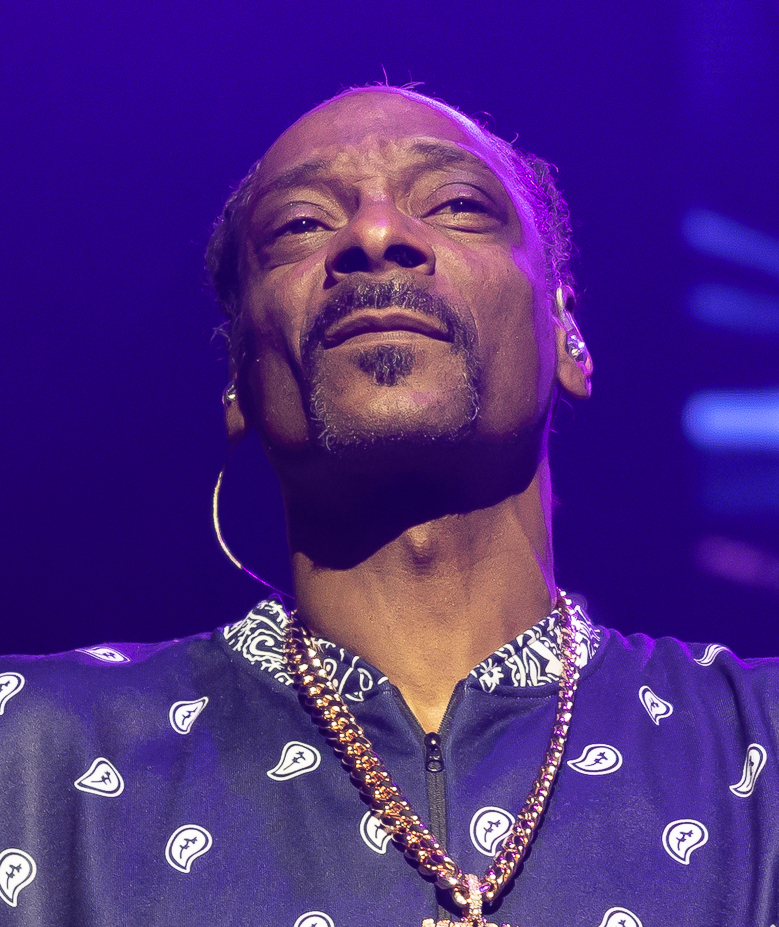
Snoop Dogg, born Calvin Cordozar Broadus Jr., was born in 1971 in Long Beach, California, USA, and is widely regarded as one of the most influential figures in contemporary West Coast hip-hop. His career began in 1992, when he broke through on Dr. Dre’s landmark album The Chronic. In 1993, his debut solo album Doggystyle was released on Death Row Records; propelled by hit singles such as “What’s My Name?” and “Gin and Juice,” he quickly rose to fame and established his signature laid-back delivery and G-funk sound. However, during his ascent he became embroiled in a murder charge, and he was not acquitted until 1996—an experience that led him to reflect and gradually distance himself from a gang-associated lifestyle.
In 1998, amid contract disputes and dissatisfaction with the environment at his former label, he moved to No Limit Records, and then sustained his commercial success in the early 2000s through a deal with Geffen Records. His 2004 single “Drop It Like It’s Hot” earned him his first No. 1 on the Billboard charts. Beyond music, Snoop Dogg has been prolific across film and television, business ventures, and brand endorsements. His public persona has gone through multiple reinventions, including a brief rebrand as “Snoop Lion” after adopting Rastafarianism in 2012 and exploring reggae, as well as the release of a gospel album in 2018—demonstrating strong cross-genre adaptability.
In recent years, Snoop Dogg has also made major moves in business. In 2022, he successfully acquired Death Row Records—the label that first made him famous—marking a return from artist to label owner. At the end of 2024, he released his 20th studio album, Missionary, once again underscoring his enduring presence in popular culture. With more than 35 million albums sold worldwide, multiple Emmy honors, and 17 Grammy nominations, he has become an iconic symbol of global hip-hop culture.
The Ji Earth Day Master (Ji Tu) is born in the Xu month, supported by Wu Earth (Wu Tu) showing on the month stem and rooted in Xu Earth, so the chart is assessed as Day Master strong (Shen Wang). Ji Earth is like fertile garden soil—soft, moisture-holding, and supportive. Born in late autumn, Earth qi is dense and seasonally strong. A strong Day Master suggests a naturally robust energy field and high stress tolerance, much like broad land that can carry many loads. This often shows outwardly as relaxed and unhurried, while inwardly remaining steady and hard to shake. The key advantage is the stability and capacity that come with “thick Earth,” while the potential challenge is stagnation—too much Earth can become blocked, and without healthy outlets it may slide into stubbornness or inertia.
The chart takes Xin Metal (Xin Jin) as Shi Shen (Output Star) on the year stem as the primary useful focus, and it benefits from Water (Wealth Star) to moisten the chart—forming the favorable pattern “Shi Shen generates Wealth” (Shi Shen Sheng Cai). With Earth overly strong, the chart needs Metal to vent and refine it—balancing energy through the expression of talent. Here, Shi Shen points to eloquence, artistic presentation, and a distinctive aesthetic; “generating Wealth” means that such talent can translate into tangible income. This shapes the life strategy: rather than relying on Bi Jie (peer/competition dynamics such as raw hustle or group rivalry), progress comes through Xin Metal—symbolically, the microphone, a signature tone, and a recognizable style—clearing Earth’s heaviness. The flow of talent becomes the source of wealth.
The month branch Xu Earth and the day branch Mao Wood form “Mao–Xu Liu He” (Mao Xu Liu He), a special configuration often described as Jie Cai (Peer Rival) combining with Sha. Qi Sha / Pian Guan (Indirect Officer; technically: Qi Sha (Indirect Officer)) refers to high-pressure forces—risk, confrontation, and institutional or legal constraint—while Jie Cai relates to brothers, allies, and one’s social circle. Their “combination” suggests not being swallowed by a high-risk environment, but reaching a kind of coexistence and workable truce with it. This tends to color the personality with an ability to move between informal street codes and formal rules: loyalty and camaraderie (Jie Cai) paired with the capacity to handle intense, rule-bound pressure (Qi Sha). What could have manifested as destructive conflict is more likely redirected into a charismatic, commanding leadership presence.
The Day Master sits on Jiang Xing (Command Star), and the year branch Hai Water together with the day branch Mao Wood form a partial Wood combination, reinforcing the authority-signature of Qi Sha (Indirect Officer). Jiang Xing is an Auxiliary Star associated with command and leadership within one’s circle. This helps explain how someone could evolve from an ordinary street figure into a hip-hop godfather-level presence. The Hai–Mao partial combination increases Wood (pressure/Officer-Killing influences), yet Hai Water as the Wealth Star also channels early resources toward the Day Master—suggesting that early street experiences (Hai) can later become a foundation for establishing standing and influence (Mao).
The Ji Earth Day Master carries the quality of “humble, moist, and accommodating,” and with Shi Shen venting and refining, it often presents as a soft, flexible kind of wisdom—outwardly smooth, inwardly principled. Ji Earth differs from Wu Earth’s more rigid firmness; it is like cultivated soil—softer and highly adaptable. This describes a signature baseline: very laid-back, socially skilled, and unlikely to charge head-on. Under pressure, rather than snapping or clashing, it tends to absorb, contain, and dissolve tension. This profile also helps explain long-term resilience in a combustible hip-hop scene—taking in changes like a sponge while keeping an inner steadiness and calm.
Xin Metal on the year stem, as the focal point of “refined qi in motion” (Xiu Qi Liu Xing), is the chart’s strongest talent reservoir. Xin Metal is “jewelry metal”—fine, detailed, and precise—often reflecting a highly recognizable vocal texture and artistic style. When Earth is heavy, this Xin Metal becomes especially precious and prominent. In plain terms, it suggests an ability to “turn rough material into something polished”: refining raw street life (thick Earth) into crafted art (Xin Metal). Competitive advantage in music and business rests on this distinctive, smooth, seemingly effortless mode of expression.
The core tension is that Wu Earth in the month command, as Jie Cai (Peer Rival), is overly strong, carrying the recurring risk of “Bi Jie competing for Wealth” (Bi Jie Zheng Cai). Jie Cai can bring strong brotherhood and loyalty, but it also implies depletion and competition. This can show as repeated life challenges tied to “people”—being dragged down by friends, legal disputes, or the need to support a large team. With Earth qi too dense, personality blind spots can include procrastination, inertia, or over-staying the comfort zone (Earth favors stillness). Keeping Xin Metal (creativity/output) flowing is key; otherwise momentum can stall, or benefits may be diluted by the surrounding “brotherhood” dynamic.
Overall, this is a classic fame-oriented configuration often summarized as “heavy Earth with elegant Metal output, with Sha and Yin in subtle alignment.” The life path tends to illustrate the principle that a “problem” can become the source of distinction: overly strong Earth (a heavy, complex background) becomes the soil that nurtures Xin Metal (unique talent). Through the Mao–Xu combination, the chart shows an ability to tame Qi Sha’s high-pressure edge and convert it into worldly authority and influence. The broader arc is a case study in using art (Shi Shen) to open blockages in relationships, soften harshness, and ultimately achieve both name recognition and material gains.
Pian Yin (Resource; unconventional learning) appears on the stems, nurturing the Day Master; Shi Shen (Output; artistry) is in its Growth phase and well-rooted. This decade is a latent period in which the native’s mind matures early and talent begins to germinate. The heavenly stem Ding Fire as Pian Yin points to an original way of understanding and a non-traditional thinking style; it not only warms the chart’s damp earth but also sharpens his sensitivity to his surroundings. The earthly branch You Metal is Shi Shen, a source of talent and expression; being well-placed suggests artistic gifts quietly fermenting within. For a teenager growing up in Long Beach, this pairing makes him keenly aware of the harshness of street life (Pian Yin), while also able to transmute it into expression through a medium (such as language or rhythm) (Shi Shen). This is not a carefree childhood, but a stage of gathering material for a future “street poet.”
Shi Shen begins to reveal refined output; the Resource star supports him with warmth. In schooling and early socialization, the eloquence and performative impulse signified by Shi Shen start to show. Although there is not yet tangible career wealth, You Metal—an important symbol of Wen Chang (literary aptitude) and artistic skill in the chart—suggests he is less likely to achieve through conventional academics (Zheng Yin) and more likely to stand out via distinctive skills. The presence of Ding Fire Pian Yin often indicates nourishment from non-mainstream contexts: while family or community may be complicated, it can still provide unusual survival wisdom and early resource support.
Resource stars reflect the mother; Shi Shen reflects joy. Ding Fire Pian Yin leading on the stems suggests a strong influence from the mother or senior female figures during this period, with care that may feel protective or somewhat indulgent. Shi Shen in the branches indicates that among peers he begins forming an initial social circle through humor or a standout skill (such as early rap attempts). Even if real social influence has not yet formed, a “likable” quality is already emerging.
Fire and Metal contend; dryness begins to stir. Ding Fire counteracts You Metal; Fire–Metal tension often shows up through the respiratory system or skin. During growth years, pay attention to lung and throat care—especially relevant for a future rapper’s core “instrument.” Emotionally, Pian Yin can lean toward solitude while Shi Shen favors optimism; alternating between the two may create swings between inward observation and outward expression.
Shang Guan (Output; rule-breaking expression) arrives in season and grows strong; Zheng Yin (Resource; orthodox support) is prominent and restrains excess. This is the decade with the greatest explosive momentum and turning-point significance. The earthly branch Shen Metal as Shang Guan points to rebellion, breaking rules, extreme talent release, and challenges to mainstream order; the heavenly stem Bing Fire as Zheng Yin points to reputation and support from mentors and benefactors. This “Shang Guan paired with Yin” structure is a classic signature of public recognition: Shang Guan draws him into street life, gang involvement (Crips), and even incarceration—an intense rebellious arc—while Zheng Yin brings the right mentor at a critical time (Dr. Dre), converting destructive force into artistic achievement. Over these ten years, he undergoes a sharp transformation from street troublemaker to global superstar.
Shang Guan generates wealth; fame and gains arrive together. Shen Metal Shang Guan is a powerful wealth engine, implying substantial returns through non-traditional skill (rap). In 1992–1993 (Ren Shen, Gui You), Metal and Water are exceptionally strong; Shang Guan and Shi Shen energies peak, and the unprecedented success of the debut album “Doggystyle” reflects a full, clean release of Shang Guan power. At the same time, Shang Guan also relates to disputes and legal exposure: achievements may come with heightened legal risk, so even as the career soars, life can hover between jail time and luxury—wealth arriving fast, but accompanied by controversy.
Jie Cai (Peer star; competitive sharing) is hidden; mentors stand in the open. While a Shang Guan decade can easily offend others, prominent Bing Fire Zheng Yin suggests strong backing from an elder or mentor-level figure (such as Dr. Dre) who can vouch for him and help defuse crises. Shen Metal also forms a harm interaction with Hai Water in the natal chart, hinting that early circles (gang “brothers”) can be both a source of inspiration and a generator of trouble—relationships swinging sharply between loyalty and betrayal.
Metal is excessive, Water is strong; Fire is taxed. Intense Metal–Water can benefit talent, but it can over-consume Fire energy (heart and mental vitality). Under this kind of luck cycle, lifestyle may trend toward excess; drug or alcohol use (as an outlet for Shang Guan) can become a health risk. Watch psychological pressure and disrupted routines.
Hai–Mao–Wei form a Three-Harmony Wood frame; Qi Sha / Pian Guan (Indirect Officer) pressures the self yet transforms into authority. In this major cycle, the earthly branch Wei Earth joins the natal Hai (year) and Mao (day) to form the strong “Hai–Mao–Wei” Three-Harmony Wood frame. In this chart, Wood signifies Officer/Kill dynamics (power, pressure, law), meaning the native shifts from solo talent display (Metal) into deeper entanglement with power, status, and legal matters. Qi Sha pressing the self often points to major crises (such as a homicide trial), yet with the frame successfully formed, Qi Sha is more likely to be converted into authority, influence, and control. This decade is when he “gets through the storm” and establishes his standing—moving from a trouble-attracting celebrity to someone who can carry pressure like a true heavyweight.
Sha and Yin support each other; winning through risk. The Three-Harmony Wood frame brings heavy career pressure and the need to pivot. Leaving Death Row Records and signing with No Limit can be read as seeking room to operate under strong external pressure (Qi Sha). Early on, lawsuits may drain significant resources, yet Qi Sha also signals the courage to open new territory. Over this decade, income shifts from primarily record royalties toward brand-building and cross-industry collaborations that channel Qi Sha pressure—cementing an unshakeable “godfather” position in entertainment.
The Three-Harmony frame activates; networks reorganize. The Hai–Mao–Wei frame tightly links the year pillar (society / distance), day pillar (self / spouse), and the major cycle. This not only suggests breaking away from early gang-level entanglements and entering higher-stakes games, but also indicates that family ties (with the day branch involved) can become closer after major tests. The loyalty and social finesse he shows in this period help him accumulate strong prestige in the industry.
Wood and Earth contend; the digestion system is taxed. Strong Wood counteracts Earth (the Day Master), putting pressure on spleen–stomach and digestion. Excessive Qi Sha can also manifest as nervous tension, anxiety, or reliance on substances to cope. Prioritize digestive care and emotional regulation to avoid stress-driven mind–body imbalance.
Jia and Ji combine into Earth; the Officer star “combines to the self.” In this decade, the major-cycle stem Jia Wood (Zheng Guan, Direct Officer) combines with the Day Master Ji Earth, while the branch Wu Fire (Pian Yin, Resource) provides a strong root for the self. This is the key period in which he fully shifts from a “gang icon” into a mainstream public figure. “Zheng Guan combining to the self” suggests acceptance and recognition by mainstream society, even a kind of public-facing legitimacy. He is no longer perceived as a frightening street predator, but rather as a widely embraced entertainment symbol. Wu Fire, carrying both Tao Hua (Peach Blossom; charisma) and Resource qualities, helps his popularity cross racial and class boundaries; he even explores reggae (the Snoop Lion period), showing strong adaptability.
Officer and Resource reinforce each other; fame and earnings stabilize. Zheng Guan emphasizes management and collaboration; Pian Yin supports side ventures and reputation. In this decade, his work is no longer limited to releasing albums; it expands broadly through reality TV, film cameos, and commercial endorsements. The Jia–Ji combination reflects skill in building stable partnerships with major platforms and brands (such as the collaboration with Katy Perry). Wealth becomes diversified and more “regularized,” pushing his commercial value to a new high—essentially becoming a walking IP.
Peach Blossom enters the chart; smooth social navigation. Wu Fire corresponds to Xian Chi (Peach Blossom; charisma/romance), and Jia–Ji combine. His public image becomes notably approachable. In family terms, Zheng Guan combining to the self often points to a return toward responsibility; while strong Peach Blossom implies many temptations, the combining structure suggests a preference for maintaining a stable family framework and public image—becoming, in the public eye, a beloved “national uncle” figure.
Fire and Earth both strong; excessive dryness. Wu Fire generates Earth; vitality can be robust, but overly dry Fire–Earth may incline toward inflammatory tendencies or circulation issues (cardiovascular). Prioritize hydration and balancing internal dryness, and avoid burnout from an overly active social schedule.
Si and Hai clash; Yi Ma (Mobility Star) meets a clash. In this major cycle, the branch Si Fire clashes strongly with the natal year branch Hai Water, creating an intense “Si–Hai clash.” The year branch relates to roots and the wider world; both Si and Hai are Yi Ma (Mobility Star), and a Mobility Star in clash highlights change, travel, and cross-boundary expansion. The stem Gui Water as Pian Cai (Indirect Wealth) is visible. This is the decade of rapid business expansion and the most intense cross-industry diversification. The clash breaks old geographic and sector limits: he is not only a musician, but also an investor, a TV host (partnering with Martha Stewart), and an Olympics commentator. The turbulence is not inherently negative; it spreads his influence into unexpected arenas.
Indirect Wealth shows clearly; a commercial heavyweight. Gui Water Pian Cai prominent indicates substantial business wealth beyond fixed salary income. The Si–Hai clash activates Fire–Water dynamics in the chart, showing up commercially as keen instincts for higher-risk ventures (the cannabis industry, tech investing). While “clash” implies instability, it also implies fast-moving opportunity. He leverages this mobility to monetize his personal brand to the fullest; income scale may exceed the period when he relied mainly on entertainment work.
Roots are shaken; more time apart than together. When the year branch is clashed, it can suggest shifts in living environment or health concerns for elders/relatives. Socially, the clash brings connections with many people outside entertainment (business, sports), producing a qualitative reshuffle of his circles. Even with strong outward social skills, Yi Ma meeting a clash can also imply that family life may experience more separation due to frequent travel and commitments.
Water and Fire contend; heart–kidney axis needs support. The Si–Hai clash is a strong Water–Fire confrontation, corresponding to cardiovascular (Fire) and kidney/urinary systems (Water). Such intense dynamics can correlate with sudden health events or large swings in energy. Build in enforced downtime amid heavy business activity, and monitor blood pressure and heart health.
The wealth vault is clashed open; Water and Earth mix. In the upcoming major cycle, the stem Ren Water is Zheng Cai (Direct Wealth), and the branch Chen Earth is a Water repository (a “wealth vault”); Chen also clashes the month branch Xu Earth, forming the “Chen–Xu clash.” This is a decade of opening the wealth vault. Zheng Cai points to stable assets, while Chen–Xu clash suggests significant restructuring or reallocation of holdings. At this age, it often corresponds to establishing trusts, estate planning, or large-scale reorganization of family assets. It is also a stage of “storing inward”—shifting from front-stage visibility to behind-the-scenes capital operations.
Direct Wealth sits on the vault; steady accumulation. Ren Water Zheng Cai appearing indicates more reliable income streams (such as catalog/copyright income and long-term investment returns). Chen–Xu clash opening the vault suggests major asset liquidation, consolidation, or deployment. Career-wise, he may prefer expansion through capital moves such as acquisitions and mergers rather than hands-on performance. This decade consolidates lifetime wealth and closes out the building of a business empire—while also calling for caution around Jie Cai (Peer star) themes (hidden stems within Chen and the Earth clash), which can show up as partner disagreements or property disputes.
Kinship clash dynamics; family matters come forward. Chen–Xu clash activates the month pillar domain (often read around siblings, parents, and the family system). This commonly involves internal personnel changes in the family, or benefit-sharing and interest alignment among siblings and friends. He may need to spend significant energy handling family relationships, or face the passing of old friends. This is a stage that requires balancing practical interests with long-term bonds.
Earth clash pressure; prevention over reaction. Chen–Xu clash can intensify Earth dynamics; Earth relates to tissues, muscles, and spleen–stomach. In later years, an Earth clash calls for careful prevention regarding proliferative conditions (such as nodules or tumors) or chronic digestive issues. Regular checkups—especially gastrointestinal and abdominal screening—are particularly important.
Shi Shen restrains Sha; strong and active in later years. The stem Xin Metal as Shi Shen appears, while the branch Mao Wood is Qi Sha / Pian Guan (Indirect Officer), and Mao is also the Day Master’s seated root. This reflects an image of “craft and artistry tempering power and pressure.” In later life, this suggests he still maintains strong creative and expressive drive (Shi Shen) and can use wisdom and seniority to manage complex situations (Qi Sha). He may become a spiritual leader in the industry—commenting on the world with relaxed humor (Shi Shen) while enjoying high social standing.
Reputation generates wealth; a cultural elder. Shi Shen relates to reputation and late-life blessings, while Qi Sha relates to status. This decade’s wealth is mainly the monetization of “legendary standing.” Rather than intense commercial battles, he exists as a cultural totem. He may devote energy to education, philanthropy, or writing a memoir—turning lived experience into spiritual and cultural value for future generations.
Fu Yin (repetition) on the day branch; returning inward. The major-cycle branch Mao matches the natal day branch Mao (Fu Yin), often pointing to deeper self-reflection and a return to inner priorities. Family life becomes central; a spouse’s health or the relationship itself may become a focus. In public, he may present as kinder and more transparent—an elder seen as wise by younger people.
Metal and Wood contend; tendons and bones need care. Xin Metal counteracts Mao Wood; Mao relates to limbs, tendons, and also liver–gallbladder. In old age, a Metal–Wood contention period most calls for guarding against falls and injuries, arthritis, or liver–gallbladder decline. Gentle, moderate movement (such as taiji or walking) is more suitable than intense exercise.
Shang Guan meets Zheng Guan; disputes are hard to fully avoid. The stem Geng Metal is Shang Guan, and the branch Yin Wood is Zheng Guan (Direct Officer). Classical phrasing says, “When Shang Guan meets Guan, many complications arise,” but in very late-life cycles this often shows more as a “mischievous elder” temperament. He may still speak sharply or out of step (Shang Guan), which can spark controversy (meeting Guan). For an elder in his eighties, this friction is more likely to be read as personal style and persistence rather than disaster. This decade looks like a final round of playful critique of established rules while reviewing a lifetime.
Stepping back from the scene; copyrights endure. At this stage, conventional career concerns recede; the focus shifts to managing rights and passing on family wealth. Geng Metal Shang Guan suggests his works continue to generate influence, while Yin Wood Zheng Guan suggests using legal frameworks to protect those rights. Some handling of estate or copyright legal documents may be involved.
The Officer star is supported; widely respected. Despite the “Shang Guan meets Guan” image, Yin Wood combines with natal Hai Water (Yin–Hai combine to Wood), easing part of the tension. This suggests that even if his words are sharp, he remains deeply respected in the circle. In later years, he may prefer spending time with younger generations (Shang Guan often relates to juniors), sharing experience.
Metal–Wood complexity; watch the nervous system. The structure still reflects Metal–Wood contention, and can also be stirred by Yin–Shen clashes if annual influences trigger them. Pay special attention to nervous-system themes (Wood is often mapped to nerves), such as stroke risk or tremors common in older age. Keeping a calm emotional baseline and avoiding strong agitation supports longevity.
Bi Jian (Peer star) supports the self; returning to Earth. Both stems and branches are Earth, and Bi Jian is strong. For a Ji Earth Day Master, this indicates a return of energy and a slowing-down. A Bi Jian cycle in later years often corresponds to simplicity and conservatism. After a lifetime of vivid Metal, Water, Wood, and Fire dynamics, everything settles back into Earth’s weight and quiet. This is the twilight stage—life naturally trending toward calm, with space to enjoy a final period of peace.
Distributing wealth outward; blessings for descendants. Bi Jian can indicate sharing and division; in later years it often reflects wealth allocation. The meaning of wealth now lies in fair distribution to children and grandchildren, or giving back to society. New growth drivers are less central; the focus shifts to “preserving” and “allocating.”
Same-qi companions; old friends thinning out. Bi Jian also represents peers. At this age, a Bi Jian cycle often coincides with the gradual passing of same-generation friends, which can bring inevitable loneliness. Yet Earth’s stabilizing quality also points to family continuation; he may enjoy the warmth of multiple generations under one roof.
Heavy Earth covers Metal; follow natural rhythms. Excess Earth can “bury” Metal (lungs/respiration), and strong Earth can also counteract Water (kidneys). Functional decline becomes part of the natural course. Keeping life quiet and well-rested, and following the body’s rhythms, becomes the most practical guideline in this cycle.
Tian Xiang (Seal/Chancellor Star) stands alone: the imprint of stewardship and support. In Zi Wei Dou Shu, Tian Xiang is often called the "Seal Star," symbolizing a chancellor or general entrusted with the imperial seal. It points to strong coordination skills, a keen sense of balance, and excellent image and presence management. Unlike the sharper, more confrontational "Sha Po Lang"-type configurations, this star emphasizes "harmony first" and diplomatic smoothing. This pattern can give the native a distinct sense of ease and socially versatile charisma—able to stay cool and composed even in high-friction environments, combining street-level loyalty with the ability to move comfortably in refined settings.
Supported by Ju Men (Gate of Speech) transforming to Lu under the Xin Heavenly Stem: discreet prosperity follows. Although the Life Palace main star itself does not directly carry the Four Transformations, influence from the Parents Palace—where Ju Men transforms to Lu (Prosperity/Benefits)—suggests an inborn, subtle advantage of "earning through words." This field links personal branding and presence (Tian Xiang) closely with verbal expression (Ju Men), so reputation is often built on a distinctive communication style.
These Tian Xiang qualities closely mirror Snoop Dogg's distinctive position in hip-hop: not the most aggressive gangster figure, but one of the most cross-over capable "diplomats." From hardcore rap to partnering with lifestyle icon Martha Stewart, Tian Xiang's harmonizing energy supports his ability to move fluidly between contrasting worlds and tastes, sustaining a signature "godfather" image that feels recognizable without being overtly confrontational.
Ju Men (Giant Gate; Speech & Disputes) as a dim luminary: words invite controversy, yet Hua Lu brings a turning point. Ju Men relates to speech, barriers, and disputes. In the Fu Mu Gong (Parents Palace), it often suggests emotional distance from parents in early years, or a family environment marked by arguments and tangled issues. As a “dim” star, Ju Men can also symbolize that one’s background carries an aspect not easily understood or accepted by the mainstream.
With the Xin Heavenly Stem, Ju Men transforms to Hua Lu (Transform-to-Prosperity): wealth through speech, turning the discarded into value. This is a pivotal reversal in the chart. Ju Men, originally linked to disputes, becomes “the wealth of eloquence” through Hua Lu. It suggests that a trait inherited from one’s family line or upbringing (such as street vernacular or survival intelligence) can be converted—through one’s voice and expression—into substantial wealth. Even if ancestral support feels incomplete, it can ultimately become the very source of one’s rise.
Snoop’s starting point was not privileged (the “dim” aspect of Ju Men), yet he transformed street language and Black slang (Ju Men as “the mouth”) into globally influential rap artistry (Hua Lu). In practical terms, he rewrote family destiny through speaking. Ju Men Hua Lu aptly points to rising from the bottom to the top by means of a distinctive voice and linguistic style, enabling a major shift in social standing.
Tian Liang (Canopy/Protector Star) guards this palace: elder energy and principled presence. Tian Liang signifies protection, support from elders, and a strong moral compass. When placed in the Siblings/Peers Palace, it often indicates that within the native's social circle or partnerships there is a "big-brother" or spiritual-leader type figure—or that the native is readily elevated into a role with arbitration authority. This star also carries a refined, somewhat lofty quality, suggesting that even if the core circle (e.g., Dogg Pound) came up from the streets, it may still operate with clear hierarchy, seniority, and internal order.
Tian Liang itself does not transform to Lu; influenced by Tai Yin (Moon Star), it favors enduring bonds. The steady energy of Tian Liang here suggests partnerships that go beyond pure transaction, rooted more in codes of loyalty and quasi-family commitment. This stabilizes the base of support, while also implying a tendency to carry others' burdens out of loyalty.
This configuration reflects his early-career ties with Dr. Dre and Death Row Records, and later his "Uncle Snoop" stance of mentoring younger artists. He is often regarded in the scene as a reliable "big brother" (Tian Liang). That role positioning helps him build a stable, protective network even within a volatile hip-hop landscape.
Zi Wei (Emperor Star) and Qi Sha / Pian Guan (Indirect Officer) in the same palace: authority forged through decisive power. This is a notably strong pairing. Zi Wei signifies sovereignty and command; Qi Sha (Indirect Officer; technically: Qi Sha (Indirect Officer)) is the archetype of a disciplined, hard-edged general. When they share a palace, it often points to a spouse with a powerful, self-sufficient personality—someone who can, at times, "check" or effectively manage the native. The relationship dynamic can resemble "ruler-and-minister" or "comrades-in-arms" more than a purely sentimental, conventional romance.
Zi Wei gains leverage; Qi Sha adds force—strength balanced with strategy. This strong transformational field suggests the spouse plays a stabilizing "anchor" role in the native's life. When the native is out in the world or facing turbulence, the spouse's firm involvement can often help steady the situation. It tends to be a partnership that works best with substantial mutual respect and clear boundaries around authority.
This helps explain his relationship with his wife Shante Broadus (whom he calls "Boss Lady"). From high-school sweethearts through a marriage with ups and downs, Shante has consistently been a strong managerial presence behind the scenes. The Zi Wei + Qi Sha signature suggests that a steady, decisive partner who can hold the center is especially well-suited to balancing a highly charismatic, socially magnetic hip-hop superstar.
Tian Ji and Po Jun converge—volatility and depletion coexist. (Note: based on the chart provided by the user) Tian Ji governs strategy and change; Po Jun governs disruption—breaking first, then rebuilding. When these two stars sit in the Children Palace (also associated with subordinates, works/creations, and fans), it suggests the native approaches the younger generation or creative output with extreme flexibility and a distinctly subversive edge. His “offspring” (whether biological or artistic protégés) often display rebellious, nonconformist traits, with very high mobility and turnover.
Tian Ji is agile; Po Jun disperses—innovation through renewal. This combination indicates that in nurturing newcomers or during the creative process, it is necessary to repeatedly “break” established patterns. The native tends to invest heavily in this area, often accompanied by rapid consumption and restructuring of resources; yet it is precisely this dynamic that can give rise to a new generation with striking creativity and disruptive power.
This aligns with his expansive “Snoop family” and countless co-branded collaborations. His way of engaging with “subordinates” or “disciples” is highly spontaneous (Tian Ji), and he frequently reorganizes across fields (Po Jun). From music to a business empire, his “output” remains in a constant cycle of breaking and rebuilding—without a fixed template, full of surprises and variables.
Tai Yang sits in place—prestige generates wealth; spending attracts people. Tai Yang emphasizes status more than hoarding riches. In the Wealth Palace, it suggests income arises from reputation, standing, and public influence. Like sunlight that shines broadly, it indicates highly fluid cash flow: returns are often gained through “giving” and “showing up.” Unlike Wu Qu’s tendency toward “accumulation,” Tai Yang’s wealth is a classic case of monetizing fame—the more well-known and publicly active one is, the wider the financial channels become.
Xin-stem: Tai Yang transforms to Hua Quan (Authority)—authority enters wealth; the brand becomes currency. This is a decisive set of Four Transformations. Tai Yang Hua Quan implies the native carries strong decision power and brand dominance in business. His name (fame) itself takes on the value of authoritative endorsement, capable of converting directly into substantial commercial gains. Hua Quan amplifies Tai Yang’s control, making it not only about being known, but also about commanding the pathways of monetization.
Snoop Dogg’s commercial footprint fully illustrates the energy of “Tai Yang Hua Quan.” He is not merely a musician but a super IP. From endorsing Corona to investing in the cannabis industry to frequent appearances and cameos, he is effectively selling the authoritative endorsement of the “Snoop Dogg” brand. His wealth is driven less by meticulous calculation and more by omnipresent visibility (Tai Yang) and brand pull backed by authority (Hua Quan).
Tan Lang (Greed Wolf; Desire & Talent) presides: the ruler of desire, a tension between sensuality and spirit. Tan Lang is a primary Peach Blossom (Charisma / Romance) star and also represents desire and artistry. When it enters the Fu De Gong (Well-Being & Inner Life Palace), it suggests exceptionally vigorous life force and desire, with a drive for sensory stimulation, artistic pleasure, and spiritual freedom. Tan Lang is also known as a “cultivation” star, implying that one’s inner world may swing between intense indulgence and intense spiritual or religious pursuit.
Tan Lang governs change: a kaleidoscope of the inner world. This field of energy makes monotony hard to tolerate; one may need constant entertainment, creative output, or shifts in belief systems to address an inner sense of emptiness. It points to a classic hedonistic streak, yet also strong insight—an ability to develop a distinctive life philosophy while moving through worldly experiences.
This is a key code for reading Snoop Dogg’s inner life. From immersion in cannabis and parties (Tan Lang’s desire-oriented side), to the sudden rebranding as Snoop Lion with a turn toward reggae spirituality, and later releasing a gospel album (Tan Lang’s cultivation-oriented side), his life repeatedly expresses Tan Lang’s signature: seeking spiritual anchoring amid pleasure and spectacle. His happiness tends to come from candidly acknowledging desire—and refining it into something larger.
Tai Yin (Moon; Wealth & Property) enters the storehouse: a wealth star returning to its place, strong real-estate fortune. Tai Yin is regarded in Zi Wei Dou Shu as one of the most important wealth indicators, associated with stillness, preservation, and property—especially housing. Tai Yin in the Tian Zhai Gong (Property & Home Palace) is among the most favorable configurations, suggesting the native has strong potential for acquiring real estate and tends to seek comfort, quality, and privacy in the living environment. Tai Yin’s yin, gentle nature also implies that female family members (such as the mother or spouse) may have a notable influence on household matters.
Tai Yin governs savings; when the moon is full, it is complete. This pattern suggests that even when outward spending is high, the underlying accumulation of assets tends to keep growing. Tai Yin’s energy is like steady streams converging into a river—often indicating a discerning eye for investments in real estate or collectibles, and that home functions as a harbor where one restores and replenishes energy.
Although Snoop is known for a party-centric lifestyle, Tai Yin indicates that deep down he places exceptional value on the sense of security that “home” provides. He holds substantial real-estate assets, and he nourishes himself through highly comfortable, carefully curated arrangements in his residences (Tai Yin favors enjoyment and refinement). This also helps explain why, after becoming famous, he was able to preserve his wealth rather than experiencing the kind of financial collapse seen among many peers.
Tian Fu (Treasury & Steward Star) holds the fort—resource-based growth and winning through stability. Tian Fu is regarded as a key Southern Dipper authority star and is also linked with the “wealth repository.” In the Guanlu Gong (Career Palace), it indicates an especially steady, conservative, long-horizon career trajectory. Unlike the Sha Po Lang (Breakthrough/Trailblazer pattern) that favors high-risk charges, Tian Fu emphasizes consolidation, stewardship, and management. This implies that even if the native appears spontaneous, there is often strong strategic depth and planning behind the scenes—skilled at accumulating resources and avoiding unprepared battles.
Tian Fu is not typically described through Si Hua (Four Transformations), yet it signifies a well-stocked repository of rewards and resources. This energetic pattern tends to support a long professional lifespan. Tian Fu helps convert short-term bursts of momentum into durable assets. What stands out is not fleeting hype, but a bank-like operating mindset—diversifying and managing risk with steady, pragmatic strategy.
Snoop Dogg is widely seen as an “evergreen” figure in hip-hop. While many talented peers fell due to internal turmoil or overly aggressive choices, Tian Fu favors the most stable route: moving from Death Row to No Limit, then expanding independently—each step grounded in solid business logic. He has effectively run his performance career as a large, stable “treasury,” ensuring ongoing output.
Lian Zhen (Discipline & Desire Star) enters the chart—strong secondary Peach Blossom energy, with complex friendships. Lian Zhen is a nuanced star, often associated with both restraint/confinement themes and “secondary Peach Blossom (Charisma/Romance)” dynamics. In the Nupu Gong (Friends & Networks Palace), it points to a highly mixed social circle spanning many walks of life. Lian Zhen’s “bloodline/heat” symbolism can also hint at early involvement with groups defined by strict rules, loyalty codes, or sworn-bond dynamics (such as gangs).
Lian Zhen highlights the tension between impulse and order. This configuration suggests the native may be drawn to people who are intense, edgy, artistically inclined, or socially peripheral. Friends can bring major help (Peach Blossom-style popularity and connections), yet may also correlate with legal entanglements or confinement-related pressure (the restraint/confinement motif). Overall, relationships can feature both temptation and risk.
This aligns closely with his early Crips gang background and his later complex entertainment-industry connections. The “confinement” theme resonates with legal disputes he was pulled into when young due to loyalty to friends; the “Peach Blossom” side helps explain how, in an industry full of temptations, he could leverage distinctive personal charisma to build an expansive network.
Wu Qu is Metal in the Five Elements, linked with the respiratory system under constraint. With Wu Qu in the Health Palace, it corresponds (in traditional Chinese medical-astrological mapping) to the lungs, respiratory tract, as well as bones and teeth. Wu Qu represents hard, resolute Metal; in the Health Palace it often suggests these areas may be prone to “hardening” tendencies or strain from overuse. Whether Metal is excessive or challenged, it can point to respiratory sensitivity or longer-term wear.
Wu Qu’s Metal qi faces disturbance—be mindful of Metal–Wood contention. This configuration suggests the body’s “Metal” domains (lungs, large intestine, skin) are key focal points in energy metabolism. Without moderation, external intake and lifestyle factors can more easily translate into sustained load on this system over time.
This is almost ironically echoed in the native’s habits. As one of the world’s most famous heavy smokers, his lungs (Metal) have borne a load most people could hardly imagine. Wu Qu’s hardness may confer unusual tolerance, yet the chart clearly highlights that the primary long-term health vulnerability continues to revolve around the respiratory system.
Tian Tong (Fortune Star) presides here—good fortune tends to follow, and travel often brings pleasant encounters. Tian Tong is known in Zi Wei Dou Shu as a “Fortune Star” and an “Inner Child” archetype. Placed in the Qianyi Gong (Travel & Public Image Palace—how one is perceived externally and one’s luck away from home), it suggests the native comes across as exceptionally approachable, with an unmistakable youthful, playful vibe. This natural likability often makes others more forgiving—much like how people indulge a child—so it can be easier to receive support from Gui Ren (Mentors/Helpful People) when developing in other cities or abroad.
Tian Tong relates to mood, enjoyment, and softening harsh edges. This kind of energetic signature can strongly neutralize the stern, intimidating aura that might have come with an early gang-associated environment. In public, what shows up is less aggression and more humor, ease, and a harmless, feel-good presence. This “blessed” quality can be a key factor in being accepted across ethnic and social boundaries by mainstream audiences.
This helps explain how someone who once faced a murder allegation could later be embraced nationwide as a beloved cultural mascot. Tian Tong lends a built-in “harmless filter”: on camera—whether joking around, cooking, or doing Olympic commentary—he naturally radiates Tian Tong’s pure entertainment spirit and childlike sincerity, which tends to make him welcome wherever he goes.
Generate your personal chart in under a minute. Sign up free and get 30 credits — enough for two or more AI readings. No credit card.
Generate my free BaZi chartPlease sign in to join the discussion
Sign In