Year
Wu
Zi
Zheng Guan
Bi Jian
Hidden Stems
Gui (Bi)
- Star Luck
- Lin Guan
- Sitting Branch
- Tai
- Void
- Wu Wei
- Na Yin (Elemental Sound)
- Pi Li Huo
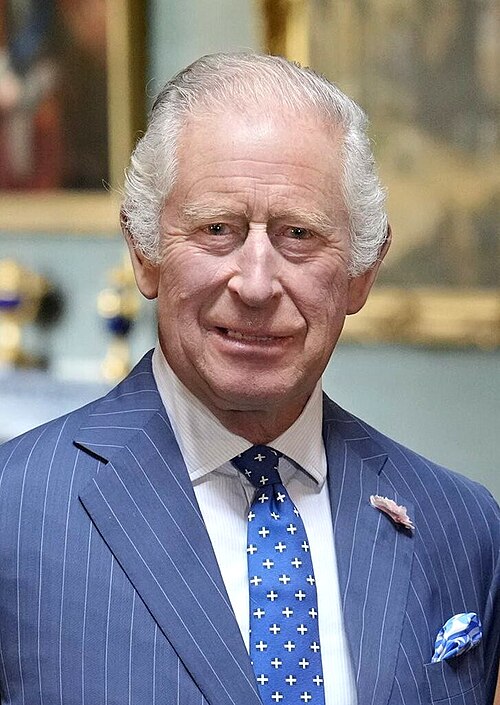
Charles III (full name Charles Philip Arthur George), born on November 14, 1948 at Buckingham Palace, London, England, is the eldest son of Queen Elizabeth II and Prince Philip. He is the current King of the United Kingdom and Head of the Commonwealth of 14 realms.
Educated in royal tradition from an early age, he attended Hill House School, Cheam School, and Gordonstoun School. In 1966, he spent two terms at the Timbertop campus of Geelong Grammar School in Australia. In 1967, he entered Trinity College, Cambridge, initially studying archaeology and anthropology before switching to history, graduating in 1970 with a Bachelor of Arts degree with upper second-class honours, becoming the first British heir to the throne to earn a university degree.
From 1971 to 1976, he served in the Royal Air Force and Royal Navy, learning to fly and serving as a ship's commander. After leaving active duty in 1976, he founded The Prince's Trust, dedicated to helping young people start businesses, and subsequently established numerous charitable organizations, forming the "The Prince's Charities" network. As heir apparent, he carried out his duties actively, representing his mother at home and abroad, and showed interest in topics such as architecture, environmental protection, organic farming, and alternative medicine, occasionally making controversial remarks.
His marital life attracted much attention: he married Lady Diana Spencer in 1981, with whom he had two sons, Prince William and Prince Harry; they divorced in 1996. In 1997, Diana died in a car accident. In 2005, Charles married his long-time companion Camilla Parker Bowles.
On September 8, 2022, following the death of Queen Elizabeth II, Charles became King at the age of 73, the oldest monarch to accede to the British throne in history. He was crowned at Westminster Abbey on May 6, 2023. In February 2024, Buckingham Palace announced that he would suspend public duties for cancer treatment, later gradually resuming. From 2025 onwards, he continues his royal duties as King, including visits to countries such as Canada and Australia.
The Day Master Gui Water is born in the Hai month, receiving the month's command at Emperor Prosperity, the year branch Zi water serves as Lu (Prosperity Star), the hour pillar Gui Hai brings many Bi Jian (Peer) and Yin Xing (Resource Stars), the Day Master is extremely strong, forming a Cong Qiang (Follow the Strong) structure. This energy state indicates that he is naturally energetic, but has a deep and introspective mindset, with rich and sensitive emotions, and a strong sense of self. Because the Water force is overly strong and unchecked, with a strong body but no dependence, he tends to stick to his own views in reality and is unwilling to compromise, yet this also leads to a long-term feeling of being constrained by the system. The Day Branch Mao Wood Shi Shen (Output) releases brilliance, serving as the pure element of the whole chart; the Heavenly Stem reveals Wu Earth Zheng Guan (Zheng Guan (Direct Officer)), but unfortunately rootless and floating, washed away by the strong Water, making it a false Guan. This means that although he has a noble status and titles, he lacks substantial control power, and his life achievements rely more on intelligence and expression rather than the exercise of power. The overall impression is gentle and refined yet quietly stubborn, his greatest strength being creativity and artistic appreciation, while the potential challenge is the tendency to fall into the contradiction between idealism and reality.
The structure is Cong Qiang (Follow the Strong), the Yong Shen (Beneficial Element) is Water and Wood, the Xi Shen (Favorable Element) is Metal (the Yin Xing / Resource Star generates Water), the Ji Shen (Unfavorable Element) is Fire and Earth. Water represents Bi Jie (Peers) and Yin Xing (Resource Stars), signifying the supportive environment and his own foundation; Wood represents Shi Shen (Output), signifying talent, thought, and expression; Fire represents Cai Xing (Wealth Star), signifying material desire and control; Earth represents Guan Sha (Authority Stars), signifying career power and constraints. Yong Shen Water and Wood means his favorable resources lie in the support of relatives, friends, and subordinates, and deep cultivation in the cultural and artistic fields; Ji Shen Fire and Earth suggest he should avoid pursuing direct economic benefits and power struggles. This determination profoundly influenced his life choices and path of achievement: as the crown prince for decades, he did not insist on fighting for real power but instead devoted himself to public welfare such as environmental protection, architecture, and education, which is the manifestation of the Shi Shen Yong Shen. When he did not forcefully seek Wealth (such as royal property) and Guan (speedy succession), he instead accumulated reputation and eventually ascended the throne smoothly at an advanced age, confirming the wisdom of 'going with the flow'.
The core combinations are 'Shi Shen (Output) releasing brilliance' and 'Bi Jie (Peers) snatching the Guan (Officer).' The Day Branch Mao Wood Shi Shen is the star of talent and artistry, nourished by Hai Water, forming the pure and elegant Water-Wood image, endowing him with extraordinary aesthetics and creativity; the year stem Wu Earth Zheng Guan (Zheng Guan (Direct Officer)) is competed over by the three Gui Bi Jian (Peers), forming the clear image of 'Bi Jie contending for the Guan,' representing extremely fierce competition for status and titles. This combination shaped his character of being sensitive and talented yet forced to endure patiently for a long time. In decision-making style, he tends to overcome hardness with softness, using cultural influence instead of administrative orders; in interpersonal patterns, he craves spiritual resonance, but the overabundance of Bi Jie easily triggers emotional competition, making him appear indecisive in handling intimate relationships; in career choice, he avoided hardcore political arenas, turning instead into an 'action-oriented prince,' establishing foundations to promote social innovation, all of which deeply align with the way of the Yong Shen.
The Day Pillar carries Tian Yi Gui Ren (Heavenly Nobleman) and Wen Chang Gui Ren (Literature Star), indicating nobility and literary fame. Tian Yi is a star that turns misfortune into fortune, and Wen Chang governs scholarly achievement and writing; these two Shen Sha enable him to always receive help from high places in difficult times, with his knowledge and ideas gaining social recognition, as evidenced by his published works and environmental initiatives. The year branch Zi is Peach Blossom (Romance Star), indicating rich emotions and potential emotional entanglements; the year pillar Wu Zi and Day pillar Gui Mao, with the Heavenly Stems Wu and Gui combining while the Earthly Branches Zi and Mao create the Punishment of Impoliteness, symbolize innate conflict in marriage and relationships. The strong Peach Blossom star with Punishment directly corresponds to the mutual harm in his marriage with Princess Diana and the world-famous emotional turmoil; the Zi-Mao Punishment also represents rude disputes and inner torment. The hour branch Hai-Hai Self-Punishment causes frequent inner struggles. This Shen Sha combination created his psychological pattern of being sensitive, contemplative, and often self-doubting; after experiencing multiple public opinion storms in life, he can still calm his mind and pursue ideals, demonstrating the philosophical aspect of Water-Wood.
Gui Water is Yin Water, akin to rain and dew, born in the Hai month, three Gui appear on the stems, the Water force overflows, a classic case of 'Water governs wisdom'; the Day sits on Mao Wood Shi Shen (Output), presenting the pure and elegant 'Water-Wood' image. He is like still waters running deep, calm and gentle on the surface, yet his mind is full of myriad thoughts. His thinking pattern leans toward emotional intuition, skilled at capturing emotions and inspiration from details; he has strong and delicate emotional needs, craving understanding and appreciation, which led to complex relationships with his stern father Prince Philip and authoritative mother Queen Elizabeth II, spending his life seeking spiritual resonance. In his comfort zone, he displays an affable artistic temperament and the face of a son of nature; under pressure, he tends to withdraw into himself and become indecisive, sometimes appearing hesitant and wavering. This fundamental character determines that he is more like a poet philosopher than a decisive monarch.
Shi Shen (Output) is strong and prosperous as the whole chart's Yong Shen, making abundant talent his greatest advantage. Shi Shen represents creativity, expression, and intellect; his talent is concentrated in deep cultivation of organic agriculture, traditional architecture, art, and philosophy, publishing multiple works such as 'Organic Gardening' and founding the Prince's Foundation, all achievements stemming from the Shi Shen energy. The Water generating Wood combination endows him with natural competitiveness in fields requiring innovation, communication, and aesthetics. The sustainable community concept he advocated was ahead of its time, once seen as eccentric, but ultimately validated. This potential enabled him to influence the world without relying on power, exerting a competitive advantage in cultural and social experimental fields.
Multiple Bi Jie (Peers) snatch the Guan (Officer), and Cai Xing (Wealth Star) is not prominent, forming a configuration of 'Bi Jie crowding and Guan star floating.' Bi Jie represent peers and competitors, and a floating Guan star means having a title without real power, leading to long-term intense struggles for status in his career yet difficulty in wielding actual authority. His delicate relationships with the Queen and Parliament, and the overshadowing of his star in marriage with Diana, all imply this conflict. The Mao Wood Shi Shen (Output) is combined with Hai Water, causing obstacles in realizing creative ideas. His personality weakness is overthinking and indecisiveness, poor at handling real conflicts, and under pressure he easily escapes to the mental world. This internal conflict caused him to spend most of his life in waiting and compromise, with a constant tug-of-war between ideal and reality, resulting in significant internal drain.
The whole chart is pure and elegant with Water-Wood yet meets a floating Guan star, destined for a life of 'respected but not powerful,' leaving his mark in history through cultural influence rather than political power. He chose the company of nature and art, transforming the long waiting period as crown prince into an experimental field for reforming society, turning hardship into creation. His life theme is: accumulating wisdom in waiting, displaying grace under constraints, and filling the power vacuum with patience and sincerity. Ultimately, he was crowned as 'King,' but what was truly crowned was the atypical crown prince story he wrote with his life—though late, it is well-deserved.
Shang Guan (Output) releases brilliance, Bi Jian (Peer) supports the self. This cycle sees a surging Water momentum, the Day Master extremely strong. Shang Guan Jia Wood emerges to drain the excessive qi, indicating talent revelation and active thinking, but also prone to rebellious tendencies. For the young prince, this is a period of education and character formation. He shows interest in art and history, but also feels constrained under strict royal discipline. Overall, it's a stage of knowledge accumulation and budding individuality.
Shang Guan generates wealth, but the Wealth Star is not prominent. Jia Wood Shang Guan can generate Fire (wealth), but the original chart lacks Fire, so wealth sources do not manifest. Thus, there is no substantial financial accumulation in career; rather, the focus is on study and talent cultivation. During this cycle, Charles enters school, achieves average to good grades, but does not show particular leadership qualities. Financially, he depends on royal support and has no independent income. The key is the independent thinking and critical spirit represented by Shang Guan, which foreshadows his later attention to architecture, environmental protection, etc.
Bi Jie (Peers) appear frequently, Officer Star restrained. With many Bi Jian, there are many friends and peers. However, the Stem of the year, Zheng Guan Wu Earth, is combined by three Gui Water, leading to the early death of his father, King George VI (in 1952), and his mother, Queen Elizabeth II, ascending the throne with strong maternal authority. His relationship with his mother is formal, and he has little communication with his father. In school, he is somewhat distant from classmates. The emergence of Shang Guan also makes him prone to aversion to rules set by elders, but it manifests as introverted sensitivity.
Water strong, Earth weak, spleen and stomach vulnerable. The chart has extremely strong Water, and Earth is drained by Water, so watch for issues with the spleen, stomach, digestive system, and damp-cold problems. During adolescence, strengthen physical exercise and avoid exposure to water and cold. Emotionally, strong Water governs melancholy, and Shang Guan brings mood swings, so mental health needs attention.
Shi Shen (Expression) controls Sha, damp Earth nurtures Wood. Yi Wood Shi Shen emerges, draining brilliance and generating wealth. The earthly branch Chou Earth (Qi Sha) is useful, but Chou is damp Earth, its power to control Water limited. This cycle is youth, emphasizing artistic refinement and responsibility. He enters Cambridge University and begins royal duties. Shi Shen represents gentleness and creativity, while Qi Sha represents pressure and mission. He gradually appears composed in public, but inwardly still yearns for free expression.
Qi Sha approaches Wealth repository, career emerges. Chou Earth Qi Sha is the root of the Officer Star, and Chou is Metal repository, hiding Xin Metal Pian Yin, indicating he gains some positions and advisory roles within the royal family. In 1969, he is formally invested as Prince of Wales, becoming heir apparent. His career shifts from student to royal family member, but actual power is limited. Financially, he begins to have an independent income source (Duchy of Cornwall revenue). Shi Shen generates wealth, and his interests in agriculture and environmental protection begin to sprout.
Shi Shen combines with Officer, marriage brewing. Yi Wood Shi Shen has a tendency to combine with the year stem Wu Earth, indicating romantic inclinations. Later in this cycle, he meets Camilla Shand (1970), and they become close. However, under family pressure, he needs to find a more suitable princess. Relations with his mother remain distant, while his father, Prince Philip, is strict with him. Shi Shen also represents love of animals, and he actively participates in equestrian sports.
Chou Earth and Chen repository, pay attention to joints. Shi Shen controls Sha, energy is relatively strong, but Chou Earth as Metal repository requires attention to joint overuse. With a Water-strong constitution, still watch for dampness, appropriate exercise like horseback riding can strengthen the body. Emotionally, Shi Shen brings pleasure, but Qi Sha can easily cause anxiety.
Wealth Star combines with the self, Shang Guan generates wealth. In this cycle, Bing Fire Zheng Cai combines with Gui Water Day Master, while Yin Wood Shang Guan generates Bing Fire, forming an auspicious pattern of Wealth Star affectionate and Shang Guan generating wealth. Fire is the favored element, completely changing the cold Water state of the original chart. This is the golden period of Charles's life: actively engaged in career, marrying Diana in marriage, family happiness. The Wealth Star also represents material enjoyment; he begins to have more autonomy and wealth accumulation.
Zheng Cai combines with the self, both wealth and officer are excellent. Bing Fire Zheng Cai combines with the self, indicating stable direct income; and the Wealth Star generates Officer (Bing Fire generates Wu Earth), consolidating his career status. He is enthusiastic about charity, founding The Prince's Trust (1976), focusing on youth and community. During this decade, his charitable endeavors expand, personal wealth grows from Duchy of Cornwall revenues. In 1981, he marries Diana in a grand wedding, boosting his international prestige. Shang Guan generates wealth: he publishes books, gives speeches, engages in architecture, philosophy, etc., attracting attention.
Wealth Star combines with Day, marital harmony. Bing Fire is the wife star, combining into the Day Master, indicating marital harmony. Initially, his relationship with Diana is good, and they have William (1982) and Harry (1984). However, Shang Guan emerging also represents the pursuit of freedom and independent space, and personality differences with Diana gradually emerge. In family relations, his relationship with his mother improves somewhat, but remains distant.
Fire warms the chart and body, health improves. This cycle has strong Fire warming the body, constitution improves, energy abundant. However, Yin combines with Hai to become Wood, Wood qi excessively strong, so watch liver and gallbladder function. Emotionally, Wei Cai combining with self brings pleasure, but Shang Guan can easily stir mood swings, so restrain temper.
Pian Cai emerges on stem, Shi Shen generates wealth. Ding Fire Pian Cai and Mao Wood Shi Shen, the Wealth Star is even stronger, but Mao is combined by Hai, Shi Shen is fettered. This cycle's prosperity is still auspicious, but marriage shows cracks. In career, he continues charity and public duties, but personal life becomes a media focus. Shi Shen represents art and enjoyment; he is fond of country life, painting, and philosophy. Pian Cai governs fluidity; his marriage with Diana separates in 1992 and officially divorces in 1996.
Pian Cai flourishes, investments active. Ding Fire Pian Cai represents investment returns and extra income; he invests in real estate and organic farming through the Duchy, wealth grows. However, Shi Shen being combined hinders creative ventures. His 1994 biography "Charles: The Man, the Myth" stirs controversy. In career, he begins to take on more duties on behalf of the Queen, but succession remains distant.
Shi Shen governs emotions, marital change. Mao Wood Shi Shen represents desire and emotions, but is combined by Hai Water, emotions suppressed. His relationship with Camilla continues, while Diana exposes marital problems in 1992. Relations with his mother are tense, and public opinion turns against him. After Diana's death in 1997, he is greatly grieved, but gradually recovers his relationship with Camilla. This cycle marks the lowest point of his reputation.
Wood strong, Fire blazing; watch cardiovascular health. Ding Fire Pian Cai, but Mao Wood generates Fire; excessive Fire can harm the cardiovascular system. Beware of high blood pressure and heart strain. Emotionally, Shi Shen being combined causes inner distress, prone to depression; need outlets like gardening, art.
Officer Star reappears, many Waters contend for Officer. Wu Chen Zheng Guan stem and branch unified, but original chart has many Bi Jian, Officer Star is overcome by the many Waters, forming an image of "Officer Star contended". This cycle, Officer Star is useful but damaged, representing power and responsibility but accompanied by pressure and controversies. He formally divorces Diana (1996), her death (1997) triggers huge public opinion, and he is once blamed. In career, he continues to wait for the throne and begins to rebuild his image.
Officer Star attacked, career setbacks. Zheng Guan represents position and reputation, but is contended by Bi Jian, meaning his public image is damaged, power eroded. After Diana's funeral in 1997, his approval rating plummets. He shifts focus to environmental protection and organic farming, writing "Harmony: A New Way of Looking at Our World" (2010) etc. Financially, due to divorce settlement and public pressure, expenditures are huge, but Duchy income remains stable.
Officer Star as taboo, family conflicts. Wu Chen Officer Star combined by Bi Jian, indicates competition with siblings (royal family members) and generational succession pressure with his mother. His relationship with Camilla is made public in 1998, but still criticized. In marriage, he weds Camilla in 2005, but public acceptance is not high. Relations with William and Harry are tolerable.
Earth and Water at war, spleen and stomach issues. Officer Star Earth is overcome by Water; beware of weak spleen and stomach, indigestion. Chen is Water repository, excessive dampness, susceptible to rheumatism. Emotionally, Officer Star attacked brings anxiety and sense of responsibility, need stress management.
Qi Sha attacks the body, Wealth Star transforms Sha. Ji Earth Qi Sha emerges on stem, Si Fire Zheng Cai has root, forming wealth generating Sha. Qi Sha represents challenges, change, and pressure, but Si Fire is favored, able to restrain excessive Sha. This cycle, he actively promotes charity and environmental causes, while preparing for succession. After marrying Camilla in 2005, family life stabilizes. In career, he receives more dignitaries, engages in diplomacy, gradually regaining public respect.
Wealth generates strong Sha, career breakthroughs. Qi Sha nurtured by wealth indicates he proactively takes on responsibilities and risks. He expands the influence of The Prince's Trust, launches the "Prince's Rainforests Project," etc. He criticizes modern architecture, stirring controversy but gaining attention. Financially, Duchy income grows annually; he invests in organic farming and renewable energy. Qi Sha also represents competition, and he has philosophical differences with his son William on environmental issues.
Qi Sha is restrained, interpersonal relations improve. Ji Earth Qi Sha is generated by Si Fire Wealth Star, but Si-Hai clash causes friction within the family. Relationship with Camilla is solid; she becomes an important support. Relations with his mother trend toward easing, as the Queen begins to delegate some duties. Public relations improve due to the passage of time since Diana's death, but some negative voices remain.
Si-Hai clash, watch kidneys. Si-Hai clash, Water and Fire at war; pay attention to kidneys, urinary system, and fluid metabolism. Si Fire being clashed also requires guarding against heart problems. This cycle has high pressure, Qi Sha attacking the body can easily cause blood pressure issues; appropriate relaxation needed.
Resource Star at peak, Wealth and Resource accompany. Geng Metal Zheng Yin (Direct Resource) generates the self, Wu Fire Pian Cai is favorable, but the Resource Star generates Water which is taboo, so surface honor rises but actual consumption. This cycle is a critical period of power transition. His status as heir apparent becomes more prominent; he gradually takes over the Queen's duties. In 2022, the Queen passes, and he succeeds as King Charles III. This cycle marks the peak and turning point of his life.
Resource Star protects Officer, inherits the throne. Zheng Yin represents reputation and succession; Geng Metal Resource Star generates the Day Master, his authority within the royal family rises. In 2018, the Hereditary Succession meetings confirm him as successor. On September 8, 2022, the Queen passes, and he ascends automatically. Financially, he inherits royal assets, but to meet public expenditures, the Duchy of Cornwall is transferred to William. Wu Fire Pian Cai is favorable, but is drained by Geng Metal Resource Star, so finances require careful planning. He vigorously promotes environmental and climate issues, but political influence is limited.
Resource Star as taboo, family turbulence. Geng Metal Zheng Yin generates Bi Jian, relations with family members are complex. Tensions with Harry and Meghan; in 2020, Harry steps back from royal duties. Relations with William are tolerable but the power transition is sensitive. Relationship with Camilla is harmonious; she is styled Queen Consort. Public support rate rises after succession, but still not as high as his mother.
Metal generating Water, lungs and kidneys prone to weakness. Geng Metal generates Water; watch for lung and respiratory issues; excessive Water generation burdens kidneys. Wu Fire is favorable, can moderately warm and supplement heart yang. At old age, guard against cold, keep warm. Emotionally, Resource Star brings excessive pondering, need to cultivate an open-minded attitude.
Pian Yin transforms Sha, Earth and Metal generate each other. Xin Metal Pian Yin generates the self, Wei Earth Qi Sha controls Water, but Wei Earth is dry Earth and combines with Mao to form Wood, Wood flourishes generating Fire. This cycle is the monarch's later years; Pian Yin represents thought and introspection, Qi Sha represents responsibility and restriction. He may continue to focus on environmental, religious matters, but energy wanes. Wei Earth Qi Sha is favorable, but Xin Metal Pian Yin is taboo, so outward glory but inner loneliness.
Qi Sha adjacent to Resource, power consolidation. Wei Earth Qi Sha is authority, but is drained by Xin Metal, so actual power may be limited. As king, he gradually retreats behind the scenes, possibly giving more symbolic speeches. In career, he will focus on charity and interfaith dialogue. Financially, because Pian Yin is taboo, investments need caution to avoid losses from trusting others. Wei Earth is wealth repository, but combined by Mao Wood, the repository is tied up, leading to financial entanglements.
Pian Yin causes loneliness, interpersonal relationships distant. Pian Yin governs reclusiveness; he may have a generation gap with younger royals (such as William, George). Qi Sha brings dignity, but subordinates and advisors may find it hard to get close. Relationship with Camilla remains intimate, but health reasons may affect interaction. Public attention declines; he may feel loss.
Xin Metal controls Wood, watch liver and gallbladder. Xin Metal controls Mao Wood, liver and gallbladder function easily impaired. Wei Earth Qi Sha, watch skin and joint issues. This cycle, Pian Yin generates Water, Kidney Water too strong; beware of frequent night urination, soreness of waist and knees. Emotionally, there's a tendency to dwell on memories and depression; need to maintain social connections.
Jie Cai seizes wealth, Resource Star as taboo. Ren Water Jie Cai emerges on stem, Shen Metal Zheng Yin generates Water, the chart's Water momentum floods, taboo gods rampant. This cycle is the twilight of life, energy declines. Jie Cai represents competition and financial loss, Resource Star represents overthinking; he may live in seclusion, but health and property are at risk. In career, he completely withdraws from public activities, retires peacefully.
Jie Cai breaks wealth, financial erosion. Ren Water Jie Cai overcomes Ding Fire Pian Cai, financially there may be large expenditures or loss due to fraud. Shen Metal generates Water, reputation no longer important. He may transfer most power to William, retaining only a titular position. No substantive career progress; focus is on maintaining dignity and peace.
Bi Jie numerous, interpersonal indifference. Many Bi Jie indicate siblings or old friends may pass, leaving him feeling lonely. In family relations, conflicts may arise over property or inheritance. Public memory of him fades, but as the longest-serving heir apparent and the oldest monarch to ascend, historical evaluation will become a focus.
Metal abundant, Water turbid; Kidney Water excessively strong. Pay serious attention to kidneys, urinary system, and fluid circulation. Shen Metal generates Water, lung qi also weak, prone to heart and lung diseases. This cycle Water highly excessive, may require dialysis or fluid regulation. Emotionally, Ren Water Jie Cai brings turmoil, prone to anxiety and insomnia; need to calm the spirit and rest.
Tian Xiang (Minister Star) in 'Miao' state guards the Parents Palace, with Zuo Fu (Left Assistant) and You Bi (Right Assistant) transforming to Hua Ke (Fame), Tian Kui (Celestial Protector / Noble Star), and Huo Xing (Fire Star / Impulsive Star). Tian Xiang is a star of official propriety; in 'Miao' denotes noble parents with a supportive nature. Zuo Fu and You Bi transforming to Hua Ke indicate parents who are well‑regarded by the public and beloved by assisting ministers. Tian Kui is a benefactor, while Huo Xing adds an irritable or confrontational side to the parents. Charles's mother Elizabeth II (Tian Xiang in 'Miao') reigned 70 years with stability and duty; his father Prince Philip (Huo Xing) was fiery‑tempered and often blunt. Zuo‑You Hua Ke maintained the couple's lofty image in most people's eyes.
You Bi transforms to Hua Ke in the Parents Palace, and Zuo Fu, though without Hua Ke, resides in the same palace. Hua Ke amplifies parents' reputation and educative influence: the solemn majesty of the Queen's coronation (Ke), Prince Philip's witty demeanor in public (Ke). Huo Xing made the father extremely strict with Charles, sending him to a remote Scottish school (Huo Xing's severity) and even calling him 'useless' (Huo Xing's hurtful side). Tian Xiang in 'Miao' eventually reconciled this relationship—in her later years the Queen increasingly relied on Charles.
Charles's relationship with his parents is a royal version of 'strict father, loving mother.' The Tian Xiang mother: Elizabeth II symbolizes perpetual duty; she expressed love through silence but was often absent due to work (Tian Xiang's 'keeping the rules'). The Huo Xing father: Prince Philip drove his eldest son with discipline and criticism, calling him 'fool' even on his deathbed (Huo Xing's goading). Zuo‑You Hua Ke made this parental pair an example: the Queen's globally watched funeral (Ke), documentary tributes to Philip (Ke). Tian Kui (protector) also ensured Charles had support from many aristocrats under parental auspices.
Tian Tong (Gentle Star) in 'Li' state and Tian Liang (Heavenly Beam) in 'Miao' state guard the Fortune Palace, accompanied by Tian Ma (Celestial Horse / Mobility Star). Tian Tong is a blessing star, Tian Liang a protection star; this pair in Fortune signifies spiritual abundance, compassion, and joy in helping others. Tian Ma imparts a sense of contentment even amidst toil. Charles's interest in philosophy and religion, and his longtime support of charities (e.g., The Prince's Trust), perfectly reflect the 'bodhisattva‑like' heart of Tian Tong–Tian Liang. Tian Ma keeps him constantly traveling among philanthropic events, never slackening even in later years.
This palace has no Four Transformations, but the Travel Palace has Tian Ji (Sky Wisdom) transforming to Hua Ji (Obstacles), forming a triangular illumination, creating a 'blessing‑versus‑worry combat.' Tian Ji Hua Ji makes his mind frequently anxious—especially excessive rumination about royal reforms and public opinion, leading to insomnia (Tian Tong's 'blessing' disrupted by Hua Ji). Fortunately, Tian Liang in 'Miao' resolves much; he relieves stress through journaling and painting (Tian Ma–Tian Tong artistic hobbies) and maintains mental health.
Charles's happiness comes from causes that transcend kingship. Tian Tong–Tian Liang makes him a 'royal philosopher': he firmly believes organic farming and meditation can transform society, and in 1990 founded the 'Prince's Thirty Initiatives' (propelled by Tian Ma), helping young people into employment. In middle age he took up watercolor painting (Tian Tong's refined pleasure), auctioning works for charity. But the shadow of Tian Ji Hua Ji also surfaces: in his diaries he admitted guilt over Diana's death (Hua Ji's knot of thoughts), yet in later life found inner peace by reconciling with Camilla (Tian Liang's harmony).
Ju Men (Darkness Star) in prosperous state sits in the Destiny Palace, with Di Kong (Void Star) in the same palace. Ju Men is the star of darkness, governing speech, disputes, and deep thinking. Its strong position gives it exceptional communication and analytical abilities. Di Kong imparts an unconventional imagination and a spiritual inclination. The combination forms the pattern of "Darkness Emptied, Star Illuminated"—the darkness of Ju Men is diluted by the Void Star, transforming into a dedication to abstract ideals (such as environmental protection, architecture, philosophy). From an early age, the native's unconventional remarks and interests (such as organic farming, historic building preservation) drew attention, reflecting Ju Men's "speech can be a profession" and Di Kong's "unconstrained by conventions."
No Four Transformations activate the Destiny Palace, but Tian Ji (Strategy Star) with Hua Ji (Transformation to Obstacle) in the Travel Palace forms an opposition. Although Hua Ji does not directly fall in the Destiny Palace, its presence in the opposite Travel Palace suggests that when expressing himself, the native is prone to mental drain or misunderstandings due to external pressure (media, public opinion). Throughout his life, Charles III had his private remarks often misinterpreted by the public (e.g., his silence after Diana's death drew criticism), which is the manifestation of Tian Ji Hua Ji in Travel—"thoughts leaking out and tangling."
As the heir apparent for 64 years, Charles III's destiny is not the domineering force of a traditional imperial star, but the Ju Men style of "establishing oneself through speech." In his early years, he revealed in a TV documentary his true feelings of "not wanting to be king" (Di Kong's anti-authority), and in his later years, he promoted ecological farms and community projects (Ju Men's cultivation of ideals). Di Kong also sparked his interest in mysticism and philosophy; he wrote the book "Harmony" exploring the relationship between humans and nature.
Lian Zhen (Integrity Star) and Tan Lang (Desire Star) in a fallen state with Hua Lu (Transformation to Prosperity), and Wen Chang (Literary Star) in the same palace. Lian Zhen is the secondary Peach Blossom star, while Tan Lang governs desire and talents. Both in a fallen state suggest sibling relationships that appear lively on the surface but lack a stable foundation. Hua Lu transforms Lian Zhen's networking and Tan Lang's talents into tangible support, while Wen Chang adds interaction in paperwork and education. Charles's siblings (Princess Anne, Prince Andrew, Prince Edward) each have their own life trajectories, but Hua Lu enables collaboration in official matters—for instance, Princess Anne has accompanied him on many tours, Prince Andrew participated in charity but was later embroiled in scandal (reflecting the "illegality" aspect of Lian Zhen in a fallen state).
Lian Zhen and Tan Lang with Hua Lu enter the Siblings Palace, and Wen Chang with Hua Ke (Transformation to Reputation), though not in this palace, influences it through convergence. Hua Lu turns siblings into a resource network; especially during Charles's childhood, Princess Anne was his only playmate (only two years apart). But the fallen Lian Tan with Hua Lu also brings competition: Andrew was once seen as a more approachable royal (Tan Lang's networking charm), while Charles was long neglected by his mother, leading to an implicit psychological distance between brothers.
The relationship between Charles and his siblings can be summarized as "intimate distance." He and Anne quarreled constantly since childhood (Lian Zhen's friction), but in adulthood they share tacit understanding on topics like equestrianism and environmental protection (Wen Chang's documentary collaboration). Andrew's sexual abuse scandal forced him to order the stripping of his ducal titles (the outbreak of Lian Zhen's fallen "peach-colored dispute"). Prince Edward's career stays low-key (another manifestation of Tan Lang Hua Lu—quietly accumulating wealth).
Tai Yin (Moon Star) in prosperous state with Hua Quan (Transformation to Authority) guarding the Spouse Palace, with Di Jie (Disruption Star) in the same palace, and it is the Body Palace. Tai Yin is yin water, governing gentleness, introversion, and femininity; its strong position enhances maternal qualities, while Hua Quan gives the spouse a sense of control or independence. Di Jie brings separation or a sense of spiritual gap. Since the Body Palace falls here, marital status directly affects the life path. Charles's two marriages perfectly confirm this: Diana (Tai Yin's gentle exterior) divorced him due to his relationship with Camilla (Di Jie's rift); Camilla (Tai Yin Hua Quan's mature control) was eventually married as the queen consort, but always carries the shadow of "the other woman" (Di Jie's worldly censure).
Tai Yin Hua Quan falling directly into the Spouse Palace is the strongest dynamic force in the marriage realm. Hua Quan makes the wife a figure with her own opinions, actively breaking the balance: Diana dared to give a BBC interview revealing royal secrets (Tai Yin Hua Quan's "transgression" in the personal sphere); Camilla used years of silence to secure the queen consort position (the delayed counterattack of the Power Star). With Di Jie and the Power Star combined, the marriage is destined to be a "power game" rather than pure emotion.
Charles's marital history is a drama of Tai Yin Hua Quan entwined with Di Jie. In 1981 he married Diana: Tai Yin's strength made Diana the symbol of the "people's princess," but Hua Quan made her unwilling to be an appendage, eventually triggering a royal crisis. In 2005 he married Camilla: Di Jie's "imperfection" turned into low-key practicality—Camilla never gave up the Duchess title and only obtained the formal queen consort title after the Queen's death (Tai Yin Hua Quan's protracted battle). With the Body Palace here, marriage is the "soul interrogation" of his life.
Tian Fu (Southern Emperor Star) in prosperous position guards the Children Palace, Ling Xing (Hidden Fire Star) gains ground. Tian Fu is the southern emperor star, representing conservatism, stability, and having systems; the prosperous position indicates children have noble temperament and sense of responsibility. Ling Xing brings secret trouble, delays, or rebellion. Charles' sons William and Harry: William (Tian Fu) inherits the throne steadily and conservatively, Harry (Ling Xing) rebels and leaves, publishes a memoir attacking the royal family. Ling Xing in the Children Palace symbolizes the inner fire of the child—Harry's rebellion is precisely the 'hidden fire burning the prairie' against royal tradition.
No Four Transformations in the Children Palace, but the Parents Palace has You Bi (Right Assistant) Hua Ke (Transformation to Reputation) illuminating. Hua Ke represents assistance in reputation and education, indicating that children receive good public image cultivation (Prince William received complete royal education, Prince Harry was also a military officer). However, Ling Xing is not controlled by any transformation; Harry's rebellion (such as stepping back from the royal family) is like Ling Xing 'gaining ground'—erupting at the right moment and hard to contain.
The relationship between Charles and his two sons can be called a contrast between Tian Fu and Ling Xing. William (Tian Fu in prosperous position) received heir training from childhood, has a calm character, and the father and son cooperate seamlessly in official duties; Harry (Ling Xing gaining ground) lost his mother (Diana) in childhood, rebelled in adolescence, moved to the US with Meghan in adulthood, and accused his father of coldness in interviews. This configuration in the Children Palace allows Charles to enjoy the legitimacy of the eldest son's succession on one hand, while bearing the public opinion storm of the younger son's backlash on the other.
Wu Qu (Finance Star) thrives with Qi Sha (Indirect Officer; technically: Qi Sha (Indirect Officer)) flourishing, together guarding the Property Palace, and Wen Qu (Arts Star) is flourishing. Wu Qu is a wealth star, Qi Sha a general star; their combination in Property denotes a home that undergoes frequent changes and heavy asset management (like castle renovations, land stewardship). Wu Qu thriving clarifies financial figures, while Qi Sha flourishing grants strong decisiveness. Wen Qu adds artistic flair, highly consistent with Charles's architectural taste (such as the Poundbury town experiment). Yet the Wu–Sha combination also brings relocations or property disputes—for instance, Charles moving into Clarence House and then out, and Harry and Meghan leaving Frogmore Cottage.
This palace has no Four Transformations, but the Parents Palace receives illumination from You Bi (Right Assistant) transforming to Hua Ke (Fame). Hua Ke links the home with reputation: Charles's organic renovation of Highgrove became an environmental calling card (Wen Qu’s disseminating power), and the design of Poundbury won architectural awards. Qi Sha's 'breaking the old and establishing the new' manifests in his demolishing part of a residence to build eco‑rooms, even being criticized for 'squandering public funds' (Wu Qu's monetary controversies).
Charles's real estate kingdom is the real‑world model of the Wu–Sha pattern: Wu Qu's financial acumen doubled the income of the Duchy of Cornwall, and Qi Sha's execution turned Highgrove from barren land into an organic showcase. Wen Qu's aesthetics are displayed in Poundbury, which he personally helped design—a model of neoclassical architecture that embodies his 'human‑centered urbanism.' Yet his frequent moves and renovations (from Buckingham Palace to Clarence House and back to Buckingham Palace) have earned him the media nickname 'the prince who is forever renovating.'
Tai Yang (Sun Star) in Prosperity guards the Career Palace, with Tuo Luo (Delaying Star) in Temple in the same palace. Tai Yang is the career ruler; in Prosperity, it signifies brilliant career prospects and high reputation. Tuo Luo is a star of delay, and while in Temple it causes no major harm, it brings procrastination. As the Prince of Wales for 64 years (Tuo Luo's 'slowness'), Charles finally became king at 73 (Tai Yang's 'brightness'). Tai Yang represents public credibility; he was notorious for the Diana incident, but in later years, his environmental contributions (such as COP26) rebuilt his image. Tuo Luo in Temple means 'good things come with delays' but can be realized.
This palace has no Four Transformations, but the Travel Palace's Tian Ji Hua Ji forms an opposition, creating the variant pattern of 'Sun-Avoidance Simultaneous Brightness'. With Hua Ji opposing, career achievements are often overshadowed by negative public opinion. For example, in the early days of his accession, discussions about the monarchy's abolition focused on the Diana affair, dimming the 'Sun's' brilliance of the coronation ceremony. Tuo Luo extended this shadow—until the 2023 coronation, the public refocused on his historical role.
Charles' career is defined as 'the longest-serving heir apparent in the world'. Tai Yang in Prosperity symbolizes his duty to shine from birth, but Tuo Luo delayed this brilliance for half a century: invested as Prince of Wales at 21 in 1969, he only inherited the throne in 2022. During this time, he defied royal tradition by actively voicing political opinions (Tai Yang's impulse to participate in governance), criticized as 'overstepping', but also pushed environmentalism into national policy (Tuo Luo's endurance). After ascending the throne, he adopted the 'People's King' approach to close the distance with the public, finally bringing Tai Yang to its fullest Prosperity.
The Servants Palace has no main star, guarded solely by Lu Cun (Wealth Accumulation Star). Lu Cun is a wealth star and guardian of wealth. When sitting alone, social circles are broad but value quality over quantity; friends are mostly those who can provide substantive help. Charles was surrounded by a group of 'professional' advisors (secretaries, butlers, charity trustees) rather than fair-weather friends. He long benefited from old aristocracy like the Marlborough family (Lu Cun's 'noble aura'), but also caused dissatisfaction among other members due to reliance on a single circle (such as Camilla's family).
This palace has no Four Transformations, but the Siblings Palace's Lian Tan transforms to Hua Lu, forming a hidden alliance. The Siblings Palace's Lian Zhen and Tan Lang transform to Hua Lu, indicating resource sharing between siblings and friends. Many of Charles' friends originally came from secondary school (Hill House, Gordonstoun) and military training, and he shared a common circle with his brother Andrew. Lu Cun's stability makes allies less likely to betray, but the hidden Hua Lu alliance also creates internal royal factions—for example, Camilla's circle gradually replaced Diana's old friendships.
Lu Cun in the Servants Palace means Charles is good at 'employing people', particularly favoring steady and older aides. For instance, his private secretary Michael Peat served for many years until retirement (Lu Cun's stability). But he was also criticized for 'closed circles'—hiring staff who had worked for Camilla in 2015 sparked 'nepotism' controversy (Lu Cun sometimes means covering up for one's own). Overall, his interpersonal network is characterized by trust and long-termism but lacks the flexibility to accommodate diverse opinions.
Tian Ji (Intelligence Star) in Temple transforms to Hua Ji (Avoidance), guarding the Travel Palace, with Qing Yang (Blade Star) fallen in the same palace. Tian Ji governs intelligence, change, and contemplation. In Temple, it represents meticulous thinking, but with Hua Ji, it leads to excessive entanglement and misunderstandings. Qing Yang is a punishment star, and in a fallen position, it brings sharp external conflicts. With such a configuration in the Travel Palace, every trip of the native is accompanied by public opinion storms or interpersonal frictions. As the Prince of Wales, Charles frequently traveled overseas, but often caused diplomatic controversies due to untimely remarks (such as comments on Hong Kong sovereignty and architectural styles), which is precisely the 'overthinking' of Tian Ji Hua Ji and the 'sharp tongue' of Qing Yang.
Tian Ji Hua Ji directly falling into the Travel Palace is the strongest energy in the chart. Hua Ji turns every movement and public speech into a 'liability'. During his 1990s visit to Australia, Charles was pelted with eggs (Qing Yang's violence), and in the 2000s, his remarks on colonial history in India were criticized as 'forgiveness theory' (Tian Ji Hua Ji's dredging up the past). However, Tian Ji in Temple also grants him humanistic research ability—he wrote the book 'Organic Farming' based on observations during his travels (the positive side of Temple).
The Travel Palace is the magnifying glass of Charles' public image. Tian Ji Hua Ji makes him a 'Monday morning quarterback' king: his 2005 visit to the US defending Diana was passable, but his 2018 visit to Africa mentioning 'colonialism' again sparked controversy. Qing Yang fallen makes him an easy target—the media called him the 'loquacious prince'. However, the depth of Tian Ji in Temple allows him to distill unique insights from travels, such as inspiration for his philanthropic projects from his observations in rural India.
Wealth Palace has no main star, borrows from the opposite palace (Fortune Palace) Tian Tong (Blessing Star) and Tian Liang (Protector Star), along with Tian Ma (Mobility Star). Tian Tong is the blessing star, Tian Liang resolves difficulties, Tian Ma indicates running about. Financial sources rely on blessings, ancestral property, and side jobs. Tian Tong and Tian Liang are both longevity stars, wealth mostly comes from long-term accumulation (such as royal grants, inheritance). Tian Ma suggests the characteristic of seeking wealth through movement and income from different places (such as estate management, copyright income). Charles' personal wealth mainly comes from the Duchy of Cornwall (Tian Liang's 'ancestral protection'), and he wrote books like 'Harmony' (Tian Ma bringing royalty flow).
No Four Transformations in this palace, but the Travel Palace has Tian Ji (Heavenly Mechanism) Hua Ji (Transformation to Obstacle) affecting financial flow. Hua Ji in Travel means that going out and public affairs may lead to financial loss or disputes. For example, Charles early on promoted environmentalism but was criticized as 'hypocritical' due to inappropriate words and actions, affecting his charitable foundation's fundraising; although Tian Ma likes movement, Hua Ji makes every 'distant operation' accompanied by criticism. The overall wealth pattern is 'not actively generating wealth, but plenty of maintaining achievements' (Tian Tong's blessing).
As a member of the British royal family, Charles does not need to toil for money like ordinary people. His Wealth Palace borrowing Tian Tong and Tian Liang is manifested as: Tian Tong's blessing allows him to enjoy all material security from birth; Tian Liang's resolving difficulties is reflected in his early years when he almost gave up the throne for financial independence (once wanted to be a farmer), but ultimately lived a wealthy life on family funds; Tian Ma makes him constantly explore new financial sources—for example, establishing 'The Prince's Trust' and developing the organic estate brand 'Duchy Originals'.
Zi Wei (Emperor Star) and Po Jun (Reform General) together guard the Health Palace, plus Tian Yue (Noble Mentor Star). Zi Wei, the emperor star dominating, Po Jun as the general of change, the combination shows the body has leader-like resilience, but Po Jun brings the potential risk of 'breaking and then rebuilding'—prone to sudden acute illnesses or surgeries. Tian Yue is a noble mentor star, indicating famous doctors or good medical conditions in health matters. Charles tested positive for COVID in 2020 (Po Jun's sudden outbreak), but recovered quickly (Zi Wei's disease resistance); leg surgery in 2022 (Zi Wei and Po Jun hint at bone and joint issues). Overall health has twists and turns but no major problems.
No Four Transformations in this palace, but the Career Palace has the Sun in prosperous aspect shining, enhancing life energy. The Sun in prosperous aspect represents abundant yang energy, strong immunity. Charles, over 70 years old, is still active in public duties, with hobbies like horse riding and gardening (Zi Wei Po Jun's love of activity). Only need to pay attention to Po Jun and Tian Yue's 'help within breaking'—every health crisis he has top medical teams taking care (Tian Yue).
Charles' health experience is typical of Zi Wei Po Jun: vigorous energy in youth, once broke royal tradition by skydiving and mountaineering (Po Jun's risk-taking); in old age, he focuses on health preservation, advocating organic food (Zi Wei's health consciousness). In 2020 he got COVID (Po Jun's 'impact'), but only mild symptoms, and he publicly disclosed his illness process to call for protection (Zi Wei's leadership demonstration). Tian Yue allows him to enjoy special treatment in the UK healthcare system, but as king he also must bear the pressure of 'public disclosure of health information'.
Generate your personal chart in under a minute. Sign up free and get 30 credits — enough for two or more AI readings. No credit card.
Generate my free BaZi chartPlease sign in to join the discussion
Sign In