Year
Gui
Mao
god of food
Indirect Wealth
Hidden Stems
Yi (Indirect)
- Star Luck
- 绝
- Sitting Branch
- Immortality
- Void
- Chen / Si
- Na Yin (Elemental Sound)
- 金箔金
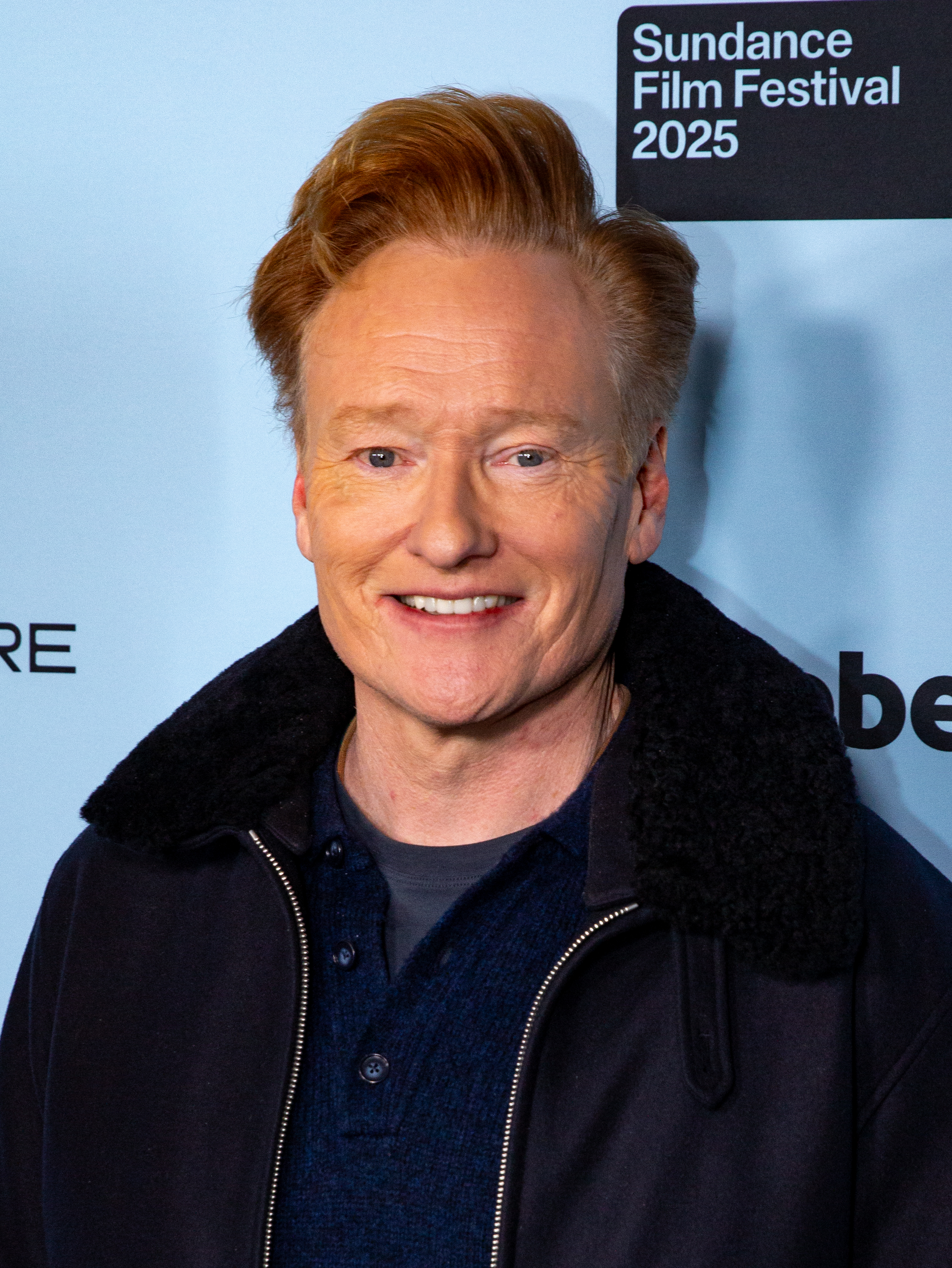
Conan Christopher O'Brien is a famous American television host, comedian and screenwriter, best known for his nearly 30-year late-night talk show career. He was born in Brooklyn, Massachusetts, in 1963 to an Irish Catholic family. His father was a professor at Harvard Medical School and his mother was a well-known lawyer. O'Brien served as president of the Harvard Lantern while studying at Harvard University and graduated magna cum laude in 1985.
O'Brien began his career as a screenwriter. He worked on "Saturday Night Live," where he won an Emmy Award, and then served as a writer and producer on "The Simpsons" from 1991 to 1993, creating such classic episodes as "Marge vs. the Monorail." In 1993, he was selected to succeed David Letterman as host of NBC's "The Late Show." Although the show initially received poor reviews and faced pressure to be discontinued, he gradually built a large young audience with his unique "awkward, self-deprecating humor" and eventually achieved both commercial and critical success.
O'Brien took over "The Tonight Show" in 2009, but left after only seven months due to internal disputes at the network. After that, he switched to TBS channel to host "Conan" until his retirement in 2021. Over the course of his long career, he’s not only one of America’s longest-serving late-night hosts, but has also successfully transitioned into podcasting (Conan O’Brien Needs Friends) and travel reality shows. In 2025, he was awarded the Mark Twain American Humor Award for his outstanding contributions to the comedy industry, and was inducted into the Television Academy Hall of Fame. He was also invited to host the 97th Academy Awards.
Xinjin Riyuan was born in Chen Yue, the two earthly branches are trees, and the sky is dry and the water is Gui. The fate is "rich in wealth and weak in body" but has "wet soil generates metal" as the root energy. Xinjin is like jewelry or scissors for pruning branches and leaves. It is born in the late spring Chenyue. Although earth can produce metal, the two Umu (wealth stars) in the earthly branch are extremely powerful and excessively consume the energy of the sun master. This energy state creates a perfectionist who is extremely sensitive, has high-frequency thinking, and has neurotic tendencies. He is not a strong leader who relies on brute force to expand territory, but a "fine worker" who relies on keen perception and instantaneous explosive power (scissors pruning) to establish his position.
The pattern is "The God of Food Produces Wealth" combined with the "Zhengguan Style". He likes to use wet soil (Seal Star) to generate dark fire in the body, and avoid wood fire attacking the body too much. The "God of Food" (Guishui) represents talent, eloquence and artistic expression, which is revealed in the fate, indicating that relying on mouth and creativity to eat is destiny; "Zhengguan" (Binghuo) represents fame, traditional system and power. Using God to take "earth" (Yin Xing) means that he must rely on powerful platforms or institutions (such as Harvard, NBC) to gain a sense of security and develop his talents. When the Seal Star is powerful, he can control fame and wealth; when Wood (wealth) overcomes Earth (Seal), he will encounter platform turmoil or lose support, and his life will fall into anxiety and wandering.
The core combination is "Bing Xin combined" and "The God of Cookery Xixiu", and the Earthly Branches show "Mao Chen intersects" (the bad seal of wealth). "Bingxin combination" refers to the close bond between the Sun Lord Xinjin and the Moon Stem Binghuo (the official). This explains why he has been pursuing the orthodox status of "traditional late night show host" (the official's recognition) throughout his life, and he longs to be accepted by the mainstream system. However, Nian Gan's "God of Cookery" (Guishui) represents irony and deconstruction, which forms the basis of his character: a troublemaker (God of Cookery) wearing a suit (official). He uses an extremely serious form (Bing Xinhe) to interpret the most absurd content (The God of Cookery Show).
The destiny has double "Heaven Yi Noble Man" and "General Star", but the earthly branch offends "Mao Chen and harms each other". "Tianyi Noble Person" symbolizes the support he received from noble people in his early career (such as the appreciation of Lorne Michaels), and "General Star" gives him a certain sense of authority in the entertainment industry. However, "Mao and Chen harm each other" is a hidden thunder in the fate, and Mao wood (wealth/desire/change) penetrates Chen Tu (seal/platform/foundation). This accurately corresponds to the biggest crisis in his career - the "Tonight Show" crisis in 2010: the game (finance) between commercial interests and ratings destroyed the stable platform (India) he dreamed of, causing damage to his foundation and forcing him to leave.
Xinmao Rizhu, self-situation favors wealth, Nayin is pine and cypress wood, and the battle between metal and wood brings typical "nervousness" and "high IQ anxiety". Xin Jin has a noble nature, loves face, and pursues perfection, but sitting down with Uaki (a partiality for wealth) makes him always in a state of restlessness. This internal friction of "the battle between metal and wood" is externalized into his signature body language - restlessness, constant small movements, and the sense of humor that constantly attacks himself in order to resolve embarrassment. His thinking mode is jumping and sharp, just like Xinjin's scissors constantly pruning messy branches and leaves. He looks for order and laughter in chaotic impromptu interactions.
In the first year, the "God of Cookery" of Ganguishui was revealed, and the remaining energy of Yue Ling was obtained, forming the delicate circulation of "Water, Wood, Qinghua". "The God of Cookery" is the most valuable talent star in the entertainment industry, representing language talent and unique perspective. In Conan's plate, although the God of Cookery drained the Sun Master, it also exposed his talents. His talent lies in his ability to instantly transform highly intelligent observations (derived from Xin Jin's delicacy) into popular and absurd performances (derived from the flow of the God of Cookery). He does not need to build prestige by attacking others like Seven Kills, but releases Xin Jin's pressure through "self-deprecation" and "deconstruction". This talent gives him an irreplaceable position in the field of screenwriting and improv hosting.
The coexistence of "officials" and "gods of cooks", and "lots of money and bad seals" constitute the ultimate paradox of "rebels within the system". He has been torn between two extremes throughout his life: Binghuo (official) makes him long to become a traditional successor like Johnny Carson and gain the highest recognition from mainstream society; but Guishui (god of cook) has a natural tendency to laugh at all this. When he tried to completely comply with the system (such as in the early days of "The Tonight Show"), he seemed reserved and unhappy; it was only when he suffered "Mao Chen Xiangxian" (lost platform) and was forced into a wandering state (touring, podcasting), no longer subject to the constraints of "officials", that his "God of Cooking" talent truly reached its peak.
Conan O'Brien's fate is a pair of exquisite Xinjin scissors. He tried to prune a perfect official garden, but he was constantly washed away by the flood of the God of Cookery. His fateful trajectory proves that the antidote to "weak body and rich wealth" is not to stick to a certain status, but to follow the flow of talent. He suffered from losing his "throne" (institutional recognition), but became a god by embracing the "clown" (pure comic spirit). This is a long reconciliation from "seeking recognition" to "self-establishment".
This is the childhood fortune of the Wealth Star, which connects the roots and drains the Sun Lord . The partial wealth star represents an extroverted and exploratory energy, and it also means the consumption of the sun master (one's own energy). For the Xinjin sun owner, encountering strong wood energy (wealth star) prematurely means that he has shown extremely active thinking and strong curiosity about the outside world in childhood, but he may also find it difficult to concentrate because his thinking is too jumpy. This is a stage where a preliminary world view is established through play and broad interests.
At this time, I was in the early stages of my studies, when I had a lot of money, a weak body, and hidden talents. The fortune star does not directly represent money in adolescence, but is more reflected in the wide range of talents and precocious social skills. Excessive Mu Qi means that he needs to spend more energy than ordinary people to adapt to the school's rules. Although it is not a direct career luck, a childhood dominated by wealth often indicates that the family environment is relatively superior or that his father has an important influence on him. It also plants the seeds for him to be good at observing human nature and capturing non-mainstream perspectives in the future.
There are signs of bad financial seal and deep relationship between father and mother. Partial wealth represents the father, and strong wealth indicates a powerful father star, indicating that the father plays an authoritative or guiding role in his growth. However, the wealth star restrains the seal star (representing mother or traditional care), suggesting that he may not have been overly pampered, or he may have been encouraged to think independently since he was a child. This slightly alienating education method has contributed to his unique independent personality in the future.
It is necessary to pay attention to the physical tendencies of liver and gallbladder deficiency, liver and gallbladder deficiency, and strong wood and metal deficiency. Too much wood energy can easily harm metal (respiratory system, skin), and you may be prone to respiratory tract sensitivity, skin allergies, or limb abrasions due to excess energy in childhood. They tend to be easily irritable emotionally and need to be guided to vent their excess energy.
Entering into a period of study and exploration where the wealth, stems and branches are aligned, and when the body is weak, follow the strengths. Zhengcai represents pragmatism, step-by-step and the pursuit of concrete results. In the past ten years, the wood energy has been extremely strong. Although the Xinjin Sun Lord is weak, he has followed this momentum of pursuing excellence. This means that he showed a strong sense of purpose during his teenage years. He no longer had aimless fun, but began to transform his talents into specific academic achievements or social recognition. This was a critical decade for him to accumulate core competitiveness.
It is reflected in the pattern of prosperous wealth, officialdom, and academic excellence. Although the body is weak, the fortune star helps the Binghuo (official star, representing reputation and status) in the destiny. This decade corresponds to the period when he attended Harvard University and served as president of the Harvard Lampoon. Zhengcai represents the recognition gained through orthodox channels. He used words (wood) and talent (water) to build his early reputation and laid a solid class foundation for his future entry into the mainstream media circle.
Going through adolescence where love blossoms are in your life and your relationship with the opposite sex is strong. The fortune star also represents the opposite sex in men's horoscopes. The pure wood energy of Jiayin's fortune means that he is very attractive to the opposite sex at this stage, or he is beginning to experience important emotional enlightenment. His social circle expanded rapidly, and he met many "elegant" classmates who would be helpful to his future career. This accumulation of connections is the invisible wealth brought by good fortune.
Be wary of the risks of strong wood, landslides, and damage to the spleen and stomach. Strong wood overcomes earth, which represents the digestive system and muscles. Under high-intensity academic and social pressure, stomach problems or indigestion caused by irregular eating are prone to occur. At the same time, excessive wood energy can easily lead to nervousness, so you need to pay attention to sleep quality.
This is the turning point in life where the god of food is revealed and the treasury nourishes the body. The God of Cookery (Guishui) represents the outlet of talent, eloquence and creativity, while Chou Earth is the Kugan of Metal, providing much needed support to the Sun Lord of Xinjin. These ten years were a critical period for him from a writer behind the scenes to a superstar in front of the stage. The appearance of the God of Cookery allowed him to find an outlet for his unique and even weird sense of humor, while the Yinxing (ugly) of the earthly branch ensured that he had enough confidence to withstand the pressure of becoming famous.
The career is showing an explosive trend of being controlled by the God of Cookery and realizing talents. In the past few years, he has worked as a writer on "Saturday Night Live" and "The Simpsons", and is the typical embodiment of the God of Food (creation). Taking over "The Late Show" in 1993 was a qualitative change in the energy of Universiade. Although he was questioned in the early days (he was too weak to take on the task), as Chou Tu's fortune progressed, his roots gradually stabilized. He successfully conquered the audience with his nonsensical talent (God of Cookery) and established his position in the talk show world.
We are in the stage of making money from food and reorganizing contacts in the workplace. The God of Cookery represents juniors, subordinates or fans. In the past ten years, he has established his own core creative team (such as subordinates), and these people have become a solid backing for his career. In terms of relationships, people with the God of Food luck tend to pursue spiritual harmony. Although their emotional life fluctuated during this period, more energy was invested in releasing their creative passion.
It is necessary to pay attention to the problems of damp earth dampening fire and cold dampness trapping spleen . Guichou is the luck of dampness and cold, and it is easy to suppress the Bing fire (heart, eyes, spirit) in the fate. Under high-pressure work, it is easy to suffer from restlessness, depression or vision loss. It is recommended to get more exposure to the sun and keep exercising to generate and support fire energy.
Entering the turbulent ten years of the world, where officials have been hurt and officials have failed, fame has coexisted with right and wrong. Renshui (the injured official) comes out and strongly impacts the Binghuo (the official official) of the moon pillar. The wounded official represents rebellion, innovation and breaking the rules, while the official official represents traditional authority. In the past ten years, his personal style has been extremely strengthened and he has become the standard-bearer of "anti-traditional" talk shows. However, this energy also destined him to have internal conflicts that are difficult to reconcile with traditional institutions (such as NBC executives).
Typical career fortune is to hurt officials and make money, to win in danger. Shangguan not only brings huge traffic and fan enthusiasm (Shangguan represents fame), but also brings constant controversy. At this stage, he reached the peak of "The Late Show", and his income and influence increased dramatically. However, the hidden danger of "hurting an official to see the official" always exists, which means that his achievements are often accompanied by challenges to existing rules. Although he wins the audience, he may offend the powerful people who control resources.
Facing the test of damaged official star and interpersonal friction. In the workplace, it is easy to offend your leaders or peers because of your outspoken words or overly egoistic style. But in terms of family, after getting married in 2002, the family became a safe haven in his turbulent career. This may be the stabilizing force inspired by the fleeting seal star to balance the drain of excessive prosperity in the Universiade.
Focus on preventing the battle between water and fire in the body, and the balance of cardiovascular and kidney blood. Strong water overcomes fire, which represents the heart and blood circulation. Extremely exciting working conditions (injured officers) are often followed by deep exhaustion. You need to be alert to sudden arrhythmia or loss of kidney energy caused by staying up late for a long time.
Entering a period of transformation and turmoil in which people work together to help others and hurt officials and finances. The appearance of the Heavenly Stem Xinjin (Bi Jian) means that there is support from friends, colleagues or oneself, and the Earthly Branches Haimao and Ban are combined with the Wood Bureau (Financial Bureau). This decade saw the famous “Tonight Show” controversy. The side by side represents a competitor (Jay Leno), and the combination of the earthly branches suggests that he will eventually choose a path that is more in line with business interests (finance) rather than purely pursuing fame (officialdom).
Experienced the drastic changes of robbing wealth, seizing fame, and starting a new business. The conflict between 2009 and 2010 was a concentrated explosion of the energy of "injured officials see officials", which caused him to lose the top position of the traditional TV network (the main official was injured). However, in the Xinhai Universiade, Haishui was born in conjunction with Uomu (the fortune star), which meant that after he left the system, he gained richer financial returns and freer creative space through tours and TBS cable TV programs, realizing the transformation from a "working emperor" to an "independent prince".
It is reflected in the struggle for love and calamity, and a friend in need is a friend indeed. In the workplace struggle, he sees clearly who are the true allies (the positive role of side by side) and who are the enemies. The fan group (Bijieku in a sense) has given him unprecedented support. This kind of "passionate and angry" support is a manifestation of the power of helping others and inciting injured officials.
Pay attention to the risks of excessively cold gold water and depression. Although there was help from Bi Jian, the water in Haishui was still cold. During the darkest moments of your career, it’s easy to fall into self-doubt and depression. Physically, you need to pay attention to urinary system and joint rheumatism problems. It is important to maintain body temperature and inner enthusiasm.
This is the subversive great fortune of the robbery wealth revealed and the Chenxu flushing the treasury. Gengjin (Robbery of Wealth) represents some form of expansion or plunder, and Xutu (Yinku) clashes with the Moon Branch Chentu, breaking away from the "Yinku" and "Official Treasury". This means that his life stage (Yin) has been completely shaken and reorganized. He ended the traditional daily talk show and turned to podcasts and streaming media. This is exactly what "Chongku" brings to the old and new.
It presents a strange situation of conflict in printing and treasury, resource reorganization, and digital nuggets. Jie Cai Geng Jin usually represents sharing money or cooperation, but in the modern context it also represents "fan economy" and "community". The podcast company he founded was sold to SiriusXM (around 2022), which is a typical fulfillment of "the library being flushed" to release huge wealth. He no longer relies on a single TV platform (old Yin), but has established his own media empire (new Yin), and his wealth has increased exponentially.
Entering the stage of robbing wealth and making good fortune. The name of the podcast "Conan O'Brien Needs a Friend" accurately corresponds to the theme of "robbing wealth" (friends/peers). Through this more intimate and equal media form, he has established a deep connection with guests and audiences, and the interpersonal relationship has changed from "performer and audience" to "friends and partners."
Be wary of hidden dangers in human body, gastrointestinal and skin diseases. The conflict between Chen and Xu leads to agitation of earth energy, which leads to the proliferation of spleen, stomach and cells. Special attention needs to be paid to maintaining the digestive system and preventing growths on the skin. Heavy soil may also cause sluggishness or slow metabolism, requiring more aerobic exercise.
Entering into the period of retirement or transition in old age when the is partial to Zuo Lu and Mao and You are in conflict. Jitu (partial seal) represents non-traditional thoughts, philosophies or eccentrics. Youjin is the "Lu Shen" (foundation) of Xinjin, but it also conflicts with the Maomu (wealth star/energy) of the annual branch and the daily branch. This indicates that he will gradually withdraw from the business front and instead pursue spiritual satisfaction or more pure personal creation. However, "Lu goes to make money" also implies a decline in physical vitality or a weakening interest in money.
It will be the stage where the god of wealth protects the body and fame and wealth are restrained. As a strong root, Youjin still maintains a very high industry status and voice, but the conflict between Maoyou and Youjin means that he may take the initiative to cut off some commercial business (to conflict with wealth), or end a certain long-term cooperation model. The career form will be more personal and boutique, and may involve more behind-the-scenes guidance, memoir writing, or purely interest projects.
Facing the test of conflicting Japanese branch and turmoil in the spouse palace. Maoyou clash directly impacts the Japanese branch (spouse palace). This is a period when special attention needs to be paid to the health of the partner and the stability of the marriage. At the same time, partial printing represents loneliness. He may enjoy being alone or having in-depth conversations with a few close friends and reduce ineffective social interactions.
Pay close attention to the battle between metal and wood, muscles and bones, liver and gallbladder. Maoyou Chong is the most direct form of Jin subduing wood. When this happens in old age, injuries, fractures, or numbness of the limbs are very likely to occur. The liver and gallbladder systems are also relatively fragile, so it is not advisable to drink alcohol. Pay attention to the maintenance of the nervous system to prevent the risk of stroke.
Enter into the kind and good fortune of Zhengyin Shengsheng and Shen Zichen combined with water. Wutu (zhengyin) represents honor, belonging and protection. The earthly branch Shenjin is combined with the son (if there is a pillar) in the original game or the water and air in the luck, resolving the original conflict. In these ten years, he will enjoy the respected status as the "godfather of the industry" and his mentality will become more peaceful. It will be a good fortune for him to enjoy his old age and write books.
It is reflected in the shining star of and spiritual inheritance. At this time, wealth is no longer the focus, and the Zhengyin represents the final fixation of reputation. He might receive a lifetime achievement award or something like that. Shen Jin's role as the place of immortality for robbery means that his influence will continue to extend through the younger generation (apprentices and descendants), and his comedy style will become a classic and be studied repeatedly.
It presents a scene of the blessing of the Seal Star and the harmony of the family. The positive seal represents tolerance and the warmth of family. The sharpness and edges in his early years have been smoothed over by the passage of time, and he will play more of the role of family elder and wise mentor. Relations with children and younger generations will be more harmonious.
It is necessary to pay attention to the rich soil and gold in the body and the smoothness of the respiratory system. Although Yinxing is born in the body, the thickness of Wu earth can easily lead to poor Qi movement. Older people need to be aware of problems such as lung infections, asthma or difficulty breathing. Maintaining air circulation in the living environment and moderate breathing exercises are very beneficial.
Entering into the challenge period of longevity when the body is in harmony with the killing seal and the earth is dry and the gold is crisp. Ding Huo (seven kills) revealed his attack, but it was resolved by Wei Tu (seal). The Seven Kills represent illness or sudden health challenges, but with the transformation of the Seal Star, danger can often be averted. This is usually the last tenacious burning of vitality and requires medical resources (yin) to maintain balance.
He is at the stage where he has to kill seven times to attack his body and leave his name in history. At this time, there is no secular career, and the Seven Kills represent his "final conclusion" in history. People will begin to look at his life in a serious, legendary light. His legacy, both material and cultural, will be properly handled and distributed during this period.
This is reflected in the mixed situation of official killings and the need for people to take care of the dead. Seven Deaths Attacking the Body means the decline of body functions, requiring close care from family members and medical staff. The social circle has been extremely narrowed and mainly revolves around a core group of relatives and the medical team.
Strictly guard against inflammation, inflammation, earth dryness, and cardiovascular and cerebrovascular emergencies. Dingwei is a hot soil, which easily consumes the moisture of Xinjin. Special precautions need to be taken against dehydration, high fever, inflammation, and sudden cardiovascular and cerebrovascular diseases. Staying calm and avoiding emotional agitation is the key to longevity.
Tian Liang (The Shelter Star) resides here, symbolizing protection and longevity. Tian Liang represents nobility, oversight, elder patronage, and traditional moral standards. In the Parents Palace, it typically suggests parents with long life and social status, who may be strict in discipline or provide profound moral influence.
Tian Liang transforms into 'Shelter' (Yin), and even without transformation, it possesses the power to resolve difficulties. This configuration indicates the native comes from a scholarly or highly respected family. Parents provide not just material support, but more importantly, spiritual 'shelter' (educational resources, core values).
Conan's father is a Harvard Medical School professor and his mother is a prominent lawyer, perfectly matching the 'noble, academic, and legal' traits of Tian Liang. This background provided him with a deep intellectual foundation, which is the root of his ability to master high-intelligence comedy. The protection of Tian Liang ensures that despite ups and downs, he can always turn misfortune into blessings.
Zi Wei's seven kills are in the same degree, forming the pattern of "Zi Sha Hua Quan", and also meets the noble Tianyi. Ziwei represents imperial dignity and desire for control, while Qisha is the star of a general who charges into battle. This configuration forms the strong characteristic of "royal driver and personal expedition". The native is not a conservative monarch, but a warrior who expands territory. His character has arrogant self-esteem, strong action ability and the ability to rebuild after destruction. He is destined to take an unconventional leadership path.
The Ming Palace is full of star energy. Although it does not have the four transformations of this palace, it is affected by the Desire Star transformation of the official and salary palace. This means that the native's personal will (Ming Palace) is often severely impacted by career changes (official salary changes into Ji). This kind of impact is not destruction, but forces him to constantly reshape his self-image, inspire the explosive power of "Seven Kills" in desperate situations, and turn the crisis into a narrative of personal heroism.
This pattern perfectly confirms Conan O'Brien's status in the late-night talk show world. He not only has the elite arrogance of a Harvard background (Zi Wei), but also has the destructive power of being funny and subverting tradition (Seven Kills). He was not content with inheriting the traditional throne of "The Tonight Show", but demonstrated his strong personal appeal and pioneering spirit by establishing the independent kingdom of 'Team Coco'.
Tian Xiang (The Minister) resides here, emphasizing the support and balance of the Seal Star. Tian Xiang represents the prime minister, service, justice, and appearance. In the Palace of Happiness (Mental Well-being), it means the individual's spiritual fulfillment comes from maintaining decency, balancing relationships, and serving others. Internally, they seek an elegant, orderly, and respected state, with a strong distaste for vulgarity and chaos.
Tian Xiang is influenced by the energy of adjacent palaces, emphasizing a 'supporting' role. With Tian Xiang in the Palace of Happiness, it shows that deep down, the individual is not as aggressive as their outward appearance (Qi Sha / The Warrior in the Life Palace) suggests. Instead, they possess a 'peacemaker' mindset. They use humor to diffuse awkwardness and maintain situational balance, which is the source of their spiritual satisfaction.
This explains why Conan, despite his wild persona on stage (Qi Sha / The Warrior), is privately described as very well-bred, gentlemanly, and mindful of etiquette (Tian Xiang). His inner world seeks a harmonious order; comedy is a tool he uses to balance the absurdity of the world, rather than a pure vent for emotions.
Ju Men (The Great Gate) resides here, governing communication and hidden gateways. Ju Men represents the mouth and communication, but can also signify barriers. In the Property Palace (Tian Zhai Gong), it often suggests a noisy environment near the residence or verbal disputes within the household. In modern astrology, it also symbolizes a 'base built on communication' (such as a studio or recording booth).
The Gui Heavenly Stem triggers Ju Men Hua Quan (Authority Transformation). 'Hua Quan' represents control, authority, and expansion. When Ju Men Hua Quan enters the Property Palace, it signifies that the individual holds absolute authority within their 'territory' (studio or company). Their 'home' (career base) is built upon the authority (Hua Quan) of language and communication (Ju Men).
Conan's 'Team Coco' studio is a classic example of a Ju Men Hua Quan domain. It is a base where language, talk shows, and podcasts are the core assets. In this field, he is not just a resident but the absolute authoritative voice. The Authority Transformation (Hua Quan) also ensures he can protect this foundation from outside interference.
Tan Lang (The Opportunist) resides here, governing desire, charisma, and versatility. Tan Lang is the primary Peach Blossom (Charisma) star and the deity of desire. In the Career Palace, it signifies involvement in entertainment, performing arts, public relations, and other industries that involve interpersonal interaction and showcasing charm. This star grants the individual a strong desire for performance and sophisticated social skills.
The Gui Heavenly Stem triggers Tan Lang Hua Ji (Transformation to Obstacle). 'Hua Ji' represents setbacks, disputes, entanglements, and karmic debts. Tan Lang Hua Ji in the Career Palace is a highly dramatic combination: in the pursuit of professional desires, one is destined to encounter significant setbacks, competition, and scandals. However, Tan Lang is also a star of 'seizing'; Hua Ji can actually stimulate its transformative energy to 'find life after death' or reinvent itself through crisis.
This is the astrological footnote to the famous 'Tonight Show' conflict. Tan Lang Hua Ji brought about embarrassing disputes and career stagnation in the public eye. However, it was precisely this massive 'Hua Ji' (setback) that forced him out of the comfort zone of traditional television networks. Leveraging Tan Lang's adaptability, he carved out a brand-new entertainment empire in the realms of the internet and podcasting.
Tai Yin (The Moon Star) resides here, indicating female Gui Ren (Mentors/Helpful People) and gentle, supportive energy. Tai Yin represents femininity, gentleness, meticulousness, and the night. In the Peers and Subordinates Palace, this suggests that among the subject's fan base, staff, or supporters, women or those with refined qualities play a significant role. It also implies gaining support through 'nighttime' (late-night programming) audiences.
The Gui Stem triggers Tai Yin Hua Ke (Transformation to Fame). 'Hua Ke' represents reputation, recognition, and public status. With Tai Yin Hua Ke entering the Peers and Subordinates Palace, the subject gains immense fame through their staff, assistants, or fans. Their popularity is no longer solely self-generated but is 'illuminated' through interactions with those around them.
This precisely corresponds to the phenomenal characteristics of Conan's later career: his assistant Sona and producer Jordan became indispensable stars of his show. Tai Yin Hua Ke allowed him to significantly boost his own brand reputation and relatability by 'spotlighting' his staff (especially women or those with nuanced personalities), which in turn reflected back on him.
Tian Ji (The Strategist) and Po Jun (The Vanguard) reside together; dynamic stars entering the Peer Palace indicate constant change and resource expenditure. Tian Ji represents strategy and mobility, while Po Jun represents breakthrough and pioneering spirit. This combination suggests that the subject's relationships with peers and partners are highly unstable, filled with intellectual maneuvering and sudden shifts. Siblings or close partners are often quick-witted but rebellious in nature.
Po Jun (The Vanguard) meets Hua Lu (Prosperity Catalyst) under the Gui Stem. 'Hua Lu' signifies an increase in affinity and financial opportunities. Despite the turbulence in relationships, these changes harbor significant wealth opportunities. This implies the subject can gain new resources and benefits (Hua Lu) by frequently changing partners or restructuring team dynamics (the transformative nature of Po Jun); every 'disruption' of the team is accompanied by the birth of new opportunities.
This explains the close yet volatile relationship he had with partners (such as Andy Richter) and writing teams throughout his career. Po Jun Hua Lu indicates that even after network cancellations or team migrations, these 'brothers' (partners) ultimately became the source of his new wealth and creative content.
Tai Yang (The Sun) sits alone, radiating outward; it emphasizes prestige and status over material wealth. Tai Yang represents universal love, altruism, and the public eye. As the star in the Spouse Palace, this suggests the partner may possess a cheerful, sunny disposition, or that the subject's emotional life involves a 'public service' aspect. Tai Yang in this position also means the subject tends to be the primary giver or the center of attention within the relationship.
Tai Yang is not directly activated by this year's Four Transformations, but it is influenced by Tan Lang Hua Ji (The Charmer transformed by Restriction) in the opposite Career Palace. This indirect influence suggests that career setbacks (Tan Lang Hua Ji) may spill over into emotional life, or the spouse may need to bear the pressure of the subject's professional fluctuations. The energy of Tai Yang here acts as a 'publicizer,' bringing private life into the spotlight.
Conan's wife, Liza, though not a superstar herself, embodies the Tai Yang traits through the light and support she provided during his career lows (such as losing The Tonight Show). At the same time, Tai Yang symbolizes Conan viewing the 'audience' as a spiritual partner; his trait of burning himself (The Sun) on stage to please others transcends traditional domestic emotions to some extent.
Wu Qu (The Finance & General Star) resides here. Associated with the Metal element, it signifies rigidity and authority. Wu Qu is both a wealth star and a general star, representing fortitude and decisiveness. In the Palace of Children or Subordinates, it suggests the subject adopts a militaristic or highly professional management style toward juniors, students, or young subordinates. The relationship lacks soft sentimentality, focusing instead on interactions based on competence and discipline.
Wu Qu is not directly triggered by the Four Transformations (Si Hua) here, but is influenced by the surrounding energetic field of the Three-way and Four-square Palaces. The rigid nature of Wu Qu remains pure. This affects not only parent-child dynamics but also reflects the subject's attitude toward refining their 'works' (spiritual children)—as rigorous as forging metal, pursuing hardcore humor and precise execution rather than casual warmth.
In reality, this is reflected in Conan's rigorous attitude toward comedy creation. The young writers or actors he promotes (the subordinate/junior generation) often need exceptional resilience (a Wu Qu trait). The 'works' he leaves behind tend to have a sharp, distinct style rather than a smooth, family-friendly vibe, projecting the upright and stern qualities of the Wu Qu star.
Tian Tong (The Star of Fortune) resides here, bringing the 'Star of Blessing' into the Wealth Palace, signifying 'wealth created from scratch' and 'wealth through enjoyment'. Tian Tong represents fortune, childlike innocence, and pleasure. In the Wealth Palace, it suggests that the subject's wealth does not come from grueling labor or high-risk speculation, but rather from industries related to culture, entertainment, and making people happy. This is a pattern of 'earning money while having fun'.
Although Tian Tong does not undergo the Transformation to Prosperity (Hua Lu) here, its inherent 'blessing' resonates with the ZiWei (The Emperor) in the Life Palace. The nobility of ZiWei combined with the fortune of Tian Tong allows the subject to transform personal hobbies (the playfulness of Tian Tong) into significant commercial value. This type of wealth carries a strong 'emotional value' attribute; the audience pays because he brings them joy.
Conan's immense wealth stems precisely from the essence of 'Tian Tong'—humor and entertainment. Whether it was his early writing work or his later late-night talk shows and podcasts, he is essentially selling 'happiness.' Tian Tong also explains why, even after being let go from a network, he could quickly generate revenue through tours (a form of performance and play), because his source of wealth lies in 'making everyone happy'.
Tian Fu (The Treasury Star) resides here, with the Heavenly Treasury entering external lands, signifying benefits and tolerance during travel. Tian Fu is the Imperial Star of the Southern Dipper, representing tolerance, stability, and wealth reserves. In the Travel Palace, it means the native presents a generous, steady, and resource-rich image when traveling, socializing, or facing the public. This complements the sharpness of Qi Sha (The Warrior) in the Life Palace, leading to excellent interpersonal relationships abroad.
Tian Fu acts as a solid treasury, conducive to establishing bases overseas or in external environments. This configuration is extremely beneficial for 'development in distant lands.' The inclusive nature of Tian Fu allows the native to adapt to various unfamiliar cultural environments and build their own 'treasury' (reputation and resources) within them.
The success of 'Conan Without Borders' is a perfect portrayal of Tian Fu in the Travel Palace. When he leaves his familiar studio (Life Palace) to travel the world (Travel Palace), the energy of Tian Fu allows him to quickly integrate into local cultures, be accepted by foreign audiences, and gain broader acclaim in the external world than at home.
Lian Zhen (The Integrity Star) resides here, governing secondary Peach Blossom (Charisma) and circulatory health issues, as well as mental stress. Lian Zhen is a star of precision and is also known as the 'Star of Confinement.' Physically, it relates to the blood and heart; mentally, it represents extreme sensitivity, self-entanglement, and potential psychological pressure. This configuration is common among high-intelligence, high-strung creators.
Lian Zhen is sensitive by nature and easily agitated by external Hua Ji (Transformation to Obstacle). Although there are no specific Lian Zhen transformations this year, its 'confinement' trait makes the individual prone to mental self-imprisonment. Intense intellectual labor and an obsession with perfection (Lian Zhen's inherent fastidiousness) can manifest as internal physical depletion, appearing as anxiety or nervous system overload.
This provides a profound analysis of Conan's lesser-known side behind the camera. Comedians are often accompanied by depression or high pressure; Lian Zhen reveals his almost neurotic level of acute perception. His comedic style often leans toward self-deprecation and self-torment, which is the artistic release of Lian Zhen's 'self-confinement' energy.
Generate your personal chart in under a minute. Sign up free and get 30 credits — enough for two or more AI readings. No credit card.
Generate my free BaZi chartPlease sign in to join the discussion
Sign In