Year
Bing
Xu
Jie Cai
Jie Cai
Hidden Stems
Wu (Jie)Xin (Pian)Ding (Bi)
- Star Luck
- Yang
- Sitting Branch
- Mu
- Void
- Wu-Wei
- Na Yin (Elemental Sound)
- Wu Shang Tu
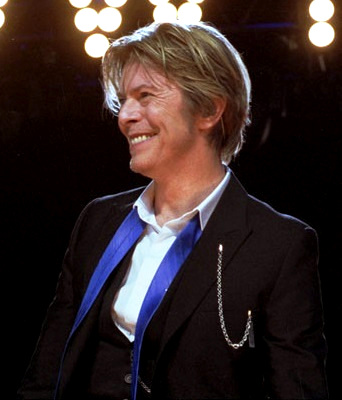
David Bowie (8 January 1947 – 10 January 2016), born David Robert Jones, was an English singer, songwriter, and actor. He is regarded as one of the most influential musicians of the 20th century, known for his constant reinvention and visual presentation.
Bowie was born in Brixton, London, and studied art, music, and design in his early years. He achieved his first success in 1969 with the single "Space Oddity." In 1972, he shot to fame with the glam rock persona Ziggy Stardust, and the album "The Rise and Fall of Ziggy Stardust and the Spiders from Mars" became a classic. In 1975, he moved towards a "plastic soul" style, breaking into the US market with "Young Americans" and the chart-topping single "Fame." In 1976, he starred in the film "The Man Who Fell to Earth" and released "Station to Station." From 1977 onwards, he collaborated with Brian Eno on the Berlin Trilogy ("Low," "Heroes," "Lodger"), experimenting with electronic and experimental music.
In 1980, he returned to the mainstream with "Scary Monsters," and in 1983, "Let's Dance" reached his commercial peak. From 1988 to 1992, he formed the hard rock band Tin Machine. Throughout the 1990s, he continued to experiment, releasing albums such as "Earthling." In 2004, he reduced his activities due to heart problems. He made a comeback in 2013 with the album "The Next Day." On 10 January 2016, he died from liver cancer, two days after the release of his final album "Blackstar."
Bowie's record sales are estimated to have exceeded 100 million, and he received six Grammy Awards and four Brit Awards. He was inducted into the Rock and Roll Hall of Fame in 1996 and was named one of the greatest singers, songwriters, and artists by Rolling Stone magazine.
The Day Master, Ding Fire, born in the Chou (Ox) month, with the Eating God (Shi Shen) in command. The Heavenly Stem Bing (Yang Fire) combines with Xin (Yin Metal), the Eating God generates Wealth, but the Day Master loses command, only having slight root from the Si (Snake) branch in the hour and the Xu (Dog) branch in the year (Fire storage). Overall assessment: a weak body (Shen Ruo). This energy state represents someone innately sensitive, with a creative fire burning within, yet who needs to constantly draw warmth and affirmation from the external world. Like a candle flame on a winter night, brilliant yet easily flickering in the wind, his vital force requires careful guarding. The overall feeling is one of approachability mixed with detachment, gentleness hiding intensity. The greatest strength is an imagination that flows like a spring, easily transforming the inner world into works that astonish the world; the potential challenge is that emotions are easily depleted, prone to self-doubt, craving to be understood yet fearing being seen through. His life is always seeking fuel—perhaps art, love, or perpetual transformation—to keep that flame from extinguishing.
The pattern is Eating God generating Wealth. With a weak body, the Yong Shen (Useful God) is the Seal and Peer (Wood and Fire). Favoring warm places in the southeast, avoiding Earth, Metal, and Water which drain and overcome him. The Yong Shen, Wood and Fire, are like a stove and sunshine in icy weather—resources that can grant him energy and confidence. Wood represents knowledge, learning, creative concepts; Fire represents passion, supporters, the spotlight. When he encounters Wood and Fire cycles (such as stepping onto the international music scene in the early 1970s under Yin and Mao Wood cycles), his artistic energy erupts in a burst, creating immortal images like Ziggy Stardust. The Ji Shen (Unfavorable Gods)—Earth, Metal, and Water—represent overthinking, commercial pressure, and external constraints respectively. Once dominated by Ji Shen, for instance, overly pursuing commercial success (Metal) or getting caught in complex interpersonal entanglements (Earth), he would feel creative drought and sink into identity loss (the drug problems of the mid-1970s were precisely a manifestation of Earth and Metal cycles). He practiced throughout his life how to leverage the support of the Seal and Peer to transform the pressure of Ji Shen into artistic drive.
The core combination is Eating God generating Wealth (Chou Earth → Xin Metal) and Indirect Authority (Qi Sha) generating Seal (Hai Jia Wood → Si Bing Fire), forming a flow of "Eating God, Wealth, Zheng Guan (Direct Officer), Seal". The Eating God generating Wealth endows him with the ability to turn wildly imaginative inspirations into best-selling works, like an efficient art monetization machine, from glam rock to electronic experiments, always leading the trends. The Qi Sha generating Seal represents his capacity to sublimate external doubts and emotional wounds (Qi Sha) through contemplation and creativity (Direct Seal, Zheng Yin) into a unique artistic philosophy. This combination shapes an ever-evolving "artistic chameleon"—he can both capture mass taste (Eating God generating Wealth) and disdain repeating himself (Qi Sha generating Seal). In decision-making, he relies on keen intuition to constantly overturn the past; interpersonally, he needs team partners (Peer, Jie Cai, as aid) but deliberately keeps distance (Lonely Star, Gu Chen) to prevent the mundane from devouring inspiration.
The Year Pillar has Hua Gai (Intellectual Star), the Day Branch has Tian Yi Gui Ren (Noble Mentor) combined with Jie Sha (Robbery Sha) and Gu Chen (Lonely Star), the Hour Pillar has Yi Ma (Mobility Star) and Wang Shen (Nether Spirit). Chou (Ox) and Xu (Dog) form a punishment (Chou-Xu Xing), stirring artistic tension. The Hua Gai star makes him naturally connected to mystery, solitude, and art, as if there's always a transparent barrier separating him from the world, which precisely nourishes his avant-garde aesthetics. Tian Yi Gui Ren means that at every life turning point, there are helpful guides (such as agents, collaborators), but Jie Sha and Gu Chen indicate that such assistance often comes at the cost of sacrificing personal emotions—his multiple marital changes are proof. Driven by Yi Ma and Wang Shen, his life is like a never-ending tour—from London to Berlin, New York, from gender ambiguity to space fantasies, he cannot tolerate stagnation. The Chou Xu punishment (Year Xu and Month Chou) is an internal, root-level tension: the rebellion against tradition (Xu is Fire storage, representing self-identity) clashes with worldly rules (Chou is Eating God storage, representing earthly expression). This clash becomes the primal drive for him to constantly tear apart his old self and create new identities.
Ding Fire Day Master sitting on Hai (Pig) Water as Zheng Guan (Direct Officer) (Zheng Guan), with Yi Wood in the Hour as Indirect Seal (Pian Yin) gaining root from Si Fire as Peer (Jie Cai)—an outwardly gentle, inwardly clever, change-prone, and deep-hiding Indirect Seal pattern. He is like a thinking flame: seemingly mild, delicate, even with a touch of feminine sensitivity, but internally firm in his own cosmology. His thinking is jumpy and profound, able to piece together a completely new aesthetic system from inconspicuous details, which is why his styling and music are always unpredictable. Emotionally, he yearns to be thoroughly understood, yet fears that intimacy will lead to self-dissolution, so he protects his core with ever-changing shells. Under pressure, he retreats into his fantasy kingdom, using creation to chew over anxiety; but prolonged stability makes him restless, and he will actively ignite a revolution—whether shaving his eyebrows or switching to electronic music. This makes his life a pioneering drama, self-directed and self-performed, where every act is an overthrow of the previous self.
With a robust Eating God generating Indirect Wealth (Pian Cai), and Indirect Seal transforming Qi Sha, it forms a rare combination of "Eating God and Hurting Officer venting grace, and the Seal forging the soul". The Eating God gives him the ability to instantly transmute emotions and concepts into melodies, visual symbols—an infectious power directly felt by the masses. The Indirect Seal transforms the pressure of Zheng Guan (Direct Officer) and Qi Sha into profound insights, making him voraciously absorb drama, literature, exotic philosophies, ultimately condensing them into the intellectual weight in his works. These two energies merge to create a cultural engineer who can both create pop and transcend it. In fields that require boundary-breaking, he is almost unstoppable: music and fashion, film and gender issues, he always precisely tapped the pulse of the era, yet stayed half a step ahead, beyond reach of imitators. His success was not accidental but an inevitable eruption when his chart's energies were fully ignited under the Wood and Fire Da Yun (Major Life Cycles).
The core conflict lies in the tendency of Wealth harming the Seal (Cai Xing Huan Yin), and Peer robbing the Eating God (Jie Cai Duo Shi). The Month Stem Xin Metal as Indirect Wealth represents commercialization, material pleasures. It constantly tempts him, potentially eroding the pure contemplation of the Indirect Seal, leading to art compromising for the market, or indulgence in the illusory escape brought by substances. The Year Stem Bing Fire Peer is the external competitor, also the mirrored projection of fans and the public; he often feels his self is fragmented by countless "hims"—which Bowie do people love? This conflict keeps his psyche on the edge of "self-shattering" for long periods; the downturn of the 1980s was precisely the concentrated manifestation of Wealth harming the Seal and Peer pressure. But the wonder of his chart is that whenever he is on the verge of collapse, the Qi Sha pressure awakens the Seal (Qi Sha generating Seal), forcing him to rebuild his identity with new artistic works. It is this profound contradiction that allowed his artistic persona to constantly metamorphose rather than collapse.
His destiny is a magnificent aria with "change" as its theme. With a weak body yet all the elements of Eating God, Wealth, Zheng Guan (Direct Officer), and Seal present, it destined him to never find peace in a single identity but must continuously self-immolate and rebirth to release inner tension. Shen Sha like Hua Gai, Yi Ma, Jie Sha pushed him onto a nomadic artistic journey, in the gap between mainstream and alternative, he built a temple for all misfits. From David Jones to David Bowie, he proved that even with a chart containing Gu Chen and Wang Shen, loneliness and insecurity can be forged into beams that illuminate an era. Ultimately, he became an immortal symbol of pop culture—though the flesh is gone, every makeup and chant in the lights is the eternal echo of his destiny in time.
The Mutual Generation of Zheng Guan (Direct Officer) and Direct Resource: A Foundation Period for Arts and Learning. Zheng Guan (Zheng Guan (Direct Officer)) represents rules and discipline, while Zheng Yin (Direct Resource) represents learning and protection. This decade was like laying the foundation of life. Through systematic study of musical fundamentals and stage performance, rigorous artistic discipline was cultivated, storing energy for future breakthroughs.
The Officer Star emerges on the stem, and the Resource Star transforms the Officer into authority. Zheng Guan controls Jie Cai (Rob Wealth), helping to establish professional norms; Zheng Yin transforms the Officer and nourishes the Day Master, turning pressure into creative force. At 15, he began learning saxophone; at 17, he formed a band. Although not immediately famous, the solid skills became the cornerstone of future achievements.
The Resource Star protects one's self, with hidden Gui Ren (Helpful People). Zheng Yin brings mentor support and family assistance in relationships. His mother encouraged his artistic interests, and he met early bandmates. But the Officer Star also brought friction with authority during adolescence, such as school disciplinary constraints.
Water and Wood mutually generate, and Wood and Fire bring brightness. Ren Water Officer Star generates Yin Wood Resource Star, so physical health is good. However, be cautious of an excess of Water weakening Fire, which may lead to respiratory sensitivities. Advice: increase outdoor exercise, and keep emotions flowing smoothly.
The Mutual Generation of Indirect Officer and Indirect Resource: A Period of Breaking Through and Achieving Fame. Qi Sha (Indirect Officer) represents breakthrough and subversion, while Pian Yin (Indirect Resource) represents unconventional thinking. This Decadal Cycle was like detonating an artistic nuclear bomb, transforming systemic repression into rebellious creativity and reshaping pop culture with startling looks and music.
Qi Sha attacks the Day Master, and Pian Yin transforms the Sha into authority. Qi Sha brings intense competition and challenges, while Pian Yin helps create a unique style to resolve crises. The 1969 single "Space Oddity" was a breakthrough, exactly the power of Sha and Yin: Qi Sha corresponds to the loneliness of space, and Pian Yin to sci-fi narrative. The establishment of the Ziggy Stardust persona in 1972 was a huge success for Pian Yin's unorthodox aesthetics, with wealth and fame soaring.
The combination of Sha and Yin brings extreme relationships. Qi Sha triggers conflicts with the mainstream circle, while Pian Yin attracts devoted niche followers. There were love-hate entanglements with managers and bandmates, and romantic relationships were complex and changeable. This cycle had abundant Peach Blossom (Romance), but Pian Yin led to a sense of alienation, resulting in short-lived marriages.
Wood flourishing generates Fire, but Qi Sha exhausts the body. Energy is seriously overdrawn; pay attention to the burden on the heart and nervous system. The risk of substance abuse increases. It is advised to take regular rests and avoid excessive burnout.
Talent with Resource: A Phase of Artistic Experimentation. Shang Guan (Talent) represents the outpouring of gifts, while Zheng Yin represents integration and consolidation. This cycle was like entering an alchemist's laboratory, refining previous wildness into deep experimentation and pioneering minimalist artistic styles such as the Berlin Trilogy.
Zheng Yin combines with Shang Guan, transforming restlessness into sedimentation. Shang Guan generates wealth, but is controlled by Jia Wood Zheng Yin, avoiding excessive commercialization. In 1976, he moved to Berlin, underwent detoxification and reinvention, and released experimental albums like "Low" and "Heroes". Although commercially not at the peak, artistic acclaim was high, consolidating his status as a master for later generations.
Shang Guan emerges on the stem, while Zheng Yin protects the body. Interpersonal relationships tended to be closed. He divorced his wife, and collaborated deeply with musical partners but became distant from the public. Zheng Yin brought a few kindred spirits, such as the collaboration with Iggy Pop. Fame stabilized, but media attention declined.
Wood and Earth clash, and Shang Guan drains the body. Emotional fluctuations are significant, with a tendency toward depression. Jia Wood overcomes Chen Earth, so pay attention to gastrointestinal and digestive issues. Channel psychological shadows through artistic creation, and maintain a regular daily routine.
Indirect Resource and Rob Wealth: A Commercial Peak Period. Pian Yin provides creativity, while Jie Cai represents competition and expansion. This cycle was like ascending the pop throne, grafting alternative art into the mainstream, conquering the global market with albums like "Let's Dance", with wealth reaching its zenith.
Pian Yin generates Jie Cai, and Jie Cai challenges wealth. The clever concepts of Pian Yin achieve commercial success through the competitive means of Jie Cai. The 1983 album "Let's Dance" sold over ten million copies, and world tours generated staggering income. But Jie Cai also brought collaboration disputes and disagreements over profit sharing with bandmates.
Jie Cai is strong, causing romantic scandals. Fame was at its height, but Jie Cai led to interpersonal strife. His marriage to Susan Sarandon broke down, damaging his public image. Pian Yin caused him to oscillate between commerce and art, with frequent changes of collaborators.
Excessive Fire burns Wood, and Jie Cai exhausts the body. Overwork led to decreased immunity and health warnings. Pay attention to cardiovascular and liver issues. It is advised to slow down the pace and reduce the frequency of performances.
Peers Robbing Wealth: A Period of Adjustment and Transformation. Jie Cai and Bi Jian (Peer) represent peer competition and self-repetition. This cycle was like a healing and restorative phase after commercialism. Music style shifted to industrial rock, but market response was indifferent, while personal life gradually stabilized.
Overabundant Peers, Wealth Star is restrained. Jie Cai divides benefits, causing income to drop. Albums like "Earthling" did not regain past glory. However, Bi Jian also brought a solid team, and in the late 1990s collaborations and tours became stable. Pian Cai (Indirect Wealth) Xin Metal was combined and restrained by Bing Fire, so investments were conservative.
Heavy Peers, old ties reconnect. He married model Iman in 1992, and family life was harmonious. Jie Cai helped expand social circles, but relationships simplified. He maintained friendships with predecessors like David Gilmour.
Excessive Fire and dry Earth, Heart Fire hyperactive. Emotions are prone to anxiety; pay attention to blood pressure and heart health. Bing Wu Fire is vigorous, making inflammation likely. Advised to hydrate more and practice meditation.
Enjoyment generates Wealth: A Period of Retreat and Comeback. Shi Shen (Enjoyment) represents pleasure and artistic output, while Bi Jian represents self-persistence. This cycle was like unsheathing the sword after retreating to the mountains. Although works were scarce, quality was extremely high. After 2006, he largely faded away, and in 2013 made a surprising return, demonstrating his mastery.
Shi Shen generates Pian Cai, the Wealth Star shows up. Shi Shen is creativity, and Pian Cai is hidden wealth. After 2006 he hardly released new albums, but royalty income was abundant. The 2013 release "The Next Day" was a comeback powered by Shi Shen, earning high critical acclaim and strong sales. Xin Metal in Wei Earth made wealth stable in later years.
Bi Jian supports the body, Shi Shen gathers friends. Family relationships were fulfilling, he accompanied his daughter as she grew up. He interacted and collaborated with younger musicians like Arcade Fire. His reputation was re-elevated in the internet era.
Fire and Earth mutually generate, pay attention to the spleen and stomach. In the Ding Wei cycle, Fire and Earth are dry, easily causing indigestion. Health declined after 2014, Shi Shen is weak, be alert for heart disease. Advised to moderate diet and have regular check-ups.
Talent generates Wealth: A Final Brilliant Period. Shang Guan represents the ultimate artistic statement, while Zheng Cai (Direct Wealth) represents real-world legacy. This cycle was like the swan song: releasing the final album "Blackstar", which elevated art with the theme of death. Shang Guan exerted its force to achieve a masterpiece, and Zheng Cai solidified posthumous reputation.
Shang Guan generates Zheng Cai, monetizing talent. In early 2016, "Blackstar" was released. Shang Guan emerged to bring peak acclaim, and Zheng Cai represented commercial success, topping charts in many countries. However, Shang Guan also signaled the end of life. On January 10 of the same year, he died of liver cancer, making the work his final manifesto.
Shang Guan drains the body, many mourn him. Relationships were mainly artistic farewells, and he spent his last days with family. Fans worldwide mourned, media paid tribute, and his fame reached a historical peak. Shang Guan brought controversial topics, but overall the sentiment was positive.
Metal prosperity destroys Wood, fatal liver disease. In the Wu Shen cycle, Shen Metal acts as the illness sign, and Shang Guan excessively drains the body, damaging Liver Wood. Reminder: serious illness signals should be detected and treated early; overwork harms the root.
Tian Fu (Treasury Palace) exalted guards the Career Palace. Tian Fu is the southern dipper emperor star, representing stability, accumulation, and structure. An exalted Career Palace suggests a solid foundation, but without innovative Four Transformations, it tends toward 'conserving achievements'—this seems contradictory to Bowie's constant reinvention, but Tian Fu exalted reflects results rather than process: his career foundation (copyrights, brand) was remarkably stable, while specific creative breakthroughs were driven by the Travel Palace's Zi Wei and Tan Lang.
The Career Palace has no Four Transformations. Without transformative energies like Hua Lu or Hua Quan, career advancement relies on its inherent foundation rather than sudden leaps. Bowie's record distribution rights, music royalties, and other tangible assets formed the base of his later wealth. Tian Fu exalted indicates that his later career shifted toward asset management rather than being on the front line.
Bowie's career trajectory can be divided into two phases: in the 1970s-1980s he relied on constant creative breakthroughs (driven by Zi Wei and Tan Lang in Travel Palace), and from the 1990s onward he shifted to solidifying his impact (Tian Fu exalted in Career Palace). He founded companies to manage rights, invested in art, and created 'Bowie Bonds'—all expressions of Tian Fu's 'accumulation' quality. After 2004, he almost stopped touring, released albums only occasionally, yet still controlled a complete business empire.
Tian Ji Hua Quan (Transformed Authority) and Tai Yin (Moon) waxing in the Allies Palace. Tian Ji governs intellect and change, and when transformed to Authority it becomes the strategic lead; Tai Yin, the Moon, governs sensitivity and collaboration. Tian Ji Hua Quan combined with a waxing Tai Yin indicates friends and partners provide wisdom and emotional support, but the transformed Tian Ji also suggests a tendency to dominate opinions and change strategies in collaborations.
Tian Ji Hua Quan enters the Allies Palace. Hua Quan strengthens influence; Bowie was very skilled at leveraging people, such as long-term collaborators Tony Visconti (producer) and Mick Ronson (guitarist). Tian Ji Hua Quan means he served as both creative lead and decision-maker within the team, while the waxing Tai Yin enabled him to consolidate the emotional loyalty of his collaborators.
Bowie's team stability was extremely high. Working with Tony Visconti for 40 years, from 1969's "Space Oddity" to 2016's "Blackstar," every major stylistic shift relied on the same core team. Tian Ji Hua Quan explains why he could always "direct" the band's transformations (from folk to glam rock to electronica), while the waxing Tai Yin made collaborators willingly follow. But Tian Ji also brought interpersonal turnover—early bandmates like Mick Ronson went solo because they couldn't adapt to the changes.
Tai Yang (Sun) fallen in the Property Palace, with no supporting stars, making the palace energy solitary and weak. Tai Yang governs radiance, warmth, and fatherhood; in its fallen state, its energy is dimmed, bringing a lack of warmth and tangible accumulation in the home environment. Bowie's Property Palace with Tai Yang fallen and no assists hints at a distant father and emotionally unstable mother, and a domestic atmosphere as oppressive as overcast weather. This star combination is reflected in his adult property patterns: most residences were short-term, investment-driven, or speculative, with little desire for long-term roots. He rented a cheap apartment in Berlin-Charlottenburg (1976-1978, a low-cost area, not a stable home), bought a villa in Montreux, Switzerland in 1983 but sold it after only two years, and his New York apartment (shared with Iman after 2000) was sold and leased back shortly before his death. Throughout his life, he never built a traditional 'home anchor.' The fallen Tai Yang forms a broken 'Sun Shines on Thunder Gate' pattern with the Travel Palace's Zi Wei, Tan Lang, Zuo Fu, and Di Jie: Tan Lang symbolizes wandering and Di Jie interruption, confirming his frequent relocations—traveling and artistic identity replaced a sense of home belonging.
The Property Palace has no Four Transformations of its own, but it is significantly influenced by the flying transformations from the opposite Travel Palace's Xin Stem. The Xin Stem causes Tai Yang to Hua Quan (transform into Authority) in the Travel Palace, Wen Qu to Hua Ke (Literature Star, transform into Fame) in the Siblings Palace, and Ju Men to Hua Lu (Giant Gate, transform into Prosperity) in the Health Palace. Among these, Tai Yang Hua Quan indirectly strengthens the original Tai Yang's 'radiating mobility' in the Property Palace—Bowie treated home as a battlefield and stage. In the early 1970s, he frequently hosted salons in his rented Kensington apartment (artistic socializing), and his Swiss villa in the 1980s doubled as a creative retreat, tying property function to public exposure. Additionally, the Parents Palace's Wu Stem causes Tian Tong Hua Lu (Heavenly Union transformed into Prosperity) to fly into the Property Palace, bringing blessings: after marrying Iman in 1992, he bought a townhouse in NoHo, New York, leading to a relatively stable family life, and this home later became his artistic archive. The Health Palace's Ren Stem causes Ju Men Hua Lu (empty palace borrowing Tian Ji Hua Quan from the opposite) has no direct flying star to the Property Palace, but Ju Men Hua Lu secretly harmonizes with Tai Yang fallen, hinting at how health crises (liver cancer) influenced property decisions: half a year before his death in 2016, he secretly sold the New York mansion and placed it in trust for his children, avoiding inheritance disputes.
The fallen Tai Yang in the Property Palace repeatedly played out as 'home is a stopover, not a destination.' His childhood was spent in a semi-detached house in Brixton, London, where his father was often absent and his mother was hospitalized multiple times for schizophrenia—home was an emotional desert. After fame with Space Oddity in 1969, he immediately left his original home, renting an apartment in Mayfair, but soon moved again due to drug issues. In Berlin (1976-1978), he rented a ground-floor apartment (cheap and near Hansa Studios), decorated only in black and white with no furniture—a minimalist life that perfectly embodies the 'home as an empty shell' of fallen Tai Yang. In 1983, he bought a villa in Montreux for 800,000 Swiss francs, but his obsession with California sunlight led him to sell it at a loss in 1985. After marrying Iman in 1992, he purchased a penthouse at 285 Broadway, NoHo, New York, and for the first time tried to decorate it into a 'warm home,' but the residual effect of fallen Tai Yang remained: he was constantly on tour and the house was mostly empty. After a heart attack in 2004, he began consolidating properties: in 2010, he transferred the New York apartment to Iman; after a liver cancer diagnosis in 2015, he secretly sold it and leased it back, and was still handling paperwork three days before his death. Overall, the fallen Tai Yang in the Property Palace gave him little sense of 'ownership' or long-term planning for real estate; his wealth accumulation relied more on music royalties than bricks and mortar.
Wu Qu (Finance Star) balanced and Po Jun (Action Star) balanced guard the Fortune Palace, with You Bi (Right Assistant) and Tian Kui (Heavenly Mentor) joining. Wu Qu is a financial star; its balanced state means spiritual enjoyment is often tied to material calculation, making detachment difficult. Po Jun is an action star; its balanced state retains a strong impulse for upheaval and transformation. You Bi is a supportive star, and Tian Kui is a mentor/noble star; their assembly means that in Bowie's spiritual struggles, unexpected inspiration or external rescue often appears. Wu Qu and Po Jun in the same palace form a 'rigid-breaking' pattern: Wu Qu's pragmatism and persistence clash with Po Jun's destructiveness and drive to start anew, leading to a long-term cycle of 'construction–destruction–reconstruction' in Bowie's inner world. You Bi and Tian Kui act as buffers, helping him transform internal conflicts into open-ended creative experiments. For example, his self-described 'Spengler period' (anxiety over the decline of Western civilization) is a projection of the Wu Qu–Po Jun conflict—Wu Qu sees the decay of reality, but Po Jun actively wants to accelerate destruction in order to find rebirth.
This palace has no Four Transformations, but the Travel Palace's Zi Wei and Tan Lang with Zuo Fu and Di Jie, and the Spouse Palace's Lian Zhen Hua Ji (Purity Star transformed into Affliction) with Qi Sha and Ling Xing create a gravitational pull. The Travel Palace's Zi Wei (Emperor Star), Tan Lang (Desire Star), Zuo Fu (Left Assistant), and Di Jie (Earth Calamity) actively stimulate Po Jun's adventurous desires in the Fortune Palace: Zi Wei's authority combines with Tan Lang's craving, Zuo Fu's assistance mixes with Di Jie's sense of ruin, driving Bowie to constantly seek extreme experiences, such as his deep involvement with drugs and mysticism during his 1976 Berlin period. Meanwhile, the Spouse Palace's Lian Zhen Hua Ji directly impacts Wu Qu's need for stability: Lian Zhen Hua Ji brings emotional entanglements and self-destructive tendencies, clashing with Wu Qu's pragmatism—Bowie's failed marriage and drug dependency in the 1970s are a direct manifestation of this conflict. Additionally, the Parents Palace's Tian Tong Hua Lu (Heavenly Union transformed into Prosperity) indirectly soothes the spiritual tension of the Fortune Palace through Tian Kui (also a mentor star), allowing him to review his life with greater ease in his later years.
Bowie's inner world constantly oscillated between Wu Qu's 'seeking reality' and Po Jun's 'seeking change'. In the early 1970s, he vented Po Jun's subversive impulse through his flamboyant stage persona (Ziggy Stardust), while Wu Qu's calculation precisely controlled commercial timing. After moving to Berlin in 1976, Po Jun's energy surged: he immersed himself in cocaine and occultism, claimed he was 'at a spiritual station,' and frankly depicted this disorientation in Station to Station. Here, You Bi and Tian Kui played their role—he befriended artists like Iggy Pop and co-created experimental albums such as Low, turning a spiritual crisis into an artistic breakthrough. After marrying Iman in 1992, Wu Qu's need for stability took hold: he quit drugs, his mindset became calmer, and his later work Blackstar, while themed around death, showed Po Jun-like equanimity—not resistance, but acceptance.
Tian Tong (Heavenly Togetherness) at equilibrium transforming into Lu guards the Parents Palace. Tian Tong is a blessing star. The equilibrium position indicates moderate blessings; transforming into Lu indicates actual giving and emotional nurturing. This combination implies parents provided love but with limitations in material conditions or spiritual support — father John Jones worked in low-income charity, mother Peggy suffered from depression; the family atmosphere was warm but strapped. Tian Tong transforming into Lu's 'giving' manifested in Bowie's childhood as his father scrimping to buy him a trombone and his mother encouraging his songwriting; the equilibrium position corresponds to the parents' inability to provide stable economic security and the times when the mother's emotional fragility required Bowie's reverse care. This palace has no malefic stars, but the opposite Health Palace with Ju Men sunken and Tuo Luo forms a covert assault. Ju Men governs concealment and Tuo Luo governs entanglement, hinting that the mother's mental illness lurked long-term. Growing up amidst sensitivity and insecurity, Bowie developed insight into the subtle shades of human nature, which became the psychological root for his later artistic portrayals of marginal characters like 'alien' and 'androgynous' figures.
Tian Tong transforming into Lu in the Parents Palace. Transforming into Lu converts the blessing star's energy into concrete favors: his father remained Bowie's first supporter on his musical path until his death in 1969 (funding instruments, driving to rehearsals); his mother, despite her unstable condition, did not obstruct his name change to 'David Bowie,' preserving his artistic freedom. However, with Lu coexisting with equilibrium, the blessings could not last — his father's early death (the same year Bowie rose to fame with 'Space Oddity') meant the loss of his greatest pillar; his mother's mental issues also recurred after his fame, leading to his financial support and a tense relationship in her later years. Furthermore, the Travel Palace's Zi Wei and Tan Lang transforming into Quan (borrowed star) activates the Parents Palace, Tian Tong transforming into Lu drawn by the power star, suggesting the parents' social connections or status indirectly fueled Bowie's rise: the lower-class social material his father encountered at the charity became inspiration for Bowie's early songs (e.g., 'The Laughing Gnome').
True events corroborate: His father John Jones died of pneumonia in 1969, not witnessing his son's skyrocketing fame from 'Space Oddity' two months later. Bowie often mentioned in interviews that his father was key to his artistic enlightenment, persisting in listening to his new compositions even while seriously ill; here the 'giving' of transforming into Lu reached its peak — but the 'limitation' of Tian Tong equilibrium abruptly ended this support, leaving lifelong regret. His mother Peggy had schizophrenia, hospitalized multiple times in the 1960s; Bowie witnessed her suicide attempt at age 13. Tian Tong transforming into Lu clashing with the Health Palace's Ju Men and Tuo Luo, the mother's mental illness became the source of 'madness' and 'loneliness' themes in Bowie's work (e.g., the marginal personalities in the album 'The Man Who Sold the World'). As an adult, Bowie fully supported his mother financially, but constant arguments due to incompatible personalities led to gradual estrangement after 1975, a real-life portrayal of Tian Tong transforming into Lu's 'flawed blessings.'
The Destiny Palace has no main star, borrowing the 'Zi Tan (Purple Greed) pattern' from the Travel Palace (Purple Emperor and Greed Wolf), with auxiliary star Tian Yue (Celestial Moon) entering the Destiny Palace. Zi Wei is the emperor star, Tan Lang is the star of talent and desire. The Zi Tan combination bestows strong self-assertion, artistic talent, and pioneering ambition. Tian Yue is a benefactor star, implying that the native often receives help from important people, especially at key turning points. Since the Destiny Palace's main star is empty, the personality's base color is easily shaped by external environment, exhibiting a chameleon-like variability, highly consistent with his constant reinvention of musical style and image (Ziggy Stardust, Aladdin Sane, etc.).
The Destiny Palace has no Si Hua, but the Travel Palace's Zi Wei incites Quan (Power) transformation in the opposite palace (borrowed star). The Travel Palace's Zi Wei transforming into Quan (actually Zi Wei does not transform into Quan; here it means the borrowed star carries the power effect) enables the native to seize dominance when developing abroad or across fields. In 1972, the birth of the Ziggy Stardust persona was exactly the explosion of the Travel Palace's Zi Wei and Tan Lang energy, using the rock stage to incarnate as an 'alien superstar' and achieve instant fame.
The Destiny Palace having no main star and borrowing Zi Tan indicates that his life's core driving force comes from 'outer projection' rather than introspection. In childhood, his parents supported his musical interest (Tian Yue benefactor); he began performing on stage at 13. His 1969 breakthrough with 'Space Oddity' was precisely the 'space fantasy' theme of Zi Wei and Tan Lang. The drastic image changes in the 1970s, each transformation seemingly becoming someone else — this is the ultimate expression of Zi Tan in the Travel Palace with an empty Destiny Palace: he was constantly playing roles, but success also stemmed from this.
Zi Wei waxing, Tan Lang favorable guarding the Travel Palace, with Zuo Fu and Di Jie joining. Zi Wei waxing, the Emperor Star gaining influence abroad, governs authority and leadership; Tan Lang favorable represents cross-disciplinary talent and social skills; Zuo Fu is helpful person assistance; Di Jie is setbacks and losses. This palace is one of the strongest in the chart. The Zi Wei Tan Lang combination in the Travel Palace means the native must leave their birthplace to achieve greatness and easily becomes the center of attention overseas. Zi Wei's imperial aura combined with Tan Lang's charisma and artistic talent formed a unique "alien rock superstar" image—able to command the stage (Zi Wei) and constantly change styles (Tan Lang). With Zuo Fu's support, he gained extensive international connections and fan support; Di Jie brought frequent feelings of drift and growing pains from transformations, where each relocation or style change was accompanied by social controversy and economic fluctuations.
The Travel Palace has no natal transformations, but is influenced by Lian Zhen Hua Ji in the Spouse Palace and Tian Fu in the Career Palace. Lian Zhen Hua Ji in the Spouse Palace: Lian Zhen (the Secondary Charisma Star) when transformed to Ji (Restriction) can cause emotional turbulence, indirectly projecting onto the Travel Palace—overseas relationships of the native often became the trigger for career changes. For example, after divorcing Angie Bowie in 1976, he moved to Berlin and began the "Berlin Trilogy" of albums. Tian Fu in the Career Palace is a storage star; although there is no transformation, the waxing Zi Wei in the Travel Palace forms a "treasury reflection," symbolizing career achievements accumulating wealth through international movement. Additionally, Tian Ji Hua Quan in the Allies Palace forms a trine with the Travel Palace, indicating that partners or team strength drove international expansion, such as after signing with RCA Records in 1972, global tours made the Ziggy Stardust persona a sensation.
The entire career was a real-life enactment of Zi Wei Tan Lang in the Travel Palace. Born in London (where Zi Wei waxing requires leaving to actualize), his debut album "David Bowie" failed to gain traction in the US in 1967 (Di Jie's cold public reaction). After "Space Oddity" became a hit in the UK in 1969, his first US tour in 1970 was cut short due to visa issues (Di Jie's bureaucratic setbacks). The Ziggy Stardust persona, born in 1972, was hugely popular in the UK, but the true global breakthrough came with the 1973 Japan tour (Tan Lang's inspiration from Eastern aesthetics). Moving to Berlin in 1976 (Tan Lang's artistic incubation) led to the experimental albums "Low" and "Heroes," where Di Jie manifested as the oppression by the Berlin Wall and creative blocks. Settling in New York in the 1980s (Zi Wei's power center), he released commercial albums like "Let's Dance," with Zuo Fu helping him collaborate with giants like Madonna and Lennon. Founding Tin Machine and moving to Switzerland in 1988 (Di Jie's further wandering), after the 1990s travel was reduced due to heart disease, but the residual power of Zi Wei Tan Lang continued through virtual personas (like Lazarus).
Ju Men falling in the Health Palace, with Tuo Luo temple in the same degree. Ju Men belongs to water, governing darkness, mouth, and disputes; in fallen state its gloomy energy multiplies, easily triggering hidden diseases of the digestive system (pancreas, liver, stomach) and oral cavity. Tuo Luo belongs to fire, governing delays, chronicity, and recurrence; its temple position amplifies the stagnation trait, forming a classic combination of "hidden ailments prolonged." Ju Men's "darkness" means lesions are hard to detect early and often mistaken for fatigue or minor ailments, while Tuo Luo's "slowness" prolongs the course—Bowie's substance abuse in the 1970s (Ju Men falling as a metaphor for addiction) and, though he quit in the 1980s, long-term smoking (Ju Men's mouth) had already planted hidden dangers. Ju Men falling also points to nervous system sensitivity; Bowie's migraines and anxiety in middle age (1970s stage pressure) were related, but all were masked by his artistic expression (Ju Men's darkness as metaphorical expression) and not treated in time. Tuo Luo temple's persistent effect allowed these chronic issues to accumulate over decades, finally erupting in the 2000s.
No natal transformation in the Health Palace, but it forms a "hidden Lu" attraction with the opposite Parents Palace, where Tian Tong Hua Lu resides. Tian Tong Hua Lu in the Parents Palace (Xu), originally signifying blessings and longevity, here faces the Health Palace across the axis, and the gentle Hua Lu energy is distorted by Ju Men's gloom—Bowie's family history of illness (mother with mental illness, father early death from cancer) could have been alleviated by Hua Lu, but was overlooked due to Ju Men's "obscuring." Meanwhile, the Travel Palace's Zi Wei Tan Lang (Mao) has no transformation, but Tan Lang carries Di Jie, forming an image of "calamity": Bowie's 2004 heart attack (Zi Wei as the sovereign heart, Tan Lang's sudden calamity) was essentially an indirect impact from the Travel Palace. Although Tian Tong Hua Lu did not directly resolve the crisis, it allowed him to maintain creative passion after illness (the 2013 album "The Next Day"), but Ju Men fallen and Tuo Luo temple ultimately allowed the condition to worsen silently.
Bowie's health was in a prolonged "hidden disease accumulation phase," with major illnesses all matching the chronic characteristics of Ju Men fallen + Tuo Luo temple. In the 1970s, cocaine abuse damaged his gastrointestinal system (Ju Men fallen ruling digestion); he was hospitalized multiple times for indigestion but never fully treated (Tuo Luo's delay). In 1987, a sudden fainting on tour (Ju Men fallen affecting the nervous system) was diagnosed as a transient ischemic attack, but after resting he recovered, and Tuo Luo's trait caused him to neglect follow-ups. In June 2004, he suffered a sudden heart attack during a German tour (Tuo Luo temple's fire triggering acute cardiac event), undergoing emergency surgery and stent placement—this was essentially the concentrated explosion of decades of hidden illness. Although he quit smoking after surgery (Tian Tong Hua Lu's blessing), Tuo Luo temple turned the heart problem into chronic heart failure. In 2014, he was diagnosed with liver cancer (Ju Men fallen corresponding to pancreas/liver); from diagnosis to death in January 2016 was only 18 months, and here Tuo Luo temple's "slowness" mutated into the extreme speed of the cancer's covert spread—the ultimate manifestation of Ju Men fallen's "darkness." A month before death, he released the album "Blackstar," with lyrics like "I'm falling like a black hole" and "you know nothing," serving as a dress rehearsal for death from Ju Men fallen in the Health Palace. Key turning points: 1976 (emergency drug overdose), 1996 (first check-up after quitting drugs revealed abnormal liver function), 2004 (heart attack surgery), 2014 (liver cancer diagnosis).
Tian Xiang at De guards the Wealth Palace, with Lu Cun in the same palace, and Huo Xing at De. Tian Xiang is the Seal Star, presiding over contracts, coordination and stability; Lu Cun is the Wealth Treasury Star; Huo Xing represents explosive power and innovative courage. The three stars together form a 'Seal and Treasury with Fire' structure: Tian Xiang at De (the Si palace is a prosperous place) grants the native a strong awareness of financial contracts, Lu Cun ensures a solid wealth foundation, and Huo Xing injects the potential for sudden large-scale income. This combination determined that Bowie did not get rich through speculation, but used copyrights and financial instruments as anchors, leveraging stable foundations to create unexpected income. For example, the global success of the 1970s album 'Ziggy Stardust' brought millions in royalties, corresponding to the explosive effect of Huo Xing; while Tian Xiang + Lu Cun manifested in his pioneering 'Bowie Bonds' (1997), which securitized music assets by raising $55 million guaranteed by future copyright income. Notably, Tian Xiang is the third star of the Southern Dipper, with an essence leaning toward 'passive income' and 'institutional wealth', so Bowie's lifetime wealth growth relied more on recording contracts, copyright transfers, and long-term art collections, rather than high-risk industrial investments.
The Wealth Palace itself has no Four Transformations, but Lu Cun inherently carries a 'pseudo Hua Lu' attribute, and the opposite palace, the Career Palace with Tian Fu (Miao), together with the Migration Palace with Zi Wei and Tan Lang (Wang/Li), forms the noble pattern 'Fu Xiang Chao Yuan' (Minister and Treasury Facing the Emperor). Although Bowie's Wealth Palace has no direct transformations, the presence of Lu Cun acts as 'self Hua Lu', symbolizing natural accumulation of wealth rather than sudden windfalls. At the same time, the palace is influenced by the opposite Career Palace: Tian Fu is the lord of the Wealth Treasury, echoing with Tian Xiang to form 'Wealth and Seal Double Perfection', meaning Bowie was adept at using institutions (such as company structures, trust funds) to protect assets. The Migration Palace has Zi Wei and Tan Lang (with Zuo Fu and Di Jie). Although the Friends Palace has Tian Ji Hua Quan, there is no direct flying star link to the Wealth Palace, but Zi Wei and Tan Lang in Migration, with Zi Wei as the Emperor Star and Tan Lang as the Communication Star, indirectly relate to wealth, representing income from international performances and commercial collaborations. In addition, the Children Palace has Wen Chang Hua Ke (Xian), which does not form a direct transformation chain with the Wealth Palace, but Wen Chang Hua Ke implies that his children or creative works (such as music) gained value through 'reputation', for example, added royalties from covers or inclusion of his songs. Overall, there are no intense transformational conflicts, and the Wealth Palace exhibits a 'steady with sudden bursts' pattern.
Bowie's wealth trajectory fully validates the 'Seal and Treasury with Fire' structure: early success came from album royalties (stability of Tian Xiang), while the middle period leveraged Huo Xing's explosive power to achieve class ascension. In 1972, 'Ziggy Stardust' was a global bestseller, and album income plus tour revenue allowed him to buy a luxury home in New York at age 25. Although the 1977 Berlin Trilogy was commercially moderate, Tian Xiang + Lu Cun ensured continued copyright revenue. In 1997, Bowie collaborated with banker David Pullman to issue 'Bowie Bonds', securitizing future royalties from 25 albums to raise $55 million, the world's first music asset securitization case, exactly the ultimate manifestation of Tian Xiang (contractual finance) and Huo Xing (innovative courage). After heart surgery in 2004, he reduced his music copyright holdings but heavily acquired art collections (such as Basquiat paintings), reflecting the Treasury effect of Lu Cun. At his death in 2016, his estate was estimated at about $100 million, including properties in New York, Switzerland, and a private island. His Body Palace falls in the Wealth Palace, and he viewed economic autonomy as a survival baseline throughout his life, even once refusing an offer from the Beatles' manager to buy out his copyrights.
Tian Liang Miao guards the Children Palace, with Wen Chang Hua Ke at Xian, and Qing Yang at Xian. Tian Liang is the Shelter Star, presiding over protection and elder affinity; when exalted, it indicates the native has a deep protective instinct and sense of responsibility toward children, but Tian Liang also carries loneliness and separation, easily generating generation gaps or physical separation. Wen Chang Hua Ke, although in a fallen position, still grants children the potential for talent, education, and reputation, but the fallen state suggests that only through hard work can they achieve prominence. Qing Yang, a malefic star in fallen position, indicates punishment and conflict; children may encounter pressure, setbacks, or strained father-child relationships during growth. The combination of these three stars means the native deeply loves his children but often lacks companionship due to career or other reasons; the children, tempered by competition and adversity, develop unique talents, ultimately leading to reconciliation with the father.
Wen Chang Hua Ke enters the Children Palace. Hua Ke represents reputation, academic achievement, and literary talent. Wen Chang itself is a Literary Star, and after transformation, it strengthens the children's academic or artistic gifts. David Bowie's son Duncan Jones (originally Zowie Bowie) became a director as an adult, with works like 'Moon' (2009) and 'Source Code' (2011) winning multiple awards, perfectly manifesting Wen Chang Hua Ke in practice—the Ke star transforms literary talent into socially recognized fame. Qing Yang and Wen Chang in fallen positions hint that the son encountered bottlenecks early in education or career (e.g., Duncan had a strained relationship with his father during adolescence and changed his name to distance himself), but eventually broke through through his own efforts, with the power of Wen Chang Hua Ke becoming more evident after middle age.
In 1971, Bowie had a son Zowie (later renamed Duncan) with his first wife Angie Bowie. At that time, Bowie was at the peak of his career (releasing 'The Rise and Fall of Ziggy Stardust'), frequently touring and absent from home; Angie mainly raised the child, and the father-son relationship was distant. The deep fatherly love of Tian Liang Miao manifested under Qing Yang Xian as 'tough love' or 'love improperly expressed'; Duncan once told the media his father was 'like a stranger'. In the 1990s, Bowie tried to repair the relationship, supporting Duncan's study at film school (University College London) and funding his short films. After 2000, Duncan changed his name to Joe (later back to Duncan) and lived with Bowie in New York, warming their relationship. When Bowie died in 2016, Duncan tweeted 'I'm so lucky to have known you'—the shelter of Tian Liang ultimately resolved the conflict of Qing Yang, and Hua Ke allowed the son to inherit his father's artistic genes and establish himself.
In the Siblings Palace, borrowing the Health Palace's Ju Men (Delusion Gate) sunken and Tuo Luo (Entanglement Star) temple, supplemented by Wen Qu (Literary Talent) in favorable position and Tian Ma (Heavenly Horse). Ju Men governs concealment and communication barriers; sunken worsens its negativity. Tuo Luo governs delay and entanglement. The combination implies siblings prone to chronic mental illnesses (e.g., schizophrenia, depression) with long-term suffering difficult to cure. Wen Qu is a talent star; its favorable placement enhances artistic gifts. Tian Ma rules constant movement. Its presence here means siblings possess literary/artistic talent (brother Terry studied art) yet due to illness or geographical distance (Bowie moved to the U.S., brother long hospitalized) relationships become alienated. This configuration projects onto the native's behavioral pattern a psychology of both closeness and fear toward the brother. Early works frequently feature themes of 'split personality' and 'madness,' precisely a product of the collision between Ju Men's dark concealment and Wen Qu's artistic flair.
Although the Siblings Palace has no Si Hua (Four Transformations) activation, its stem Bing causes Lian Zhen (Integrity Star) to transform into Ji (Taboo) and enter the Spouse Palace. Lian Zhen transforming into Ji implies emotional entanglements and interpersonal barriers. This flying effect suggests sibling issues directly affect the native's marriage and intimate relationships. For example, in Bowie's first marriage (1970 to Angie Bowie), brother Terry's mental illness became a source of family stress; Angie complained about Bowie's excessive attention to his brother. In the second marriage (1992 to Iman), he deliberately kept distance from his family. Moreover, the Parents Palace has Tian Tong (Heavenly Togetherness) transforming into Lu (Reward), indicating parental care for the sibling is compensatory, but the Siblings Palace itself lacks Lu, Quan, Ko, or Ji transformation. Thus such influence is indirect, manifested more in post-illness care and emotional ties rather than career assistance.
David Bowie's brother Terry Burns is a true portrayal of the Siblings Palace. Terry was five years older than Bowie, early showed artistic talent (corresponding to Wen Qu), but was diagnosed with schizophrenia at 18 (Ju Men sunken + Tuo Luo). Since the 1960s he was long-term hospitalized. When Bowie released his first album in 1967, Terry was already in a mental hospital; they had almost no real contact. Bowie's 1969 hit 'Space Oddity' with its 'Major Tom' character is interpreted by critics as a metaphor for the brother's mental detachment. The 1977 song 'Ashes to Ashes' directly mentions 'strange, looking at you, don't know you,' acknowledging the unfamiliarity toward his brother. After Terry's suicide attempt in 1985, Bowie briefly interrupted his tour to visit but always kept distance. Terry died in 1988; Bowie did not attend the funeral, only privately saying 'He lived in his own world, and I didn't have the key.' This sibling relationship provided no resources but became a deep source of themes of 'alienation' and 'loneliness' in Bowie's work. Sister Myra was ordinary, with an average relationship with Bowie, fully fitting the 'Wen Qu Tian Ma estrangement' characteristic.
Lian Zhen Hua Ji and Qi Sha Miao jointly guard the Spouse Palace, with Di Kong and Ling Xing joining, forming a fierce combination of 'Obstruction, Killing, Void, and Agitation'. Lian Zhen is the secondary Peach Blossom (Romance) Star; when transformed to Hua Ji, it turns from passion to deficiency and obsession. Qi Sha at Miao presides over severity and severance. Di Kong brings a sense of spiritual void, and Ling Xing adds sudden conflict and drama. These three layers caused David Bowie's intimate relationships to violently sway between intensity and detachment—he deeply craved connection yet instinctively kept distance, and marriages often became victims of his artistic experiments. His first marriage (to Angie Bowie) began in 1970, when he was on the rise and Angie was an avant-garde dancer, perfectly matching the 'conflict spark' of Qi Sha Miao: they publicly quarreled, had extramarital affairs, the relationship was a battlefield, and they divorced in 1980. The second marriage (to Iman, 1992) seemed stable—Iman is a Somali supermodel, elegant and resilient—but Di Kong and Ling Xing still lurked: he insisted on living separately in New York and London, even saying in interviews, 'I enjoy solitude; marriage is just another form of loneliness.' This pattern also infiltrated his iconic role creations (like Ziggy Stardust), constructing an artistic persona through androgyny and emotional distance on stage, while making real relationships hard to ground.
Lian Zhen Hua Ji directly clashes with the Spouse Palace, the only transformation pointing to emotions in the chart, with no resolution from opposite or trine palaces. Hua Ji signifies an eternal sense of lack: Lian Zhen Hua Ji made him always pursue the 'next climax' in relationships rather than feeling satisfied with the present. This explains why he frankly said in his first marriage, 'Love is performance,' and maintained a bisexual lifestyle for a long time after divorce, only remarrying after meeting Iman. But Hua Ji did not disappear—even with Iman, though the marriage seemed stable, he maintained spiritual independence; Iman recalled, 'He needed a lot of alone time.' The enduring effect of Hua Ji in the late 1990s made him immerse himself more in musical experimentation, reducing public appearances, and actual companionship with his wife was far less than normal. Additionally, Qi Sha Miao and Di Kong Ling Xing are not moderated by any transformation, so the mitigation mechanisms in the relationship (such as the Sun at Xian in the Children-Field line, and Wu Qu Po Jun Ping in the Fortune Palace) struggle to work, and loneliness becomes the backdrop.
His emotional trajectory was like a dangerous shape-shifting show. In the late 1960s, Bowie publicly embraced bisexuality and had brief relationships with several men, reflecting Lian Zhen and Qi Sha's desire for breakthrough and Di Kong Ling Xing's aversion to convention. Marrying Angie Bowie in 1970, she was not only a partner but a career promoter—she designed the Ziggy Stardust look—but the marriage quickly soured: in 1973, Bowie said in an interview, 'Marriage is a decrepit institution,' and they separated in 1976, during which he was linked with several men (like Lou Reed). Divorce proceedings began in 1977, finalized in 1980; Angie accused Bowie of coldness and emotional abuse in her autobiography—exactly Lian Zhen Hua Ji's 'emotional black hole' and Qi Sha's 'severity'. He married Iman in 1992 but maintained separate residences: Bowie lived in New York, Iman in London; they spent a few months together each year. Iman described in an interview, 'We have two houses, two lives, one love.' Di Kong and Ling Xing gave him a need for 'space,' while Lian Zhen Hua Ji's craving made him unable to leave the symbolic presence of a partner. Until his death in 2016, he worked on his final album 'Blackstar,' whose lyrics are filled with musings on death and separation; the Spouse Palace energy ultimately merged into his artistic interpretation of 'existential loneliness'.
Generate your personal chart in under a minute. Sign up free and get 30 credits — enough for two or more AI readings. No credit card.
Generate my free BaZi chartPlease sign in to join the discussion
Sign In