Year
Jia
Chen
Qi Sha
Bi Jian
Hidden Stems
Wu (Bi)Yi (Zheng)Gui (Zheng)
- Star Luck
- Guan Dai
- Sitting Branch
- Shuai
- Void
- Yin Mao
- Na Yin (Elemental Sound)
- Fu Deng Huo
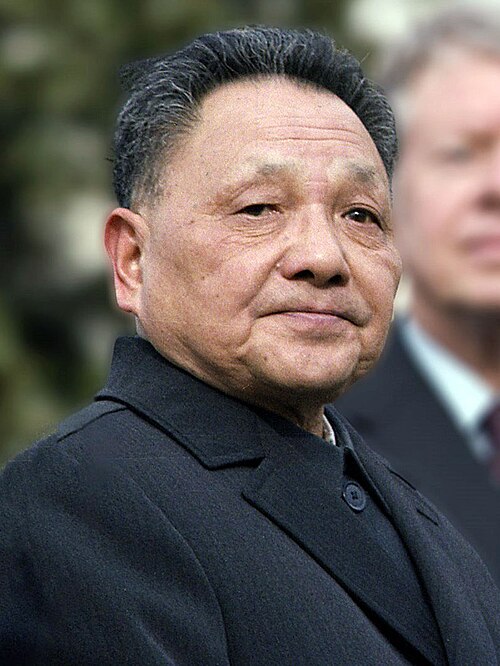
Deng Xiaoping (August 22, 1904 – February 19, 1997), originally named Deng Xiansheng, was a native of Guang'an, Sichuan. He was a Chinese politician, revolutionary, military strategist, and diplomat, and the core of the second-generation central leadership of the Communist Party of China. He is hailed as the 'chief architect of China's reform and opening-up.'
In his early years, he went to France on a work-study program, joined the Communist Party of China in 1924, and later studied in the Soviet Union. After returning to China, he participated in leading the Baise Uprising, the Long March, the War of Resistance against Japan, and the Liberation War, contributing to the founding of the People's Republic of China. After the founding of the PRC, he served as Vice Premier, General Secretary, and other posts, but was twice persecuted and sent down during the Cultural Revolution. After his rehabilitation in 1977, he gradually became the paramount leader, steering the course of rectifying past mistakes and implementing the reform and opening-up policy. He introduced the household contract responsibility system, established Special Economic Zones, and attracted foreign investment, leading to rapid economic growth in China.
In foreign affairs, he promoted the normalization of Sino-American relations, ordered the Sino-Vietnamese Self-Defense Counterattack, and signed the Sino-British Joint Declaration to resolve the Hong Kong issue, proposing the 'one country, two systems' concept. During the 1989 Tiananmen Square incident, he ordered a military crackdown, sparking international controversy. His 1992 Southern Tour reaffirmed the direction of reform. He passed away in 1997, and his theories were enshrined as 'Deng Xiaoping Theory.' His policies lifted hundreds of millions out of poverty, but also faced criticism over income inequality and corruption.
Day Master Wu Earth seated on Zi Water, born in Shen Month, Shi Shen (Talent) is in command, Wealth Stars appear twice, Qi Sha (Indirect Officer) stands prominent, forming a weak body with Shi Shen generating Wealth structure. Wu Earth is like thick walled earth, symbolizing stability and sincerity, but born in autumn when Metal is strong and Water is in phase, leading to significant draining and dissipation. Although there are Chen and Xu Earth to support the body, they are ultimately drawn into the Shen Zi Chen Water combination, causing the Earth to flow with the Water, resulting in a floating foundation. This energy configuration indicates an innate strong adaptability and flexibility, not a person who rigidly adheres to rules. With a weak body and Shi Shen generating Wealth, he must rely on thoughts, strategies, and tangible results to survive and develop, rather than depending on ancestral support or brute force. His greatest strengths are pragmatism, flexibility, and a hands-on approach, adept at finding a way out in complex environments. The potential challenge is an unstable foundation, making him prone to compromise under environmental pressure or feel drained, requiring constant search for support points.
The structure is Shi Shen controlling Qi Sha with Wealth, Yong Shen (Favorable Element) is Fire, Xi Shen (Supporting Element) is Earth, Ji Shen (Unfavorable Elements) are Water and Wood. Shi Shen represents talent and strategy, Qi Sha represents pressure and challenges, Wealth Star (Cai Xing) represents resources and desires. When Shi Shen can control Qi Sha, it signifies resolving crises through wit and turning pressure into motivation. However, in this chart, the Wealth Star appears on the stem, generating Qi Sha and draining the energy of Shi Shen, weakening the controlling force. Therefore, Fire (Resource Star) is needed to transform Qi Sha and support the body, while also adjusting the climate and warming the chart. Fire symbolizes mentors, knowledge, beliefs, and inner strength, helping him resist external pressure and unite people. Earth represents Bi Jian and Jie Cai (Companion Stars), which can share the burden and enhance execution. It is unfavorable for Water and Wood to be too strong: too much Water turns flexibility into aimlessness, and strong Wood with heavy Qi Sha oppresses body and mind. Historically, his multiple ups and downs relied on inner belief (Fire) and practical action (Earth), waiting for opportunities in adversity, which confirms the effective functioning of Yong Shen.
The core combination is Shi Shen generating Wealth, and Wealth generating Qi Sha, with a hidden generation from Qi Sha to Resource. Shi Shen represents creative thinking and expression; generating Wealth means turning ideas into tangible benefits. This combination shaped his character's practical, truth-seeking foundation. Wealth generating Qi Sha reflects that his pursuit of tangible results is inevitably accompanied by immense pressure and risk. In decision-making, he dares to confront contradictions directly and uses flexible methods (Shi Shen) to resolve crises, avoiding empty talk. In interpersonal relations, he is adept at observing the pattern of interests and survives through adaptability. The hidden generation from Qi Sha to Resource (the Ding Fire Direct Resource in the Xu Earth Hour Branch) is the key to his survival in brutal political struggles—Resource represents principles, wisdom, and protection. Whenever in desperate situations, there is always inner belief or support from key figures preventing his downfall.
The Year Pillar Chen hosts Hua Gai (Canopy of Wisdom) and Tai Ji Gui Ren (Supreme Mentor); the Month Pillar Shen hosts Wen Chang Gui Ren (Literary Star) and Yue De Gui Ren (Virtue of the Month); the Day Branch Zi hosts Jiang Xing (Leadership Star); the Hour Pillar Xu hosts Yue De and Tai Ji. Hua Gai and Tai Ji in the same pillar indicate exceptional intelligence and philosophical thinking, but also a tendency toward loneliness. Wen Chang and Yue De together signify that he gained social renown through culture and virtue, often turning peril into fortune. Jiang Xing seated on the Day Branch gives him inner leadership and calmness in crisis. The Earthly Branches form a Shen Zi Chen Water combination, directing the Qi of Metal (Shi Shen) to Water (Wealth), strengthening the ability to transform wisdom into resources, but also causing the body (Earth) to be made ungrounded by the Water combination, leading to a life of drifting and change. The Chen Xu clash impacts the foundation of the Year and Hour Pillars, symbolizing major changes in early and later life; the clash opens the tombs, also signifying breaking through norms and creating new situations. The absence of Harm indicates that although conflicts are intense, they do not become unresolvable malignant struggles, always leaving some room. These Shen Sha and interactions outline a destiny of a lone star of wisdom who achieves success by leveraging circumstances.
Day Master Wu Earth, born in autumn’s Shen Month, when Metal is white and Water is clear, the Earth’s virtue hides a sharp edge. Wu Earth is inherently thick and sincere, but it is washed and shaped by the Shen Zi Chen Water combination, transforming into flowing Earth—outwardly adaptable yet inwardly rigid. In his thinking mode, he is both pragmatic and broad-minded, not attached to dogma, adept at “crossing the river by feeling the stones”—this aligns with the flexibility of Shi Shen (Talent) controlling Qi Sha (Indirect Officer) and the goal orientation of the Wealth Star. His emotional needs are deep but not overt; he values security from tangible achievements more. Under pressure, he displays astonishing calm and resilience, like an embankment of earth: the greater the flood, the more it demonstrates its regulatory function. In comfort zones, he is instead wary of ease and proactively seeks change—a typical reaction of a weak body relying on Shi Shen and Shang Guan (Talent and Expression), where stagnation means danger.
The greatest energy lies in Shi Shen paired with Yue De (Virtue of the Month), combining wisdom with moral virtue. Shi Shen is strong and controlled (stored in Chen, combining with Water to form wisdom), endowing him with extraordinary strategic planning skills and economic acumen. This talent allows him to break free from ideological constraints, face real-world problems directly, and unleash astonishing creativity in economic fields such as the Reform and Opening-Up. Yue De Gui Ren in the Month Command signifies that his actions carry a moral appeal; even in harsh struggles, he can maintain relative integrity and attract loyal followers. Jiang Xing (Leadership Star) on the Day Branch gives him decisive power in the moment; “It doesn’t matter whether a cat is black or white” is a direct expression of his grasp of essence and rejection of superficiality. These talents combine to form an unmatched competitive edge in pragmatic reform.
The core conflict lies in Wealth fueling a weak Qi Sha, and Bi Jian and Jie Cai snatching Wealth. Wealth Stars overly strong generate Qi Sha, causing him to be accompanied by high pressure and controversy throughout his life, often encountering strong resistance when implementing policies, with even up-and-down fluctuations like “three downfalls and three rises.” Bi Jian and Jie Cai dividing Wealth represents internal friction when companions or competitors share resources, leading to deviations in policy execution. A character weakness is that excessive flexibility may erode principled rigidity, and with a weak body, he sometimes over-suppresses himself, leaving controversial spaces at historical turning points. When Shi Shen fails to fully control Qi Sha, he may exhibit evasive maneuvers toward certain challenges rather than confronting them head-on.
He is a flowing earth, born in an autumn of transformation, moistening himself with the wisdom of Water, transforming Qi Sha with the fire of conviction, and building a new foundation amidst the great clashes of the era. The chart’s weak body with a strong Yong Shen (Favorable Element) indicates that his achievements were not made overnight but gradually realized through repeated adjustments. Hua Gai (Canopy of Wisdom) and Tai Ji (Supreme Mentor) illuminate the loneliness of the thinker, while Yue De (Virtue) and Jiang Xing (Leadership) guide the responsibilities of the statesman. Ultimately, with the pragmatic Shi Shen of seeking truth from facts, he deconstructs the dogmatic Qi Sha, bringing China into a modern framework and completing a historic leap from nothingness to existence. This destiny pattern does not pursue perfection but achieves profundity.
Zheng Cai emerges, Shang Guan generates wealth, youthful enlightenment. This decade is dominated by Zheng Cai (Direct Wealth), representing pragmatism and accumulation, while Shang Guan (Hurting Officer) brings studiousness, intellectual curiosity, and a rebellious spirit. The individual is in a stage of seeking education and life direction. Early family upheaval (father's early death), but personal talents begin to shine. In 1919, he goes to France on a work-study program, laying the foundation for a future revolutionary career. Overall, a period of exploration and accumulation; external environment is turbulent (Xinhai Revolution, WWI), and the individual moves from insularity to engagement with the world.
Wealth star harms Resource, studies are obstructed, but Shang Guan is agile. In this cycle, wealth is strong but there is no Resource (Yin) to support the self, so academic performance may not be outstanding, but Shang Guan (Hurting Officer) intelligence and social skills compensate. Family financial difficulties push early independence. Working and studying in France, experiencing the bottom of society, accumulating social insight. Almost no personal financial accumulation, but broadens worldview. Shang Guan generating wealth also hints at future success through ideological reform.
Wealth star combines with Resource, leaving home and traveling far. In relationships, separation from family, forming friendships with like-minded people. Joining revolutionary organizations in France, establishing initial revolutionary bonds. No long-term stable intimate relationships, but lays groundwork for future teams. Reputation begins to emerge.
Metal and Water strong, Earth energy weak. In youth, constitution is average; needs to watch respiratory and digestive issues. But youthful energy and resilience. Emotions easily affected by environment, but overall optimistic.
Qi Sha attacks the self, Bi Jian protects the host, revolutionary start. Qi Sha (Indirect Officer) represents pressure, struggle, and transformation, while Bi Jian (Peer) symbolizes comrades and personal perseverance. This decade, the individual engages in revolution in foreign lands, undergoing the transition from student to professional revolutionary. Joining the Party in 1922, becoming head of the European branch in 1924, returning to China in 1927 to lead armed struggle. Qi Sha brings danger, but Bi Jian helps overcome difficulties. Overall, a growth stage of passion and peril.
Qi Sha as career, Bi Jian as team. This decade's career centers on revolutionary activities; materially deprived but spiritually fulfilled. After returning to China, engaging in work in White areas and the August 7th Conference, accumulating political experience. Bi Jian (Peer) represents like-minded comrades, forming an early core team. Financially, everything serves the revolution, no personal property. Career gradually advances under high pressure.
Officer and Killing mixed, complex social network. Abroad, interacting with various political figures; after returning, engaging with different factions. Married Zhang Xiyuan in 1927, but she passed away the following year, a brief marriage. Relationships are changeable, but also establishes long-term trust with Zhou Enlai, Chen Yun, etc.
Qi Sha overcomes self, high stress. Needs to watch physical exhaustion and mental strain. Experiencing multiple dangers (e.g., arrest), but still relatively young body can cope. Beware of physical injuries and sleep deprivation.
Zheng Guan emerges, Pian Cai generates Guan, career setbacks. Zheng Guan (Zheng Guan (Direct Officer)) represents position and rules; Pian Cai (Indirect Wealth) generates the Officer, making the Officer star strong but the self too weak to bear it. This decade, the individual works in the Central Soviet Area; in 1933, due to supporting Mao Zedong, he is attacked by the "Leftist" line and removed from substantive posts; after the Zunyi Conference in 1935, he gradually regains status. Zheng Guan has a post but is suppressed, Pian Cai brings resources but also burdens. Overall, a decade of ups and downs and turning points.
Officer star restricted, Wealth star transforms Officer. Career development hits obstacles, posts are revoked but Party membership retained. During the Long March, serves as editor-in-chief of "Red Star" newspaper, still an important propaganda role. Financially destitute, entirely dependent on organization supplies. Later reaches northern Shaanxi with the army, posts begin to recover. Pian Cai also brings some unexpected opportunities, such as cooperation with Comrade Deng Xiaoping.
Zheng Guan as colleagues, Pian Cai as opposite sex. In relationships, conflicts with Bogu and others, but establishes trust with Mao Zedong, Zhou Enlai, etc. Marries Zhuo Lin in 1939, family life stabilizes. Marriage brings emotional support.
Wood and Water strong, Fire and Earth weak. Physical exhaustion, heavy toll during the Long March. Watch heart and digestive system. High emotional stress but strong will.
Pian Yin supports the self, Zheng Cai as useful, rise to power. Pian Yin (Indirect Resource) Bing Fire warms the chart, supporting the Day Master, transforming weakness into strength. Zheng Cai Zi Water and Bing Fire form Resource transforming Wealth, career gains noble support. This decade, the individual holds key positions during the Anti-Japanese War and Liberation War, from Political Commissar of the 129th Division to Secretary of the General Front Committee in the Huaihai Campaign, achieving great military success. Pian Yin represents strategy and backing; Zi Water as wealth, but restrained by Resource, valuing career over personal wealth. Overall, a golden period in military and political career.
Resource star effective, both Wealth and Officer beautiful. Bing Fire Pian Yin brings strategic vision and endurance, showcasing talent in military and political fields. In 1945 appointed Secretary of the Shanxi-Hebei-Shandong-Henan Central Bureau, 1947 "Thousand Mile Leap into the Dabie Mountains", 1948-1949 commanding Huaihai and Yangtze Crossing campaigns, reaching high military rank. In terms of wealth, no personal wealth during war, but power and prestige grow unprecedentedly.
Resource star as senior, Zi Water as subordinates. Partners with Liu Bocheng in the "Liu-Deng Army", harmonious relationship. Close ties with Mao Zedong and Zhou Enlai. Family stable in the 1940s, Zhuo Lin gives birth to several children. Subordinates are loyal, team cohesive.
Fire and Earth receive support, health gradually improves. Energetic, adapts to war environment. Beware of overexertion and old injuries (e.g., leg). Irregular diet, watch stomach and intestines.
Zheng Yin emerges, Jie Cai helps the self, reaching the highest official position. Ding Fire Zheng Yin (Direct Resource) supports the self, Chou Earth Jie Cai (Rob Wealth) assists. This decade, at the founding of the nation, the individual holds important central posts: in 1952 becomes Vice Premier of the State Council; in 1954, Secretary-General of the CPC Central Committee; in 1956, General Secretary. Zheng Yin represents reputation and status, Jie Cai represents team and competition. Career reaches its peak, but Jie Cai also brings struggles. Overall, a period of consolidation at the core of power.
Resource star accomplishes, Jie Cai struggles for power. In career, participates in various national decisions, economic recovery. But Jie Cai implies internal competition, conflicts with Gao Gang, Rao Shushi, etc. Becomes one of the core leadership in 1956. Financially, public service salary, nothing extraordinary. Zheng Yin brings good reputation, but Jie Cai also brings power struggles.
Resource star as benefactor, Jie Cai as friends. Cooperates with Mao Zedong, Liu Shaoqi, Zhou Enlai, etc. But movements like the Anti-Rightist Campaign in 1957 and the Great Leap Forward in 1958 strain interpersonal relationships. Family-wise, many children but often separated. Relations with Zhuo Lin remain stable into the early 1970s.
Fire and Earth strong, beware of heat dryness. Gaining weight in middle age; watch blood pressure and cardiovascular issues. Energetic but needs balanced rest. High emotional stress but able to withstand.
Bi Jian helps the self, Qi Sha attacks the self, reversal of fate. Heavenly Stem Wu Earth Bi Jian, Earthly Branch Yin Wood Qi Sha. Bi Jian provides strong support, but Yin Wood Qi Sha attacks the self, and Yin-Shen clash (month branch), severe impact. This decade the individual experiences drastic ups and downs. After the Seven Thousand Men Conference in 1962 regains strength, but in 1966 the Cultural Revolution erupts and he is overthrown, sent down to Jiangxi in 1969. Qi Sha represents disaster and suppression, Bi Jian represents perseverance. Overall, the lowest point in life.
Qi Sha (Indirect Officer) attacks the self, career collapses. Career-wise, at the start of the Cultural Revolution, is criticized and all posts revoked. In 1969 evacuated to work in a tractor repair plant in Xinjian County, Jiangxi. Bi Jian brings resilience and covert help from colleagues, but overall career hits rock bottom. Wealth sharply decreases, life is hard. Qi Sha suppression, but Bi Jian sustains survival.
Qi Sha as enemies, Bi Jian as comrades. Fierce struggle with Lin Biao, Jiang Qing, and other opponents. Even some old comrades become estranged due to circumstances. Family-wise, in 1969 son Deng Pufang becomes disabled due to the Cultural Revolution, wife Zhuo Lin affected. Extremely tense interpersonal relationships, but a few old friends secretly support.
Wood strong overcomes Earth, health deteriorates. Emotional depression, physical burden heavy. Falls ill while working in Jiangxi; watch cervical spine and digestive system diseases. Immense mental stress, but will never breaks.
Jie Cai provides assistance, Zheng Guan returns to court, comeback and resurgence. Ji Earth Jie Cai helps the self, Mao Wood Zheng Guan represents career. This cycle, after the Lin Biao incident in 1971, the situation shifts; in 1973 reinstated as Vice Premier, in 1975 presides over daily work of Party and government. Jie Cai represents colleague support, Zheng Guan represents return of authority. But in 1976 overthrown again (April Fifth Movement), then reinstated in 1977. Twists and turns, eventually grasping great power. Overall, a winding path back to the center of power.
Officer star is utilized, Jie Cai seizes power. In 1975, carries out comprehensive rectification, restoring economy. In 1976, criticized for "Rightist Deviationist Wind". After 1977 comeback, restores college entrance exams, rehabilitates wrongful cases, in 1978 the Third Plenary Session of the 11th Central Committee establishes reform and opening-up policy. Jie Cai boosts momentum, career takes off. Economically, national economy begins to improve; personally no special enjoyment.
Officer star as superiors, Jie Cai as subordinates. Subtle relationships with Hua Guofeng, Ye Jianying, etc. When overthrown again in 1976, protected by some people. Family-wise, children gradually recover. Depends on Zhuo Lin. By 1978, cooperation with old comrades resumes.
Wood and Earth battling, watch bones and sinews. Age increases, energy declines. Beware of falls and accidents. Emotional ups and downs but mentally strong. Watch hypertension.
Shi Shen pours out talent, Bi Jian solid, reform and opening up. Geng Metal Shi Shen (Eating God) governs wisdom and reform, Chen Earth Bi Jian helps the self. This decade, the individual leads China's reform and opening up, economic takeoff. Shi Shen represents innovation, openness, marketization; Bi Jian represents unity and stability. In the 1980s, abolishes lifelong tenure for leading cadres, reduces military by one million, proposes "One Country, Two Systems". Career reaches its zenith. Overall, a golden decade of accomplishment.
Shi Shen generates Wealth, nation prospers. Economic reforms: rural household contract system, urban state-owned enterprise reform, establishment of special economic zones. Wealth rapidly grows, national GDP doubles. Personal prestige reaches pinnacle, becomes core. Shi Shen releases talent, thought liberation, drives social progress. Bi Jian supports self, team stability.
Shi Shen as talent, Bi Jian as team. Cooperates with Chen Yun, Hu Yaobang, Zhao Ziyang, etc. 1989 disturbances, but ultimately stabilizes. Family: children each have achievements, Zhuo Lin healthy. International relations also improve.
Metal strong, watch lungs and respiratory system. Older, frequently catches colds. Still energetic, persists in work. Needs rest, avoid overwork.
Shang Guan matched with Yin, wisdom and bravery, twilight years. Xin Metal Shang Guan (Hurting Officer) and Si Fire Pian Yin (Indirect Resource); Shang Guan governs reformative discourse, Pian Yin governs wisdom and protection. In this cycle, the 1992 Southern Tour speeches promote a new round of reform and opening up. Shang Guan is not favorable for longevity, but Pian Yin protects the self, persisting in ideals. Passes away in 1997 (Ding Chou year), Chou Earth clashes with Si Fire, shaking the Resource root. Overall, the final influence period and end of life.
Shang Guan generates Wealth, words influence. In the 1990s, although retired, influences policy through Southern Tour speeches. Economy continues high-speed development. Financially no personal accumulation, but national progress. Shang Guan represents criticism and reform, Pian Yin represents wisdom; Southern Tour sets tone. Anti-flood efforts in 1998 not witnessed, but the 1992 speech is core.
Shang Guan as outlet, Pian Yin as thought. Transitions to the third-generation leadership collective. In family, Zhuo Lin recovers from serious illness in 1990. Final moments peaceful, children by side. Extremely high international reputation.
Fire and Metal clash, heart and lung disease. In 1997, passes away from pulmonary infection due to late-stage Parkinson's disease. Need to watch respiratory system. Elderly constitution weak, beware of cold and infections.
In the Tian Zhai (Property) Palace, Tian Fu (Treasury Star) in Miao state, Tian Kui (Heavenly Leader), Di Kong (Void), and Tuo Luo (Torturer) in Miao state together form a variant of the 'Fu Xiang Chao Yuan' (Treasury Facing the Court) pattern. Tian Fu is the master of storehouses, Miao state indicates abundant real estate and a fine ancestral inheritance; Tian Kui is a benefactor star, adding personal connections in property matters; Di Kong conversely indicates 'void' within 'substance,' meaning that the assets under his name are not entirely personal (e.g., donating royalties); Tuo Luo Miao signifies delays, possibly representing prolonged renovations or property rights issues. Deng Xiaoping's residences: Beijing's Miliangku Hutong, his original home in Jiangxi, etc. However, he had no obsession with luxury, and after death his residence was returned to the state, reflecting Di Kong's 'non-attachment.'
This palace has no Four Transformations, but Tian Fu Miao provides extremely strong institutional shelter, Tian Kui ensures he never lacked housing, and Di Kong with Tuo Luo implies he did not care about material accumulation. Deng never used his position to seek private housing for his family; his son Deng Pufang lived in an ordinary building, in line with Tian Fu's 'steadiness' but Di Kong's 'no hoarding.' Tuo Luo Miao gave him attachment to his old home; after the Cultural Revolution, he returned to Beijing and still lived in his former residence, avoiding reconstruction.
The Tian Zhai Palace reflects Deng Xiaoping's 'home-nation isomorphism': he governed the country as a 'large property' while keeping his private residence simple. In the 1950s he moved into Zhongnanhai, was confined to Xinjian County, Jiangxi during the Cultural Revolution, and later returned to an old-style courtyard in Beijing. During Reform and Opening Up, he vetoed proposals to build a memorial hall for himself, emphasizing 'no special privileges.' Tian Kui's benefactor effect: his residence was protected during many political storms, never being ransacked. Di Kong suggests that in his later years his royalties and collections were all donated, truly 'belonging to the people.'
In the Career Palace, Tian Ji (Opportunity Star) in Prosperous, Tai Yin (Moon Star) in Exuberant, Wen Qu in Average, together with Lu Cun (Wealth Accumulation Star) and Tian Ma (Travel Star) in the same palace, form the 'Ji Yue Tong Liang' pattern together with the 'Lu Ma Jiao Chi' (Wealth and Horse Racing) pattern. Tian Ji governs adaptability and strategic planning, Tai Yin governs planning and endurance, Wen Qu in Average enhances eloquence and writing ability, Lu Cun accumulates wealth, and Tian Ma drives dynamic movement. This is a typical 'strategic' career pattern: advancing steadily through intellect and strategy rather than force. Deng Xiaoping's career trajectory—from political cadre to military commissar, then to General Secretary of the Central Committee and chief architect of reform and opening-up—reflects the rational adjustment of 'Ji Yue' (Tian Ji and Tai Yin) and the pioneering leap of 'Lu Ma' (Lu Cun and Tian Ma) at every stage. Wen Qu in Average also fostered his emphasis on theoretical construction (Selected Works, Conversations).
There are no Four Transformations in this palace, but Tian Ji and Tai Yin in vigorous states naturally carry the energy of 'stillness reaching its limit and turning into movement'. Lu Cun strengthens the stable foundation, and Tian Ma triggers annual changes. Tian Ma governs change, corresponding to Deng Xiaoping's 'three rises and three falls': each time he was ousted, he returned to power by adjusting strategies. The combination of Lu Cun and Tian Ma symbolizes 'the more movement, the more prosperity'—after each political setback, his return to power became even more consolidated. After his third comeback in 1977, he immediately took charge of reforms, perfectly embodying Tian Ma's acceleration.
In his youth, Deng Xiaoping studied Marxism in France and later engaged in armed struggle upon returning to China. Tian Ji enabled his skill in land reform and military reconnaissance. During the Huaihai Campaign, as Secretary of the General Front Committee, he coordinated two major field armies, demonstrating Tai Yin's ability to 'pool collective wisdom'. After the founding of the People's Republic, he served as General Secretary for ten years, handling daily party and government affairs with Tian Ji's orderliness and Tai Yin's meticulousness. After being overthrown during the Cultural Revolution, he used idle time at a factory in Gan County to contemplate reform ideas (Tian Ji's endurance). When he emerged in the late 1970s, he immediately implemented the policy of opening-up and domestic reform, with Tian Ma's driving force evident from his southern tour speeches.
In the Fu De (Spirituality) Palace, Tai Yang (Sun) transforming to Ji (Hindrance), Wen Chang (Literary Star) in De state, and Huo Xing (Fire Star) in Xian state form an anxious combination of 'Sun Obscured by Fire.' Tai Yang governs brightness and leadership, transforming to Ji dims its light, leading to inner repression and worry; Wen Chang De represents wisdom and cultural cultivation, while Huo Xing Xian intensifies urgency and mental fluctuations. The native appears composed externally but bears enormous internal pressure, especially when concerned about the nation's future. Deng Xiaoping's quotes like 'What's there to fear? When the sky falls, a tall person will hold it up' are a form of self-comfort under Tai Yang Hua Ji.
Tai Yang Hua Ji entering Fu De is the most crucial Ji transformation in the natal chart, directly affecting the spiritual level. Hua Ji turns Tai Yang's 'warmth' into 'scorching,' indicating the native experienced dark times mentally (forced to endure during the Cultural Revolution). But the combination of Wen Chang De and Huo Xing Xian allows him to relieve inner distress through reading, thinking (Wen Chang), and decisive action (Huo Xing). In 1978, supporting the debate on practice as the sole criterion for truth and rejecting the 'Two Whatevers' was a transformation of Hua Ji: acknowledging the 'imperfection' of thought to move forward.
Deng Xiaoping faced major spiritual hurdles throughout his life: the hardships of the Long March, being sent down during the Cultural Revolution, and political disagreements with old friends (such as Hu Yaobang's resignation) all caused inner turmoil. On a subjective level, Tai Yang Hua Ji manifested as 'political fatigue': he decided to retire after 1989, no longer willing to manage countless affairs. Wen Chang De allowed him to read extensively on Marxism-Leninism during his time in Jiangxi, forming theoretical depth; Huo Xing Xian prompted him to settle disputes with 'Don't argue' during his 1992 southern tour. His love for bridge and football was a way to find 'self-forgetfulness' under Tai Yang Hua Ji.
In the Parents Palace, Wu Qu (Wealth Star) in Ping state transforming to Ke (Reputation) and Po Jun (Ruin Star) in Ping state transforming to Quan (Power) form a resolute combination of 'Wu Po Dual Motion.' Wu Qu is a wealth and general star, transforming to Ke enhances reputation; Po Jun is a consumption and change star, transforming to Quan indicates authority and renovation. The Parents Palace governs inheritance, ancestral virtue, and early environment. Wu Qu Hua Ke suggests the father (or paternal figure) has a military or financial background and is praised for virtue; Po Jun Hua Quan hints that the grandparents or family experienced destruction and rebuilding (e.g., a landlord family facing upheaval). Deng Xiaoping's father, Deng Shaochang, was an enlightened landlord who studied at a law and politics school and supported his son's study abroad, reflecting Wu Qu Hua Ke; Po Jun Hua Quan corresponds to the family transformation after his mother's early death and the decline of family fortune.
Wu Qu Hua Ke and Po Jun Hua Quan are both in this palace, an extremely potent dual transformation, and both are in Ping state, indicating this power is 'moderate' rather than extreme. Hua Ke brought a certain social status to the father (Deng Shaochang once served as county security chief), while Hua Quan implies that the mother (or a female family member) held actual power (Deng's mother, née Dan, managed the household). However, Po Jun Hua Quan also means 'change': Deng Xiaoping's mother died when he was three, reflecting Po Jun's sense of rupture in early childhood. Wu Qu Hua Ke also points to his later clear logic in writing articles and reports, a literary style inherited from the Parents Palace.
The Wu Po dual transformation in the Parents Palace laid the gene for Deng Xiaoping's courage to break conventions. His father valued education and sold family property to send him to France; Po Jun Hua Quan is exactly the 'painful abandonment of the old.' His mother's early death left a sense of loss, but his stepmother, Xia Shi, was gentle and partly compensated. Wu Qu Hua Ke also contains a 'danger' element (Wu Qu governs accidents), as his father was kidnapped and killed by bandits in his later years. Throughout his political career, Deng repeatedly set things right and broke deadlocks, continuing the reform DNA of the Parents Palace's 'Wu Po' into his Career Palace.
Tian Tong (Heavenly Harmony) sits in the Destiny Palace in the Xu position, in a balanced state, assisted by Zuo Fu (Left Assistant), forming the pattern of 'Fu Bi Tong Gong' (aiding stars in the same palace). Tian Tong is a star of blessings, governing gentleness, coordination, and aversion to conflict. However, being in a balanced state weakens the depth of blessings, requiring trials before blessings are obtained. Zuo Fu is a helpful star, strengthening interpersonal support, indicating that the native has a group of loyal collaborators. This combination suggests a tendency to achieve goals through soft tactics and strategic retreats rather than direct confrontation. Deng Xiaoping's characteristic of 'a needle hidden in silk floss' stems from this: outwardly amiable, inwardly unyielding, adept at holding to principles through compromise.
There are no Four Transformations in this palace, but the Career Palace's Tian Ji (Heavenly Secret) and Tai Yin (Yin Water) together with the Destiny Palace form the early shape of the 'Ji Yue Tong Liang' pattern. Moreover, the Life Ruler and Body Ruler are both in the Wealth and Travel Palaces, while the Four Transformation forces enter from the Children and Parents Palaces. Without Transformations in this palace, blessings must be cultivated through effort. In the Children Palace, Lian Zhen (Integrity) Hua Lu brings resources through cooperation or subordinates; in the Parents Palace, Wu Qu (Military Song) Hua Ke adds professional prestige; while in the Fortune Palace, Tai Yang (Sun) Hua Ji symbolizes mental pressure. During his three rises and falls, each comeback leveraged the lubricating effect of his existing network.
The combination of Tian Tong and Zuo Fu in the Destiny Palace shaped Deng Xiaoping's leadership style: not a domineering 'emperor' figure, but a 'chief architect' who coordinated all sides. His work in the political department during the Long March and his role as the 'chief secretary' of the Huaihai Campaign demonstrated his talent for pooling resources and resolving conflicts. After being toppled during the Cultural Revolution, he was able to bend and stretch while waiting for the right moment, epitomizing Tian Tong's 'hidden resilience'. In his later years, his pragmatic approach of 'crossing the river by feeling the stones' to promote reform and opening-up also reflected Tian Tong's acceptance of uncertainty and ability to go with the flow.
The Siblings Palace has no main star, with only Di Jie (Earth Calamity) alone. Di Jie governs setbacks and depletion, indicating shallow sibling bonds or weak support. Di Jie belongs to Water, also symbolizing financial drain or relationship ruptures. In ancient interpretations, it means disputes over inheritance or separation; in modern times, siblings go their separate ways, offering limited practical help. Deng Xiaoping came from a large family with many siblings, but he left home early for education and revolution, rarely reuniting. His younger brother Deng Ken later entered politics, but his assistance was not as strong as the cooperative stars in other palaces.
There are no Four Transformations in this palace, but the essential nature of Di Jie is 'depletion'. It subtly combines with Ju Men (Great Gate) from the opposite palace, forming an implicit constraint: 'when encountering calamity, disputes arise'. Di Jie in the Siblings Palace does not directly trigger Hua Lu or Hua Quan, but it weights the overall energy negatively, suggesting that the native tends to invest in sibling relationships without return. In reality, Deng Xiaoping's younger brother Deng Ken suffered political setbacks, and though they kept in touch, they never collaborated deeply, reflecting Di Jie's 'sense of detachment'.
In his early years, Deng Xiaoping was the second son; his elder brother Deng Shaosheng died young, and there were other younger siblings. After going to France on a work-study program in 1920, he gradually lost touch with his family, and the brothers took different paths. Di Jie also portends 'calamities' in family affection—his father Deng Shaochang died early, and the family was impacted by land reforms, further thinning sibling ties. However, Di Jie does not signify complete severance, just 'low energy', so in his later years, Deng Xiaoping still looked after family but did not rely on the power of his sibling group.
In the Subordinates Palace, Zi Wei (Emperor Star) in Exuberant, Tan Lang (Desire Star) in Favorable, Qing Yang (Conflict Star) in Decline, forming a special 'Zi Tan Yang' combination. Zi Wei the Emperor Star, Tan Lang the Desire Star, with Qing Yang the Conflict Star, constitute a 'ruler and strategist' pattern of the deviant type: there are talented but ambitious subordinates who can be utilized but must be watched. Zi Wei in Exuberant indicates high loyalty from subordinates, Tan Lang in Favorable means they are multi-talented and socially adept, Qing Yang in Decline brings competition and friction. In Deng Xiaoping's team, there were reform pioneers like Wan Li and Xi Zhongxun (Tan Lang's daring), but also some who fell due to power struggles (Qing Yang's harm). His approach was to 'give and take appropriately': use their strengths and limit their weaknesses.
There are no Four Transformations in this palace, but Zi Wei in Exuberant inherently radiates authority, and Tan Lang in Favorable can transform its energy into charisma (Peach Blossom) or degenerate into extravagance. The Subordinates Palace is the palace of subordinates; with Zi Wei seated here, the native naturally becomes the core, but Qing Yang warns against internal conflicts. Deng Xiaoping's establishment of the Central Advisory Commission and his insistence on collective leadership were meant to disperse the risk of personality cult that Qing Yang could bring.
Deng Xiaoping's revolutionary team, from Taihang Mountain to the Central Plains Field Army (later the Second Field Army), showed unwavering loyalty to him. The seamless cooperation with Liu Bocheng and Chen Yi exemplified Zi Wei's commanding power. However, during the Cultural Revolution, incidents like the Lin Biao affair and the Gang of Four represented a backlash from the broader 'subordinates palace': Qing Yang in Decline caused some close associates (like Mao Yuanxin) to become adversaries. In his later years, he decisively 'cleaned up the three types of people' to control Qing Yang. Tan Lang in Favorable also won him supporters in cultural circles (such as Wang Zhen), but Qing Yang constrained any overstepping.
In the Travel Palace, Ju Men (Orator Star) in Decline with You Bi (Right Assistant) together form a characteristic where the 'dark water of Ju Men' meets assistance yet paradoxically intensifies solitude. Ju Men is a dark star, governing disputes, gossip, and distant travel toil; in Decline, it deepens the native's low-key endurance while away, avoiding ostentation. You Bi, as an assistant star, in the Travel Palace represents gaining noble helpers in a foreign land, but Ju Men in Decline often makes such help contingent. Deng Xiaoping did not travel abroad extensively in his life (relative to modern leaders), but 'going out' was key: at 16, he went to France for work-study; in middle age, he visited Moscow multiple times to liaise with the Comintern; in his later years, he promoted opening-up—all reflecting 'going out brings turning points'.
There are no Four Transformations in this palace, but with the Career Palace's Tian Ji transforming to Avoidance (not in this palace), a hidden movement of 'Ji Yue Tong Liang' forms, causing travels often to be for political missions rather than leisure. Ju Men in Decline plus You Bi made Deng Xiaoping both willing to endure hardships (working while studying) and adept at building connections (meeting Zhou Enlai and others in France). His visits to Japan and Southeast Asia in 1978 and to the United States in 1979 each brought back inspiration for national policy, with You Bi's 'covert assistance' aligning with the pragmatic welcome from the US and Japan.
The Travel Palace with Ju Men in Decline presaged the hardships of Deng Xiaoping's early years in France: working as a laborer and facing discrimination, yet this experience allowed him to understand capitalism's operations and cultivate a pragmatic style. In middle age, he studied at Moscow's Sun Yat-sen University, sharing classes with Chiang Ching-kuo, laying groundwork for later cross-strait relations. In his later years, the 'southern tour,' though not international, was an extension of the Travel Palace—his southern speeches changed China's direction. Ju Men's characteristic of 'disseminating ideas' is evident: his theories spread in the form of 'talks' and 'speeches'.
In the Illness Palace, Tian Xiang (Harmony Star) is in a favorable position, with no malefic stars clashing, indicating a gentle constitution. Tian Xiang is the Star of Authority (Yin Star), its qi transforms into benevolence, governing the digestive system and endocrine balance. In a favorable position, the health foundation is good, unless annual influences activate imbalances in stars like Ju Men (Orator Star) or Wu Qu (Finance Star). Deng Xiaoping did not suffer many serious illnesses throughout his life: in his early years, he endured the hardships of the Long March; in his later years, after quitting smoking, his lung function improved; at the age of 90, he could still walk and swim. Tian Xiang also hints at a need to guard against 'injuries from sharp objects' throughout life (as Tian Xiang sometimes corresponds to physical damage). During the Cultural Revolution, he was criticized and beaten, fracturing bones, but had a strong ability to recover.
There are no Four Transformations in this palace, but the Parents Palace with Wu Qu Hua Ke (Reputation Transformation) and Po Jun Hua Quan (Authority Transformation) forms a hidden trigger of 'Metal-Wood conflict' with the Illness Palace, necessitating attention to the lungs and bones. Wu Qu belongs to Metal, Po Jun belongs to Water; if Metal generates Water too strongly, the lungs may be weak. In his later years, Deng Xiaoping occasionally had respiratory infections, but overall remained robust. He passed away in 1997 from Parkinson's disease, a degenerative neurological condition, consistent with the imagery of Tian Xiang being 'peaceful but susceptible to the erosion of time'.
Tian Xiang in a favorable position bestowed upon Deng Xiaoping longevity and vitality: in his 80s, during his Southern Tour, his mind was sharp and his gait was steady. The only major health hurdle was the injuries sustained during the Cultural Revolution, but he bravely endured it. The Illness Palace without malefic stars allowed him to maintain physical resilience amidst political adversity, and after three falls and three rises, he still governed the country at an advanced age. Tian Xiang also governs moderation in diet; in his later years, he ate at regular times and in measured quantities, and was not fond of alcohol, aligning with the self-discipline of being in a favorable position.
The Wealth Palace has Tian Liang (Blessing Star) exalted, and it is the Body Palace, with no supportive or baleful stars, sitting alone in the Exalted-Emperor position. Tian Liang is the star of protection; when exalted, one accumulates wealth through ancestral legacy or institutional patronage, rather than through commerce or speculation. Tian Liang is lofty and pure, disliking unscrupulous means; wealth often comes from public salary and policy dividends. As the Body Palace, it indicates that the focal point of the life-owner is maintaining the existing economic order, rather than creating massive personal wealth. Deng Xiaoping's promotion of the household contract responsibility system and establishment of special economic zones enriched the people rather than himself, perfectly embodying Tian Liang's character of 'distributing wealth to benefit the masses'.
There are no Four Transformations in this palace, but the Children Palace with Lian Zhen Hua Lu (Prosperity Transformation) and the Property Palace with Tian Fu (Heavenly Mansion) exalted illuminate and support, forming an indirect wealth flow known as 'Lu Ma Jiao Chi' (Prosperity Star Meeting Mobility), causing indirect wealth flow. The absence of Hua Lu in Tian Liang does not mean no money, but rather that wealth is not directly controlled by the individual. Deng Xiaoping's approach to 'enriching the nation' was to stimulate private vitality through structural reforms, increasing overall national wealth, while his own monthly salary was only a few hundred yuan, and his car seating followed regulations without special privileges. With Tian Liang sitting in the Wealth Palace, greed is most taboo, and indeed he lived a life of integrity.
Deng Xiaoping's financial management was extremely simple: he took no extra allowances during wartime, and had no private property while serving as Vice Premier after the founding of New China. After retirement, he donated his royalties to education. With Tian Liang exalted and as the Body Palace, his attitude towards 'money' was that of a tool rather than an end. However, his statement during reforms of 'letting some people get rich first' was actually driven by Tian Liang's descendants (Children Palace with Lian Zhen Hua Lu) driving social wealth distribution—Tian Liang sitting firmly like a fisherman, watching 'Qi Sha' (the vanguard of reform) dashing into the waves.
The Spouse Palace has Ling Xing (Turbulence Star) alone, in a Fallen position. Ling Xing is a variant of Huo Xing (Fire Star), governing sudden shocks, emotional fluctuations, and hidden disputes. Its Fallen position amplifies the negative effects, indicating friction in marriage or the test of frequent separation. Ling Xing belongs to the Fire element, also hinting at a spouse with a strong or irritable temperament. However, since this palace lacks a main star, the solitary Ling Xing's power is easily disturbed by the external Ju Men (Great Gate) and You Bi (Right Assistant) in the Travel Palace, leading to communication barriers between spouses. Deng Xiaoping's first wife, Zhang Xiyuan, and second wife, Jin Weiying, both separated from him or died early due to specific historical periods. His third wife, Zhuo Lin, stayed with him the longest, yet due to work, they still lived apart for many years, clearly manifesting Ling Xing's 'intermittent' imagery.
There are no Four Transformations in this palace, but Ling Xing itself carries a latent 'destructive' trigger. Moreover, Ju Men (Great Gate) in the Travel Palace governs disputes and is prone to impact the marital relationship through external events. Without Hua Lu to dissolve calamities, nor Hua Ke to add grace, the energy of the Spouse Palace is purely about 'tests'. In Deng Xiaoping and Zhuo Lin's marriage: Zhuo Lin was introverted and not sociable, complementing Deng Xiaoping's calm demeanor. However, frequent political movements disrupted their home. During the Cultural Revolution, Zhuo Lin accompanied Deng Xiaoping when he was sent down to Jiangxi, bringing out the other side of Ling Xing — 'sharing weal and woe'.
The Spouse Palace with Ling Xing in Fall foreshadows two episodes of marital turmoil: Zhang Xiyuan died in childbirth in 1928; Jin Weiying divorced due to revolutionary needs (later remarried); Zhuo Lin, after marriage, soon lived apart as both engaged in revolution. Ling Xing tends to attach to other stars, and without a main star in this palace, it appears isolating, but Deng Xiaoping deeply understood the trade-offs of 'political marriage', minimizing family harm. In his later years, Zhuo Lin accompanied Deng Xiaoping on his southern tour and received foreign guests, transforming Ling Xing's 'sparks' into the tacit understanding of an old married couple.
The Children Palace has Lian Zhen Hua Lu (Prosperity Transformation), Qi Sha (Indirect Officer) exalted, and Tian Yue (Assisting Star) stationed, forming a variation of the 'Xiong Su Qian Yuan' (Heroic Star Meeting Heavenly Origin) structure. Lian Zhen is the secondary Peach Blossom star, and when undergoing Hua Lu, it transforms into the ability to convert personal connections into tangible results; Qi Sha exalted points to pioneering and control; Tian Yue symbolizes recognition from superiors. The combination of these three stars indicates that the life-owner's subordinates, descendants, or the third generation will contain exceptionally capable executors, and these individuals are often not direct blood relatives but rather successors in one's career. Deng Xiaoping had five children (Deng Pufang, Deng Nan, etc.), but more prominently, 'reform successors' like Zhao Ziyang and Jiang Zemin formed the prototype of the national governance team.
Lian Zhen Hua Lu entering the Children Palace is one of the most critical Hua Lu in the natal chart. The Hua Lu transforms destructive force into resources; Lian Zhen, the 'Prison Star' (law enforcement, politics), when moistened by the Prosperity Star, becomes a 'reservoir of political talents'. In his later years, Deng Xiaoping promoted a large number of young cadres and abolished the tenure system for officials, which was exactly the manifestation of Lian Zhen Hua Lu in the Children Palace (lord-vassal relationship). The 'iron fist' of Qi Sha exalted was reflected in his actions such as purging the 'three types of people' and rectifying the party, applying a standard of selecting the virtuous and capable among subordinates.
Deng Xiaoping's education of his children was strict but not stifling; most of them worked in government or science/technology fields, but not overly prominent, reflecting 'prosperous but not arrogant'. In a broader sense, 'children' refers to the Deng faction team: in the 1980s, he vigorously promoted educated young cadres; Hu Yaobang and Zhao Ziyang were first entrusted with important tasks and then adjusted, demonstrating the 'use then discard' characteristic of Lian Zhen Hua Lu with Qi Sha exalted. The 'benefactor' element of Tian Yue secured him support from elder statesmen like Ye Jianying at critical moments, and allowed him to smoothly transfer power to Jiang Zemin.
Generate your personal chart in under a minute. Sign up free and get 30 credits — enough for two or more AI readings. No credit card.
Generate my free BaZi chartPlease sign in to join the discussion
Sign In