Year
Bing
Xu
Zheng Yin
Zheng Yin
Hidden Stems
Wu (Zheng)Xin (Shi)Ding (Pian)
- Star Luck
- Yang
- Sitting Branch
- Mu
- Void
- Wu-Wei
- Na Yin (Elemental Sound)
- Wu Shang Tu
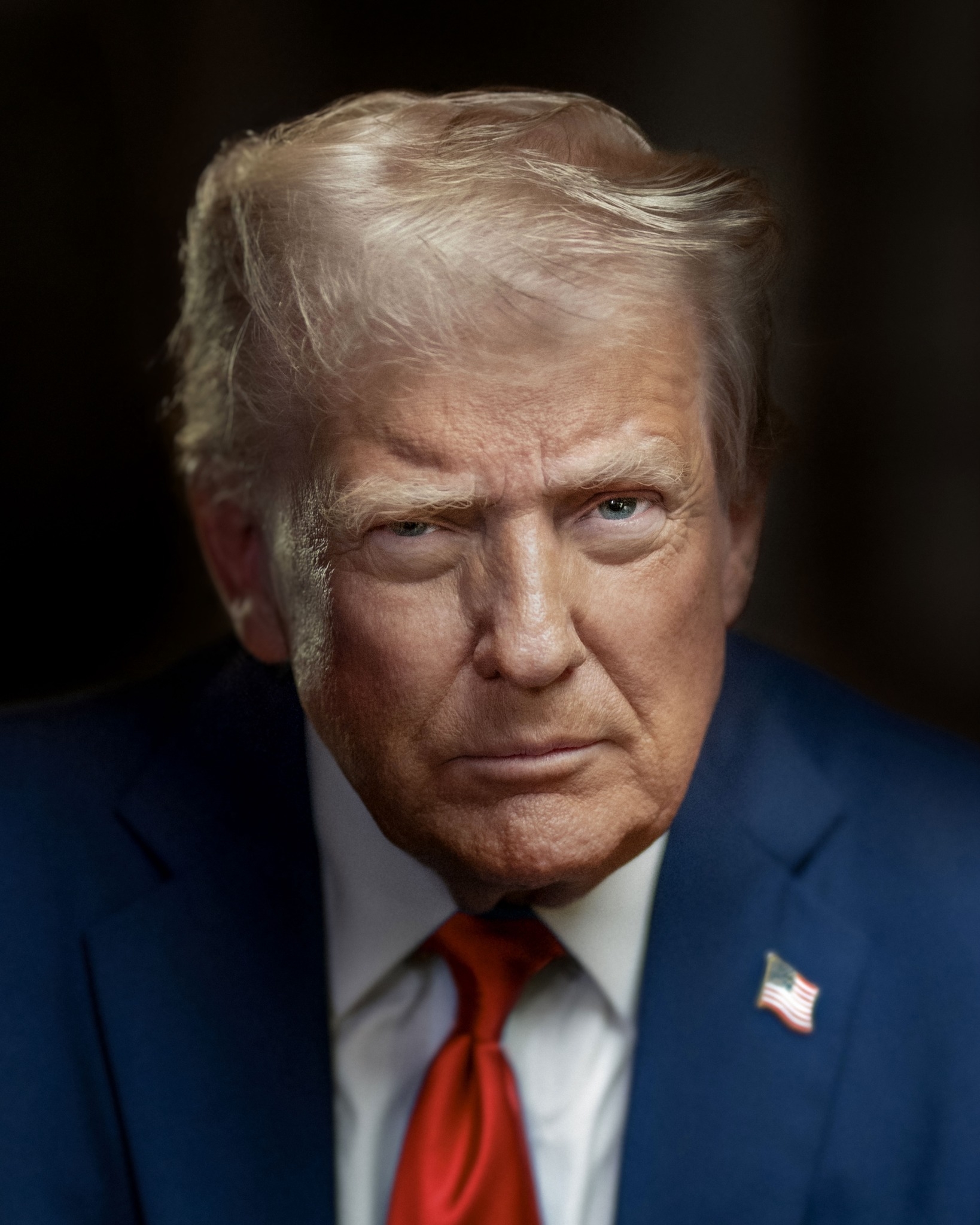
Donald John Trump was born in 1946 into a wealthy family in Queens, New York City. In his early years, he attended the New York Military Academy and later received his education at the Wharton School of the University of Pennsylvania, earning a Bachelor of Science degree in Economics in 1968. After graduation, he joined his father's real estate company and officially took over the firm in 1971, renaming it The Trump Organization. Under his leadership, the company's operations expanded from Queens and Brooklyn into Manhattan, developing numerous landmark properties including Trump Tower and the Grand Hyatt Hotel, while also venturing into casinos, golf courses, and brand licensing.
Trump's business career has been marked by both immense success and significant controversy. He experienced six business bankruptcies during the 1990s and early 2000s, but reshaped his public image as a successful billionaire between 2004 and 2015 by hosting the reality television show "The Apprentice." Additionally, he held long-term ownership of beauty pageants such as Miss Universe. His business model relies heavily on the licensing of the "Trump" brand, covering a wide range of products from apparel to home goods.
In 2016, Trump won the presidential election as the Republican candidate, becoming the 45th President of the United States. During his term, he implemented several controversial policies, including a travel ban targeting several Muslim-majority countries, the construction of a wall on the U.S.-Mexico border, the signing of the Tax Cuts and Jobs Act, and the appointment of three conservative Supreme Court justices. In the realm of foreign policy, he adhered to "America First," withdrawing from the Trans-Pacific Partnership, the Paris Agreement, and the Iran nuclear deal, while initiating a trade war with China. During the COVID-19 pandemic in 2020, his response measures and rhetoric sparked widespread social debate.
Following his loss in the 2020 re-election bid, Trump faced multiple charges for his attempts to overturn the election results, which culminated in the January 6, 2021, Capitol riot. He is the only president in U.S. history to have been impeached twice. Between 2023 and 2024, he was involved in several civil and criminal lawsuits and was convicted of felony charges in 2024 for falsifying business records. However, in the 2024 general election, he secured victory once again, beginning his second presidential term. His political philosophy, known as "Trumpism," has profoundly reshaped the identity of the Republican Party, while also receiving complex evaluations from historians regarding its impact on democratic institutions.
The Day Master, Geng Metal, is born in the month of Wu (Horse). Sitting on the Shen Metal (Monkey) which serves as the Jian Lu (Prosperous Stage), the Earthly Branches form a partial Fire combination (Wu-Xu), creating a state of balance between the Self and the Indirect Officer. This is an energy structure of immense tension. Geng Metal symbolizes raw iron, swords, or ore. Born in the scorching summer (Wu month), it should theoretically melt, but because the Day Master sits on the strong root of the 'Shen' Metal, this 'raw iron' possesses extreme hardness and resistance. This indicates the subject is naturally placed in high-pressure environments filled with challenges, attacks, and extreme trials, yet possesses a resilient vitality. The overall impression is one of toughness and a refusal to yield, often positioned at the center of a storm. The greater the external pressure (Fire), the stronger the resistance (Metal), embodying the intense imagery of 'True Gold refined by Fire.'
The chart follows the Qi Sha (Indirect Officer) structure, where Wealth nourishes the Indirect Officer, and the core mechanism is using Bi Jian (Friend/Parallel) to support the Self against the pressure. In metaphysics, 'Qi Sha' represents authority, disruptive power, non-traditional methods, and strong external suppression. 'Wealth nourishing the Indirect Officer' means financial or commercial resources (Wealth) continuously fuel this power and conflict (Indirect Officer). In this chart, the Useful Element (Yong Shen) is the 'Bi Jian' (the Shen Metal in the Day Branch), representing the need to rely on a powerful will, loyal allies, and tough tactics to counter external intensity. This explains why his path is marked by fierce competition and controversy; he cannot rely on gentle negotiation (as the mechanism of 'Output' controlling the Indirect Officer is absent in the first three pillars) but chooses direct confrontation to establish his status.
The Heavenly Stems reveal Jia Wood (Indirect Wealth) nourishing Bing Fire (Indirect Officer), while the Earthly Branches form a Fire combination (Wu-Xu) attacking the Self, a classic 'Wealth and Indirect Officer attacking the Self' configuration. Indirect Wealth represents unstable large-scale wealth and commercial speculation, while the Indirect Officer represents fame and power. This combination shapes an aggressive personality: transforming commercial pursuits (Jia Wood) directly into political or social influence (Bing Fire). Decision-making shows an extreme preference for high risk, investing resources in areas that generate maximum sensation. This structure also implies that wealth often comes with legal disputes, lawsuits, or significant reputational controversy, as 'Wealth' nourishes not just the 'Officer' but the 'Indirect Officer' that pressures the Self. The more wealth acquired, the greater the attacks and pressure faced.
The Day Branch sits on Lu Shen (Prosperity Star/Shen Metal), the Year Pillar carries Hua Gai (Elegant Seal) and Yue De Gui Ren (Monthly Virtue Mentor), and the Earthly Branches form a partial Fire combination. 'Lu Shen' represents one's foundation and tangible roots; sitting on it means the subject is extremely confident, self-centered, and relies on personal action to obtain resources. The Wu-Xu Fire combination not only strengthens the Indirect Officer but also suggests involvement in factionalism or mass movements. This combination corresponds to several 'narrow escapes' from commercial crises, as Lu Shen provides a continuous 'health bar,' while the strong Fire keeps him in the spotlight and focus of public opinion—both a scorching trial and an opportunity for fame.
The Geng Metal Day Master is resolute and stern. With the Qi Sha (Indirect Officer) closely accompanying him, he exhibits a radical mindset of 'raw metal that must be forged to become a vessel.' Geng Metal is Yang Metal, like the iron of an axe, upright and unyielding, avoiding indirectness. Psychologically, this depicts a linear thinker who values power and conquest. His response to pressure is not evasion but a head-on strike. Emotionally, he desires to be respected more than to be liked. In comfort zones, he may appear domineering and lacking in empathy, as the essence of Geng Metal is cutting and decisiveness, leading to a binary logic of 'with me or against me' in complex relationships.
The greatest advantage lies in the ability to transform fame and the high pressure threshold brought by 'Fire refining Autumn Metal.' Although the strong Fire (Officer/Indirect Officer) pressures the Self, it also refines the Metal. This talent gives him a strong 'reality distortion field,' allowing him to turn negative attacks (Indirect Officer) into personal visibility and authority. In business and media, this energy manifests as a keen sense for creating conflict to attract attention (Fire) and using that attention to consolidate his commercial empire (Wealth). His greatest competitive edge is his 'thick skin' and psychological resilience (sitting on Lu Shen); in public storms where others would collapse, he draws energy and becomes harder and more brilliant.
The core conflict is the excessive heat and dryness (Fire/Dry Earth), where Metal is strong but lacks the tempering of Water. The Fire is extremely intense; while Geng Metal has roots and won't melt, the chronic 'high heat' leads to irritability, impulsiveness, and a lack of 'lubrication.' In metaphysics, Water represents wisdom, calmness, and flow. A lack of Water means a lack of deliberate maneuvering in decision-making, leading to extremes. This 'dry heat' manifests as recurring dilemmas: intense backlash caused by provocative speech or reckless behavior. Though he can suppress these with force, he remains in a tense, restless state of combat, finding it difficult to achieve true inner peace.
Overall, this is a destiny of 'Gold forged in fierce fire, seeking nobility through danger.' His life is destined to be far from mediocre because the original energy structure is imbalanced (Fire-Metal conflict), but he successfully uses this imbalance to build a dynamic stability. He does not need harmony; he needs conflict to maintain 'heat.' He does not need universal approval; he needs support from core strengths (Lu Shen). His life trajectory is like walking beside a steel furnace; he must maintain high-intensity confrontation to keep the 'Geng Metal' sharp and brilliant. Once the fire dies or the metal breaks, life slides downward. Thus, 'combat' is not just his method, but his only way to sustain his life energy.
Wealth Star combining with the Self, Resource Star protecting the Master. This decade was a critical period for the reshaping of the subject's character and foundational education. The Heavenly Stem Yi Wood, acting as the Wealth Star, combines with the Geng Metal Day Master. This energetic pull manifested as early exposure to family wealth concepts, while also implying strong discipline from the father (represented by Indirect Wealth). The Earthly Branch Wei Earth is dry soil, representing not only the academic protection of the Resource Star but also harboring hidden Fire, suggesting an environment characterized by strictness and a sense of discipline.
Direct Wealth combining into the Day Master, Resource and Wealth supporting each other. Although still in the student phase, the luck cycle showed resources gravitating toward the subject. Direct Wealth represents methodical values. During this time, he was sent to the New York Military Academy, a result of the combined influence of institutional education (Resource Star) and disciplinary constraints (the 'Fire Tomb'). This rigorous environment (dry Fire-Earth) suppressed the teenager's natural impulses but completed the initial 'forging' of the Geng Metal into a useful tool.
Wealth Star combining with the Self, patriarchal dominance. The Yi-Geng combination in family relations manifested as the father's absolute influence and control over the subject. During this period, he was deeply influenced by Fred Trump's pragmatic style, which became embedded in his subconscious. Peer relationships appeared somewhat aloof due to the 'Dry Earth' influence.
Dry Earth and brittle Metal, hidden Fire energy. The heat of Wei Earth can easily cause excessive internal heat, manifesting as adolescent irritability or inflammation. Attention should be paid to the respiratory system (Metal), which may be sensitive due to the pressure from Fire and Earth.
Indirect Officer (Qi Sha) protruding, Prosperity Star (Lu) supporting the Self. This decade marked the subject's ambitious youth as he began to show his brilliance. The Heavenly Stem Bing Fire is the Indirect Officer (Qi Sha), representing immense pressure, challenge, and the desire for power. The Earthly Branch Shen Metal is the 'Prosperity Land' (Lu) of the Geng Metal Day Master, providing a powerful foundation and self-confidence. This combination means the subject possessed extremely strong stress resistance, daring to use aggressive means to gain fame in high-risk environments.
Indirect Officer (Qi Sha) and Resource in harmony, Self and Officer balanced. In his career, the Indirect Officer brought the boldness to expand territory and handle crises. After graduating from Wharton, he entered the family business. Rather than being overshadowed by his father, he used the energy of Bing Fire (Fame/Power) to quickly take over large projects. As the Prosperity Star (Lu), Shen Metal gave him the energy to execute complex real estate deals. He began venturing into Manhattan real estate, using the decisiveness of the 'Indirect Officer' to navigate complex government-business relations, laying the foundation for his future empire.
Red Radiance Star (Hong Yan) active, Peers (Bi Jie) providing momentum. Shen Metal as the Peer Star meant he was surrounded by many partners or competitors. The protrusion of the Indirect Officer also brought strong attraction and a desire for conquest; his social circle expanded rapidly, connecting him with many powerful figures (represented by the Officer stars).
Conflict between Fire and Metal, potential for physical strain. The Indirect Officer pressures the Self. Although supported by the Prosperity Star, high-intensity mental stress can lead to neurasthenia or migraines. During years where Metal and Wood clash, one should guard against sports injuries or physical impacts.
Officer Star refining the Blade, authority established. This decade was the golden age for the subject to build his business empire. The Heavenly Stem Ding Fire is the Direct Officer (Zheng Guan), representing official recognition, honor, and orthodox power. The Earthly Branch You Metal is the 'Yang Blade' (Yang Ren), representing ultimate execution, competitiveness, and sharpness. The Direct Officer restrains and refines the Yang Blade, transforming the subject's raw aggression into precise business operations and significantly elevating his social status.
Fire refining true Metal, Competitor (Jie Cai) transformed into authority. In his career, the Ding Fire Direct Officer played a key role. The subject successfully used political connections and networking (Officer Star) to obtain massive tax breaks for the Grand Hyatt project. Although the Yang Blade (You Metal) carries the nature of the Peer/Competitor (Jie Cai - representing loss or contention), under the suppression of the Officer Star, this energy was converted into a weapon to defeat competitors. The completion of Trump Tower was the peak symbol of this luck—possessing both the noble reputation of the Direct Officer and the sharp design of the Yang Blade.
Peach Blossom (Charisma) with the Officer, in the center of the social scene. You Metal is a Peach Blossom land. Combined with the Heavenly Stem Officer, the subject became a top star in the New York social scene. During this period, he married Ivana; his partner (the source of the Wealth Star) provided great assistance in his career, and the two became a model 'Power Couple.'
Conflict between Metal and Fire, cardiovascular and respiratory concerns. The Direct Officer restrains the Yang Blade; while this brings career success, the body remains in a state of tension. Focus should be placed on the balance of the cardiovascular system (Fire) and the respiratory system (Metal) to avoid sudden issues caused by overwork.
Heavy Earth burying the Metal, Indirect Resource (Xiao) suppressing the Output (Shi Shen). This decade was a phase of great ups and downs, including his 'Waterloo.' The thick Earth of Wu Xu, while theoretically supporting Geng Metal, is so heavy it buries the Metal's luster. Furthermore, dry Earth cannot effectively produce Metal, leading to stagnation. The excessive Indirect Resource (Xiao Shen) suppressed the Food God (Shi Shen - representing source of wealth and wisdom), leading to errors in judgment and blind expansion.
Strong Resource and stagnant Self, Wealth Storage under pressure. In his career, he initially continued to expand through momentum (casinos, airlines, yachts), but the thick Earth completely blocked liquidity (Water). The 'blind confidence' represented by the Indirect Resource led him to acquire many distressed assets at high prices. Around 1990-1991, as the years intensified the Earth energy, the capital chain broke, and the business fell into a bankruptcy crisis. This is a classic 'rich house, poor man' configuration—assets (Earth) are many, but they cannot be converted into cash flow (Water).
Resource Star suppressing Output, marital separation. The Indirect Resource suppressed the stars representing emotional expression and happiness. During this period, family conflicts intensified, leading to famous divorce proceedings. His public image (Output) was severely damaged by bankruptcy and scandals, turning the former media darling into an object of ridicule.
Heavy Earth breaking Wood, stagnation in the digestive system. Excessive Earth energy suppresses the weak Wood (Liver/Gallbladder) in the chart, easily leading to severe digestive disorders, slow metabolism, or stone-related issues. Mentally, there is a tendency toward stubbornness and depression.
Output (Shi Shen) expressing elegance, finding life in a dead end. This decade was a critical period for the subject's transformation and comeback. The Earthly Branch Hai Water is the 'Food God' (Shi Shen) and the 'Birth' (Chang Sheng) land for the Geng Metal Day Master. It also provides the much-needed Water to balance the chart. Water moistens the dry Earth (Ji) and supports Wood (Wealth), not only resolving the crisis of 'Metal buried by Earth' but also opening new channels for monetizing talent.
Output (Shi Shen) generating Wealth, brand as king. The business model underwent a fundamental shift from asset-heavy real estate development to asset-light brand licensing and media operations. Hai Water (Food God) represents eloquence, performance, and creativity. The subject published books, acquired the Miss Universe organization, and began preparing The Apprentice. The expression of the Output Star allowed his personal charisma to become a source of wealth again. Debt crises were resolved through public listings and restructuring (utilizing the legal protection of the Direct Resource).
Output generating Wealth, a new union. The Food God cycle brought emotional relief and enjoyment. Interpersonal relationships shifted from confrontation to cooperation. During this period, he divorced Marla Maples and subsequently met Melania; his emotional life stabilized as his career recovered.
Mixed Water and Earth, kidney energy needs nurturing. While Water moistening the chart is good, the mixture of Ji Earth and Ren Water (hidden in Hai) suggests a need to guard against hidden issues in the urinary or renal systems. Overall energy significantly recovered compared to the previous luck cycle.
Zi-Wu Clash against the Officer, Challenger (Shang Guan) meeting the Officer. This decade was the incubation period for the subject to become a global 'Super IP' and launch an assault on the political sphere. The Earthly Branch Zi Water is the 'Challenger' (Shang Guan), which directly clashes with the Month Branch Wu Fire (Direct Officer). In metaphysics, 'Challenger meeting the Officer' usually refers to disputes and challenging authority, but for a strong Day Master, it represents breaking the old order and using controversy to gain attention.
Challenger (Shang Guan) harnessing the Indirect Officer, fame shaking the world. In his career, the explosion of The Apprentice was the ultimate manifestation of the Challenger energy (performance/speech). Subsequently, the Zi-Wu clash triggered dramatic changes. The subject was no longer satisfied with business entertainment and began using the rebellious nature of the 'Challenger' to intervene in politics (such as the 'birther' movement). This clashing energy is extremely strong, meaning he accumulated massive political capital by creating conflict and confronting mainstream media (the Officer).
Clash in the Palace of Authority, constant disputes. The Zi-Wu clash directly shook the month pillar (representing parents, siblings, or career partners), making interpersonal relationships highly volatile. He completely broke with old business partners and media circles, establishing a new network centered on 'loyalty.'
Intense battle between Water and Fire, lack of harmony between Heart and Kidney. The Zi-Wu clash is a violent conflict between Water and Fire, posing a major challenge to the cardiovascular system. One must strictly guard against high blood pressure, excessive heart load, and extreme emotional fluctuations.
Peer (Jie Cai) resisting the Indirect Officer, Metal Storage absorbing power. This decade was the period when the subject reached the pinnacle of power and sparked immense controversy. The Heavenly Stem Xin Metal is the Peer (Jie Cai), representing competitors and incitement. The Earthly Branch Chou Earth is the 'Metal Storage' (Resource Star) and also wet soil. Chou Earth dims the Fire and produces Metal, absorbing the Fire of the Officer stars that originally pressured the Self. This means the subject transformed massive external pressure into the power in his hands.
Storage opening the Officer, Peers gathering the masses. In his career, the Peer Star (Jie Cai) played a powerful role in 'mass mobilization.' He won the support of the 'forgotten class' through anti-establishment rhetoric (Peer restraining Direct Wealth). Chou Earth, as the Metal Storage, absorbed the energy of Bing Fire (Indirect Officer) and Wu Fire (Direct Officer), helping him achieve a miraculous victory in 2016. However, the Peer Star also implies continuous struggle and consumption; his term was filled with impeachments, investigations, and partisan strife. The legal battles after 2020 are also a manifestation of the Peer meeting Wealth and the Resource Star being damaged.
Peers competing for Wealth, isolation from former allies. The Peer cycle brought both fanatical supporters and mortal enemies. The core team changed frequently, confidants turned into foes (Peers contending for the position), and family members were deeply involved in the political vortex, enduring unprecedented public pressure.
Wet Earth stagnating Water, cold dampness entering the bones. Chou Earth is cold and yin, which can easily lead to joint rheumatism or a 'cold' stomach. As age increases, special attention must be paid to the 'freezing' of bodily functions or sluggish circulation and metabolism.
Yin-Wu-Xu Triple Fire Combination, Output (Shi Shen) controlling the Indirect Officer. This decade is the final battle and the period that defines the subject's legacy. The Earthly Branch Yin Wood combines with the original Wu Fire and Xu Earth to form a powerful 'Triple Fire Combination,' pushing the energy of the Indirect Officer (Power/Pressure) to its extreme. The Heavenly Stem Ren Water (Food God) protrudes, attempting to manage this raging fire. This is an ultimate gamble regarding survival, power, and historical positioning.
Fire Combination attacking the Self, seeking victory in danger. His career (or political life) enters a white-hot stage. The Triple Fire Combination represents massive official power, legal trials, or the struggle for supreme authority. If the subject's 'bones' (Geng Metal) remain strong, this represents seizing incredible power once again (such as a 2024 victory). If the Self is too weak to endure, he may be melted by the Fire, facing devastating legal or health blows. Ren Water (Food God) is the only salvation, representing strategy and flexibility; he will use all his lifelong wisdom to manage this prairie fire.
Wealth and Indirect Officer forming a faction, a mix of love and hate. Indirect Wealth (Yin) fuels the intensity of the Indirect Officer (Fire), meaning financial support and legal pressure coexist. Family wealth faces the risk of redistribution or erosion by external forces (fines/seizures). Alliances will become extremely utilitarian and dangerous.
Flaming Fire and parched Earth, guard against 'Wind' and strokes. The extremely strong Fire combination suppresses Metal and Water, which is a high-risk health signal. One must be extremely vigilant against cerebral hemorrhages, strokes, acute myocardial infarctions, and other sudden cardiovascular issues. Ren Water is counter-attacked by Fire, leading to the depletion of Kidney Water; energy levels may experience a cliff-like drop.
Challenger (Shang Guan) generating Wealth, returning to tranquility. Should the subject live to this age, this decade will be the period of final assessment after the glory has faded. Gui Water (Challenger) protrudes, gently supporting Mao Wood (Direct Wealth). The intense clashes (Zi-Wu, Yin-Wu-Xu) have passed, and the energy flow becomes peaceful.
Wealth returning to storage, leaving a legacy. There is no longer the energy to gamble for power through dangerous situations; the focus shifts entirely to the preservation and inheritance of family assets. The Challenger Star represents the spread of fame; at this time, the public's evaluation of him will gradually solidify. Though controversy remains, he has become a historical symbol.
Stable Wealth Star, peaceful later years. Direct Wealth governs domestic peace, with the main focus on the arrangements for future generations. The social circle shrinks significantly, returning to the family unit.
Water and Wood supporting each other, gradual decline of Qi and Blood. The laws of natural aging dominate. Pay attention to the natural decline of liver and kidney functions and the maintenance of the nervous system.
Lian Zhen (The Diplomat) transformed by Hua Ji (Restriction) and Tian Xiang (The Minister) reside together in the Wu Palace, forming the 'Xing Qiu Jia Yin' (The Minister trapped between Punishment and Prisoner) configuration. Lian Zhen is originally a star representing diplomacy and secondary charisma. Once transformed by Hua Ji, it turns into a challenge to order and an obsessive desire for control; Tian Xiang, as the star in charge of the official seal and assistance, is forced to endorse this aggressive energy. This configuration creates highly controversial leadership traits: possessing both powerful political maneuvering and public charisma, while being accompanied throughout life by legal disputes, controversy, and the impulse to break rules.
The Bing Heavenly Stem triggers Lian Zhen's transformation into Hua Ji (Restriction) in the Life Palace. This transformation is not purely destructive but rather a 'challenging' driving force. It signifies that the subject's achievements must be obtained through conflict, confrontation, and controversy. The more they are suppressed (Hua Ji), the stronger the rebound energy. The life trajectory is destined not to be smooth; one must survive within the eye of the storm.
This perfectly validates his life pattern: from commercial legal disputes to political impeachment storms, his entire life has been spent in 'battle.' He excels at utilizing conflict (Lian Zhen Hua Ji) to consolidate his base (Tian Xiang), turning controversy into traffic and attention.
Ju Men (The Great Gate) sits alone in the Si Palace. Ju Men is a 'dark' star, governing eloquence, disputes, and barriers. In the Parents Palace, it suggests that the relationship with the father was full of communication barriers or a sense of oppression. Although the father had a massive influence on him, this influence often manifested through strict discipline, criticism, or the shadow of the family legacy.
Ju Men represents a 'Great Gate,' which also acts as a barrier. This indicates that in his early years, he may have lived under his father's powerful authority, requiring immense effort to cross the high threshold set by his father. This early pressure transformed into a compulsive drive to surpass his father's achievements in adulthood.
Fred Trump was a demanding real estate developer whose influence on Donald was profound and complex. Trump inherited his father's business but spent his life trying to prove he was more successful than his father. This drive to surpass the paternal figure originates from the psychological shadow brought by Ju Men.
Tian Liang (The Guardian) sits alone in the Wei Palace. Tian Liang is a protective star, also representing elders or the law. Located in the Siblings Palace, it suggests that among siblings, someone may have a solitary, conservative personality, or play the role of 'sacrificer' or 'burden-bearer' within the family. It also implies a sense of detachment between the subject and siblings based on duty rather than intimacy, or a certain family pressure regarding seniority and order.
Influenced by the hidden resonance of Lian Zhen Hua Ji in the Life Palace. The stability of the Siblings Palace is constrained by the turbulence of the Life Palace, meaning that partners or confidants (broadly defined as 'brothers') often need to endure external pressure triggered by the subject, leading to internal disagreements over principles within the inner circle.
This corresponds to the complex dynamics within his family, particularly the tragedy of his elder brother, Fred Trump Jr., who passed away early due to an inability to adapt to the high-pressure family environment. In business and political partnerships, he also tends to seek collaborators who can withstand pressure or even 'take the hit' for him.
Qi Sha (The Warrior / Strategist) sits alone in the Shen Palace, in the 'Chao Dou' (Facing the North Star) formation. Qi Sha is the general star in ZiWei Dou Shu, governing decisiveness, transformation, and a stern nature. In the Spouse Palace, it represents the subject's appreciation for independent, strong, or even wild partners. However, this energy is too rigid and lacks a soft buffer, meaning marital relationships are often accompanied by power struggles and are prone to lightning-fast unions and separations.
Qi Sha is not directly affected by the Four Transformations, but is influenced by the radiance of Zi Wei (The Emperor) and Tian Fu (The Treasurer) in the opposite palace. This configuration elevates the social status of the partner, meaning spouses are often public figures or women of high aesthetic appeal and capability. However, this 'high-spec' nature also increases the difficulty of relationship maintenance, as neither side is willing to compromise easily.
The subjects of his three marriages were all famous models or socialites, and each wife possessed a very strong personal style and independence. This stellar configuration explains why his marriages always begin with high profiles but often reshuffle due to the clash of strong personalities.
Tian Tong (Star of Harmony) transformed by Hua Lu (Prosperity) in the You (Rooster) Palace. Tian Tong is a star of fortune; its transformation by Hua Lu signifies an abundance of resources. This indicates that children are either numerous or share a deep bond with the subject, possessing gentle or pleasure-seeking temperaments. Tian Tong Hua Lu suggests the subject is willing to provide significant material support to descendants, who in turn provide emotional comfort and a continuation of the subject's legacy.
The Bing Heavenly Stem triggers Tian Tong Hua Lu. This is an excellent auspicious transformation, representing the Children Palace as one of the subject's 'wealth repositories.' Descendants can not only inherit the family business but also expand the family brand through diplomatic means (Tian Tong). Relationships among children are relatively harmonious, allowing them to work effectively as a team.
In reality, his children are deeply involved in family business and political activities, often maintaining a positive public image that serves as a buffer for his more aggressive persona. The energy of Tian Tong Hua Lu ensures a smooth transition of family legacy, making his children his most reliable soft-power assets.
Wu Qu (Star of Finance/Execution) in the Xu (Dog) Palace. Wu Qu is the primary star of wealth, characterized by resoluteness and decisiveness. In the Xu Palace, it is in a 'Radiant' state, known as 'Wu Qu Guarding the Enclosure.' This represents exceptional control over cash flow and execution. The 'hardness' of Wu Qu implies aggressive wealth-seeking methods, a lack of fear regarding risk, and a talent for utilizing leverage and financial instruments.
While there is no direct transformation of the primary star, it is influenced by the 'Three-Party Meeting' of Lian Zhen (The Integrity Star) transformed by Hua Ji (Clouding/Obstacle) from the Life Palace. This suggests that wealth acquisition is often accompanied by legal disputes and controversy. While the financial gains are massive (due to Wu Qu's radiant state), the process is full of strategic maneuvering, sometimes requiring navigation along legal boundaries to secure profits.
This accurately depicts his business empire: built on real estate (heavy assets) and brand licensing (cash flow), with a habit of using aggressive tactics like bankruptcy protection and debt restructuring (Wu Qu traits) to protect assets. To him, wealth is a weapon for battle rather than a static deposit.
Tan Lang (The Opportunist) sits alone in the Chen Palace, Exalted. Tan Lang is the primary 'Peach Blossom' (Charisma) star and the deity of desire. Located in the Karma Palace (spiritual world and subconscious), it represents the subject's boundless desire and curiosity. He cannot tolerate loneliness and requires constant stimulation, applause, and competition to maintain spiritual satisfaction.
Tan Lang is Exalted, transforming desire into motivation. This mental structure gives him extreme resilience under pressure because he views life as a never-ending game. His pursuit of longevity, enjoyment, and reputation is overt; this 'Tan' (desire/ambition) is the source of his vitality.
He never hides his love for beauty, money, and attention. Even in his seventies, he maintains a vigorous fighting spirit, which is the effect of Tan Lang in the Karma Palace—he is always 'hungry,' always wanting more, and therefore will never truly retire.
Tai Yin (The Moon) sits alone in the Mao Palace. Tai Yin governs wealth, representing real estate and land, and is the primary star of the Property Palace. Although Tai Yin is 'Fallen' (dimmed) in the Mao Palace (representing the moon during daylight), as a wealth star entering its treasury, it still signifies the possession of vast real estate. The 'Fallen' status may imply asset volatility or that assets are often leveraged with debt or mortgages.
Influenced by Tian Tong (The Hedonist) transformed by Hua Lu (Prosperity) in the opposite palace. Despite the main star being dimmed, the 'Lu' energy from the opposite palace flows in continuously, forming a 'Manifest and Hidden Prosperity' configuration. This means even if the real estate industry fluctuates, he can always find ways to liquidate or increase value, particularly by enhancing property value through entertainment and leisure industries (the nature of Tian Tong).
The core assets of the Trump Organization are precisely real estate, golf courses, and hotels. With Tai Yin in the Property Palace, even if dimmed, it is enough to make him a real estate tycoon, and his properties are often associated with enjoyment and leisure (influenced by Tian Tong).
Zi Wei (The Emperor) and Tian Fu (The Treasury/Monarch) reside together in the Yin (Tiger) palace. This is the 'Zi Fu Tong Gong' formation, an extremely noble configuration known as 'The Emperors at the Peak.' Zi Wei is the North Star Emperor, and Tian Fu is the South Star Monarch. Their presence in the Career Palace represents an ultimate desire for power and a drive for dominance. This configuration destines the subject to never settle for a subordinate position; his goal is always the pinnacle of the industry.
The presence of dual Emperor stars creates a magnificent aura. This formation grants the subject exceptional leadership and a capacity for grand narratives. He is not merely conducting business or politics; he is constructing a 'kingdom' with himself at the core. However, the dual-emperor presence can also lead to being headstrong and dismissive of opposing views.
This is a classic 'Imperial Chart.' From building a business empire to entering the White House, his life path has been a continuous pursuit of supreme power. The autocratic style and preference for grand spectacles shown in his career are direct projections of the Zi Wei and Tian Fu energies.
Tian Ji (The Strategist) is enhanced by Hua Quan (Authority) in the Chou (Ox) palace. Tian Ji represents intelligence and change; Hua Quan represents power and control. This implies his subordinates or supporters (fans/voters) are highly intelligent and mobile, yet full of calculation and variables. Hua Quan shows the subject's attempt to exert absolute control over this group, but the inherent 'restlessness' of Tian Ji leads to a high turnover rate among his staff.
The Bing Stem triggers Tian Ji Hua Quan. This strategic energy is injected into his interpersonal networks. His relationship with subordinates is based on strategy and power exchange rather than emotion. He is adept at utilizing clever people but remains constantly wary of their potential betrayal.
The frequent personnel changes during his time in the White House perfectly illustrate this. He appointed various advisors (Tian Ji) and granted them substantial power (Hua Quan), but once they slipped from his control or their strategies diverged, they were swiftly replaced. His team exists in a state of high-pressure, dynamic adjustment.
Tai Yang (The Sun) in a Fallen state in the Hai (Pig) Palace. The Sun in the Hai Palace is like the sun at midnight, devoid of light. In the Health Palace, this indicates potential issues with the cardiovascular system, eyes, or head. A fallen Sun suggests immense physical exertion, leading to energy depletion due to over-excitement or high-pressure work. It also implies that 'Yang energy' (vitality) is being consumed at the expense of health.
Due to the Sun being in a fallen state, its resistance to negative transformations is weak. One must guard against sudden cardiovascular events triggered by emotional intensity (linked to the Lian Zhen Hua Ji transformation in the Life Palace). This configuration suggests that while the subject appears energetic, their internal physiological functions are actually operating under long-term overload.
Despite his display of incredible energy, this astrological configuration warns of latent cardiovascular risks and issues with vision or the head. His long-term fast-food diet and high-pressure lifestyle are overdrawing the remaining warmth of this fallen Sun; health remains his greatest hidden vulnerability.
Po Jun (The Pioneer) sits alone in the Zi (Rat) palace, either facing Zi Wei (The Emperor) or Tan Lang (The Opportunist). Po Jun is the star of depletion and renewal, signifying 'destruction before construction' and constant upheaval. Located in the Travel Palace (representing public image and external ventures), it suggests the subject appears as a 'disruptor' to the world. He is destined to gain recognition by overturning old rules and breaking established orders.
Po Jun is at its peak energy (Miao) in the Zi palace. This transformative force is immense and torrential. It explains why he often seems out of place in external environments (such as the Washington political circle) yet manages to create massive waves. The more he steps into the outside world or faces unfamiliar crowds, the stronger his subversive energy becomes.
From a 'corporate raider' in the business world to an 'anti-establishment' figure in politics, Po Jun in the Travel Palace ensures he can never be a mere conservator. Every one of his transitions (migrations) begins with the dismantling of the old order and ends with the establishment of new rules.
Generate your personal chart in under a minute. Sign up free and get 30 credits — enough for two or more AI readings. No credit card.
Generate my free BaZi chartPlease sign in to join the discussion
Sign In