Year
Bing
Yin
Qi Sha
Pian Cai
Hidden Stems
Jia (Pian)Bing (Qi)Wu (Pian)
- Star Luck
- Jue
- Sitting Branch
- Chang Sheng
- Void
- Xu-Hai
- Na Yin (Elemental Sound)
- Lu Zhong Huo
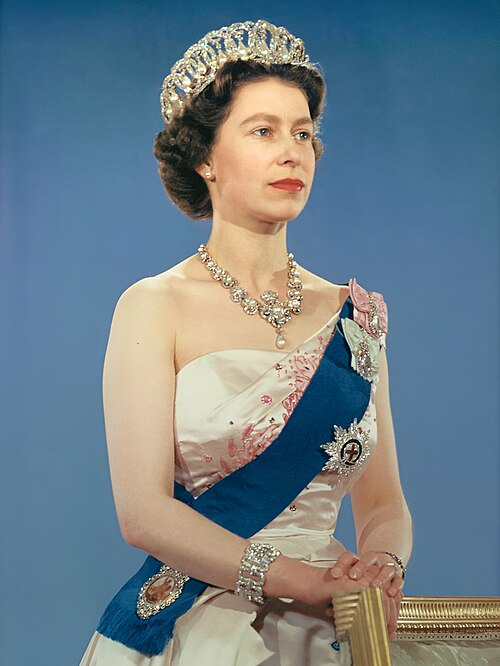
Elizabeth II (21 April 1926 – 8 September 2022), full name Elizabeth Alexandra Mary, was Queen of the United Kingdom and other Commonwealth realms, reigning from 6 February 1952 until her death. She was the longest-reigning monarch in British history (70 years and 214 days) and the second-longest-reigning sovereign monarch in world history.
Elizabeth was born in Mayfair, London, as the first child of the Duke and Duchess of York (later King George VI and Queen Elizabeth). After her uncle Edward VIII abdicated in 1936, her father became king and she became heir presumptive. During World War II, she served as a driver and mechanic in the Auxiliary Territorial Service. In 1947, she married Philip Mountbatten, Prince of Greece and Denmark, with whom she had four children: Charles, Anne, Andrew, and Edward.
Upon her father's death in 1952, Elizabeth acceded to the throne and was crowned the following year. Her reign witnessed major political changes such as the decolonisation of the British Empire, the Troubles in Northern Ireland, and the United Kingdom's accession to and withdrawal from the European Union. As a constitutional monarch, she worked with 15 British prime ministers and over 170 Commonwealth prime ministers. She undertook many historic visits, including to China in 1986, Russia in 1994, and Ireland in 2011.
Elizabeth II faced several monarchical crises during her reign, including the breakdown of royal marriages and the Windsor Castle fire in 1992 (which she called an "annus horribilis"), as well as public pressure following the death of Diana, Princess of Wales, in 1997. However, she restored public support through measures such as reforming royal finances and making public addresses. In her later years, her health declined, and she died on 8 September 2022 at Balmoral Castle in Scotland, succeeded by her eldest son, Charles III.
Day Master Geng Metal, born in Chen month, receiving support from the seasonal wet earth; sitting on Chen earth, with the hour branch being Chou earth. The Resource stars (Yin Xing) are stacked, undoubtedly making the chart very strong. This manifests as 'strong Resource and robust self' – Geng Metal is crude and stubborn, urgently needing Fire to refine and Wood to unclog. This energetic structure is like a massive boulder, deeply rooted and highly resilient to pressure, yet also prone to rigidity and conservatism. She is the sort of person who stands unmoved like a mountain in any storm, with a deeply steadfast heart and extreme self-discipline, but at times she may appear inflexible due to an over-reliance on inherited experience. Her greatest strengths are endurance and a sense of responsibility; the potential challenge is how to achieve breakthroughs within an established framework without being consumed by tradition.
The chart forms patterns of 'Sha Yin Xiang Sheng (Indirect Officer and Resource generating each other)' and 'Guan Yin Xiang Sheng (Zheng Guan (Direct Officer) and Resource generating each other)', combined with 'Shi Shen Zhi Sha (Output controlling the Indirect Officer)'. Bing Fire (Indirect Officer) is rooted in the Yin Wood (its life source), Ding Fire (Zheng Guan (Direct Officer)) prominently sits in the hour pillar, and Ren Water (Output) controls the Indirect Officer while preserving the Zheng Guan (Direct Officer), producing an exceptionally pure structure. The Useful God (Yong Shen) is Wood and Fire; the Favorable (Xi Shen) is Water; the Unfavorable (Ji Shen) is Earth and Metal. Choosing Wood and Fire means she needs to rely on rules, order, and authority (Guan / Sha) to navigate her life, while simultaneously using wisdom and decisiveness (Output controlling Indirect Officer) to balance pressure. As a noble monarch, the system and responsibility represented by the Zheng Guan (Direct Officer) (Zheng Guan) are both her halo and her chains, while the approachability and adaptability brought by the Output (Shi Shen) allow her to build a bridge between tradition and modernity. She must consistently find a fulcrum between 'upholding her duties' and 'adapting to the times', which made her the longest-reigning monarch in British history, yet inevitably entangled in the storms and changes of the royal family.
The core combination is 'Output controlling the Indirect Officer' (Shi Shen Zhi Sha) and 'Zheng Guan (Direct Officer) and Resource generating each other' (Guan Yin Xiang Sheng). Ren Chen (Output over Chen) sits atop the Indirect Officer Bing Fire, and Ding Chou (Zheng Guan (Direct Officer) over Chou) sits on a Resource star; the restraint and transformation are well-balanced, making her dignified but not fierce. This combination shapes her fundamental character of being 'soft on the outside but firm within, planning thoroughly before acting'. The Output controlling the Indirect Officer gives her both a desire for control and decisiveness, while knowing how to soften sharp edges in a gentle manner—she doesn't confront directly but dissolves tension indirectly. In decision-making, she is inclined to seek gradual improvement within traditional frameworks rather than radical change. In interpersonal relations, she exudes a sense of distance without losing politeness, skilled at listening but rarely revealing her true feelings. Her career trajectory is entirely fitting: as a constitutional monarch, she perfected the principle of 'reigning but not ruling', using ritual to unite the people and silence to preserve the neutrality of the Crown.
The double Chen in the month and day branches create a Self-Punishment (Zi Xing); Hua Gai (Canopy Star) and Guo Yin Gui Ren (National Seal Mentor Star) repeat; Kui Gang (Black Road Star) is present; Tian Yi Gui Ren (Heavenly Mentor Star) appears in the hour pillar. The triple Chen repeats (Fu Yin), hinting at deep inner loneliness; the Yi Ma (Mobility Star) at the Yin year portends a life of constant travel for public duties. The double Chen self-punishment reflects a self-wrestling deep in her soul—often struggling between duty and self, public and private. Hua Gai intensifies her aloofness and rich spiritual world, making her the 'distant symbol' in the hearts of her subjects. The Guo Yin Gui Ren, overlapping with the Zheng Guan (Direct Officer), endows her with an extreme reverence for institutions and administrative talent. Kui Gang, the 'Black Road' star, suggests a near-cold rationality and decisiveness in her nature. The Yi Ma star at Yin year signifies the transition from princess to queen, from touring the Commonwealth to handling countless political crises—her path and fate are in perpetual motion. The Tian Yi Gui Ren in the hour pillar means she often receives heavenly assistance in times of crisis, turning peril into safety, echoing how, despite numerous upheavals, she always weathered them safely.
Geng Metal as the Day Master is Yang Metal, like a sword or blade, firm, hard, and unyielding. Born in Chen month, with layers of Resource stars (Yin Xing), it adds to her honesty and steadiness; the Ren Water Output (Shi Shen) moistens the chart, and the Ding Fire Zheng Guan (Direct Officer) (Zheng Guan) refines the metal, forming 'sword-sharpened gold'—the edge is concealed but remains sharp. Her psychological portrait: inside, she is solid as steel; external turmoil rarely shakes her core. She is measured in all matters, rarely making hasty statements, but once a decision is made, she is unwavering. In terms of emotional needs, she demands loyalty and order, not passionate entanglement; in intimate relationships, she requires a high degree of security and predictability. Under pressure, she is like a sponge soaked in water—absorbing, digesting, without showing a trace; in her comfort zone, she reveals a rare dry humor and tenderness toward animals. She wears the crown at all times, maintaining the self-possession of a monarch even when alone.
Her greatest advantageous energy comes from the ingenious combination of Guan/Sha and Output. The Bing and Ding Fire (Officers) refine the metal, giving her natural dignity and commanding power; the Ren Water Output (Shi Shen) lets out the brilliance, bringing precise judgment and flexible communication skills. These talents enable her, when in a high position, to both manage solemn ceremonies and use personal wisdom and patience to resolve political impasses. In fields requiring symbolic leadership (such as etiquette, diplomacy, traditional heritage), her competitive edge is unparalleled. The Output controlling the Indirect Officer also reveals her talents: her devotion to horse racing, Corgis, and an appreciation for art are manifestations of the Output and Hua Gai, which soften her public image, making her more acceptable. Her success heavily relies on a kind of 'just-right restraint'—appearing when needed, silent when needed; this sense of proportion is a supreme political survival skill.
The core conflict lies in 'heavy Resource making the self too strong, with insufficient Output to drain', and 'mixed Officers' (Guan Sha Hun Za) causing inner anxiety. The three Earth branches (Chen, Chen, Chou) bury the metal, easily leading her into excessive conservatism and emotional suppression; with both Bing and Ding Fire appearing, she must defend against the Indirect Officer's attacks while constraining herself with the Zheng Guan (Direct Officer), resulting in worrisome overthinking. Recurring predicaments in her life are: the tug-of-war between tradition and modernity, and the contradiction between the royal image and personal emotions. As a monarch, she must cling to old systems for stability, but the tide of the times forces her to continually concede (e.g., handling the Diana affair). A character weakness is excessive forbearance; negative emotions often stagnate within. Moreover, her strictness with her children led to strained family relationships. The Wealth star (Yin Wood) being constrained by much Earth also means she has had to exhaust her wits for the royal family's economic interests and public image. These conflicts mean her life always oscillates between 'unstoppable duty' and 'unspeakable weariness'.
Elizabeth II's chart is a brocade of kingship woven with Guan/Yin as the warp and Output as the weft. Her life is the embodiment of the institution, and also a hostage of fate. Geng Metal, having been refined, became the most indestructible model of a monarch in modern history; Hua Gai self-punishment, however, tempered loneliness into a sacred flame for lifelong service to the nation. She is not a pioneer, but a guardian; not a reformer, but a ballast stone. The central theme of her destiny is to define a flowing era with a static posture amidst the rapidly collapsing afterglow of an empire. In the end, she became a symbol—one who made the world forget the weight of the crown.
劫财坐正财,羊刃被合,早露锋芒。 此运金木交战,劫财分禄,正财被夺,但辛金劫财与日主庚金同气,增强自信与行动力。卯木正财为父星,又为年支驿马,主童年环境变动。此阶段正值二战爆发,王室迁居温莎堡,女王作为长女承担家族责任,性格早熟,展现出坚韧与责任感。
劫财夺财,财星受制,家国同运。 童年时期家庭财产因战争而缩减(劫财分财),但劫财亦代表手足、同伴,女王与妹妹玛格丽特公主一同成长,形成亲密关系。卯木正财为父辈资源,1940年(庚辰年)流年比肩夺财,父亲乔治六世因战争压力健康受损,王室收入减少。但此运培养了她对公共事务的参与感,1945年(乙酉年)加入辅助领土服务队,作为“公主机械师”体验平民生活,为日后形象打下基础。
比劫旺相,六亲得力,贵人暗藏。 辛金为劫财,代表手足、同龄人,与妹妹玛格丽特关系亲密。卯木正财为父亲,乔治六世对其教育严格,培养责任感。时柱正官丁火透出,早显贵气。1940年(庚辰年)流年比肩重见,母亲伊丽莎白王太后成为其精神支柱,母女默契加深。
金木交战,注意筋骨与情绪。 辛金克卯木,木气受损,需关注骨骼、牙齿发育(庚金主骨),以及肝气郁结(木主肝)。童年时期因战争颠沛,可能有消化不良问题。建议多接触自然,保持规律作息。
比肩坐偏财,杀印相生,登基前奏。 庚金比肩帮身,寅木偏财生年干丙火七杀,七杀得生则压力增大,但寅辰拱卯,印星暗中化解。此运是女王从公主到君主的过渡期,1947年(丁亥年)与菲利普亲王结婚,1952年(壬辰年)父王去世,登基为君。偏财代表父亲宫,寅木为父亲之根,1949年(己丑年)父亲病情加重,1952年壬辰年财星破印,父亲逝世。
比劫助身,财旺生杀,责任陡增。 庚金比肩增强竞争力,1951年(辛卯年)劫财透出,参与摄政事务,开始处理公务。寅木偏财为父业,1947年(丁亥年)正官合身,婚礼获得民众爱戴,提升王室声望。1952年壬辰流年,食神制杀,登基大典,但辰辰自刑,内心承受巨大压力。大运庚金比肩,代表团队支持,二战后的英国王室在民众支持下巩固地位。
比肩合财,官星合身,婚姻稳固。 庚金与日主同气,1947年丁亥年正官透出,与菲利普亲王成婚,丁壬合、寅亥合,情感和谐。但寅木偏财为父,1952年父丧,悲痛中登基。妹妹玛格丽特的婚姻问题(1955年)在此运末期显现,比肩为手足,但寅木生杀,王室内部压力增大。
金木交战,火旺克金,注意心脏与情绪。 丙火七杀旺,庚金比肩助身,但火旺易致心火上炎,表现为焦虑失眠。1952年(壬辰年)食神制杀,但辰辰自刑,消化系统易失调。建议适当运动,保持心态平和。
正印坐正印,土厚埋金,沉稳蓄势。 己丑为湿土,生金但过厚反埋金。此运天干己土合大运庚金(比肩),地支丑土与命局辰土会金局,增加金气。印星主导,代表地位、名誉、庇护。女王登基初期,依靠传统和制度树立权威,1953年加冕典礼成功举行。丑土为金库,象征王冠与权力稳固。但土重,创新不足,维持现状为主。
印星扶身,官杀得地,国运昌隆。 己土正印生身,1957年(丁酉年)官星合印,出访各国,巩固英联邦。丑土金库,1953年(癸巳年)流年伤官见官,加冕典礼引发争议(如电视直播问题),但最终成功。此运英国经济复苏,王室地位提升,女王个人威望如日中天。1961年(辛丑年)劫财透出,但丑为印库,财政上得到国家支持。
印星为重,亲情稳,配偶助力。 己土正印代表母亲王太后,她给予女王极大支持。丑土为偏印,与丈夫菲利普亲王的关系如印星般稳定但刻板。此运中,子女查尔斯、安妮出生,家庭美满。1960年(庚子年)比肩合印,与妹妹玛格丽特关系略有疏远,但总体和谐。
土多金埋,注意湿邪与代谢。 湿土过重,易生痰湿,需关注体重管理、肠胃功能。1958年(戊戌年)双印重见,身体疲倦,可能有轻微抑郁倾向。建议多晒太阳,增加火气。
偏印坐伤官,戊癸合火,变革之机。 戊土偏印生身,子水伤官泄秀,子辰半合水局,伤官力量增强。戊癸合火,伤官生财,财生官杀,形成流通。此运女王面对社会变革,1960年代英国文化反叛,王室传统受到挑战。伤官代表改革、言论,女王开始尝试让王室更亲民,如1969年(己酉年)播出的纪录片《王室家族》。
伤官生财,印星制伤,理财有道。 戊子运伤官透出,但戊土可制水,保持平衡。1964年(甲辰年)流年偏财透,财印相战,王室资产因通货膨胀受损,但通过投资和税收改革缓解。1971年(辛亥年)伤官克官,与政府就女王薪酬产生摩擦,最终达成协议。此运女王逐步将参与公共事务制度化,提升自身经济独立性。
伤官见官,家庭波动。 子水伤官冲克时支丑土正印,家庭内部矛盾显露。1970年代,查尔斯王子的教育问题引发争议(伤官代表叛逆)。与菲利普亲王的关系因各自忙碌而疏远,但伤官生财,夫妻共同参与公务仍有默契。妹妹玛格丽特婚姻破裂(1978年),伤官克官,王室家族形象受损。
水旺火弱,注意肾虚与心血管。 子水伤官旺,火气不足,易有肾脏、泌尿系统问题,同时水克火,心脏压力大。1967年(丁未年)火土来复,健康尚可,但1975年(乙卯年)财星破印,可能有脚伤或关节炎。建议补肾养心。
正官合壬,食神制杀,内修外平。 丁火正官合月干壬水食神,亥水食神与命局寅合木,生旺丙火七杀。此运官星透干,代表权威与规范,但食神制杀,减少了外部压力。女王以柔克刚,在外交上取得成就,如1981年(辛酉年)查尔斯婚礼、1982年(壬戌年)访问中国等。亥水食神生寅木偏财,王室旅游产业收益增加。
官食相生,名利双收。 丁火正官合壬水食神,1977年(丁巳年)官星双现,银禧庆典成功,女王声望达到巅峰。1980年代,英国与阿根廷马岛战争(1982年壬戌年),食神制杀,女王支持军队,获得民众爱国热忱。亥水食神为智慧,1986年(丙寅年)访问中国,打破外交僵局。
官合食神,家庭喜忧参半。 丁壬合,夫妻宫寅亥合,婚姻关系融洽,1981年查尔斯与戴安娜结婚,表象美满。但亥中藏甲木偏财,1987年(丁卯年)正官合劫财,戴安娜与查尔斯矛盾初显,家庭内部暗流涌动。孙女们(安妮公主子女)出生,带来欢乐。
水火交战,注意情绪稳定。 丁火与亥水冲,水克火,易有情绪波动,1980年(庚申年)比肩帮身,体力尚佳,但1983年(癸亥年)水旺,可能患感冒或偏头痛。建议注意水火平衡,静养心神。
七杀坐偏印,杀印相生,多事之秋。 丙火七杀透干,坐下戌土偏印,火土相生。此运七杀攻身,压力巨大,但偏印化杀,危机中得智慧应对。1992年(壬申年)流年食神制杀,女王发表“可怕的一年”演讲,指家族多个婚姻破裂及温莎堡火灾。1997年(丁丑年)戴安娜王妃去世,七杀克身,王室声誉跌至低谷。
杀印相生,危机公关。 丙火七杀为挑战,戌土偏印为制度。1990年代,王室面临离婚潮、税收改革废除王室免税特权(1993年癸酉年)。1992年壬申年流年食神制杀,女王同意支付所得税,缓和公众情绪。1997年丁丑年正官合伤官,戴安娜之死引发对王室冷漠的批评,女王及时发表电视讲话,扭转形象。
七杀攻身,家庭破碎。 七杀代表压力与分离。1980年代末至1990年代,查尔斯与戴安娜分居、正式离婚(1996年丙子年),安德鲁王子与萨拉分居,安妮公主离婚。1992年戊辰年偏印旺,温莎堡火灾象征王室结构动摇。女王在家庭与君主责任间痛苦平衡。
火炎土燥,注意心脏与情绪。 丙火旺,戌土燥,易上火、失眠。1988年(戊辰年)土重,可能关节炎发作。1992年壬申年水旺,情绪低落,需防抑郁。建议多补水,保持凉爽环境。
正财坐劫财,财星坏印,转型调整。 乙木正财合庚金,酉金劫财与辰合,金气旺盛。此运财星坏印(乙木克戊土),王室传统受到市场化冲击。女王开始现代化改革,削减开支,开放白金汉宫等。2002年(壬午年)母亲与妹妹去世,财星破印,至亲离世,但劫财帮身,女王坚强应对。
财星坏印,改革阵痛。 乙木正财为收入来源,酉金劫财为消费。1999年(己卯年)流年财印相战,王室年度津贴改革,女王同意接受财政透明化。2001年(辛巳年)劫财透出,王室网站建立,尝试新媒体。2002年(壬午年)火旺克金,财务上母亲遗产免税问题引发争议。此运王室资产从传统地产转向多元化投资。
财克印,至亲凋零。 乙木正财为母亲,乙庚合,母女情深。2002年(壬午年)午火克酉金,母亲与妹妹相继去世,女王悲痛不已。劫财酉金代表手足,妹妹玛格丽特之死令其反思家庭关系。与查尔斯关系因戴安娜事件后渐暖,但财星坏印,王室长孙威廉王子渐受重视。
金旺木弱,注意关节与肝气。 乙木被庚金合克,肝气不舒,易有眼睛、筋骨问题。1995年(乙亥年)水木旺,可能流感,但整体硬朗。建议养护肝脏,避免劳累。
偏财坐比肩,食神生财,晚年辉煌。 甲木偏财合己土正印,申金比肩助身,申辰半合水局,食神生财。此运女王进入耄耋之年,但精神矍铄,以智慧与经验应对挑战。2006年(丙戌年)七杀生印,庆祝80寿辰;2011年(辛卯年)威廉王子大婚,王室人气回升。2012年(壬辰年)钻石禧年庆典盛况空前,食神生财,民众爱戴。
财星合印,名利双收。 甲木偏财为额外收入,合己土正印,王室品牌价值提升。2003年(癸未年)伤官生财,王室旅游创收。2010年(庚寅年)比肩夺财,但申金助身,女王个人威望高,财政上国家拨付王室资金稳定。2012年壬辰年食神制杀,钻石禧年吸引全球目光,女王成为英国历史上在位时间第二长君主。
偏财合印,家族渐稳。 甲木偏财为丈夫,甲己合,与菲利普亲王感情深厚,共同出席活动。2010年以后,威廉与凯特恋情公布,家族回归正面形象。与查尔斯关系更加和谐,2011年(辛卯年)劫财透,威廉大婚象征王室接班人充满希望。
金水相生,小心疾病偶发。 申金比肩旺,水旺生木,但木旺泄水。2003年(癸未年)未土克水,可能有腿膝手术。2007年(丁亥年)水旺,重感冒住院。建议保持温暖,关注血压。
伤官坐正印,土重埋金,寿星迟暮。 癸水伤官透干,未土正印,癸水合月干戊土,未土与命局丑土冲,激发土气。此运伤官见印,表达与权威并存,女王以90多岁高龄仍履行公务。2015年(乙未年)成为在位最长君主,2020年(庚子年)菲利普亲王去世,伤官克官,夫妻诀别。2022年(壬寅年)白金禧年,但大运未土与日柱辰土相破,健康每况愈下,最终于2022年9月去世(壬寅年己酉月)。
伤官生财,印星护身,善始善终。 癸水伤官为智慧,她以经验指导王位过渡。2013年(癸巳年)英联邦会议,外交收尾。2020年庚子年,比肩帮身但子未穿,王室因哈里梅根事件受损,但女王稳控大局。2022年(壬寅年)流年比肩合印,官方收入稳定,但未土冲丑,权力移交。
伤官见官,配偶离世,家庭变故。 癸水伤官克官,2020年庚子年,与菲利普亲王60年婚姻终结,悲痛但坚强。2019年(己亥年)安德鲁王子丑闻,伤官泄气,家族声誉下降。威廉凯特夫妇成为中坚力量。2022年(壬寅年)暗中交接权力,女王保持微笑至最后一刻。
土克水,水火不交,寿元有数。 未土克癸水,肾水不足,2012年后多次住院。2021年(辛丑年)土重,劳累后入院。2022年(壬寅年)金木相战,最终在睡梦中安详离世。建议:晚年养护脾胃与肾脏。
Tian Xiang (Heavenly Minister) in its exalted position sits in the Spouse Palace, unafflicted by malefic stars, forming the excellent 'Seal of Shared Hearts' pattern. Tian Xiang, the seal star, governs coordination, loyalty, and stability; its exalted state indicates a spouse who is steady and highly supportive. This points to her marriage—Prince Philip gave up his right to the Greek throne for her, serving as a supporter throughout his life, truly a 'ministerial helper.' Tian Xiang also represents responsibility and contracts; the Queen's marriage to Philip was both love and a 'royal official partnership.' Throughout 74 years of marriage, Philip always stood behind her, just as Tian Xiang in the Spouse Palace symbolizes 'the best deputy.'
The Spouse Palace has no Four Transformations, but the Zi Wei (Purple Emperor) and Po Jun (Vanguard Star) Hua Quan from the Career Palace projects authoritative energy, tightly binding the spouse's identity to royal power. The absence of transformations means the marriage itself does not generate additional changes for better or worse, but exists as a stable foundation. Prince Philip never contended for power; instead, he proactively defused royal crises (such as delivering the 'annus horribilis' speech after the Windsor Castle fire in 1992). His role exactly matches Tian Xiang: both a harmonizer and a stabilizer.
The Queen's marriage to Prince Philip began with love at first sight, but the fate of succession gave the relationship an 'official character' from the start. Philip was required to have the children take their mother's surname and to pledge allegiance to the Queen—Tian Xiang's nature allowed him to accept this 'supporting' role. He often referred to the Queen as 'the boss' in public, but privately balanced the stifling court protocol with humor and frankness. After Diana's funeral in 1997, Philip voluntarily accompanied the Queen to walk among the public and pay respects, repairing the royal image—this was Tian Xiang's instinct to 'harmonize crises.' The lasting stability of the marriage is a perfect testament to Tian Xiang's exalted pattern.
Tian Tong Hua Lu (Heavenly Unity Transforms into Wealth) and Tian Liang (Heavenly Beam) are in the same palace, with Huo Xing (Fire Star) exalted and conjoined, forming the 'Fu Shou Yang Bo' (Blessings and Longevity Stirring Waves) configuration. Tian Tong Hua Lu governs blessings and harmony, Tian Liang is a sheltering star, and Huo Xing brings passion but also factors that easily intensify conflicts. This points to both deep sibling affection (Tian Tong Hua Lu) and disputes or competition triggered by Huo Xing in the sibling relationship. Her younger sister, Princess Margaret, was rebellious and freedom-seeking, contrasting with the Queen's composure, yet the sisterly bond remained close throughout—Tian Tong Hua Lu's harmonizing power prevented conflicts from breaking apart. Huo Xing exalted manifests in Margaret's affair with the dashing equerry Peter Townsend, which ignited a royal crisis, forcing the Queen to intervene and mediate, demonstrating Tian Liang's sheltering and responsibility.
Tian Tong Hua Lu (Heavenly Unity Transforms into Wealth) in this palace directly enhances the blessings and harmony of the Siblings Palace. The transformation into Wealth (Lu) facilitates smooth resource flow between the sisters—after their father's early death, the Queen assumed responsibility for caring for her sister and the royal family, and Margaret also received royal support in her later years of financial difficulty. However, Huo Xing coexists with Tian Tong Hua Lu, indicating that maintaining blessings requires extra mental effort.
The Queen's only full sister, Princess Margaret, is a living portrayal of the Siblings Palace. The two were inseparable in childhood, but Margaret's rebellious behavior in adulthood (such as falling in love with a divorced man) repeatedly put the Queen in a dilemma—both maintaining royal dignity and caring for her sister's feelings. The conflict triggered by Huo Xing peaked in 1955 when Margaret gave up Peter Townsend; the Queen refused to approve the marriage on the grounds that 'a constitutional monarch has no right to interfere with the Church's marriage laws,' which was both Tian Liang's principle of fairness and the realistic choice under Huo Xing's intensification. Tian Tong Hua Lu ultimately allowed the sisters to maintain their familial bond for sixty years, until Margaret's death in 2002.
Ju Men (Great Gate) in its flourishing position guards the Children Palace, accompanied by Di Jie (Earth Calamity), forming the 'Dark Waves Entwined' pattern. Ju Men governs disputes, gossip, and hidden matters; its flourishing state makes the children strong-willed and opinionated, while Di Jie brings sudden accidents or separations. This implies communication barriers, privacy leaks, or external public pressure in the relationship with children. Among the Queen's four children, Prince Charles's marriage tragedy with Diana, Prince Andrew's entanglement in the Epstein scandal, and Princess Anne's divorce all manifest Ju Men's contentious nature. Di Jie corresponds to the children's independent lives after adulthood, gradually distancing from the royal core.
The Children Palace has no Four Transformations, but the Tian Ji (Celestial Mechanism) Hua Quan from the Property Palace shines remotely, strengthening the children's voice in family affairs. Tian Ji Hua Quan symbolizes that the children may play an active role in royal family decisions—Charles waited long for succession, actively engaging in environmental and architectural issues, trying to establish his influence under the paternal shadow, precisely embodying Tian Ji Hua Quan. The absence of transformations also indicates that the Children Palace itself lacks auspicious transformation to resolve Ju Men's malefic nature, hence the Queen often felt 'powerless' in disciplining her children.
As a mother, the Queen consistently faced troubles with her children. Charles, sensitive and distant from his parents, had his marriage breakdown with Diana amplified globally in the 1990s—the ultimate manifestation of Ju Men's gossip. The Queen remained silent in public but privately communicated with Charles through letters, attempting mediation. Di Jie is reflected in Princess Anne's two divorces and Prince Andrew's media disputes, where the children's life paths frequently deviated from traditional royal frameworks. In her later years, the Queen took on the role of a mediating and protective grandmother, just as a ray of light from Tian Liang (Heavenly Beam) still shone through the darkness of Ju Men.
Lian Zhen (Integrity Star) transforms into taboo (Hua Ji), located in the Wealth Palace with Tan Lang (Desire Star) in a fallen state, accompanied by Tian Kui (Heavenly Leader), forming the 'Entangled Blossom' pattern. Lian Zhen, the star of incarceration and secondary romance, when transformed into taboo, signifies emotional troubles, hidden worries, or irrational spending. Tan Lang, the star of desires, in a fallen state may indicate excessive pursuit of pleasure or risky investments. However, Tian Kui, the mentor star, provides remedy, symbolizing that there is always someone to lend a hand. This reflects the Queen's personal wealth management style—she is known for frugality, yet royal expenditures are frequently questioned by Parliament (the public scrutiny associated with Lian Zhen Hua Ji). The fallen Tan Lang is seen in her generous investment in horse racing, Corgis, and the appreciation of her jewelry collection. Tian Kui corresponds to the support of finance officers or government annuities.
Lian Zhen Hua Ji directly resides in the Wealth Palace, creating a sense of blockage in wealth flow. She inherited her father's estate of about 128 million pounds but had to pay death duties; the maintenance costs of Buckingham Palace were exorbitant, and she personally funded renovations—these 'Hua Ji' are like invisible drains. Yet simultaneously, through investments, income from Crown Estate, and increased Sovereign Grant, her wealth continued to grow (Tan Lang's wildness was tamed into rational investment by Tian Kui).
The Queen's attitude toward money is highly pragmatic: she is famous for packing her own lunch box and mending old clothes, yet also spends lavishly on horse breeding at the racetrack. With Lian Zhen Hua Ji in the Wealth Palace, her control over wealth was filled with hidden concerns—after the Windsor Castle fire in 1992, she agreed to open Buckingham Palace to the public to raise repair funds, breaking the tradition of royal privacy, a classic case of Hua Ji forcing reform. Tian Kui led her to loyal and trustworthy financial officers, ensuring her wealth management avoided major turmoil. Her personal wealth was above average within the royal family, but never caused public resentment due to extravagance, a result of the fallen Tan Lang being regulated by Tian Kui.
Tai Yin (Moon) flourishes in the Health Palace, with Di Kong (Earth Void) sharing the same degree, forming the 'Yue Yin Kong Ming' (Moon Hidden in Void Brilliance) configuration. Tai Yin governs body fluids, metabolism, and emotions; its prosperous position represents a supple constitution and emphasis on self-care. Di Kong brings sudden weakness or periodic issues. The Queen enjoyed good health throughout her life, rarely falling publicly ill, but in later years underwent major surgeries (e.g., knee surgery in 2003) and experienced age-related decline—exactly matching Di Kong's 'void.' Tai Yin's flourishing allowed her to recover quickly; even at 94, she remained in the public eye, thanks to Tai Yin's nourishment and genetic advantage.
The Health Palace has no Four Transformations, but Wen Chang Hua Ke in the Travel Palace forms a hidden connection, suggesting that travel or public activities help health maintenance. Her annual vacations to Balmoral Castle in Scotland and horse riding at Windsor Castle—activities belonging to the Travel Palace—were indeed her secret to staying vibrant. The absence of Four Transformations also indicates that her health had no dramatic ups and downs, with a steady, gradual decline.
The Queen's health management was exemplary: she persisted in daily two-hour walks, ate moderately, never smoked, and drank little alcohol. Tai Yin's prosperity gave her a constitution tending toward cold, but Di Kong helped her avoid extreme states. After her husband's death in 2021, she experienced a temporary decline in strength—Di Kong corresponds to weakness induced by emotional shock. Yet she recovered quickly, and in 2022 still personally appointed Liz Truss as Prime Minister, passing away two days later after completing her final duty. Tai Yin's suppleness and Di Kong's buffering allowed her to find balance between duty and health.
Tian Fu (Heavenly Storehouse) flourishes in the Travel Palace, with Wen Chang (Literary Star) transforming into Ke (Reputation) and Tian Yue (Auxiliary Elite) sharing the same degree, forming the 'Fu Xiang Chao Yuan' (Court of Authority and Affluence) configuration. Tian Fu is the star of the treasury; in its prosperous position, it signifies gains from distant travel and a wide network. Wen Chang Hua Ke brings cultural renown, while Tian Yue is a benefactor star. This perfectly corresponds to her identity as head of the Commonwealth and the world's most famous royal—having visited over 120 countries, each trip enhancing Britain's image. Wen Chang Hua Ke imbued her visits with cultural diplomacy (e.g., visiting Confucius Institutes, participating in Commonwealth Games), while Tian Yue enabled her to encounter supporters or political dignitaries abroad.
Wen Chang Hua Ke in the Travel Palace is one of the most auspicious transformations among the Four Transformations, symbolizing brilliant fortune in travel. After her coronation in 1953, she immediately embarked on a Commonwealth tour lasting half a year and visiting 13 countries. In 1986, as the first British monarch to visit China, she met Deng Xiaoping in Tiananmen Square—these landmark diplomatic achievements were the 'gain fame through distant travel' blessed by Wen Chang Hua Ke. Tian Yue (benefactor) manifested in each visit: banquets, security arrangements, ensuring smooth journeys.
The Queen's diplomatic career is a masterpiece of the Travel Palace. In 1952, while on a visit to Kenya, she received news of her father's death and became Queen there—fate intertwined with distant travel. She subsequently traveled frequently, breaking the convention of 'the monarch never goes abroad.' During a Caribbean tour in 1982, despite an assassination threat, she persisted with her itinerary, reflecting Tian Fu's composure. In 1995, she became the first British monarch to address the South African Parliament, commemorating Mandela's release, showcasing Wen Chang Hua Ke's diplomatic wisdom. Tian Yue manifested in the spontaneous welcome of people everywhere; she was called 'the most famous woman in the world.'
Wu Qu (Military Song) and Qi Sha (Qi Sha (Indirect Officer)) sit in the Destiny Palace at Mao (Mao palace), with Wu Qu in a beneficial position and Qi Sha prosperous, forming the 'Jin Sha Zhu Po' (Gold Killing Forges the Soul) configuration. Wu Qu is a wealth star, Qi Sha is a general star; their combination endows the native with a resolute, decisive, and swift-acting character. The beneficial and prosperous positions strengthen action drive and desire for control, but the energy is introverted due to the tomb position despite the Chang Sheng (Growth) phase—she is not an ostentatious leader but is known for composure and tenacity. This star configuration is rare among royal members, indicating she would bear the dual mission of 'preservation and reform': both stabilizing the monarchy's traditions (Wu Qu's conservative aspect) and advancing royal modernization amid the currents of the times (Qi Sha's innovative aspect). In practice, her crisis management after Princess Diana's death and the royal decolonization process exemplified this 'firm yet gentle' trait.
There are no Four Transformations in the Destiny Palace, but the Travel Palace has Wen Chang Hua Ke (Literary Star Transforming into Reputation), forming a 'Ke Ming Gong Ming' (Reputation Shines onto the Destiny Palace) effect. Wen Chang Hua Ke from the Travel Palace shines remotely, symbolizing that her reputation and knowledge will be showcased on the international stage. Her service as a mechanic during World War II, her radio broadcasts that calmed the nation, and her travels throughout the Commonwealth to maintain diplomatic relations are all luminous projections of Wen Chang Hua Ke in the Travel Palace—a royal image built through culture and affinity, not through force or scheming.
The combination of Wu Qu and Qi Sha in the Destiny Palace allowed her to display composure and responsibility beyond her years when she succeeded to the throne at age 21. When she received the news of her father's death in Kenya in 1952, she calmly handled affairs and returned to Britain without panic—this is precisely Qi Sha's unflappable nature in crisis and Wu Qu's pragmatic calmness. During her 70-year reign, she went through 15 prime ministers, always maintaining the constitutional monarch's posture of 'no comment, no interference,' yet secretly advancing royal reforms such as cost-cutting and opening Buckingham Palace, all of which exemplify Wu Qu and Qi Sha's way of being 'outwardly gentle but inwardly firm.'
Tai Yang (Sun) shines brightly in the Parents Palace, with Ling Xing (Sorrow Star) debilitated and Tuo Luo (Troublemaker Star) exalted conjoined, forming a 'Ri Xian Jiao Yang' (Sun Trapped in Pride) configuration. Tai Yang prosperous indicates a bright image of the father, but Ling Xing debilitated hides contradictions, and Tuo Luo exalted brings lingering trouble. Her father, King George VI, was gentle and upright, but the pressure of World War II and health issues (cancer) caused the Queen to assume royal responsibilities at a young age (Tai Yang's early maturity). Ling Xing debilitated corresponds to her mother, Queen Elizabeth the Queen Mother's longevity and strong personality, creating subtle tension in the mother-daughter relationship—the mother lived to 101, long participating in decisions, and the Queen sometimes needed to assert her independence. Tuo Luo exalted corresponds to the hasty succession upon her father's death and the mother's continuous influence on royal affairs in her later years.
There are no Four Transformations in the Parents Palace, but Tai Yang's brightness directly reflects the father's social status and prestige. George VI steadfastly stayed in London during World War II, becoming a symbol of British resilience, worthy of Tai Yang's radiance. The absence of transformations indicates that the parent-child relationship itself has no auspicious transformation blessings, with some hidden burdens.
The Queen was groomed as an heir from age six; her father, George VI, was strict but full of affection. Tai Yang's brightness made her deeply admire her father; in 1940, at age 14, she gave her first radio broadcast, encouraged by him. In 1952, her father died of lung cancer, and she hastily succeeded; Tuo Luo's lingering sense is reflected in her delaying the coronation for a year to mourn. Her mother lived until 2002, over 100 years old, still influencing the royal family behind the scenes; the Queen in her mother's later years acted both filial and independent—for example, she insisted on personalizing the Christmas broadcast, which her mother disapproved but ultimately respected, resolving the contradiction of Ling Xing's debilitation.
The Shen Gong (Body Palace) is in the Fu De Gong (Fortune Palace). Wen Qu (Literary Star) in its exalted state and Lu Cun (Wealth Preserver) are in conjunction, forming the 'Wen Jin Lu Ku' (Pattern of Literary Brocade and Wealth Treasury) configuration. Wen Qu governs artistic talent, taste, and spiritual refinement; its exalted and flourishing state strengthens elegant temperament. Lu Cun is the reservoir of wealth, governing spiritual satisfaction and blessings. This indicates a rich inner world, drawing solace from art, religion, and family. The placement of the Body Palace here shows her lifelong pursuit of inner stability and peace of mind. The Queen's steadfast religious faith (daily prayer) and her love of horse racing and corgis are all manifestations of Wen Qu and Lu Cun.
This palace has no Four Transformations, but the exalted Wen Qu radiates its own brilliance, and Lu Cun is a natural auspicious star. The absence of Four Transformations means that on the spiritual level, there is no need for dramatic ups and downs; rather, a steady and lasting sense of happiness prevails. She steadfastly upheld her duties as monarch throughout her life, and her faith sustained her through the grief of losing her husband—a profound manifestation of Lu Cun's blessings.
One of the Queen's spiritual pillars was her Christian faith, attending weekly worship; another was her love of animals and outdoor activities. She personally bred corgis and would laugh heartily when watching her beloved horse win at the racecourse. Wen Qu in its exalted state enabled her to write Christmas broadcast scripts that moved the nation in warm, simple language. Lu Cun allowed her to retreat to the tranquility of Balmoral Castle to recharge when facing public pressure. With the Body Palace here, she lived out the philosophy that 'duty is happiness' throughout her life—she once said, 'I cannot live any other way.'
Tian Ji (Wisdom Star) Hua Quan (Authority Transformation), Zuo Fu (Left Assistant), and Qing Yang (Conflict Star) together guard the Tian Zhai Gong (Property Palace). Tian Ji is exalted, Zuo Fu is flourishing, Qing Yang is fallen, forming the 'Zhi Ren Dang Jia' (Wisdom Blade Governs the Home) configuration. Tian Ji Hua Quan governs strategic planning and changes in the household; Zuo Fu provides assistance; Qing Yang, as an inauspicious star, brings disputes or controversies. The Queen managed royal estates (such as the Royal Collection, Windsor Castle, Buckingham Palace). Tian Ji Hua Quan endowed her with skill in asset planning and family inheritance; Zuo Fu brought capable advisors (such as estate managers); Qing Yang in its fallen state corresponds to public disputes over certain properties (e.g., the cost of the Windsor Castle fire restoration, controversies over opening Buckingham Palace).
Tian Ji Hua Quan is the key to this palace, giving her the decision-making power to control family assets. She personally approved the restoration plan for Windsor Castle and decided to open the Queen's Gallery to the public to raise funds—all concentrated manifestations of Hua Quan in the realm of real estate. Qing Yang in its fallen state reflects the opposition in Parliament when maintenance costs were too high, but Hua Quan and Zuo Fu allowed her to avoid major losses.
The Queen was the chief administrator of the royal family's vast property portfolio, reviewing royal property income and expenditure annually. Tian Ji Hua Quan enabled her, during the royal financial crisis of the 1990s, to proactively agree to link the Sovereign Grant with royal expenses, quelling public resentment. She opened Windsor Castle to visitors and allowed documentaries to showcase castle life, preserving value through cultural management. After the 1992 Windsor Castle fire, Qing Yang's fallen state triggered disputes over the cost of repairs; she paid part of it out of her own pocket, demonstrating the responsibility of Hua Quan.
You Bi (Supporting Aid) and Tian Ma (Heavenly Horse) together guard the Servants Palace, in the zone of Lin Guan (Approaching Authority), forming the 'Gui Ma Jiao Chi' (Noble Horse Interplay) configuration. You Bi governs benefactor assistance; Tian Ma governs bustling activity and a vast social network. Lin Guan indicates that in her interpersonal network, she occupies a commanding position, with subordinates and assistants happy to serve. The Queen is surrounded by a retinue of loyal servants (e.g., private secretary, steward, guards)—You Bi represents this silently dedicated team; Tian Ma symbolizes her maintaining ties with elites from various circles through regular inspections and honorific appointments.
The Servants Palace has no Four Transformations (Si Hua), but You Bi and Tian Ma themselves form a strongly auspicious combination. The absence of Four Transformations indicates that interpersonal relationships are predominantly stable and free from major upheavals. During the Queen's reign, there were almost no significant internal defections. Even after Diana's death sparked intense public sentiment, the royal family remained united—You Bi's cohesive power played a significant role.
The Queen's retinue team was extremely loyal: her private secretary served for decades, and the steward worked at Windsor Castle for life. Tian Ma manifested in her hosting over 400 events annually, from investiture ceremonies to garden parties, shaking hands and engaging with people from all walks of life. After surviving an assassination attempt in 1981 when a gunman fired blanks, she calmly reassured the coachman and continued on, which deepened the respect of her entourage. Together, You Bi and Tian Ma wove an efficient people network centered on her, sustaining her in fulfilling heavy official duties.
Zi Wei (Emperor Star) and Po Jun (Vanguard Star) together guard the Guan Lu Gong (Career Palace). Zi Wei is exalted and Po Jun is flourishing, forming the 'Zi Po Chao Yuan' (Emperor and Vanguard Facing the Palace) configuration of transformation. Zi Wei is the Emperor Star, Po Jun is the vanguard. Their combination indicates a career that requires constantly breaking old rules and establishing new orders. Zi Wei exalted strengthens authority and nobility; Po Jun flourishing endows boldness for reform. During her 70-year reign, the Queen transformed the monarchy from an imperial symbol to the head of the Commonwealth, abolished outdated protocols, and allowed members of the royal family to marry freely (e.g., Prince Edward's marriage)—all manifestations of Zi Wei and Po Jun's principle of 'upholding orthodoxy while achieving extraordinary results'.
The Career Palace has no Four Transformations, but the Ming Gong (Destiny Palace) with Wu Qu (Finance Star) and Qi Sha (Indirect Officer), and the Qian Yi Gong (Travel Palace) with Wen Chang (Literary Star) Hua Ke (Fame Transformation) indirectly bestow energy. The absence of Four Transformations indicates that her career (the throne) was inherited, not self-made, but the combination of Zi Wei and Po Jun itself is sufficient to drive internal reform. Her 1953 coronation, the first to be televised (breaking tradition), and her national television address after Diana's funeral in 1997 showcase Po Jun's communication style of 'breaking the old to establish the new'.
The Queen's career was the monarchy itself. When she ascended, the British Empire was in decline, and she needed to reshape the monarchy's value amidst the wave of decolonization. Zi Wei and Po Jun enabled her to decisively support the transformation of the Commonwealth (allowing colonies independence in the 1960s) while preserving the symbolic meaning of the monarchy. After the 1992 Windsor Castle fire, she agreed to open royal residences to the public and pay taxes—a Po Jun-style self-revolution. In her later years, she no longer shied away from discussing royal scandals and faced the media with openness. All this was endowed by Zi Wei and Po Jun's 'courage and vision'.
Generate your personal chart in under a minute. Sign up free and get 30 credits — enough for two or more AI readings. No credit card.
Generate my free BaZi chartPlease sign in to join the discussion
Sign In