Year
Jia
Xu
Bi Jian
Pian Cai
Hidden Stems
Wu (Pian)Xin (Zheng)Ding (Shang)
- Star Luck
- Yang
- Sitting Branch
- Yang
- Void
- Shen-You
- Na Yin (Elemental Sound)
- Shan Tou Huo
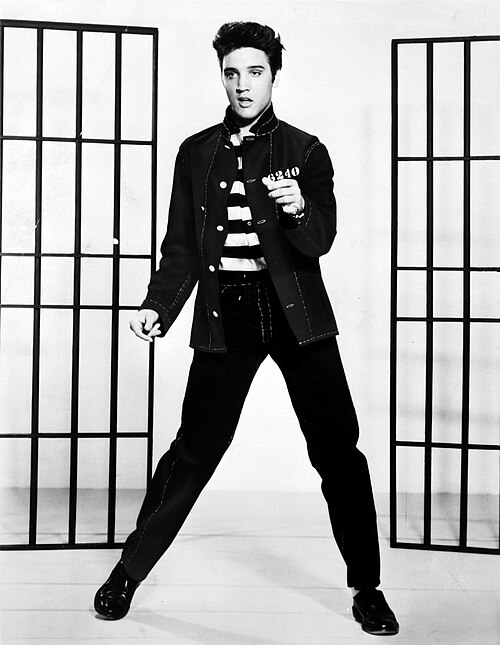
Elvis Aaron Presley (January 8, 1935 – August 16, 1977), American singer and actor, hailed as the 'King of Rock and Roll', was one of the most culturally influential icons of the 20th century.
Born into a poor family in Tupelo, Mississippi, he moved with his family to Memphis, Tennessee at age 13. In 1953, he recorded his first demo at Sun Records. In 1954, his recording of 'That's All Right' marked the beginning of rock and roll. He signed with RCA Victor in 1955 and rapidly rose to fame under the management of Colonel Tom Parker. In 1956, the single 'Heartbreak Hotel' became his first number-one hit, his debut self-titled album topped the Billboard album chart, and he made his first appearance on The Ed Sullivan Show, causing a national sensation.
From 1958 to 1960, he served in the United States Army. After his discharge, he focused on film, starring in over twenty movies during the 1960s, though most were poorly received. A 1968 television comeback special marked his return to the stage, followed by residencies in Las Vegas and frequent tours. In 1973, 'Aloha from Hawaii' became the first global satellite concert by a solo artist.
Presley's personal life drew much attention; his marriage to Priscilla Beaulieu ended in 1973. In his later years, he struggled with drug addiction and health issues, and died of cardiac arrest at his Graceland estate on August 16, 1977, at the age of 42. The official cause of death was heart disease, but drug abuse is considered a significant factor.
He is one of the best-selling music artists of all time, with estimated worldwide record sales of 500 million. He won three Grammy Awards, received the Grammy Lifetime Achievement Award at age 36, and was posthumously inducted into multiple music halls of fame. He holds numerous Billboard chart records, including the most Billboard 200 albums (129) and the most UK number-one singles (21). In 2018, he was posthumously awarded the Presidential Medal of Freedom.
The Jia Wood Day Master is born in the Chou (Ox) month. The month's ruling star is Wealth (Zheng Cai), with Earth heavy and Wood leaning. However, the Hour Pillar's Yin Wood (Yang Ren/Sheep Blade) provides a root, and the Year Stem's Bi Jian (Peer) supports, turning the Day Master from weak to moderate. This means that Elvis was not naturally an energetic powerhouse, but he had solid backing (fans, family) that always allowed him to bounce back. In the Bazi, Bing and Ding Fire, representing Shi Shen (Eating God) and Shang Guan (Hurting Officer), emerge to adjust the climate, and they receive the Birth (Chang Sheng) stage from the Yin Wood, serving to "warm the cold Wood with sunshine," which laid the foundation for his unparalleled artistic charisma. However, the Day Stem sits on Qi Sha (Indirect Officer) in Shen Metal, subjecting his inner world to constant immense pressure and self-conflict—the root of the loneliness and collapse behind his glory.
The chart structure is "Shang Guan and Shi Shen Generating Wealth." The Heavenly Stems reveal both Bing and Ding Fire, which express talent and generate wealth. Water and Wood, representing Yin (Resource) and Bi Jian (Peer), serve as the Yong Shen (Useful Gods). The chart benefits from Bi Jian and Jie Cai (Peers) to assist the self, and from Yin (Resource) to transform the Qi Sha. Fire, Earth, and Metal are unfavorable. The favorable Water and Wood represent nourishment and support—coming from mother, family, or kindred spirits (Yin Star, Water), and from friends and fans (Bi Jie, Wood). Elvis's career peak coincided with Da Yun cycles of Water and Wood. Through his voice (Output Stars), he created immense wealth (the month's Zheng Cai/Direct Wealth). However, the Yin Star was weak (the Gui Water hidden in Chou was obscured by Earth), leading to insufficient self-restraint and over-dependence on medication, eventually resulting in backlash from the unfavorable Wealth and Qi Sha stars.
The core combination is "Shang Guan and Shi Shen jointly generating Wealth." The Heavenly Stems show both Ding Fire Shang Guan and Bing Fire Shi Shen, causing talent to burst forth but also a volatile temperament. Hidden is "Qi Sha attacking the self": the Shen Metal in the Day Branch, with Geng as Qi Sha, sits close to the Day Master, transforming pressure into an endless stream of artistic expression. The Shang Guan represents explosive creativity, while the Shi Shen represents gentle charm; their interplay endowed him with a groundbreaking stage presence and versatile musical direction. Yet the Qi Sha represents intimidation and fear, causing long-term anxiety and a reliance on high-intensity performances to release stress, which ultimately led to the abuse of tranquilizers. The Wealth star was also unfavorable, turning material abundance into a shackle and leading to dissipation and loneliness.
The Day and Hour Branches, Yin and Shen, form a Yi Ma (Mobility Star) relationship and also clash, indicating a life of turbulence and travel. The Year Pillar hosts Hua Gai (Canopy Star), Tian Yi Gui Ren (Heavenly Noble), and other Shen Sha, reflecting artistic talent and solace in religious faith. The Yin-Shen clash in the Day and Hour represents intense conflict between inner world and external circumstances—frequent tours, marital breakdowns, and conflicts with managers all originate from this. The Hua Gai Star imparts a solitary, lofty artistic temperament, while the Guo Yin Gui Ren (State Seal Noble) brings a positive public image. The Tian Yi Gui Ren in the Chou month also signifies mentorship from elders. However, the clash of the Yi Ma Stars stirred an unstable life rhythm. The heart (Ding Fire) and spirit (Shen Qi Sha) were under chronic strain, leading to an abrupt halt at the peak of life.
Jia Wood is the first of the Ten Heavenly Stems, embodying the nobility and integrity of pillar-like timber. Born in the Chou month, it favors the warmth of Bing Fire. The Hour Stem reveals Bing Fire Shi Shen, forming the classic combination of "Warming Cold Wood with Sunshine," which manifests as outward enthusiasm and inner warmth. His character is like a giant tree in sunlight: radiant and impassioned on stage, yet privately craving love and security. The Ding Fire Shang Guan also made him sensitive, irritable, rebellious, and impulsive, with intense emotional swings. The Qi Sha Geng Metal hidden beneath his seat generated a constant sense of crisis, driving him to pursue perfection but also leading to self-destructive tendencies such as binge eating and substance dependency.
The chart's greatest strength is the double emergence of Shang Guan and Shi Shen generating Wealth, ensuring an unimpeded channel for talent expression. Moreover, the Bing Fire Shi Shen sits on its own stage of Birth (Chang Sheng), giving his artistic vitality endless continuity. The Output Stars represent creativity and performance charisma; in music, this manifested as a wide vocal range, a unique voice quality, and the ability to deftly interpret various styles. The Wealth star represents market acceptance, and he not only sold records in huge numbers but also led popular culture. Although the favorable Yin Star was weak, the Yin Wood in the Hour Pillar secretly generated the Bing Fire, continuously supplying inspiration, which is why his works still exert a powerful influence today.
The core conflicts are "Wealth damaging the Yin Star" and "Qi Sha lacking control." The month's Chou Earth Zheng Cai (Direct Wealth) is in command, and its hidden Gui Water Zheng Yin (Direct Resource) is being restrained. The Yin Star represents self-discipline and spiritual nourishment; damaged by Wealth, it led him to indulge in pleasure and become unable to escape dependence on fame, money, and drugs. The Qi Sha Geng Metal lurks in the Day Branch without any visible Fire or Wood to control it, causing pressure to accumulate over time and transform into physical and mental health issues. The Yin-Shen clash further aggravated instability in interpersonal relationships, leading to marital breakdowns and fallings-out with collaborators. The more successful he became, the greater the inner void grew—a tragic illustration of the unfavorable stars flourishing while the favorable stars withered.
Elvis Presley's natal chart is a typical case of the extreme "Warming Cold Wood with Sunshine" noble pattern being undermined by the unfavorable Wealth and Qi Sha stars. He ascended to the throne of music through the talent of his Output Stars, but fell into the abyss due to the weakness of the Yin Star and the Qi Sha attacking the self. His life theme was "burning oneself to illuminate others"—the Bing Fire Shi Shen was like an eternal stage light, while the Yin-Shen clash and Wealth damaging Yin destined this path to be filled with intense internal friction. What he left the world is the dual revelation of artistic immortality and the fragility of life.
Pian Cai (Indirect Wealth) emerges in the Heavenly Stems, and the Lu (Vigor/Root) strengthens the Day Master. Pian Cai represents unstable income, opportunities, and generosity, but when the Day Master is weak, it can easily become pressure. Fortunately, the Earthly Branch Yin Wood acts as the Lu Shen (Root/Vitality Star) for the Day Master Jia Wood, bolstering his own strength. This decade covers childhood and adolescence; although the family was not wealthy, the chart owner showed early talent in music and performance, with an outgoing personality, adventurous spirit, and love of expression, planting seeds for future development. Overall, it was a period of gestation, with energy gradually accumulating.
The Wealth star is unfavorable, but the Lu Shen assists the Day Master: suppression first, then rise. Pian Cai is inherently an unfavorable god, indicating family financial difficulties, but the Yin Wood Lu Shen provided inner support. He participated in the school choir and was active, but did not form a stable income. In 1953 (Liu Nian Gui Si), when Shang Guan (Expressive Talent) clashed with Zheng Guan (Zheng Guan (Direct Officer)), he might have encountered his first recording opportunity, but due to the unfavorable Wealth star, it did not lead to immediate success. This decade was resource-scarce, but his personal charisma began to show, laying the foundation for a later breakthrough.
Bi Jian (Companion Star) as support, with many friends. Yin Wood Bi Jian represents peers and friends, and he was very popular among his age group. In family relationships, his parents supported his interests, but financial pressure caused tension. He made some early musical friends, but the friendships were mainly for fun, and a solid team had not yet formed. His fame was limited to the local area.
Wood is strong and body robust; pay attention to the spleen and stomach. The Earthly Branch Yin Wood assists the body, so constitution is good, but in the BaZi (Eight Characters), Earth is strong (Xu and Chou), and Wood overcomes Earth, which can easily lead to digestive system issues. Childhood was lively and energetic, but attention to dietary hygiene was needed.
Zheng Cai (Direct Wealth) merges with the Day Master, and Jie Cai (Companion) bolsters power: gain both fame and fortune. Zheng Cai represents stable income and career. Ji Earth merges with the Day Master Jia Wood, indicating he firmly seized wealth opportunities. Jie Cai (Mao Wood) represents competition and partners, but also strengthens his own power. This decade was the golden era of Elvis's career takeoff: first single released in 1954, nationwide fame in 1956, military service in 1958 without affecting popularity, and continued success after his comeback in 1960. Energy was mainly explosive and expansive.
Ji Earth Zheng Cai merges with Jia Wood, and the Resource star (Yin) is effective, bringing rolling wealth. With Zheng Cai merging with the Day Master, his music career transformed into enormous wealth. In 1956 (Bing Shen), Shi Shen (Output) controlled Qi Sha (Indirect Officer), and he released classics like "Heartbreak Hotel", with astonishing sales. In 1957 (Ding You), Shang Guan (Expressive Talent) confronted Zheng Guan (Zheng Guan (Direct Officer)), but the You-Chou half-combination resolved it; he enlisted in the army, which actually protected his image. In 1960 (Geng Zi), Qi Sha generated Yin (Resource), and after discharge he released "It's Now or Never", pushing his career to new heights. In this decade, he created a unique musical style, income skyrocketed, and he became a cultural icon.
Jie Cai is strong, bringing multiple peach blossoms (romantic opportunities). Mao Wood Jie Cai also represents opposite-sex attraction; he was surrounded by many women and met his girlfriend Priscilla in 1956. In terms of his team, manager Colonel Parker joined, and their cooperation was close, but conflicts of interest gradually emerged. In the family, his mother passed away in 1958, a major blow, but overall interpersonal relationships supported his career. His fame was at its zenith.
Mao Wood overcomes Earth, beware of mental stress. With Jie Cai strong, competition was fierce; meanwhile, Zheng Cai merging with the Day Master led to a workaholic tendency. After 1960, he started taking sleeping pills, sowing the seeds of future health problems. He had abundant energy, but needed to regulate his pace.
Qi Sha (Indirect Officer) attacks the Day Master, and the Wealth star drains strength: a troubled transition. Qi Sha represents pressure, challenges, and authority. The natal chart already has Shen Metal as Qi Sha, and the Luck Stem Geng Metal adds more Qi Sha, making the Day Master too weak to bear it. Pian Cai (Chen Earth) intensifies wealth depletion. In this decade, he developed his film career but box office returns declined; musically, he was impacted by the British rock invasion, and only made a comeback with a TV special in 1968. Overall, it was an adjustment period, falling from the peak into a trough and then picking up again.
Qi Sha is uncontrolled, leading to a career with twists and turns. From 1964 to 1967, he made multiple films continuously, but reviews were mediocre, and income relied on past glory. In 1965 (Yi Si), Jie Cai combined with Qi Sha bringing slight relief, but in 1967 (Ding Wei), Shang Guan saw Yin (Resource), and although the album "How Great Thou Art" won awards, the decline continued. In 1968 (Wu Shen), Qi Sha and Yin mutually generated each other; he launched a comeback special and regained audience favor. Pian Cai (Chen Earth) represents unstable wealth; investments in mansions and other expenses were huge, causing financial strain. In this decade, he tried to break through, but the market environment changed, and wealth growth slowed.
Confusion of Guan (Officer) and Sha (Indirect Officer) leads to legal disputes. Qi Sha brought legal troubles, such as a contractual dispute with manager Parker in 1965. In terms of marriage, he married Priscilla in 1967, but the relationship was strained due to his long working hours. New people joined his team, but old friends left. Fame declined slightly, but he still maintained top-tier status.
Metal and Wood clash, damaging the nervous system. Qi Sha attacking the body, stress led him to become dependent on medication; his first hospitalization for health issues was in 1969. He was prone to irritability and insomnia, requiring attention to the liver and sleep.
Zheng Guan (Zheng Guan (Direct Officer)) combines with Shi Shen (Output), turning obstruction into use, but the peak ends. Zheng Guan represents rules, fame, and restraint. Xin Metal combines with Bing Fire Shi Shen, taking away the Output star, weakening his expressive ability and vitality. Shi Shen originally represented the display of talent; when combined, inspiration dried up. In this decade, although he continued global tours, his health deteriorated rapidly, and he died of heart disease in 1977. Energy moved toward exhaustion, marking a turning point in the Da Yun (Major Life Cycle).
The Officer star merges with the Day Master: career declines from prosperity. In 1974 (Jia Yin), Bi Jian (Companion) assisted the Day Master, and he set a record for consecutive concerts, but his health was already in the red. In 1975 (Yi Mao), Jie Cai resisted Guan (Officer), causing weight gain and a decline in performance quality. In 1976 (Bing Chen), Shi Shen reappeared, bringing a brief recovery, but drug dependence was deep. In 1977 (Ding Si), Shang Guan confronted Guan, and he died of cardiac arrhythmia. Financially, due to manager Parker's commission and huge expenses, he was actually in heavy debt, leaving only a small amount of assets at death.
The Officer star is unfavorable, leading to family breakdown. Zheng Guan also represents the husband's responsibility, but being taken away by combination, he divorced Priscilla in 1973. Relationship with his child (daughter Lisa Marie) became estranged due to work. Assistants and doctors around him provided drugs, forming a harmful circle. Fame remained high, but negative news increased.
Si Fire clashes with Hai Water, indicating a heart crisis. Si Fire is Shi Shen; it secretly combines with Shen Metal in the natal chart and again with Xin Metal in the stems, causing the Fire to be drained. After 1973, he was hospitalized multiple times, and excessive use of stimulants led to heart disease. Attention to cardiovascular health and liver detoxification was needed.
Tai Yang (Sun) afflicted with Hua Ji (Obstacle Transformation), and Tai Yin (Moon) in Miao (Prosperous) together in the Fortune Palace, along with Tian Kui (Leader Star), Di Jie (Earth Robbery), and Tuo Luo (Retrograde Star) in Miao. Tai Yang, representing father, masculinity, and light, is in a fallen state with Hua Ji, causing loss of power and suggesting the native's inner feelings of lacking fatherly love or male respect. Tai Yin, representing mother, femininity, and emotion, in its Miao state brings delicate inner sensibilities and emotional richness. Tian Kui is a benefactor star, Di Jie indicates setbacks, and Tuo Luo signifies slowness and entanglement. The Fortune Palace governs spiritual enjoyment and psychological state. Elvis's inner world was complex: behind the sunny image lay profound loneliness and emptiness. Tai Yang Hua Ji made him feel perpetually inadequate, while Tai Yin Miao endowed him with deep affection and a sentimental temperament (evident in many ballads). Di Jie and Tuo Luo led him into recurring cycles of depression and substance dependence.
Tai Yang Hua Ji in the Fortune Palace. This is one of the core inauspicious signs in the natal chart. Tai Yang Hua Ji leads to an inner lack of sunshine, a craving for paternal approval (Elvis's father was imprisoned for fraud, and their relationship was complicated), and difficulty in enjoying life's pleasures. Many of his behaviors—such as binge eating and overdosing on medication—were outward manifestations of Tai Yang Hua Ji's 'self-destructive tendency'. Although Tian Kui provided benefactors (such as doctors prescribing drugs), it instead aggravated substance dependence, forming the 'calamity' of Di Jie and the 'entanglement' of Tuo Luo.
The tragic expression of Tai Yang Hua Ji in the Fortune Palace: In the latter half of the 1970s, Elvis frequently expressed apprehensions about death, once saying 'I don't want to live like this.' He suffered insomnia at night and lethargy by day, relying on drugs to function. Tai Yin Miao enabled him to write poignant songs like 'Are You Lonesome Tonight?', but Di Jie and Tuo Luo kept him trapped in emotional trauma (early loss of his mother, failed marriage). Tian Kui appearing in the opposite Career Palace (with Left Assistant) suggests that his business associates tried repeatedly to help him overcome addiction, but Tuo Luo's 'procrastination' prevented him from finally quitting. On the morning of his sudden death in 1977, he had planned to follow his physician's advice, but ultimately he did not act.
Tan Lang (Desire Star) in a balanced state sits in the Property Palace (Tian Zhai), with Lu Cun (Wealth Store) in the same house. Tan Lang is the star of peach blossom and desires; its balanced state amplifies materialistic and hedonistic tendencies but lacks self-discipline. Lu Cun, as a wealth repository, stabilizes asset accumulation. The Property Palace represents real estate, home, and material life. Elvis Presley purchased the Graceland mansion, lavishly decorated with a recording studio, swimming pool, game room, etc., exemplifying the ultimate pursuit of material pleasure of Tan Lang. Lu Cun ensured he always retained a core asset, never ending up homeless despite his spending.
The Property Palace has no Four Transformations. However, Lu Cun itself carries the intent of 'Hua Lu', akin to a weakened form of Transforming Wealth, ensuring a settled home and real estate value preservation. After Elvis died, Graceland became a tourist attraction, generating tens of millions annually, a centennial continuation of Lu Cun's wealth preservation function.
The reflection of Tan Lang in a balanced state and Lu Cun in the Property Palace: In 1957, Elvis bought Graceland for $102,500, later expanding it with renovations exceeding $1 million. He purchased countless furniture, appliances, and decorations, even buying properties for friends and family. Tan Lang's "enjoyment" propensity drove him to seek the best sound system and the most comfortable bed, but its balanced state also made him careless about financial management, often controlled by his manager's budget. Lu Cun, however, allowed him to at least retain Graceland as a core asset, unlike other extravagant stars who had to sell all their properties in bankruptcy.
Wu Qu (Military Advisor Star) in Wang (Thriving) with Hua Ke (Fame Transformation), and Tian Fu (Treasure Star) in Miao (Prosperous) together in the Parents Palace. Wu Qu is a wealth star and a star of fortitude; with Hua Ke it indicates that the father figure has social status or professional skills. Tian Fu is a reservoir star, signifying stability and nobility. The Parents Palace represents the bond with parents and heredity. Elvis's father, Vernon Presley, was imprisoned for check fraud but later served as Elvis's financial manager; Wu Qu Wang with Hua Ke suggests that although the father had early misdeeds, he later gained a certain social role by managing his son's wealth. His mother, Gladys, was the emotional pillar; Tian Fu Miao reflects her compassion and protectiveness.
Wu Qu Hua Ke in the Parents Palace. Hua Ke gives the father image a cultural or technical tint. Though Vernon lacked professional skills, he obtained the identity of 'manager' through handling Elvis's enterprises (such as Graceland operations), which is a kind of legitimization conferred by Hua Ke. Mother Gladys receives no direct Four Transformations, but Tian Fu Miao's 'nobility' underscores her virtue and devotion.
Analysis of the dual stars in the Parents Palace: Elvis's feelings toward his father were complex—Vernon was imprisoned for check fraud when Elvis was 7, leading to family hardship; but after achieving fame, Elvis forgave him, appointed him as financial advisor, and even allowed him free access to funds. Wu Qu Wang with Hua Ke gave the father a measure of respect in later years, but the stern nature of Wu Qu also implies a lack of warmth between father and son, more a sense of duty. Mother Gladys was the person Elvis most depended on all his life; her death from hepatitis in 1958 (just as Elvis was drafted into the army) was a devastating blow. Tian Fu Miao indicates that while she lived, she gave him unconditional love, like a solid fortress.
Tian Tong (Mercy Star) in Miao (Prosperous) position in the Destiny Palace, accompanied by You Bi (Right Assistant). Tian Tong is a star of fortune, signifying gentleness, harmony, and enjoyment; in its Miao state it brings profound blessings and widespread popularity. You Bi is an auxiliary star, enhancing benefactor luck and teamwork ability. This combination indicates that the native is naturally endowed with affability and artistic sensitivity, easily gaining others' favor and support. However, Tian Tong also carries tendencies toward laziness and easiness; without postnatal stimulation, strong ambition may not arise. Elvis Presley, with his tender voice and stage charisma, conquered the globe, exemplifying Tian Tong's fortune attribute—not through forceful assertion, but through infectious appeal. You Bi reflects his close collaboration with his band and manager, as well as the strong support from numerous assistants.
The Destiny Palace receives no direct Four Transformations, but borrows Lian Zhen (Integrity Star) Hua Lu (Prosperity Transformation) from the opposite Children Palace. Lian Zhen Hua Lu transforms talent and stage presence into prosperity. Shining from the Children Palace onto the Destiny Palace, it means the native's artistic gifts and performance achievements are the pivotal driving forces of life. This 'borrowed transformation' pattern is common in the charts of performing artists, where the Destiny Palace does not demand power strategies but needs only to be illuminated by talent to naturally attract attention. Elvis Presley, through his unique musical style and stage performances, rose from a small radio station in Tennessee to the world stage, every step surrounded by the halo effect of Hua Lu.
The configuration of Tian Tong and You Bi in the Destiny Palace allowed Elvis Presley to display remarkable mimicry and absorption abilities from an early age. The musical sense he accumulated in the church choir during childhood, and the rapid vibrato he 'unintentionally' produced when recording at Sun Records (later known as the 'Elvis style'), are manifestations of Tian Tong's spontaneous creativity. You Bi is reflected in his partnership with manager Colonel Tom Parker, who helped package his image and arrange tours, expanding his influence from country music to the national pop market. Although Colonel Parker was later criticized for excessive control, he undoubtedly provided a crucial boost in the early days.
Po Jun (Destruction Star) in its prosperous position with Hua Quan (Authority Transformation) sitting in the Siblings Palace. Po Jun is a star of change and upheaval, and its prosperous phase enhances its action power and pioneering nature, while Hua Quan confers dominance and execution capability. This palace reflects the native's relationship with siblings or peer competitors—marked by competition, transformation, and power dynamics. Elvis was an only child, but his peer circle included early musical partners and rock 'n' roll competitors like Chuck Berry, Little Richard, etc. Po Jun Hua Quan signifies that he did not passively accept competition but actively led change, overturning old musical paradigms with the attitude of a "rock 'n' roll revolutionary."
Po Jun Hua Quan directly falls in the Siblings Palace. Hua Quan strengthens and directs Po Jun's force of change, making it no longer disordered destruction but strategic upheaval. Elvis fused country, blues, and gospel into a completely new form of rock 'n' roll, which itself is a "directed breaking of the old to establish the new." Hua Quan also implies that he often played the role of decision-maker or leader in groups; for instance, in his touring band, he was usually the core and final arbiter.
The Po Jun Hua Quan in the Siblings Palace was actually reflected in Elvis's interactions with early musical peers. He did not rise overnight; after recording "That's All Right" at Sun Records, he formed the "Blue Moon Boys" with local musicians Scotty Moore (guitar) and Bill Black (bass), collectively creating the early sound of rock 'n' roll. But Elvis soon became the absolute focus, with Hua Quan manifesting as his control over performance style—his iconic hip-shaking movements and improvisations were all self-directed, not dictated by others. In his later years, when he entered Hollywood and collaborated with veteran actors, conflicts often arose due to his insistence on his own way, precisely the "unrestrained" quality of Po Jun Hua Quan.
Spouse Palace guarded solely by Di Kong (Void Star). Di Kong is a star of void and unreality, governing feelings of emptiness in relationships, frequent separation, or idealization tendencies. This palace has no main star, suggesting that marriage relationships are easily disturbed by external factors, and the native holds unrealistic expectations of partnerships. Elvis's marriage experience is precisely this: his marriage to Priscilla, though lasting many years, was long separated by tours and work, ultimately breaking down due to emotional estrangement. Di Kong also points to his later ambiguous relationships with multiple women, which were mostly brief and lacking deep connection.
No Four Transformations affection in the Spouse Palace. The absence of Hua Lu, Hua Quan, Hua Ke, or Hua Ji indicates that the marriage relationship itself was not a domain where the native concentrated life energy, and there were no strong auspicious or inauspicious transformations. This further confirms that for Elvis, marriage was more a symbol of social status rather than a foundation for emotional belonging. He preferred to devote his energy to the stage and music (Hua Lu in the Children Palace) and career (Career Palace).
Elvis's marriage to Priscilla began in 1967, but by then his career was at its peak, with constant touring and filmmaking. Priscilla recalled in her memoirs that in marriage, Elvis was like a "big boy," yearning to be cared for while demanding absolute loyalty and obedience. The idealization brought by Di Kong made him fantasize that his wife could perfectly integrate into his lifestyle, but the reality of frequent separation and communication barriers eventually destroyed the relationship. After the divorce, Elvis had brief affairs with several women but no long-term relationships; the "void" symbolism of Di Kong became fully apparent.
Tian Ji (Wisdom Star) in prosperous state and Ju Men (Communication Star) in temple state jointly guard the Career Palace (Guan Lu), with the Body Palace (Shen Gong) also located here. Also joined by Zuo Fu (Left Assistant), Huo Xing (Fire Star) in beneficial state, and Qing Yang (Ram Star) in detrimental state. Tian Ji is a star of wisdom and planning, its prosperous state indicating sharp thinking; Ju Men is a star of speech and communication, its temple state indicating excellent eloquence and fame through voice or sound. Zuo Fu enhances supportive forces, Huo Xing transforms impulse into action, while Qing Yang brings competition and pressure. The Body Palace here indicates the person's life focus is on career. The combination of Tian Ji and Ju Men is a classic "making a living by speech" configuration, highly suitable for orators, singers, or hosts. Elvis shook the world with his unique voice and singing technique, a massive outburst of Ju Men's energy. Huo Xing and Qing Yang made his performances full of passion and explosive power, but also led to excessive consumption and disputes.
The Career Palace has no Four Transformations, but it borrows the Hua Ji (Transformation of Obstacle) from Tai Yang in the opposite Fu De Palace (Inner World / Fortune & Virtue), and with Qing Yang present, it forms the 'Ju Men - Fire Star - Qing Yang' inauspicious pattern? In fact, Tian Ji and Ju Men meeting Huo Xing and Qing Yang constitutes a variant of the 'Ju Men - Fire Star - Qing Yang' pattern, indicating that career may be hindered by verbal disputes or sudden conflicts, but also sparks exceptionally brilliant outbursts. Elvis was besieged by public opinion mid-career for being accused of 'obscene performances', and later faced economic disputes with his manager and record companies, all confirming this pattern. Tai Yang Hua Ji shining from the Fu De Palace implies that despite high career achievements, he endured inner pressure and loneliness.
The Career Palace as the Body Palace directly directed Elvis's life: In 1954, when he sang "That's All Right" at Sun Records, the agility of Tian Ji and the penetrating power of Ju Men instantly captured the audience's ears. Zuo Fu manifested as the seamless cooperation of his early band members. Huo Xing and Qing Yang made him a performer who 'burned himself' on stage, dripping sweat and drenched at every show. But in 1956, the director of The Ed Sullivan Show requested him to only be filmed from the waist up (because his hip-swiveling movements were considered too provocative), a conflict and censorship brought by Qing Yang. In his later years, during his Las Vegas residency, he performed over a hundred shows a year at the peak, severely depleting his body but persisting nonetheless, a testament to Qing Yang's tenacity and Huo Xing's frenzy.
Zi Wei (Emperor Star) in favorable position and Tian Xiang (Minister Star) in favorable position jointly guard the Servant Palace (Nu Pu). Zi Wei, the emperor star, gains authority in its favorable position; Tian Xiang, the seal star, governs coordination and assistance. The Servant Palace represents subordinates, partners, and social relationships. This combination suggests that the individual has a natural leadership position within the team, with capable subordinates or partners who serve devotedly. The core team around Elvis, such as Colonel Parker (though controversial) and shadow guitarist James Burton, were loyal followers who stayed for many years. Zi Wei also confirms his emperor-like status in the entertainment world, often surrounded by many 'subjects'.
The Servant Palace has no Four Transformations. Without Hua Lu or Hua Quan, it indicates that although interpersonal relationships are stable, there is a lack of strong impetus for promotion or transformation. Subordinates and partners mostly maintain the status quo rather than pushing him to a higher level. For example, Colonel Parker refused to let Elvis tour overseas (except Canada), limiting his international influence expansion, a reflection of Tian Xiang's conservative nature.
The concretization of Zi Wei and Tian Xiang in the Servant Palace is the formation of Elvis's massive "Memphis Mafia" (his private entourage of friends and bodyguards). This group included childhood playmates, army buddies, etc., dedicated to his security and daily affairs, at one point exceeding 20 people. Elvis was extremely generous to them, giving luxury cars and properties, but internal jealousy and sycophancy also existed. Zi Wei's isolating nature led him to live in seclusion in later years, mainly interacting with this core circle, and his social circle gradually solidified. Tian Xiang's coordinating nature manifested in these people helping him manage daily chores, allowing him to focus on performing.
Tian Liang (Patronage Star) is in detriment sitting in the Travel Palace (Qian Yi Gong), and Ling Xing (Fire Calamity Star) is favorably positioned alongside it. Tian Liang is a Star of Patronage and nobility; its detriment weakens its protective aura, making one prone to entanglements in disputes or legal troubles. Ling Xing, a Fire Affliction Star, governs sudden troubles, arguments, or accidents. The Travel Palace indicates the fortune or misfortune concerning external activities, long journeys, and public image. Elvis Presley's two military service terms (1958–1960) were compulsory long-distance travels; during this time he gained no significant reputation boost, but instead his music career stalled due to his absence from the scene, perfectly illustrating Tian Liang in detriment. Ling Xing corresponds to the various sudden incidents he encountered during tours, such as death threats and fan riots.
The Travel Palace has no Four Transformations. Without auspicious transformations, outward development lacks sustained smoothness, requiring support from auspicious transformations in other natal palaces. After leaving the army, Elvis returned to the music scene relying on his previously accumulated reputation (such as a Hua Lu transformation in the Children Palace), rather than any good fortune from the Travel Palace itself.
The detrimental Tian Liang and favorable Ling Xing manifested repeatedly in Elvis's life: when he was drafted in 1958 at the peak of his career, fans cried 'Elvis is going to the army,' but his military service brought no professional advancement; instead, he missed the rapid evolution of early rock 'n' roll. After 1960, he was forced to shift into movie acting because the music market had been taken over by new artists. In the 1970s, during his Las Vegas residency, he received multiple death threat letters requiring police protection, also indicating the covert influence of Ling Xing.
Qi Sha (Indirect Officer) is strong and sits in the Health Palace (Ji E Gong), with Wen Qu (Literary Star) in a fallen state conjoined. Qi Sha is a General Star; in the Health Palace, it governs sudden illnesses or accidental injuries, and its strength amplifies destructive force. Wen Qu in detriment represents hidden chronic consumption or psychological stress. Elvis Presley long suffered from insomnia, mood swings, and drug dependence; in his later years, abuse of prescription drugs led to physical collapse—a manifestation of Qi Sha's aggression and Wen Qu's latent harm. Qi Sha also hints at early performance injuries or overwork, such as repeatedly twisting his knee during shows.
The Health Palace has no Four Transformations. There is no Hua Ji (Transformation of Hindrance) clashing directly, but Qi Sha's own ferocity is sufficient. The Sun-Moon magnetic field? The Sun transforms into Hua Ji in the Virtue Palace (Fu De Gong) and covertly combines with this palace, creating an effect of 'Sun and Moon Hua Ji disrupting health,' exacerbating psychological pressure. Elvis's later depression and binge eating were not unrelated to the Sun's Hua Ji shining distantly in the Virtue Palace.
A prominent manifestation of Qi Sha in the Health Palace was Elvis's drug addiction. In the 1970s, he started taking sleeping pills, painkillers, and stimulants for insomnia and pain, with increasing doses, leading to mental confusion and sluggishness during performances. His death in 1977 from a heart attack, with an autopsy revealing over ten drug substances in his body, is a living picture of Qi Sha's 'sudden seizure of life.' Wen Qu in detriment corresponds to his chronic hereditary heart issues (weakness) and digestive disorders caused by stress.
Lian Zhen (Artistic Star) in its temple position, Hua Lu (Prosperity Transformation), Wen Chang (Literature Star) acquired, Tian Ma (Traveling Star) in the same palace. Lian Zhen is a secondary Peach Blossom Star, governing artistry, social interaction, and performance. Hua Lu transforms talent into brilliant achievements and wealth. Wen Chang, the literature star, enhances elegance and creativity in artistic expression. Tian Ma governs dynamic dissemination and long-distance travel. This palace represents Elvis's "works" (music, films) as his children, possessing immense disseminative power and influence. The combination of Tian Ma and Wen Chang depicts how his works transcended geographical boundaries and swept the globe. Lian Zhen Hua Lu further points out directly: his music was not only art but also an asset that brought huge commercial success.
Lian Zhen Hua Lu in the Children Palace. Hua Lu allows Lian Zhen's performing talent to blossom to the fullest, generating actual income and fame. Elvis released hundreds of songs in his lifetime and sold over a billion records, precisely the manifestation of Lian Zhen Hua Lu. Although Wen Chang Hua Ke (Wen Chang transforming into Reputation) is not directly written in this palace, the opposite Career Palace has Wen Chang (implicit combination), which actually is the Hua Ke force implicitly combining, making his works not only popular but also possessing a certain cultural depth and artistic value, regarded as classics by later generations.
The three stars in the Children Palace perfectly correspond to Elvis's artistic career: Lian Zhen provided him with stage presence and charisma; Wen Chang enabled him to create melodious and enduring songs like "Love Me Tender" and "Can't Help Falling in Love"; Tian Ma allowed him to sing from Memphis to Las Vegas, Hollywood, and even the whole world. When he first appeared on "The Ed Sullivan Show" in 1956, the television broadcast sent his image into countless homes, perfectly exemplifying the Tian Ma (Traveling Star) in motion. In his later years, his residency shows in Las Vegas were the stable continuation of Tian Ma into long-term touring.
Tian Yue (Nobleman Star) stands alone in the Wealth Palace (Cai Bo Gong). Tian Yue is a Star of Helpful People, indicating wealth gained through benefactors or by assisting others. The absence of main stars in this palace means that wealth does not come from a single career but from diverse connections and opportunities. Early on, Elvis was discovered by Sun Records owner Sam Phillips, and later his manager Colonel Tom Parker negotiated business deals—both manifestations of Tian Yue's benefactor influence. However, Tian Yue's power is limited; it cannot provide an endless flow of wealth like Hua Lu (Transformation of Prosperity). Consequently, his later financial troubles due to extravagance and tax issues also reflect the emptiness of the Wealth Palace.
The Wealth Palace has no Four Transformations activating it. Without Hua Lu, Hua Quan, Hua Ke, or Hua Ji, the accumulation and expenditure of wealth lack strong, sustained momentum; it fluctuates naturally with career ups and downs. Although Elvis's total income was astonishing, due to high taxes, the manager's commission (up to 50%), and his own lavish lifestyle (buying mansions, cars, gifts, etc.), his actual net income was limited. This is a classic expression of a Wealth Palace without the Four Transformations: money flows in abundantly but cannot be retained.
The influence of Tian Yue on Elvis's wealth is quite concrete: Sam Phillips bought his early recordings for $150, then profited by selling his contract; Colonel Parker negotiated a contract with RCA Records with a then-staggering advance of $35,000, but Parker took 50%. In his later years, Elvis tried to increase income through Las Vegas residencies and film salaries, but his profligate spending left his net worth at death only about $5 million (a modest sum among superstar legends). Tian Yue brought wealth but there was no star to safeguard it—exactly the picture of his finances.
Generate your personal chart in under a minute. Sign up free and get 30 credits — enough for two or more AI readings. No credit card.
Generate my free BaZi chartPlease sign in to join the discussion
Sign In