Year
Ji
Hai
Direct Resource
Expression
Hidden Stems
Ren (Expression)Jia (Indirect)
- Star Luck
- 病
- Sitting Branch
- 胎
- Void
- Chen / Si
- Na Yin (Elemental Sound)
- 平地木
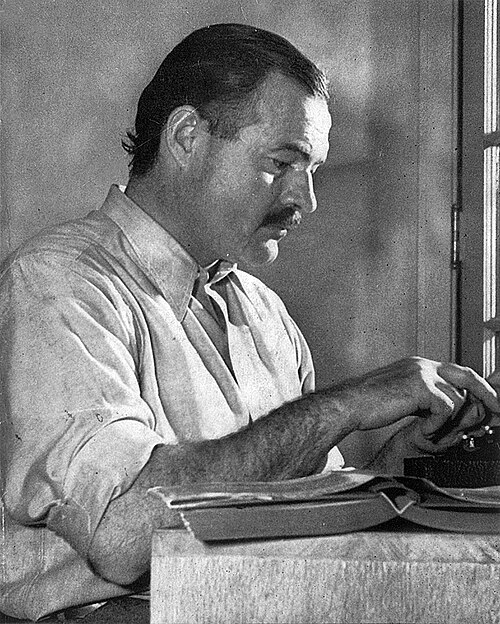
Ernest Miller Hemingway (July 21, 1899 – July 2, 1961) was an American novelist, short-story writer, and journalist. He influenced later 20th-century writers with his concise, understated style and was romanticized for his adventurous lifestyle and outspoken public image. His seven novels, six short-story collections, and two non-fiction works became classics of American literature, and he won the Nobel Prize in Literature in 1954.
Hemingway was born in Oak Park, a suburb of Chicago. After high school, he worked as a cub reporter for The Kansas City Star before joining the Red Cross as an ambulance driver on the Italian front, where he was severely wounded in 1918. In 1921 he moved to Paris, becoming a foreign correspondent for the Toronto Star and was influenced by the modernist writers of the "Lost Generation". In 1926 he published The Sun Also Rises, and his reputation was established with A Farewell to Arms in 1929. He married and divorced multiple times, successively to Hadley Richardson, Pauline Pfeiffer, and Martha Gellhorn, and in 1946 married Mary Welsh.
Hemingway participated in the Spanish Civil War and World War II, reporting as a journalist on the Normandy landings and the liberation of Paris. In 1952, The Old Man and the Sea won the Pulitzer Prize, and in 1954 he received the Nobel Prize in Literature. In his later years, plagued by alcoholism, multiple accidents (including two plane crashes), and depression, his health deteriorated, and he died by suicide at his home in Idaho in 1961. His works, characterized by the "iceberg theory", explore themes of war, love, masculinity, and death, and had a profound impact on American literature.
The Day Master is Geng Metal, born in the Wei month when Earth is prosperous and in command. With the year stem as Direct Resource and the hour pillar as Companion star supporting, the chart is undoubtedly strong. This means Hemingway was innately endowed with tenacious will and powerful self-energy, like steel being forged—both rigid and sharp, yet laden with an inner anxiety of being buried by heavy Earth. His fundamental personality hue is that of a 'tough guy,' daring and resolute, yet frequently plagued by a sense of oppression within. He constantly needed to break through the encirclement of his environment through ceaseless action and adventure to release his vitality. The month branch Wei Earth serves as a Resource repository, and with double Geng Metal emerging, it forms the pattern of 'heavy Earth burying Metal,' instead favoring Wood and Fire to dredge and ventilate. A person with this pattern has a life theme of continuously breaking free from the constraints of established frameworks—from small town to battlefield, from journalist to novelist, every step he used the 'soil-loosening' pen and the 'fire-igniting' passion to sculpt himself. His greatest strengths are resolute executive power and inexhaustible explosiveness; potential challenges include a tendency toward stubbornness, self-repetition, and breaking under pressure due to excessive rigidity.
The Ba Zi forms a 'Direct Resource Pattern,' with the Resource star flourishing and Rob Wealth appearing. This belongs to the category of a strong mother with a strong child, thus Wealth and Officer are used as Useful Gods, favoring Wood and Fire, and avoiding Earth and Metal. The Useful God refers to the most beneficial energy and resources for the chart owner. In Hemingway's chart, Wood (Wealth star) and Fire (Officer and Killing) are favored. Wood represents the output of talent, wealth, and emotions; Fire represents fame, pressure, and tempering. His lifelong journeys to battlefields, seas, and hunting grounds were all active pursuits of the tempering of 'Fire' and the stretching of 'Wood' to balance the excessive authority of the Resource star. The Annoying Gods are Earth and Metal: too much Earth leads to overthinking, conservatism, and stagnation; too much Metal leads to obstinacy and rivalry. Therefore, he had to stay away from the comfortable shelter of the 'Resource' type (such as family ties and stable jobs) and achieve literary status by thrusting into Fire. His path of using the Useful Gods is clear: in his early years as a journalist heading to war zones, he used Fire (Officer and Killing) as the Useful God to gain direct experience; as a writer of novels, he used Wood (Food and Hurting) to control the Killing and generate Wealth, transforming his aggressive energy into art. This explains why he could not endure ordinary daily life and could only release creative energy amid turmoil; once he stopped (such as after receiving awards in his later years), he fell into depression.
The chart structure features 'Rob Wealth exposed on the Heavenly Stem, Direct Resource hanging high, Indirect Wealth sitting on the Day Branch, and Indirect Officer hidden in the Branch.' Rob Wealth represents peer competition and direct action; Hemingway's social interactions and creativity often carried the confrontational nature of Companion and Rob Wealth, like boxing or bullfighting styles. The strong Direct Resource endowed him with inner sensitivity and attachment to traditional values, yet it could also evolve into idealistic pride. The Indirect Wealth in the Yin Branch generating the Indirect Officer is a combination of 'Wealth nourishing the weak Killing,' meaning that through adventure and writing, he acquired wealth and experiences, which in turn summoned greater pressure and a desire for conquest. This combination shaped his foundational character of 'writing life through action': his disdain for cowardice and worship of courage both stemmed from the inner drive of the Indirect Officer; his decision-making style was impulsive and reckless, pursuing the ultimate truth of the moment. In interpersonal modes, he was both a generous friend and a harsh rival, habitually establishing a hierarchy of 'who is tougher' in relationships, which attracted followers but also led to isolation in his later years.
The Year Pillar (Hai) contains the Wen Chang Star and the Tai Ji Noble Star; the Month Pillar (Wei) brings the Tian Yi Noble Star and Hua Gai; the Day Branch (Yin) sees the Gu Chen Star and the Wang Shen Star; the Hour Pillar (Chen) carries the Guo Yin Noble Star. Wen Chang and Tai Ji are both stars of literary eminence, governing wisdom and academic talent; Hemingway's ability to pioneer a generation's style with concise prose corresponds to this sign. The Hua Gai Star rules loneliness, philosophical speculation, and artistic temperament; his works are filled with inquiries into the meaning of life, and he often lived in seclusion, with a lofty and solitary inner world. The Day Branch Yin is the Gu Chen (Solitude Star) and Wang Shen (Peril Star), symbolizing the soul's wandering and sudden disasters; Gu Chen deepens emotional estrangement, while Wang Shen intensifies his obsession with the theme of death and his instinct to personally encounter danger. The Hour Pillar's Guo Yin Noble Star also carries Flowing Glow, endowing him with a sense of authority and imagery of bloody campaigns. The chart contains a Yin-Hai combination into Wood, and while Chen-Wei do not directly clash or harm, when the Annual Influence or Decadal Cycle encounters combinations or clashes, it triggers dramatic changes. For example, in his later years, the Decadal Cycle entered the southeastern Wood-Fire region, which should have been beneficial, but because of the excessive Resource and Rob Wealth in the natal chart, it led to an assault on the spiritual core, confirming the fateful turning point where he chose self-destruction after achieving supreme honor—the extreme manifestation of the Indirect Officer attacking the heart after the Annoying God Resource star was disturbed.
The Day Stem Geng Metal sits on the Yin Wood of absolute exhaustion (jue di), with Rob Wealth exposed on the month and deep Direct Resource on the year, forming a rigid and repressed psychological foundation. Hemingway's thinking pattern resembled a precision hunting machine, forever locking onto targets and striking swiftly. He could not tolerate ambiguity and hesitation, compelled to validate existence with short sentences and straightforward actions. Emotionally, he craved intense resonance, yet due to the isolating effect of the Solitude Star and the overprotective nature of the Resource star, he struggled to truly offer tenderness, leading him to frequently assume the roles of dominator or destroyer in intimate relationships. Under pressure, he displayed astonishing resilience, adopting 'grace under pressure' as his code of conduct and transforming anxiety into concrete combats; but in comfort zones (excessive Resource star), he would fall into emptiness and self-doubt, generating a powerful destructive urge—a classic response of unrefined Geng Metal rigidity, where he must either conquer everything or eliminate himself.
Geng Metal, tempered by Ding Fire in the Wei month and rinsed by Ren Water, along with the Yin Wood Indirect Wealth generating the Killing, forms a creative talent akin to 'pure Metal and clear Water, sharp metal and stone.' The core of this talent is the ability to encapsulate immense violence and poetry with minimalist words, like engraving on stone with a knife. His competitive edge lay in transforming his aggressive spirit (Indirect Officer) into literary imagery, using his own wounds as raw material to directly cut through the veneer of life. As a journalist, he excelled at capturing fleeting truths; as a writer, he pioneered the 'Iceberg Principle,' conveying deep emotions through omission and restraint. The competitive consciousness from Rob Wealth on the Heavenly Stem and the curiosity-driven instinct of Indirect Wealth drove him to forever seek the next battlefield or prey. This relentless chase made him the spokesperson of the 'Lost Generation,' but it also drained his inner energy.
The core conflict in the chart lies in the tug-of-war between 'excessive Direct Resource and uncontrolled Indirect Officer,' as well as the interpersonal drain from 'Rob Wealth seizing Wealth.' The flourishing Resource star, which should be a shelter, became a cage suffocating the self. Throughout his life, he rebelled against his mother's control and the mediocrity of post-war middle-class life, yet he could not detach from the need for those values. This contradiction evolved into both a worship of masculine virility and a love-hate relationship with women. The Indirect Officer (Bing Fire) hidden in the Yin Branch is deeply concealed and obscured by heavy Earth, lacking a transforming element, meaning that pressure and aggression often grew inward rather than being channeled outward. His repeated experiences of war, hunting, and alcoholism were all attempts to find outlets for the suppressed Indirect Officer, but each release only deepened the desolation within. Rob Wealth seizing Indirect Wealth is reflected in multiple marital breakdowns and severed friendships; he was always vying for control, yet lost stable emotional support. In his later years, while the Wood-Fire Decadal Cycle was favorable, the vigorous Fire clashed with the strong Earth, and the Indirect Officer, uncontrolled, struck back, magnifying his character flaws—stubbornness, bigotry, inability to embrace vulnerability—to the extreme, ultimately leading to suicide, the final declaration of his 'tough guy' ethos.
Hemingway's natal chart is a tragedy of extreme rigidity leading to collapse. With the firmness of Geng Metal, he resisted the stifling Earth world, measuring the boundary between life and death with his pen, and in 'lostness' forged an immortal literary monument. The core theme of his life was ending sorrow with warfare—quelling inner turmoil with external clamor, melting the soul's loneliness with the heat of adventure. The Useful Gods in his chart were the blood and fire on the blade, while the Annoying Gods were the retreating warmth and tranquility. Hence, he had to live in 'danger' to feel alive. Ultimately, when all the highs of life receded and physical decay deprived him of the ability to act, he chose to end everything with a hunting rifle, precisely the final instinctive response of a chart weighed down by Resource and attacked by the Indirect Officer: rather be a shattered piece of jade than a whole tile. This was not failure, but the most extreme self-completion of his philosophy of destiny.
比肩帮身,官星制约,少年早慧但内心矛盾。此运天干庚金为比肩,加强自身力量,但庚金为忌神,易有竞争压力;地支午火为正官,代表纪律与规则,能约束过旺的金。海明威童年时期受到家庭严格教育,母亲要求他学习音乐,父亲带他狩猎钓鱼,官星与比肩的较量让他既渴望独立又服从权威。
印星不显,财星暗弱,学业平平但兴趣广泛。原局印星旺,但大运未引动,学业上未显突出。他热衷于户外活动,比肩表现为兄弟朋友间的竞争。官星受克,早期没有明确职业方向。
官星为父,比肩为兄弟,家庭关系紧密。父亲医生,母亲音乐教师,官星代表父亲权威,比肩代表兄弟姐妹。他常与父亲冲突(官比之战),但母亲的影响(官星)促使他后来从事文学。
金旺火弱,注意外伤与肺金。庚金刚猛,午火受克,肺部较弱。童年多次受伤,1911年(辛亥)车祸,符合金木相战。
印星化杀,外压内顺,战争创伤与文学启蒙。己土正印泄七杀丙火之力,表面顺从环境但内心压抑。巳火为七杀,代表战乱与危险。此运涵盖一战,他志愿参军,七杀应于战场,印星代表救护工作。重伤后(1918年),己土印星让他沉浸写作疗伤。
杀印相生,但印为忌,事业起步曲折。七杀克身,印星化杀为权,但他身强不需要印生,反而束缚创造力。他在报社工作,多为模仿写作,未成名。财富不佳,劫财透干(原局辛未),收入有限。
正印代表长辈贵人,七杀代表动荡感情。哈德莱(第一任妻子)在此期间出现,印星加持,关系稳定。但七杀也带来冒险,1918年受伤后与护士艾格尼丝恋情,最终分离。
巳火七杀引发外伤,注意心脏与神经。1918年腿部受伤,弹片留下后遗症。巳火克金,心肺功能受影响,一生抑郁倾向始于此时。
双印伏吟,土重金埋,创作突破但内心挣扎。戊辰两柱纯印,土过旺反埋金,压抑才华。但原局庚金强,土为忌却能收敛锋芒。此运为巴黎时期,偏印代表独特思维与写作技巧,他摒弃繁复,创立“冰山理论”。1926年《太阳照常升起》成功,辰中乙木财星暗藏,财为喜用。
印星忌神,但辰土财库开,名利初显。偏印主偏门才华,他放弃记者职业专事写作,辰为水库,伤官有源,文字犀利。1929年《永别了,武器》大卖,辰中乙木正财,财富积累。但印星为忌,过程辛苦,多次修改。
辰戌冲?原局无戌,但大运辰辰自刑,婚姻波动。1927年与哈德莱离婚,辰辰自刑,自我纠结。后娶波林,辰土印星代表稳定,但印多感情沉闷。
土重金埋,精力透支,注意脾胃。过度写作导致胃病、失眠。1933年(癸酉)金旺泄土,稍缓。
财官相生,喜用齐聚,人生巅峰与动荡。丁火正官透干,卯木正财坐支,财生官旺,克制忌神印星。此运是他最顺畅的十年。原局寅卯辰三会木局?仅寅卯辰会东方木,财星极旺。官星代表事业与名望,1937年赴西班牙报道内战,七杀(官杀混杂)引发冒险犯难。
财官为用,事业飞跃,收入丰厚。《丧钟为谁而鸣》(1940)畅销,官星成就声誉。财星旺,他投资房产,收入颇丰。但正官合身?丁火合壬水?(日主庚,丁合壬?不直接)总之,名望达到新高度。
正财为妻,卯木桃花,婚姻多变。1940年与波林离婚,娶玛莎(正财)。卯木为桃花,吸引女性。但正官制比劫,人际关系稳定,朋友众多。
木火通明,精力旺盛,但卯酉冲(原局无酉)无妨。身体健康,多次参与战争危险但仍无恙。注意肝火,饮酒增多。
七杀攻身,偏财助杀,晚年动荡却再创高峰。丙火七杀直接克庚金,寅木偏财生杀,风险巨大。但身强喜杀,压力转化为动力。此运为二战记者生涯,1944年诺曼底登陆、解放巴黎,七杀应于战场。1945年后写作瓶颈,偏财代表投资,他活得很奢侈。
杀旺成权,但盗财,职财双收却有波折。七杀为权威,他成为文坛硬汉标杆。1952年《老人与海》获普利策奖,偏财为意外之财,奖金丰厚。但寅木偏财被七杀所泄,开销巨大,后期经济紧张。
偏财为情人,七杀为暴力,婚姻破裂。1946年与玛莎离婚,娶玛丽(偏财),但七杀带来争吵与暴力倾向。亲友关系紧张。
七杀克身,外伤与心理危机。1944年飞机失事受伤,1954年(甲午)两次飞机事故,命悬一线。丙火克金,心脏、血压问题。
财星透出,印星为根,盛极而衰的转折。乙木正财合庚(乙庚合,有情之合),丑土正印为忌神。财印交战,内心矛盾。此运获诺贝尔奖(1954),但印土埋金,抑郁加重。丑为金库,合月令未库,库门紧闭。
正财合身,名望巅峰但创造力枯竭。1954年诺贝尔文学奖,乙庚合,财星带来荣誉。但印星忌神,后期无法写作,仅发表回忆录。丑土印星代表停滞,财富靠版税,但负面新闻缠身。
乙庚合,妻子玛丽陪伴,但丑未冲,家庭不和。丑未冲(大运丑与原局未冲),夫妻宫振动,多次争吵。朋友减少,孤独感加重。
土旺金埋,精神崩溃,注意次女。1961年辛丑,比劫夺财,丑土伏吟,抑郁症爆发,同年自杀。八字中正印过旺,失去生存欲望。
Tian Liang (Heavenly Beam) is exalted and undergoes Hua Ke (Transformation to Fame) in the Spouse Palace, with Huo Xing (Mars) in its proper place, forming the 'Ke Huo Spreads Fame' configuration. Tian Liang is a protective star, governing elders, lofty integrity, and academic authority; its exalted state strengthens its sheltering qualities. Hua Ke bestows fame and literary talent. Huo Xing in its proper place brings passion and impatience. This combination indicates a spouse who is often older or holds social status, with a marriage relationship containing elements of 'teacher-student' or 'admiration,' but Huo Xing also leads to intense quarrels in the relationship. Of Hemingway's four marriages, the first two (Hadley and Pauline) were older or more mature than him, and they provided economic and spiritual support in his early writing career, exactly corresponding to Tian Liang's Hua Ke 'protection and promotion.'
Tian Liang Hua Ke in the Spouse Palace, with Huo Xing accompanying, forms the 'Ke Huo Spreads Fame' configuration. Hua Ke enhances the spouse's social prestige and elevates his image, while Huo Xing imbues emotions with intensity and contradiction. Hemingway's third wife, Martha Gellhorn, was herself a renowned war correspondent, and their relationship became strained due to career competition; the fourth, Mary, was more like a 'manager,' handling his Nobel Prize affairs. Hua Ke made the spouses part of his 'celebrity label,' while Huo Xing caused each marriage to begin with passion and end in conflict.
Hemingway's marital history perfectly confirms this palace: the first wife, Hadley (8 years older), supported his writing with her inheritance—the 'patronage' of Tian Liang Hua Ke; the second, Pauline (a wealthy girl), provided a comfortable environment, and Huo Xing's passion enabled him to write 'The Sun Also Rises' amidst betrayal; the third, Martha (a strong woman), stood with him on the battlefields, but Hua Ke turned into Huo Xing's tearing due to competition; the fourth, Mary (a former assistant), cared for him in old age, but Tian Liang's 'shelter' eventually gave way to Huo Xing's weariness. Each marriage initially brought a raise in fame like 'Tian Liang Hua Ke,' but ended in mutual destruction like 'Huo Xing in its proper place.'
Qi Sha (Indirect Officer) in its temple position occupies the Brothers Palace, with Ling Xing (Fire Star) also in its temple position, forming the 'Sha Ling Po Meng' (Killing and Fire Breaking the Alliance) configuration. Qi Sha is a star of severe elimination; its temple prosperity strengthens its fierce and competitive nature. Ling Xing belongs to fire, representing sudden conflicts and sharp contradictions. This combination foretells that the native's relationships with siblings or peers are tense and prone to disputes. The Brothers Palace is the domain of 'siblings' in the family. Qi Sha in its temple indicates that Hemingway held a strong, dominant position at home, but Ling Xing in its temple suggests that conflicts arose due to his assertive personality and sharp words. In fact, Hemingway's relationships with his siblings were indeed discordant; he treated his brother Leicester with 'control' rather than care, and he often criticized his sister Marcelline.
The Brothers Palace has no Four Transformations activation, but Qi Sha in its temple itself is an energy of 'active aggression'. Without Hua Lu, Hua Quan, or Hua Ke to harmonize, it means that interactions between siblings lack lubricants of interest or emotional warmth, resulting more in pure personality clashes. Ling Xing in its temple further amplifies this tendency to turn hostile at the slightest disagreement. In Hemingway's relationship with his brother, he often gave orders in a 'patriarchal' manner but rarely offered substantial help — this is exactly the portrayal of Qi Sha without auspicious transformations, like 'fighting alone'.
Hemingway had five siblings; he was the second child, with an older sister above and three younger brothers and a younger sister below. Qi Sha in its temple in the Brothers Palace showed that from a young age he displayed a desire for leadership and domination: he organized hunting and fishing at home and required his siblings to obey arrangements. In adulthood, his relationship with his brother Leicester was particularly tense — Leicester once published an article under Hemingway's name, causing Hemingway to angrily cut off contact; in his later years when suffering from depression, he further criticized his brother as 'weak', leading to an almost complete rupture between the siblings. The explosive nature of Ling Xing in its temple was also reflected in Hemingway's quarrel with his brother-in-law over a trivial matter, leading to years of no communication.
Lian Zhen (The Chaste Star) in its balanced state and Tian Xiang (Heavenly Minister) in its exalted state are in the Children Palace, with Tian Kui (Heavenly Mentor) accompanying, forming the 'Lian Xiang Holds the Seal' configuration. Lian Zhen is a secondary romance star, governing talent and volatility; its balanced state weakens stability. Tian Xiang is the Star of the Seal, and its exalted state governs rules and assistance. Tian Kui is a benefactor star, indicating that children possess a noble aura or that one gains noble support through children. This combination foretells intelligent and artistically talented children, but Lian Zhen's balanced state causes rebelliousness and generational gaps in parent-child relationships. Hemingway had three sons: the eldest, Jack (by Hadley), had a gentle personality like Tian Xiang; the second, Patrick (by Pauline), was rebellious and unrestrained like Lian Zhen; the third, Gregory (by Pauline), later underwent sex change, taking Lian Zhen's 'volatility' to the extreme.
The Children Palace has no Four Transformations triggering, but Tian Kui brings indirect assistance. Without Hua Lu, Hua Quan, or Hua Ke, the children did not directly inherit their father's career (none became great writers), but Tian Kui enabled them to have benefactor help in their respective fields (e.g., Jack became a fisheries expert, Patrick became a doctor). Hemingway's care for his children was inconsistent (Lian Zhen balanced), and Gregory's sex change in his later years left him perplexed, but Tian Xiang's exalted 'rules' kept most of the children maintaining a decent life.
Among Hemingway's three sons, the eldest Jack was his favorite (the steadiness of Tian Xiang exalted); in his childhood, Hemingway took him fishing and hunting, and they co-wrote parts of 'The Dangerous Summer.' The second son, Patrick, rebelled against his father from an early age and was once beaten for drinking on the sly (the rebellious nature of Lian Zhen balanced), later becoming a doctor. The third son, Gregory, took it further; from childhood, he imitated his mother's dressing and as an adult underwent sex reassignment surgery (the transformation of Lian Zhen's romance nature), a fact Hemingway never accepted until his death. The benefactor role of Tian Kui is evident: Jack became director of the Key West Aquarium thanks to his father's fame, and Patrick entered medical school through his father's connections.
Ju Men (The Mouthpiece Star) flourishes in the Wealth Palace and serves as the Self Palace, forming the 'Ju Men Shines on Wealth' configuration. Ju Men is a star of obscurity, governing eloquence, disputes, and hidden matters. In its flourishing position, it uses eloquence to generate wealth, and the negative effects of its Hua Ji (Transformation to Fear) are restrained. As the Self Palace, this sector dominates the life focus of the native—Hemingway indeed accumulated wealth by relying on his 'pen' (an extension of eloquence). The flourishing Ju Men represents income from writing, speaking, and controversial topics. Throughout his life, royalties, writing fees, and the Nobel Prize money all stemmed from the power of language and words. However, Ju Men also carries an 'obscure' nature, causing his sources of wealth to often be accompanied by plagiarism lawsuits (such as 'A Farewell to Arms' being accused of plagiarism) and tax disputes.
Ju Men in the Wealth Palace is flourishing but lacks the Four Transformations; however, the Self Palace reinforces its role. Without Hua Lu (Transformation to Prosperity) to directly stimulate wealth, it means that wealth must be earned through 'personal ability' with difficulty (Ju Men flourishing relies on eloquence, not unexpected wealth). Although Hemingway became famous through writing, he was poor in his youth (depending on Hadley's support), earned high salaries as a war correspondent in middle age (the 'journalism' attribute of flourishing Ju Men), and became wealthy in his later years from the Nobel Prize and posthumous royalties. With the Self Palace here, 'making money' becomes one of life's themes—his frequent complaints about taxes and haggling with publishers exactly highlight Ju Men's 'calculating' trait.
Hemingway's financial trajectory highly aligns with the characteristics of flourishing Ju Men: in his early Paris years, writing fees were meager (Ju Men had not yet manifested); after the success of 'The Sun Also Rises' in the 1920s, royalties surged, but his luxurious lifestyle (hunting, yachting) squandered them; in the 1930s, as a war correspondent, he earned a thousand dollars a week (flourishing Ju Men exchanging 'eloquence' for wealth); the 1954 Nobel Prize gave him financial freedom, but in his later years, due to dollar devaluation and medical expenses, his estate was only several hundred thousand dollars at death. The flourishing Ju Men also attracted disputes: in the 1940s, he was under FBI surveillance, suspected of misusing funds; his lawsuits with publisher Scribner lasted for years.
When Tan Lang (Desire Star) is in its prosperous phase and Hua Quan (Authority Transformation) sits in the Health Palace, it forms the ‘Tan Lang Quan He’ (Desire Star Authority Radiant) configuration. Tan Lang is a star of desires, and its prosperity links health issues to indulgence and excess; Hua Quan intensifies the controlling force of 'greed,' making the chart holder unable to moderate their desires (drinking, sex, risk-taking). The Health Palace governs bodily vulnerabilities, and Tan Lang's prosperity with Hua Quan points to liver disease (alcohol metabolism) and suicidal tendencies (mental desire out of control). Hemingway was a heavy drinker throughout his life, hospitalized multiple times for alcohol poisoning; his depression worsened in his later years, and he ultimately committed suicide with a shotgun—an extreme manifestation of Tan Lang's 'desires unfulfilled → mental breakdown'.
Tan Lang Hua Quan in the Health Palace strengthens the dominance of desire over the body. Hua Quan gives legitimacy to indulgence—Hemingway often drank heavily under the pretext that ‘writing needs inspiration,’ even viewing alcohol consumption as part of masculinity. This 'authority' made him ignore health warnings, eventually developing cirrhosis and hypertension. Hua Quan also made him extremely controlling about his illnesses: he insisted on treating his own wounds (e.g., after the 1944 plane crash recovery) and refused to follow medical advice.
Hemingway's health history is a textbook case of Tan Lang in prosperity with Hua Quan: he was wounded in war at age 19 (a trait of Po Jun), survived a plane crash in Africa at 39 (Tan Lang's risk-taking), and repeatedly suffered from liver disease due to alcoholism in his later years. After two consecutive plane crashes in 1954, he insisted on walking out of the wreckage himself and refused a stretcher (the arrogance of Hua Quan). Before his suicide in 1961, he had undergone electroconvulsive therapy at Mayo Clinic (Tan Lang's despair transformed into a death wish). The prosperity of Tan Lang also gave him an exaggerated 'heroic' obsession with illness, often describing his injuries to craft a tough-guy image.
When Tai Yin (Lunar Star) is weakly situated in the Relocation Palace, with Zuo Fu (Left Assistant) in the same degree, it forms the ‘Yin Fu Yuan Xing’ (Lunar Star and Left Assistant for Distant Journeys) configuration. Tai Yin is a flowing water star, and its unfavorable position weakens its brightness, indicating gentleness, wandering, and nostalgia; Zuo Fu is a helpful star, foretelling assistance from benefactors when traveling. This combination explains why Hemingway spent his life roaming across many countries—Paris, Spain, Cuba, Africa, Idaho—and was always aided by mentors wherever he went (Zuo Fu). The weakness of Tai Yin also gave him a strong attachment to foreign lands; he viewed Paris as 'a moveable feast' and settled in Cuba for twenty years, which precisely embodies Tai Yin's 'emotional anchorage'.
The Relocation Palace has no Four Transformations activation, but Zuo Fu brings substantial assistance. Without Hua Lu or Hua Quan, it means that travel itself does not directly generate wealth or power; rather, opportunities are indirectly gained through benefactors (Zuo Fu). In Paris, Hemingway met Ezra Pound and Gertrude Stein (Zuo Fu's mentoring); in Spain, he befriended the matador Ordóñez (Zuo Fu's collaboration); in Cuba, he connected with Gregorio Fuentes, his boat captain (Zuo Fu's companionship). The weakness of Tai Yin made his departure from Cuba in old age extremely painful, as if uprooted.
Hemingway's migration history: At 19, he went to Italy to serve in WWI; in the 1920s, he moved to Paris (joining the Lost Generation); in the 1930s, he settled in Key West (fishing base); in 1937, he went to Spain for civil war reporting; in the 1940s, he stationed in Cuba (WWII and writing); in 1949, he went on an African safari (plane crash); and in 1959, he moved back to Idaho. In each relocation, the Zuo Fu benefactor was active: in Paris, introductions by Gertrude Stein; in Cuba, Fuentes serving as his boat captain; in Africa, assistance from the hunter Percival Hunt. The weakness of Tai Yin made him treasure each place with deep sentimental memories, especially Paris, which he repeatedly wrote about in his memoirs.
Tian Tong (Heavenly Peace) in its balanced position sits in the Destiny Palace, with Di Jie (Earth Calamity) co-located, forming the 'Fortune Breaker' configuration. Tian Tong is a star of fortune, representing gentleness, kindness, and enjoyment, but its balanced position weakens its stability; Di Jie is a dark wave, bringing mental sensitivity, idealism, and life's ups and downs. The native appears easygoing on the outside but harbors deep loneliness and adventurous impulses within — this interweaving of 'fortune and calamity' explains why he could write the resilient optimism in 'The Old Man and the Sea' yet spend his life mired in alcoholism and depression. Tian Tong in its balanced position caused him to constantly seek self-validation through external events (such as war and hunting), while Di Jie made him suddenly feel emptiness at his peak, leading to self-destruction.
The Destiny Palace has no Four Transformations activation, but Tian Tong in its balanced position itself is a state of potential energy not yet activated. Since Tian Tong does not actively trigger transformations, the native's life drive relies more on the Hua Lu, Hua Quan, Hua Ke from other palaces to 'borrow light'. For instance, the Wealth Palace with Ju Men in prosperity (Body Palace) and the Parents Palace with Wu Qu Hua Lu form a wealth star activation, prompting him to transform Tian Tong's sensitivity into writing material; the Spouse Palace with Tian Liang Hua Ke allowed him to gain social image enhancement through marital relationships. Overall, the 'stillness' of the Destiny Palace needed external 'movement' to activate it, making Hemingway a complex personality who was passively swept into the era's torrents and then actively conquered them.
The configuration of Tian Tong and Di Jie in the Destiny Palace manifested in Hemingway as: throughout his life he sought a 'peaceful' self (Tian Tong), but was constantly pushed by 'turbulent' external events (Di Jie). In youth, he went to war, was wounded, and became famous through writing; in middle age, he had four marriages, traveled between Europe and Cuba, and participated in the Spanish Civil War; in his later years, after winning the Nobel Prize, he shot himself. Each life turning point appeared to be his active choice, but in reality it was the tug-of-war between the inner 'fortune star's desire for comfort' and the 'calamity star's creation of crises'. Tian Tong in balance gave his works human warmth, while Di Jie imparted a profound sense of tragedy — this is the spiritual source of 'finding meaning in death' as seen in 'For Whom the Bell Tolls'.
Wu Qu (Military Music Star) in its temple and Hua Lu occupy the Parents Palace, forming the 'Wu Lu Double Temple' configuration. Wu Qu is a wealth star; its temple prosperity indicates firmness and pragmatism; Hua Lu enhances wealth and protection. This palace indicates that the parents (especially the father) had a profound influence on the native, providing material support and a tough character. Hemingway's father, Clarence Hemingway, was a doctor who loved outdoor activities. Wu Qu in its temple corresponds exactly to his tough-guy education (hunting, fishing, boxing); Hua Lu is reflected in the forest cabin left by his father for exploration, and although the inheritance in later years was small, the spiritual legacy was enormous. His mother Grace was of an artistic bent, but the dominance of Wu Qu in its temple gave the father image the upper hand.
Wu Qu Hua Lu in the Parents Palace strengthened the father's material and spiritual support. Hua Lu caused Hemingway to receive financial support from his father in his early writing days (such as travel expenses to Paris in 1920), and more crucially, the 'tough-guy philosophy' imparted by his father became the core of his works. However, the firmness of Wu Qu in its temple also led to friction in the father-son relationship: his father disliked Hemingway becoming a writer instead of a doctor. After his father's suicide in 1928, Hemingway's feelings toward his father were complex — both admiration and guilt.
Hemingway's father Clarence (1858–1928) was an obstetrician-gynecologist and nature lover who often took young Hemingway fishing and hunting on Lake Michigan (the outdoor attributes of Wu Qu). His mother Grace was an opera singer who wanted him to study music (suppressed by Wu Qu). His father's suicide due to diabetes and depression made Hemingway fear hereditary illness all his life, and indirectly influenced his own later suicide due to depression. The positive effect of Hua Lu was the growth environment provided by his parents (shotguns, fishing rods, books) that shaped his writing material. The shotgun left by his father was precisely the one Hemingway used to kill himself.
Tai Yang (Sun) in Prosperity occupies the Fu De Palace, accompanied by You Bi (Right Assistant), Tian Ma (Mobility Star), and Tuo Luo (Delaying Star) in Decline, forming the 'Yang Ma Tuo Xian' (Sun-Horse-Delay Trap) configuration. Tai Yang is the star of brightness; its Prosperity position represents a passionate and open-minded pursuit of spiritual goals. You Bi aids with a compassionate heart. Tian Ma signifies constant movement and restless thoughts. Tuo Luo in Decline brings about inner procrastination, anxiety, and recurrence. This combination reveals Hemingway's inner world: outwardly optimistic (Tai Yang in Prosperity), yet internally full of conflict (Tuo Luo in Decline) and unease (Tian Ma never ceasing). He often combated depression through adventure (Tian Ma), but Tuo Luo in Decline trapped him in a cycle of alcoholism, becoming a spiritual shackle.
The Fu De Palace has no Four Transformations, but the Prosperous Tai Yang and Tian Ma form a 'Sun-Horse Intersecting' active mindset. The enthusiasm of Tai Yang in Prosperity drove him to constantly seek new spiritual anchors: wars, bullfighting, hunting, deep-sea fishing. Tian Ma represents a mind that never rests; he often worked on multiple writing projects simultaneously, but in his later years, he became agitated from creative exhaustion (the entanglement of Tuo Luo in Decline). Tuo Luo in Decline deepened his depression gradually, and the psychoanalysis treatment he started in the 1940s could not reverse it. Overall, this is a palace that 'seeks darkness within brightness'.
Hemingway's mental state: Tai Yang in Prosperity made him high-spirited in youth, engaging in various adventures and writing with vitality. You Bi made him generous with friends (supporting impoverished writers), and Tian Ma prompted him to make ten transatlantic journeys. Tuo Luo in Decline manifested as: he wrote for four hours each morning, relieved stress with alcohol in the afternoons, and fell into the anxiety of 'write or die' in his later years. In 1961, he committed suicide at his home in Idaho, having dined with his wife the night before. Beneath the optimistic exterior of Tai Yang in Prosperity, the depression of Tuo Luo in Decline ultimately prevailed. He often said he had 'lived too long', which corresponds to Tian Ma's 'ceaseless movement is a torment'.
Po Jun (Destroyer) in Prosperity sits in the Tian Zhai Palace, with Wen Chang (Literary Star) in Decline and Lu Cun (Accumulation Star) together, forming the 'Po Lu Wen Xian' (Destroyer-Accumulation-Literature Trap) configuration. Po Jun is a star of consumption; its Prosperity position represents frequent changes and renovations of the home. Wen Chang in Decline weakens the literary influence, while Lu Cun provides some savings. This combination indicates instability in real estate and family foundation, with frequent moves or home renovations, but Lu Cun ensures some profit from the last sale. Hemingway built four houses in his lifetime (Paris apartment, Key West villa, Cuban estate, Idaho cabin), each time undertaking major construction (Po Jun). Wen Chang in Decline made him careless with property legal documents, leading to tax issues (such as the Cuban property being confiscated later).
The Tian Zhai Palace has no Four Transformations, but Po Jun in Prosperity and Lu Cun together form the 'Po Jun Lu Cun' phenomenon. Po Jun implies 'destruction followed by reconstruction', and Lu Cun provides a financial buffer, so that after each move or renovation, the economy did not collapse. After buying his first property in Key West, Hemingway added a swimming pool and study himself; after buying the estate in Cuba, he expanded the watchtower. Lu Cun allowed him to purchase a home in Idaho after selling the Cuban property in his later years. Wen Chang in Decline suggests his careless handling of land contracts; in the 1970s, the Cuban government confiscated the estate on the grounds of 'unpaid taxes'.
Hemingway's property history: After his father's suicide in 1928, he settled in Key West (the starting point of Po Jun), renovated the villa in the 1930s (added walls), purchased the Cuban estate ('Finca Vigía') in 1940, was forced to leave Cuba in 1960 (the abandonment of Po Jun), and bought his final home in Ketchum, Idaho. Lu Cun was reflected in his ability to cover property expenses with writing income, and even sometimes rented the villa to tourists. Wen Chang in Decline led to his failure to keep the Cuban property documents safe, and the estate was eventually confiscated by the Cuban government, though he had already passed away by then.
When Zi Wei (Emperor Star) in its prosperous phase and Tian Fu (Celestial Treasury) in its earthly position both reside in the Friends & Servants Palace, with Wen Qu (Arts Star) under Hua Ji (Obstacle Transformation) and Tian Yue (Heavenly Official) accompanying, it forms the ‘Zi Fu Ji Yue’ configuration. Zi Wei is the sovereign star, and its prosperous position reveals authority; Tian Fu is the treasury star, and its earthly position symbolizes a stable network of contacts; Wen Qu under Hua Ji brings flaws in documents and reputation; Tian Yue is a helpful person star. This combination suggests that the chart holder dominates social circles (Zi Fu), but Wen Qu Hua Ji leads to negative remarks or legal disputes around him (such as accusations of plagiarism and FBI surveillance), and there is betrayal among subordinates (or friends). In his later years, Hemingway suspected that his friends were FBI informants, exactly reflecting the ‘obscuration’ indicated by Wen Qu Hua Ji.
Wen Qu Hua Ji in the Friends & Servants Palace is the focal point of this palace. Hua Ji brings misunderstandings in communication, document-related disputes, and reputation damage. Hemingway had falling-outs with several friends (e.g., broken friendship with Sherwood Anderson due to jealousy over fame), was investigated by the FBI in the 1940s (mistakenly believed to be a communist sympathizer), and sued the author of The Rake's Progress for libel in the 1950s. Tian Yue, however, provided him with high-level mentors at critical moments (such as his good relationship with Cuban President Batista), but Hua Ji destabilized such connections. The prosperity of Zi Wei inclined him to control his social circle and be unwilling to engage as equals.
Hemingway's social circle: In his early Paris years, Gertrude Stein's salon was the center of his social life (the controlling nature of Zi Wei), but they later drifted apart due to stylistic differences (Hua Ji). His friendship with F. Scott Fitzgerald was deep yet fraught with competition (Zi Wei's jealousy toward another 'emperor star'). In his later years, his social circle in Cuba mainly consisted of wealthy fishermen and journalists. The prosperity of Zi Wei made him a central figure, but Hua Ji allowed FBI infiltration—he mistakenly believed that Fuentes was also a spy, leading to a fierce quarrel. Tian Yue manifested when Cuba awarded him a medal for his cultural contributions.
Tian Ji (Advisor Star) in Decline sits in the Guan Lu Palace, accompanied by Di Kong (Void/Emptiness Star) and Qing Yang (Aggressive Star) in Prosperity, forming the 'Ji Kong Qing Xian' (Advisor-Void-Aggression Trap) configuration. Tian Ji is the strategist star; its Decline position causes excessive deliberation and difficulty in execution. Di Kong signifies idealism and intermittent inspiration. Qing Yang in Prosperity brings competition and conflict. This combination indicates a career full of twists and turns, often missing opportunities due to over-planning or becoming isolated due to aggressive competition. In Hemingway's writing career, there were many discarded drafts (repeated revisions of Tian Ji in Decline), numerous disputes with publishers (conflicts of Qing Yang), and Di Kong allowed him to break through old genres (e.g., the minimalism of "The Old Man and the Sea"). But Qing Yang in Prosperity also gave him a strong 'fighter's spirit', leading him to actively join partisan debates.
The Guan Lu Palace has no Four Transformations activation, but Qing Yang in Prosperity and Di Kong form the 'Yang Kong' (Aggression-Void) combination. Without Hua Lu, Hua Quan, or Hua Ke, career achievements did not come from external blessings but from personal effort and talent (the flexibility of Tian Ji in Decline). Qing Yang in Prosperity promotes 'sprints' and 'breaks' in the workplace: he often served as a wartime journalist (short-term contracts), then switched to secluded writing after the war. Di Kong made his works often avant-garde, but also led to poor market reception (e.g., "Across the River and into the Trees" was poorly received).
Hemingway's career trajectory: wounded and returned home in 1918, worked as a journalist in 1919 (quick writing of Tian Ji in Decline), published short story collections in the 1920s, wrote non-fiction in the 1930s ("Death in the Afternoon"), war reporting in the 1940s (peak sales of "For Whom the Bell Tolls"), and won the Nobel Prize for "The Old Man and the Sea" in the 1950s. Each step had the 'impulse' of Qing Yang: he volunteered for wars, served as a foreign correspondent, and wrote about bullfighting. Di Kong led him to attempt a memoir style in later years ("A Moveable Feast" was unfinished). Tian Ji in Decline manifested in his frequent revisions of manuscripts, sometimes rewriting entire chapters.
Generate your personal chart in under a minute. Sign up free and get 30 credits — enough for two or more AI readings. No credit card.
Generate my free BaZi chartPlease sign in to join the discussion
Sign In