Year
Yi
Mao
Pian Yin
Pian Yin
Hidden Stems
Yi (Pian)
- Star Luck
- Bing
- Sitting Branch
- Lin Guan
- Void
- Zi Chou
- Na Yin (Elemental Sound)
- Da Xi Shui
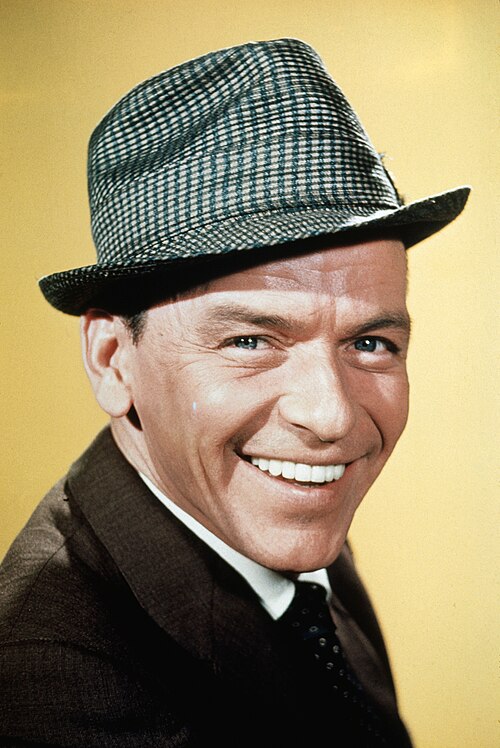
Frank Sinatra was one of the most influential American singers and actors of the 20th century, known by nicknames such as 'The Chairman of the Board' and 'Ol' Blue Eyes'. Born on December 12, 1915, to an Italian immigrant family in Hoboken, New Jersey, he began his career in church choirs and on radio. In 1939, he joined the Harry James Orchestra, and in 1940 he moved to the Tommy Dorsey Orchestra, gaining fame with songs like 'I'll Never Smile Again'. After going solo in 1942, he sparked 'Sinatramania' and became a teenage idol. In 1943, he signed with Columbia Records and released his debut album 'The Voice of Frank Sinatra'.
In the early 1950s, his career declined, but he revived it in 1953 by signing with Capitol Records and winning the Academy Award for Best Supporting Actor for the film 'From Here to Eternity'. Collaborating with arranger Nelson Riddle, he released concept albums like 'In the Wee Small Hours' (1955) and 'Songs for Swingin' Lovers!' (1956), establishing a jazz-pop style. In 1960, he founded his own Reprise Records, releasing classics such as 'Strangers in the Night' (1966) and 'My Way' (1968). Performing with the Rat Pack in Las Vegas, he became an iconic entertainer there.
Sinatra also had an active film career, starring in 'The Man with the Golden Arm' (1955), 'The Manchurian Candidate' (1962) and others, and received the Cecil B. DeMille Award from the Golden Globes. He won 11 Grammy Awards, the Presidential Medal of Freedom in 1985, and the Congressional Gold Medal in 1997. In his later years, he retired and came back several times before dying of a heart attack on May 14, 1998. Sinatra is consistently recognized as one of the greatest pop singers of the 20th century.
The Day Master is Ding Fire, born in the mid-winter Zi month, when Qi Sha (Indirect Officer) is in command, losing timing and support. However, the year and hour pillars have double Yin (Resource) transforming the Sha, resulting in a configuration where a weak Day Master receives mutual generation from Sha and Yin. Ding Fire is like a candle flame; in the long winter nights of the Zi month, its light is faint yet tenacious. Fortunately, the Yi Mao and Yin Wood continuously fuel it, forming a unique temperament of overcoming hardness with softness and controlling military might with culture. A person with this energy state may appear gentle and humble outwardly, but is extremely proud and resilient inwardly, adept at enduring and accumulating strength in adversity, transforming pressure into creativity. The greatest advantage is the ability to sublimate external harshness and challenges into artistic tension, achieving profound expression; the potential challenge is a tendency toward self-consumption, overthinking, and a constant tearing between ideals and reality.
The core structure is Sha-Yin mutual generation (Indirect Officer and Resource mutually producing each other), with the drawback of Shang Guan (Hurting Officer) confronting Zheng Guan (Zheng Guan (Direct Officer)). Wood and Fire are the Useful Gods; Metal, Water, and Earth are the Annoying Gods. The Useful God Wood (Yin Star) represents knowledge, reputation, and benefactor support; Fire (Peer Star) represents sibling assistance and release of self-energy. The Annoying God Water (Officer and Sha) must be transformed by Wood, like melting swords into ritual vessels, turning a harsh environment into artistic nourishment; Earth (Shang Guan) drains Fire to generate Metal (Wealth), which can easily damage nobility and must be restrained by Wood. Throughout his life, the Day Master relies on Wood and Fire, especially Wood Yin, which can transform his singing talent (Ding Fire as the mouth and tongue) and the oppressive feelings of a complex life into timeless hits, using Fire (stage passion) to ignite the audience. When the Annoying God Water is strong (such as when the Da Yun (Major Life Cycle) encounters Metal and Water), he is prone to legal disputes and emotional turmoil, confirming the ups and downs of his life journey.
The core combination is Sha-Yin mutual generation, supplemented by Shang Guan protruding on the stem sitting on Sha, mixed Guan and Sha, and Shi Shen (Eating God) hidden. Sha-Yin mutual generation means that pressure is the mother of achievement—the more he is questioned and tempered, the more extraordinary depth is forged. Shang Guan (Wu Earth) is next to Qi Sha (Gui Water), symbolizing how he confronts authoritative rules with a rebellious, unconventional stage image and a straightforward singing style (Shang Guan), forming a strong personal identity. Mixed Guan and Sha (Gui Sha in Zi and Ren Guan in the hour stem) lead to constant gossip and scandals, entangled with rumors of the underworld, but he always resolves crises with Yin (artistic achievements). This combination creates a charming yet dangerous complex character: obsessed with perfectionistic artistic pursuit, yet full of possessiveness in private, like a godfather walking between the legitimate and the underworld.
The Month Pillar has Peach Blossom sitting on Gui Ren (Mentor Star), the Hour Pillar has Yue De and Guo Yin, the Year Pillar carries Disaster Sha and Jiang Xing (General Star), and the Day Pillar sits on Hua Gai (Art Star) and Gua Su (Solitude Star). In the chart, Peach Blossom (Zi) next to Tian Yi Gui Ren (Heavenly Noble Mentor) bestows magnetic charisma and romantic opportunities; his life is full of emotional connections that even influence his career scope, but because Peach Blossom carries Sha, it also brings emotional entanglements and scandals. Hua Gai and Gua Su (Chou) in the Day Branch grant extraordinary artistic talent and a sense of spiritual solitude; on stage, he attracts thousands of eyes, but off stage he yearns for a true confidant. The Hour Pillar has Wang Shen and Jie Sha alongside Guo Yin, reflecting his willingness to take risks and courage to break conventions, thus pioneering a new musical era. There are no direct clashes or punishments among the Earthly Branches, but the Zi-Chou combination (Eating God and Shang Guan combining with Sha) transforms inner violence and darkness into creative energy, vividly expressed in his gangster narrative style and movie roles.
Ding Fire Day Master, nourished by Yin and Mao Wood, is like a fire in a furnace or a candle flame, outwardly civilized and gentle, inwardly fierce and strong, with strong Sha-Yin-Xiao (Indirect Officer, Resource, and Indirect Resource) characteristics. Throughout his life, he pursued light and heat, longing to be seen and recognized, highly sensitive to dignity, harboring deep hatred when humiliated, biding his time to repay twofold. His thinking pattern is extremely delicate and dramatic, capable of turning every experience into a story; emotionally, he needs passionate love to prove his existence, yet because of solitary stars like Gu Chen and Gua Su, he maintains a sense of aloof isolation. Facing pressure, he is like hard ore, forged to become sharper; in comfort zones, he becomes restless, needing to constantly challenge new areas to maintain vitality. This is "Skinny Monkey" Frank—a Sicilian soul forever burning, forever struggling.
The chart's energy is concentrated in Sha-Yin mutual generation, with hidden Shi Shen (Eating God) and Shang Guan, giving him a combination of power will, artistic talent, and business acumen. Yin Star transforms Sha into life, granting the top talent of refining life's suffering into art; his low crooning is moving because every note is ground from real pain. Shang Guan confronting Guan but not fearing it becomes an original style; he revolutionized pop singing with an instrumental-like "light-voiced" technique that overturned tradition. The Earthly Branch contains Shi Shen generating hidden wealth; he was not only a singer but also a shrewd producer and casino owner, adept at converting fame into a business empire. His strongest competitive areas are precisely those intersections of art and industry that require deep empathy, a strong personal brand, and the courage to reshape rules.
Mixed Guan and Sha and Shang Guan confronting Guan create a lifetime of disputes; weak Wealth Star and heavy Yin make him prone to emotional and family entanglements. Mixed Guan and Sha led him to constantly struggle on the edge of the law, in the shadow of the underworld, and in battles over reputation; clearly longing for orthodox approval, he always opposed the establishment. Shang Guan confronting Guan intensified self-destructive tendencies; his fiery temper and willfulness often pushed his career to the brink, such as the singing strike incident. Excessively heavy Yin Star (too much Wood) sometimes created a "maternal dependence" or controlling tendency; his four marriages and several emotional breakdowns are related to his contradiction of needing absolute loyalty but being unable to refrain from infidelity. Wealth Star is an Annoying God and is weak; he was generous with money but often faced financial crises; investment impulses were swayed by personal relationships, and in later years, he owed taxes due to gambling.
His destiny is a typical "Sha-Yin mutual generation, with undercurrents surging." His life was like watching stars on a winter night: the deeper the darkness, the brighter the starlight. Using art as a talisman, he refined struggles from the bottom, racial prejudice, and personal wounds into batch after batch of classics, completing a stunning leap from a poor street kid to the "Voice of the American Century." Yet his success and failure both came from Guan and Sha; his world was always surrounded by powerful men and beautiful women, rising and falling in the dual whirlpools of power and emotion. In the end, like the old sailor in his song "My Way," he took his final bow amidst grand clamor and the solitude of Hua Gai, leaving the world an unfading thin silhouette—that is the cultural totem transformed by Yin Star, proclaiming that life can emit its strongest light in the deepest darkness.
Tian Xiang (Heavenly Image) auspiciously positioned, Di Jie (Earth Calamity) in the Property Palace, Si Wei (Death position). Tian Xiang is the Minister star; when auspicious (Miao) it signifies stability and structure. Di Jie is the star of breach, causing asset loss or unexpected depletion. Si Wei symbolizes a frozen, declining state. Sinatra's real estate investments, though numerous and in prime locations (e.g., his Beverly Hills mansion, Palm Springs estate), were often not held long-term: they were sold, seized due to tax issues, or donated (Di Jie's disappearing nature). Tian Xiang Miao gave these properties a 'presentable' facade, such as his 'Compound' built in Palm Springs in the 1950s, a celebrity gathering spot, but he later sold it due to divorce settlement. Si Wei shows his attachment to property was not as strong as to music, more as a temporary status symbol.
The Property Palace has no Four Transformations; Tian Xiang Miao meets no baleful stars except Di Jie. Di Jie is like a funnel—no matter how much real estate he accumulated, it would leak away for various reasons. This is consistent with the liquidity indicated by his Wealth Palace's Tian Ji Hua Lu—he was not good at holding assets, preferring to liquidate. Si Wei suggests that in his later years, the properties under his name were not many, mostly sold or gifted to his children.
With Tian Xiang Miao and Di Jie in the Property Palace, Sinatra's view of property was 'for show' rather than 'for living.' He built a massive family compound, but spent most of his time in hotels and on tour, with houses mostly vacant. The most typical Di Jie event: in 1971 when he announced retirement, he sold or donated most of his properties; when he later made a comeback, he lived in rented apartments. Si Wei also reflects his relationship with his natal home—in childhood he lived in a low-rent apartment; after fame he tried to buy back the old residence as a memorial, but ultimately gave up due to development. Overall, property was just a footnote to his career success, not a foundation.
Tian Tong (Harmony Star) in Beneficial position, Tian Liang (Supervision Star) in Temple position with Hua Quan (Power Transformation) occupying the Guan Lu Gong (Career Palace), also the Shen Gong (Body Palace). Zuo Fu (Left Assistant) and Tuo Luo (Delay Star) in Fallen position. Tian Tong is a star of blessings, symbolizing harmony, performing arts, and enjoyment. Tian Liang is the star of supervision and oversight; in Temple position with Hua Quan, it grants authoritative and decisive power in career. The Shen Gong located here indicates the entire focus of life is on career. Zuo Fu is a helpful force, but its fallen state implies unstable support. Tuo Luo in Fallen brings delays, repetitions, and hidden obstacles. Sinatra's career peaks were precisely honed through countless 'delays' and 'repetitions'—he would record each song dozens of times until perfect (Tuo Luo). The combination of Tian Tong and Tian Liang made him an 'authoritative performer,' not merely a singer: he not only sang but also ventured into film production, directing, political activities, and built a business empire. The Hua Quan gave him a 'godfather' status in the music industry, dominating the interpretation of swing and pop standards.
Tian Liang with Hua Quan in the Career Palace is the core driving force for the upward momentum of his career structure. The Hua Quan transformed him from an ordinary singer into a 'boss'—he founded Reprise Records, controlling distribution rights; established a film company, leading production. Although Tuo Luo in Fallen brought industry obstacles, the resilience of Tian Tong enabled him to always adjust his pace. The support from Zuo Fu in Fallen was reflected in his being a 'lucky star' for many big bands—any musician or producer who collaborated with him saw their careers rise, yet he himself did not rely on a specific assistant.
With Tian Tong, Tian Liang, and Hua Quan in the Career Palace, Sinatra's career path leveraged 'entertainment' as a fulcrum to move 'power.' In the 1940s, he was a teen idol (Tian Tong); in the 1950s, he transformed into an actor and won awards (Tian Liang's authority); in the 1960s, he built a business empire (Hua Quan). The Shen Gong amplifies the weight of career, making his life and work seamlessly integrated—his romantic entanglements, mafia rumors, and political interventions were all intertwined with his career. Tuo Luo in Fallen caused him to be investigated by the FBI due to mob connections and even lose his Las Vegas performance license (1947), but he recovered through two years of public relations (a rebound after Tuo Luo's delays). Zuo Fu in Fallen manifested as his never needing a fixed team but constantly absorbing new collaborators.
Ju Men (Great Gate) flourishing, You Bi (Right Assistant), Tian Kui (Heavenly Leader), Ling Xing (Bell Star) debilitated seated in the Blessings Palace, Mu Wei (Tomb position). Ju Men is a dark luminary ruling speech, thoughts, and deep anxieties; its flourishing state brings profound contemplation, eloquence and the ability to dig into hidden matters. You Bi and Tian Kui are mentor stars, showing that mentally he often received guidance or resonance from others. Ling Xing debilitated brings inner restlessness and sudden emotional outbursts. Mu Wei represents storage and sedimentation, indicating that his inner joy was not outwardly displayed but achieved through long-term, deep self-adjustment. In his later years, though hailed as a 'legend,' Sinatra's heart was not at ease: his relationships with his children were strained, he quarreled with his fourth wife, and his fear of death and aging intensified (Ju Men flourishing's imagination of the void). You Bi and Tian Kui symbolize his many psychiatrists and close friends (such as writer Gay Talese). Mu Wei finally precipitated into an operatic aging mindset, reflected in the melancholy of his later cover album 'It Was a Very Good Year'.
The Blessings Palace has no Four Transformations. Without Hua Ji clash, there is no serious mental illness; without Hua Lu, Hua Quan, Hua Ke, his mental pleasure does not rely on external stimulation but on self-cultivation. Ju Men flourishing inherently carries a 'homogeneity with Hua Ji,' prone to self-criticism. Ling Xing debilitated occasionally erupts in depressive moods, but he is able to dissolve them with the help of mentor-like You Bi and Tian Kui.
With Ju Men flourishing in the Blessings Palace, Sinatra's mental world was 'black romance.' He rarely complained publicly, but in 1970s interviews he admitted to frequent 'peculiar sadness.' Mu Wei enabled him to internalize pain into art, like the album 'September of My Years' expressing midlife crisis. You Bi and Tian Kui were the poets and philosophers he befriended (e.g., writer Truman Capote); their frequent late-night conversations formed his spiritual pillars. Ling Xing debilitated manifested in his famous bad temper—he clashed with journalists and fans many times, then fell into remorse afterward (Ju Men's guilt after Ling Xing's eruption). In the 1980s, Mu Wei finally led him to reconcile with his family and accept the estate distribution peacefully.
Lian Zhen (Secondary Peach Blossom) debilitated, Tan Lang (Desire Star) debilitated in the Parents Palace, Huo Xing (Fire Star) flourishing, Jue Wei (Severance position). Lian Zhen, the secondary Peach Blossom, when debilitated indicates a weak fatherly bond or father with bad habits; Tan Lang, the star of desires, also debilitated signifies discord in the parents' relationship or moral flaws. Huo Xing flourishing intensifies fiery conflicts. Jue Wei symbolizes severance of connections or early bereavement. Frank Sinatra's father was a boxer Abramo Sinatra, and his mother was a midwife Dolly Sinatra. The parents' marriage was unfortunate, the father alcoholic and hot-tempered, the mother snobbish and controlling—all manifested in this combination of Lian Zhen and Tan Lang debilitated. Huo Xing flourishing even hinted at his father being imprisoned for injury from fighting (historical fact: his father was arrested for gambling-related fights). Jue Wei set the tone in his childhood—his relationship with his father was poor; his father died before his success (1948), and his mother passed away in his later years (1977), but the relationship remained tense throughout.
The Parents Palace has no Four Transformations. Without the influence of Hua Lu, Hua Quan, Hua Ke, or Hua Ji, it indicates that the parents' resources and character did not decisively elevate or destroy his destiny, but served more as a background influence. He relied on his own efforts to rise above his origins, rather than family patronage. The combination of Lian Zhen and Tan Lang debilitated inherently represents this kind of 'ordinary and problematic' background family.
With Lian Zhen and Tan Lang debilitated in the Parents Palace, Sinatra's childhood was full of conflict. His father, after boxing injuries, became a bartender, drinking and having affairs; his mother was domineering, often quarreling and even fighting. Huo Xing flourishing meant he witnessed violence from a young age, which cultivated his later rebelliousness against authority. Jue Wei symbolizes his rupture from the natal family—he left home at 17 to be a lounge singer, and thereafter only provided financial support to his mother but refused emotional exchange. His father died of heart problems in 1938 while he was touring with a band, without final communication. In his later years he fulfilled his filial duties to his mother (Huo Xing's intense but brief nature), but the inner rift always remained.
Tai Yin (Moon) transformed into Ji (Challenge) sits in the Destiny Palace, in a strong position, in the Fetus (Embryo) stage. Tai Yin is Yin Water, governing delicacy, artistic perception, and emotional restraint; the transformation into Ji casts a shadow over the originally clear moonlight, causing the native to often harbor insecurity and deep-seated inferiority, yet the strong position endows him with exceptional perception and resilience. This configuration manifested in Frank Sinatra: he used singing and performance to cover his inner vulnerability, and his confidence on stage stemmed precisely from the primal drive of 'must be recognized' driven by the Ji in the Destiny Palace. The Fetus stage indicates energy still gestating, meaning he did not achieve sudden fame early on but gradually took shape through continuous refinement—perfectly matching his trajectory of quietly accumulating during the big band era and emerging in the 1940s with 'I'll Never Smile Again'.
The Destiny Palace's Tai Yin (Moon) self-transforms into Ji (Challenge), with no Lu, Quan, or Ke triggering. The transformation into Ji here is not an ill omen but rather an 'alchemical furnace' for the native's lifetime emotions and talent—every setback catalyzes deeper artistic expression. Tai Yin transformed into Ji makes him extremely sensitive and easily hurt in intimate relationships, but this sensitivity also allows him to accurately capture the melancholic melodies in songs, singing love ballads that resonate with millions. Without Lu, Quan, or Ke charging, it means his fame and wealth depended more on the Four Transformations triggered by the Career Palace and Travel Palace in later life, rather than being born with heavenly favor.
With Tai Yin transformed into Ji in the Destiny Palace, Frank Sinatra's life undertone is 'melancholic romance.' In childhood, a difficult birth caused him to be deaf in his left ear and suffer facial nerve damage, deepening his inner inferiority and insecurity. Yet it was precisely these flaws that drove him to compensate with a perfectionist voice and stage control. The Fetus stage corresponds to the incubation period of his early performing career singing in small taverns in Hoboken—until he was discovered by Harry James in 1939 and formally embarked on the path to stardom. The Destiny Palace has no destructive stars clashing, and though transformed into Ji, it is in a strong position; thus he could turn the challenge into an asset, forming the psychological foundation for becoming the 'King of Love Songs'.
Tian Fu (Emperor of the South) sits strongly in the Siblings Palace, accompanied by the auxiliary star Di Kong (Void). Tian Fu is the emperor of the Southern Dipper, governing stability and hidden wealth; when strong, it enhances leadership and protective abilities. Di Kong brings a sense of emptiness and loss. This combination indicates that siblings or close friends play the role of 'superficially stable but actually distant' in the native's life—they may have provided resources or support, but ultimately, due to the native's personality or the tides of fate, they gradually drift apart. Frank Sinatra had two older sisters; his mother was a midwife and his father a boxer. Family relationships were complex and full of conflict. The Di Kong with Tian Fu perfectly reflects this 'presence without substance' family affection.
The Siblings Palace has no triggering Four Transformations. The absence of Lu, Quan, Ke, or Ji means the energy of this palace is static and passive—siblings had no decisive driving or destructive force on his career and life, serving more as background figures. In his autobiography, he mentioned that his sisters did not support his singing dreams early on, which aligns with Di Kong's diluting effect.
Tian Fu is strong in the Siblings Palace, but Di Kong makes the palace's energy insubstantial. Frank Sinatra's father was a boxer, his mother a capable midwife, but the family struggled financially and the parents had a tense relationship. When he was 10, his father retired due to injury, and his mother became the family pillar. There was no close assistance within the family, so he left home early to make his own way. Di Kong also symbolizes his emotional distance from his family—after becoming famous, he became estranged from his parents and rarely mentioned his family. This 'lone star' trait is fully revealed in the Siblings Palace's combination of Tian Fu and Di Kong.
Wu Qu (Military Finance Star) in Beneficial position, Qi Sha (Indirect Officer) in Prosperous position occupying the Nu Pu Gong (Friends and Subordinates Palace), with Lu Cun (Salary Star) in the same palace, in Declining phase. Wu Qu is a wealth star, Qi Sha is a general star; together they represent the union of 'wealth and power.' Lu Cun further stabilizes resources, indicating that the native's friends and subordinates are mostly capable doers or business partners who bring tangible benefits. However, the Declining phase shows that these relationships will weaken or be replaced over time. Sinatra's 'Rat Pack' perfectly embodies Wu Qu and Qi Sha: a group of Hollywood big shots (Dean Martin, Sammy Davis Jr., etc.) gathered for entertainment, filmmaking together, and casino performances, bringing huge commercial benefits to each other. Wu Qu's pragmatism and Qi Sha's sharpness gave this group strong exclusivity and execution—for example, they controlled performance slots in Las Vegas and suppressed competitors. With Lu Cun in the same palace, he gained decades of wealth and connections from this. The Declining phase also meant that after the mid-1960s, as members aged and passed away, the group naturally dissolved.
The Friends and Subordinates Palace has no Four Transformations, but Lu Cun self-transforms to Lu (Wealth). Lu Cun inherently signifies 'savings and accumulation.' Being in the same palace acts as a stable resource pool. Through the Rat Pack, he gained not only friendship but also a business alliance—for instance, his political connections with the Kennedy family were also introduced through Rat Pack members. With no transformation to Ji (Obstacle) clashing, there was no betrayal or major loss of friends, but the Declining phase implies a gradual distancing later on.
With Wu Qu and Qi Sha in the Friends and Subordinates Palace, Sinatra's social circle was filled with 'underworld vibes.' The 'Rat Pack' he led was not only an entertainment group but also a profit alliance: they made the 'Ocean's Eleven' film series together, performed residencies at the Sands Hotel in Las Vegas, and mutually supported each other. Wu Qu's financial nature meant he never engaged in unprofitable socializing—even when generous to friends, he expected returns. Qi Sha in Prosperous made him ruthless toward 'non-friends,' for instance, he publicly blacklisted uncooperative journalists. Lu Cun in the same palace brought him connections with mob figures (like Sam Giancana) early on, who provided protection and resources, but the Declining phase eventually caused these relationships to fade away, such as the rupture with the Kennedy family after Marilyn Monroe's death.
Tai Yang (Sun Star) in Prosperous position, Qing Yang (Blade Star) in Temple position sitting in the Qian Yi Gong (Travel and Relocation Palace), in Di Wang (Crown Prosperity) phase. Tai Yang is the star of brightness and dissemination; in Prosperous position it bestows immense radiance and fame. Qing Yang is an executioner star; in Temple position it intensifies, forming a 'Scorching Sun with Blade' pattern, symbolizing winning fame through fierce competition in foreign lands, with the sharpness to sweep away all obstacles. Di Wang phase is the peak of fortune, indicating that the native's life height and influence are almost entirely derived from travel, relocation, and development away from home. Sinatra's career is a 'history of relocation': starting from Hoboken, New Jersey, in 1939 he went to New York with a band, in the 1940s moved west to Hollywood, in the 1950s entered Las Vegas, and in the 1960s toured globally. Tai Yang and Qing Yang made him, wherever he went, like 'the sun breaking through dark clouds,' but also attracted many enemies (especially rumors of mob ties), which is precisely the competition and conflict of Qing Yang.
The Travel and Relocation Palace has no Four Transformations, but Tai Yang in Prosperous inherently manifests a 'radiant' image. Tai Yang naturally bridges Tian Ji (Heavenly Secret) transformed to Lu (Wealth) and Tian Liang transformed to Quan (Power)—his reputation abroad directly converted into wealth and power. Qing Yang in Temple and Prosperous secretly aligns with the 'counterattack' pattern of Tai Yin (Moon) in the Destiny Palace transformed to Ji (Obstacle): the more outsiders doubted him, the more he had to prove himself. For instance, in the 1960s when his performance in Australia was disrupted, he immediately counterattacked and continued the show, ultimately winning over the audience.
With Tai Yang in Prosperous and Qing Yang in the Travel and Relocation Palace, Sinatra's 'outsider' identity persisted throughout his life. Although an Italian-American born in the US, he was always regarded as an 'ethnic representative.' He broke racial barriers through music (Tai Yang's inclusiveness), yet also faced FBI investigations due to mafia connections (the blade's edge of Qing Yang). The Di Wang phase gave him immense prestige overseas—he set box office records in Japan, Europe, and Australia. The combination of Tai Yang and Qing Yang also explains why he was the 'King of Entertainment': wherever he went, he brought competition, but ultimately shone globally with the radiance of the sun.
Tian Ma (Mobility Star) sits alone in the Health Palace, at the Lín Guān (Authority Phase). Tian Ma is a star of movement, indicating busyness, activity, and a certain physiological restlessness. The Lín Guān phase represents vigorous energy and professional characteristics. Without a main star being assaulted by afflictions, Tian Ma here suggests that the health issues of the native throughout life are mostly related to 'overwork', 'discomfort caused by movement', and 'nervous tension'. Frank Sinatra was known for his high-intensity tours and nightclub performances, and Tian Ma perfectly corresponds to his life of constant travel and sleep deprivation. He also suffered from chronic laryngitis and vocal cord nodules (from overuse), and later in life, lung disease due to smoking—all align with the 'depleting' health nature of Tian Ma combined with Lín Guān. Since the Health Palace has no afflictions, his overall lifespan was long (82 years), but Tian Ma made the journey full of turbulence.
The Health Palace has no Four Transformations activated. Without Transformed to Ji (Hindrance) falling in this palace, it indicates no fatal congenital genetic diseases or major disabilities—his left ear deafness was caused at birth, but with no Ji in the Health Palace, it does not affect the overall health trajectory. The Four Transformations are concentrated in external restlessness (Tai Yang flourishing with Qing Yang in the Travel Palace) and career pressure (Tuo Luo in the Career Palace), so health problems are more of a postnatal wear and tear.
With Tian Ma sitting alone in the Health Palace, Frank Sinatra's health trajectory was a 'history of a workaholic'. He performed over 200 shows a year, frequently flying internationally, sleeping very little, relying on coffee and alcohol to maintain his vigor. In the 1960s, he underwent three surgeries for vocal cord polyps, and immediately returned to work after recovery. In the 1970s, he experienced heart discomfort but relied on willpower to cope. In the 1980s, after quitting smoking, his lung function improved, but he ultimately died of a heart attack in 1998 (Tian Ma plus Lín Guān: the heart as the engine of power). Tian Ma without afflictions meant he had strong recovery ability, but the 'Official Star' nature of the Lín Guān phase means health problems were directly linked to his professional identity: the better his performance state, the deeper his body was depleted.
Tian Ji (Wisdom Star) Transformed to Lu (Prosperity) and Wen Qu (Literary Star) fallen sit in the Wealth Palace, at the Guān Dài (Rising Phase). Tian Ji is a star of intelligence and change, and Transforming to Lu converts wisdom into substantial wealth. Wen Qu is a star of talent, but its fallen state means the source of wealth is slightly 'unconventional' or unstable, requiring constant shifts in strategies to maintain income. The Guān Dài phase symbolizes initial accumulation and formation of wealth. Frank Sinatra's wealth trajectory perfectly reflects Tian Ji Transforming to Lu: in his early years, he capitalized on big band singing (Tian Ji quickly responding to the market); in the 1940s after going solo, he utilized multiple channels such as radio, film, and records (Tian Ji's multi-pronged approach); in the 1950s, he founded his own record label Reprise, and even invested in Las Vegas casinos and hotels (Wen Qu wealth, entertainment-oriented). However, Wen Qu fallen also hints at his past extravagance and tax disputes (the fallen state led to financial vulnerabilities), such as in the 1950s when he faced a half-million-dollar deficit due to a luxurious lifestyle.
Tian Ji Transformed to Lu in this palace is the core driving force of the Wealth Palace. Transforming to Lu allows every bit of his creativity and adaptability to be instantly cashed in. Additionally, Tai Yang flourishing with Qing Yang in the Travel Palace shines its light on the Wealth Palace, bringing fame and income; Tai Yang Qing Yang is a pattern of 'first competition, then profit'—every transformation (like from big bands to solo tours) was accompanied by fierce competition, but ultimately led to even greater wealth. Note that Wen Qu is fallen with no transformation, meaning his financial planning ability was weak and he needed to rely on others to manage it (such as his fourth wife Barbara and his accountants).
With Tian Ji Transforming to Lu in the Wealth Palace, Frank Sinatra was a paragon of 'monetizing ideas'. He pioneered adding single concepts to albums (e.g., 'Songs for Young Lovers'), initiating the concept album trend; when investing in casinos, he used his performance appeal to drive customer traffic; he even invented the 'autograph signing' model, causing queues at record stores. The Guān Dài phase indicates that his wealth truly took shape during the first peak period after age 30 (1940s-1950s). Yet, Wen Qu fallen led to tax troubles in his later years—due to an accountant's mistake, he was pursued by the IRS for $23 million, nearly going bankrupt, epitomizing the weakness in financial management of Wen Qu fallen.
Wen Chang (Literary Star) is obtained, Tian Yue (Nobleman Star) sits in the Spouse Palace, in the Chang Sheng (Growth) position. Wen Chang is a literary star, governing contracts, talent, and romance; Tian Yue is a nobleman star, indicating guidance from elders or a strong spouse. The Chang Sheng position symbolizes beginnings and vitality, suggesting that the marriage relationship carries strong elements of enlightenment and support. However, the Spouse Palace is empty of main stars, and instead borrows from the opposite palace's Tian Ji (Sky Intelligence) transforming into Lu (Prosperity) entering the Wealth Palace, indicating that marital ties are closely entangled with wealth and social circles—spouses are often met through career occasions, and they have a 'luck-boosting' effect on the native. Frank Sinatra's four marriages: the first three were key figures during his career ascent or low points. The first wife, Nancy, bore him children and stabilized his home front; the second, Ava Gardner, was the goddess he dreamed of, elevating his social status; the third, Mia Farrow, brought youthful vitality but ended quickly; the fourth, Barbara, remained with him throughout. Wen Chang and Tian Yue show that each marriage carried a romantic 'literary union' flavor, but without a main star, relationships gathered and scattered quickly.
The Spouse Palace has no Four Transformations, but it borrows from the opposite Wealth Palace where the Jia Stem causes Tian Ji (Sky Intelligence) to transform into Lu (Prosperity). The transformation of Lu in the Wealth Palace indicates a substantial inflow of resources, meaning his partner relationships are often directly linked to money and career opportunities—for instance, Ava Gardner helped him break into the film circle, and Barbara helped manage his business empire. However, with no transformation into Ke (Reputation) or Quan (Authority), the marriage lacks a stable framework of status or power dynamics, being more a blend of practical interests and emotions.
With Wen Chang and Tian Yue in the Spouse Palace, Frank Sinatra's criteria for choosing a spouse were always clear: someone with both talent and beauty who could assist him in his career. His first wife, Nancy, was a childhood sweetheart who accompanied him before his debut, fitting Wen Chang's characteristic of first love. The second, Ava, was a Hollywood superstar; Tian Yue's nobility enhanced her, and Sinatra left Nancy for her, investing heavily in public relations to promote her, but ultimately they divorced due to their strong personalities. The third, Mia Farrow, had a significant age gap, a product of passion during his midlife crisis. The fourth, Barbara, was a Las Vegas socialite who managed his finances and recording career. Overall, the empty main stars in the Spouse Palace, with borrowed stars manifesting, shows that he always needed a partner who could provide 'stage assistance' rather than pure love, which aligns with the Tai Yin (Moon) transformed into Ji (Challenge) in the Destiny Palace—a longing to be loved but an inability to sustain long-term intimate relationships.
Zi Wei (Emperor Star) Transformed to Ke (Fame) and Po Jun (Pioneer Star) flourishing sit in the Children Palace, at the Mù Yù (Romance Phase). Zi Wei is the emperor star, and Transforming to Ke enhances authority and elegance; Po Jun is a general who breaks the old to establish the new, with its flourishing state giving it explosive power. The Mù Yù phase governs romance and creative energy, but also suggests that the children's relationships undergo a 'baptismal' transformation. Frank Sinatra's Children Palace indicates he had a 'king-like' sense of control and mentoring role, but Po Jun's subversive nature also meant his children would walk paths vastly different from his, even leading to conflicts. He had a daughter Nancy (named after his first wife) and two sons, Frank Jr. and Tina. Nancy later became a singer and author, Frank Jr. also engaged in music but was once kidnapped (a Po Jun shock), while Tina pursued an artistic path. With Zi Wei Transforming to Ke shining on them, the children all achieved a certain social standing, but Po Jun made their relationships with their father complex, involving both admiration and rebellion.
Zi Wei Transforming to Ke in this palace, with Tian Ji Transforming to Lu in the Wealth Palace remotely shining. Transforming to Ke endows the children with cultural and artistic talents, and further makes Sinatra proud of 'my children and I'; Transforming to Lu from the Wealth Palace activates, indicating he invested a lot of money in nurturing his children (such as sending Nancy to the best schools). However, the Destiny Palace has Tai Yin Transforming to Ji opposing, so the Children Palace also becomes the target of his emotional projection—he was both indulgent and demanding toward his children, reflecting his own unresolved emotional contradictions.
With Zi Wei and Po Jun in the Children Palace, Frank Sinatra was an extremely controlling father. He required his children to follow the path he set, but Po Jun's destructive force made them rebel: Frank Jr. chose to leave the family band and switch to other styles; Nancy had years of cold war due to his opposition to her marriage; Tina exposed family secrets through writing (such as the book 'My Father's Daughter'). The Mù Yù phase implies the Children Palace also carries a romantic nature—his adopted children and rumored extramarital affairs (such as with Mia Farrow's adopted daughter) all show that the parent-child relationships extended beyond traditional bloodlines.
Generate your personal chart in under a minute. Sign up free and get 30 credits — enough for two or more AI readings. No credit card.
Generate my free BaZi chartPlease sign in to join the discussion
Sign In