Year
Jia
Wu
Shang Guan
Pian Cai
Hidden Stems
Ding (Yin Fire) (Pian)Ji (Yin Earth) (Qi)
- Star Luck
- Jue
- Sitting Branch
- Si
- Void
- Chen-Si
- Na Yin (Elemental Sound)
- Sha Zhong Jin
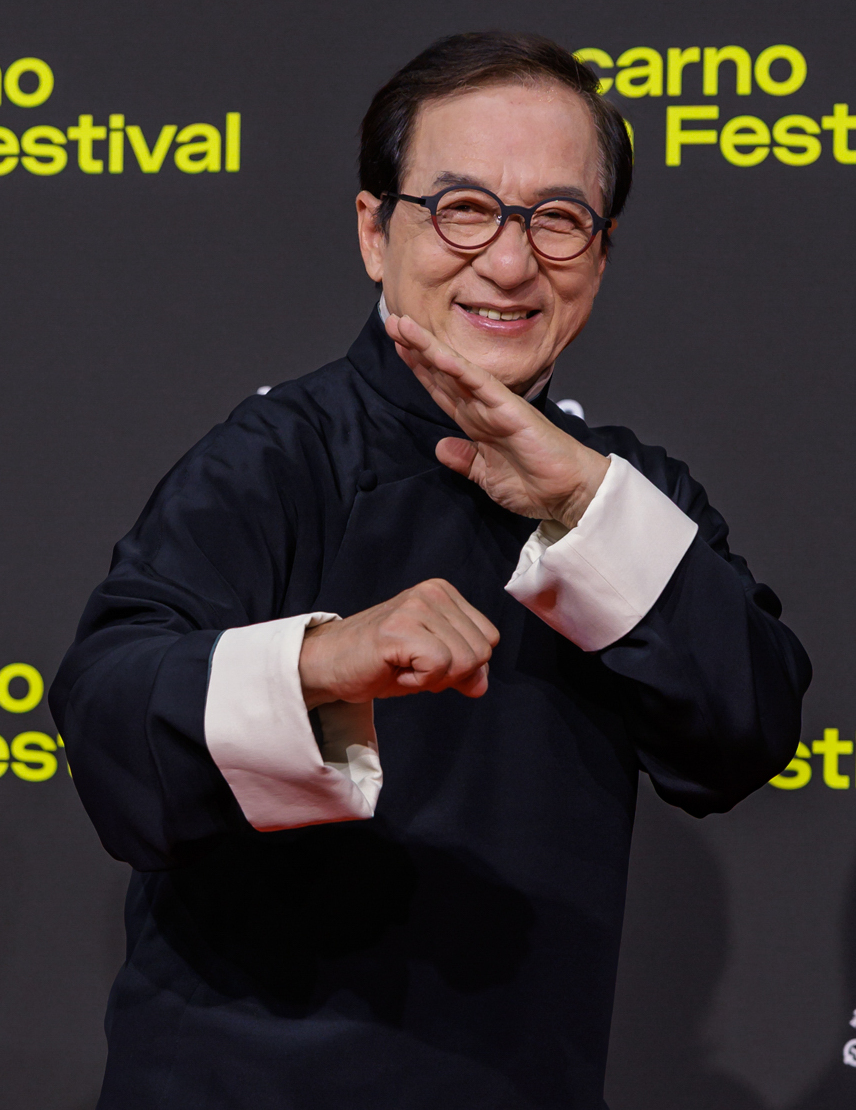
Jackie Chan (born Fang Shilong, originally Chen Gangsheng) is one of the most influential martial artists and filmmakers in the world. Born in British Hong Kong in 1954, he entered the China Drama Academy at a young age for rigorous training in Peking Opera and martial arts, becoming a member of the famous "Seven Little Fortunes." His career began as a stuntman and martial arts choreographer. In the late 1970s, he pioneered the kung fu comedy genre with films like Snake in the Eagle's Shadow and Drunken Master, breaking the serious tradition of martial arts films at the time and quickly rising to fame across Asia.
In the 1980s, Jackie Chan, Sammo Hung, and Yuen Biao formed the "Three Dragons," collaborating on a series of classic action films. Project A (1983) marked the official formation of the Jackie Chan Stunt Team (Sing Ga Ban) and established his signature style, which combines breathtaking stunts, high-difficulty acrobatics, and slapstick humor. He performed numerous dangerous stunts himself in films such as the Police Story series and Armour of God, solidifying his peak status in the Hong Kong film industry.
In the mid-1990s, Jackie Chan successfully broke into the North American mainstream market with Rumble in the Bronx. The subsequent Rush Hour series made him a true Hollywood A-list star. Since then, he has navigated between the Chinese and American film industries, starring in Western productions like Shanghai Noon and The Karate Kid, as well as groundbreaking Chinese-language films such as New Police Story and Little Big Soldier. Beyond his acting career, Jackie Chan is a professionally trained singer and has long been dedicated to philanthropy, having been named one of the top ten most charitable celebrities by Forbes.
Jackie Chan's achievements in cinematic history are widely recognized; he received an Academy Honorary Award (Oscar) and has stars on both the Hong Kong Avenue of Stars and the Hollywood Walk of Fame. Despite a career spanning over sixty years, he remains active in the film industry, with several projects like Karate Kid 2 scheduled for release in 2025. He is not only synonymous with action cinema but also one of the most recognizable cultural icons worldwide.
The Day Master, Gui Water (Yin Water), was born in the month of Chen (Dragon). It does not receive the support of the season, and the Earth and Fire elements are dominant in the branches. This is defined as a 'Weak Self with Strong Wealth and Officer' chart, with a tendency toward a 'Follower' structure. Gui Water is often described as 'mist or dew.' Born in the late spring month of Chen, the Earth element (Officer/Power, representing restraint and pressure) is in command, while the Water element is in a state of 'Storage' and 'Weakness.' In the earthly branches, Wu Fire and Si Fire merge into a powerful force of heat. The Day Master, Gui Water, is like morning dew under a scorching sun, desperately needing Metal (Resource) to provide a source or Water (Companions) for support. This energetic state of 'Weak Self with extremely strong Wealth and Officer' suggests a life lived in high-pressure environments and grand arenas of fame and fortune. This is not a destiny of idle comfort; rather, the individual must constantly exert physical energy, adapt to the environment, and even take significant risks to secure their place. The abundance of Wealth and Officer stars against a weak Self means that while opportunities (Wealth) and reputation (Officer) are immense, every achievement requires an extraordinary physical toll, creating a life tension that is 'always on the move' and filled with a sense of urgency.
The chart presents a classic 'Shang Guan (Hurting Officer) meeting Zheng Guan (Direct Officer)' configuration (Jia Wood on the Year Stem clashing with Wu Earth on the Month Stem), alongside the 'Wealth and Officer Both Prosperous' pattern. It is inferred that Metal (Resource Star) to transform the pressure and nourish the Self is the primary Favorable Element, while Water (Companion Star) to assist the Self is the secondary Favorable Element. Structurally, the month of Chen is rooted in Wu Earth (Direct Officer), which would normally define a 'Direct Officer Structure.' However, the Jia Wood (Hurting Officer) is prominent on the Year Stem, directly challenging the Wu Earth on the Month Stem. In traditional Bazi, Shang Guan (Hurting Officer) meeting Zheng Guan (Direct Officer) often implies scandals or legal troubles. In this specific chart, however, this conflict translates into professional characteristics: the Hurting Officer represents breaking conventions, physical performance, and bold adventure, while the Direct Officer represents traditional rules and authority. Their clash means his life is a process of constantly breaking traditions (Hurting Officer) to establish a new order (Direct Officer). The 'Resource Star' (Metal) as a Favorable Element suggests resolving immense pressure through reputation, the support of elders, or self-protection mechanisms. This explains his early reliance on a drama academy (Resource protection) for training. His action-comedy style—using 'humor and agility' (Hurting Officer) to dissolve 'seriousness and violence' (Direct Officer)—is the highest manifestation of this chart's strategy.
The core combination involves Jia Wood (Hurting Officer) generating Wu Fire (Indirect Wealth), while Si and Wu Fire partially combine, forming a flow where talent generates wealth and wealth nourishes the weak Officer. Shang Guan (Hurting Officer) generating Wealth means that talent and expression (Hurting Officer) are continuously converted into material success (Wealth). Jia Wood (representing limbs and the head) on the Year Pillar generates Wu Fire, meaning he must rely on physical display and action output to acquire wealth. This combination shapes a 'restless' personality—highly active in thought and sharp in business intuition. However, Wealth nourishing the weak Indirect Officer (Qi Sha) (excessive Wealth stars supporting the Officer to restrain the Self) is the greatest risk point. The overwhelming Fire and Earth exhaust and suppress the Gui Water Day Master, meaning the greater the wealth and fame, the stronger the physical and mental pressure. This manifests as extreme professionalism and a hunger for success, but also a difficulty in saying 'no,' a strong desire for 'face,' and a tendency to attract trouble (Qi Sha (Indirect Officer)/Officer) through financial interests (Wealth). His career path naturally leads toward high-risk, high-reward fields requiring intense expressiveness.
The chart carries a 'Peach Blossom (Charisma / Romance)' on the Year Pillar, with 'Tian Yi Gui Ren (Heavenly Mentor)' and 'Taiji Gui Ren (Philosophical Mentor)' on the Day Pillar, alongside the restless energy of the Si-Wu-Wei Southern Fire Frame. Peach Blossom on the Year Pillar (Jia Wu) represents not only early popularity but also 'audience appeal' and 'fan charisma' in the entertainment context. Tian Yi Gui Ren (Heavenly Mentor) sits on the Day Branch (Gui Si), a high-level auspicious star signifying that in the most dangerous moments (such as severe injuries during filming), he can always turn misfortune into luck through the help of mentors or invisible protective forces. However, the Fire and Earth elements are too dry, lacking visible Water to balance the temperature. This elemental imbalance (scorching Fire and dry Earth) corresponds to physical risks like inflammation, fractures, and burns. Regarding clashes, while there are no violent branch clashes, the heavenly conflict of 'Hurting Officer clashing with Direct Officer' destines his reputation to fluctuate between praise and criticism, with every peak accompanied by public controversy.
The Day Master is Gui Water, the most Yin and softest form of Water, possessing strong permeability and the ability to adapt to any shape. However, because the Self is weak and suppressed, there is an underlying sense of crisis and a reliance on defense mechanisms. Gui Water differs from the surging Ren Water; it is more like dew or a stream—humble, agile, and observant. In Jackie Chan's personality, this 'Water' quality manifests as his flexibility on set, his skill in handling complex interpersonal relationships, and his 'go with the flow' wisdom in action design (e.g., using chairs or ladders rather than brute force). Yet, being surrounded by Fire and Earth creates deep-seated insecurity. He projects the image of a 'Big Brother' who is generous and takes care of others (seeking security through giving), but internally, he cares deeply about others' opinions and fears being left behind by the times. This psychology drives him to keep working even after achieving great success, maintaining a 'fighting' stance to combat inner anxiety.
The Jia Wood (Hurting Officer) is prominent and nourished by the residual Water in the Dragon (Chen) branch, combined with extremely strong Wealth stars, creating a top-tier blend of performance talent and commercial monetization. The Hurting Officer represents a rebellious, creative talent. Jia Wood represents the limbs, corresponding to his talent for pushing physical potential to the limit. His greatest advantage was not following the traditional 'Direct Officer' path (serious kung fu films) but utilizing the 'unconventional' nature of the Hurting Officer to pioneer action-comedy. Simultaneously, the Si and Wu Fire Wealth stars are extremely strong. Wealth represents the desire for control over the physical world and management ability, giving him excellent business acumen and production skills. He is not just an actor, but a businessman who knows how to operate capital and maximize a personal brand. The precise timing in his action sequences is the balance achieved between the Hurting Officer (talent) and the Direct Officer (order) during their conflict.
The core conflict lies in the 'Hurting Officer meeting Direct Officer' (Jia-Wu clash) on the stems and the 'Excessive Wealth with a Weak Self' (Fire drying up Water) in the branches. This leads to a destiny where fame coexists with controversy, and wealth conflicts with health. The contradiction of Shang Guan (Hurting Officer) meeting Zheng Guan (Direct Officer) has played out repeatedly in his life: he craves recognition from official and mainstream society (Direct Officer needs), but his behavior and private life often carry a rebellious and informal streak (Hurting Officer disruption), leading to reputation crises like the 'secret daughter' incident. This is the negative manifestation of the Hurting Officer clashing with the Officer (which represents children for a male chart). Furthermore, Excessive Wealth with a Weak Self means that despite his immense wealth, his body (Day Master) finds it hard to carry the load. He has spent his life trading 'scars' for 'gold.' This elemental structure destines him to be unable to enjoy idle comfort; once he stops to enjoy (Wealth exhausting the Self), he is prone to illness or a sense of emptiness. His challenge lies in balancing infinitely expanding desires (Fire) with limited life energy (Water).
Looking at Jackie Chan's Bazi, it is a grand epic of 'Striving against Fate between the states of Completion and Incompletion.' Gui Water, born in a furnace of Fire and Earth, should have dried up, yet through the wisdom of the Hurting Officer and the help of Mentors, he carved a path through danger. His life trajectory perfectly validates the ancient proverb: 'When the Hurting Officer meets the Direct Officer, a hundred troubles arise; yet if great greatness is to be achieved, it must be sought within danger.' The humility and arrogance, the charity and philandering, the struggle and overexertion in his character all stem from this imbalanced yet tension-filled elemental structure. He was never destined to be a conventional person; he must burn himself (strong Fire) to light up the screen as a legend. In his later years, he must guard against Earth burying Metal and the exhaustion of Water energy. Returning to simplicity and tempering his brilliance is the way to preservation.
The Indirect Officer (Qi Sha) exerts pressure, while Fire and Earth dominate.
This decade represents the most arduous and foundational period of the subject's life. The Gui Water Daymaster is inherently weak, and the Heavenly Stem of this luck pillar reveals Ji Earth (Indirect Officer), while the Earthly Branch Si Fire strengthens the Fire-Earth momentum, creating immense pressure and exhaustion for the Daymaster. The Indirect Officer (Qi Sha) symbolizes strict discipline, high-intensity physical hardship, and extreme suppression. This coincides with Jackie Chan's entry into the China Drama Academy (Peking Opera school), undergoing the rigorous 'hell-style' training under Master Yu Jim-yuen. Under this influence, personal free will was entirely suppressed, and life was filled with the blood and tears of corporal punishment and practice. However, it was precisely this 'body-striking' pressure that forged a physical foundation far beyond that of ordinary people.
Wealth generates the Indirect Officer; labor without reward.
At this stage, there was no 'career' in the true sense, but rather the passive acquisition of survival skills. The Earthly Branch Si Fire acts as the Wealth Star, but for a weak Daymaster, excessive Wealth becomes a burden, manifesting as exchanging grueling physical labor for meager survival resources. From the 'Seven Little Fortunes' performance era to later becoming a 'stuntman' (martial arts performer) on film sets, he survived under the shadow of the Indirect Officer (Qi Sha). Although involved in film production, he remained anonymous, with effort and reward being vastly disproportionate—a typical 'hard labor' fortune.
A mixture of Officers; isolated and without aid.
Interpersonally, an environment dominated by the Indirect Officer (Qi Sha) means being surrounded by powerful authority figures and competitors. In the opera troupe, the master-disciple relationship was like that of a monarch and subject; absolute obedience was the only rule. Peers were both brothers and potential rivals. This decade lacked the protection of strong Mentors (Resource Stars/Yin were absent). The subject had to learn how to survive in the cracks, an environment that shaped his later character: observant, extremely professional, yet deeply aware of the dangers of the world.
Blazing Fire and Parched Earth; Water energy is damaged.
Excessive Fire and Earth severely suppress the Gui Water Daymaster. Water governs the kidneys, blood, and the skeletal/ligament system. High-intensity training involving falls and injuries during the critical growth period left numerous hidden traumas. While youth allowed for quick recovery, the over-exhaustion of bones and muscles laid the foundation for systemic pain in later years.
Direct Resource (Zheng Yin) emerges; finding life in a desperate situation.
This decade is the turning point where the subject transitioned from a stuntman to a lead actor. The Heavenly Stem Geng Metal (Direct Resource) finally appears. For the weak Gui Water, the Resource Star is the only lifeline and protective umbrella, signifying fame, seniority, and the appearance of Mentors (Gui Ren). Although the Earthly Branch Wu Fire (Indirect Wealth) continues to drain the Daymaster—indicating that success is accompanied by great controversy and turbulence—the Metal energy in the stems allowed the subject to establish his own 'brand.' From the period of confusion following Bruce Lee's death to the creation of Kung Fu Comedy, this was the process of establishing the Resource Star (personal style/reputation).
Resource Star protects the self; talent is monetized.
In the first five years, he was still searching for his path, failing in attempts to mimic a 'tough guy' style. Once the annual cycles entered the Metal-Water peak (around 1978, despite the heat of the Wu year, the interaction triggered a breakthrough), Drunken Master and Snake in the Eagle's Shadow became massive hits. The 'Resource' represented by Geng Metal systematically packaged the previously chaotic 'Hurting Officer' (Shang Guan/artistic talent), making it not only visually appealing but also market-recognized. Regarding wealth, as his reputation soared, his salary exploded. However, as Wu Fire is Indirect Wealth, it represents wealth gained through movement and risk; every penny was earned by risking his life.
Peach Blossom (Charisma) sits in the life palace; Mentors provide elevation.
Wu Fire is the Peach Blossom Star of the natal chart. With the arrival of this luck pillar, the subject's charisma with the opposite sex exploded, and scandals began to accompany his career. Professionally, the Direct Resource represents elder Mentors, such as key figures like Lo Wei and Ng See-yuen. Despite disputes during cooperation (Wealth clashing with Resource), they objectively pushed him toward superstar status. This decade also saw the embryonic formation of the 'Jackie Chan Stunt Team,' where brotherhood (Peer Stars/Bi Jie) became the moat of his career.
Metal suppressed by Fire; respiratory health is compromised.
Despite the protection of Geng Metal, Wu Fire sits beneath it, 'cutting the legs' of the Metal. Metal governs the lungs, respiratory system, and bones. During this decade, he filmed countless high-risk stunts; a broken nose and various hard injuries due to the lack of stunt doubles were frequent. This was a period of extreme physical depletion.
Indirect Resource (Pian Yin) encounters the Output Star; winning through risk.
This decade was the peak period when Jackie Chan established his 'life-risking' style and dominated the Asian film industry. Xin Metal (Indirect Resource) protrudes, representing unique, unconventional talent and fame, which perfectly aligned with his unique selling point of 'no stunt doubles, real stunts.' The Earthly Branch Wei Earth is the 'Tomb of the Indirect Officer,' and because Wei Earth is parched and hot, a sense of crisis was always present. This was a 'life-gambling' luck pillar; immense fame (Xin Metal) was built upon immense risk (Wei Earth Indirect Officer).
Indirect Officer and Resource in harmony; awe-inspiring influence in Asia.
Professionally, the Indirect Resource dominated unique artistic concepts, producing classics like Project A and Police Story. The 'Officer-Resource' flow signifies the dual acquisition of power and prestige. He was no longer just an actor but became a director and martial arts choreographer, controlling the entire film production process. Wealth accumulation reached staggering heights during the golden era of Golden Harvest. However, Wei Earth is also the 'Arts Star' (Hua Gai), suggesting an extreme sense of loneliness and a paranoid pursuit of art behind the public excitement.
Wealth hidden in the Tomb; secret marriage and children.
Wei Earth contains hidden Yi Wood (Eating God) and Ding Fire (Indirect Wealth), indicating a highly complex and secretive emotional life. The secret marriage and birth of his son occurred during this decade, corresponding to the 'Indirect Resource' tendency to conceal the truth. His public image was glamorous, but his private life (Wealth Star entering the Tomb) was carefully guarded. Regarding brotherhood, the cohesion of the Jackie Chan Stunt Team reached its peak, yet the seeds for its future dissolution were sown.
Parched Earth makes Metal brittle; injuries to the head and face.
Wei Earth is dry earth; it cannot generate Metal but instead makes it brittle. The severe brain injury sustained in 1986 (Bing Yin year) while filming Armour of God occurred because the Fire and Wood of that year fueled the parched Earth of the luck pillar, suppressing the Resource Star (the Longevity Star). This was the closest brush with death in his life, with the head (Metal) being severely damaged.
Metal and Water in harmony; the dragon swims in the great ocean.
This is the most expansive luck pillar of the subject's life. The Heavenly Stem Ren Water (Competitor/Jie Cai) assists the Daymaster, and the Earthly Branch Shen Metal is the 'Birthplace' (Liang Sheng) of Water. It forms a complex but favorable combination with the natal chart (triggering the Water Frame and the Si-Shen Water combination). The weak Gui Water received a powerful, continuous source, signifying a leap in energy levels. Water governs movement and overseas territories; this decade was the key period for his successful entry into Hollywood and becoming an international superstar.
Peer Stars assist the momentum; fame spreads across the seas.
Shen Metal, acting as the 'Mobility Star' (Yi Ma), governed frequent international travel. Ren Water (Competitor/Jie Cai) represents massive public influence and the global expansion of his fan base. The success of Rumble in the Bronx and Rush Hour was the product of the flow between Metal and Water—the fusion of East and West. Wealth was no longer limited to Asian box offices; he completed the global allocation of capital during this pillar. Although 'Jie Cai' also implies massive expenses and profit-sharing, the overall situation was 'Water bringing life,' and his career flourished like a fish in water.
Peach Blossom affects the self; a crisis of reputation.
The protrusion of the Competitor Star (Jie Cai) is good for popularity but easily triggers 'contention.' Specifically, in 1999 (Ji Mao year), the annual cycle formed a complex clash with the luck pillar and natal chart, leading to the famous 'Little Dragon Girl' incident. This is a typical negative effect of 'Jie Cai'—loss of wealth and reputation due to romance (Peach Blossom). While his career was at its zenith, his family relationships and personal moral image faced an unprecedented public relations crisis.
Strong Water and weak Fire; insufficient heart energy.
While the Metal-Water flow favors energy recovery, excessive Water suppresses the Wu and Si Fire in the natal chart. Fire governs the heart, eyes, and blood circulation. Although external injuries decreased during this decade, he needed to be wary of cardiovascular issues and endocrine disorders caused by long-term high-pressure flying.
Chen-You combine into Metal; clear Metal and pure Water.
The fortune continues through the Metal-Water peak. The Heavenly Stem Gui Water (Friend/Bi Jian) assists the self, and the Earthly Branch You Metal combines with the Chen Earth of the Month Branch to transform into Metal. This strong Metal combination further strengthened the power of the Resource Star (Reputation/Status). At this time, Jackie Chan no longer purely pursued thrilling stunts but shifted toward seeking industry status as 'Big Brother' and social influence. This was a transition from a 'warrior' to a 'leader,' with his social status reaching its peak.
Resource Star forms a structure; holding the scepter of power.
The Chen-You combination transforms Earth (Officer) into Metal (Resource). This means he began to receive high-level official recognition (such as becoming a CPPCC member and Olympic Ambassador). In film, works like New Police Story and The Myth began to experiment with dramatic acting and tragic tones—an expression of the Indirect Resource (deep, artistic). Wealth came more from brand licensing, investments, and resource integration as an industry leader, rather than just acting fees.
Peers compete for combinations; constant rumors and disputes.
Despite his high status, the protrusion of the Friend Star (Bi Jian/Peers) often brings burdens or betrayals from those around him. During this decade, he was passionate about mentoring juniors and charity, but he also fell into several media storms due to his remarks. The 'brotherly loyalty' represented by the Friend Star sometimes became a liability under modern business rules, leading to a polarization of his public image.
Excessive Metal makes Water turbid; aging of bones and joints.
Extremely strong Metal energy protects the body, but extremes turn into their opposites. Excessive Metal makes the Water turbid, and You Metal clashes with the Wood (Liver/Gallbladder/Bones) of certain annual cycles. With age, old injuries from early years began to manifest as 'metal fatigue.' Specifically, the liver/gallbladder system (Wood suppressed by Metal) and joint hardening began to trouble his daily life.
The Hurting Officer encounters the Officer; the Chen-Xu Clash.
Entering the Jia Xu luck pillar, life's fortune experiences violent shocks. The Heavenly Stem Jia Wood (Hurting Officer) protrudes, directly clashing with the Xin Metal (remnant of the Officer) within the Earthly Branch Xu. Furthermore, the Earthly Branch Xu Earth violently clashes with the Chen Earth of the Month Branch (the Chen-Xu Clash). This is a classic 'Hurting Officer meets Direct Officer' structure, signifying verbal disputes, legal troubles, and damage to reputation. Clashing with the 'Month Branch' (the foundation) means both the career base and family internal affairs will undergo turmoil.
The Treasury is forced open; loss of fame and wealth.
The Chen-Xu clash is a clash of Water and Earth treasuries, shaking the stability of his career. Although he continued to produce work, public reception was highly polarized (the Hurting Officer represents rebellion and refusing to grow old). The most significant impact was 'legal/official trouble': in 2014 (Jia Wu year), his son's imprisonment for drug offenses was not only a family tragedy but also a direct blow to Jackie Chan's official image as an 'Anti-Drug Ambassador' (Direct Officer), precisely manifesting the negative energy of 'Hurting Officer meets Officer.' While his wealth remained vast, it suffered losses due to investment errors or family changes.
Clashes among the six relations; loneliness in later years.
The Chen-Xu clash directly impacts the Palace of Parents and the Palace of Siblings. During this decade, frequent changes occurred among those close to him, and internal family conflicts became public. The Hurting Officer temperament made him more eager to express himself, but in the eyes of the public, this often turned into 'acting on seniority' or 'misspeaking.' The relationship with his son became the greatest pain of this decade and the most direct manifestation of the fortune's impact.
Wood and Earth in conflict; damage to the spleen and stomach.
The Chen-Xu clash stirs up strong Earth, and Jia Wood further attacks the Earth. Earth governs the spleen, stomach, digestive system, and muscles. This violent elemental conflict led to a significant decline in bodily functions, muscle atrophy, and weakened digestion. Furthermore, strong Earth suppresses Water, leading to a noticeable decline in Kidney Qi (vitality), with signs of aging appearing rapidly toward the end of this pillar.
The Si-Hai Clash; the Mobility Star is struck.
Entering the Yi Hai luck pillar, the Earthly Branch Hai Water (Competitor/Jie Cai) clashes with the Si Fire (Direct Wealth) in the Day Branch. The Day Branch represents the body, family, and inner world. This clash directly shakes the subject's foundation, indicating that this decade will be the period of greatest health fluctuations and restless wandering (Mobility Star clash). Although the Heavenly Stem Yi Wood (Eating God) can generate wealth, the foundation is struck, leaving him with the will but not the strength. Life enters a phase of comprehensive contraction and reflection.
Prosperity and Mobility in conflict; frequent changes.
Si Fire represents the subject's 'Wealth' and 'Mentors.' Being clashed by Hai Water means traditional income sources or partners will undergo major changes. He may travel frequently between different residences, unable to settle down in retirement. Professionally, he will move entirely from the front of the stage to behind the scenes, or exist more as a 'spiritual icon.' High-risk investments should be avoided during this pillar, as the 'Wealth Star being clashed' easily leads to the instantaneous loss of assets.
The Palace of Spouse is struck; domestic unrest.
The Day Branch Si Fire also represents the Palace of Spouse. The Si-Hai clash is one of the most intense among the Six Clashes, suggesting potential health issues for the spouse or a rift in the marital relationship due to changes in residence or trivial life matters. The entry of the Competitor Star (Hai Water) also means he may face financial disputes such as inheritance distribution or loans to relatives in his later years; he must guard against being 'robbed in old age.'
Fire and Water in fierce battle; depletion of both Heart and Kidney.
This is the most dangerous luck pillar for health. The Si-Hai clash is a battle between Water and Fire. Fire governs the cardiovascular system and eyes; Water governs the kidneys and urinary system. Both damaging each other makes him highly susceptible to sudden myocardial infarction, stroke, or serious eye diseases. The year 2025 (Yi Si) triggers a double Si-Hai clash, marking a critical health juncture that requires extreme precaution.
The Zi-Wu Clash; Fire and Water un-reconciled.
Stepping into the Bing Zi luck pillar, the Earthly Branch Zi Water clashes with the Wu Fire of the Year Branch. The Year Branch represents the head, ancestral heritage, and the root of life. This clash strikes at the very source of the natal chart, a sign of massive dissipation of life energy. The Heavenly Stem Bing Fire protrudes as Direct Wealth, but it is suppressed by the branch beneath it, presenting a scene of 'the setting sun is infinitely beautiful, but it is near dusk.'
Wealth Star is hollow; returning to simplicity.
At this point, there is no substantive career to speak of. The focus lies in the inheritance and protection of family wealth. Due to the Zi-Wu clash, there may be final resolutions regarding ancestral property or the ownership of his reputation. Social activities will cease entirely; wealth figures lose their meaning, and what remains is more of a spiritual legacy.
Clashing with the Year Branch; the falling leaf returns to its roots.
A clash with the Year Branch often signifies a strong nostalgia for or return to one's birthplace and ancestors. The interpersonal circle shrinks drastically, revolving mainly around medical care and core relatives. Disputes among the younger generation must be guarded against.
Clashing with the root; the threshold of longevity.
The Zi-Wu clash is a death-struggle between Water and Fire. A clash with the Year Branch often concerns the limit of one's lifespan. The cardiovascular system is extremely fragile, and every elemental fluctuation in the annual cycles could become a major test. Quiet rest is required; extreme emotional highs and lows must be avoided.
Damp Earth dims the Fire; the land of the Tomb.
In the Ding Chou luck pillar, Chou is the 'Tomb of Metal' and also damp earth, which has a powerful ability to dim Fire. For a chart that relies on Fire (Wealth) to maintain vitality, the Fire energy gradually extinguishes, returning to silence. This is a 'Tomb' (Mu) luck pillar, symbolizing the dormancy of life and final rest.
Inheritance finalized; fame after life.
Worldly wealth has become passing clouds. This stage is mainly manifested in the management of his estate and copyrights by his descendants. His name will become a cultural symbol of an era.
Resonance between Heaven and Man; the spirit lives forever.
Realistic interpersonal interactions have basically been severed; he exists in film archives and the memories of future generations.
The oil is exhausted and the lamp withers; following the mandate of Heaven.
The Five Element energy is extremely low; everything follows its natural course.
Tan Lang (The Opportunist / Star of Desire) sits in this palace. Tan Lang is the 'Archetype of Desire,' governing fortune, social interaction, and talent. In the Spiritual Palace (the mental realm), it represents a restless inner spirit filled with curiosity and a drive to conquer new things. He cannot tolerate loneliness; his spiritual life must be vibrant and diverse, with wide-ranging hobbies that may even lean toward risk-taking or hedonism.
Influenced by the Peach Blossom (Charisma / Romance) star system. With Tan Lang in the Spiritual Palace, there is a perpetual 'wanderer' in his heart. This explains his difficulty with monogamy and why, even in his seventies, he remains energetic in exploring various fields (singing, racing, collecting). His joy comes from 'desire'—a deep attachment to and experience of the world.
This Tan Lang star is the source of his vitality and the root of his controversies. He never stops because of his infinite inner desire for the world. This personality allows him to live a brilliant life, but it also subjects his private life to criticism, as Tan Lang is a star that is inherently difficult to bind by conventional morality.
Tai Yin (The Moon) sits in this palace. Tai Yin governs wealth, tranquility, and real estate. Its presence in the Property Palace is an ideal placement, indicating a strong passion for acquiring property and a keen eye for real estate investment. As a star of gradual accumulation, it suggests that his real estate holdings are widespread and often discreet (hidden assets), characterized by elegant environments (as Tai Yin represents beauty).
The star's energy is stable; despite fluctuations, the long-term trend is bullish. Tai Yin in the Property Palace, much like the moon, has phases of waxing and waning (market volatility), but its essence is accumulation. This predicts that he will possess significant real estate wealth in his later years, serving as his primary source of security.
Jackie Chan’s global acquisition of luxury properties perfectly aligns with the traits of Tai Yin in the Property Palace. Whether it is a traditional courtyard in Beijing or a mansion in the US, he converts liquid capital (Tai Yang Hua Ji / Sun transformed by Obstacle) into fixed assets (Tai Yin), which is his most subconscious and successful financial strategy.
Ju Men (The Gate / Star of Eloquence) sits in this palace. Ju Men is a 'Dark Star,' governing verbal disputes, estrangement, and distance. In the Parents Palace, it usually indicates a thin connection with parents or early separation, with communication barriers (Ju Men acts as a 'gate' separating people). It also suggests that the parents' professions might involve speaking or working in discreet or controversial environments.
The 'Dark Luminary' traits of Ju Men are prominent. This does not imply a direct clash, but rather 'estrangement.' The sense of distance brought by Ju Men meant that the subject lacked deep intimacy during his upbringing, often having to face the world's challenges alone, which conversely forged his independent character.
In Jackie Chan's early years, his parents moved to Australia, leaving him alone in Hong Kong to learn opera. This is a classic manifestation of Ju Men’s 'separation from kin.' This early separation and sense of isolation (the 'darkness' of Ju Men) became the psychological motivation for his intense training in the opera troupe and his search for validation among his peers.
Tian Xiang (The Minister) sits alone, flanked by the Assistant Stars (Zuo Fu and You Bi). In Zi Wei Dou Shu, Tian Xiang is known as the 'Keeper of the Seal,' representing support, a sense of justice, and image management. This star grants the native a 'Big Brother' leadership style—not a tyrannical despot, but a warm-hearted, service-oriented leader who enjoys helping others, values prestige, and maintains appearances. This trait makes him not just a hero on screen, but a core figure in real life who mentors juniors and mediates industry disputes.
Influenced by Lian Zhen Hua Lu (The Integrity Star transformed into Prosperity) in the Peers Palace. Although the Life Palace has no self-transformation, it is strongly projected upon by external social relationships. This means the native's self-worth is highly dependent on the recognition and applause of others. His life path moves according to the needs of his 'audience' and 'brothers'; to maintain this indispensable image, he must constantly give of himself.
Jackie Chan's lifelong 'Big Brother' persona is a perfect reflection of Tian Xiang. He cherishes his reputation immensely and values a dignified appearance (as Tian Xiang governs clothing and sustenance). In public, he always maintains an energetic and righteous image. This personality also makes him prone to taking on excessive responsibilities due to concerns over 'face' (prestige).
Tian Liang (The Guardian) resides here, in the 'Seal squeezed by Punishment and Obstacle' formation. Tian Liang is the 'Shade Star,' representing elders, protection, and principles; however, in the Siblings Palace, it suggests a 'paternalistic' management style. This indicates that the native's relationship with partners or team members (such as the Jackie Chan Stunt Team) is not one of equal brotherhood, but a patriarchal structure with a strong hierarchy. He provides protection but demands absolute obedience and discipline.
Tian Liang does not transform, but is affected by Tai Yang Hua Ji (The Sun transformed into Obstacle). This means that in team finances or benefit distribution, disputes easily arise due to being 'strictly business' or overly idealistic. Although he looks after his 'brothers,' they often struggle to be true assets to him, instead requiring his constant effort to manage.
This confirms the operational model of the 'Jackie Chan Stunt Team': he is the absolute patriarch, and his brothers survive under his protection, but they rarely have the chance to stand out individually. This celestial configuration also explains why the people around him are constantly changing; the solitary and stern nature of Tian Liang makes it difficult to accommodate partners of equal standing.
Zi Wei (The Emperor) and Qi Sha (The Strategist; technically: Qi Sha (Indirect Officer)) reside together. This is the powerful 'Emperor Taming the Warrior' formation. Zi Wei is the monarch, and Qi Sha is the general; these two powerhouses meet in the relationship palace. This indicates that the native's spouse must possess a very strong personality or management ability, even to the point of being able to 'hold down the fort.' This usually suggests a marriage structure where the husband handles external affairs while the wife manages the internal ones with great authority, or a relationship where they spend more time apart than together, each operating independently.
The palace energy is rigid and unaffected by minor annual stars. This combination shows that the partner is not a weak dependent, but an empress capable of independently managing the 'inner court.' In emotional interactions, there is a lack of romantic tenderness, replaced by an alliance based on responsibility, power, and practical considerations.
Joan Lin's role perfectly corresponds to the traits of Zi Wei and Qi Sha: resilient and powerful. Facing Jackie Chan's external romantic scandals, she was able to stabilize the situation with the dignity of a 'Primary Consort' (the nobility of Zi Wei) and effectively control the family's finances and operations (the execution power of Qi Sha). While this marriage model lacks tenderness, it is extremely stable.
Tian Fu (The Star of Treasury) resides here. Tian Fu is the 'Treasury Star' and the Southern Dipper Emperor Star, governing storage and stability. In the Career Palace, Tian Fu represents a deep professional foundation, excelling in preservation and management. This shows the subject is not just an actor but has the potential of a behind-the-scenes mogul. He knows how to build a business empire and operate capital; he is a strategic and planned operator rather than a mere entertainer.
Resonates with Tian Xiang (forming the 'Fu Xiang Chao Yuan' or Treasury and Seal Formation). This configuration greatly elevates the career scale. Tian Fu's storage capacity supports Tian Xiang's public image and authority. It means he progresses methodically in his career, from actor to director to film company owner, building a stable 'Jackie Chan Kingdom.'
Tian Fu grants him a business mind beyond ordinary actors. Establishing companies, training his own stunt team, and investing in cinema chains are all manifestations of Tian Fu's 'treasury building.' His career longevity relies not on explosive bursts but on the heavy resource accumulation and risk control brought by Tian Fu.
Lian Zhen (The Star of Integrity/Sociality) resides here. Lian Zhen is the 'Secondary Peach Blossom' (Charisma Star) and a star of social maneuvering. Located in the Friends/Peers Palace, it indicates an extremely complex social circle, spanning all walks of life and various backgrounds. Lian Zhen carries an unconventional and intense nature, meaning friends include both talented eccentrics and those who might invite trouble; interpersonal relationships are filled with exchanges of interest and emotional entanglements.
Lian Zhen Hua Lu (Transformation to Prosperity) in the Jia Stem. This is an excellent auspicious transformation. Hua Lu represents wealth, flow, and benefits. With Lian Zhen Hua Lu in the Friends Palace, the subject can profit directly from a massive social network. His fans, friends, and industry connections are the true source of his wealth and status. He achieved immense success through 'networking' and 'gathering popularity.'
Jackie Chan's success is inseparable from his vast social network. Lian Zhen Hua Lu grants him the influence to 'command a massive following.' Every star-studded charity gala or movie premiere is an explosion of this star's energy. Friends are not just companions; they are his wealth treasury.
Tian Tong (The Star of Fortune/Blessing) resides here. Tian Tong is a star of blessing, governing enjoyment and ease. Located in the Travel Palace (opposite the Life Palace), it resonates with Tian Xiang (The Seal/General) in the Life Palace, creating an interesting contrast: while the subject is a diligent manager at home (internally), they become like a playful child when traveling (externally), easily making friends and enjoying foreign cultures. This favors overseas development, as they project a more approachable and humorous side (Tian Tong traits) in foreign lands.
Highly influenced by annual luck fluctuations. Tian Tong is inherently soft, meaning early overseas development relied heavily on being 'likable' and 'lucky.' Compared to the hardcore style in Hong Kong, his Hollywood image leans toward a comedic, lucky hero—a projection of the Tian Tong energy in the international market.
From a Hong Kong action star to a Hollywood Kung Fu comedy legend, Tian Tong granted him a unique style of 'fighting like a child' on the world stage. His constant travels (Migration) are often adventures filled with joy and opportunity rather than arduous journeys.
Wu Qu (The Martial Star) sits alone. Wu Qu belongs to the Metal element, governing the lungs, bones, and respiratory system. In the Health Palace, Wu Qu represents the 'suffering of metallic wounds'—specifically fractures, cuts, or injuries caused by metal tools and weapons. For an action superstar, this is a direct reflection of destiny—his body is a battlefield, destined to undergo the baptism of broken bones and bloodshed.
Jia Stem: Wu Qu Hua Ke (Transformation to Fame). Hua Ke represents reputation and manifestation. Remarkably, the injuries (Wu Qu) are transformed into honor (Hua Ke). This means the subject's pain is not suffered in vain; every injury becomes a badge of professional dedication and a capital for his fame. Hua Ke also represents skilled physicians, suggesting that despite many disasters, he will always encounter renowned doctors to save him and turn danger into safety.
The record of over 200 injuries across his body is ironclad proof of Wu Qu in the Health Palace. Wu Qu Hua Ke allowed him to package these pains as the 'Jackie Chan Movie' gold standard—the audience buys tickets specifically to see how he risks his life (Wu Qu) to earn their applause (Hua Ke).
A complex combination of Tian Ji (The Strategist) and Po Jun (The Pioneer). Tian Ji governs change and intellect, while Po Jun represents disruption and the cycle of 'breaking before building.' Having these two volatile stars in the Children Palace suggests highly unstable parent-child dynamics, filled with estrangement and rebellion. The offspring may possess a strong disruptive or rebellious spirit, making it difficult for them to follow the path set by their parents. Frequent separations and intense ideological conflicts in communication are likely.
Jia Stem: Po Jun Hua Quan (Transformation to Authority). Hua Quan represents the desire for control and potential conflict. This indicates that the subject may attempt to use authority to discipline their children, or the children may attempt to seize power once they reach adulthood, leading to a 'power struggle' in the relationship. Po Jun Hua Quan also suggests that children may cause significant trouble due to impulsiveness (Po Jun), requiring the use of influence or authority to resolve.
Jaycee Chan's growth trajectory aligns closely with this configuration. The restlessness of Tian Ji combined with the disruptive force of Po Jun led to the 'Dragon's Son's' rebellion and eventual fall. Po Jun Hua Quan further confirms the educational dilemma where the father attempted to maintain control but ultimately faced a loss of it.
Tai Yang (The Sun) resides here. Tai Yang prioritizes social status and nobility over mere accumulation of wealth, meaning the subject's fortune must be built upon significant fame and social influence. As a star that 'burns itself to light up others,' it suggests that wealth often passes through his hands—earning much but spending heavily on maintaining appearances, public welfare, or being consumed by others. This is not the chart of a miser, but rather a high-cash-flow, high-dissipation pattern.
Jia Stem: Tai Yang Hua Ji (Transformation to Clouding). This is the most critical pain point of the entire chart. Tai Yang Hua Ji in the Wealth Palace represents 'attracting resentment due to wealth' or 'toiling for money.' This explains why, despite being incredibly wealthy, he is often embroiled in financial scandals such as charity controversies or child support disputes (the friction of Hua Ji). Simultaneously, Tai Yang Hua Ji implies that even at an advanced age, he must rise every day like the sun, working tirelessly to maintain the flow of wealth.
Jackie Chan's wealth is entirely derived from being 'exposed' under the spotlight. Tai Yang Hua Ji accurately depicts his destiny of 'working his life away for money while frequently attracting controversy because of it.' His wealth is accompanied by significant public debate and physical exhaustion.
Generate your personal chart in under a minute. Sign up free and get 30 credits — enough for two or more AI readings. No credit card.
Generate my free BaZi chartPlease sign in to join the discussion
Sign In