Year
Xin
Wei
Authority
Direct Wealth
Hidden Stems
Ji (Direct)Ding (Creative)Yi (The)
- Star Luck
- 墓
- Sitting Branch
- 衰
- Void
- Xu / Hai
- Na Yin (Elemental Sound)
- 路旁土
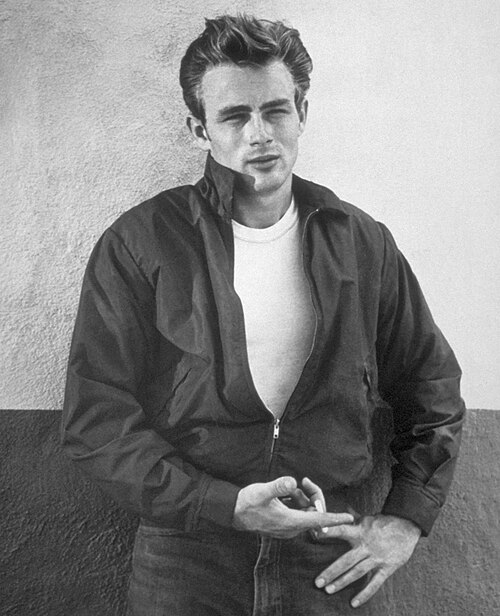
James Byron Dean (February 8, 1931 – September 30, 1955) was an American actor who became one of the most influential figures in 1950s Hollywood due to his performances in East of Eden, Rebel Without a Cause, and Giant. He was born in Marion, Indiana, and after his mother died when he was nine, he was sent to live with his aunt.
Dean's acting career began in 1950 with a Pepsi-Cola television commercial, and he subsequently honed his skills on Broadway and in television shows. In 1954, he starred in the film East of Eden, his improvisational acting received critical acclaim, and he was posthumously nominated for the Academy Award for Best Actor. In 1955, his portrayal in Rebel Without a Cause created the classic rebellious youth image. That same year, he completed filming his last movie, Giant, which was released in 1956 and earned him a second posthumous Oscar nomination.
Dean's personal life was controversial; he was rumored to have had romantic or sexual relationships with several women (such as Pier Angeli) and men (including William Bast, Rogers Brackett), and his sexual orientation remains questioned to this day. He was passionate about car racing, owned multiple sports cars, and won awards in various competitions.
On September 30, 1955, Dean was driving his Porsche 550 Spyder near Cholame, California, when he collided with a Ford sedan, suffering a broken neck and dying at the age of 24. His untimely death turned him into a symbol of rebellion, youth, and counterculture. All three of his films have been inducted into the National Film Registry by the Library of Congress. In 1999, he was ranked the 18th greatest male movie star by the American Film Institute. Dean's fashion style (T-shirt, jeans, leather jacket) has had a lasting influence, and in 2012 he was listed by Time magazine as one of the all-time most influential fashion icons.
Jia Wood Day Master, born in the Yin month, forming the Jian Lu (Strong Root) structure. It appears strong as it has seasonal support and ground position, but the overall chart is dominated by Fire and Earth. The Day Master sits on Shang Guan (Output Star) Wu Fire, which drains it, and the Hour Pillar Ji Si (Earth over Snake) generates Fire and Earth in succession. The Wood energy is almost completely exhausted. The Heavenly Stems reveal Geng and Xin, creating a mix of Qi Sha (Indirect Officer) and Zheng Guan (Zheng Guan (Direct Officer)), which pressure the Day Master. There is no Water (Yin / Resource Star) to support it. The pattern is thus 'weak body with excessively active Output Stars.' This energy configuration signifies someone inherently possessing immense expressiveness and creativity. Outwardly flexible, yet inwardly burning with intense restlessness and passion. The overall impression is one of blazing heat yet detachment, like a flame that may burn out at any moment—brilliant but prone to overextension, yearning to break free yet draining itself. The greatest strengths are artistic sensitivity and instantaneous explosive power; the greatest challenges are emotional volatility and a lack of enduring stability. Throughout life, he seems to race against time and rules, tending toward a brilliant but fleeting trajectory.
In this chart, Fire is strong and unchecked, and Wood is completely drained. This forms the 'Shang Guan producing Wealth' structure. The Officer and Indirect Officer (Geng and Xin) are unfavorable. The primary Yong Shen (Favorable Element) is Water, the Yin Star (Resource), to moisten the chart, nourish Wood, and curb the Shang Guan. The Xi Shen (Supporting Element) is Wood, the Bi Jie (Peer Star), to reinforce the body against drainage. The Ji Shen (Unfavorable Elements) are Fire, Earth, and Metal. Water represents deep wisdom, introspection, and helpful people (Yin / Resource); it could cool the intense emotions and provide direction. Wood represents companionship and peer support. However, the natal chart completely lacks Water, implying that throughout life it is difficult to attain inner peace and traditional security. He must rely on his own burning energy (Shang Guan) to gain attention and wealth (Wealth Star). This directly influenced his path to fame: his sensitive, rebellious 'bad boy' image (Shang Guan) happened to strike a chord with the era's aesthetics, leading to rapid stardom. Yet, without the Yin Star to regulate, he couldn't handle the inner emptiness, ultimately spiraling out of control amid glory.
The core combination is 'Output draining the beauty and generating Wealth' and 'mixed Officer and Indirect Officer without restraint.' The hidden Ding Fire (Shang Guan) in Wu emerges through the Ji Earth (Zheng Cai / Direct Wealth). The hidden Bing Fire (Shi Shen / Eating God) in Yin provides support, forming an energy chain where talent is converted into tangible fame and fortune. However, the Heavenly Stems present both Geng (Qi Sha / Indirect Officer) and Xin (Zheng Guan / Zheng Guan (Direct Officer)), creating 'mixed Officer and Indirect Officer.' With a weak Day Master, the pressure doubles. A person with strong Shang Guan naturally dislikes restrictions and pursues extreme experiences. This instinct led him to challenge the Hollywood system, overturning traditional leading-man images with improvisation and a rebellious aura. The Direct Wealth appearing on the Hour Stem also shows his attachment to material gain and sensory pleasures. The mixed Officers kept him constantly caught between two voices: longing for mainstream recognition (Zheng Guan (Direct Officer)) while compelled to rebel against authority (Indirect Officer). This contradiction shaped his unique on-screen charisma—vulnerability coexisting with aggression—but also caused repeated vacillation in personal relationships and career choices, making integration difficult.
The Day Pillar receives the Tian Yi Gui Ren (Heavenly Mentor Star). The Hong Yan (Charm) and Jiang Xing (General Star) gather in the Wu Fire. The Year Pillar hosts Hua Gai (Arts Star). The Hour Pillar has Yi Ma (Mobility Star) and Kong Wang (Void). There is a Yin-Si punishment and a Wu-Wei combination. Tian Yi Gui Ren indicates that he could always encounter mentors who recognized his talent (such as director Elia Kazan). The Jiang Xing conferred innate leadership qualities and a strong screen presence. The Hong Yan amplified the dramatic nature of his relationships, leading to turbulent romances. The Hua Gai star and Tai Ji Gui Ren (Spiritual Mentor) suggest artistic talent and a solitary quality; his love for racing and photography reflected a pursuit of paradox between speed and stillness. The Yi Ma star combined with Kong Wang meant a life of constant movement and risk-taking, ultimately manifesting in high-speed driving—he seemed driven by the restless energy of the Yi Ma. The Yin-Si punishment between the Day and Hour points to self-sabotage regarding family and career foundations. He lost his mother early, was estranged from his father, and as an adult could not establish a stable home. This inner conflict propelled him toward an itinerant life until it abruptly ended.
Jia Wood Day Master, upright and elegant, yet sitting on the Shang Guan Wu Fire, creating an image of 'Wood and Fire communicating brightness.' However, with a weak body unable to absorb support, outwardly gentle but inwardly impatient, with a sensitive and fiery temperament. He was like a vine scorched by the sun—delicate in appearance but with a core of volatile emotions. His thought patterns were highly intuitive and artistic; instantaneous inspiration was everything, and he detested rules. His emotional needs were intense yet contradictory: craving to be cherished but using detachment as self-protection. Under stress, he would react like a cornered beast, unleashing even more intense self-expression (Shang Guan). The thrill of racing was a direct projection of this impulse. In comfort zones, he easily succumbed to sensory pleasures or aimless wandering. The psychological undertone was that of an 'abandoned orphan'—the trauma of his mother's early death was deeply imprinted in a chart lacking the Yin Star, leading him to constantly seek an emotional container but never finding the unconditional acceptance he once knew from his mother.
The 'Shang Guan producing Wealth' structure endowed him with astonishing artistic charisma and monetization ability. The Shi Shen (Bing Fire) secretly aided him, and he often had supportive mentors. The Shang Guan energy allowed him to think outside the box, instantly capturing the soul of a character and moving audiences with subtle gestures and glances—exactly what propelled him to fame in East of Eden and Rebel Without a Cause. The Wealth Star meeting Yi Ma indicates he was suited for highly mobile work (like filmmaking and racing) to accumulate fame and fortune. He possessed a rare gift: transforming inner pain (the oppressive feeling of the unfavorable Officers) into artistic language that resonated with the public. This transformative ability enabled his rapid rise in the competitive Hollywood landscape, becoming a cultural icon before the age of 25. However, over-reliance on talent also made him neglect long-term planning, like a meteor blazing across the sky.
Mixed Officers without the Yin Star to resolve them, a weak body drained by Output, creates a dilemma of 'pressure from both restraint and exhaustion.' The Earthly Branches feature a Yin-Si punishment, with hidden Fire consuming Wood. The core conflict was that he simultaneously needed the approval of authority to validate himself (Officers) but instinctively resisted all constraints, choosing self-banishment (Shang Guan). This played out repeatedly in love and career: both depending on directors and clashing with them, both yearning for closeness with lovers and testing their limits. The most fatal personality flaw was an inability to compromise or delay gratification—the Shang Guan's demand for immediate release led him to cope with anxiety through drinking and speeding. The family alienation caused by the Yin-Si punishment reinforced his belief that only extreme actions could reaffirm existence. The Officers were rootless, meaning his career foundation was unstable; as his fame grew, so did his inner sense of depletion, forming a vicious cycle. His greatest blind spot was the illusion that burning himself would achieve eternity, forgetting that Jia Wood without Water eventually turns to charcoal.
James Dean's chart is a tragic fugue of 'fire refining true gold but failing to forge a vessel.' A weak Wood Day Master shouldered a chart full of flames, carving an immortal name into film history in just three short years. His life theme was the duality of 'extreme blooming and inevitable withering': the Flourishing Wealth Star propelled him to fame and fortune, the unchecked Officers brought heavy pressure and an early death, and the Yin-Si punishment exemplified a self-sacrificial destiny. Just like the Water missing from his chart—the peace and longevity he never had—he chose to chase it with acceleration, only to stop abruptly at 24. The world will always remember the confused youth in a leather jacket, precisely because he lived out the most intense page of his Bazi: the Shang Guan poured out freely, ultimately freezing into eternal myth within the Void.
Wealth Stars Appear Twice, Earth Dominates Restricting Water, Resource Star Suppressed. This decade is governed by Zheng Cai (Direct Wealth), indicating a childhood environment focused on material foundations with average family economic conditions. The native's luck cycle begins at age 1, and during this early period, both the Heavenly Stem and Earthly Branch of the Da Yun (Decadal Cycle) are Direct Wealth. With wealth being overly strong and the Resource Star (Water) absent, it suggests a lack of maternal protection or educational support in early years. This decade lays the foundation for life; from childhood to adolescence, the personality begins to form. However, the Wealth Star suppressing the Resource Star may lead to precocity and practicality but a lack of scholarly influence. Overall, it is a period of accumulation without significant ups and downs.
Wealth Star as Unfavorable, Rob Wealth Supports the Self, Strong Wealth Weak Self, Difficulty Accumulating Wealth. In childhood, there is no career to speak of; the dominance of the Wealth Star reflects a family focused on livelihood, and the native may have early exposure to practical matters. However, the Day Master Jia Wood lacks a strong root, leading to a condition of strong wealth overwhelming a weak self, which can cause health issues or financial troubles. Parents may be busy earning a living, and the native has limited stable resource accumulation.
Wealth Star Restricts Resource Star, Interpersonal Ties Lean Toward Material Interactions. Childhood relationships are simple, but the Wealth Star suppressing the Resource Star indicates a shallow connection with elders, or the mother may have weak health. The native may be precocious, with peer interactions often involving practical interests, lacking deep emotional bonds.
Excessive Earth Folding Wood, Susceptible to Spleen and Stomach Issues; Pay Attention to Nutrition. With Earth strong and Wood weak, the digestive system is prone to problems, warranting attention to dietary health. Overall constitution tends to be weak with easy fatigue.
Wealth and Resource Stars Clash, Zi-Wu Opposition, Turbulence and Transformation. In this decade, Pian Cai (Indirect Wealth) emerges above, while the Earthly Branch contains Zheng Yin (Direct Resource) at Zi, which clashes with the Day Branch Wu Fire. This marks the beginning of significant life upheavals. The clash between Wealth and Resource represents a conflict between ideals and reality. During adolescence, the native begins to pursue personal interests (Resource Star), but practical pressures (Wealth Star) force compromises. The Zi-Wu clash activates Shang Guan (Hurting Officer) and Zheng Cai (Direct Wealth), bringing rebelliousness and innovative spirit. This decade is a stage of self-exploration and initial attempts, laying the groundwork for a later artistic career.
Wealth Star Emerges, Resource Star as Root; Clash Promotes Movement, Introduction to Skills. Pian Cai (Indirect Wealth) governs unexpected income or flexible earnings, while the Resource Star governs learning and skills. The native may have come into contact with performing arts during this period, with the Zi-Wu clash energizing the display of talent. However, due to the clash and restriction, career beginnings are fraught with twists and turns, and income is unstable. In the Yi You year of 1945, Yi Wood Jie Cai (Rob Wealth) supports the self, while You Metal Zheng Guan (Zheng Guan (Direct Officer)) controls Rob Wealth, possibly bringing assistance from Gui Ren (Mentor/Helpful People).
Zi-Wu Clash, Peach Blossom Dynamic, Emotional Entanglements. The Day Branch—the spouse palace—is clashed, indicating early romances or emotional fluctuations during adolescence. Zi Water, as Zheng Yin (Direct Resource), represents elders; clashing with Wu Fire Shang Guan (Hurting Officer) leads to tension with elders and rebellious attitudes. Friends are mostly like-minded, but due to the influence of the Wealth Star, relationships may be tainted with interest.
Zi-Wu Clash, Water and Fire Disharmony; Watch Cardiovascular and Urinary Systems. Fire is dashed by Water, burdening the heart; Water is drained by Fire, weakening the kidneys. Emotional volatility is high, with a tendency to irritability.
Shang Guan Matches Resource, Ding Fire Emerges, Hai Water Combines with Yin Wood, Indirect Officer and Resource Generate Each Other—A Burst of Talent. This cycle features Shang Guan (Hurting Officer) Ding Fire emerging, representing artistic creativity. The Earthly Branch Hai Water (Pian Yin, Indirect Resource) combines with the Month Branch Yin Wood (Bi Jian, Friend), enabling Wood and Fire to shine freely. Geng Metal Qi Sha (Indirect Officer) is controlled by Ding Fire and transformed by Hai Water, creating a peak career cycle. At age 22 (1953), the native began to rise to prominence, starring in multiple films and rapidly becoming a superstar. However, Shang Guan also denotes rebellion and unconventionality, mirroring their on-screen persona. This cycle only lasted until the age of 24 (1955) when a car accident ended their life—brief but brilliant.
Shang Guan Produces Wealth, Wealth Produces Indirect Officer—Fame and Crisis Coexist. Shang Guan Ding Fire produces Wealth Ji Earth; Wealth produces Qi Sha Geng Metal, which gains strength but is controlled. Career-wise, relying on talent (Shang Guan) quickly attains fame and wealth (Wealth), but Qi Sha represents danger, hinting at accidents. In the Jia Wu year of 1954 (Da Yun Ding Hai), the annual fortune clashes with the Day Pillar in Fu Yin, and Jia Wood Bi Jian (Friend) competes for wealth, making career competition fierce yet reaching a peak. In the Yi Wei year of 1955, Yi Wood Jie Cai supports the self, but Wei Earth penetrates and harms Hai Water, damaging Pian Yin (Indirect Resource), leading to a sudden catastrophe (car accident).
Shang Guan Emerges, Peach Blossom Star Active; Complex Romantic Life. Ding Fire Shang Guan attracts opposite-sex attention, but Shang Guan restrains Guan (Officer), making stable relationships difficult. Hai Water combines with Yin Wood, bringing helpful friends. Fame brings complex interpersonal relationships, but Pian Yin, as the Mother Star, indicates the mother has a deep influence.
Water-Fire Conflict, Excessive Wood and Fire; Pay Attention to Heart and Nervous System. Ding Fire Shang Guan is overly strong, causing heart fire hyperactivity; Hai Water Pian Yin is combined and drained, leading to kidney water insufficiency. Emotions are highly volatile, with risk-taking tendencies; guard against sudden injuries.
The Career Palace has no main star, only Tian Kui (Heavenly Chief) sits alone. No main star indicates an unfixed career direction, suitable for diverse development. Tian Kui is a helpful person star, symbolizing that there are often benefactors assisting secretly in career, making it easy to be promoted or receive special appointments. The Career Palace, as viewed from its three directions and four alignments, sees Tai Yang Hua Lu in the Siblings Palace, Tian Fu (Heavenly Treasury) with Huo Xing (Fire Star) in the Wealth Palace, and Zi Wei Qi Sha in the Fortune Palace; career achievements come from the balance of fame, stability, and spiritual pursuit.
No Four Transformations enter the Career Palace, but Tai Yang Hua Lu in the Siblings Palace directly connects career with friends and the entertainment industry. His acting career relied entirely on introductions by friends and appreciation from directors (a manifestation of Tian Kui). Tai Yang Hua Lu illuminating the Career Palace caused his fame to spread rapidly, making him an icon of the times. Tian Kui represents encountering companies like Warner Bros. that were willing to take a chance on him: after only two TV films in 1954, he signed a three-picture deal.
James Dean only starred in three films, but each one is a classic. His Career Palace without a main star means he did not rely on specific skills (like singing or dancing) but on personal charisma and the timing of the era (Tian Kui). He dropped out of college to pursue acting, from the New York Actor's Studio to Hollywood; Tian Kui's benefactor luck brought him the appreciation of Elia Kazan, and he stood out in East of Eden. The Zi Wei and Qi Sha in his Fortune Palace gave him a strong desire to perform, while Huo Xing in the Wealth Palace drove him to work desperately but be troubled by money.
The Friends Palace has no main star, borrowing the exalted Tian Ji and Tian Liang from the opposite palace. Tian Ji, a star of wisdom and change, combined with Tian Liang, symbolizing protection and aloofness, suggests the native's friends are often intelligent, older, authoritative mentors or guides who provide crucial advice at key life junctures. However, Tian Ji's fickleness makes friendships difficult to sustain long-term, alternating between warmth and distance; Tian Liang's solitary nature keeps the native somewhat aloof in socializing, making it hard to form deep bonds. The Travel Palace in the San Fang (Trigram), containing Lian Zhen (Secondary Peach Blossom) and Po Jun (Reform), along with Zuo Fu (Left Assistant) and Di Jie (Earth Calamity), indicates rebellious, reforming friends, leading to unexpected collaborations and potential troubles. Lian Zhen governs secondary romance, Po Jun rules destruction, Zuo Fu represents help, and Di Jie signifies setbacks. Tian Kui (Celestial Guardian) in the Career Palace reinforces the helpful mentor aspect of friends, but the emptiness of the Health Palace warns that getting too close to friends could harm health.
Although no Four Transformations directly fall in the Friends Palace, Tai Yang Hua Lu (Sun's Lu) in the Siblings Palace, as the opposite palace's energy, strongly influences through borrowed stars. Tai Yang Hua Lu represents generosity and fame, bringing friends who promote and provide resources, such as older actor James Whitmore, who lent him a place to stay and introduced roles, playing a decisive role in his early film career. Simultaneously, Tian Tong Hua Ji (Harmony's Ji) in the Children Palace, forming an indirect tri-harmony with the Friends Palace, hints at hidden troubles from younger people or emotional entanglements, like collaborations breaking down due to disagreements. Wu Qu Hua Quan (Finance's Quan) in the Spouse Palace projects competitive pressure from authoritative friends, like Jack Warner, president of Warner Bros., who initially rejected but later strongly supported him; the authority star's forceful nature requires relationship adjustment.
The borrowed Tian Ji and Tian Liang led him to meet mentor Lee Strasberg at the Actors Studio in New York, whose Tian Liang-like stern guidance laid the foundation for his acting. In 1954, through Whitmore's introduction, he met director Elia Kazan. While filming East of Eden, Kazan, like Tian Ji, flexibly adjusted the script. The two argued over artistic concepts, but this ultimately produced his iconic screen performance. In 1955, Nicholas Ray, director of Rebel Without a Cause, was another important friend. During filming, disputes (reflecting Tian Ji's changeability) occurred, yet Ray publicly praised his talent. That same year, he fraternized with subordinates like cameramen and makeup artists as equals, often racing cars together. Cameraman Will Quinlan was a key companion. Here, the Travel Palace's Lian Zhen, Po Jun, Zuo Fu, and Di Jie manifested: On September 30, Quinlan was in a car with him when an accident occurred; Quinlan was severely injured, and Dean died. Zuo Fu's help and Di Jie's sudden calamity erupted simultaneously.
The Property Palace has no main star, borrowing Zi Wei (Emperor Star) in a strong phase, Qi Sha (Indirect Officer) in a balanced phase, and You Bi (Right Assistant) from the opposite Fortune Palace, with the 'Prime Prosperity and Growth' position. Zi Wei, the Dipper Emperor Star, governs authority, status, and foundations. In a strong phase, it indicates the native's intense need to control their sense of security. However, Qi Sha in a balanced phase exposes a shallow foundation and lack of substantial accumulation. You Bi, as a supporting star, suggests that residence or property must rely on help from others (like relatives or business partners) to be maintained. The 'Prime Prosperity (Di Wang) and Growth (Chang Sheng)' position should traditionally indicate prosperous ancestral property, but the empty palace without stars leads to 'prosperity without substance': although the native had family protection in early childhood (his mother's insurance, his father's technician income), this protection quickly dissolved after his mother's death when he was 9. The empty Property Palace reflects his lifelong failure to establish a stable physical home—in adulthood, he was rootless, often staying at friends' homes or hotels. After becoming famous, he bought a ranch in California only to satisfy his acting needs (the filming location of Giant), not for a true sense of belonging. The combination of Zi Wei and Qi Sha further intensifies his behavioral pattern of 'preferring to be a lone wolf in the wilderness rather than staying under a conventional roof,' and the empty palace makes property a purely functional tool (for work) rather than an emotional anchor.
No Four Transformations in this palace, but the opposite Fortune Palace's Zi Wei and Qi Sha borrow You Bi, and the Siblings Palace has Tai Yang (Sun) Hua Lu secretly interacting with the Property Palace. Tai Yang Hua Lu in the Siblings Palace indicates that siblings or the mother's legacy (Tai Yang represents the father, but here the Siblings Palace includes the mother's palace) became the early foundation of the Property Palace—he lived with his father in childhood, and his mother's insurance money supported part of his living expenses after her death when he was 9. In the Spouse Palace, Wu Qu (Wealth Star) Hua Quan and Tan Lang (Desire Star), along with Di Kong (Void), Ling Xing (Siren Star), and Tuo Luo (Torture Star), Hua Quan strengthens the spouse's (or opposite sex partner's) dominance in property matters, but Di Kong and Tuo Luo make the actual purchase process full of twists and turns: he became entangled with an actress who demanded they buy a house to live together, but it was eventually put aside due to his busy film schedules. In the Children Palace, Tian Tong (Heavenly Harmony) Hua Ji and Tai Yin (Moon) Hua Ke, Hua Ji's energy rushes toward the Property Palace, suggesting that offspring (or his creative works) consumed resources that could have been used for property—he invested most of his income in motorcycles and racing car modifications (extensions of his work), rather than real estate. In the Travel Palace, Lian Zhen (Integrity) Po Jun (Destruction) with Zuo Fu (Left Assistant) and Di Jie (Earth Disaster), Po Jun's energy is consumption, and Di Jie rules destruction, strengthening his dependence on 'mobile nests' (motels, film set trailers); the borrowed Qi Sha in balanced phase in Property Palace cannot resist the destructive force of Po Jun.
Early years under Prime Prosperity's ancestral shelter, youth saw selling of property, aging in rented apartments, dying alone. Born in 1931 in Marion, Indiana, his father was a dental technician, and his mother died of pneumonia when he was 9. The Prime Prosperity phase reflects that his early family, though not wealthy, was intact and stable (his father worked in a dental lab, with a fixed residence). In 1948 (age 17), he sold the family property and moved to California to pursue his dreams; the empty Property Palace shows he had no attachment to inheritance. After his breakout in East of Eden in 1954, he bought a small ranch in the California countryside (perhaps using rental income? actually a loan), but he rarely lived there—during the filming of Rebel Without a Cause, he often stayed in a makeup trailer on set or at friends' homes. When he died in a car accident on September 30, 1955, his rented apartment was scattered with unopened scripts, motorcycle parts, and love letters, and the landlord didn't even know he was a star. The trajectory from Prime Prosperity to empty palace in the Property Palace precisely matches his life rhythm of 'from a home to homeless': the strong phase was the warm nest when his mother was alive, the empty palace was the fate of wandering after her death, and the spiritual home of Zi Wei and Qi Sha ultimately was only the screen and the road.
Zi Wei (Emperor Star) in a strong phase and Qi Sha (Indirect Officer) in a balanced phase co-occupy, with You Bi (Right Assistant) as support. Zi Wei, the Emperor Star, in a strong phase represents a strong sense of self and desire for leadership; Qi Sha in a balanced phase adds decisiveness and a fierce drive, but the balanced state slightly reduces dominance while increasing loneliness. You Bi is a supportive star that can bring help from others. This palace shows that his mental world is full of ambition, rebellion, and drama, wanting to be the center of attention while disdaining mundane rules.
No Four Transformations (Si Hua), but the combination of Zi Wei and Qi Sha inherently carries the will to 'initiate and conquer'. Zi Wei in a strong phase gives him a superstar aura, while Qi Sha in a balanced phase endows him with the courage to break conventions. His performances are so moving because he unleashes the inner Qi Sha energy—the rebellion against authority and the eruption of repressed feelings. This spiritual force makes him like a lightning bolt on screen, but also makes it hard for him to find peace in reality.
He once said in an interview, 'My life is a performance.' Zi Wei and Qi Sha drive him to pursue extreme experiences. He enjoys dangerous sports like racing and bullfighting, seeking thrills from the Qi Sha energy. His friends recall that he often immersed himself in his own world, speaking very fast with rapid-fire thoughts (the kingly perspective of Zi Wei). With You Bi, he always had followers and fans nearby, but the loneliness of Zi Wei (the isolation at the top) was also evident. During the filming of Giant, his mood swings were intense, and he clashed with the director—a clear manifestation of Qi Sha's rebelliousness.
Tian Ji (Analytical Star) in its strong position and Tian Liang (Heavenly Beam) in its exalted state occupy the Parents Palace, forming the 'Ji Liang Shan Tan' (Analytical and Beam Star good at communication) pattern, with no negative stars interfering. Tian Ji belongs to Wood, governing wisdom and change; when strong, it indicates quick-thinking and artistic parents, but also hints at changes in the family structure. Tian Liang belongs to Earth, a star of shelter; exalted, it symbolizes upright and protective parents, especially a father with traditional moral responsibility. The combination gives the parents both learning and an emphasis on education, but Tian Ji's mobile nature predestines early separation or fosterage experiences—this 'good at communication' manifests more in the tension between the native inheriting the mother's poetic sensitivity and the father's pragmatic criticism, rather than harmonious communication. The absence of negative stars ensures a clean family background without major scandals or legal disputes.
This palace has no direct transformations, but Tian Tong Hua Ji (Tian Tong Star transforming into Obstacles) in the Children Palace (the transformation of Tian Tong into Hua Lu in the Bing Stem, but here it is Hua Ji in the Ren Stem? According to the natal chart, the Children Palace has Ren Stem, so Tian Tong Hua Ji is fixed) forms a clash with the Parents Palace (the Children Palace at Wu and the Parents Palace at Xu are in a Three Harmony relationship, allowing the Ji star's energy to transmit directly). This means that the native, as a child, with his rebellious nature and early death (Tian Tong Hua Ji represents impaired fortune) became a core source of stress for the parents: the mother's health deteriorated from worry, and the father, feeling powerless in discipline, chose distance. At the same time, Tai Yang Hua Lu in the Brothers Palace (Jia Stem) provides indirect shelter through the Liu He (Harmony of Earthly Branches) relationship between the Brothers Palace's Shen and the Parents Palace's Xu—the father's income as a dentist (Tai Yang Hua Lu symbolizing stable financial resources) supported the native's life in foster care after the mother's death, but the Lu star not directly entering the Parents Palace indicates that financial support always carried emotional distance.
The three major events—losing his mother at age 6, being fostered at age 9, and his father’s long-term opposition to his career—correspond to the tug-of-war between Tian Ji's separative nature and Tian Liang's sheltering quality. Specifically: in 1935, his mother Mildred died of cancer (fulfilling Tian Ji's change); his father Winton, though representing the upright dentist of Tian Liang exalted, was unable to raise him alone and sent him to his aunt's home in Fairmount, Indiana (Tian Ji again triggering migration); in 1951, when the native decided to go to New York for acting, his father denounced it as 'not a proper job,' but Tian Liang’s sheltering power led the father to eventually lend him money in 1953 to buy his first race car (highlighting the father’s contradictory support); after the native’s death in a car crash in 1955, the father refused to watch his posthumous films, leaving the 'verbal disharmony' of Tian Ji and Tian Liang unresolved for a lifetime. Key figure: the aunt (the actual caregiver) symbolizes the substantive care of Tian Liang, but Tian Ji always kept him at a distance from his natal family.
Tian Xiang (Minister Star) in its fallen state, accompanied by Qing Yang (Lamb Star), and the Destiny Palace has no direct transformation influence. Tian Xiang is the Star of the Seal, governing coordination, assistance, and education, but when fallen, its positive power weakens, making one prone to drifting with the current and lacking assertiveness. Qing Yang is the Star of Punishment, and when fallen it brings sudden accidents and harm, especially in health and safety. This combination makes James Dean appear gentle and refined (Tian Xiang's facade), but internally harboring rebellion and a tendency for risk (Qing Yang's impact). In his fate, he was prone to dramatic turns caused by momentary impulses or external conflicts, which is the underlying tone of his short but sensational life.
The Destiny Palace has no direct transformations, but the influences of Tai Yang Hua Lu (Sun transforming into Prosperity), Wu Qu Hua Quan (Wealth Star transforming into Power), Tai Yin Hua Ke (Moon transforming into Reputation), and Tian Tong Hua Ji (Childlike Star transforming into Obstacles) come from surrounding palaces. Although no direct transformation falls into the Destiny Palace, the support of Tai Yang Hua Lu in the Brothers Palace, the decisiveness of Wu Qu Hua Quan in the Spouse Palace, the artistic sense of Tai Yin Hua Ke in the Children Palace, and the inner deficiency of Tian Tong Hua Ji all project onto the Destiny Palace, creating a personality that 'relies on friends, emotions, and talent, yet cannot escape inner melancholy.' Throughout his life, he sought recognition and passion.
The fallen Tian Xiang and Qing Yang in the Destiny Palace explain why he could create the classic image of the 'melancholic rebel youth' on screen—Tian Xiang's refinement and polished exterior, combined with Qing Yang's inner impulse and insecurity, gave his acting both vulnerability and explosiveness. His role as Jim Stark in Rebel Without a Cause is almost a projection of his Destiny Palace traits: a young man trying to break free from family and societal constraints, ready to ignite at any moment. In reality, he often got into arguments due to impulsiveness, and on September 30, 1955, excessive speeding (Qing Yang's accident) led to a car crash that killed him, confirming the destructive power of fallen Qing Yang.
Lian Zhen (Secondary Peach Blossom) in Ping (Even) and Po Jun (Reform) in Xian (Fallen) occupy the same palace, accompanied by the auspicious Zuo Fu (Left Assistant) and the inauspicious Di Jie (Earth Calamity), forming a 'Po Jun Carrying Calamity' pattern of volatile changes. Lian Zhen, a secondary romance star, in Ping position intensifies emotional and environmental fluctuations; Po Jun, a pioneering star of destruction, when fallen, appears even more impulsive and subversive. Zuo Fu symbolizes helpful people, but Di Jie's characteristic of erosion warns that such help often fails at crucial moments. This combination led to James Dean's frequent migrations, each journey blending opportunity and destruction—he was like a meteor thrown by fate, destined to expend his radiance in distant travels.
The palace itself has no direct Four Transformations, but Tai Yang Hua Lu (Sun's Lu) in the Siblings Palace (opposite the Travel Palace) indirectly illuminates it, creating a 'borrowed Lu' effect. Tai Yang Hua Lu represents convergence of external resources and fame. The Siblings Palace being opposite the Travel Palace indicates he gained opportunities through interpersonal connections (peers, friends) when traveling. However, the fallen Po Jun and Di Jie in the Travel Palace dilute this auspiciousness, making the Lu only fleeting glory. Wu Qu Hua Quan (Finance's Quan) in the Spouse Palace (one of the Tri-Harmony palaces of the Travel Palace) also brings a hint of rigid support, but the negative influence of Tian Tong Hua Ji (Harmony's Ji) in the Children Palace (one opposite the Travel Palace) highlights entanglements with juniors or subordinates during trips—such as his repeated arguments with producers over schedules.
His childhood confirmed the instability of the Travel Palace: born in Marion, Indiana in 1931, moved with his father to Santa Monica, California at age 4, and after his mother's death at age 6, was sent back to Indiana to live with his uncle. In adulthood, he continuously traveled between New York and Los Angeles: in 1951 he went to New York to study acting, and in 1954 returned to Los Angeles to film East of Eden. The most iconic event was the fatal journey of September 1955: he departed from Hollywood, driving his Porsche 550 Spyder to a race in Salinas. Along the way, a friend at a gas station warned of ominous signs about the car, but the impulsive nature of fallen Po Jun overcame reason, and he collided with a Ford on Highway 46 and died. Di Jie also manifested in earlier minor travel incidents, such as lost luggage and a stolen license plate before the crash.
The Health Palace has no main star, borrowing Lian Zhen in Ping (Even) and Po Jun in Xian (Fallen) from the opposite Travel Palace, and is additionally clamped by Qing Yang (Blade) in Xian (Fallen) in the Destiny Palace and Huo Xing (Fire Star) in De (Gain) in the Wealth Palace, forming a pattern of 'Baleful Stars Invading'. When the Health Palace is empty, the constitution is easily influenced by external stars. The Lian Zhen-Po Jun combination in the Travel Palace signifies sudden changes and destruction; Po Jun in fallen state symbolizes unexpected shocks during travel; Lian Zhen in Ping, as a secondary peach blossom with potential for bloodshed, together hint at sudden traumatic injuries. Qing Yang in the Destiny Palace, a baleful star of blood, directly impacts this palace; Huo Xing in the Wealth Palace rules acute flare-ups. Lian Zhen, Po Jun, Qing Yang, and Huo Xing converge in tri-harmony, forming a powerful signal of sudden disaster. This star combination gave James Dean a latent attraction to high-speed, intense sports, but also sowed seeds of an unnatural death.
No Four Transformations directly fall in the Health Palace, but Tai Yang Hua Lu in the Siblings Palace, Tian Tong Hua Ji in the Children Palace, and Wu Qu Hua Quan in the Spouse Palace influence health through flying star interactions. Tai Yang Hua Lu in the Siblings Palace, representing the radiance of the friends palace, also indirectly mitigates some baleful energy of Lian Zhen and Po Jun in the Travel Palace, enabling him to often turn misfortune into fortune in social situations, though unable to completely offset ominous signs. Tian Tong Hua Ji in the Children Palace, a romance-related palace, represents obstacles in enjoyment, corresponding to the conflict between the recreational nature of his racing and its fatal outcome. Wu Qu Hua Quan in the Spouse Palace strengthens Wu Qu's rigidity; although the Spouse Palace has no direct link with health, Wu Qu belongs to the Metal element, governing lungs and the respiratory system. The Quan star enhanced his stress handling but also overdrawn his life. Additionally, the Health Palace itself has no transformations, but the Body Palace located in the Wealth Palace contains Tian Fu and Huo Xing. Huo Xing's elemental nature as 'Fire' directly dominates the source of sudden disasters in the Health Palace.
James Dean was passionate about racing, a high-risk activity that perfectly matched the potential for sudden bloodshed indicated by his Health Palace. On September 30, 1955, he drove his Porsche 550 Spyder and collided with a Ford sedan on a California highway, dying instantly. At that time, he was in his second major cycle, Gui Si (ages 21–30), with the major cycle's Destiny Palace in Si. The Wealth Palace, containing Tian Fu and Huo Xing, was activated; Huo Xing stirred the baleful energy in the Health Palace. Combined with the fallen Lian Zhen and Po Jun in the Travel Palace, and in the annual influence (Yi Wei year), Wu Qu Hua Quan in the Spouse Palace activated Qing Yang, creating the timing for the accident. His health had been fine before age 23, but overwork from frequent filming and obsession with racing led to his untimely death at 24.
Tian Fu (Treasury) is favorably placed and seated alone, with the Body Palace located here, assisted by Huo Xing (Fire Star) in a favorable position. Tian Fu is a star of wealth storage; being favorably placed indicates a stable financial foundation or money management ability. Huo Xing brings sudden expenditures or an impulse to make quick money. The Body Palace in the Wealth Palace shows that his life focus is on wealth and material achievement, with a strong ambition for money. However, Huo Xing's impulsive nature makes his wealth accumulation less stable, often coming and going quickly.
This palace has no Four Transformations directly, but borrowing the opposite palace's Tai Yang (Sun) Hua Lu (transformed into Asset) and Ju Men (Great Gate) in hidden harmony, it receives an indirect Lu star illumination. His wealth mainly comes from monetizing fame, rather than direct business. Tai Yang Hua Lu in the Siblings Palace means his income relies on connections and reputation (performance fees), not his own schemes in this palace. Huo Xing in the Wealth Palace reflects his extravagant spending—he liked racing cars, buying luxury cars, and often overspent; before his death in 1955, his bank account was already in deficit.
At his peak, he earned about $100,000 per film (astronomical at the time), but he spent his money on buying Porsches and racing gear, and even lent money to friends without keeping records. He starred in only three films during his lifetime, but each performed well at the box office. The Body Palace here represents his strong concern for financial independence; although his father opposed him becoming an actor, he lived independently on his own income. However, Huo Xing also foreshadowed the abrupt end of wealth—when he died, there was hardly anything left in his account, and the estate needed legal disputes to sort out.
Tian Tong (Heavenly Unity) debilitated and transformed into Ji (Hindrance), Tai Yin (Moon) does not transform into Ke both guard this palace, assisted by Wen Chang (Literary Star) debilitated. Tian Tong is a star of fortune; when debilitated and transformed into Ji, fortune turns into inner repression and emotional distress. Tai Yin is the moon; not transforming into Ke means talent exists but is obscured. Wen Chang debilitated weakens sustained academic or artistic ability. This palace represents weak affinity with children, creative anxiety, and a yin-oriented talent. For James Dean, he had no children, but the Children Palace can also be seen as an extension of talent—his performance was full of melancholy and sensitivity, exactly the interplay of Tian Tong Hua Ji and Tai Yin Hua Ke.
Tian Tong Hua Ji causes internal emotional depletion, Tai Yin Hua Ke brings artistic perception. Tian Tong Hua Ji gave him an inner sense of 'unfulfilled' longing, which translated into vulnerability and authenticity in his acting, especially in East of Eden where Cal's thirst for paternal love was almost a reflection of himself. Tai Yin Hua Ke endowed him with a melancholic beauty, giving him a unique poetic temperament on screen. Wen Chang debilitated suggests he did not receive orthodox academic acting training (he briefly studied but dropped out), instead relying on instinct.
He had no children in his lifetime, but the star combination in the Children Palace exactly mirrors his acting style: the 'bitter sentiment' of Tian Tong Hua Ji and the 'poignant beauty' of Tai Yin Hua Ke. In his iconic film Rebel Without a Cause, his portrayal of a confused and angry teenager was an outlet for Tian Tong Hua Ji. Interestingly, Tai Yin Hua Ke also gave him an androgynous charm—he liked wearing pink shirts and eyeliner, challenging the masculine stereotypes of the time, which is also a manifestation of Ke star's artistic innovation.
Tai Yang (the Sun) in a strong position transforming into Hua Lu (Prosperity), Ju Men (Great Gate) in its exalted state, accompanied by Wen Qu (Literary Star), Lu Cun (Wealth Accumulation), and Tian Ma (Heavenly Horse), forming the auspicious pattern of 'Yang Ju Chang Lu' (Sun, Great Gate, Literary, and Wealth). Tai Yang Hua Lu signifies the spread of fame and generosity; Ju Men in its exalted state enhances eloquence and communication power; Wen Qu supports artistic expression; Lu Cun stabilizes resources; Tian Ma accelerates mobility. This palace is extremely auspicious, indicating that James Dean gained immense fame and opportunities through friends, peers, or partners, making it particularly suitable for the entertainment industry, which relies on networks and communication.
Tai Yang Hua Lu falling into the Brothers Palace is the most critical transformation in his natal chart. Hua Lu doubles the Sun's radiant light, symbolizing that his relationships bring him fame, resources, and substantial help. After dropping out of UCLA in 1951, he entered the entertainment industry through a friend's recommendation. In 1954, he met director Elia Kazan, who became his mentor and invited him to star in East of Eden, making him an overnight sensation—this exemplifies how Tai Yang Hua Lu's 'Sun energy' shines into his destiny through friends.
As a minor, his parents divorced, and he was raised by his father, with whom he had a strained relationship, but he always had supportive friends around him. While studying acting in New York, he met many peers in the theater circle, and they helped each other. After becoming famous, he remained generous to his friends (Tai Yang Hua Lu), often lending money to those in need. Tian Ma reflects his frequent movements: shuttling between Hollywood and New York for filming, and even driving while fatigued due to work (contributing to the risk of car accidents). The Brothers Palace is strong and free of negative stars, so although he benefited from friends, he never suffered losses because of them.
Wu Qu (Military Song) exalted and transformed into Hua Quan (Authority), Tan Lang (Desire Star) temple seated, with Tian Yue (Assistant), Di Kong (Earth Void), Ling Xing (Bell Star) profitable, and Tuo Luo (Tortoise) temple entangled together, forming 'Wu Tan Huo Ling' but with Tuo Luo and Di Kong. The combination of Wu Qu Hua Quan's firmness and Tan Lang's desire in the Spouse Palace represents strong control and conquest in relationships, easily entering intense but short-lived romances. Tian Yue is a helpful star, but Di Kong and Ling Xing bring ups and downs and separation, while Tuo Luo signifies delays or repetitive patterns. Overall, the romantic world is full of drama and difficult to stabilize.
Wu Qu Hua Quan entering the Spouse Palace intensifies his control and initiative in relationships. He was decisive and aggressive when pursuing the opposite sex, but the harshness of the Quan star also made his affections lack tenderness, easily leading to conflicts. In reality, he had brief affairs with several actresses, such as Pier Angeli, but none lasted. Hua Quan also hints that he might make major decisions due to romantic affairs, such as giving up other opportunities for a woman. Meanwhile, Ling Xing and Tuo Luo reflect his tendency to get entangled in complicated relationships, even with married women.
During the filming of East of Eden in 1954, rumors circulated about him and co-star Julie Harris, but they went nowhere. He deeply loved Italian actress Pier Angeli, but her family opposed, and they eventually broke up. His romantic life was like the Wu Qu Tan Lang combination: passionate pursuit, rapid combustion, then extinguished by personality clashes or external obstacles. Tian Yue in the Spouse Palace was originally a benefactor, but Di Kong caused opportunities to fall through—he never found a long-term partner in life, which may be one reason for his short life.
Generate your personal chart in under a minute. Sign up free and get 30 credits — enough for two or more AI readings. No credit card.
Generate my free BaZi chartPlease sign in to join the discussion
Sign In