Year
Gui
Mao
Bi Jian
Shi Shen
Hidden Stems
Yi (Shi)
- Star Luck
- Chang Sheng
- Sitting Branch
- Chang Sheng
- Void
- Chen-Si
- Na Yin (Elemental Sound)
- Jin Bo Jin
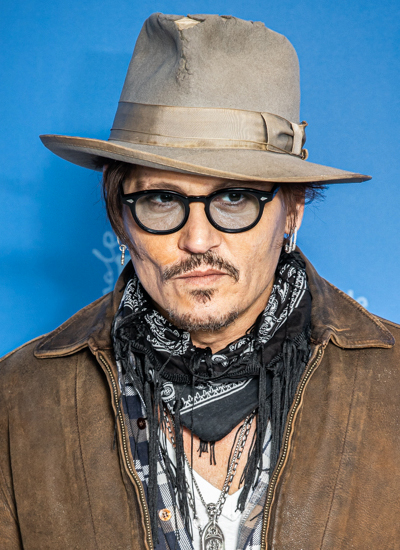
John Christopher Depp II is a renowned American actor, musician, and film producer. Born in 1963, his career began in the field of music, where he joined several rock bands. In 1984, following the advice of Nicolas Cage, he entered the acting world and made his screen debut in 'A Nightmare on Elm Street'. In the late 1980s, he became a teen idol through his starring role in the television series '21 Jump Street'; however, he subsequently chose to avoid mainstream commercial films in favor of pursuing more artistically challenging and eccentric roles.
Depp is well-known for his long-standing collaboration with director Tim Burton, with whom he has worked on eight films since 1990's 'Edward Scissorhands', including 'Ed Wood', 'Sleepy Hollow', and 'Sweeney Todd'. These works established his status as a character actor. In 2003, Depp portrayed Captain Jack Sparrow in the 'Pirates of the Caribbean' film series, a role that not only brought him global commercial success but also earned him multiple nominations for Academy Awards, Golden Globes, and BAFTA Awards. His films have grossed over $10.8 billion at the global box office.
Beyond his acting career, Depp founded the production company Infinitum Nihil in 2004 and formed the rock supergroup 'Hollywood Vampires' with Alice Cooper and others. His personal life has also been the subject of intense media scrutiny, particularly the controversy surrounding his claims of Native American ancestry and the protracted legal disputes with his ex-wife Amber Heard. In 2022, Depp prevailed in a high-profile defamation case, which sparked widespread societal discussion regarding domestic violence and defamation. With his unique acting style and diverse career path, Depp has become one of the most influential stars in contemporary Hollywood.
The Day Master, Gui Water, is born in the month of Wu (mid-summer), situated in the 'Extinct' stage and lacking seasonal support. The Earthly Branches are dominated by the parched energy of Fire and Earth, while the Gui Water Bi Jian (Friend) in the Year Stem is floating and rootless, suggesting an extremely weak self or a 'Follower' (Fake Follow) structure. This implies the subject's energy is like dew at high noon in mid-summer, easily evaporated by the surrounding scorching sun (environment and fame). This energetic state shapes a personality that is intensely sensitive, lacking a sense of security, and possessing blurred boundaries. Lacking a solid innate defense mechanism, he often adapts by constantly changing form, appearing to others as both mysterious and charming yet fragile and brittle—as if he might vanish into the air at any moment. This 'instability' is both the wellspring of his artistic inspiration and the root of his psychological crises.
The Wu Fire of the Month Branch represents Pian Cai (Indirect Wealth), with Wu Earth Zheng Guan (Direct Officer) protruding in the stems. The Wu-Gui combination and the Wu-Wei combination in the branches further strengthen Fire and Earth. The chart presents a structure where 'Wealth produces Officer' alongside a 'Mixed Officer and Warrior' (Guan Sha Hun Za) dynamic. The chart is overheated and urgently requires Metal and Water for balance and support. Wealth represents desire, money, and the opposite sex, while the Officer/Warrior archetypes represent reputation, pressure, and the law. The excessive Fire and Earth signify that immense fame and complex relationships are not only the main themes of his life but also major sources of exhaustion. He spends his life struggling between 'being defined by the world' and 'finding himself.' Lacking the protection of the Yin (Resource/Metal) star, he finds it difficult to attain traditional stability (such as domestic warmth or inner peace), often resorting to substances (Water) to artificially balance his internal heat and seek momentary relief.
The Heavenly Stems feature the 'Ruthless Combination' of Wu and Gui, while the Earthly Branches show a Mao-Wei partial Wood combination, creating a complex interplay of 'Output producing Wealth' and 'Wealth nourishing the Warrior.' The Wu-Gui combination, known as the 'Ruthless Combination,' often signifies unions with significant age or status gaps; it also symbolizes the Day Master sacrificing his true nature for the sake of the Officer star (reputation/roles). This explains his ability to fully dissolve into characters through 'method acting' while losing himself in reality. The Output (Wood) represents talent and expression; the Mao-Wei combination grants him top-tier artistic creativity. However, the dynamic of Wealth nourishing the Warrior (Qi Sha) suggests that wealth and women often act as triggers for his life crises, pushing him into legal entanglements or reputational damage.
The Year Branch hosts Tian Yi Gui Ren (Heavenly Noble/Mentor) and Wen Chang Gui Ren (Intelligence Star), while the Day Branch carries Hua Gai (Star of Arts and Solitude) and Fei Ren (Flying Blade), alongside the Wu-Wei and Mao-Wei combinations. The blessings of the Mentor and Intelligence stars provided him with early opportunities in the entertainment industry and a unique cultural temperament, often attracting supportive figures. However, the Day Branch (Palace of Marriage/Inner World) hosting Hua Gai symbolizes profound loneliness and the aloofness of an artist, while Fei Ren hints at sudden injuries and disputes. While the Wu-Wei Six Harmony strengthens the Fire-Earth energy, it also 'locks' the Marriage Palace, meaning his romantic life is often deeply entwined with financial interests and external pressures—appearing intimate but fraught with suppression and emotional wounding, making a peaceful conclusion difficult to achieve.
The Day Master, Gui Water, is Yin Water—the most feminine and yielding of elements—sitting atop the Wei Earth Qi Sha (Indirect Officer/The Warrior), which hides internal restlessness and anxiety. Gui Water is like mist or morning dew, the most permeable of the Five Elements. This forms the 'fluid' foundation of his character—lacking a fixed shape, emotionally nuanced and volatile, deeply empathetic yet elusive. This nature allows him to keenly sense others' emotions and mimic various personalities, but when facing pressure, he tends to retreat (flowing away like water) or self-anesthetize rather than confront issues head-on. The deep-seated anxiety caused by the parched Earth's restriction keeps him searching for a harbor his whole life, yet he often ends up hurt due to over-dependence.
In the chart, the Mao Wood Shi Shen (Eating God) is nourished by Water to express its elegance, which, combined with the chemical reaction of the Wu-Gui Fire combination, creates a magnetic artistic charisma. The Eating God represents the natural flow of talent; unlike the more assertive 'Hurting Officer,' the Eating God leans toward a unique, eccentric, and restrained sense of humor and aesthetics. This perfectly aligns with the quirky and captivating characters he portrays (such as Captain Jack Sparrow or Edward Scissorhands). The Fire (Charisma/Spotlight) generated by the Wu-Gui combination makes him a natural for the camera, capable of completely dissolving his ego into a role. This 'selfless' performance style is the positive manifestation of his 'Follower' chart structure.
The core conflict lies in a 'Weak Self unable to sustain Wealth and Officer,' meaning his fragile energy struggles to manage immense fame, fortune, and complex restrictive forces, compounded by the 'Warrior' (Qi Sha) attacking the self from the Day Branch. The Qi Sha (Wei Earth) sits directly beneath the Day Master, representing a constant shadow of crisis, hidden enemies, legal battles, and the threat of volatility in his private life. Due to his energetic weakness, it is difficult for him to maintain clear judgment in high-pressure environments, making him susceptible to being swayed or exploited by those around him (Wealth/Women/Partners). Excessive Wealth 'damages the Resource' (rationality), leading him to lose his reason during emotional impulses in relationships and financial matters, falling into a cycle of 'the deeper the love, the deeper the wound,' which can even lead to legal or reputational peril.
Johnny Depp's natal chart is a portrait of 'Summer Thunder and Evaporating Dew.' His life is a testament to Gui Water's struggle to survive amidst scorching Fire and dry Earth; his talent is squeezed out of pain, and his achievements come from the dissolution of the self. He is destined to reach worldly peaks through art as an 'outlier,' yet equally destined to face backlash for being unable to carry the heavy burden of fame and emotion. His life path is not a linear ascent but a pendulum swinging between extreme brilliance and chaotic depths. Ultimately, only by returning to inner stillness and the purity of art (Metal and Water) can he calm the predestined storm of parched heat.
Pian Cai (Indirect Wealth) protruding in the stems, strong Fire exhausting the self, leading to a 'Wealth-Heavy, Self-Weak' structure.
During this decade, the Fire element is extremely dominant. For a Gui Water Daymaster that is already fragile, this represents a significant drain on energy. In childhood, the subject did not enjoy a stable or sheltered upbringing; instead, due to the excessive dissipation of energy, life was characterized by instability and forced precocity. An overly dominant Wealth Star in early years often signifies a father figure who is influential but also a source of pressure, or frequent changes in family finances and residence, leading to a lack of inner security and an early confrontation with the complexities of the adult world.
Wealth Star counteracting the Resource Star, hindered education, and early wandering.
The intense Fire suppressed the Yin (Resource Star), which represents academic pursuits and formal certification. This meant the traditional educational path was fraught with resistance. He found it difficult to find a sense of belonging in the conventional school system, struggling to focus on textbooks. This energetic structure pushed him to look toward society and the outside world prematurely. While he did not accumulate substantial material wealth, this 'drifting' experience laid the foundation for his future artistic inspiration.
Wealth Star suppressing the Resource, distant family ties, and a turbulent early start.
An excessive Wealth Star in family dynamics often suggests a dominant father figure or tension in family relations, while simultaneously suppressing the Resource Star that represents the mother and protection. During these ten years, internal family conflicts or fluctuations in his parents' relationship impacted his young mind, leading to the formation of a sensitive, introverted, and defensive personality.
Blazing Fire and parched Earth, evaporating Water energy, leading to insufficient Kidney Qi.
Extreme heat from Fire and Earth heavily consumed the Gui Water energy, which governs the kidneys, urinary system, and ears. In childhood, this may have manifested as a weak constitution, susceptibility to fevers and inflammation, or emotional restlessness and poor sleep quality.
Wealth generating the Officer, doubled pressure, and abandoning academics for art.
Bing Fire (Direct Wealth) supports the Chen Earth (Officer Star). This 'Mixed Officer and Indirect Officer' energy field brought a heavy psychological burden and rebellious impulses. Traditional social norms (the Officer Star) clashed violently with his innate desire for freedom. This high-pressure environment forced him to find an outlet, leading him to completely deviate from the mainstream path, drop out of school, and immerse himself in rock music as a way to combat the constraints around him.
Officer and Indirect Officer attacking the self, financial hardship, and the beginning of craft mastery.
Although Chen Earth serves as a Water storage (providing a slight root), the protrusion of Bing Fire maintains the 'Wealth counteracting Resource' pattern. During this period, he faced extreme financial distress. His early music career did not provide a stable income; rather, due to the suppression from the Officer stars, he lived under constant survival pressure. However, it was this very pressure that forced him to hone his skills; the guitar became his weapon against the world, cultivating the unique melancholic temperament that would later define his entry into the acting world.
Wealth Star combining with the self, early marriage and early divorce, and volatile romance.
Bing Fire (Direct Wealth) combines into the natal chart, suggesting that romantic encounters arrived very early. Toward the end of this cycle, he experienced his first marriage. However, due to the excessive pressure from the Officer stars and an immature mindset, this relationship—built on impulse or a search for solace—was extremely fragile, coming and going quickly without lasting stability.
Strong Earth suppressing Water, emotional depression, and reliance on external substances.
As a reservoir for the Officer stars, Chen Earth intensified the suppression of the Daymaster. This deep psychological pressure could easily lead to depression and anxiety. He may have begun experimenting with alcohol or tobacco during this stage to numb himself and alleviate the pain caused by the 'Officer attacking the self' dynamic.
Shi Shen (Eating God) controlling the Indirect Officer, a burst of talent, and rising fame.
This decade marked a major turning point. The pure Wood energy of Yi Mao acted as a powerful Shi Shen (Eating God) star, which not only expressed the brilliance of the Daymaster but, more importantly, restrained the rampant Qi Sha (Indirect Officer/Earth) in the chart. The Eating God represents talent, art, and expression; controlling the 'Warrior' star means using talent to conquer pressure and authority. He transitioned from an obscure musician to an actor, with his unique ethereal and eccentric temperament (Eating God traits) perfectly capturing the aesthetic of the era.
Eating God generating Wealth, mentorship from helpful people, and first signs of prominence.
The Eating God is the source of wealth and the manifestation of artistic skill. During this cycle, he met mentors like Nicolas Cage who guided him into the industry. He debuted in 'A Nightmare on Elm Street' and became an icon through '21 Jump Street'. However, the 'Eating God controlling the Indirect Officer' also meant he refused to be a packaged 'idol.' This energy drove him to resist the commercial system and seek deeper roles, laying the groundwork for his explosion in the 90s.
Eating God expressing brilliance, abundant charisma, and emotional entanglements.
The Eating God represents the release of emotion and romance. During these ten years, his charm was radiant, and his 'Peach Blossom' (romance) luck was extremely strong. However, the Eating God also represents a pursuit of novelty and instability. He was deeply invested and passionate in his feelings, experiencing several high-profile relationships. His emotional life was rich and intense, making him a central figure in Hollywood discourse.
Strong Wood exhausting Water, energy depletion, and neurasthenia.
While Wood can control Earth to protect Water, an overly strong Eating God also drains the Daymaster's vital essence. The irregular hours of acting work combined with intense emotional exhaustion could easily lead to nervous system weakness, insomnia, and a decline in immunity.
Shang Guan (Hurting Officer) harnessing the Indirect Officer, unconventional success, and established style.
In the Jia Yin Great Fortune cycle, the Hurting Officer star is majestic. The Hurting Officer is more intense, rebellious, and talented than the Eating God. This 'Hurting Officer harnessing the Indirect Officer' pattern signifies that he completely shed his 'idol' baggage and established a grotesque, Gothic, and non-mainstream artistic style. This was the period of his highest artistic achievement, where he portrayed a series of marginalized characters (such as the continuation of 'Edward Scissorhands', 'Ed Wood', etc.), taking the 'unconventional' nature of the Hurting Officer to its extreme.
Hurting Officer generating Wealth, fame and fortune, and finding a unique path.
The Hurting Officer generates wealth, and the wealth energy is well-connected. Although he mostly took on independent films or non-commercial blockbusters, his immense artistic reputation translated into massive commercial value. He established an irreplaceable position in the industry, and his income rose with his stable fame. However, wealth at this time came more from the monetization of his 'reputation' rather than pure commercial maneuvering.
Hurting Officer meeting the Officer, unconventionality, and a trend toward stability.
A Hurting Officer cycle is usually unfavorable for traditional marriage because it suppresses the Officer star (representing constraint). However, during this period, he met Vanessa Paradis. The passion of the Hurting Officer was transformed into a protective instinct for the family (especially children). Although they did not formally marry (resisting the constraint of the Officer star), this non-traditional family model maintained long-term stability, allowing the tender side of the Hurting Officer to show.
Wood and Fire brilliance, beware of excessive Liver Fire and heart energy depletion.
Jia Yin Wood supports the Wu Fire in the chart, making both Wood and Fire very strong. Attention should be paid to the smooth flow of Liver and Gallbladder energy, as well as mental exhaustion from being too deeply immersed in roles. This period is prone to sudden physical discomfort triggered by emotional intensity.
Bi Jian (Friend Star) assisting the self, Indirect Officer clashing with the storage, peak and undercurrents.
With the Gui Water Bi Jian (Friend Star) protruding in the stems, the weak Daymaster finally receives a powerful 'helper,' enabling him to carry the immense Wealth and Officer stars in his chart. This decade was the absolute peak of his commercial value, evidenced by the success of the 'Pirates of the Caribbean' series. However, the Chou Earth in the cycle clashed with the Wei Earth in the natal chart (Chou-Wei Clash), opening the 'Officer and Indirect Officer Storage' while also causing turbulence in the Spouse Palace. While the surface was glorious, the foundation was being shaken.
Self and Indirect Officer in balance, wealth storage wide open, immense earnings.
With the Friend star helping to resist the 'Warrior' (Indirect Officer), he was finally able to harness the vast wealth energy in his chart. The Chou-Wei clash opened both the Wealth and Officer storages, meaning his income grew exponentially, making him one of the highest-paid actors in the world. However, a clash also represents instability; though wealth was abundant, it came and went quickly, and the activation of the Officer storage hinted at latent legal disputes or contract issues brewing in the shadows.
Chou-Wei Clash, movement in the Spouse Palace, endings and new beginnings.
The Chou-Wei clash directly impacted the Day Branch (Spouse Palace). This is a signal of extreme instability in marriage and relationships. His 14-year partnership collapsed toward the end of this cycle (2012), followed quickly by a new relationship of a 'Qi Sha' (Indirect Officer) nature—intense and destructive (Amber Heard). The clash represents the breaking of the old and the turbulent intervention of the new.
Agitated Earth energy, spleen and stomach damage, damp-cold stagnation.
The Chou-Wei clash leads to excessive Earth energy, which governs the spleen and stomach; he must guard against digestive system diseases. Additionally, Chou is damp Earth and with Gui Water protruding, it is easy for internal dampness to become excessive, leading to joint pain or slowed metabolism.
Zi-Wu Clash, Rob Wealth seizing Wealth, the darkest hour.
In the Ren Zi Great Fortune cycle, Water energy is overwhelming. The Zi Water in the cycle enters a violent 'Zi-Wu Clash' with the Wu Fire of the Month Pillar. This battle between Water and Fire not only breaks the framework of the chart but also directly damages the Wealth Star (Wu Fire). The Wealth Star represents fortune, the father, and the wife. This decade was the most catastrophic stage of his life: his mother passed away, his marriage turned into a legal war, his assets were squandered by financial managers, and his reputation was ruined. This is a classic manifestation of 'Rob Wealth seizing Wealth' and the 'Water-Fire War.'
Rob Wealth causing havoc, betrayal by petty people, and career standstill.
Ren Water (Rob Wealth) represents predators or friends in disguise. During these ten years, he faced a severe financial crisis, not just from divorce settlements but more so from the theft and mismanagement of his inner circle (petty people). Career-wise, due to the damage to his reputation (Officer star under clash), he was abandoned by mainstream studios (like Disney and Warner Bros.), and his commercial value plummeted to the point of near bankruptcy.
Water and Fire clashing, eruption of love and hate, reputation damaged.
The Zi-Wu clash is Water attacking Fire, damaging the 'Wife and Wealth' stars. His romantic life during this period evolved into a public, destructive war. His ex-wife (the Wealth Star) became the force attacking him. Because the Rob Wealth was unrestrained, his private life was exposed to public judgment. It wasn't until the end of the cycle (2022), with the shift in annual cycles toward Wood and Water, that he managed a pyrrhic victory in the legal battle to reclaim a shred of dignity.
Water and Fire failing to communicate, heart and kidney disharmony, severe mental trauma.
The violent Water-Fire clash caused great mental turmoil. The cardiovascular system (Fire) and the kidney/urinary system (Water) were in conflict. Extreme psychological pressure, substance dependency, and emotional instability were the health themes of this decade. He must be wary of sudden cardiovascular issues.
Hai-Mao Half-Combination, Pian Yin (Indirect Resource) supporting the self, a period of recuperation.
Entering the Xin Hai Great Fortune cycle, his luck begins to warm up. Xin Metal in the stems is the Pian Yin (Indirect Resource), representing the repair of reputation, artistic accumulation, and spiritual healing. The Hai Water in the branches forms a half-combination with the Mao Wood of the Year Pillar (Output stars), reactivating his artistic talent. This decade is no longer about commercial combat but a stage for returning to the essence of art and seeking inner peace. The appearance of the Indirect Resource suggests he will focus more on directing, music, or independent artistic creation rather than chasing Hollywood box-office myths.
Resource Star protecting the self, reputation repair, and artistic return.
The Indirect Resource governs unique fame and unconventional achievement. Xin Metal generates Water, dissolving the hostility of the past. Professionally, he will gradually emerge from the shadow of being blacklisted, returning to the public eye through more artistically prestigious platforms like European film festivals and music festivals. Regarding wealth, while it may be hard to return to the peak profits of the past, his financial situation will stabilize under the protection of the Resource Star, with no more major losses to 'Rob Wealth.'
Combination resolving the clash, reconnecting with the past, truth in simplicity.
The combination in the branches (the beginning of the Hai-Mao-Wei Wood combination) resolves the original clashes in the chart. Interpersonal relationships will become gentler, and his relationship with his children (Wood as Output stars) will become the focus of his life. In romance, he will no longer pursue intensity; the Indirect Resource cycle leans toward spiritual companionship or enjoying the freedom of solitude. He may have a close female confidante, but may not necessarily enter marriage again.
Metal and Water generating each other, recuperation, and focus on Liver Wood.
With the flow of Metal and Water, his physical condition will significantly improve compared to the previous cycle. However, with the Hai-Mao combination turning into Wood, Wood energy becomes strong, so he still needs to pay attention to liver maintenance and issues like rheumatism or gout. The Indirect Resource cycle is favorable for spiritual practice and meditation, which will greatly benefit his psychological recovery.
Officer and Resource generating each other, high prestige, and a peaceful late life.
Geng Metal (Direct Resource) protrudes in the stems, sitting atop the Xu Earth Fire storage. This is a state of maturity and solemnity after 'Fire refines Metal.' The Direct Resource represents orthodox reputation and social recognition. During this decade, he will be re-evaluated by film history; past controversies will fade, leaving behind the title of 'Legendary Actor.' Although Xu Earth is dry, it is channeled by Geng Metal, making the overall fortune resemble the brilliance and tranquility of a sunset.
Resource Star finding its place, lifetime achievement, and enjoying a peaceful life.
There is no longer a need to fight on the front lines of his career; it is more about receiving tributes and lifetime achievement awards. Regarding wealth, royalty income and returns from past investments will be sufficient to support a comfortable late life. The Direct Resource cycle also means he may dedicate himself to charity or education, passing on his artistic experience.
Resource as benevolence, family harmony, and being respected by others.
The Direct Resource cycle brings elder-like kindness and tolerance. Relationships with family will reach their most harmonious state. In the eyes of the public, he will have completely transformed from a 'bad boy' into a respected elder of the arts.
Earth and Metal generating each other, watch the respiratory system, protect the lungs from dryness.
Xu Earth is dry and hot, and Geng Metal is being refined. In old age, he needs to focus on the health of the respiratory system (lungs) and avoid respiratory infections. Since the dry Earth also affects the Wei Earth, chronic digestive issues still require attention.
Indirect Officer and Resource generating each other, returning to stillness, an immortal spirit.
Ji Earth (Indirect Officer) protrudes in the stems, sitting on You Metal (Indirect Resource). This Great Fortune cycle represents the sublimation of spiritual power. The 'Indirect Officer and Resource' dynamic means using spiritual will to dissolve the aging of the physical body. For an artist, this often means that even in the final stages of life, they maintain a unique personality and dignity.
Resource transforming the Indirect Officer, estate planning, and spiritual legacy.
Worldly wealth is no longer important; the focus is on the organization and preservation of his spiritual legacy. The Indirect Resource represents unique thoughts; his works and life story will be compiled into biographies or documentaries during this decade, becoming classics for future study.
Indirect Resource's aloofness, inner fulfillment, and letting nature take its course.
Late-life may lean toward quietude or even a bit of reclusiveness, but this is a consciously chosen inner peace. Communication with the outside world decreases as he becomes more immersed in his own spiritual world.
Mao-You Clash, Metal and Wood in conflict, ailments of the bones and sinews.
The You Metal of the cycle clashes with the Mao Wood of the Year Pillar. At this age, clashing with the Year Pillar (the foundation) often concerns one's lifespan. He must strictly guard against falls and fractures (Metal clashing Wood) as well as liver function decline. This is a stage of life energy withdrawing.
Tian Fu (The Treasury Star) resides here, known as the 'Leader of the Southern Dipper' and the 'Star of the Vault.' Tian Fu represents tolerance, stability, and the energy of accumulation. This suggests that in his life, siblings or close partners play the roles of 'treasuries' and 'backups.' Unlike the subject’s own turbulence, these associates are more conservative and pragmatic, providing financial security or administrative support when he is on the front lines or even losing control.
While this palace has no direct Transformations, Tian Fu’s essence is naturally that of a 'Vault.' This means the Siblings Palace is not just an emotional connection but a hub for resources. Partners or siblings often manage his financial lifelines or behind-the-scenes operations, serving as a vital stabilizing force for his foundation.
This is vividly reflected in his career; his sister has long been involved in managing his production company, acting as a 'steward.' When the energy of Tian Fu operates normally, his business empire remains solid; however, if these relationships are damaged, his 'financial vault' faces significant risk.
Lian Zhen (The Virtuoso) sits alone in the Life Palace, acting as both the 'Secondary Peach Blossom (Charisma Star)' and the 'Prisoner Star.' This star bestows a deep and complex personal charm, blending the sensitivity of an artist with an indescribable sense of internal restraint. The energy of Lian Zhen governs emotional release and mental tension, meaning his personality harbors a duality of wild rebellion and self-imposed confinement. This internal conflict often serves as the wellspring of his artistic creation, crafting his unique aura of unconventional charm and melancholy.
Although the Life Palace itself has no direct Transformations, it is harmoniously influenced by Po Jun (The Pioneer) transforming into Lu (Prosperity) in the Career Palace and Ju Men (The Orator) transforming into Quan (Authority) in the Wealth Palace. This configuration converts Lian Zhen’s 'confinement' into extreme professional focus. External energy flows in continuously, transforming what might have been mental friction into the explosive power seen in his portrayals of complex characters on screen.
This stellar alignment perfectly mirrors his unique presence in Hollywood—an unconventional character actor. His life is a constant struggle with inner sensitivity, a struggle externalized through marginal, eccentric, yet captivating roles like Edward Scissorhands. It also explains the frequent emotional fluctuations in his private life.
Tai Yin (The Moon Star) resides here, acting as both the 'Moon' and a 'Wealth Star' in the Spouse Palace. Tai Yin governs stillness, softness, and concealment, indicating that the subject is deeply attracted to women with feminine grace, strong artistic temperaments, or delicate personalities. This star reveals his high aesthetic standards for partners and a desire for spiritual solace in intimate relationships, much like moonlight. However, as the moon waxes and wanes, it also hints at emotional sensitivity and fluctuations within the relationship.
The Gui Heavenly Stem triggers Tai Yin (The Moon) to transform into Ke (Fame/Recognition). Ke represents reputation, academic honor, and public exposure. This means his marriage and romantic life are destined to be high-profile; partners are often famous figures, or every relationship becomes a focal point of public discourse. Emotional unions are accompanied by the spread of fame, whether through a positive reputation or tabloid news.
From Winona Ryder to Vanessa Paradis and Amber Heard, his partners have all been public figures with unique temperaments. Tai Yin transforming into Ke has turned his romantic history into a public serial drama; the privacy of his emotions is completely shattered by the spotlight of fame, with every union and separation evolving into a global news event.
Tan Lang (The Desire Star) resides here, known as the 'Primary Peach Blossom (Charisma)' and the 'Star of Desire.' Tan Lang governs versatility, social adeptness, and strong aspirations. In the Children Palace, this suggests that his offspring possess distinct personalities, potentially exhibiting early social brilliance or artistic talent. They may be independent-minded, full of vitality and a spirit of exploration. It also implies the subject's attitude toward his children is indulgent and deeply emotionally intertwined.
The Gui Heavenly Stem triggers Tan Lang Hua Ji (Transformation to Obstacle), signifying 'obstructed desires' or 'emotional debt.' This is a critical pain point. Hua Ji represents entanglement, obsession, and imperfection. This suggests he pours excessive emotion into his children but may face barriers in their relationship due to external factors (such as divorce or scandals), or he may harbor a deep-seated anxiety and protective urge, fearing his own 'fires of desire' might inadvertently affect his descendants.
His relationship with his daughter, Lily-Rose, is close yet intensely protective. The energy of Tan Lang Hua Ji manifests as his effort to provide a protective umbrella for his children amidst a chaotic private life. Even when facing public scrutiny, his children's perceptions become his greatest vulnerability and source of emotional weight.
Ju Men (The Great Gate) resides here, known as the 'Gloom Star' and the 'Star of Eloquence.' Ju Men governs disputes, communication, and hidden matters. In the Wealth Palace, this clearly indicates that wealth is derived from 'vocal expression'—namely acting, speaking, and performing. However, this star also carries a 'shadowy' nature, meaning financial status can be opaque or accompanied by controversy and disputes; the flow of money often comes with significant public noise.
The Gui Heavenly Stem triggers Ju Men Hua Quan (Transformation to Authority), meaning 'speech transforms into power.' Hua Quan represents control and monetization capability. This significantly enhances the positive energy of Ju Men, turning 'disputes' into 'the right to speak.' This means his performances (expressions) hold immense commercial value, allowing him to earn vast wealth through his unique voice and acting skills, though it also implies wealth must be sought through competition and debate.
He is one of Hollywood's highest-paid actors, relying on the acting and expressive power of 'Ju Men.' However, the inherent 'dispute' attribute of Ju Men did not disappear; instead, it was intensified by Hua Quan, leading to massive legal battles with financial managers. Both the acquisition and loss of wealth are accompanied by intense legal and verbal conflicts.
Tian Xiang (The Minister) resides here, known as the 'Seal Star' and the 'Star of Sustenance.' Tian Xiang belongs to the Water element, governing the kidneys, urinary system, and the skin/face. In the Health Palace, it usually represents a decent physical foundation that is easily influenced by lifestyle habits. Tian Xiang also governs 'image,' suggesting health issues may first manifest in skin conditions or puffiness, requiring attention to endocrine balance.
This palace is influenced by Po Jun Hua Lu (Transformation to Prosperity) from the opposite palace. The volatile energy of Po Jun (The Ruinous Star) shines upon the Health Palace, meaning physical depletion often stems from excessive 'consumption' behaviors, such as irregular routines or indulgence. While Tian Xiang is good at 'repairing,' long-term depletion poses a hidden burden on the kidney-water system.
While there are no major congenital illnesses, under long-term high pressure and an indulgent lifestyle, changes in his appearance (skin, puffiness) serve as a barometer for his health. The 'Water' nature of Tian Xiang requires him to be vigilant against the damage alcohol or substances may cause to the body's filtration systems.
Tian Tong (The Fortune Star) resides here, also known as the 'Child Star'. Tian Tong represents emotionality, easy-going nature, and passivity. In the Parents Palace, this usually suggests parents who are gentle but may lack authority, or parents who themselves are like 'children who never grew up,' with significant emotional fluctuations. This leads to a lack of strong discipline during upbringing, or a relationship with parents that feels more like playmates than a traditional hierarchy.
The 'Fortune' of Tian Tong carries a sense of leisure and dependency. This implies that the early family environment may have been unstable, or that parents adopted a laissez-faire approach to his education. This lack of rigorous discipline protected his innate nature (the 'childlike heart' of Tian Tong) on one hand, but also led to a disregard for rules in adulthood.
Johnny Depp's childhood involved frequent moves and a turbulent family environment with a complex, mercurial mother. Tian Tong here did not provide rock-solid protection; instead, it provided a wandering, emotional foundation for his early life. This forced him to become independent prematurely while preserving that 'childlike' quality that never quite fades.
Wu Qu (The Finance Star) resides here, known as both the 'Wealth Star' and the 'Solitary Star'. The Happiness Palace governs spiritual enjoyment and the inner world. Wu Qu in this palace means the individual's inner self is essentially resolute, solitary, and realistic. Despite an outward appearance of being unconventional, the soul remains as cold and hard as metal. He seeks security through material control or specific obsessions, finding it difficult to truly relax.
As a Finance Star, its presence here suggests 'mental labor in pursuit of value'. His psychological pressure often stems from a need to prove his own worth. Even with immense wealth, the solitary nature of Wu Qu makes it hard to enjoy spiritual peace. He may attempt to fill an inner void through rigid means like collecting or purchasing physical goods.
Despite his playful persona on screen, he often exhibits a deep sense of loneliness in reality. His fanatical pursuit of guitars and collectibles is actually a release of Wu Qu's energy—an attempt to use the tangibility of 'objects' to combat spiritual emptiness and solitude.
Tai Yang (The Sun Star) resides here, meaning the 'Master of Status' has entered the Property Palace. Tai Yang represents radiance, altruism, and public reputation. In the Property Palace, it signifies an open, sunlit living environment or the possession of numerous properties. However, the Sun's nature is to radiate rather than accumulate, implying that while one may own grand estates, maintenance costs are high, or properties are subject to change, making it difficult to maintain a stable ancestral estate long-term.
Although Tai Yang has no specific Transformations (Si Hua) here, its 'scattering' nature is evident. The Sun's light shines on the Property Palace, suggesting assets are often public and conspicuous (such as private islands or castles). Yet, the 'burning' attribute of this star also hints at immense expenditures; assets often exist for 'prestige' or 'enjoyment' rather than pure value preservation.
He once owned an entire French village and an island in the Bahamas. These assets were as dazzling as the Sun but also consumed vast amounts of energy (money) to maintain. The eventual sale of many assets confirms the Sun's property fortune: 'favoring prestige over wealth' and being 'easy to scatter but hard to gather'.
Tian Ji (The Strategist) and Po Jun (The Disruptor) reside together (Note: a specific chart configuration), representing the 'Thinker' meeting the 'Consumer'. Tian Ji governs change and strategy, while Po Jun governs destruction and 'breaking before building.' This combination in the Career Palace predicts a career that is never conventional, but filled with volatility, innovation, and creativity. He must constantly shatter old images and rely on flashes of inspiration to forge new paths.
The Gui Heavenly Stem triggers Po Jun's Transformation into Prosperity (Hua Lu), meaning 'wealth through disruption'. This is the core code of his career. Hua Lu represents opportunity and fortune. Po Jun Hua Lu means: only by subverting tradition, playing unconventional roles, and engaging in disruptive innovation can massive career success be achieved. The more rebellious the path, the more the market recognizes him.
From Edward Scissorhands to Pirates of the Caribbean, his most successful roles are 'destructions' (Po Jun) of traditional hero archetypes. The eccentric, swaying image of Captain Jack Sparrow is the perfect product of Tian Ji (cunning strategy) and Po Jun (unconventionality) transforming into Hua Lu. His life proves: only by destroying the 'idol' burden can one become a true legend.
Tian Liang (The Guardian) sits in this palace, known as the 'Shade Star' and 'Resolution Star'. Tian Liang represents integrity, longevity, and the ability to turn misfortune into blessings. In the Travel Palace, this indicates that the subject often receives protection from elders or invisible forces when abroad or in public. Even amidst storms, they tend to emerge unscathed. However, this star also carries a sense of solitude, suggesting a degree of detachment within crowds.
Tian Liang itself does not undergo the Four Transformations (Hua), but it is influenced by the energy of the Life Palace. The 'protective' nature of Tian Liang acts as a crucial buffer during turbulent years. When facing public controversy abroad, Tian Liang's energy helps maintain an image of a 'survivor' or 'transcendent figure,' thereby gaining public sympathy and understanding.
Most of his career has been spent traveling the world (Migration). Despite numerous crises that could have ruined his reputation, he maintains high global recognition and support. This is a real-world projection of Tian Liang's 'turning misfortune into blessing' energy—always finding a safe harbor in the eye of the storm.
Zi Wei (The Emperor) and Qi Sha (The Strategist / Warrior) reside together, representing the 'Monarch' meeting the 'General'. This is a highly authoritative combination, signifying 'Transforming Pressure into Authority.' In the Friends Palace, it means his social circle, fan base, or subordinates possess immense power and drive. His associates are either wealthy and influential or possess fierce personalities. This is not an equal friendship but a 'King and Subject' dynamic, where followers are fanatical and loyal.
This combination's energy is extremely potent and not easily swayed by standard Four Transformations. The Zi Wei and Qi Sha structure implies he is surrounded by powerful individuals. These people can either solidify his 'imperial' status or cause uncontrollable trouble due to the 'General in the field' autonomy. He must maintain absolute authority in his social circle to avoid being overwhelmed.
His fan base (the 'pirate' fans) exhibits intense combativeness (Qi Sha), acting like an army in online discourse. Simultaneously, his friends, such as Marlon Brando and Hunter S. Thompson, are intense personalities and 'kings' in their respective fields, validating the 'Emperor's Throne' in the Friends Palace.
Generate your personal chart in under a minute. Sign up free and get 30 credits — enough for two or more AI readings. No credit card.
Generate my free BaZi chartPlease sign in to join the discussion
Sign In