Year
Ding
Si
Jie Cai
Bi Jian
Hidden Stems
Bing (Bi)Geng (Pian)Wu (Shi)
- Star Luck
- Lin Guan
- Sitting Branch
- Di Wang
- Void
- Zi-Chou
- Na Yin (Elemental Sound)
- Sand Earth
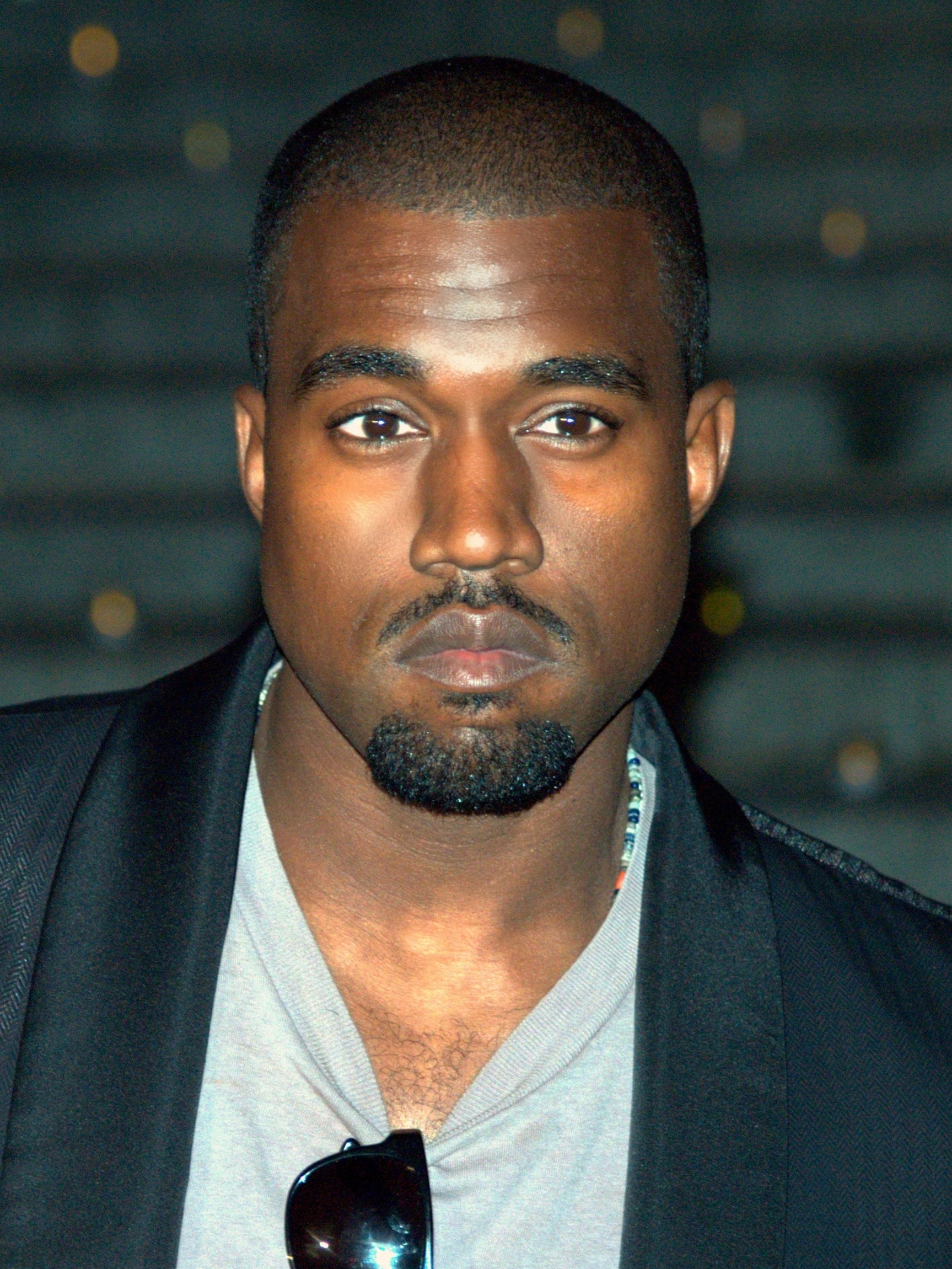
Kanye West (now known as Ye) is a highly influential American rapper, songwriter, record producer, and fashion designer. He was born in 1977 in Atlanta, Georgia, and grew up in Chicago, Illinois. West’s artistic talent showed early, and at age 20 he left college to pursue a career in music. In the early stage of his career, he gained recognition as a producer at Roc-A-Fella Records. By producing Jay-Z’s album The Blueprint, he helped revitalize Jay-Z’s momentum and gradually developed his own distinctive sampling style.
In 2004, West released his debut solo album The College Dropout, breaking away from the then-dominant “gangsta rap” template and achieving both commercial success and critical acclaim. He went on to release classics such as Late Registration and Graduation, cementing his leading status in hip-hop. The sudden death of his mother in 2007 and the end of his engagement pushed him into a low period, which in turn led to the highly experimental 808s & Heartbreak—an album that profoundly influenced later pop and hip-hop aesthetics. In 2010, he released My Beautiful Dark Twisted Fantasy, widely regarded as a modern masterpiece, once again demonstrating his exceptional artistic vision.
Beyond music, West also achieved major success in fashion. He collaborated with Nike, Louis Vuitton, and Gap, and worked with Adidas to build the commercially powerful Yeezy brand. However, his career has also been marked by intense controversy. He has repeatedly made shocking public statements, including the 2009 MTV Awards incident, his 2020 U.S. presidential run, and in recent years, extreme remarks involving race and religion. In particular, from 2022 onward, he faced broad backlash for antisemitic statements and for publicly praising extremist historical figures, leading to widespread mainstream rejection and the loss of key business partners, including Adidas. Despite ongoing controversy, with 24 Grammy Awards and 160 million records sold, West is still widely recognized as one of the most significant artists of the 21st century.
The Day Master is Ding Fire, born in the Wu month, gaining seasonal strength with Jian Lu (Established Prosperity). The year pillar is Ding-Si in Di Wang (Peak Prosperity), forming a Yan Shang Ge (Flames Rising structure) or an extremely strong Day Master configuration. Ding Fire is naturally like lamp or candlelight, but being born in midsummer (Wu month) makes the fire surge upward. With heavy Bi Jie (Peers/Companions; self-and-competition energy) and little to no Water to regulate the heat, the chart shows an energy state marked by explosive drive and self-fueled intensity. It can project extreme confidence, sometimes shading into a savior complex or narcissistic coloring. The greatest strength lies in exceptional charisma and emotional contagion, like a wildfire that can ignite collective sentiment quickly. The key challenge is overload: without the cooling and moderating function of Water (rational restraint), it can tilt toward agitation, mood volatility, and loss of control at the extremes.
The chart enters Yue Ren Ge (Monthly Blade structure) and also carries Qun Jie Zheng Cai (Many Peers Competing for Wealth). It favors Shi Shang (Output/Expression; Earth) to vent and refine the fire, generating wealth, and disfavors Wood and Fire that further intensify the blaze. Yue Ren Ge points to a tough, uncompromising temperament and a strong will to win; Qun Jie Zheng Cai suggests a life theme of competing, being competed against, and repeatedly negotiating ownership, resources, and control. The primary favorable element is Earth, which channels excessive Fire into tangible production: craft, work, and creative output. Wood and Fire become unfavorable when they amplify the heat, potentially escalating fixation and grandiose ideation. This shapes the life path strongly: consistent creation and public output (Shi Shang venting) help maintain psychological balance; when output stalls, surplus energy may flip into destructiveness, leading to interpersonal conflict or public-image breakdown.
The core pattern is Bi Jie Duo Cai (Peers/Companions competing for Wealth) alongside Fire overcoming Metal; the Day Branch You Metal (Pian Cai, Indirect Wealth) stands isolated amid intense fire. This combination produces a sharply contradictory inner baseline: Bi Jie reflects an intense self-focus and competitive stance, while Pian Cai (Indirect Wealth) points to a heightened pursuit of material expression, style, and aesthetics. Fire overcoming Metal suggests a tendency to remake or break existing rules and aesthetic systems (Metal). In decision-making, it can show impulsiveness and a disruptive, consequence-light approach. In relationships, emotional swings may be dramatic and polarized. In career terms, the same tension can make him a vanguard who breaks old fashion and cultural orders, yet it can also make wealth harder to hold, with large inflows and outflows and significant volatility in cash and deals.
The chart carries Yue De Gui Ren (Monthly Virtue Mentor), Peach Blossom (Charisma / Romance), and Yang Ren (Blade Edge), and the Si-You half-combination toward Metal is disrupted and overpowered by the Wu Fire of the month. Peach Blossom in the chart, together with surging fire, points to high visibility and strong romantic and social magnetism in the entertainment sphere, naturally becoming a focal point. Yang Ren (here in Wu Fire) is a double-edged marker: it can grant bold expansion energy and a conquering presence, while also implying risks tied to sharp extremes, including accidents, surgery themes, or heightened mental agitation. The Si-You half-combination would normally support Metal (wealth), yet the strong interference from the Wu month can correspond to repeated cycles of forming and abruptly rupturing business collaborations, and, in intimate partnerships, a pronounced drive toward control that may turn self-sabotaging if unchecked.
Ding Fire as Yin Fire is inherently "soft with steel inside," but in this chart it transforms into a more obsessive, sky-scorching intensity. Ding Fire is originally sensitive, refined, and oriented toward meaning, like candlelight. Surrounded by an ocean of fire, that sensitivity can be amplified into hyper-reactive sharpness. The thinking style tends to be leaping and associative; emotional needs can feel like a black hole for attention and validation. Under pressure, unlike Yang stems (such as Bing Fire) that vent and move on, this pattern may loop internally, simmering and burning from within, then erupting through public outbursts or extended monologues. This psyche struggles to tolerate mediocrity; it often needs high-intensity conflict or creation to feel fully alive.
The chart's core advantage lies in "fire refining metal" as artistic intuition, paired with the momentum-building power of strong Bi Jie (Peers/Companions). Although the chart shows strong Fire constraining Metal, that very pressure can forge striking artistic results. The Day Branch You Metal (Pian Cai, Indirect Wealth) can signify precision of structure, musical rhythm, and fashion tailoring; repeatedly refined by strong fire, it suggests an ability to extract extreme aesthetics from chaos. Strong Bi Jie can also create a crowd-mobilizing force reminiscent of a charismatic movement leader. In trend culture and popular music, this points to an orientation that does not rely on pleasing the masses; instead, it reshapes mass taste through sheer will and presence. This is a chart-level logic behind the shift from producer to global trend icon.
The central tension is Qun Jie Zheng Cai (Many Peers Competing for Wealth), which can blur boundaries and weaken anchoring in practical reality. In the chart, an excess of Bi Jie (Fire) surrounds and pressures the lone wealth star (You Metal), implying a lifelong negotiation between "self-boundaries" and "the external world." Wealth represents the logic of reality: money, contracts, and partner dynamics. A powerful self-drive (Fire) may repeatedly try to melt or override those rules. This can show up as inconsistency in business negotiations and difficulty sustaining an equal, stable relational dynamic in marriage. A key blind spot is trouble distinguishing imagination from reality; when fire becomes too strong without Water to regulate it, emotional overheat can trigger dysregulated episodes that push allies away and create isolation.
Kanye West's chart reads like a rhapsody of "raging fire tempering metal." The life trajectory is strongly driven by an inner flame that is hard to extinguish. That force can elevate him into a legendary status as a disruptive innovator, while also making conventional stability and quiet difficult to sustain. The central life motif is "burning": establishing the self through repeated demolition and rebuilding of old orders, whether in musical language or commercial models. This is not a configuration oriented toward preservation; it is more aligned with dramatic oscillation, pursuing psychological and artistic extremes that can, if unmanaged, drift toward self-consuming intensity.
Wood and Fire are bright and flowing; Yin (Resource) supports the Self, while Bi Jie (Peers) is strong, setting the baseline temperament.
This decade is an initial accumulation phase of personal vitality. The heavenly stem Yi Wood is Pian Yin (Indirect Resource), indicating unconventional insight and a distinctive way of thinking; the earthly branch Si Fire further strengthens the chart’s Fire. For a Ding Fire Day Master, excessive Fire often shows as abundant drive and stamina, yet with a tendency toward volatility. Early-life family changes (parents’ divorce) and moving with the mother to China mirror the drifting quality of Pian Yin and the changes associated with Bi Jie. This unusual upbringing quietly laid the groundwork for a later, nonconformist artistic perspective.
Pian Yin emerging points to early artistic awakening; overly strong Bi Jie points to competition and turbulence.
There is no formal career in childhood, yet Pian Yin’s influence can show as precocious gifts in art, drawing, and music. Pian Yin favors “off-the-beaten-path” talent, suggesting sensitivity to distinctive forms of expression rather than a conventional academic route. Family finances may fluctuate (Bi Jie strains Cai/wealth), but the mother, as an Yin (Resource) figure and educator, provides crucial support that protects the spark of creativity.
Layered Bi Jie: early-life solitude and dependence can coexist.
With strong Bi Jie in the natal chart, early years may coincide with parental separation (Cai being pressured, a reduced father presence). The bond with the mother (Yin star) is especially close and becomes a pillar of the inner world. A single-parent background plus frequent moves can shape a sensitive temperament with a strong need for recognition.
Fire runs hot; Wood generates Fire—watch heat-type patterns and emotional agitation.
When Fire is excessive, childhood energy may feel hard to contain, with tendencies toward restlessness or heightened reactivity. Pay attention to potential sensitivities involving the eyes and the heart/blood-circulation system, as well as psychological adjustment challenges triggered by environmental changes.
Zheng Yin (Direct Resource) appears to protect the Self; Shang Guan (Output) releases brilliance and reveals talent—early edge begins to show.
This decade highlights the awakening of talent. Jia Wood as Zheng Yin (Direct Resource) points to formal learning and reputation, while the earthly branch Chen Earth functions as Shang Guan (Hurting Officer), associated with independence, innovation, and breaking conventions. This combination of “Yin carrying Shang Guan” can indicate both access to structured education (Yin) and a later decision to leave it (Shang Guan’s nonconformity) to focus on music production. Shang Guan vents and refines the chart’s strong Fire into tangible creative output.
Shang Guan as the source of wealth-making: leaving the conventional track for the arts; craft and technique take shape.
Shang Guan is often viewed as a driver of income, closely tied to skills and artistry. In this decade, he begins building recognition in the underground music scene through producing beats. While not yet at peak wealth, Chen as damp Earth helps moderate excessive Fire, allowing creativity to be both passionate (Fire) and grounded (Earth). Leaving school to focus fully on music is a classic expression of Shang Guan’s “unconventional path.”
Yin star as mother; Shang Guan as strong individualism—social circle begins forming.
The mother (Yin star) remains the core support. Shang Guan temperament may show as a bold, unrestrained streak, standing out among peers. The social network expands into music circles, including connections that later become pivotal partners.
Earth moderates Fire; energy balances—overall resilience is good.
Chen Earth tempers Fire and dissipates excess heat, so health tends to be comparatively steady. Youthful vitality finds an outlet through creation. Still, care for the spleen/stomach digestive system (Earth) and avoid the irregular routines that can come with late-night work.
Qi Sha (Indirect Officer; technically: Qi Sha (Indirect Officer)) pressures the Self and correlates with rapid notoriety; Mao-You clash signals crisis and breakthrough.
This is the most dramatic decade of life. The heavenly stem Gui Water brings Qi Sha (Indirect Officer), linked with pressure, authority dynamics, and sudden surges of visibility; the earthly branch Mao Wood is Pian Yin (Indirect Resource) and forms a sharp Mao-You clash with the Day Branch You Metal. A clash impacting the Day Branch (often associated with the body and partnership sector) suggests life-altering changes. When Qi Sha pressure is met with capacity and strategy, it can produce major achievements. Under pressure and challenge, he completes a high-profile transition from producer to rap superstar.
Sha-Yin mutual support: fame and gains together; the clash activates wealth storage and drives explosive growth.
Qi Sha can signify authority and public impact; combined with a strong Fire configuration, it can form a balanced “Self and Sha in workable tension,” supporting high status. In this decade he releases career-defining albums such as The College Dropout. The Mao-You clash indicates upheaval and can also point to physical injury from Metal-Wood conflict (a car accident), which in turn becomes a catalyst for a breakthrough (e.g., Through the Wire). Wealth grows exponentially with fame, alongside intensified controversy.
Day Branch is clashed: relationship volatility; Peach Blossom (Charisma/Romance) with Sha.
The Day Branch relates to the partnership sector; being clashed by Mao Wood points to unstable relationship rhythms, with on-and-off patterns more likely. Qi Sha appearing can also show a sharp, combative edge in social dynamics—easy to attract rivals, yet also to draw fiercely loyal supporters. The mother’s passing (2007; annual Ding Hai influences challenging Si Fire) becomes the biggest emotional blow toward the end of this cycle.
Metal-Wood conflict: heightened accident/surgery markers; tendons and bones need care.
Mao-You clash is a classic signature for incidents such as car accidents, surgery, or fractures. The 2002 car accident closely matches this pattern. In addition, sustained Qi Sha pressure can bring significant mental stress, planting seeds for later mental-health vulnerabilities.
Ding-Ren combine: the Officer comes to connect with the Self—career peaks and cultural icon status.
The heavenly stem Ren Water as Zheng Guan (Direct Officer) combines with the Day Master Ding Fire, often read as “the Officer comes to meet the Self,” a sign of recognition and status arriving through mainstream channels. The earthly branch Yin Wood is Zheng Yin (Direct Resource), and Yin-Wu forms a partial Fire combination, further energizing the chart. This decade not only solidifies his position in music, but also expands into fashion and broader cultural symbolism. Zheng Guan reflects mainstream validation; Zheng Yin adds intellectual depth—his work begins to carry stronger artistic and philosophical layers.
Guan and Yin reinforce each other: cross-industry dominance; business footprint expands dramatically.
Zheng Guan combining with the Self often coincides with top-tier recognition from mainstream business and institutions. The collaboration with Adidas (the Yeezy brand) begins and takes off in this cycle. With Yin-Wu combining into Fire, Bi Jie remains strong, yet the Fire is channeled through strong “Wood” (design/creativity) into major commercial value. This is a key decade in shifting from “celebrity” to “business magnate.”
Officer star connects with the Self: establishing a family and career; a high-profile union.
Zheng Guan also relates to social standing and, in many traditional readings, aspects of family continuity. During this period he marries Kim Kardashian and builds a highly visible family. Although the natal chart’s strong Bi Jie can be challenging for spouse-and-wealth stability, the Ding-Ren combination can temporarily steady the structure, presenting a powerful alliance dynamic.
Yin-Si harm/punishment: Fire at an extreme—watch agitation and mood instability.
The Yin-Si interaction can intensify Fire; with Yin Wood fueling it, overall activation reaches a peak. While this can produce a surge of creativity, it may also severely deplete mental reserves. Bipolar symptoms become more evident later in this cycle; strong Fire with insufficient Water moderation (Ren Water being drawn into combination and transformation toward Wood/Fire) can make inner calm harder to maintain.
Shi Shen (Eating God) generates wealth; Si-You-Chou form a Metal combination—wealth surges and inner disorientation.
The decade fortune cycle enters Xin Chou: Xin Metal as Pian Cai (Indirect Wealth) appears, and the branches Si (year), You (day), and Chou (cycle) form a strong Metal combination, creating a powerful “wealth configuration.” The chart shifts from Fire-dominant to Metal-dominant (wealth-dominant). This decade marks a peak in personal wealth (billionaire level), yet it can also coincide with the start of inner destabilization. Strong Metal can drain Ding Fire vitality, and damp Earth (Chou) can obscure Fire, dimming the clarity associated with spirit and reason.
Wealth star disrupts Yin: too much Metal extinguishes Fire—cliff-like reversals after the business peak.
In the first half, the Metal combination brings extraordinary wealth accumulation (the Yeezy empire). Yet “wealth heavy, Self weakened” and “wealth star damaging Yin” (Metal restraining Wood) matter here: Yin often represents reputation, judgment, and coherence. When wealth becomes excessive and suppresses Yin, misalignment of interests or values can lead to self-sabotage. In the middle to later period, uncontrolled public statements triggering a total collapse of business partnerships aligns with “wealth intensifying Sha pressures” without sufficient Yin to mediate.
Wealth configuration merges into the spouse sector: beginnings and endings—estrangement risks rise.
Although the Si-You-Chou combination looks stable, what it consolidates is “wealth” (often read as material ties and functional bonding), not necessarily emotional intimacy. As Ding Fire weakens (drained by Earth and Metal), it becomes harder to manage an overly strong wealth influence, increasing the likelihood of marital breakdown. Bi Jie (friends/public) may also shift into opposition when interests are at stake.
Earth and Metal obscure Fire: loss of inner anchor—full-scale mental-health crisis risk.
Chou as damp Earth is especially effective at veiling Ding Fire’s light. Ding Fire is associated with the heart, eyes, and mental clarity. With Fire heavily suppressed, patterns such as severe dysregulation, depressive phases alternating with manic agitation can surface. Mental-health support becomes a top priority to reduce the risk of extreme behaviors under destabilization.
Zi-Wu clash: Water and Fire in direct conflict—seeking reconstruction amid turbulence.
Entering the Geng Zi decade fortune cycle, Zi Water (Qi Sha / Indirect Officer) clashes strongly with the month command Wu Fire (Bi Jie and Lu Shen [Prosperity Star]). Zi-Wu clash is among the more challenging clash patterns, striking the chart’s structural pivot (the month command). This suggests core foundations—social positioning and key values—may face unprecedented pressure and reshaping. It is a “break down to rebuild” cycle, marked by turbulence and conflict.
Wealth feeds weakened Sha; the month command is hit—guard against insolvency risks and legal troubles.
Geng Metal as Zheng Cai (Direct Wealth) supports Zi Water Qi Sha; if Sha runs unchecked and clashes the month command directly, the career may be forced into a full reset and prior business models may not hold. Strongly guard against legal disputes (Sha pressing the Self), tax issues, or financial holes created by impulsive decisions. This decade favors risk control and consolidation over aggressive expansion.
Bi Jie is clashed: major reshuffling of connections—late-cycle loneliness.
Wu Fire in the month command often reflects peer and friendship dynamics; being broken by Zi Water suggests former circles may disperse, with friends and relatives turning away or creating distance. Family ties may also undergo severe tests. The resulting sense of isolation calls for substantial inner resilience.
Water-Fire conflict: heart and kidney axis out of sync—a major health checkpoint.
Zi-Wu clash often highlights the heart (Fire) and kidneys/blood-related systems (Water). It can correlate with heightened risk of sudden cardiovascular or cerebrovascular events. Emotional regulation is essential; avoiding extreme highs and lows and prioritizing rest becomes central to navigating this cycle.
Shi Shen (Eating God) attempts to check Sha; Si-Hai clash—Yi Ma (Mobility Star) in motion.
The heavenly stem Ji Earth as Shi Shen (Eating God) appears, attempting to moderate Officer/Sha pressures, while the branch Hai Water clashes the year branch Si Fire. Si-Hai clash is often read as “Yi Ma (Mobility Star) meeting a clash,” indicating movement, travel, and instability. Later years may still feel unsettled, with frequent changes of residence or shifts across fields. Compared with the sharper conflict of the Geng Zi cycle, this decade is more about drifting and lack of rootedness.
Shi Shen generating wealth lacks force: returning to simplicity; spiritual aims outweigh material goals.
Shi Shen can represent the afterglow of talent and the pursuit of enjoyment and meaning. Ambition may soften, shifting toward pure artistic creation or spiritual messaging. The wealth structure is largely set, with fewer major commercial breakthroughs; emphasis moves to preservation and curating a legacy.
Root is clashed: like falling leaves that struggle to return to the root.
The year branch relates to ancestry and foundations; being clashed suggests later life may be spent away from one’s original base or with greater distance from family lineage. Relationships tend to simplify, with more life faced independently.
Ongoing Water-Fire clashes: monitor the nervous system and leg/foot vulnerabilities.
Si-Hai clash can also involve the nervous system and lower-limb issues. Watch for stroke risk, neuralgia, or reduced mobility.
Shang Guan (Hurting Officer) is strong; Wu-Xu partial Fire combination—late-life resurgence.
The branch Xu Earth forms a partial Fire combination with the month command Wu Fire, supporting the Day Master. Shang Guan remains strong, yet the Fire combination provides backing. This decade may bring a more activated mental state than midlife, with a “second wind” effect—potentially speaking out again through memoirs or a role as a spiritual/cultural voice.
The vault opens: spending rather than accumulating—legacy over profit.
Xu is a Fire storehouse and also a storehouse for Shang Guan. Career focus shifts away from conventional success toward leaving an imprint. Remaining wealth may be directed into ideals or philanthropy (Shang Guan releasing expression).
A solitary sage, or an eccentric figure.
Older adults with strong Shang Guan often appear unconventional and hard to accommodate, yet can be intellectually deep. Only a small number of people may truly understand and stay close.
Fire and Earth both strong: watch inflammatory dryness and tumor/metabolic risks.
Excessive Fire-Earth dryness can correlate with inflammation, tumor risk, or metabolic issues. Spending time in Water-and-Wood environments can help restore balance.
Fu Yin on the Day Pillar: life cycles back—returning to what is essential.
The decade fortune cycle Ding You matches the Day Pillar exactly (Fu Yin). Fu Yin often indicates repetition, pause, and inward turning—also a return to the Self. This is commonly a late-stage theme, where life experiences fold back into the Ding You starting point: a spirit that shines in Firelight yet remains entangled with the pull of wealth and desire.
All returns to emptiness; reputation is what remains.
Material wealth carries little practical meaning at this stage; the focus is how later generations evaluate the contributions and controversies of a lifetime.
Dialogue with the Self.
Fu Yin emphasizes inner conversation—reviewing gains and losses across the life course.
The oil runs low and the lamp dims—allow things to unfold naturally.
With Ding Fire repeating, if there is little Wood to nourish it, the flame gradually weakens. Following the natural course becomes the gentlest approach.
Wu Qu (Discipline/Execution Star) sits in the palace, associated with toughness, solitude, and strong execution; elementally Metal. The Fu Mu Gong (Parents Palace) relates to inherited traits, relationships with elders, and paperwork/credentials. Wu Qu is a cool, hard-edged wealth-and-command type of star. This suggests that his parents (especially his mother, given early parental separation) held strict, practical expectations. Rather than indulgent nurturing, the relationship leans toward training based on real-world goals and capability. He also appears to inherit this unyielding, uncompromising temperament.
Wu Qu is firm in nature: less emotional exchange, more tangible support. With Wu Qu in the Parents Palace, one parent is often a strong, action-oriented figure who can provide concrete resources or educational backing, while emotional communication may be blunt or somewhat rigid. This upbringing can shape a highly pragmatic, results-focused value system, as well as a tendency to meet authority with direct resistance (hard-on-hard).
Kanye’s mother, Donda West, was a university professor and had a profound influence on him. Wu Qu’s qualities align closely with Donda’s image—strong, independent, and fully supportive of her son’s career. She was not only a mother but also a manager-like organizer and a psychological pillar (Wu Qu relates to resources as well). Her passing (a major shift signaled through the Parents Palace) was devastating, because it meant losing what felt like the firmest backing in his life.
Tai Yang (Sun) sits in the palace, associated with generosity, giving, and energetic output; when strong, it shines brilliantly. The Fu De Gong (Wellbeing/Inner Happiness Palace) relates to spiritual enjoyment and personal interests. With Tai Yang here, he tends to be someone who “burns bright” to illuminate others. His sense of fulfillment comes from public attention—radiating energy like the sun. He finds it hard to stay idle; his mind is constantly filled with grand plans. He is a classic idealist, but this can also lead to mental overexertion.
Tai Yang tends to radiate outward rather than consolidate, so the drain on mental energy can be substantial. This configuration can indicate a strong philanthropic impulse or quasi-religious idealism (a drive to “save the world”). Yet Tai Yang in Fu De also implies busyness: his happiness comes from continuous output and self-expression. If he loses his stage and visibility, the “sun” within can dim, making low mood more likely. His inner world tends to need to be bright, public, and expansive.
This helps explain his later religious turn (Sunday Service). Through religious music, he sought to distribute the “light and heat” of his inner world to the public. He has little tolerance for mediocrity or darkness and tends to keep himself in a heightened, spotlighted state. This pursuit of the “sublime” fuels his motivation and also underlies his tireless restlessness.
Tian Tong (Harmony/Childlike Blessing Star) sits in the Life Palace, naturally associated with ease, warmth, and gentleness—yet it presents in a special way in this chart. Tian Tong is often regarded as a “blessing star” or a “child star,” symbolizing innocence, emotional sensitivity, and a strong preference for comfort. However, in Kanye’s chart, this star does not simply indicate enjoyment; it carries pronounced emotional tension. This suggests that the core tone of his personality is that of an eternally youthful inner child—highly sensitive, artistically intuitive, and easily stirred by emotional waves—needing continuous creation as a way to soothe inner restlessness.
The Ding Heavenly Stem triggers Tian Tong Hua Quan (Power), making it not only a blessing star, but a willful child with authority. Hua Quan represents an infusion of power and a drive to control. When the soft, yielding Tian Tong meets the firm force of Hua Quan, it creates a contradictory energy of “having to be strong.” This helps explain why, despite an artist’s vulnerability and sensitivity, his outward behavior can appear extremely forceful, domineering, and even compulsively controlling—a classic pattern where inner insecurity transforms into an urge to conquer the outside world.
This configuration shapes a trait in which “the madman” and “the genius” coexist. In real life, he appears to use adult power games (a business empire, political runs) to protect that fragile inner child. Each time he “melts down” or behaves far outside convention, it is essentially an intense reaction: when Tian Tong’s emotions overflow, he attempts to use the hard tactics of Hua Quan to demand attention and validate self-worth.
Lian Zhen sits alone, associated with secondary Peach Blossom (Charisma/Romance) and karmic ties of lineage, carrying a constricting quality. Lian Zhen is a precise, sensitive star with a slightly taboo, edgy aura. Falling in the Siblings/Peers Palace (also representing peers and partners), it suggests he is extremely discerning and emotionally reactive in social interaction. His relationships with companions often come with intense love–hate entanglements: people tend to become either fiercely loyal allies or lifelong estranged opponents, making it difficult to sustain calm, low-drama friendships.
As the palace is pulled by annual cycles of luck, Lian Zhen’s secondary Peach Blossom quality turns into interpersonal magnetism. Although the Four Transformations here do not directly trigger the main star into Hua Ji (Constraint), Lian Zhen’s inherent high sensitivity makes him quick to feel “restricted” or “betrayed” in collaboration. This field of energy often makes partnerships in music or fashion begin with passionate admiration and end in explosive breakups, giving his social sphere a strongly dramatic tone.
This aligns with his reputation of having relationships where it is hard to distinguish friend from foe. From early ties with Jay-Z to later collaborators, his brotherhood/partnership dynamics tend to be passionate yet extremely fragile. He has little tolerance for mediocre teammates and tends to seek equally talented but intense personalities to work with—an “oil on a roaring fire” social style that keeps his circle in perpetual turbulence and reorganization.
Tian Fu (Treasury/Steward Star) presides here—an Imperial star of the Southern Dipper, governing reserves, resources, and status. Tian Fu represents inclusiveness, steadiness, and financial storehouses. When it appears in the Spouse/Marriage Palace, it suggests that deep down he longs for a partner who can hold the center, with strong social standing and management ability. This person is not only a lover, but also a capable counterpart who can help “run the realm,” offering the steadiness and practical grounding he lacks—like an “empress” who can carry the public mantle.
Tian Fu itself does not directly participate in the Four Transformations, but its strength and dignity shape the spouse’s overall caliber. Tian Fu is highly stabilizing and functions here as an “anchor.” For the emotionally driven Tian Tong Hua Quan (Power) in the Life Palace, a Tian Fu-type partner provides essential material foundations and image support. This suggests his marriage is often intertwined with substantial wealth and public stature, and that the partner can, in practical terms, be a high-value “asset.”
This is vividly reflected in his marriage with Kim Kardashian. As a classic Tian Fu-type partner, Kim has strong business instincts and family/brand management capacity, providing Kanye with prolonged real-world stability. However, Tian Fu also emphasizes propriety and control; when the native’s loss of control (Tian Tong Hua Quan + Ju Men Hua Ji (Constraint)) exceeds the line of public dignity Tian Fu can tolerate, an alliance built on “resources” and “status” may begin to unravel.
Tai Yin (Moon; introspection, refined emotions, and the ability to hold/accumulate) presides here, highlighting tenderness and a private sense of emotional security. Tai Yin symbolizes the Moon, associated with storing, protecting, and subtle feelings. Placed in the Zi Nv Gong (Children Palace), it suggests that children are his softest, most intimate refuge. Around his children, he is more likely to drop defenses and sharp edges, showing a distinctly nurturing, Yin-style care (a Tai Yin trait). Children are not only lineage, but also a concrete embodiment of his inner and spiritual “wealth.”
The Ding Gan (Heavenly Stem Ding) transforms Tai Yin into Hua Lu (Prosperity/Resource), making it a source of tangible benefits and emotional fulfillment. Hua Lu points to supportive ties and a steady flow of giving. With Tai Yin Hua Lu in the Children Palace, children can bring him significant joy and practical tailwinds (even business inspiration). His investment in them tends to be generous and not overly cost-calculated, and their arrival may coincide with an upswing in his wealth or career momentum—often described as a pattern that “supports the father.”
In real life, Kanye’s devotion to his children is widely recognized. Whether naming brands after his daughter or speaking emotionally about his kids in public, it reflects the tone of Tai Yin Hua Lu. Children can function as the one clear sanctuary in an otherwise turbulent world—and the primary reason he is willing to compromise for the future. Many of his design sensibilities and the warmer, more human turn in his later work can be traced directly to this strong parent-child bond.
Tian Ji (Strategy Star) and Po Jun (Disruption/Reset Star) in the same palace (note: this is a special chart configuration), indicating change and depletion. Tian Ji highlights movement and intellect; Po Jun highlights breaking down and high consumption. When these two dynamic stars fall in the Tian Zhai Gong (Property & Home Palace), it suggests an exceptionally unstable living environment—frequent moves, renovations, or rebuilds. His idea of “home” tends to be experimental and disruptive, making it difficult to settle peacefully in one place for long.
With the Ding Heavenly Stem, Tian Ji transforms into Hua Ke (Academic/Recognition), pointing to reputation and planning; Po Jun emphasizes expenditure. Tian Ji Hua Ke here is quite notable: it can indicate that his residence or real estate becomes well-known, or that its design is highly concept-driven (Hua Ke). Yet with Po Jun, the design often turns anti-traditional—sometimes pared down to a “bare-shell” minimalist aesthetic. He may pursue an ideal or concept (Ke) to the point of tearing down and rebuilding (Po Jun), spending heavily on property.
His well-known “monastery-style” mansion and the large ranch project in Wyoming can be read as outcomes of Tian Ji Hua Ke combined with Po Jun. These properties are not only places to live, but also testing grounds for radical aesthetics and design concepts (Tian Ji Hua Ke). The repeated cycles of remodeling, demolition, and redesign (Po Jun) reflect an ongoing inner drive to deconstruct and reorganize physical order—home becomes a fluid concept for him.
Zi Wei (Emperor Star) and Qi Sha / Pian Guan (Indirect Officer; technically: Qi Sha (Indirect Officer)) share the same palace, forming an “imperial command with decisive authority” configuration (Zi-Sha Hua Quan). In Zi Wei Dou Shu, this is a highly pioneering, conquest-oriented pairing. Zi Wei represents the sovereign, while Qi Sha represents the battlefield commander; together, it conveys the image of “the ruler leading the campaign in person.” In career matters, this often indicates a strong need to lead rather than serve—preferring to set rules instead of operating under them. It points to formidable execution and large-scale vision, with a willingness to break outdated structures to reach a goal.
Zi Wei + Qi Sha already carries a strong authority signature; even without relying on the Four Transformations, the commanding tone is evident. When placed in the Career Palace, this combination often reflects a life path shaped by continuous contests and strategic pushes. Rather than being satisfied with success in a single domain, there may be an impulse to build an expansive “empire” spanning music, fashion, and even politics. Qi Sha’s sharp, reform-through-disruption quality also suggests career advancement may come with cycles of dismantling and rebuilding—progress through decisive resets.
From music producer to rap superstar, to fashion magnate, and even a presidential run, Kanye’s career trajectory aligns closely with the Zi-Wei–Qi-Sha signature. He not only plays the game—he seeks to rewrite the rules. Many of his major career moves carry strong assertiveness and a desire to lead; this forceful “rule-maker” posture is a core professional tone indicated by Zi Wei and Qi Sha in the Career Palace.
Tian Liang (Elder/Overseer Star) presides here, linked with integrity, oversight, and a solitary streak—often called the “Old Sage Star.” When Tian Liang appears in the Friends/Networks (Servants) Palace, it suggests his fans or subordinates may take on a “devotee” quality, or that he tends to play a godfather/mentor role in his social circle. Tian Liang also carries a more solitary signature, indicating it can be hard for him to form equal, intimate friendships; relationships more often take the form of guidance, mentorship, or being guided.
Tian Liang’s qi is expressed through sheltering support, and also through discipline—highlighting strong principles. In interpersonal dynamics, this can show up as a “preaching/teaching” current. He may attract people seeking spiritual or ideological direction, or conversely, he may hold friends to strict moral or principled standards. This energy can make the social atmosphere less lighthearted, with frequent values-based debates or a heavier sense of mission.
This maps onto his relationship with his team (Sunday Service Choir) or fans (Yeezy devotees). He can come across not merely as an artist, but more like a spiritual-ideological leader (Tian Liang’s religious tone). Breaks with friends often stem from incompatibility in beliefs and principles rather than pure conflicts of interest. What he tends to need are followers and fellow believers rather than casual drinking buddies—an elevated but isolating social stance that can read as both revered and lonely.
Tian Xiang (Aide/Minister Star) presides here, associated with credentials, comfort, and support—an impeccably crafted “public face.” The Travel/Outward Presentation Palace reflects one’s external image and the opportunities encountered in the wider world. Tian Xiang is a star that values presentation, taste, and rules. This suggests he is highly attentive to styling, aesthetics, and a sense of ceremony in public. No matter how turbulent things may feel internally (Life Palace), the image he projects outward (Travel Palace) tends to remain refined and aesthetically authoritative, making it easier to receive assistance when away from home or in public settings.
Tian Xiang is strongly shaped by surrounding support/pressure, producing swings such as “Cai Yin flanking the Seal” or “Xing Ji flanking the Seal.” Tian Xiang itself does not carry the Four Transformations, yet it is highly responsive to context. This implies his public image can be quite variable—at times like an elegant fashion tastemaker (Cai Yin), and at other times coming across as rigid or difficult to reason with (Xing Ji). How he is socially received may swing between extremes, largely depending on the dynamics and “field” of the environment around him at the time.
This helps explain his standing as a “fashion icon.” Tian Xiang governs themes of apparel, lifestyle resources, and status; his achievements in fashion (external presentation) can even outshine his music in public perception. His exacting standards for clothing in public, and his grand, world-spanning narrative style during tours or launches (Travel), reflect Tian Xiang’s influence—using the most ornate form of “credentials” to package and amplify a sense of presence.
Tan Lang (desire, windfalls, speculation; also a major Peach Blossom—Charisma/Romance—star) presides here. With Tan Lang in the Cai Bo Gong (Wealth Palace), income streams tend to be diversified and strongly tied to speculation and entertainment value. He is less oriented toward earning through fixed salary structures and more toward earning through “human nature.” This star grants sharp commercial instincts: an ability to monetize fame, desire, and trends. His money-making methods often come with significant controversy and attention.
When activated by annual cycles, Tan Lang can form the explosive momentum of Huo Tan or Ling Tan configurations. Although the natal Four Transformations do not directly strike Tan Lang, its hallmark is “it surges when encountering Fire.” This implies wealth accumulation that is often burst-like rather than linear. By creating trends (leveraging Tan Lang’s talent and social magnetism), he can ignite demand quickly and capture outsized profits—while also carrying a pronounced risk of sharp ups and downs.
The rise of the Yeezy empire is a textbook expression of Tan Lang’s signature. He combined sneakers (material desire) with pop culture (Peach Blossom charisma), then used scarcity tactics and headline-driven hype (speculation) to create a multibillion-dollar phenomenon. His wealth is less the result of conservative, step-by-step operations and more the result of accurately sensing—and skillfully steering—mass desire. This is an extreme business-facing expression of a Sha Po Lang (Breakthrough/Disruptive) pattern.
Ju Men (speech, disputes, obscurity, and the shadow side; Water element) presides here. The Ji E Gong (Health/Illness Palace) reflects not only the body but also the subconscious. Ju Men here is an “obscuring” star, pointing to unspoken inner shadows, doubt, and anxiety. Physically, it may correspond to respiratory or nervous-system sensitivities; psychologically, it often indicates intense inner friction and a tendency toward fixation.
The Ding Gan (Heavenly Stem Ding) transforms Ju Men into Hua Ji (Obstruction/Karmic Knot), forming a signature of conflict through speech and pointing directly to mental strain. This is one of the most challenging links in the whole chart. Hua Ji emphasizes fixation, unresolved burdens, and blockages. With Ju Men Hua Ji in the Health Palace, he may be repeatedly pulled into inner loops—paranoid ideation, mood instability, or an uncontrollable urge to speak out. Many instances of “trouble arising from words” can be read as a symptomatic release: internal pressure (Health Palace) discharging through language (Ju Men) in an unbalanced way.
This aligns closely with Kanye’s public disclosure of Bipolar Disorder. Ju Men Hua Ji can make it difficult to stop ruminating on negative signals—and difficult to resist the impulse to externalize darker content. His controversial statements are not merely publicity tactics; they can also reflect moments when Health-Palace pressure overwhelms regulation. In this sense, he can feel “contained” by his own thoughts and seeks relief through continuous expression—even when the expression becomes self-damaging.
Generate your personal chart in under a minute. Sign up free and get 30 credits — enough for two or more AI readings. No credit card.
Generate my free BaZi chartPlease sign in to join the discussion
Sign In