Year
Ding
Wei
Shi Shen
Pian Cai
Hidden Stems
Ji (Pian)Ding (Shi)Yi (Bi)
- Star Luck
- Yang
- Sitting Branch
- Guan Dai
- Void
- Yin Mao
- Na Yin (Elemental Sound)
- Tian He Shui
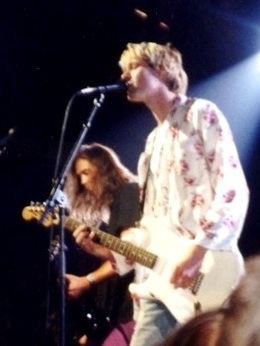
Kurt Cobain (February 20, 1967 – April 5, 1994) was an American musician, best known as the lead vocalist, guitarist, primary songwriter, and founding member of the band Nirvana. Born in Aberdeen, Washington, he experienced his parents' divorce during childhood and gradually became immersed in rock music. In 1985, he formed an early band called Fecal Matter, and in 1987, together with Krist Novoselic, Dave Grohl, and others, officially launched Nirvana. The band released the album Nevermind in 1991, achieving massive success with the single "Smells Like Teen Spirit," which propelled Seattle grunge into the mainstream. Cobain was hailed by the media as the "spokesman of Generation X."
Cobain struggled with chronic stomach issues, depression, and substance addiction throughout his life. In 1992, he married rock musician Courtney Love, and their daughter Frances was born the same year. As his fame grew, Cobain became increasingly uncomfortable with his public persona, and the pressures of his personal life and creative work intensified. On April 5, 1994, Cobain died by suicide at his home in Seattle at the age of 27.
Cobain's posthumous legacy continues to influence future generations. In 2014, Nirvana was inducted into the Rock and Roll Hall of Fame in their first year of eligibility. His songwriting, anti-establishment stance, and tragic end have made him one of the most iconic figures in alternative music history.
The Yi Wood Day Master, born in the Yin month, receives seasonal support, sits on its own Mao Wood Lu root, has a hidden Yi Wood root in the Year Branch Wei, and expresses its talents through the Bing Fire Shang Guan (Direct Talent) on the Hour Stem. The chart is overwhelmingly Wood, making it a strong Day Master constitution. This energetic state means Kurt Cobain is like a deeply rooted, lush tree in spring—resilient, with a strong sense of self, and brimming with an urgent need for expression and creativity. Overall, he appears sensitive, proud, and brilliantly talented, yet carries an untamable primal wildness. His greatest strength lies in transforming internal pain and anger into stunning artistic works; the potential challenge is that such abundant self-energy, if unguided, can turn inward, leading to emotional extremes and self-destructive tendencies.
With a strong Day Master and heavy Bi Jie (Sibling Stars), the preferred Useful God is Guan Sha (Officer Stars). However, Metal Qi is feeble—only hidden Xin Metal Qi Sha (Indirect Officer) exists in Xu, too weak to restrain the Yi Wood. Thus, the next choice is to use Shi Shang (Talent Stars) to drain the excess and Wealth Stars to weaken the self. Fire and Earth become the Xi Shen (Favorable Elements), while Water and Wood are Ji Shen (Unfavorable). The Useful God "Fire" represents his musical talent, artistic expression, and outlet for release; "Earth" symbolizes real-world recognition, wealth, and commercial transformation. The unfavorable Water and Wood signify excessive self-absorption, stubbornness, and emotionality. This pattern clearly maps onto his life choices: he had to vent his surging inner energy through music (Fire) and attain worldly success (Earth) to temporarily find inner balance. However, when fame and commercial pressures (Earth) became overwhelming, or when he retreated into his inner world (Water/Wood), the unfavorable elements gained the upper hand, plunging him into depression and drug addiction.
The most prominent Shi Shen (Ten Archetypes) combinations in the chart are "Mixed Shi Shang" and "Bi Jie Robbing Wealth": the Year Stem Ding Fire Shi Shen (Indirect Talent) and Hour Stem Bing Fire Shang Guan (Direct Talent) both emerge; the Day Master Yi Wood sits on its Lu root; the Month Branch Yin Wood is Jie Cai (Rob Wealth); the Year Branch Wei contains Ji Earth Pian Cai (Indirect Wealth) being restrained by Jia Wood Bi Jie. Shi Shen (Indirect Talent) governs gentleness, sensitivity, and inspiration in solitude; Shang Guan (Direct Talent) rules rebellion, critique, and overturning rules. The mixture of the two shaped his contradictory personality—both fragile and violent: he could infuse poetic melancholy into lyrics (Shi Shen), yet erupt with wild screams on stage (Shang Guan). "Bi Jie Robbing Wealth" represents indifference and insecurity toward material wealth, making him detest commercial packaging while being forced into the huge interests of the recording industry, deepening his inner conflict. In decision-making, he followed intuition over reason, hated compromise; in relationships, he craved understanding yet kept distance due to extreme sensitivity.
The Year Branch Wei carries Hua Gai (Canopy Star); the Day Branch Mao is Jiang Xing (General Star) and Lu Shen (Prosperity Star); the Hour Branch Xu shows Liu Xia (Flowing Rosy Clouds) and Fei Ren (Flying Blade). Moreover, the Mao-Xu harmony transforms to Fire, strengthening the Shi Shang's power. Hua Gai is a star of solitude, philosophy, and art, granting him exceptional introspective ability and metaphysical pursuits, yet also accompanying him with lifelong loneliness. Jiang Xing and Lu Shen amplify his egocentrism and desire for control, making him the absolute core of the band but also causing interpersonal tension. Liu Xia and Fei Ren are stars of bloodshed and accidents, activated by the Mao-Xu combination, hinting at unpredictable harm events—a cruel reality mirrored in his chronic stomach ailment, drug addiction, and eventual suicide by shotgun. Although the Mao-Xu Fire harmony energized his artistic explosiveness, it also consumed his life force.
Yi Wood is the wood of flowers and grasses—flexible yet sensitive. Sitting on a Lu root, it becomes rigid and stubborn. Shang Guan (Direct Talent) Bing Fire emerges, Shi Shen (Indirect Talent) Ding Fire hangs high, forming a "Shang Guan plus Shi Shen" personality combination. The underlying color of Kurt Cobain's character is a thorny flower blooming alone in the wilderness—his thinking leaps and is full of imagery, with deep emotional needs that are hard to satisfy. At times childlike and vulnerably pure, at others like a trapped beast—violent and desperate. In his comfort zone, he was an aesthete immersed in music and painting; under pressure, he either attacked outward with sharp sarcasm and destructive acts, or completely withdrew inward, numbing himself with drugs. He spent his life seeking unconditional love and understanding, yet pushed away those who came close with his own hands. This contradiction stems from the irreconcilable conflict between Yi Wood's flexibility and Shang Guan's rebellion.
With both Shi Shen and Shang Guan emerging, and Bing Fire effectively adjusting the climate, this forms a top-tier "Shi Shang Draining Excess" talent pattern. Shang Guan Bing Fire further meets the Xu Earth Wealth Vault, creating "Shang Guan Generating Wealth." Shi Shang represents artistic talent, aesthetic sensitivity, and linguistic expression; Shang Guan generating Wealth means this talent can directly translate into market value. His musical gift was not merely technical—it was a magic enabling him to distill the era's confusion and pain into melody and lyrics. The reason he became the standard-bearer of Grunge lies in the "Wood and Fire Illuminating" configuration, which gave him unique mastery over noise and melody, and a precise critique of mainstream values. This talent allowed him to create works with mass resonance without deliberate pandering, catapulting him from underground frontman to cultural icon in just a few years.
The greatest conflict in the chart is "a strong Day Master without restraint" and "mixed Shi Shang": Bi Jie (Sibling Stars) unchecked by Guan Sha (Officer Stars) turns excessive freedom into dissipation; the coexistence of Shi Shen (Indirect Talent) and Shang Guan (Direct Talent) creates opposition between inner emotions and outward expression. This conflict played out repeatedly in his life: he longed for sincerity (Shi Shen) yet was forced to play a rebellious icon (Shang Guan); he needed commercial success (Wealth) to sustain his art, yet hated the hypocrisy and constraints it brought; he craved stable intimate relationships, yet could not let go of his ego due to heavy Bi Jie. A blind spot was extreme egocentrism and idealism, preventing him from reconciling with the mundane world. Eventually, under the immense pressure after fame, he suffered mental and physical collapse, ending his chaotic inner war with suicide.
Kurt Cobain's life was like a self-igniting star—its excessive density caused it to burn fiercely and finally collapse from exhaustion. His chart, with an extreme Wood and Fire illumination, achieved artistic brilliance, but the excessive Wood suffocating Fire and burning to ashes unfortunately resulted in a tragic early death. His life theme was "Expression and Destruction": music was his only path to self-redemption, yet the very extreme of expression drained his life source. His suicide at 27 was not cowardice; it was the inevitable outcome of irreconcilable internal conflicts in his chart—once the flames of Shi Shang burned all the grass and wood, only silent ashes remained.
Qi Sha (Indirect Officer) assaults the self, Chou-Wei clash stirs the Year Pillar. This decade was a foundational period of life, yet filled with heavy pressure. The Qi Sha—a challenging star that controls the Day Master—directly suppressed the Day Master, symbolizing strictness and constraints from the external environment. Meanwhile, the Chou (Ox) earth clashed with and opened up the Wei (Goat) earth, the foundation of the Shi Shen (Talent/Output) in the Year Branch, signifying drastic changes in the family during childhood. The native's parents divorced when they were 9 years old, leading to a turbulent life and the development of an introverted and withdrawn personality.
Qi Sha (Indirect Officer) uncontrolled, Pian Cai (Indirect Wealth) weak and unstable. There were absolutely no opportunities in career; on the contrary, under the pressure of Qi Sha, academic progress was hindered and setbacks were frequent. The Wealth Star (Pian Cai) was clashed, leading to family financial difficulties; the native started working at a young age, earning a meager income. However, this cycle also honed his rebellious spirit and artistic sensitivity, planting the seeds for his future music career.
Inauspicious stars clash, friends and family scatter. The Chou-Wei clash undermined the stability of Shi Shen (which governs affinity and expression), leading to strained relationship with the father, the mother's remarriage, and a lack of family warmth. At school, due to his withdrawn nature, the native suffered bullying and had almost no close friends; interpersonal relationships remained in a state of suppression for a long time.
Qi Sha controls the body, earth energy unstable. The direct assault of Qi Sha weakened the constitution, making the native prone to fright and nightmares. The Chou-Wei clash triggered digestive issues of the spleen and stomach (earth clashed), leading to chronic stomach problems later in life, rooted in the latent dangers of this cycle. Emotionally, there was a tendency toward anxiety and self-destructive tendencies, though not yet fully erupted at this time.
Zheng Guan (Zheng Guan (Direct Officer)) merges with the self, Yin Star nurtures and supports, the combination of Officer and Resource transforms into auspiciousness. This decade was a crucial turning point in life. The Zheng Guan, representing rules and reputation, merged with the Day Master Yi Wood, indicating that the native began to actively integrate into social norms and gained recognition through the energy of Zheng Yin (Direct Resource, representing intellect and art). Forming Nirvana in 1987 and the global breakthrough of the album Nevermind in 1991 perfectly embodied the synergy of Guan and Yin—soaring fame and a torrent of artistic creativity.
Guan and Yin mutually generate, fame spreads far and wide. The Zheng Guan merging with the self brought a formal career role (lead singer and guitarist of the band), while Zheng Yin (Zi Water) strengthened the Day Master, providing a continuous flow of creative inspiration. In the 1991 Liu Nian (Annual Influence) Xin Wei, Qi Sha emerged but sat on a wealth storage, leading to massive album sales and a sudden increase in wealth. However, the Zi-Mao punishment (the Mao Wood of the Day Branch being punished) hinted at internal conflicts—tensions among band members, and the pressure of fame began to surface.
The Officer Star merges with the self, expanding social connections. The Zheng Guan merging with the self brought a wide network of social relations, moving from the underground rock scene into the mainstream spotlight. Yet, the Zi-Mao punishment also caused friction in intimate relationships: the marriage with Courtney Love was filled with passion and conflict, and disputes over profit distribution led to rifts within the band. Fame proved to be a double-edged sword; the native began to feel shackled by public expectations.
Excessive water makes wood drift; Zi-Mao mutual punishment. The overly strong Zi Water of the Zheng Yin actually increased the floating sensation of Wood, leading to emotional depression and drug dependence. The Zi-Mao punishment directly impacted the Day Branch (representing the body and mind), worsening stomach ailments (Wood controlling Earth) and initiating heroin abuse. Over this decade, health shifted from early hyperactivity to gradual overdraft, laying the groundwork for later collapse.
Pian Cai (Indirect Wealth) breaks Zheng Yin (Direct Resource); Hai, Mao, Wei form a triple combination of wood. On the surface, this cycle seemed to match Indirect Wealth with Direct Resource, but it was fraught with hidden dangers. The Ji Earth of Pian Cai restrained the Hai Water of Zheng Yin, meaning that money and worldly desires eroded the original artistic vision. At the same time, the Da Yun's Earthly Branch Hai, together with the Year Branch Wei and Day Branch Mao, formed a triple Wood combination, causing Bi Jian (Peer/Friends) energy to explode to the extreme—leading to inflated self-awareness, but also because of "too much wood suffocating the fire" (excess wood blocking creative output). The suicide in 1994 was the manifestation of this extreme imbalance.
Wealth and Resource in conflict; Bi Jian and Jie Cai rob wealth. The Ji Earth of Pian Cai attempted to control the situation, but was restrained by the combined Wood of Hai-Mao-Wei (Wood controlling Earth), leading to financial chaos: despite high album sales, copyright disputes, team splits, and enormous drug expenses caused a sharp decline in actual income. Career-wise, the 1993 album In Utero received polarized reviews, band conflicts became public, and professional development stalled.
Overwhelming Bi Jian and Jie Cai, isolated and helpless. The Hai-Mao-Wei triple Wood combination made the Bi Jian (peers, kindred spirits) excessively powerful, leading to competition and betrayal instead. Power struggles within the band intensified, and the relationship with his wife was on the verge of collapse due to drugs and suspicion. His public image shifted from 'rebel hero' to 'troubled figure', and media pressure drove him further into isolation, ultimately leading to suicide to end it all.
Excessive Wood uncontrolled, Earth defeated, Metal deficient. The extreme excess of Wood (liver-gallbladder) corresponded to alternating manic and depressive emotions; Earth (spleen-stomach) was controlled, with severe stomach problems making eating impossible; Metal (lung, large intestine) was weakened, and drug addiction impaired the respiratory system. In the 1994 Liu Nian Jia Xu, the Jia Wood of Jie Cai intensified the Bi Jian's struggle for officials, and the Xu Earth fire storage clashed with Chen (not originally present, but with the Da Yun Hai-Mao-Wei wood combination, Xu as dry earth triggered 'wood fire burning the body'). Health collapsed completely, making life unsustainable.
Tian Fu (Heavenly Treasury Star, bright) and Di Kong (Earth Void Star) together guard the Chou Palace, at the Mu Yu (Bathing) position. Tian Fu is a star of wealth storage; its bright state represents stability and tolerance. Di Kong is a Void star, signifying illusion and loss. Mu Yu is a romance-related position, symbolizing the beginning stage of children or relationships. Cobain's relationship with his daughter Frances Bean was exactly this: he deeply loved her (the loving nature of Tian Fu bright), and songs like 'Heart-Shaped Box' were inspired by her, but Di Kong hints that he could not be with her long-term - after her birth, he sank into drug addiction and depression, eventually committing suicide, and his daughter was raised by her grandmother.
No Four Transformations in this palace; the Children Palace is simply influenced by Tian Fu and Di Kong. Without transforming to an auspicious star, the affinity with children is not strong; Cobain's actual time spent with his daughter was extremely short. Di Kong made him feel pessimistic and powerless about his daughter's future. In the bathroom, there was a suicide note to his daughter, expressing his decision that there would be 'no more pain.' The Mu Yu position represents a relationship that blooms and fades quickly, brief yet beautiful.
His daughter Frances Bean was born in August 1992. Cobain was touring at the time and tried his best to spend time with her, but after 1993 his health deteriorated, and in April 1994 he committed suicide. His wife Courtney Love later recalled him as 'a very gentle father.' Di Kong's sense of isolation and Tian Fu's protective urge were paradoxically intertwined, and ultimately he chose to leave.
Tian Ji with Hua Ke, strong Tai Yin with Hua Lu, both occupying the palace, with balanced Wen Qu assisting, located in the Zhang Sheng (Growth) position. Tian Ji is the star of wisdom and planning; Tai Yin is the star of yin, gentleness, and emotion. The combination of Hua Ke and Hua Lu brings excellent energy to the Spouse Palace, indicating that marriage or partnership is full of creativity and emotional nourishment. Wen Qu adds artistic talent. Zhang Sheng position signifies that this relationship has vitality and potential for sustained development. The marriage of Kurt Cobain and Courtney Love is exactly this: both were alternative rock musicians, mutually inspiring creative sparks (Tian Ji Hua Ke), with intense but turbulent emotions (the tenderness and dependency of Tai Yin Hua Lu).
Tian Ji Hua Ke and Tai Yin Hua Lu enter the Spouse Palace, forming the double auspicious combination of Hua Ke and Hua Lu. Hua Ke governs fame and talent, while Hua Lu governs enjoyment and wealth. This means that Cobain derived artistic prestige and emotional satisfaction from his marriage—Love's band Hole complemented Nirvana's influence. After the two married in 1992, Cobain's music style gained additional emotional depth. However, Tai Yin Hua Lu also brought excessive emotional dependency, so when relationship crises occurred, his psychological pillar was shaken, exacerbating his depression.
Cobain and Love met in 1990, married in 1992, and had a daughter, Frances, in 1993. Their relationship was full of passion and chaos: they used drugs together (the indulgent side of Tai Yin Hua Lu) and also created together—Cobain wrote songs for Love, and she fell into grief after his suicide. The Zhang Sheng effect indicates that had Cobain overcome his addictions, the marriage could have endured, but in reality he ended his life in 1994.
Tai Yang (Sun Star, waning) and Wen Chang (Literary Star, prosperous) guard the Wealth Palace (Zi Palace), which is also the Body Palace, at the Guan Dai (Coming of Age) position. Tai Yang is the ruler of career and officialdom; its waning state means its light is obscured, and the path to wealth is turbulent. Wen Chang governs documents, contracts, and reputation. With the Body Palace here, the native's life focus on career and wealth is linked to fame. Cobain accumulated wealth through music copyrights and record sales, but Tai Yang waning indicates he was not good at managing money and even despised commercial operations. The Guan Dai position symbolizes achieving socioeconomic status through adult effort.
No Four Transformations activate this palace, but the waning nature of Tai Yang already indicates unstable wealth. Without a transforming to Lu (Prosperity), financial sources are not abundant - Nirvana's success made Cobain money, but he often lent it to friends or spent it on drugs, leaving a net worth of only about $500,000 at his death. Wen Chang prosperous helped him have legal protections in contracts and royalties, but due to trust issues, he did not actively defend his rights.
After Cobain shot to fame with 'Nevermind' in 1991, his annual income reached millions of dollars, but he hated business and often deliberately disrupted carefully planned promotional strategies. He lived in an ordinary house in an old Seattle neighborhood and drove old cars. This contradiction fits Tai Yang waning and Wen Chang prosperous: he acquired wealth (Wen Chang's contractual benefits) but internally resisted it (Tai Yang waning).
Wu Qu (Finance Star, balanced) and Po Jun (Rebel Star, balanced), assisted by Tian Kui (Heavenly Chief Star), are located in the Hai Palace at the Lin Guan (Career Building) position. Wu Qu is a strong and unyielding star, Po Jun is a destructive star, and their balanced state keeps their energy moderate. Tian Kui is a helpful people star. The Lin Guan position indicates that maintaining health requires diligent effort. Cobain had chronic stomach problems (Wu Qu belongs to Metal, governing the lungs and intestines), and drug addiction (the destructive nature of Po Jun). Tian Kui represents that he encountered doctors and rehabilitation help, but could not persist.
No Four Transformations (Si Hua) activate this palace; the combination of Wu Qu and Po Jun itself suggests health is vulnerable to damage. Wu Qu transforming to Ji (Obstruction) in the Health Palace is commonly associated with chronic illness, but here it is balanced, so not as severe as with Ji. However, Po Jun's impulsive behavior (drug overdose) was the fatal harm. The beneficial influence of Tian Kui manifested in 1993 when he briefly entered a rehabilitation center, but Po Jun caused relapses.
Cobain suffered from chronic gastritis (Wu Qu balanced), often experiencing stomach pain and vomiting. He used heroin to relieve the pain, eventually becoming addicted. Po Jun balanced represents self-destructive tendencies; in March 1994, he overdosed in Rome and was saved by his wife, but a month later he successfully committed suicide. Tian Kui's helpfulness is reflected in the many interventions by those around him, but they couldn't change the outcome.
Tian Tong (Heavenly Unity) at an average level transforming into Authority, and You Bi (Right Assistance) both guard the Xu Palace, located in the 'Prosperity' phase. Tian Tong is a star of blessings; transforming into Authority enhances action and leadership; You Bi is a supporting star. The 'Prosperity' phase indicates that development when away from home can reach its peak. Cobain's Migration Palace reflects his career: touring globally with Nirvana, leaping from the underground rock scene of Seattle to a worldwide phenomenon. Tian Tong transforming into Authority made him the creative core of the band, dominating every performance.
Tian Tong transforming into Authority in the Migration Palace indicates gaining power and success when away from home. The transformation turns Tian Tong's lethargy into ambition; Cobain was energetic during tours and created albums like In Utero. With the support of You Bi, the band worked together effectively. The 'Prosperity' phase means he reached the peak of his career on stages in foreign lands (such as New York and London).
Starting in 1988, Cobain toured the northwestern United States with the band; after the release of Nevermind in 1991, he exploded globally, demonstrating the power of the Migration Palace. He performed in Europe, Asia, and Australia, and the 1993 MTV Unplugged concert is regarded as a classic. The 'Prosperity' phase shows he enjoyed this nomadic life, but the blessings of Tian Tong were overwhelmed by the transformation into Authority—he grew tired of the pressures of touring and longed to return to a normal life.
Tian Yue (Celestial Moon) and Di Jie (Earthly Desolation) both guard the You Palace, located in the 'Decline' phase. Tian Yue is a helpful star, Di Jie is a disruptive star, and the 'Decline' phase indicates that friendships or subordinate relationships gradually deteriorate. Cobain's social circle had both support (Tian Yue) and hindrance (Di Jie). He was surrounded by musicians and producers, but Di Jie led some friends to exploit his fame for profit or to drug addiction. The 'Decline' phase suggests that relationships worsened later on.
This palace has no Four Transformations; Tian Yue and Di Jie cancel each other out. Tian Yue brought important collaborators like producer Butch Vig, but Di Jie made Cobain prone to trusting the wrong people, such as certain drug-using friends. The 'Decline' phase means that while he had many friends early on, they gradually drifted apart; by 1994, he was almost isolated from the outside world.
In the late 1980s, Cobain befriended a group of underground musicians (Tian Yue), but after achieving fame, some old friends turned against him due to conflicts of interest (Di Jie). His closest friends were his bandmates and wife, but Di Jie also manifested in his relationships with the media and rivals—he had ongoing conflicts with peers in alternative rock.
Strong Zi Wei and beneficial Tan Lang together occupy the Mao palace, located in the Yang (Nourishment) position. Zi Wei is the emperor star, while Tan Lang is the star of peach blossom (charisma) and social connections. Their combination forms the 'Zi Wei and Tan Lang in the Same Palace' pattern, indicating capable and socially active siblings or peers. Kurt Cobain's sister Kim Cobain had an ordinary relationship with him, but his bandmates Krist Novoselic and Dave Grohl were more like brothers: Novoselic was steady and inclusive (Zi Wei), while Grohl later became the frontman of Foo Fighters (Tan Lang's expanding influence). The Yang position suggests this relationship needed nurturing to grow; early on they rehearsed in garages and toured in cramped vans, which was exactly the stage of building rapport.
There are no Four Transformations stars in this palace, but Zi Wei and Tan Lang inherently possess leadership charisma and pioneering energy. The absence of Hua Lu or Hua Quan means no extra stimulation is needed; the energy of the Siblings Palace functions naturally. Between Cobain and his bandmates there were no intense power struggles (Zi Wei's command), but through co-creation they built deep bonds (Tan Lang's integrative power). This relationship provided him emotional support—Novoselic helped him detox multiple times, and Grohl rebuilt the band after his death.
Cobain had no biological brothers, but treated his bandmates as family. The Zi Wei and Tan Lang configuration made him the core of the team, but Tan Lang's fickle nature also caused him to occasionally miss rehearsals due to drug addiction or emotional issues. After the success of "Nevermind" in 1991, internal pressures grew; Zi Wei's arrogance and Tan Lang's hedonistic tendencies began to clash—his aversion to commercialization versus the others' willingness to compromise created rifts.
Ju Men with Hua Ji, debilitated, with Zuo Fu in the same degree, located in the Chen palace at the Tai (Conception) position. Ju Men is a dark star, governing verbal disputes, gossip, and hidden matters; Hua Ji further intensifies inner suppression and loneliness. Being in a debilitated palace, its energy flows poorly, meaning the native often experiences misunderstandings or self-isolation in communication and expression throughout life. Zuo Fu is a same-rank mentor/noble star, giving him assistance from people around him, but the shadow of Ju Men Hua Ji is hard to completely resolve. This configuration often appears in artists who use non-mainstream means to express themselves and vent inner pain through music—Cobain, with his raw screams and outspoken lyrics, became the spokesperson of alternative rock.
Ju Men Hua Ji sits in the Destiny Palace, directly influencing the entire chart's tone. Hua Ji governs troubles and deficiencies; Ju Men Hua Ji means the native has innate obstacles in interpersonal relationships and expression, prone to self-doubt and depression. In daily life he was reticent, but on stage he released his repression through roaring, which perfectly fits the characteristic of Ju Men Hua Ji externalizing inner pain. Hua Ji also made him extremely sensitive to criticism; media attacks and fans' expectations became a heavy psychological burden.
Cobain was introverted from childhood, becoming more withdrawn after his parents' divorce. He expressed emotions through music; Nirvana songs like "Smells Like Teen Spirit" are full of the contradiction of anger and sadness, a faithful reflection of Ju Men Hua Ji. After fame, he was extremely uncomfortable with press interviews, often responding with sarcasm or avoidance. The role of Zuo Fu manifested in support from wife Courtney Love and bandmates, but ultimately the negative energy of Hua Ji dominated his destiny, leading to his suicide in 1994.
Tian Xiang (Minister) in Obtained state, Tian Ma (Horse), Tuo Luo (Spiral) in Sunken state, together guarding the Si Palace, Exhausted stage. Tian Xiang is the Seal Star, representing authority and support; Tian Ma governs travel and restlessness; Tuo Luo is a hidden abrasion. The Exhausted stage signifies a weak bond with parents in early years. Kurt Cobain’s parents divorced when he was 8; he was granted to his father but then shuttled among relatives, lacking stable care. Tian Xiang in Obtained reflects the positive imprints left by his parents (his mother encouraged music), Tian Ma embodies his frequent moves during childhood, and Tuo Luo in Sunken implies the torment in his parents’ relationship.
This palace has no Four Transformations. Tuo Luo in Sunken is inauspicious, while Tian Xiang in Obtained is auspicious. Without Hua Lu, material support from parents was limited. Tuo Luo in Sunken indicates long-term emotional entanglement; Cobain grew distant from his father, and his mother, after remarrying, also failed to settle him properly. Tian Ma made him drift at a young age, a sense of instability that persisted throughout his life.
Kurt Cobain’s father Donald was a mechanic, and his mother Wendy was a waitress. After the divorce, they fought for custody. Cobain first lived with his father, but felt excluded after his father remarried, staying at uncles’ and friends’ homes. He later wrote songs like “Serve the Servants” blaming his parents. The positive side of Tian Xiang in Obtained shows in his mother’s support for his piano lessons, giving him an artistic start.
Tian Liang (Canopy) in Temple state, Lu Cun (Wealth Container), together guarding the Wu Palace, Tomb stage. Tian Liang is a sheltering star, representing protection and healing; Lu Cun is a treasury. The Tomb stage indicates deep spiritual accumulation. Cobain yearned for peace and rescue (Tian Liang in Temple), and Lu Cun gave him inner spiritual richness—his music had the power to heal others, but could not heal himself. The Tomb stage implies an inherent loneliness and introspection.
This palace has no Four Transformations. The combination of Tian Liang in Temple and Lu Cun is favorable, but the Tomb stage internalizes the blessings. Tian Liang in Temple could ordinarily resolve disasters, but with challenging stars joining in other palaces (such as Ling Xing in Career), it creates the oppressive ‘Punishment and Taboo’ dynamic. Lu Cun allowed him to find spiritual solace in creation, but the Tomb stage made him bury his anguish within.
Cobain’s music often explored depression, identity, etc., as in “Something in the Way.” The compassion of Tian Liang in Temple comforted countless listeners. He himself could not absorb this blessing; Lu Cun also symbolized his longing for a quiet life (as mentioned in his suicide note: ‘no more pain’). The loneliness of the Tomb stage ultimately led him to choose death as liberation.
The Career Palace lacks a primary star, with only Ling Xing (Bell Star) sitting alone in a fallen position, located in the 'Sickness' phase, forming the pattern of "Ling Xing fallen with the Illness Charm entangling." Ling Xing belongs to the Fire element and is an explosive malefic star; in a fallen state, its destructive power doubles without restraint, like a buried powder keg. The 'Sickness' phase directly links career energy with health crises, creating a fatal cycle of "the more successful, the more depleted." Cobain's career pattern was the ultimate expression of Ling Xing's nature: in 1991, Nevermind stunned the world by replacing Michael Jackson at the top, with surging sales, media siege, and non-stop touring—this "explosive success" was not a gradual accumulation but an instant detonation, perfectly matching Ling Xing's characteristic of "sudden outburst." However, the combination of a fallen state and the 'Sickness' phase turned success into a death warrant: continuous touring aggravated his stomach illness and deepened drug dependency, causing him to faint multiple times during 1994 performances. Uncontrolled Ling Xing allowed emotions to spread like wildfire; smashing guitars on stage, jumping into the audience, and clashing with security were both artistic catharsis and unconscious discharges of the malefic star's restless energy into his career. Ultimately, the peak of his career (the deified MTV Unplugged in March 1994) merged with the energy of Ling Xing fallen in the 'Sickness' phase, leading to suicide—his career completely incinerated in the aftermath of the explosion.
Although this palace has no Four Transformations, the Migration Palace has Tian Tong (Heavenly Unity) transforming into Authority (opposite palace) and the Wealth Palace has Tai Yang (Sun) in a fallen position (Trinity Palace), with flying stars pulling, forming an implicit trajectory of "Authority shining on wealth, yet authority and wealth contradict each other." Tian Tong transforming into Authority in the Migration Palace (Xu Palace) transforms into a strong desire to control "public image": Cobain insisted on his musical direction, refused commercial compromise, declined to perform "Smells Like Teen Spirit" on Saturday Night Live in 1992, and recorded In Utero in 1993 deliberately raw to resist the mainstream. However, Tai Yang fallen in the Wealth Palace (Zi Palace) is affected by Wen Chang (Literary Star) transforming into Fame (natal transformation in the Spouse Palace, but Tai Yang is dim), suggesting that although wealth was huge, it lacked luster: he hated the mass marketing after signing, and threatened to disband the band in 1992 due to royalty disputes over Nevermind. More critically, the Health Palace has Wu Qu (Wealth Star) and Po Jun (Destruction Star) at an average level (Hai Palace), borrowing Tian Kui (Heavenly Champion), forming a hidden line of "malefic star triggering Po Jun" with Ling Xing in the Career Palace: Wu Qu and Po Jun govern sudden changes and severance; Tian Kui, a benefactor star, did not enter the Career Palace but instead went to the Health Palace. Cobain's failed drug rehabilitation and multiple suicide attempts in 1994 was precisely the "ending" energy of Po Jun erupting through health channels, ultimately leading to death by gunshot on April 8th at the peak of his career—a total outburst of transformed Authority (public dominance) and Ling Xing (inner restlessness), concluding his last "career action" with death.
Cobain's career began with the formation of Nirvana in 1987, but the real explosion point was the release of Nevermind in September 1991, which topped the Billboard album chart in its first week and sold over 30 million copies. The explosive power of Ling Xing fallen is evident here: from underground punk to global idol overnight, with tours moving from clubs to stadiums. In 1992, he married Courtney Love and became a father, but career pressure worsened his stomach illness and drug addiction. In Utero was released in 1993, rebellious in style against commercialism, yet still achieved platinum sales—confirming the Migration Palace's Tian Tong transforming into Authority "controlling strength with softness": he used artistic quality to resist commercial coercion. In the MTV Unplugged performance in November of that year, he almost fainted on stage; later he said, "It was the last time I ever enjoyed a stage," as the 'Sickness' phase energy began to consume his career passion. During the European tour in March 1994, he was hospitalized after a suicide attempt, and on April 8 he was found dead at his home in Seattle, officially ruled a suicide. The entire trajectory corresponds perfectly: Ling Xing fallen in the 'Sickness' phase (explosion → exhaustion → destruction), the Migration Palace's transformation into Authority (desire to control public image), and the Health Palace's Wu Qu and Po Jun (sudden termination). His career was like a meteor—brilliant but brief—a classic case of "success in a malefic star's fallen state is a curse."
Lian Zhen (Pure) in Advantage state, Qi Sha (Indirect Officer) in Temple state, Huo Xing (Fire Star) in Advantage state, Qing Yang (Goat) in Temple state, together guarding the Wei Palace, Death stage. Lian Zhen and Qi Sha form a turbulent combination; Huo Xing and Qing Yang intensify conflict, and the Death stage symbolizes final extinction. The Property Palace governs home, family, and inner stability. Cobain’s residence (his old house in Seattle) lacked luxury, and family life was chaotic: frequent quarrels with his wife, heavy drug use. Lian Zhen and Qi Sha gave him impulses to destroy stable environments.
This palace has no Four Transformations. With a cluster of challenging stars, the Property Palace is highly afflicted. Without auspicious Hua, it means he could not attain stability through real estate. Cobain’s home was repeatedly besieged by reporters, disturbing him to the point of considering moving. The destructiveness of Qing Yang and Huo Xing manifested when he shot himself there. The Death stage marks this as the endpoint of his life.
In 1991, Cobain bought an unremarkable villa in the Covington area of Seattle, but rarely enjoyed it. On April 5, 1994, he ended his life in the greenhouse of this house. The intensity of Huo Xing and Qing Yang led him to choose a shotgun. The Death stage confirms the Property Palace’s role as the site of death.
Generate your personal chart in under a minute. Sign up free and get 30 credits — enough for two or more AI readings. No credit card.
Generate my free BaZi chartPlease sign in to join the discussion
Sign In