Year
Ding
Wei
Shi Shen
Pian Cai
Hidden Stems
Ji (Pian)Ding (Shi)Yi (Bi)
- Star Luck
- Yang
- Sitting Branch
- Guan Dai
- Void
- Yin-Mao
- Na Yin (Elemental Sound)
- Tian He Shui
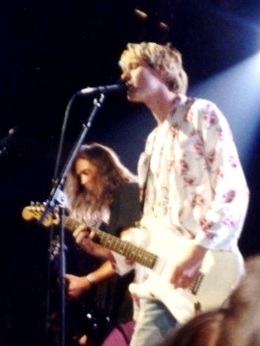
Kurt Cobain (February 20, 1967 – c. April 5, 1994) was an American musician, serving as the lead vocalist, guitarist, and primary songwriter of Nirvana. An iconic figure of the grunge movement, he is hailed as the voice of Generation X.
Born in 1967 in Aberdeen, Washington, Cobain developed a passion for music from an early age, influenced by punk and hardcore. In 1985, he formed an early band, and in 1987, Nirvana was officially established with Krist Novoselic, Dave Grohl, and others. Their debut album Bleach was released in 1989, and the 1991 follow-up Nevermind, propelled by the single "Smells Like Teen Spirit," achieved massive commercial success, thrusting alternative rock into the mainstream. As Nirvana became a global phenomenon, Cobain grew uncomfortable with his sudden fame.
He struggled with depression, chronic stomach pain, and drug addiction. In 1992, he married musician Courtney Love, with whom he had a daughter. In March 1994, he survived a suicide attempt in Rome. On April 8, 1994, police discovered his body at his Seattle home; the medical examiner ruled the death a suicide (gunshot to the head), with a time of death around April 5.
Cobain's passing sent shockwaves through the world, and his music and rebellious spirit continue to influence later generations. In 2014, Nirvana was inducted into the Rock and Roll Hall of Fame in their first year of eligibility. Rolling Stone ranks Cobain among the greatest songwriters, guitarists, and singers of all time, and his unreleased and posthumous works remain subjects of extensive discussion.
Yi Wood born in Yin month with Jian Lu (Establishment of Prosperity), Earthly Branches Mao and Wei semi-combine into Wood frame, Mao and Xu combine into Fire to support the body, the Day Master is undoubtedly strong. This means he is naturally full of energy, like a vine growing rapidly in spring, with tenacious vitality but also very stubborn. Obtaining the Month Command with numerous Bi Jian (Peers), Ren Water Zheng Yin (Direct Resource) nurturing, Bing and Ding Shi Shang (Output: Eating God and Hurting Officer) both appear to vent talent, forming a balanced state where the strong body can shoulder Cai (Wealth) and Guan (Officer) while also expressing talent. His overall temperament is outwardly gentle but inwardly firm, an action-oriented person; seemingly mild on the outside, but inside burns a strong self-awareness and desire for expression. His greatest strength lies in extraordinary artistic explosiveness and charisma to influence others, while the potential challenge is overly intense emotions, easily causing interpersonal conflicts or internal depletion due to excessive self-centeredness.
Month Command Jian Lu, Shang Guan (Hurting Officer) appearing on the Heavenly Stem, defining it as Shang Guan pattern, also having the image of Shang Guan paired with Yin (Resource). Shang Guan represents a rebellious spirit of breaking conventions and challenging authority, along with original talent—this is the Bazi foundation for him becoming a rock icon. Useful God prioritizes Fire first, Earth and Metal next; unfavorable are Water and Wood. Fire is the Useful God, representing the best channel for him to vent emotions and gain fame through music creation; Earth is Cai Xing (Wealth Star), symbolizing real-world achievements and material rewards, though not very strong in his chart, it can stabilize his temperament; Metal is Guan Sha (Officer and Killing), symbolizing rules and constraints, originally could balance the strong body, but the natal chart has extremely weak Metal, making him detest commercial rules and institutional constraints throughout his life. The unfavorable Water and Wood aggravate his subjective stubbornness, and an over-heavy Yin star brings suppression and a tug-of-war with dependency needs, which is one of the roots of his inner contradictions.
The core combination is Shi Shang venting talent and Shang Guan with Yin. Shi Shang venting talent is like a pressure cooker's release valve, allowing him to transform sensitivity, anger, and talent into musical works, avoiding a breakdown from excess internal energy. Three Bi Jian (Peers) form a partnership to assist the body, combined with Shang Guan, forming a style of doing things his own way and disliking compromise. Shang Guan with Yin is a contradictory combination: Shang Guan makes him disdain tradition, while Zheng Yin gives him a moral sense and a need for understanding, creating a trait of being both rebellious and longing for acceptance. Many Bi Jian also lead to strong competitive awareness, easily causing friction in band collaborations due to sticking to his own opinions, but it is precisely this energy that supported his distinctive musical style.
Day Pillar Yi Mao, sitting on its own Lu Shen (Prosperity Star) and Jiang Xing (General Star), endowing him with innate leadership temperament and a sense of center stage. Jiang Xing is a symbol of commanding people, so he naturally became the focal point in the band, even representing the voice of a generation. Year Branch Hua Gai (Canopy Star), Month Pillar Wang Shen (Star of Loss), Hour Pillar Yue De Gui Ren (Monthly Virtue Nobleman), forming an interweaving of loneliness and redemption. Hua Gai is a star spirit of art, philosophy, and solitude, immersing him in his own mental world; Wang Shen brings deep unease and crisis awareness, making him full of doubt about the world. Mao-Xu combine into Fire, strengthening the power of Shi Shang but constantly consuming his own energy; this combination made him habitually digest real pain through creation, eventually exhausting both body and mind. Yue De Gui Ren brings opportunities to receive help or respite at critical moments, such as in his music career where he once gained appreciation from a talent scout, but ultimately it could not offset the inner storm.
Yi Wood Day Master, inherently flexible but tenacious, with Shang Guan (Hurting Officer) mentality dominant, forming a sensitive, intense, and changeable character backdrop. He is like a vine that appears soft but can break through stones, outwardly easygoing but with an extremely tough interior. Shang Guan is vigorous and appears on the stem, thoughts are unconstrained, emotional swings are large, detests being controlled; Zheng Yin (Direct Resource) sits on the body, also bringing dependency needs and perfectionist tendencies. In his comfort zone, he is full of creativity and humor; once under pressure, he becomes extremely defensive, self-destructive, or fiercely rebellious. He longs for pure emotional connections, but due to Shang Guan's suspicion and Bi Jian's (Peers) self-centeredness, often actively pushes away close ones. This inner contradiction puts him in a tug-of-war between seeking understanding and maintaining distance; his psychological portrait is like a burning flame, illuminating countless people but scalding himself.
Both Shi Shang (Output) appear to vent talent, Yi Wood is able to blossom, artistic perception reaches its peak. Shang Guan is the nozzle of talent, enabling him to transform inner pain, anger, and genius melodies into music that shocks the world. Bi Jian (Peers) assists the body, full of action power, able to quickly put unconstrained creativity into practice. This Bazi energy is most suitable for fields requiring originality, expressiveness, and instant feedback, such as rock music creation and performance. He keenly captured the confusion and anger of the youth of his era, becoming the spokesperson for "grunge" rock, precisely using the Useful God Fire (Shi Shang) to transform the Unfavorable Wood (Bi Jian's stubbornness) into firelight illuminating the world. At the same time, Hua Gai (Canopy Star) endows him with philosophical thinking, making his works transcend ordinary entertainment and possess deep resonance.
Guan Sha (Officer and Killing) is extremely weak while Shang Guan is uniquely vigorous, forming "Shang Guan without restraint," rebelling against all authority but unable to establish inner order. This leads him to hate commercial rules on one hand, yet depend on commercial achievements to sustain life on the other, falling into value confusion. Cai Xing (Wealth Star) is weak and powerless, unable to manage reality, easily troubled by economic issues, also symbolizing his incompatibility with the material world. Bi Jian too heavy, combined with Shang Guan, habitually examines relationships from a self-centered perspective, often scarred in intimate relationships due to inability to compromise. The most fatal inner conflict is that Yin star (Resource) is unfavorable but close to the body: he extremely longs to be understood and cared for (the need of Yin), but when actual care comes, he perceives it as bondage (the reaction of Shang Guan); this cycle repeatedly destroyed his ability to build a stable life, and the sense of loneliness lingers like a shadow.
Kurt Cobain's Bazi is like a burning comet; Shang Guan talent let him sing with pain, illuminating an entire era, but Shi Shang overly vigorous without control, Unfavorable Yin entangling him, ultimately unable to escape the trajectory of self-consumption. His life theme is a violent oscillation between rebellion and dependence, destruction and creation. He vented the collective emotions of a repressed generation through music but failed to find an outlet to resolve his own contradictions. Destiny made him a legend with a blade-like radiance, and also caused him to fall prematurely with the same sharpness, confirming the tragic hue of "Shang Guan without restraint" and "Bi Jian without resolution".
Qi Sha attacks the body, Cai Xing breaks Yin Star, a turbulent childhood. This Da Yun (Major Life Cycle) is dominated by Qi Sha (Indirect Officer), which represents pressure, discipline, and challenges. Pian Cai (Indirect Wealth) signifies change and instability. The native was in childhood and adolescence; the family environment underwent drastic changes: parents' divorce in 1975, he lived with relatives successively, and after his father remarried, he suffered abuse from his stepmother. These experiences shaped his sensitive and rebellious personality, and also planted seeds for his later music creation. Overall, it was a period of repression and adaptation.
Qi Sha suppresses peers, Cai Xing harms Yin Star, hindered education and early interests. Under the pressure of Qi Sha, the native found it hard to focus on studies, and the movement of Pian Cai also caused fluctuations in the family's financial situation. However, his Shi Shang (Output/Artistic Talent) began to sprout under pressure: he started learning guitar at age 8 and composed his first song at age 12. Although material life was scarce, a spiritual outlet gradually took shape. In terms of resources, he received support from his mother (Yin Star represents mother, but being harmed by Cai Xing, the mother herself was unstable).
Qi Sha is unfavorable, Yin Star is attacked, tense relationships with family and teachers. After his parents divorced, he lived with his father, but his father was stern and cold, and he was abused by his stepmother, leading to an extreme lack of security. His relationship with his mother was intermittent. At school, he felt out of place and was often bullied. Interpersonally, this decade was dominated by loneliness and repression, but he found catharsis through musical themes. Reputation was not yet established.
Qi Sha attacks the body, Earth generates Metal, beware of psychological trauma and physical weakness. The pressure of Qi Sha can easily lead to anxiety and depression; childhood trauma may sow long-term psychological issues. Chou-Wei clash in the Earthly Branches indicates the spleen and stomach/digestive system are prone to problems. Although there were no obvious major illnesses, emotional volatility was high. It is important to build a healthy emotional support system.
Guan and Yin combine, Zi-Mao punishment, talent and restraint coexist. This Da Yun is dominated by Zheng Guan (Zheng Guan (Direct Officer)) and Pian Yin (Indirect Resource). Zheng Guan represents rules and social achievement, while Pian Yin represents unique thinking and artistic inspiration. The native entered late adolescence and early adulthood; he began forming bands (in 1985 founded the precursor to Nirvana), but the Officer star also brought real-world pressure—the need to achieve results or follow industry rules. Zi-Mao punishment (Zi water punishes Mao wood) indicates contradiction between thought and reality, yet this very tension gave birth to his later groundbreaking music. Overall, it was a phase of hard work and emerging into the spotlight.
Guan and Yin combine favorably, Shang Guan expresses talent, career breakthrough. Zheng Guan paired with Pian Yin means gaining mainstream recognition (Zheng Guan) through unique talent (Pian Yin). In 1988, Nirvana was officially formed; in 1991, the album 'Nevermind' was released, achieving instant fame. Zi water (Pian Yin) nourishes Yi wood; he absorbed punk and alternative elements, creating iconic Grunge music. Financially, album sales exceeded tens of millions, but the Officer star also entailed constraints like contracts and labels. In 1991, the Earthly Branch Mao wood (Peer) repeated in the annual pillar, indicating subtle relations with collaborators (bandmates).
Pian Yin emerges, Zi-Mao punishment, emotional complexity. Pian Yin endowed him with deep introspection and aloofness, but also brought distance in interpersonal relationships. In 1987, he lived with his girlfriend Tracy Marander; in 1990, he met Courtney Love; in 1992, they married. Zi-Mao punishment suggests torment and instability in intimate relationships. In terms of fame, he became an icon of his generation, but was also overly scrutinized by the media and fans, feeling suffocated. Family-wise, his mother supported him from behind but he always had a sense of detachment.
Water flourishes, Wood drifts, watch mental health and digestive system. Zi water (Pian Yin) is overly strong, causing Wood to drift; this can easily lead to low mood, depression, and even substance abuse. He long suffered from stomach pain (Mao wood being punished). After his career peak in 1991, he began using large amounts of heroin (water element as drugs), and his health declined sharply. Beware of addiction and suicidal ideation.
Cai Star damages Yin Star, Hai-Mao semi-harmony with Bi Jie, prosperity followed by decline. This Da Yun is dominated by Pian Cai (Indirect Wealth) and Zheng Yin (Direct Resource). Pian Cai represents fame, wealth, and material things, while Zheng Yin represents the inner self and health. Cai Xing controlling Yin Xing means external glamour erodes inner peace. Hai-Mao semi-harmony with Bi Jie (Peers/Competitors) intensifies internal conflicts within the band. The native reached his peak of fame in 1992 (appearing on the cover of Rolling Stone, nominated for a Grammy), but simultaneously fell into severe drug dependency and marital crisis. Overall, it was a final chapter interwoven with brilliance and downfall.
Cai prosperity breaks Yin, Bi Jie compete for wealth, career peak and loss of control. Pian Cai brought massive income and immense fame, but with Zheng Yin being attacked, he lost creative inspiration and life direction. In 1993, the album 'In Utero' was released; although commercially successful, it received mixed reviews, and internal band disputes over royalties and other issues arose. Hai-Mao semi-harmony strengthened Bi Jie, straining relations with bandmates; conflicts with Krist Novoselic and Dave Grohl escalated. A tour planned for 1994 was canceled due to health and psychological issues. Despite his wealth, it did not bring fulfillment.
Cai Star harms Yin, Bi Jie compete, dual crises in marriage and band. Pian Cai represents the spouse star. In 1992, he married Courtney Love, but Cai star attacking Yin led to drug use, quarrels, and even violence between the spouses. Media coverage magnified his private life, turning fame into a burden. Bi Jie combine with Hai, indicating infighting among bandmates. In March 1994, he attempted suicide but was rescued; ultimately, on April 8, he was found dead at home. Relationships rapidly deteriorated from their peak to isolation and helplessness.
Cai Star destroys Yin, Water and Wood clash, physical and mental collapse. Zheng Yin being attacked by Cai represents the exhaustion of vital energy and resistance. He became severely addicted to heroin (Hai water as drug), and chronic stomach problems worsened (Yin star damaged). In 1993, he underwent detox but relapsed. Extreme depression (in the natal chart, Shang Guan clashes with Guan; in this Da Yun, Cai and Yin clash). In 1994 Jia-Xu year, Jia wood (Jie Cai / Peer Wealth) seizes wealth, Xu earth (Shang Guan tomb) clashes with Chen (Hai-Mao and original year branch Wei forming a Wood combination), and Qi Sha Xin metal appeared; he committed suicide. Beware of drug overdose and sudden self-destructive behavior.
Children Palace: Tian Fu (Miao), Di Kong in the same palace. Tian Fu is a reservoir star; Miao strengthens stability and protective instincts. Di Kong is a void star, signifying sudden changes or spiritual transcendence. The Children Palace suggests the native has a strong sense of responsibility and traditional aspirations toward offspring, but Di Kong brings uncertainty or detachment. Kurt doted on his daughter Frances, often taking her on tour, but his drug use limited actual companionship. Di Kong also symbolizes the spiritual legacy he left for posterity through art.
No Four Transformations activated; Tian Fu stabilizes but Di Kong disrupts. The Children Palace lacks Lu, Quan, Ke, meaning descendants had no significant direct influence on his destiny, but Di Kong hints at a sense of absence in the father role. In his suicide note, Kurt specifically mentioned his daughter, wishing her a beautiful life, reflecting Tian Fu's protective love.
The Children Palace with Tian Fu Miao and Di Kong corresponds to Kurt's efforts to detox after his daughter's birth in 1992, striving to be a good father. He wrote songs for her (e.g., "Something in the Way") and expressed guilt. Di Kong reflects his inability to fulfill paternal duties long-term—Frances was only 1 year and 9 months old when he committed suicide in 1994. Tian Fu held the line: he set up a trust fund for his daughter to ensure she would benefit upon adulthood.
Spouse Palace: Tian Ji Hua Ke (Intellect Star transforming to Reputation), Tai Yin Hua Lu (Yin Star transforming to Enrichment), and Wen Qu (Literary Star) balanced in the same palace. Tian Ji is a star of contemplation, Hua Ke governs talent and fame; Tai Yin is a maternal star, Hua Lu governs peach blossom charm and emotional nourishment. The Spouse Palace strongly indicates a spouse who is intelligent, sensitive, and artistically inclined. Balanced Wen Qu adds a cultural touch. Kurt's wife Courtney Love was a rock talent; they fell in love in 1990, married in 1992, and had a daughter Frances in 1993—perfectly matching the childbirth and longing for family warmth signified by Tai Yin Hua Lu, but balanced Wen Qu hints at artistic differences.
Tian Ji Hua Ke and Tai Yin Hua Lu, two auspicious transformations, enter the Spouse Palace. Hua Ke made the spouse part of his public image (Courtney also became famous), while Hua Lu provided deep emotional dependence. However, Tai Yin Hua Lu in Yin palace forms a partial "Moon Bright at Heaven’s Gate" pattern (requires coordination with the natal chart); in reality, their relationship was intense, both empowering and draining each other. Kurt’s Ju Men Hua Ji (Gloomy Portal transforming to Affliction) conflicted with the auspicious transformations in the Spouse Palace: he longed for family warmth but struggled to maintain it due to his own shadows. Courtney tried repeatedly to save him, ultimately in vain.
The Spouse Palace’s Tian Ji Hua Ke and Tai Yin Hua Lu inspired Kurt to create the emotional depth of late Nevermind and In Utero after meeting Courtney. Tian Ji Hua Ke signifies that marriage stimulated his thinking and expression; Tai Yin Hua Lu reflects his yearning for stability—the birth of his daughter in 1991 briefly led him to quit drugs. However, balanced Wen Qu reflects their artistic differences (Courtney was more flamboyant, Kurt more raw), combined with the doubt from Ju Men Hua Ji, leading to frequent conflicts. This relationship was the brightest star in his life, yet also the last straw that broke him.
Wealth Palace: Tai Yang (Xian), Wen Chang (De), and the Body Palace is here. Tai Yang Xian indicates weak light, representing unstable sources of wealth or significant depletion; Wen Chang De governs literary and artistic talent, earning through intellectual property. With the Body Palace in Wealth, it signifies the native's life focus on wealth pursuit and self-worth realization. Kurt's music royalties were astronomical, but during his lifetime, due to contract disputes and lavish living (Tai Yang Xian), his actual wealth was poor. Wen Chang De fueled his creative vitality, generating continuous royalties.
Body Palace has no Four Transformations, but Tai Yang Xian implicitly harbors the effect of Hua Ji (Obstacle Transformation). Tai Yang Xian is already dim, and Ju Men Hua Ji in the Destiny Palace makes the Wealth Palace susceptible to depletion. After Kurt's death, his wife Courtney took over the copyrights, generating immense income, but while alive, due to drugs, lawsuits, and financial mismanagement, he often faced cash shortages—In 1992, he incurred debt from high travel expenses. Wen Chang De also proves that the copyright value of his music (e.g., "Smells Like Teen Spirit") continued to grow.
The Wealth Palace with Tai Yang Xian and Wen Chang De, and the Body Palace here, indicates that Kurt was destined to make a living through art but also suffered because of it. In 1991, "Nevermind" sold 30 million copies, but he was exploited by the record company's split, plus taxes and expenses, leaving him with little in hand. Tai Yang Xian reflects his desire to shed material constraints (punk spirit) while needing money to sustain drugs and life. Wen Chang De made his melodies and lyrics classics, still earning millions annually posthumously. After his suicide, wealth became the family's salvation—this is the contradictory destiny of the Body Palace in Wealth.
Health Palace: Wu Qu (Ping), Po Jun (Ping), and Tian Kui in the same palace. Wu Qu is a Metal star governing lungs and bones, in Ping state with afflictive nature; Po Jun governs consumption and sudden change; Tian Kui, as a Noble Star, brings healing opportunities. The Wu-Po combination portends that the native has chronic ailments or is prone to sudden injuries, and is stress-related. Kurt long suffered from stomach ailments (Wu Qu Ping, weak Metal and cold Earth), unable to find the cause (Po Jun's investigation); multiple suicide attempts (Po Jun's destructiveness); Tian Kui brought him some good doctors, but he could not persist with treatment.
No Four Transformations, but Tian Kui acts as a noble star to avert danger. Tian Kui implies that whenever he sought help, someone would extend a hand (like the doctor during his 1993 detox), but the volatility of Wu and Po made him relapse. Kurt tried various medications for stomach pain, and was still in the hospital weeks before his death.
The Health Palace's Wu-Po combination precisely corresponds to Kurt's physical suffering. From 1990, he experienced severe stomach pain; diagnoses were chaotic (Po Jun's exploration), and painkiller dependence evolved into heroin addiction. Wu Qu Ping made his digestive system fragile, Po Jun Ping exacerbated the condition; he repeatedly declared he would "never get better." Tian Kui manifested in 1992 when he found a good doctor who alleviated symptoms, but it soon relapsed. In March 1994, he attempted suicide with a shotgun and failed; in April he succeeded, the ultimate destruction of Po Jun. The stomach illness was one psychological cause of his death.
In the Travel Palace, Tian Tong (Heavenly Harmony) at average level with Hua Quan, and You Bi (Right Assistant) in the same palace. Tian Tong is a Fortune star; its average level with Hua Quan enhances control and adaptability when traveling. You Bi is an Assistant star, bringing benefactors along when in power. The Travel Palace governs external performance and opportunities. Tian Tong Hua Quan indicates he was adept at building influence while on the move and attracting followers. Kurt's global tours are a prime example—he conquered audiences with his affability (Tian Tong), while Hua Quan translated into charismatic leadership.
Tian Tong Hua Quan is the active energy of the Travel Palace. Hua Quan made him demonstrate maturity and decisiveness beyond his years in external activities. During the 1991 European tour, he insisted on the band's style without compromise and persuaded the label to promote alternative music—this was the effect of Hua Quan. You Bi reflects the support of friends and crew during tours.
The Travel Palace's Tian Tong Hua Quan with You Bi made Kurt a 'nomadic hero.' Born in the small town of Aberdeen, he spread his pain around the world through touring. At the sensational 1992 Reading Festival, he went on stage in a wheelchair (actually a prank), showing Tian Tong's humor and Hua Quan's effortless mastery. You Bi manifested in good friends like Mark Lanegan, who repeatedly accompanied him through tour lows. However, he also detested being on the road for long periods (as Tian Tong at average level has an inherent inertia), leading to physical and mental exhaustion.
The Servants Palace is empty, with Tian Yue (Lucky Charm) and Di Jie (Earthly Loss) in the same palace. An empty palace must borrow from the opposite palace (Travel Palace, with Tian Tong (Heavenly Harmony) Hua Quan (Transforming Authority)), so interpersonal relationships are deeply influenced by one's own aura. Tian Yue is a Benefactor star, Di Jie a star of depletion and loss, indicating both support and hindrance among subordinates or friends. Kurt was surrounded by loyal people (band members, assistants), but some exploited him or contributed to drug inflow (Di Jie).
No Four Transformations, but Tian Yue acts as a hidden benefactor. Its presence allowed him to receive help from low-status figures at critical moments, such as a drug dealer (ironically a 'benefactor') or ordinary fans. Di Jie suggests that some friends approached him for his fame and ultimately brought trouble—for example, in 1993, trusting the wrong person led to media exposure of his drug use.
The Servants Palace's Tian Yue and Di Jie correspond to Kurt's complex social circle. Tian Yue represents those who genuinely helped him: Nirvana drummer Dave Grohl was fiercely loyal, and manager John Silva was professional and dedicated. Di Jie represents those who provided drugs or encouraged his self-destruction. Before his suicide in 1994, someone even gave him a gun (Di Jie). The empty palace borrowing Tian Tong Hua Quan indicates he set the pace in relationships, but Di Jie made him unable to distinguish true from false.
Siblings Palace: Zi Wei (Emperor Star) flourishing, Tan Lang (Coyote Star) advantageous, with no Sha Ji (malefic stars). Zi Wei is the sovereign star, Tan Lang is the social star; a flourishing and advantageous combination shows that among siblings or peers there is someone with leadership and charisma, and the relationship dynamics tend toward shared pursuits of pleasure or career cooperation. Kurt had a sister Kimberly, but the Siblings Palace also represents friends and colleagues. The Zi-Tan combination hints at the creative energy in the band’s early days with friends like Krist Novoselic; Tan Lang’s peach blossom nature also reflects Cobain’s sensitivity to artistic trends.
This palace has no Four Transformations activation, but Zi Wei and Tan Lang themselves carry pioneering qualities. The absence of Hua Lu or Hua Quan indicates that sibling/peer relationships are more naturally gathered rather than forcibly driven. Kurt and Krist’s friendship began at age 18, complementing each other musically (Zi Wei’s stability + Tan Lang’s vitality), exactly the fundamental image of Zi-Tan.
The Siblings Palace with Zi Wei and Tan Lang shows that Kurt was not the sole core in his group, but rose together with a strong partner. Krist Novoselic symbolizes Zi Wei—stable and possessing leadership qualities—while Kurt was the creative core, and Tan Lang gave him cross-genre appeal. Their relationship, from forming the band in 1987 until Kurt’s death in 1994, remained close. The stimulating effect of Zi Wei and Tan Lang is also seen in how the band rapidly absorbed punk, rock, and pop elements to form alternative mainstream.
Destiny Palace: Ju Men Hua Ji (Gloomy Portal transforming to Affliction) sits in a trapped position, with Zuo Fu (Left Assistant) in the same palace. Ju Men star governs speech and is a dark luminary; transforming to Ji deepens its gloomy nature, and the trapped position intensifies self-suppression and communication barriers. Zuo Fu is a helper star, bringing potential for support from others. This combination indicates an innately introverted, sensitive native who tends to express inner feelings through art rather than direct language and often feels misunderstood. Kurt Cobain vented his pain in music, with lyrics full of metaphors, exactly echoing the “dark room monologue” of Ju Men Hua Ji, while Zuo Fu reflects support from band members like Dave Grohl.
Ju Men Hua Ji activates the Destiny Palace, and it also encounters the image of Zuo Fu Hua Ke. Hua Ji is not entirely malefic; it forces the native to voice in a unique way—Kurt’s songs like “Smells Like Teen Spirit” transformed inner shadows into cultural resonance. Zuo Fu’s Ke star energy (though not directly transforming to Ke) has the meaning of “assisting to achieve,” implying his success relied on teamwork. Life verification: the 1991 Nirvana album Nevermind became a huge hit, an explosion of Ju Men Hua Ji’s “dark energy” into public focus.
The Destiny Palace with Ju Men Hua Ji in Chen forms “Gloomy Portal Entering the Tomb,” representing a life accompanied by loneliness and misunderstanding. Kurt’s parents divorced when he was young, and his teenage wandering experiences formed a depressive foundation. In music, he built a painful yet authentic world that attracted countless peers. But Hua Ji also made it hard for him to handle the pressures of fame—after his marriage in 1992, media focus and drug dependence exacerbated his mental breakdown. Zuo Fu reflects key connections: wife Courtney Love and managers helped him briefly stabilize, but could not resolve the root.
In the Parents Palace, Tian Xiang (Seal Star) in De (Attained), Tian Ma (Heavenly Horse), and Tuo Luo (Chronic Star) in Xian (Trapped) share the same palace. Tian Xiang, as the Seal Star, indicates parents with social status or refinement when in De; Tian Ma represents movement, and Tuo Luo represents delay and chronic harm. The Parents Palace reveals the native's family background: the father (Tian Xiang) was a worker, and the mother (Tian Ma) loved traveling, while Tuo Luo in Xian suggests parental tension and long-term emotional damage to the native. Kurt's parents divorced in 1969; he lived with his mother and was later placed in foster care, the root of his childhood trauma.
No Four Transformations; Tian Xiang in De is disturbed by Tuo Luo. Tian Xiang in De indicates that the parents had respectable occupations (the father was a mechanic, the mother a homemaker), but Tuo Luo in Xian kept family relationships stagnant in friction. Tian Ma reflects the mother's subsequent frequent relocations, causing Kurt to constantly change schools.
The Parents Palace with Tian Xiang in De, Tian Ma and Tuo Luo corresponds to Kurt becoming a spokesperson for "broken families." In interviews, he repeatedly sobbed over the pain his parents' divorce caused him (Tuo Luo's chronic poison). Tian Xiang in De gave him a trace of rationality inherited from his father, but Tuo Luo estranged the relationship—after his father remarried, Kurt was sent to live with uncles. Tian Ma represents his mother Wendy's turbulent life: she later moved back to her parents' home, then had boyfriends, making Kurt feel unwanted. These experiences directly shaped his sensitive and angry personality.
In the Fortune & Virtue Palace, Tian Liang (Heavenly Beam) in Miao (Flourishing), and Lu Cun (Fortune Star) share the same palace. Tian Liang is a sheltering star, a star of purity and nobility. Its flourishing state indicates lofty spiritual pursuits and a tendency toward religion or philosophy. Lu Cun, a wealth star, brings blessings and savings when in the same palace, but when Tian Liang in the Xu Palace meets Lu Cun, it forms the "Tian Liang Embracing Lu" pattern—a sign of late-life fortune that went unrealized due to the native's early death. Tian Liang in Miao gave him idealism and a focus on spiritual transcendence, aligning with punk's anti-consumerism.
No Four Transformations, but Tian Liang in Miao inherently resolves afflictions. Lu Cun improved his material life, but Tian Liang's nature is solitary and aloof. Kurt often meditated and read pessimistic philosophy (e.g., Nietzsche), expressing his weariness of the world in his lyrics. Lu Cun brought him comfort, yet his choice of suicide was an extreme manifestation of Tian Liang's "seeing through" the world.
The Fortune & Virtue Palace with Tian Liang in Miao and Lu Cun reflects Kurt's inner world: he loathed the hypocrisy of fame, believed rock was dead, and wanted to retreat. In 1994, he announced Nirvana's disbandment but later compromised. Lu Cun brought him royalty income and material ease, but Tian Liang's "purity" made him unable to tolerate his own commercialization—he satirized himself in songs like "Heart-Shaped Box." Ultimately, he chose death to preserve his "purity."
In the Career Palace, Ling Xing (Bell Star) is fallen, and there is no main star. Ling Xing is a Fire Sha; its fallen position indicates sudden conflicts, transformations, or covert struggles. The empty Career Palace requires borrowing from the opposite palace (Property Palace, which holds Lian Zhen (Integrity), Qi Sha (Indirect Officer), Huo Xing (Fire Star), and Qing Yang (Ram)), giving the career a strong destructive and innovative energy. Kurt Cobain's musical journey was revolutionary, with punk overturning the mainstream—exactly Lian Zhen and Qi Sha breaking through tradition. Ling Xing's fallen state corresponds to the malice of public opinion and internal company conflicts after his rise to fame.
No Four Transformations enter the Career Palace, but the Property Palace's Lian Zhen and Qi Sha with Huo Xing and Qing Yang form a variant of 'Sha Po Lang' (Indirect Officer, Destruction, Desire Star). Lian Zhen is a secondary peach blossom, Qi Sha is a General Star, and Huo Xing and Qing Yang accelerate action. This combination made his career radical from the start: in 1991, Nevermind suddenly exploded in popularity, crushing the prevailing pop metal, reflecting the momentum of Qi Sha and Po Jun. Ling Xing's fallen state hints at later conflicts with his label (Geffen) and media accusations of him being 'hypocritical.'
With the Career Palace devoid of a main star and borrowing from the Property Palace, it shows that Kurt's career foundation was in his home (Property), meaning the band was his family. He shut himself in the garage to create, and the recording studio was 'home.' The Lian Zhen, Qi Sha, Huo Xing, and Qing Yang gave him an extreme style: the explosive guitar in 1991's Smells Like Teen Spirit, and smashing equipment on Saturday Night Live in 1992. Ling Xing's fallen state led to his voice deteriorating during the 1994 In Utero tour and increasing conflicts with audiences. Ultimately, he grew tired of it all (the emptiness after excessive Qi Sha energy).
In the Property Palace, Lian Zhen (Integrity Star) in Li (Beneficial), Qi Sha (Indirect Officer) in Miao (Flourishing), Huo Xing (Fire Star) in Li, and Qing Yang (Conflict Star) in Miao. A gathering of malefic stars (Huo Xing and Qing Yang) with the main stars Lian Zhen and Qi Sha in the same palace forms an extremely strong combination of destruction and upheaval. The Property Palace governs family, residence, and real estate. This configuration indicates the native's early family breakup, a rootless adulthood, and a home that became a venting ground. Kurt's parents divorced when he was a child, and he moved often. After becoming famous, he bought a mansion but rarely lived in it, ultimately committing suicide in the garage.
No Four Transformations, but Huo Xing and Qing Yang govern upheaval. Huo Xing in Li and Qing Yang in Miao brought a home environment full of conflict and sudden incidents. At his Los Angeles home, there were incidents such as accidental gun discharges and drug overdoses, and it was also the site of his death. Lian Zhen and Qi Sha correspond to his final residence—the villa in Seattle's Lake Washington area—described by him as a "lonely tomb."
The Property Palace dense with malefic stars corresponds to Kurt's bumpy residential history. He was born in a wooden cabin, lived with his father after age 6, and after his parents' divorce wandered among grandparents and friends' homes. In 1992, he bought a mansion in Seattle but rarely lived there, mostly touring or staying in hotels. Huo Xing and Qing Yang caused frequent domestic conflicts: arguments with Courtney, encounters with burglars. The most tragic confirmation was on April 8, 1994, when he shot himself with a hunting rifle in his home's greenhouse—the Property Palace became a fatal ground. Lian Zhen, Qi Sha, plus Huo Xing and Qing Yang form one of the Ten Severity Patterns.
Generate your personal chart in under a minute. Sign up free and get 30 credits — enough for two or more AI readings. No credit card.
Generate my free BaZi chartPlease sign in to join the discussion
Sign In