Year
Yi
Chou
Shang Guan
Zheng Guan
Hidden Stems
Ji (Zheng)Gui (Jie)Xin (Zheng)
- Star Luck
- Decline
- Sitting Branch
- Decline
- Void
- Xu-Hai
- Na Yin (Elemental Sound)
- Hai Zhong Jin
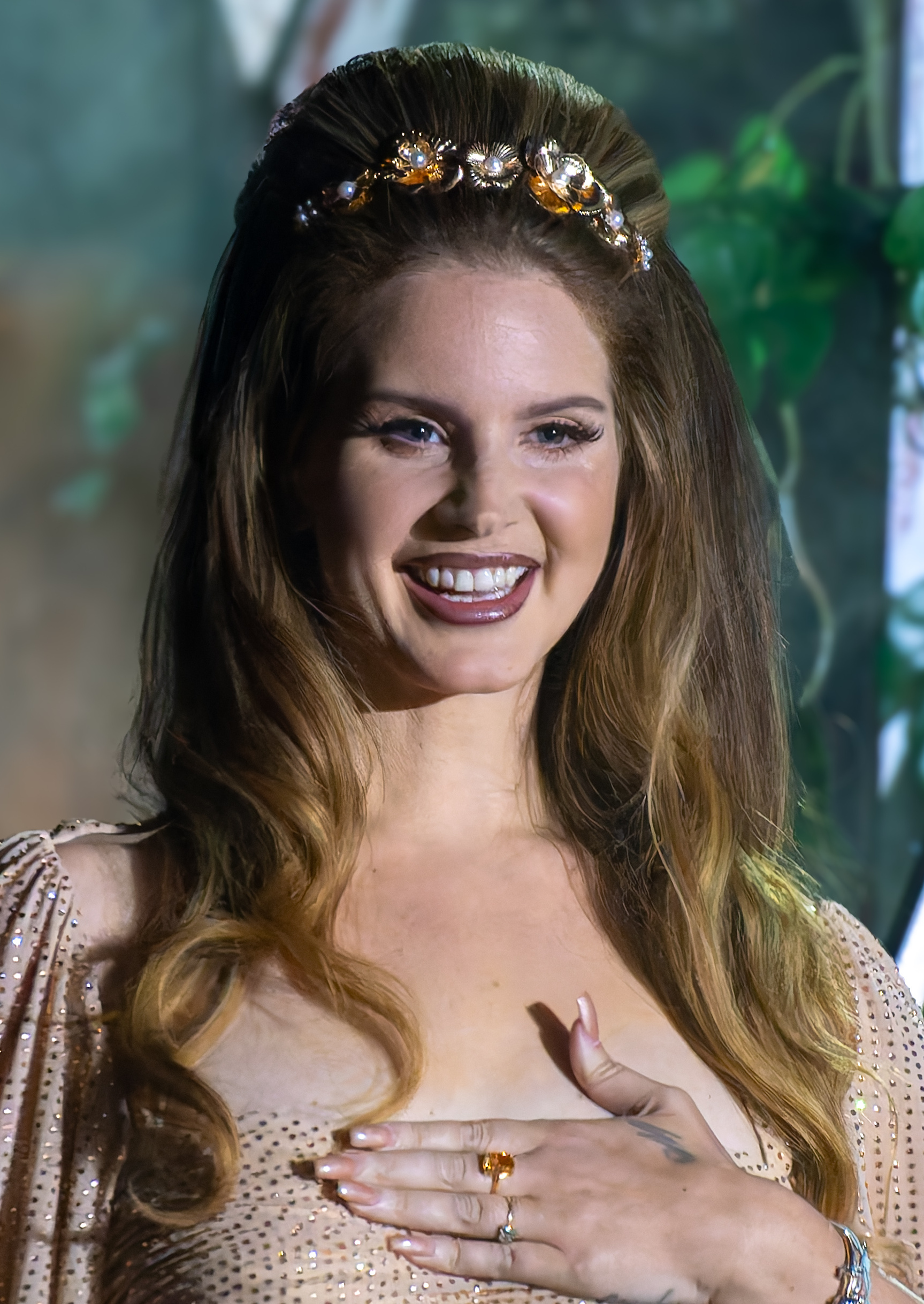
Lana Del Rey, born Elizabeth Woolridge Grant, is a highly influential American singer-songwriter of the 21st century. Her music is known for its melancholic aesthetic, its exploration of glamour and romance, and its frequent references to American popular culture from the 1950s through the 1970s. Del Rey was born in Manhattan, New York City, and grew up in Lake Placid. As a teenager, she was sent to Kent School in Connecticut due to severe alcohol addiction, and has remained sober since 2003. She later studied philosophy at Fordham University, during which time she began performing at nightclubs in New York City under various stage names.
Del Rey’s career began around 2005 with early recordings, initially using stage names such as May Jailer and Lizzy Grant. In 2010, she released her first self-titled album, but soon withdrew it. In 2011, she achieved a major breakthrough when the music video for the single “Video Games” went viral online, leading to record deals with Interscope and Polydor. In 2012, her second album, Born to Die, became a major global success. Although her early live performance on Saturday Night Live sparked intense debate about her vocals, the album ultimately became one of the longest-charting albums by a female artist in Billboard 200 history.
In the years that followed, Del Rey cemented her position in pop music with releases such as Ultraviolence (2014) and Lust for Life (2017). In 2019, her sixth studio album, Norman Fucking Rockwell!, received widespread critical acclaim, was broadly recognized as a contemporary pop masterpiece, and earned a Grammy nomination for Album of the Year. Beyond her solo albums, she also wrote and performed soundtrack songs for films including The Great Gatsby, Maleficent, and Big Eyes, showcasing her strengths in music for visual media.
Entering the 2020s, Del Rey continued to be highly prolific, publishing a poetry collection and releasing her ninth studio album in 2023. With her distinctive aesthetic and incisive lyricism, Rolling Stone praised her as “the greatest American songwriter of the 21st century.” To date, she has received numerous honors, including the Brit Awards and the MTV Video Music Awards, and has earned multiple nominations for both the Grammy Awards and the Golden Globe Awards, making her an unmistakable cultural figure in contemporary pop music.
The Day Master is Ren Water, born in the Wu month: fire is strong and earth is dry. It does not receive seasonal support, and the earthly branches Chou, Wu, and Chen create a configuration where Wealth and Officer energies are strong while the self is comparatively weak. However, the Day Branch sits on Chen, a “tomb-storehouse” for water, and Peer support is revealed to assist the self. Therefore, this is judged as a weak Day Master with roots, rather than a follow-type chart.
It is like a lake under the blazing midsummer sun: the external environment (fire and earth) is hot, dry, and pressuring, yet beneath the surface the water connects to a deep underground source (the Chen storehouse), so it is unlikely to run dry. This energetic state can make her appear languid, unforced, or even somewhat fragile on the outside (weak self), while deep inside she carries surprising resilience and self-repair capacity (rooted). She gives an impression of something “vast yet hazy,” as if always being steamed by surrounding emotions or circumstances—this is the energetic origin of her signature “decadent aesthetic”: maintaining a moist, deep presence amid intense heat and pressure.
The Wu month is led by Ding Fire, holding authority. This points to a Zheng Cai (Direct Wealth) structure with some Zheng Guan (Direct Officer) quality. Because the self is weak while Wealth and Officer energies are overly strong, the chart urgently benefits from metal (Yin Xing; Resource) to generate water, and from water (Bi Jie; Peers/Allies) to strengthen the self. Thus, metal and water are favorable; excessive fire and dry earth are unfavorable.
The favorable element “metal” represents resources, the mother, tradition, classics, and a deep inner sense of safety; “water” represents self-will and one’s own cohort. Because metal is lacking, her life tends to seek shelter in “the classics” and “old times” at a subconscious level (for example, her intense devotion to 1950s–60s American vintage aesthetics—functionally, this is a way of supplementing metal). The unfavorable “fire and earth” represent overinvestment in status and profit, and heavy real-world pressure, which can be highly depleting for her. This implies that the more she chases what is trendy in the moment (fire), the more drained she may feel; whereas when she returns to vintage sensibilities and excavates her inner melancholy (metal/water), she is more likely to feel nourished—helping establish her distinctive standing in the music world.
The year stem Yi Wood reveals Shang Guan (Expressive Output; technically: Hurting Officer). It sits on Chou Earth, a declining position, forming a complex picture of “Shang Guan meeting Guan” (not adjacent, yet the momentum remains) together with Qi Sha / Pian Guan (Indirect Officer) pressing the self. Meanwhile, Chou and Wu form a harm relationship, suggesting an undercurrent of tension between Wealth/Officer and Resource energies.
Shang Guan represents talent, defiance, and expression; Qi Sha / Pian Guan (Indirect Officer) points to turbulence, extreme pressure, and high-intensity relational dynamics. This combination shapes a personality with strong dramatic tension: she is not the bright, uplifting type of creator, but one who excels at making flowers bloom out of pain and constraint. Her lyrics often carry fascination with “dangerous men” (Qi Sha archetype) and a challenge to authority (Shang Guan). This entanglement between “Sha–Yin dynamics” and Shang Guan can incline her decision-making toward things with a destructive kind of beauty, and in relationships it can pull her into emotional vortices of “knowing it is risky, yet finding it hard to detach”—which in turn becomes a core source for her artistic output.
The Day Pillar Ren-Chen is a Kui Gang day, and it also sits on Hua Gai; the Wu month carries Peach Blossom (Charisma/Romance), and the year branch Chou also contains Hua Gai. The branches Chou and Wu harm each other, and Chen and Wu do not form a harmonious combination.
Kui Gang is an Auxiliary Star associated with strong command presence and a hard-edged decisiveness—often projecting authority without needing to display anger. Hua Gai symbolizes solitude, artistry, and a contemplative/spiritual temperament; Peach Blossom (Charisma/Romance) speaks to public appeal and social magnetism. This Shen Sha combination is both rare and internally contradictory: on one hand, she carries a starlet aura reminiscent of Hollywood’s Golden Age (Peach Blossom); on the other, at her core she can be intensely solitary, more like a recluse devoted to inner cultivation (Hua Gai). Kui Gang lends her a commanding edge—something like the aura described as “Gangster Nancy Sinatra”—so even when singing the saddest songs, she can still carry a stage-dominating, queenly presence. The Chou–Wu harm suggests the possibility of early, private wounds tied to family or intimacy; that inner tearing later externalizes into the fractured-yet-luxurious sonic texture in her music.
Ren Water is like rivers and great flows. Born in the fire-strong Wu month, it shows a “water–fire in balance not yet fully realized” pattern. With the Day sitting on Chen Earth, a tomb-storehouse that also houses Qi Sha (Indirect Officer) energy, her inner life tends to be deep and sensitive—combining water’s fluidity with earth’s gravity.
If one were to sketch a psychological portrait of Lana Del Rey, she would resemble a river moving slowly through an old cemetery on a summer afternoon. Ren Water’s nature is free and unrestrained, yet the “Chen storehouse” and the surrounding heavy earth constrain the flow, slowing it down and making it unfathomably deep. This energetic structure predisposes her toward an introspective mindset, with emotional needs that are vast and sometimes consuming. In comfort, she can be gentle and accommodating like water; but under pressure, the suppressed energy in the branches (Qi Sha) can surface as a destructive kind of melancholy or an extreme defensive mechanism. She is not playful water in the shallows, but still water over an abyss—quietly ready to absorb light and heat.
The chart’s greatest strength lies in the pairing of “Shang Guan releasing refinement” and “Hua Gai entering the chart.” Yi Wood is not strong, yet it is revealed on the stem and specializes in artistic sensitivity. Together with Chen as a water storehouse that can hold and transform, it can convert Qi Sha pressure into artistic tension.
This helps explain why she could become a defining figure for the “Sadcore” style. When ordinary people meet “Qi Sha pressing the self” (intense pain and pressure), they may collapse; yet she has a distinctive talent for collecting that pain (earth) into her reservoir (Chen), and then fermenting and sublimating it through Shang Guan (Yi Wood—creative expression) into highly aesthetic works. She has a natural edge in capturing fleeting, decadent emotions around loss and longing. Her voice is not only sound, but a container for feeling—an apt expression of the “water storehouse” function in her chart.
The core tension is “mixed Guan and Sha” alongside “Wealth disrupting Resource.” Strong earth in the branches restrains water, so personal boundaries can more easily blur amid relationships and worldly pursuits. With no strong metal Resource to protect the self, she may be prone to mental and emotional over-consumption.
This astrological tension can replay across life themes: she seeks love and protection (seeking Resource), yet may attract partners who are controlling or wounding (mixed Guan/Sha). “Wealth disrupting Resource” suggests that the rules of commerce and public life can disturb her inner quiet, intensifying anxiety after fame arrives. Temperamentally, she may live in a long tug-of-war between self-doubt and self-certainty—Ren Water wants to roam, but heavy earth can feel like captivity. This contradiction of “wanting to escape yet sinking deeper” is a blind spot in her character and also a source of the heartbreaking tension in her music.
Viewed as a whole, this is a chart of “a relatively weak self with strong pressure, channeling inspiration through art.” Ren Water, surrounded by heavy fire and earth, relies on resilience (the Chen storehouse) and artistry/sensitivity (Hua Gai and Shang Guan) to forge a distinctive path—refining worldly hardship and desire (Wealth/Officer themes) into retro, cinematic epics.
Her life trajectory is unlikely to resemble a calm, uncomplicated happiness script; it reads more like a noir film with sharp turns and dramatic rises and falls. The chart suggests she carries an unusually heavy capacity for feeling and binding attachments—not to crush her, but to position her as a recorder of her era: using a lavish voice to sing the most desolate elegies. Like a dark lotus in a sea of fire, she shapes self-restoration and artistic permanence amid volatility and controversy.
This decennial phase presents a structure of Jie Cai (Peer Rival/Resource Sharing) appearing on the heavenly stem, with the earthly branch holding Zheng Guan (Direct Officer) seated in storage. The heavenly stem Gui Water as Jie Cai points to peers and competition, and also an extension of the self; the earthly branch Wei Earth as Zheng Guan signifies rules, restraint, and pressure. For a young native, these ten years are lived amid a tension between the urge to express and flow (Water) and the strict constraints of the environment (Earth). Early experiences in a church choir align with Water’s qualities of movement and expression, yet strong Earth restrains Water—suggesting an underlying sense of emotional suppression.
Guan/Sha (Officer/Pressure) restrains the self, with Yin (Resource) not yet prominent. In schooling and early development, this tends to show as passive compliance paired with inner resistance. Zheng Guan represents conventional education and family discipline; for a Ren Water Day Master, Wei Earth is dry earth with a firm, uncompromising restraining force. This helps explain why, despite receiving elite education in adolescence, she showed early dependence on alcohol—often a pattern where Water is over-restrained by Earth and seeks an outlet, before supportive Resource (Yin) becomes strong enough to buffer that pressure.
Bi/Jie (Peers) support the self, while the Officer star remains a factor. Social dynamics in this decade mainly revolve around peers (Bi/Jie) and authority figures/elders (Officer). With Jie Cai exposed, she can be strongly influenced by friends, while also craving belonging within a group. Strict family and school governance (Officer) may feel harsh, yet it also serves as the crucible in which early values are formed.
Strong Earth restrains Water; heat dries the Earth. Wei Earth is summer-dry earth and strongly checks Ren Water. Pay attention to the kidney/urinary system, hearing, and anxiety or emotional suppression. The adolescent binge-drinking issue, in essence, reflects Water being excessively restrained and instinctively seeking “external fluids” to replenish what feels depleted.
Shi Shen (Output/Artistic Expression) releases brilliance, while Pian Yin (Indirect Resource) reaches Chang Sheng (Growth). This is a decade of qualitative change in her life trajectory. Jia Wood as Shi Shen indicates the outflow of talent, artistic expression, and an opening of the mind; Shen Metal as Pian Yin is the Chang Sheng place for Ren Water, continuously supplying vitality and spiritual support. In these ten years, she finds a way out of chaos: Pian Yin draws her into philosophy and metaphysical inquiry, while Shi Shen guides her to pick up the guitar and begin writing.
Shi Shen controls Sha (pressure), and Pian Yin transforms harsh influences. Professionally, this is the stage from accumulation to first recognition. Jia Wood Shi Shen is not only talent but also a tool for overcoming obstacles (controlling Sha). Entering Kent School (a boarding school) and later studying philosophy reflects Shen Metal (Pian Yin—nonconventional academic interests) at work. Her bar performances beginning in 2005 show the early formation of “output generating value.” Income may be modest at first, but Shen Metal as Water’s source helps ensure she doesn’t run dry—instead, she establishes the distinctive foundations of a “Sadcore” aesthetic.
Shi Shen generates value; Resource supports the self. Socially, she begins building connections in the underground music scene. Pian Yin often points to solitude and introspection; in this decade she is more likely to converse with herself or seek kindred spirits than to pursue mainstream social bustle. Romantic ties may emphasize intellectual/spiritual resonance or carry a subtle theme of mutual “salvation.”
Metal and Water generate each other; balance of warmth and cool. With Shen Metal supporting Ren Water, constitution improves markedly compared with the previous phase. Alcohol-related issues can be brought under control through Pian Yin’s reflective capacity and Shi Shen’s healthier outlet for release. Watch respiratory balance (Metal) and liver–gallbladder balance (Wood); late nights from creating may consume liver blood.
Shang Guan (Unconventional Output) paired with Yin (Resource): clear Metal and pure Water. This is the decade in which Lana Del Rey truly becomes iconic. Yi Wood as Shang Guan governs rebellion, a distinctive aesthetic, and visibility; You Metal as Zheng Yin (Direct Resource) governs reputation, rights/ownership, and mainstream endorsement. The decade branch You Metal, together with the natal Chen (day branch) and Chou (year branch), forms a powerful Metal configuration (a Resource configuration). “Shang Guan paired with Yin” is a classic structure highly favorable for recognition: Shang Guan creates conversation and signature style, while Zheng Yin consolidates it into real standing and enduring works.
Shang Guan generates wealth; Resource serves as the reservoir. The 2011 breakout of “Video Games” reflects Shang Guan energy erupting and breaking pop conventions. Then You Metal (Zheng Yin) takes effect, bringing major commercial success (Wealth) while solidifying her “godmother-level” stature in the industry (Resource/reputation). With the Metal configuration strong, support and resources are continuous: she is no longer a bar performer, but a cultural symbol with significant influence. Wealth accumulation can rise rapidly.
Peach Blossom (Charisma/Romance) joins in; Shang Guan meets Guan (the Officer). You Metal is a Peach Blossom star, and it combines with the day branch Chen Earth—romantic attention is strong and often public-facing in this decade. Yet the heavenly stem Yi Wood as Shang Guan can challenge the Officer star that often signifies a committed partner, suggesting a love life that may be rich yet turbulent—stories of longing, push–pull dynamics, or love entwined with conflict. This also becomes a major source of creative inspiration.
Excess Metal chills Water; Wood is checked by Metal. While Metal generating Water can support stamina, overly strong Metal can restrain Yi Wood (liver–gallbladder, nervous system, limbs). Guard against low mood (too much Metal, cold Water) and injuries to hands/feet or tendons. With Shang Guan emphasizing emotional release, avoid extremes that could rebound onto the body.
Chen–Xu clash, with Wealth nourishing a more demanding Sha influence. Entering this decade, the momentum shifts from prior “smooth generation” to a more turbulent pattern. Bing Fire as Pian Cai (Indirect Wealth) is prominent; Xu Earth holds Qi Sha / Pian Guan (Indirect Officer), and the decade branch Xu Earth strongly clashes with the natal day branch Chen Earth—an intense Chen–Xu opposition. This signals turning points and reconstruction. Striking the day branch (the partner palace/inner world) often points to major changes and rebuilding in living environment, family structure, or inner security.
Wealth and Sha reinforce each other; the storehouses open. Career moves into a phase with greater commercial ambition and also greater controversy. With Indirect Wealth exposed, market value remains large, but Indirect Officer (pressure) brings scrutiny and criticism. The Chen–Xu clash opens the “water storehouse” and “fire storehouse,” releasing energy in bursts—her work may become heavier and more critical in tone (as seen in shifts like the “Chemtrails” era). Gains in fame and profit remain possible, yet wealth now comes with significant public pressure and busyness rather than effortless ease.
The day branch is struck—instability and restlessness. The Chen–Xu clash directly impacts the partner palace, making this the most relationship-volatile decade. It may correlate with sudden unions and sudden splits, a partner’s health issues, or intense emotional tug-of-war. Indirect Officer often indicates forceful or high-pressure partners; people encountered may have strong personalities or bring substantial stress. Family dynamics (including parents) may also shift.
Water and Earth in conflict; heavy Earth buries Metal. The clash stirs up strong Earth, and heavy Earth restrains Water. This is a period to take health signals seriously—prioritize kidneys, urinary system, gynecological health, and circulation. Marked weight fluctuation (Earth governing flesh) can mirror the Water–Earth struggle; watch for endocrine imbalance.
Ding–Ren combination; the Day Master’s Lu returns in time. After the prior decade’s turbulence, this phase brings rare steadiness and a sense of belonging. The heavenly stems Ding Fire and Ren Water form the Ding–Ren combination, while the earthly branch Hai Water is Ren Water’s Lu Shen (Prosperity Root). This carries the symbolism of “turning conflict into concord.” She may withdraw from intense confrontation and turn toward inner peace and tangible well-being.
Wealth combines with the self; Lu Shen offers support. Professionally, the focus shifts away from expansion and conquest toward consolidation and enjoyment. “Zheng Cai (Direct Wealth) combining with the self” suggests stable, ongoing income streams (such as royalties and investment returns) without constant hustle. Lu Shen indicates personal strength and confidence; her industry standing has already solidified into a legendary position. She may reduce front-stage performances and do more behind-the-scenes production—or simply prioritize living well.
Harmony between heaven and earth; the heart finds its home. The Ding–Ren combination often points to relationship fulfillment or family stability. Compared with the previous decade’s direct clash, she is far more likely to have a steady partnership, or to reach deep reconciliation with family. Bi Jian (Peer) signified by Hai Water can also represent close friends or trusted confidants; later-life circles may become tighter and more sincere.
Water and Fire in coordination; qi and blood harmonize. With Lu Shen entering, physical vitality rebounds and energy is ample. Water–Fire dynamics are relatively balanced, supporting a brighter mood. Still, maintain the heart (Fire)–kidney (Water) balance, and avoid “comfort-related” ailments that can come from overindulgence or inactivity.
Zi–Wu clash; Yang Ren confronts Sha. This decade carries extremely forceful energy. The heavenly stem Wu Earth as Qi Sha / Pian Guan (Indirect Officer) presses the self; the earthly branch Zi Water is Ren Water’s Yang Ren (Blade Edge—peak Water strength), and it clashes with the natal month branch Wu Fire in a Zi–Wu opposition. This is a decade of pronounced Water–Fire incompatibility. Yang Ren signals toughness and stubbornness; clashing the month pillar axis suggests a major later-life conflict or change involving reputation, beliefs, or residence.
Sha and Ren both visible—seeking wins amid risk. Even in later years, she may not become quiet. Indirect Officer can indicate authority and responsibility; Yang Ren indicates execution power—she may show striking drive in certain arenas (e.g., philanthropy or social causes). However, the Zi–Wu clash can destabilize finances; guard against losses from impulsivity or being dragged into others’ problems. Avoid high-risk investing; favor preservation over aggression.
Clashing the pillar of authority—shifts in family ties. The month pillar often relates to parents or siblings; a Zi–Wu clash may suggest elders passing on or intensifying conflict with siblings. Yang Ren temperament can strain relationships; cultivate patience and flexibility to avoid damaging harmony through rigidity.
Water and Fire overstimulate each other; heart–kidney disconnect. This is a high-risk health phase. The Zi–Wu clash directly implicates the heart (Wu Fire) and blood system (Zi Water). Be vigilant about cardiovascular and cerebrovascular issues, hypertension, or sudden eye problems. Emotional volatility can be a primary driver of risk; prioritize steadiness.
Officer stars layered—returning to simplicity. After the intensity of the Zi–Wu clash, this decade enters a pure Earth cycle. Ji–Chou Earth as a unified stem-and-branch is entirely Zheng Guan (Direct Officer). For an elderly Ren Water Day Master, excess Earth can produce the pattern of “too much Earth blocking Water.” This points to reduced mobility, yet relatively stable retirement life. Priorities return fully to order, health maintenance, and everyday family matters.
Officer–Resource mutual support (implicit); dignified reputation. Career matters are largely in the past; Zheng Guan here more reflects lifetime-achievement recognition granted by society. Even without new output, reputation (Officer) remains. Financially, preservation dominates; heavy Earth suggests a secure “storehouse,” with spending focused on healthcare and wellness.
Officer governs—rule-abiding and conventional. Later-life routines are regular; social interactions are mostly limited to family or long-time friends. Zheng Guan signifies tradition and conservatism; she may become more traditional, enjoying reminiscence—contrasting with a younger, more rebellious image.
Heavy Earth restrains Water; spleen–stomach weakness. Excess Earth checks a weakening Ren Water—focus on kidney decline, urinary issues, and digestion (Earth excess can overact on Wood). Movement slows; watch for joint stiffness or stone-related conditions.
Dao Shi (Reverse Output) meets Yi Ma (Mobility Star): old tree, new blossoms. The heavenly stem Geng Metal is Pian Yin (Indirect Resource); the earthly branch Yin Wood is Shi Shen (Output/Enjoyment), and Yin is also an Yi Ma (Mobility Star). Traveling under a Mobility-Star decade in later years suggests mental sharpness and an active mind. Pian Yin points to a distinctive inner world; Shi Shen points to ease, pleasure, and enjoyment. This is a relatively comfortable and spiritually rich later-life stage.
Resource nourishes the self; Shi Shen releases refinement. Rather than pursuing worldly wealth, she enjoys intangible wealth. There may be cultural projects such as a biography, documentary retrospectives, or curated releases. Shi Shen also points to blessings through younger generations—joy may come via grandchildren.
Shi Shen generates value—warmth and harmony. Interaction with younger family members is positive; her mindset stays youthful. While Pian Yin can be solitary, Shi Shen moderates its downsides, presenting the demeanor of a wise elder.
Metal–Wood friction—watch for falls. Geng Metal restrains Yin Wood, and if the natal chart contains Shen, a Yin–Shen clash may apply; be mindful of tendon/bone injuries, falls, or decline in liver–gallbladder function. With Yi Ma activated, take extra care when traveling or going out.
Yin (Resource) protects the self; Shang Guan meets Guan (the Officer). The heavenly stem Xin Metal as Zheng Yin (Direct Resource) appears, offering the Day Master final protection; the earthly branch Mao Wood as Shang Guan is strong, but in advanced age it more often shows as mental quickness. This is a stage that favors quiet recuperation: Zheng Yin relates to medicine and caregiving, and she is likely to receive attentive support in later years.
Resource governs legacy—renown after life. By this time, assessments are largely settled; Zheng Yin consolidates her place in history. Material needs are minimal, while the spiritual and cultural legacy is substantial.
Kindness to the young; returning to nature. With a calmer mindset, the sharper edge of Shang Guan is softened by Zheng Yin, revealing a more compassionate side.
Metal–Wood contention—a critical threshold of longevity. Xin Metal restrains Mao Wood; Mao corresponds to the liver and nervous system. Watch for neurodegeneration or liver failure risk. Follow natural rhythms; favor stillness over exertion.
Tai Yin (Moon) in exaltation, gentle and inwardly contained. Tai Yin governs wealth, real estate, and the night. Placed in the Property & Home Palace, it is naturally auspicious, suggesting a beautiful living environment—often near water or in softly lit surroundings—and also the potential to inherit or accumulate substantial assets. On a deeper level, Tai Yin also represents one’s inner spiritual home: the native’s most private emotional reservoir.
Yi (Heavenly Stem) makes Tai Yin transform into Ji (Constraint). This is the most critical pressure point in the entire chart. When the Constraint transformation lands in the Property & Home Palace, it implies that “home” can become a source of pain, or that there is an unfillable hollow deep inside. It may reflect shadows from the family of origin, or a sense of piercing loneliness even while living in luxury. This transformation can cast a shadow over Tai Yin’s promise of “wealth,” showing up as extreme pickiness about one’s living space, emotional meltdowns at home, or distress connected to female relatives in the family line.
The deep, private melancholy that surfaces across albums like “Born to Die” and “Ultraviolence” reads like Tai Yin transforming into Constraint projected onto the inner spiritual home. Although she owns multiple luxury residences in places such as Los Angeles (Tai Yin signifies wealth), her soul seems to keep searching for a “home” that does not quite exist. That inner sense of lack becomes one of the deepest sources of her artistic creation.
Tian Fu (Treasury/Steward Star) in command: abundant resources and strong reserves. Tian Fu is a major Southern Dipper star associated with storing, stewardship, and command—signifying strong management ability, inclusiveness, and stability in career matters. Together with Tian Xiang (Minister/Support Star) in the Life Palace, it forms the pattern Fu-Xiang Chao Yuan (Treasury–Minister Alignment), indicating extremely steady career planning: not only talent, but also business sense. Tian Fu does not rush into risks, suggesting that behind an apparently decadent aesthetic, she likely maintains a very solid professional roadmap.
No direct Four Transformations. Tian Fu is often regarded as carrying an inherent Hua Ke (Recognition/Credibility) quality (even if it is not formally part of the Four Transformations here). This supports a stable position within the entertainment industry rather than a brief flash of popularity. She can manage her copyrights and catalog like a well-run treasury, with her career foundations deepening over time.
Although Lana is often labeled “indie” or “niche,” the Career Palace suggests she is, in practice, an artist with very strong mainstream commercial value. Tian Fu helps her maintain a composed, center-holding presence within a chaotic industry. She is less likely to be derailed by major commercial missteps; each album functions as steady, incremental asset-building.
Tan Lang (Desire Star; Desire/Charisma Star), abundant Peach Blossom (Charisma / Romance). Tan Lang is one of the strongest Peach Blossom indicators, associated with desire, talent, and esoteric or spiritual pursuits. In the Fortune & Spirit (Fu De) Palace, it points to a richly textured inner world filled with yearning. She seeks peak sensory experience and has an intuitive feel for art, religion, and mysticism. With this configuration, it can be hard to feel spiritually “sated,” and one may keep filling the inner space through relationships, constant creation, or cultivation practices.
No direct Four Transformations. With Tan Lang in Fu De, “pleasure” becomes a major life driver. Her values can look like a blend of hedonism and nihilism. Rather than being bound by conventional morality, she is willing to face human greed and erotic longing directly and sublimate them into art—one reason she can write so many songs about descent and redemption.
The core of Lana Del Rey’s artistic persona aligns strongly with Tan Lang—sensual, languid, highly alluring, with a faint touch of the divine. Her fixation on vintage glamour and her exploration of love and death are Tan Lang pushed to an extreme in the inner-spiritual realm. Her life philosophy reads like a grand, never-ending sensory party.
Ju Men (Giant Gate), a shadowed star—friction in speech and understanding. Ju Men governs speech, disputes, and obscurity. In the Parents Palace, it often indicates communication barriers with parents (especially the father), or an early home atmosphere that felt oppressive—marked by quarrels or cold emotional conflict. Ju Men also implies “separation at an angle,” pointing to a deep generational gap or persistent misunderstandings between two generations.
No direct Four Transformations. Ju Men’s darker tone falling on the parent–child dynamic suggests that the native may have left home early due to family circumstances, or been sent to boarding school—creating a literal, physical separation. Such early estrangement and blocked communication often pushes a child inward, cultivating a distinctive outlet (singing, poetry) for release and self-expression.
Biographical accounts suggest that Lana had a tense relationship with her parents early on, and that she was sent to boarding school as a teenager to address alcohol-related issues. Ju Men in the Parents Palace closely echoes that early experience of distance and misunderstanding. The pain of “having words but being unable to say them” later transformed into her lyrical style—narratives that feel like they want to speak plainly yet remain veiled and indirect.
Tian Xiang sitting alone; Fu Xiang facing the precinct. Tian Xiang is an “Imprint Star,” associated with sustenance, style, and balance, with a strong supportive and mirroring quality. This suggests the native is not perceived through the rough, trailblazing posture of an “originator,” but rather establishes themselves through a carefully crafted persona and aesthetic. Those with Tian Xiang in the Life Palace are highly skilled at presentation and self-curation; their temperament often appears gentle yet slightly detached, with an almost exacting pursuit of beauty. They can be strongly shaped by their environment, developing a distinctive vintage or languid, decadent aesthetic aura.
Supported from both sides by Tian Liang Hua Quan (Power Transformation) in the Sibling Palace and Zi Wei Hua Ke (Reputation/Scholarly Transformation) in the Spouse Palace. Although the Life Palace itself has no primary Four Transformations, the strong flanking influence indicates that the native’s life trajectory is deeply affected by surrounding authority figures (such as producers or partners) and by emotional experiences. This “flanking-palace” effect often means the path to recognition comes with external momentum as well as controversy.
Lana Del Rey’s stage name is itself a carefully designed Tian Xiang-style creation. Her transition from Lizzy Grant to Lana reflects Tian Xiang’s theme of “recasting the image.” The vintage diva persona reminiscent of Hollywood’s golden era, together with the undertone of compliance and devotion expressed in her lyrics (Tian Xiang’s supportive nature), closely matches the signature of this Imprint Star—she functions like a mirror, reflecting the era’s desires and sorrows.
Tian Liang stationed here, a sign of solitude and restraint. Tian Liang is a protective “shade” star and is also associated with rules, discipline, and a solitary streak, carrying an aloof, mature, and senior quality. This often implies that among peers or in sibling-like dynamics, there can be a serious distance—sometimes with an implicit “instructional” tone. It can also indicate that in early social circles the native may seem precocious or out of step, and tends to associate with older people or with those who are more contemplative.
Yi Stem: Tian Liang Hua Quan (Power Transformation). Hua Quan amplifies Tian Liang’s drive for control and its principled stance. This suggests siblings or close collaborators (such as an early team) may hold a dominant position in her life, or that she carries decisive influence and an “older-sister” authority among peers—an authority that often comes from her insistence on artistic ideals.
In practice, Lana maintains extremely close ties with her sister Chuck and brother Charlie, and they are often deeply intertwined in visual work and daily life. Tian Liang Hua Quan supports the idea that this bond is not only familial; it also contains a professional mutual-support structure and a degree of serious commitment—she serves as the core spiritual pillar of this small circle.
Lian Zhen (Intensity & Bonds Star), secondary Peach Blossom (Charisma/Romance): complex and changeable. Lian Zhen is sensitive and restless, carrying both lineage-type ties and psychological entanglements. In the Friends/Associates Palace, it points to an exceptionally complicated social circle, potentially mixed with edgy or non-mainstream elements. Friends or fans may feel toward her in ways that are fervent and polarized, easily creating love-hate entanglements. It also suggests she can be drawn into disputes or gossip, or get implicated by friends.
No direct Four Transformations. Lian Zhen’s “confining” quality implies the native can feel bound by social relationships. She may attract a group of extremely loyal yet highly exclusive followers (with insular, quasi-cult dynamics). This also corresponds to her early experience in underground music scenes and connections with various fringe figures.
Lana’s fan community (Gangsters) is known for its intensity, which reflects the magnetic field of Lian Zhen. The controversies she has faced on her path to fame, online harassment, and the subtle dynamics with peers often carry Lian Zhen’s kind of complexity—hard to cut cleanly, hard to fully untangle. Her social world is rarely plain or simple; it tends to come with strong dramatic tension.
Tian Tong (Ease & Sentiment Star): warm connections when away from home. Tian Tong governs emotions, enjoyment, and a childlike sincerity. When placed in the Travel/Public-facing Palace, it suggests that in public or while traveling, the native naturally presents a spontaneous, gentle, and even slightly languid image. This closely matches her often unhurried stage presence—casual movement, turning in circles, and free-form singing. The public tends to be more forgiving toward her, often viewing her as someone to be cared for.
No main star directly involved in the Four Transformations. Tian Tong’s influence shows up in a relatively pure form as an “emotional flow.” When abroad or on tour, she is more likely to seek spiritual relaxation and emotional comfort than to push for conquest in the style of Qi Sha / Pian Guan (Indirect Officer). This also helps explain why her live performances are sometimes criticized as “too casual,” since Tian Tong does not emphasize intense competition.
This configuration can make her global touring feel like the narrative of a “lost girl” searching for a place to belong. In public settings she rarely comes across as aggressive; instead, this Tian Tong-style softness and emotional expressiveness becomes her strongest advantage in general-public appeal, naturally evoking a protective response.
Wu Qu with Gua Xiu: Metal qi in excess. Wu Qu corresponds to the Metal element and is associated with the lungs/respiratory system and the bones/teeth. Psychologically, Wu Qu’s toughness and solitary tone can contribute to nervous-system tension, showing up as depression, anxiety, or certain compulsive patterns. Strong Metal’s austere quality can also hint at accidental injury or surgery earlier in life.
No direct transformations; subtly resonant with Tai Yin transforming to Hua Ji (Constraint). The Health Palace and the Home/Property Palace (Tai Yin) often interlink physical condition with one’s inner “emotional home.” Tai Yin’s Hua Ji can cast a shadow that softens and erodes Wu Qu’s hardness, making it easier for “emotional knots” to somatize—such as alcohol misuse (water-related vulnerability) or disordered eating—serving as a kind of dissolution of an inner rigid defense mechanism.
She has spoken publicly about adolescent alcohol addiction and intense anxiety around death. The blend of Wu Qu’s loneliness with Tai Yin Hua Ji’s heaviness appears to have left traces in her body and wellbeing. Her vocal quality (respiratory function) carries a distinctive languid huskiness, which may also relate to Metal qi being strained or to a unique physiological makeup.
Tai Yang in residence: prestige more than accumulation. Tai Yang governs radiance, reputation, and giving. In the Wealth Palace, it suggests income largely comes from monetizing “name recognition.” This star also tends toward “spend first, earn later” or “prioritize fame over profit,” indicating generous spending and difficulty retaining wealth, or paying heavily to maintain presentation and image. The scale of wealth depends on Tai Yang’s strength, typically pointing to “sunlit money” arising from public attention.
No principal-star transformations; influenced by the Wellbeing/Desires Palace (Fu De Gong). The Wealth Palace’s dynamics are strongly driven by personal desire and enjoyment (Fu De Gong). Because Tai Yang emphasizes “giving,” the native may be less inclined toward meticulous budgeting, and more inclined to pay for artistic projects, charity, or others. Wealth becomes a byproduct of her talent’s radiance rather than an explicitly pursued goal.
Her path of wealth accumulation closely fits Tai Yang’s signature—fame first. She builds major cultural influence (radiance) and then receives commercial returns. Rather than managing money like a traditional businessperson, she invests resources into sustaining a grand artistic vision and lifestyle; money functions as fuel in service of her “shining.”
Zi Wei and Qi Sha together: the imperial seat taking command. This is a highly explosive star pairing, symbolizing the combination of a “sovereign” and a “warrior-strategist.” It indicates the native is strongly drawn to powerful, ambitious partners—often with an edge that can feel risky or hard to handle. She may be deeply attracted to men who carry dominance, rebellion, or an untamable quality; the ordinary rarely captures her interest. This configuration also suggests that intimate relationships can carry a strong tension of conquest and counter-conquest, making the emotional landscape more volatile and hard to settle.
Yi Stem: Zi Wei Hua Ke (Reputation/Scholarly Transformation). Hua Ke relates to recognition, reputation, and cultural refinement. This implies her love life often becomes a focal point of public attention—or that a significant part of her “name” is built through how she portrays love. Her partners or relationships (even when tragic) are likely to be remembered and circulated in a “renowned” or artistically stylized form.
This neatly explains the recurring theme in Lana’s lyrics: falling for “bad men,” gang bosses, or older figures with status and influence. She transforms Zi Wei–Qi Sha-style intensity—an aesthetic devotion to love with a destructive undertow—into art (Hua Ke). Her romantic history is not only private life; it also becomes fuel for her rise and a major component of her public image.
Tian Ji + Po Jun in a mixed configuration (atypical combo). Tian Ji governs intellect and adaptability, while Po Jun indicates breaking down and rebuilding after disruption. This suggests the native’s attitude toward “output” (whether children or creative works) can be quite changeable. She tends to repeatedly overturn old creative patterns, with very fast, jumping thought processes. In teaching or in how she relates to subordinates/fans, she may run hot and cold, with many variables.
Yi-stem: Tian Ji transforms to Hua Lu (Prosperity). Hua Lu points to the flow of affinity and resources/wealth. This strongly activates Tian Ji’s agility, implying a steady stream of creative inspiration (one’s “spiritual children”), and that these ever-shifting ideas can translate into tangible returns. Her work shifts in style; each “turn of mind” can be converted into market value.
Applied to her music, this helps explain why she can be prolific while constantly evolving in style. From early hip-hop collage to later psychedelic rock and then folk piano, her “artistic offspring” keep undergoing Tian Ji–style calculation and Po Jun–style reconfiguration. Her stance toward her fan base can also feel close-yet-distant; that unpredictability can actually heighten her appeal.
Generate your personal chart in under a minute. Sign up free and get 30 credits — enough for two or more AI readings. No credit card.
Generate my free BaZi chartPlease sign in to join the discussion
Sign In