Year
Bing
Yin
Zheng Guan
Shang Guan
Hidden Stems
Jia (Shang)Bing (Zheng)Wu (Zheng)
- Star Luck
- Tai
- Sitting Branch
- Zhang Sheng
- Void
- Xu-Hai
- Na Yin (Elemental Sound)
- Lu Zhong Huo
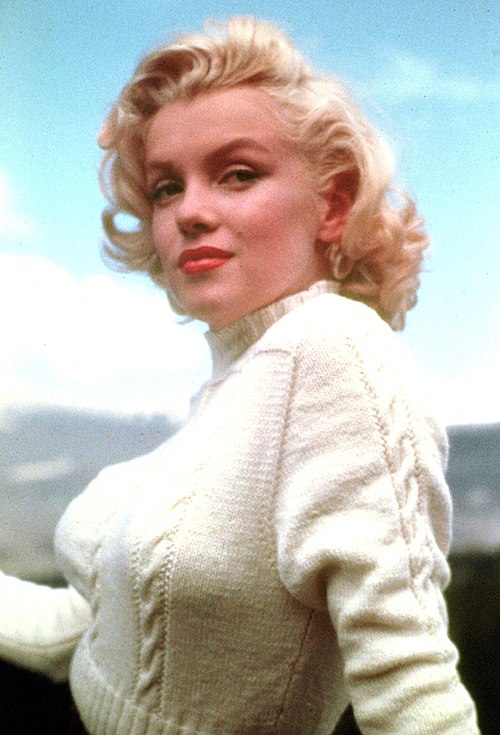
Marilyn Monroe (June 1, 1926 – August 4, 1962) was an American actress and model, one of the most famous sex symbols of the 20th century. Born in Los Angeles, she spent her childhood shuttling between foster homes and an orphanage, and married James Dougherty at the age of 16. While working in a factory during World War II, she was discovered by a photographer and began a modeling career, signing a contract with 20th Century Fox in 1946 and changing her name to Marilyn Monroe.
She rose to fame playing 'dumb blonde' roles, and in 1953, starring in Niagara, Gentlemen Prefer Blondes, and How to Marry a Millionaire, she became a top star. That same year, her nude photographs appeared in the inaugural issue of Playboy. She was suspended by Fox for refusing to shoot, and in 1954, she founded her own production company to fight for autonomy. In 1955, she negotiated a new contract with Fox, gaining greater control.
In 1956, she married playwright Arthur Miller, and that same year, she starred in Bus Stop, earning a Golden Globe nomination. In 1959, she won the Golden Globe for Best Actress for Some Like It Hot. In 1961, she starred in The Misfits, which became her last completed film. Her personal life attracted much attention, with both of her marriages (to Joe DiMaggio and Arthur Miller) ending in divorce. On August 4, 1962, she died of a barbiturate overdose, ruled as probable suicide.
After her death, Monroe became a pop culture icon, ranked by the American Film Institute as the sixth-greatest female star of Hollywood's Golden Age. Her image and works continue to influence later generations, though her tragic end has also spawned numerous conspiracy theories.
Xin Metal Day Master, born in the Si month, loses seasonal support and is weak; yet the Day Branch You Rooster provides a strong root through the Xiè (Output), with two Eating God stems revealing talent, and the Officer star combining with the Day Master, forming a foundation for the 'weak body using Seal and Peer' structure. This means she is naturally delicate but possesses a tenacious inner support, just like exquisitely carved jewelry (Xin Metal), tempered in fierce fire (Si Fire - Officer and Killing), needing Earth (Seal star) to protect and nourish, and also needing peers (Peer stars) to assist. Overall, she gives an impression of dazzling brilliance and charm, but internally she lacks a sense of security and easily depends on external validation. Her greatest strengths lie in artistic talent and mysterious allure; the potential challenges are a chaotic emotional life and excessive attachment to men. Xin Metal born 10 days after Grain Buds, Si month fire is at its peak, Officer and Killing hold power; a piece of jewelry-like metal would have melted without the You Rooster root. Fortunately, the Day Branch You Rooster is like a rock on a deserted island, supporting her against the burning of fate, but this strength is ultimately limited, and she struggles between fierce fire and cold water all her life.
The structure is 'Eating God controlling Officer'; the Useful God is Earth to transform Fire and generate Metal, favoring Metal Peers to support the body; avoiding Wood and Fire. In her chart, two Gui Water Eating Gods in the Heavenly Stems attempt to control the Bing Fire Zheng Guan (Direct Officer) in the Year Stem. This is like an artist trying to break free from traditional norms and pursue free expression, but the Zheng Guan (Direct Officer) represents reputation and husband, and being controlled leads to an unhappy marriage and damaged reputation. Because her body is weak, what she needs most is the 'Seal star', i.e., Earth energy. Earth can transform the burning of fierce fire (Officer and Killing) and then generate Metal, akin to a mother's protection, inner cultivation, and wisdom. Unfortunately, Earth is very weak in her chart, hidden within the Fire and Earth branches, difficult to utilize, and she lacked a true protective support throughout life. This structure forces her to rely on Fire (Officer and Killing) for career advancement, yet she is harmed by Fire, like a moth drawn to flame—rising to fame (Fire) in Hollywood, yet consumed by it. Si month Fire and Earth share the same palace; Si contains hidden Wu Earth Direct Seal, but it is dried by strong Fire, like parched soil unable to generate Metal, so she is spiritually always hungry, constantly seeking externally but never finding satisfaction.
Core combinations: Bing-Xin combination tending to Water (intention), two Eating Gods emerging to control the Officer, and Si-You semi-combination of Metal. The Bing Fire Zheng Guan (Direct Officer) combines with the Xin Metal Day Master, indicating an innate connection with authority and fame, and an attraction to older or powerful men, desiring to become their 'trophy'. The Eating God is the source of her talent and sexual charm; with two Eating Gods emerging, she excels in expressing emotions and displaying physical beauty, becoming a sex symbol of her generation. However, the Eating God controlling the Zheng Guan (Direct Officer) causes both a rebellious mentality and an involuntary dependence on men in emotional relationships. The Si-You semi-combination of Metal, though not strong, symbolizes a bit of tenacity and self-esteem deep in her heart, allowing her to retain a sliver of clarity amidst the flashy world. But this bit of Metal energy ultimately cannot withstand strong Fire, resulting in vacillating temperament—sometimes stubborn, sometimes fragile. Her decisions are often driven by emotion, swinging between love and career. The Bing-Xin combination originally has the potential to transform into Water, but with Si month Fire flourishing, the transformation agent is controlled, so it combines without transforming, indicating she both wants to attach to the Zheng Guan (Direct Officer) and retain her independent side; this tug-of-war is the root of her lifelong emotional tragedy.
Key Auxiliary Stars: Red Splendor, Solitary Star, Death Spirit, Heavenly Yi Mentor; Earthly Branch Yin-Si mutual punishment. The Day Pillar carries 'Red Splendor Star', a marker of romantic encounters and entanglements, destined for endless peach blossoms, but also attracting gossip and harm. The 'Solitary Star' sits in the Month and Hour Pillars, hinting at deep inner loneliness—no matter how bustling the scene, she always felt isolated, as she said, 'I only wear Chanel No. 5 to bed, that's my only piece of clothing,' reflecting extreme solitude. The 'Death Spirit' makes her soul sensitive, prone to mental distress, even linked to drugs and suicidal tendencies. Fortunately, the 'Heavenly Yi Mentor' averts calamities, ensuring she always encounters benefactors in hardship. Yin-Si mutual punishment: the Yin Year Branch punishes and harms the Si Fire in Month and Hour, symbolizing trauma from her original family (childhood foster care, mother's mental instability) and her own physical problems (multiple miscarriages, gynecological issues). The punishment also intensifies Fire, causing her heart-fire to flare, emotional loss of control, and ultimately an early demise. Los Angeles, on the West Coast, with even stronger Wood and Fire energy, aggravated the Yin-Si punishment, causing her to suffer the most intense burning in the most glamorous place.
Xin Metal Day Master, outwardly soft but inwardly strong, paired with Bing Fire Zheng Guan (Direct Officer) combining with the body and Gui Water Eating God revealing talent, forming a complex personality where 'a jewel in the casket' and 'a moth drawn to flame' coexist. She is like a meticulously polished pearl, warm and dazzling on the surface, but hard and fragile at the core. She desperately craves love and attention, just as Xin Metal needs Water (Eating God) to show luster, and Fire (Officer star) to shape its image. Under pressure, she displays extraordinary tenacity (rising from a bottom-tier model to a superstar), but in comfort, she easily indulges in sensory pleasures (alcohol, drugs). Her emotional needs are intense; the Bing-Xin combination ties her self-worth to her partner, and once the relationship breaks, her world collapses. Her typical reaction: when feeling ignored or threatened, she becomes hysterical, using extreme charm or self-destructive behavior to grab attention—precisely the manifestation of an imbalanced Eating God controlling Officer. Xin Metal's nature prefers moisture and despises dryness; the Si month's dry fire, coupled with two Si attacks, keeps her mentality in constant anxiety: outwardly a sex goddess, inwardly a crying girl.
The Eating God is the star of talent, double-emerging in the Heavenly Stems, and combined with sexual symbolism, granting her unparalleled performance and body language talent. The Eating God represents creativity, eloquence, and artistic cells; hence her screen persona radiates temptation in the most natural way, becoming an eternal goddess. The Bing-Xin combination also bestows a mysterious regal quality, making her more than just a sex bomb—like the 'princess' of every man's dream. Her competitive edge lies in perfectly fusing vulnerability with temptation, which is the essence of Xin Metal: 'Its quality is supremely hard, its form is jade-like and moist.' If the Seal star were strong, she could have become an even better actress or cultural icon, but even with a weak Seal, she earned historical status with the help of Heavenly Yi Mentor and General Star. Her path to success relied on the intuitive talent of the Eating God, coupled with high-society opportunities brought by the Zheng Guan (Direct Officer), climbing rapidly. The Hour Pillar Gui Si shows Eating God sitting on Yi Ma (Mobility Star) and Gui Ren (Mentor), indicating her artistic expression always resonated with the times; her crafted image of the 'blonde bombshell' was actually a carefully designed innocence, demonstrating high-level control of the Eating God.
Core conflict: Eating God controlling Officer, creating a tug-of-war between 'freedom and attachment'; Yin-Si punishment, leading to familial discord and inner spiritual fragmentation. Throughout her life, she repeatedly faced the same dilemma: she craved the security of traditional marriage (Zheng Guan (Direct Officer)), yet couldn't endure restraint and used her sexuality (Eating God) to sabotage it. This is reflected in her marriage to DiMaggio—he wanted her to be a housewife, but she insisted on filming the iconic skirt-blowing scene. This destructiveness stems from an inner desire for independence and control, yet lacking sufficient strength to be independent, she could only prove her existence by harming relationships. Another contradiction is the 'weak Seal star': the Seal represents wisdom, mother, and protection. Its weakness led to a lack of true judgment, making her easy to exploit, and also led to substance dependence, as drugs and alcohol provided temporary 'fake Seal' experiences—peace and satisfaction. Her personality weaknesses: extreme emotionality, lack of boundaries, and low self-worth; she traded her body for love but always got emptiness in return. In her chart, bright Fire oppresses Metal, and the scant Earth is parched; spiritually rootless, she became like a solitary shadow illuminated by a glaring spotlight, unable to find footing.
Fire tempers true gold, yet the pearl sinks in a sea of fire. Marilyn Monroe's life was one where Xin Metal was scorched by Si Fire Officer and Killing, wrapped in the flashy Gui Water Eating God. She wrote a myth of her era with her body, yet could never settle her existence with her soul. Her destiny theme was 'fame and destruction,' just like the confrontation between Bing Fire and Gui Water in her Eight Characters: fire blazed, water dried up, and she ultimately faded amidst a haze of mystery. This is a classic tragedy of the Eating God controlling Officer pattern with a weak body lacking Seal: talent made her, and destroyed her; she became a sacrifice to her own desires. Los Angeles, her birthplace, with Wood and Fire flourishing, amplified her stardom and accelerated her burnout; the Solitary Death Spirit intertwined with Red Splendor, letting her experience ultimate desolation under the watch of millions. Her life was as splendid as summer flowers, her death as quiet as autumn leaves—truly a matter of destiny.
Shang Guan (Hurting Officer) appears openly, Zheng Yin (Direct Seal) sits in the branch, outward flamboyance coexisting with inner protection. Shang Guan (Hurting Officer) is the energy of talent and rebellion, Zheng Yin (Direct Seal) represents elders, protection, and learning. During this decade, the native is transitioning from childhood to adolescence, longing for free expression internally but often constrained in reality. Her unstable natal family caused her to experience a dependent life early on. She began to show performing talent, but was sensitive and self-conscious internally. Overall, it was a period of accumulation and tempering, laying the groundwork for future breakthroughs.
Shang Guan (Hurting Officer) generates wealth, but Zheng Yin (Direct Seal) restrains, career sprouting but full of obstacles. Shang Guan (Hurting Officer) generating wealth means earning through talent and art, but she lacked resources and background. Zheng Yin (Direct Seal) represents stability and norms, conflicting with the rebellion of Shang Guan. Before age 13, she moved between foster homes; at 14, she was sexually assaulted; at 16, she was forced into marriage to escape hardship. This experience brought no wealth accumulation, but left deep psychological scars. She tried modeling, but earned little and lived in poverty.
Zheng Yin (Direct Seal) as the mother star is impacted, relationships filled with loss and loneliness. Zheng Yin (Direct Seal) represents mother and mentors, but in her chart it is weak; she lost her father and mother early, and received little care. Her marriage was brief, separating soon after marrying at 16. She yearned for love but lacked security, had difficulty socializing with peers, and often felt excluded. Her fame was not yet established, and public attention was low.
Shang Guan (Hurting Officer) drains the self, water and earth clash, emotions fluctuate intensely. Shang Guan (Hurting Officer) consumes the vitality of Xin Metal; the dampness of Chen Earth is heavy, easily triggering respiratory issues. She suffered from asthma and rhinitis. Psychologically, Shang Guan is emotional, coupled with early trauma, she often experienced depression and anxiety, with poor sleep. Attention to diet regularity and mental health is needed.
Bi Jian (Peer) supports the self, Pian Cai (Indirect Wealth) flourishes greatly, a golden decade of life reversal. Bi Jian (Peer) represents friends, competitors, and personal strength; Pian Cai (Indirect Wealth) represents unexpected wealth, opposite-sex attraction, and fame. In this decade, she completely escaped the lower rung, breaking into showbiz with her looks and opportunities. In 1945 she modeled, in 1946 she signed with Fox, in 1948 she filmed her first movie, and by 1950 she was rising to fame. She burned like wildfire, becoming a sex symbol. Wealth and fame soared, but relationships were tumultuous.
Pian Cai (Indirect Wealth) doubly manifested, gaining both fame and fortune, but Bi Jian (Peer) contests wealth, competition is fierce. Pian Cai (Indirect Wealth) brought acting opportunities and huge income; she became one of Hollywood's top-grossing actresses. Bi Jian (Peer) represents peer competition; she vied for resources with studios and other actresses. 'Gentlemen Prefer Blondes' (1953) made her A-list, and in 1954 her salary reached $100,000. But behind it lay contract disputes and gender discrimination; she strove for autonomy. Wealth came quickly, but spending was lavish—finances were not stable.
Pian Cai (Indirect Wealth) acts as Peach Blossom (Romance), Bi Jian (Peer) brings many romantic entanglements. Pian Cai (Indirect Wealth) flourished, bringing excellent opposite-sex attraction; she dated Joe DiMaggio (married 1954) and others. Bi Jian (Peer) also represents public competition; her love life was magnified by the media. Her marriage lasted only nine months; after divorce, she remained entangled with DiMaggio. She longed for family warmth but was repeatedly disappointed. Fame brought adoration but also loneliness; she had many friends but few confidants.
Strong Wood exhausts Metal, immense mental stress. Pian Cai (Indirect Wealth) associated with Mao Wood exhausts Xin Metal; even Bi Jian (Peer) supporting the self cannot withstand the strong Wood. She suffered long-term insomnia, relied on sleeping pills and alcohol, and was hospitalized for exhaustion in 1954. Her moods fluctuated, easily angered or sad. Attention to liver-gallbladder and nervous system care is needed.
Jie Cai (Rob Wealth) seizes wealth, Zheng Guan (Zheng Guan (Direct Officer)) enters the chart, a turning point from peak to decline. Jie Cai (Rob Wealth) is a force of contention and loss; Zheng Cai (Direct Wealth) represents stable income and family. In this decade, her career maintained its peak but began to spiral out of control, and her personal life fell into chaos. 'The Seven Year Itch' (1955) became an iconic sex symbol, but she broke with the studio and founded her own company. In 1956 she married playwright Arthur Miller, attempting to transform into a serious actress, but box office returns declined. In 1962, she died from a drug overdose at age 36.
Jie Cai (Rob Wealth) overcomes Zheng Cai (Direct Wealth), career ups and downs. Jie Cai represents competitors and investment losses. She founded Marilyn Monroe Productions, made 'Bus Stop' and others, with moderate success. Zheng Cai (Direct Wealth) is stable income, but is overcome by Jie Cai; although salary was high, it was consumed by agents and taxes. Her contract disputes with Fox led to her firing in 1962; later re-signed but under poor terms. Wealth came and went quickly.
Yin Wood, Zheng Cai (Direct Wealth), combines with the year pillar, marriage and fame repel each other. Zheng Cai represents husband and stable relationships. She married Arthur Miller, but cultural differences were vast; Miller wrote scripts for her but the marriage was strained. In the Liu Nian (Annual Influence) year of 1962, Ren Yin, Yin (Zheng Cai) was combined, the husband star was controlled, on the brink of divorce. Fame shadowed her; she was objectified as a sex symbol while inwardly craving respect. Her alleged affair with the Kennedy family added a tragic hue.
Jie Cai (Rob Wealth) contends with Officer, water and fire imbalance, physical and mental breakdown. Jie Cai aggravated mental drain; Yin Wood generates Fire, strong Fire overcomes Metal. She chronically used barbiturates and died of overdose in 1962. Her emotions were extremely unstable, with multiple suicide attempts. Strict medication control was needed, but no one really helped her.
The Parents Palace is empty (no major star), with the Growth stage in Death (Chang Sheng at Si). An empty palace in the Death position indicates extremely weak parental affinity; the Parents Palace energy is very deficient. No major star means there is no overarching protective tree, and the Death position further suggests the heaviness of separation by life or death. Marilyn's biological father never appeared, her mother Gladys was hospitalized long-term with schizophrenia, and she was shuttled among multiple foster families and an orphanage. The Death position in the Parents Palace also symbolizes her disillusionment with the mother figure—her mother once tried to drown her, a memory that left her lacking a sense of security for life.
There are no Four Transformations, but it is influenced by the fallen Tian Liang (Star of Shelter) in the Siblings Palace and the mismatch of Tai Yang (Sun) and Tai Yin (Moon) in the Health Palace. The fallen Tian Liang in the Siblings Palace signifies a lack of familial shelter; the disharmony between Sun and Moon in the Health Palace affects emotions, further worsening parent-child relations. Marilyn once searched for her biological father in vain, and when she visited her mother as an adult, they could not communicate normally due to her mother's illness. The empty and void Parents Palace caused her to spend her life searching for men who could replace fatherly love (such as older husbands and lovers).
Marilyn's family of origin was the starting point of her tragedy: her father left before her birth, her mother could not care for her due to schizophrenia, and she experienced at least nine foster families before age six and spent two years in an orphanage. She later tried to repair her relationship with her mother, providing financial support, but her mother no longer recognized her. The Death position in the Parents Palace not only reflects parental absence but also manifests in her own fate—she herself never had the chance to become a mother (multiple miscarriages). This rootless predicament was covered by the halo of fame, but it became the painful backdrop of her life.
Lian Zhen (Integrity Star) in its temple with Hua Ji (Transformation into Avoidance) sitting in the Fu De Palace (Fortune Palace), while Chang Sheng (Life Growth) is at the Sickness stage. Lian Zhen is the secondary Peach Blossom star and a confining star; when Hua Ji transforms it, it worsens into mental imprisonment and emotional pain. The Fu De Palace represents the inner world, spiritual enjoyment, and blessings. This configuration is the greatest hidden pain in Monroe's chart: Lian Zhen Hua Ji left her chronically plagued by depression and anxiety, turning love and desire into a cage, and diluting moments of happiness with self-blame or fear. The Sickness stage exacerbated her mental health issues.
Lian Zhen Hua Ji directly impacts the Fu De Palace. Hua Ji turns Lian Zhen’s sensitivity into hypersensitivity and paranoia, causing her to pursue love yet repeatedly get hurt, and to long for love but be unable to trust. Monroe’s multiple suicide attempts and dependence on medication all trace back to this root. She also once wrote in her autobiography: “I live in fear,” which is exactly the portrayal of Lian Zhen Hua Ji confining her soul.
Monroe's mental world was extremely complex: she studied acting, read books, listened to music (trying to cultivate a refined taste), but could never escape self-loathing. She frequently consulted psychiatrists, became addicted to sleeping pills and sedatives, and suffered emotional breakdowns on set. Her affairs with the Kennedy brothers did not give her security; instead, they multiplied her stress by involving her in political whirlwinds and celebrity scandals. In the weeks before her death, her mental state was on the verge of collapse—this is the highest-intensity activation of Lian Zhen Hua Ji in the Fu De Palace.
Qi Sha (Star of Bold Action) sits in the Destiny Palace in a strong position, with the Growth stage in the Tomb (Chang Sheng in Mu), and Tan Lang (Desire Star) as the Life Master. Qi Sha is a general star, governing decisiveness, risk-taking, and transformation; its strong position amplifies a daring and bold impact. The tomb position hints at inner loneliness and accumulation—this force often requires external catalysts to be fully activated. The Life Master Tan Lang bestows artistic talent and social charm, but Qi Sha's drive makes her go beyond mere sensual enjoyment, using art as a weapon to break through social strata. This combination manifests in the native: early use of a sexy image to challenge conservative society, constantly pushing industry boundaries; each career shift (from model to actress to producer) was a Qi Sha-style breaking of the old and establishing the new.
This palace has no Four Transformations, but the Movement Palace, where Wu Qu (Wealth Star) and Tian Fu (Star of Abundance) are in a strong position, is remotely assaulted by the Hua Ji (transformation of Repression) of Lian Zhen (Integrity Star) in the Fortune Palace. Although the Destiny Palace is not directly triggered, the strong energy in the Movement Palace implies the decisive influence of external actions on fate. Lian Zhen undergoing Hua Ji in the Fortune Palace represents emotional and spiritual entanglements, which in turn intensify the native's career drive—using external conquests to fill inner insecurity. This also explains the synchronous upheavals in Marilyn's marriages and career: whenever she faced emotional setbacks, she turned to her career for redemption.
Marilyn's life is the best annotation for the Qi Sha star: from an orphanage to a Hollywood superstar, every leap involved great risk. She dared to break contracts and escape the studio system, founding her own production company—a rare courage among female stars in the 1950s. At the same time, Qi Sha in the Destiny Palace made her many enemies (such as her lawsuits with Fox), and her health and private life were often criticized. In her later years, she attempted to transition to serious acting (as in The Misfits), and though she didn't fully succeed, it demonstrated Qi Sha's relentless drive. The tomb quality is reflected in her always-hidden self-destructive tendencies—outwardly dazzling, but inwardly gnawed by emptiness and loneliness.
Tian Liang (Star of Shelter) sits in the Siblings Palace in fall, accompanied by the auxiliary star Tian Kui (Mentor Star). Tian Liang is a sheltering star; when in fall, its protective power is insufficient. Tian Kui is a star of helpful people. The Siblings Palace represents relationships with siblings and early interpersonal connections. The fallen Tian Liang suggests a weak bond with siblings, or that they could not provide substantial help. Tian Kui indicates the appearance of key mentors/helpful people, though often not blood relatives. Marilyn was fostered from an early age, had a distant relationship with her mother, and had little contact with her half-siblings. The beneficial effect of Tian Kui manifested more in later Hollywood mentors (such as photographers, agents, etc.).
This palace has no Four Transformations, but it is influenced by the Qi Sha (Star of Bold Action) in the Destiny Palace and the Huo Xing (Fire Star) and Qing Yang (Goat Star) in the Movement Palace. The hostile energy in the Siblings Palace comes from the Huo Xing and Qing Yang in the Movement Palace, indicating external competition and pressure that impacted sibling relationships. Marilyn's brief marriage to her first husband, James, where he tried to control her career, is exactly the conflict ignited by the Fire Star in the Movement Palace—she felt constrained and quickly broke away.
Marilyn almost never had a normal sibling life: her father disappeared before her birth, her mother could not raise her due to mental illness, and she was shuttled among numerous foster families. The fallen Tian Liang indicates her lack of traditional family shelter, while Tian Kui brought her crucial help from charity organizations or kind individuals (such as Grace Goddard). The Siblings Palace also reflects her relationships with fellow actresses—there was both competition (such as friction during her collaboration with Jane Russell) and short-lived alliances (like her friendship with Lauren Bacall), but all lacked depth.
Zi Wei (Emperor Star) favorable and Tian Xiang (Minister Star) favorable sitting in the Spouse Palace, also the Body Palace. Zi Wei is the emperor star, Tian Xiang is the seal star. Both stars entering the Spouse Palace indicate a spouse with authority or social status, and marriage greatly influences the native's life pattern. The Body Palace located here further emphasizes that marriage is a turning point in destiny. The combination of Zi Wei and Tian Xiang usually represents a spouse who is accomplished in career, and the marriage has a supportive and cooperative nature. Monroe's three marriages: baseball star Joe DiMaggio (symbol of authority), playwright Arthur Miller (cultural elite), and her second husband (basketball star, short-lived but with sports fame), all fit the spouse characteristics of Zi Wei and Tian Xiang.
This palace has no Four Transformations, but the opposite palace, the Career Palace, has Po Jun (Vanguard Star) flourishing with Di Jie (Earth Calamity) and Tuo Luo (Delay Star), forming a structure of Po Jun plus malefic stars. Marriage and career are mirrors of each other — the destructive power of Po Jun and the delays and repetitions of Di Jie and Tuo Luo are projected onto career through the marital relationship. Monroe's marriage to Miller gradually broke down due to creative differences and her emotional problems, which is the real-world manifestation of Po Jun Hua Quan (Transforming to Authority) encountering obstacles: she wanted to gain spiritual elevation through marriage (Miller), but failed due to her own instability.
Monroe's marriages were central to her public image: the fairy-tale wedding with DiMaggio and the intellectual union with Miller greatly enhanced her social standing and aura (the support of Zi Wei and Tian Xiang). But looking deeper, each marriage corresponded to a transitional period in her career: when she married DiMaggio, she was transitioning from sex symbol to serious actress; when she married Miller, she sought serious scripts; after the failed attempt to remarry DiMaggio, her career declined. Marriage became an attempt to break through bottlenecks, but Zi Wei and Tian Xiang did not bring stability — because the Body Palace also suggests that she excessively tied her self-worth to her partner, and once the relationship broke down, both her career and psyche were damaged.
Tian Ji (Sky Intelligence) flourishing and Hua Quan (Transforming to Authority), Ju Men (Great Gate) in temple state sitting in the Children Palace, with auxiliary stars Wen Qu (Literary Star) in temple and Tian Yue (Heavenly Elegance). Tian Ji Hua Quan governs wisdom and adaptability; Ju Men is the star of speech; Wen Qu governs artistic talent; Tian Yue is a benefactor star. The Children Palace is not just about children, but also represents talent, creativity, and romantic charm. This combination indicates that the native possesses extraordinary creativity and expressiveness, and can gain authority (Hua Quan) through words and art. Monroe's sensual image was a product of her combining body language (symbolized by Ju Men's communication) with acting wisdom (Tian Ji). Wen Qu in temple strong state enhances artistic talent, while Tian Yue predicts assistance from benefactors in the cultural world.
Tian Ji Hua Quan in the Children Palace. Hua Quan transforms Tian Ji's agility into controllable authority. Monroe had a very strong personal style in acting; she did not passively accept the director's arrangements, but actively designed lines, expressions, and postures, infusing her roles with unique charm, which is the manifestation of Tian Ji Hua Quan. Additionally, the Children Palace also represents her creations (like her own children); she once founded her own production company (Marilyn Monroe Productions), showing she was not only an actress but also a controller of her own career.
Monroe had no biological children (multiple miscarriages), but her screen roles and iconic sex symbol were her 'children'. The energy of the Children Palace was more projected onto talent and influence on younger generations: the sexual revolution she propelled influenced an entire generation of women and actors. The configuration of Wen Qu and Tian Yue also corresponds to her associations with many celebrities in the art world (such as photographer Milton Greene and musical film director Howard Hawks), who helped her shape classic images. The adaptability from Tian Ji Hua Quan allowed her to fight for her interests in the male-dominated Hollywood, such as in 1955, she dared to confront Fox Studios and renegotiate her contract.
The Tian Zhai Palace (Property Palace) is an empty palace (no main stars), and Chang Sheng is at the Decline stage. The absence of main stars means that property and home luck rely on the opposite palace (the Children Palace with Tian Ji Hua Quan, etc.) or on borrowed stars settling in. The Decline stage suggests an unsettled home, making it hard to maintain property for long. Monroe purchased several properties in her lifetime (such as the Brentwood mansion), but all carried a tragic tone: she died in that mansion; her previously rented residence suffered a fire. The empty palace further indicates that deep down she lacked a sense of belonging to a ‘home,’ despite living in material comfort.
This palace has no Four Transformations, so it borrows Tian Ji Hua Quan from the opposite Children Palace. Tian Ji Hua Quan brings strategic thinking to property transactions, but the inherent instability remains. In the 1950s, Monroe invested in multiple properties and even bought land to build a house (such as the country home with Miller in Connecticut), but most were sold due to marital changes or financial crises, failing to become lasting assets. The Decline stage of the Tian Zhai Palace also reflects her attempt in later years to establish a stable home in Los Angeles, only for it to end in her death.
Monroe's real estate story is poignant: she bought her favorite Brentwood villa (Spanish style) in 1962, decorated it to her own taste, but passed away just a few months after moving in. Earlier she lived in an apartment on Sutton Place in New York, which she sold after divorcing Miller; while in Los Angeles, she stayed at the Beverly Hills Hotel or rented friends' homes. The empty and declining Tian Zhai Palace confirms her rootless, wandering nature: though a superstar, she never had a truly stable harbor.
Po Jun (Destruction Star) in its flourishing state sits in the Guan Lu Palace (Career Palace), accompanied by the auxiliary stars Di Jie and Tuo Luo in temple. Po Jun is the wrecking general; its flourishing aspect indicates pioneering endeavors, but Di Jie and Tuo Luo fill it with turbulence and persistent obstacles. With Po Jun in the career palace, it suggests that the native engages in disruptive, avant-garde fields—Monroe’s breaking of conservative moral views with her sexy image in the 1950s was precisely a Po Jun-style revolution. Tuo Luo in temple represents repetitive processes and constant hurdles (such as Fox’s suppression and the pressure of transitioning as she aged). Di Jie signifies that her career could plummet from its peak very quickly.
There are no Four Transformations in the Career Palace, but it is influenced by Tian Ji Hua Quan in the Children Palace and Lian Zhen Hua Ji in the Fu De Palace. Tian Ji Hua Quan drives her career through the mastery of creativity, while Lian Zhen Hua Ji lets mental pressure seep into her work. In 1960, while filming ‘The Misfits,’ creative disagreements with director John Huston and her extremely poor personal condition led to the film’s critical failure—this is the intertwining of Tian Ji Hua Quan's adaptability and Lian Zhen Hua Ji's entanglement manifesting in her career.
Monroe's career perfectly mirrors the Po Jun star: she overturned the tyranny of the Hollywood studio system, founded her own company to seize control; she used sex as a weapon, yet was unwilling to be just a pretty face, struggling to prove her acting ability (films like ‘The Seven Year Itch’ and ‘Some Like It Hot’ were breakthroughs). But Di Jie repeatedly interrupted her work with strikes, illness, and contract disputes; Tuo Luo caused her to endure constant criticism despite her superstar status (being labeled ‘shallow’). She tried to transform herself by taking acting classes (Lee Strasberg), but faced great difficulty due to her deeply entrenched image. Eventually, her career collapsed rapidly after reaching its peak—when she died in 1962, she was trying to break free from her Fox contract to start anew, but didn't live to accomplish it.
Tian Tong (The Serene Star) in Temple, transformed into Lu (Prosperity), in the Servants Palace, accompanied by auxiliary stars Wen Chang (Literary Star) in Temple, transformed into Ke (Reputation), and Lu Cun (Firm Asset). This is one of the most auspicious combinations: Tian Tong Hua Lu brings blessings and benefactors, Wen Chang Hua Ke enhances literary and artistic prestige, while Lu Cun stabilizes wealth. The Servants Palace represents subordinates, friends, and collaborators. This configuration endowed Monroe with an exceptionally strong popular base and a network of supporters, especially male fans and benefactors (Tian Tong, while a star of fortune, also carries romantic charm). Among her managers, photographers, and PR staff, many genuinely assisted her (such as her agent Lucille Ball), and Wen Chang Hua Ke added cultural and artistic taste to her collaborative projects.
Tian Tong Hua Lu and Wen Chang Hua Ke, both auspicious transformations, are in the Servants Palace. Hua Lu brings a continuous flow of interpersonal resources and generous help; Hua Ke elevates these connections with noble prestige—those who worked for her took pride in her. Lu Cun in the same palace stabilized these relationships, reducing betrayals. Monroe's connections with the U.S. military (her troop entertainment performances gained immense popularity) and with the Kennedy family (furthering her social network) are all manifestations of these auspicious transformations in the Servants Palace. However, Tian Tong is also a star of fortune that can foster dependency on others—in her later years, her excessive reliance on assistants and doctors instead led to manipulation by medication, a shadow side of over-abundant blessings.
Monroe was effortlessly well-connected: soon after arriving in Hollywood, she caught the attention of Fox executive Ben Crosby; later, photographer Milton Greene became her business partner and close friend (Green helped her fight Fox). Her romances with many celebrities (such as DiMaggio, Miller, the Kennedy brothers) also reflect the power of Lu Cun and Tian Tong in the Servants Palace—these figures both contributed to her fame and offered emotional solace. Wen Chang Hua Ke brought her into the orbit of literati like Arthur Miller, elevating her cultural sophistication. But the Servants Palace also governs subordinates; her chauffeur and housekeeper were loyal, yet her overdependence on a small inner circle (like Pat Newcomb) indirectly hastened her tragedy, as those around her failed to prevent her drug abuse.
Wu Qu (Military Officer) in Prosperity and Tian Fu (The Vault) in Prosperity reside in the Travel Palace, accompanied by auxiliary stars Di Kong (Ground Void), Huo Xing (Fire Star) in Temple, and Qing Yang (Goat) in Decline. Wu Qu is a star of wealth, Tian Fu a storage star; both in prosperity, they indicate gaining wealth and expanding career through travel and relocation. However, Huo Xing in Temple, Di Kong, and Qing Yang in Decline form a contradictory combination: 'Fire erupts with Void, Goat breaks the pattern'—external ventures bring both explosive opportunities and sudden crises. Monroe's move to Hollywood was exactly the activation of this Travel Palace: leaving a small town in New York for Los Angeles, she rapidly became a superstar (Wu Qu and Tian Fu bringing wealth), but Huo Xing and Di Kong also symbolize that her fame was as brilliant as it was fleeting.
This palace has no Four Transformations, but Wu Qu and Tian Fu are influenced by Qi Sha (Qi Sha (Indirect Officer)) in Prosperity in the Destiny Palace and Tan Lang (The Wolf) with Tian Ma (Travel Horse) in the Wealth Palace. The strength of the Travel Palace means the native is destined to develop far from their birthplace. Qing Yang in Decline indicates hidden adversaries or covert injuries when away; Di Kong suggests that certain promises will fall through. Monroe's global tour to promote a film in 1952 was a great success, but her last public event—singing for Kennedy at Madison Square Garden in 1962—was followed by her death mere months later, manifesting the burst and fade implied by Huo Xing and Di Kong in the Travel Palace.
Monroe's Travel Palace was the engine of her destiny: at age 12, she fled a foster family to join relatives in Los Angeles; after signing with Fox in 1946, she settled in Hollywood (Wu Qu gaining wealth); in 1954, she traveled to Korea for troop entertainment (Fiery adventure of Huo Xing); in 1957, she lived in Britain to film 'The Prince and the Showgirl' (Tian Fu's vanity satisfied). Yet every journey came with troubles: in London, cultural differences caused tension with the crew (Qing Yang in Decline), and her New York apartment was burglarized (Di Kong causing loss of wealth). The dual nature of the Travel Palace made her inseparable from the stage, yet trapped by the turbulence of travel.
Tan Lang (Desire Star) in moderate state sits in the Wealth Palace, with auxiliary stars Tian Ma (Heavenly Horse) and Ling Xing (Sounding Star) fallen. Tan Lang is the star of desires; in a moderate state its energy is balanced. Tian Ma governs seeking wealth through constant travel, while Ling Xing in fallen state brings sudden losses. This combination indicates that wealth primarily comes from the arts and social fields (Tan Lang), but is accompanied by twists and unexpected expenses. Tian Ma shows that accumulating wealth requires constant travel and exposure — after Monroe became famous, she received high film salaries, but studio deductions, tax issues, a luxurious lifestyle, and lawsuits often drove her into financial crises.
This palace has no Four Transformations, but is opposed by Lian Zhen (Integrity Star) Transforming to Affliction (Hua Ji) from the Fortune Palace. Hua Ji entering the Fortune Palace severely affects the psychological state, leading to the coexistence of pleasure and emptiness, and reflected in finances, it means earning a lot but unable to keep it, often spending on emotional consumption or bad investments. In her later years, Monroe once went bankrupt due to tax problems, and she continuously financed her family and friends, spending money like water — a classic manifestation of Tan Lang in moderate state affected by Hua Ji.
Monroe's wealth trajectory was like a roller coaster: in the 1950s she was already one of the highest-paid actresses, earning over $100,000 per film, but her expenditures were equally staggering. She bought expensive mansions and clothing, paid for psychotherapy, and generously donated to vulnerable groups multiple times (such as supporting orphanages). Tian Ma (Heavenly Horse) drove her to tour and promote in many European and Asian countries, but Ling Xing in fallen state suggests unexpected financial losses, such as legal battles with studios and divorce settlements. Tan Lang in moderate state also reflects her attempts in later years to preserve wealth through investments (like buying stocks), which failed due to lack of professional guidance.
Tai Yang (Sun) in Get and Tai Yin (Moon) Not in the Health Palace, with auxiliary stars Zuo Fu (Left Assistant) and You Bi (Right Assistant). The Sun and Moon in the same palace but Tai Yin fallen indicate a yin-yang imbalance—the outer radiance (Sun) sharply contrasts with inner gloom (Tai Yin fallen). Zuo Fu and You Bi are helpers, suggesting multiple health support factors, yet also potential for complex ailments. Monroe outwardly projected sunny sensuality but long suffered from depression, insomnia, and drug dependency, a true reflection of this: Tai Yang in Get allowed her to display positive energy, while Tai Yin Not reveals her deeply harbored dark emotions.
This palace has no Four Transformations, but Wu Qu and Tian Fu in the Travel Palace encounter malefic stars, and Tian Tong Hua Lu with Lu Cun in the Servants Palace indicates health influenced by external factors. The malefic stars in the Travel Palace hint at travel or sudden accidents posing health risks (such as her fainting on set, car accidents); Hua Lu in the Servants Palace suggests that care from friends and medical teams helped alleviate her conditions, but ultimately could not cure them.
Monroe's health issues ran through her life: childhood asthma, adult multiple surgeries for endometriosis, and mentally, dependence on sleeping pills and tranquilizers. The Sun-Moon disharmony explains her sleep disorders—energetic by day (Sun in Get), restless and insomniac at night (Tai Yin fallen). Zuo Fu and You Bi in the Health Palace meant she received treatment from multiple doctors simultaneously, but the mixing of medications exacerbated her condition (her 1962 death from barbiturate overdose is clear evidence). This also reflects the dark lunar reflection of Tai Yin fallen: a dim moon swallowing her vitality.
Generate your personal chart in under a minute. Sign up free and get 30 credits — enough for two or more AI readings. No credit card.
Generate my free BaZi chartPlease sign in to join the discussion
Sign In