Year
Geng
Yin
Zheng Guan
Zheng Yin
Hidden Stems
Jia (Zheng)Bing (Jie)Wu (Shang)
- Star Luck
- Di Wang
- Sitting Branch
- Jue
- Void
- Wu-Wei
- Na Yin (Elemental Sound)
- Song Bai Mu
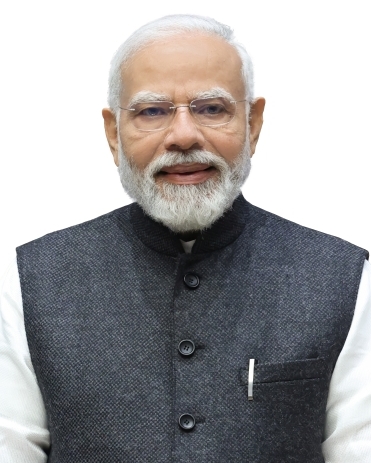
Narendra Damodardas Modi was born in 1950 in Vadnagar, Gujarat, India, and is one of the most influential political figures in contemporary India. He has served as the Prime Minister of India since 2014, having previously served as the Chief Minister of Gujarat from 2001 to 2014. Modi's political roots are deeply embedded in the Hindu nationalist organization Rashtriya Swayamsevak Sangh (RSS), which he joined in his youth and became a full-time worker in 1971. In 1985, he was assigned to the Bharatiya Janata Party (BJP), where he rose rapidly through the ranks due to his exceptional organizational and strategic capabilities.
During his tenure as Chief Minister of Gujarat, Modi implemented economic policies credited with boosting the state's growth; however, the 2002 Gujarat riots became the most significant controversy of his career. Although an investigation team appointed by the Supreme Court of India found no evidence sufficient for prosecution, his government's handling of the riots has faced severe criticism from domestic and international human rights organizations and Muslim communities. Additionally, his performance in improving healthcare, poverty, and education indicators remains a subject of debate.
In 2014, Modi led the BJP to a historic victory in the general elections, breaking the long-standing political dominance of the Congress Party. As Prime Minister, he introduced high-profile policies such as demonetization, the Goods and Services Tax (GST) reform, and large-scale sanitation campaigns. During his second term, his government revoked the special status of Jammu and Kashmir and introduced the Citizenship Amendment Act, sparking widespread protests and unrest. His leadership style has been described as having authoritarian tendencies and a cult of personality, leading to concerns about democratic backsliding in India.
Despite numerous controversies, Modi maintains a very high approval rating within India. In the 2024 elections, although the BJP lost its absolute majority in the lower house of parliament, he successfully led the National Democratic Alliance (NDA) to form a coalition government, beginning his third term. In 2025, he played a key role in managing the India-Pakistan conflict and reaching a ceasefire agreement. Modi remains a highly polarizing figure, with his Hindu nationalist beliefs and approach to social agendas seen as evidence of Indian society moving toward majoritarianism and exclusivity.
The Yi Wood Day Master is born in the month of You. Although it lacks seasonal support, it sits on the Mao Wood branch (the 'Prosperity' position), and the Year branch Yin Wood is at the 'Imperial Thrive' stage. With the Yi Wood protruding in the Heavenly Stems to support the self, the chart shows a 'Balance between Self and Indirect Officer' with a tendency toward a 'Strong Self' (Shen Wang).
This is a highly dynamic energy structure. Yi Wood is naturally like flowers, plants, or vines, usually giving an impression of being supple and winding. However, in this chart, because the foundations (the Earthly Branches Yin and Mao) are exceptionally deep, this vine has grown into a deep-rooted, intertwined shrubbery that is even harder to remove than tall trees. This energy state suggests that while the subject may possess the approachability or low profile of Yi Wood on the surface, their inner willpower is as solid as rock, possessing immense resilience and survival instincts—a classic example of 'strength within softness and unyielding persistence.'
The monthly branch You Metal is the Qi Sha / Pian Guan (Indirect Officer), and the year stem Geng Metal is the Zheng Guan (Direct Officer). The Heavenly Stems Yi and Geng combine, while the Earthly Branches Mao and You clash. The pattern is a variation of 'Removing the Direct Officer to Retain the Indirect Officer' or 'Self-Indirect Officer Confrontation.'
The Qi Sha (Indirect Officer; Archetype: The Warrior) represents unconventional authority, power gained through struggle, and immense pressure for change. In this chart, the Zheng Guan (Direct Officer, representing nominal constraints) is combined and neutralized, leaving the Qi Sha (the substantive means). This implies that the subject's life path is not a conventional bureaucratic climb but is filled with turbulence, crisis management, and challenges that break norms. As the Qi Sha is countered by a powerful Day Master and transformed into authority, it indicates that his life must find 'opportunity' within 'crisis.' The harsher the environment, the stronger his desire for control and sense of achievement become.
The core of the chart lies in the 'Metal-Wood Conflict' and the 'Stem Combination with Branch Clash,' particularly the 'Prosperity-Blade Clashing with Indirect Officer' formed by the Day Branch Mao Wood and the Monthly Branch You Metal.
Metal represents austerity, law, and reform, while Wood represents growth, tradition, and self-persistence. This backdrop of Metal-Wood conflict shapes the subject's controversial image as a 'reformer.' In decision-making, this manifests as being swift and even coercive (Metal characteristics), yet employing indirect or outflanking maneuvers (Wood characteristics). The Yi-Geng combination in the Heavenly Stems (Direct Officer combining with the Self) grants him excellent political performance talent and a mask of approachability, while the violent clashing in the Earthly Branches foretells that his path to power is accompanied by intense conflict, ruptures, and the destruction of the old order.
The chart carries the 'Jiang Xing (General Star),' 'Lu Shen (Prosperity Star),' and features the 'Mao-You Clash.' The year pillar also sees the 'Tian De Gui Ren (Heavenly Virtue Mentor)' alongside the 'Wang Shen (Dissipation Star).
The General Star and Prosperity Star in the same pillar symbolize holding substantive power and rising through self-reliance. However, the most critical factor is the 'Mao-You Clash.' Mao is the foundation of the Day Master (and the Spouse Palace), while You is the gateway (and the broader social environment). This clash signifies not only a displaced and turbulent early life but also forms a 'combat mode' on a psychological level—his life theme is constantly facing external attacks (You Metal overcoming Mao Wood) and striking back. This clashing relationship often corresponds to a lack of or sacrifice in family life, channeling all energy into the pursuit of public power.
The Yi Wood Day Master sits on its Prosperity branch with heavy Bi Jie (Companion archetypes), resulting in a personality that combines 'smoothness on the outside with firmness within' and 'collectivism.'
The nature of Yi Wood allows him to endure and spread quietly during humble beginnings, skillfully using the environment to climb (like a vine clinging to a tall tree, known as 'Teng Luo Xi Jia'). However, the strong roots in the Earthly Branches give him extraordinary stubbornness and self-centeredness. The abundance of Bi Jie (Peer archetypes) means he relies heavily on organizations, groups, or a collective ideology to strengthen himself. Psychologically, he possesses both the tact and performative flair required of a politician (the Stem combination) and the cold decisiveness of a revolutionary (the Branch clash). Under pressure, he does not break like Jia Wood; instead, like a vine, he appears to bow while actually strangling his opponent.
The greatest advantage of this chart is the ability to 'Withstand the Indirect Officer,' which is the trait of drawing energy in reverse from high-pressure environments.
The Qi Sha (Indirect Officer; representing massive external pressure, hostile forces, or difficult tasks) might be a disaster in an average person's chart, but for this strong Yi Wood, it is a whetstone. His talent lies in 'survival in chaotic times' and 'incendiary influence.' The sparks generated by the Metal-Wood conflict correspond in reality to a highly provocative oratorical talent and the ability to manufacture agendas. He excels at transforming complex contradictions (Metal-Wood conflict) into his own forward momentum; in a hostile environment, he actually displays his strongest leadership and cohesive power.
The core conflict lies in the 'Spouse Palace' of the Day Branch being directly clashed by the 'Qi Sha (Indirect Officer)' of the Monthly Branch—the instability caused by the 'Mao-You Clash.'
In his life trajectory, this manifests as the inability to have both a private emotional life and a public career. Mao Wood represents private life, inner peace, and family, while You Metal represents career, reputation, and struggle. You Metal clashing with Mao Wood means that to achieve great power, the stability of the 'small self' and intimate relationships must be sacrificed. This conflict also creates a sense of loneliness and defensiveness in his character; even in the center of a crowd, his heart remains in a state of tension, ready for battle, making it difficult to truly trust others or enjoy peace.
Narendra Modi's Bazi chart is a classic epic of a 'grassroots rise through struggle.' Yi Wood born in late autumn should naturally wither, yet because of its deep roots, it asserts dominance over its environment—a metaphysical reflection of his rise from the bottom and his steadfastness in a cruel political ecosystem. The Metal-Wood Conflict runs throughout, destining him to be a leader who is both praised and reviled: supporters see him as a gardener pruning dead branches (Metal refining Wood), while opponents see him as an axe destroying the ecosystem (Metal overcoming Wood). His life is a continuous process of transforming external aggressive energy (Qi Sha) into personal authority (Transforming the Indirect Officer into Power).
The Shang Guan (Innovation Star) manifests, while the Fire Tomb gathers Metal, marking a rebellious early phase.
This decade is governed by the Shang Guan (Talent/Innovation Star), which represents the outward expression of talent and the breaking of conventions. For the subject, Yi Wood born in autumn benefits from Fire to warm the chart. Bing Fire, like the sun, indicates an early intellectual awakening and a reluctance to be bound by tradition. This creates an energy field of 'leaving home' or 'seeking the self,' marking a strong desire in youth to become independent and deviate from the original family trajectory, leading to a profound reshaping of his worldview.
Shang Guan generates Wealth, the Treasury door is half-open, and skills begin to emerge.
The Shang Guan star represents the desire for expression and non-traditional learning paths. Academically, he may not have been a conventional top student, but he displayed exceptional eloquence and organizational skills. The Earthly Branch Xu (Earth) serves as a Wealth Tomb, suggesting that while material conditions were modest, he began accumulating early social survival skills by assisting his family (such as the tea stall) or participating in social groups (youth organizations). This is a period of 'learning through practice.'
Bi Jie enters the Tomb, distant family ties, and social bonding.
The Shang Guan star counteracts the Officer star, implying a challenge to patriarchal or traditional authority. During this period, the relationship with his family, especially his father, may have been subtle and psychologically distant. However, Shang Guan also represents exploration of the external world; during this time, he joined the youth wing of the RSS (Rashtriya Swayamsevak Sangh), finding a spiritual sense of belonging in a non-kinship community organization.
Excessive Fire and dry Earth, Wood energy is drained, potential digestive concerns.
Bing Fire generating Xu Earth creates excessive heat and dryness, which drains the vitality of the Yi Wood Day Master. Attention should be paid to the digestive system, imbalances in the spleen and stomach, and sleep issues caused by excessive mental energy.
Shi Shen controls the Warrior, Hai-Mao partial combination, a journey for the Way.
The Heavenly Stem Ding Fire is the Shi Shen (Intelligence/Creativity Star), representing gentle intellectual output and planning; the Earthly Branch Hai Water is the Zheng Yin (Direct Resource/Mentor Star), representing spiritual nourishment and protection. The partial combination of Hai and the Mao Wood in the natal chart significantly strengthens the Day Master's energy. This decade is a classic 'wandering' period, where the subject renounced secular life to travel the Himalayas—a manifestation of the spiritual pursuit brought by the Zheng Yin star and the deep philosophical reflection of the Shi Shen star.
Resource Star protects the self, renouncing commerce for the Way, a hidden dragon awaiting its time.
Zheng Yin governs reputation and faith rather than material gain. There was almost no accumulation of secular wealth during these ten years; instead, he built profound spiritual capital and organizational networks. The 'Shi Shen controlling Qi Sha' structure allowed him to stand out within strict organizational discipline (Qi Sha) through unique strategies and dedication (Shi Shen), officially becoming a full-time Pracharak (campaigner) and establishing his lifelong political convictions.
Resource Star transforms the Warrior, charisma without secular fruit, mentored by elders.
Zheng Yin represents elders and mentors. Although he was of marriageable age, the Hai-Mao combination strengthened the Bi Jie (Self/Peers) energy, and his focus was on the spiritual world, making secular marital ties extremely faint (or existing in name only). Conversely, he gained the appreciation and cultivation of mentor-like figures within the organization.
Balance of Water and Fire, but excessive dampness; beware of joint issues.
While Hai Water nourishes Wood, as a cold and damp energy, it creates a clash with the Ding Fire stem. Long-term travel may lead to rheumatism, joint pain, or the intrusion of 'cold energy' into the body. It is important to stay warm and manage humidity.
Wealth Star harms the Resource, Zi-Mao friction, tempered by the organization.
The Heavenly Stem Wu Earth is the Zheng Cai (Direct Wealth Star), representing the management of concrete affairs; the Earthly Branch Zi Water is the Pian Yin (Indirect Resource/Strategy Star), representing unique tactics. The Zi-Mao Xing (Uncivilized Penalty/Friction) is the core of this luck cycle, meaning that his ascent within the organization was filled with interpersonal friction and power dynamics. This decade was a critical transition from spiritual cultivation to pragmatic operation, requiring him to stand firm amidst complex factional struggles.
Wealth nourishes the weak Warrior, subtle power plays, the strategist behind the scenes.
The appearance of the Zheng Cai star does not refer to personal fortune, but rather to managing the organization's specific resources and administrative affairs. The Pian Yin star granted him extreme sensitivity and non-traditional methods. During this period, he was deputed to the BJP (Bharatiya Janata Party) and began planning elections behind the scenes. Though his fame was not yet widespread, he held real power—a classic 'strategist' luck cycle.
Friction in the Palace of the Self, solitude and isolation, peer rivalry.
The Zi-Mao friction directly affects the Day Branch (Spouse Palace/Inner World), intensifying feelings of loneliness and emotional isolation. Interpersonally, this manifested as internal struggles with colleagues, requiring high emotional intelligence to resolve internal suspicion and marginalization.
Earth restricts Water, kidney energy compromised, urinary system focus.
Wu Earth restricts Zi Water. In the Five Elements, Zi Water represents the kidneys and the urinary system, as well as the reproductive system. High-intensity work pressure may lead to endocrine imbalances or a deficiency in kidney energy.
Indirect Wealth sits on the Tomb, Si-You-Chou Metal frame, a surge of authority.
This was the first major leap in the subject's life. The Earthly Branch Chou Earth forms a partial Metal combination with the You Metal in the natal chart, greatly enhancing the power of the Qi Sha (Indirect Officer/The Warrior). Indirect Wealth generating the Warrior means that by operating vast resources and public opinion, he gained immense political influence. During these ten years, he moved from behind the scenes to the forefront, becoming a core figure in planning national movements (such as the Rath Yatra).
Wealth and Authority generate each other, expanding territory, rising fame.
Pian Cai (Indirect Wealth) represents the flowing wealth of the masses and a broad stage. The formation of the Metal frame (Officer/Warrior structure) gave him the ability to mobilize thousands. His organizational skills were proven at the Gujarat and national levels, planning a series of high-profile political activities that established his 'iron-fisted' image within the party. This was the fastest and most aggressive decade for accumulating political capital.
Wealth generates Authority, a gathering of mentors, the center of attention.
Pian Cai also represents broad popularity. As his status rose, he was surrounded by a large number of followers and interest groups. Although he lacked intimate family relationships, political allies and subordinates became his new 'family.'
Excessive Metal breaks Wood, Liver and Gallbladder under pressure, nervous tension.
The Earthly Metal combination creates strong Metal that restricts Wood. The Yi Wood Day Master is under immense pressure. High vigilance is needed regarding liver and gallbladder issues, migraines, and extreme tension in the nervous system. This is a stage of trading physical health for power.
Officer Star combines with the Self, Fu Yin with the Year Pillar, ascending to regional leadership.
The Heavenly Stem Geng Metal combines with the Day Master Yi Wood (Yi-Geng Combination), which is 'Authority coming to join me,' representing the official bestowal of administrative power. The Earthly Branch Yin Wood is the Jie Cai (Competitor Star) and also a strong root for the Day Master. The luck cycle 'Fu Yin' (identical) with the Year Pillar Geng Yin usually predicts a major restart or cycle of destiny. During this decade, he officially became the Chief Minister of Gujarat, though it was accompanied by great controversy and crisis (Competitor Star meeting Wealth, leading to conflict).
Self and Authority in balance, finding opportunity in crisis, consolidating power.
Geng Metal (Direct Officer) represents legitimate administrative power. Yin Wood supports the self, making the originally weak Day Master strong enough to carry heavy responsibilities. The turmoil of 2002 (the year Wu Fire combined with Yin Wood) was a classic negative explosion of the 'Competitor Star,' leading to a reputation crisis. However, with his tenacious roots (Yin Wood), he turned the crisis into an opportunity to consolidate power, initiating the 'Gujarat Model' of development.
Conflict between Authority and Competitors, mixed reputation, loyalists vs. enemies.
The Jie Cai (Competitor Star) represents fanatical supporters as well as fierce competitors. During this decade, public evaluation of him was extremely polarized. He established an unshakable leadership position within the party but faced long-term media scrutiny and diplomatic isolation externally.
Metal and Wood in conflict, risk to bones and limbs, potential surgery.
Geng Metal restricts Yin Wood; the clash between Metal and Wood most easily affects the skeletal system and limbs. Precautions should be taken against traffic accidents, physical injuries, or surgeries. Emotionally, there is a tendency toward irritability and restlessness.
Qi Sha manifests on the Stem, Mao-You Clash, ascending to national power.
The Heavenly Stem Xin Metal is the Qi Sha (Indirect Officer), representing the ultimate challenge for power; the Earthly Branch Mao Wood is the Day Master's 'Lu' (Prosperity Land), which undergoes a violent 'Mao-You Clash' with the Month Branch. These were the most thrilling ten years of his life. A clash represents change, conflict, and rupture. He had to break through both the party's seniority system and the national political landscape. Qi Sha governs conquest; this was a battle of 'cold steel' for supreme power.
Authority and Blade both manifest, reforming the old, reaching the pinnacle.
If the Qi Sha (Indirect Officer) is not controlled, it is a disaster, but if the self is strong (Mao Wood root), it becomes a scepter of power. The Mao-You clash activated the full energy of Metal and Wood. His achievements in Gujarat (Metal) became the weapons to conquer Delhi (Wood). In 2014 (Jia Wu year), the 'Wood-Fire brilliance' provided the strength to control the Warrior, leading to his successful election as Prime Minister, completing the transformation from a regional leader to a national head of state.
Clash at the Gateway, thin ties with kin, a solitary sovereign.
The Mao-You clash once again strikes the core of the chart, meaning a complete restructuring of his past social circles. To reach the top, he may have had to sacrifice many old alliances. This is the 'solitary leader' archetype, surrounded by subordinates but few true friends.
Metal and Wood in direct opposition, Liver and vision affected, cardiovascular risks.
Mao Wood represents the liver, eyes, and nerve endings, which are clashed by You Metal. Long-term high-pressure work can easily lead to declining vision and weakened liver detoxification. A clash also represents sudden health events; vigilance is needed regarding sudden cardiovascular issues.
Resource Star sits on the Tomb, Chen-You Metal combination, becoming a spiritual icon.
The Heavenly Stem Ren Water is the Zheng Yin (Direct Resource/Mentor Star), representing image, reputation, and benevolence; the Earthly Branch Chen Earth is a Wealth Tomb but forms a Metal combination with the Month Branch You. The theme of this decade shifts from 'offense' to 'defense.' The appearance of the Zheng Yin star marks a focus on shaping ideology, historical positioning, and the construction of a personality cult. He is no longer just a manager but seeks to become a spiritual totem.
Resource protects the self, Wealth returns to the Officer Tomb, supreme power.
Ren Water drains the energy of the Officer/Warrior to nourish the self, meaning the operation of power has become mature and harmonious, no longer as aggressive as the previous cycle. The Chen-You Metal combination consolidates the foundation of authority, indicating an extremely stable regime. The 2019 re-election and legislative changes (such as Article 370) are a combination of the 'legal legitimacy' of the Resource Star and the 'executive power' of the Metal frame.
Resource Star shines bright, admired by millions, emotional sublimation.
Zheng Yin represents public support and a maternal, caring image (albeit as political rhetoric). His interactions on the international stage increased, and personal relationships transformed into diplomatic maneuvers between nations. Private emotional needs are almost entirely submerged by the grand political narrative.
Damp Earth and murky Water, Spleen and Kidney deficiency, slowing metabolism.
Chen is a Water Tomb, and Ren Water sits upon it, creating heavy dampness. For an elderly person, this predicts a slowing of the metabolic system, prone to edema, diabetes, or urinary issues. A light diet is necessary to prevent chronic diseases.
Indirect Resource covers the head, Si Fire warms the chart, a sunset glow.
The Heavenly Stem Gui Water is the Pian Yin (Indirect Resource/Strategy Star), representing retirement, reflection, and non-mainstream power transitions; the Earthly Branch Si Fire is the Shang Guan (Innovation Star) and the 'Birthplace' of Metal. This luck cycle shows a complex transitional energy. Si Fire warms the originally cold chart, predicting that his reputation will remain loud in his later years, but the 'Shang Guan meeting Officer' risk (Si Fire restricting You Metal) suggests his political legacy may face revision or controversy.
Pian Yin restricts the Output, power transition, writing and legacy.
Pian Yin often represents the marginalization of power or a shift toward the spiritual level. During these ten years, he will likely fade from frontline administrative affairs, becoming a 'spiritual leader' or a behind-the-scenes influencer. As a star of change, Si Fire may mean he pushes for a disruptive reform as a final political testament, or faces strong challenges from a new generation (Shang Guan) within the party.
Shang Guan generates Wealth, returning to the true self, the loneliness of the undefeated.
In later years, his state of mind tends toward solitude and introspection. The Pian Yin star makes him harder for ordinary people to understand. Relationships will mainly focus on a few core confidants and medical staff.
Conflict between Water and Fire, lack of harmony between Heart and Kidney, vision and heart health.
Gui Water restricts Si Fire, a classic case of Water and Fire incompatibility. Si Fire represents the heart and eyes. Strict prevention of myocardial infarction, eye diseases, or major failures in the blood circulation system is required. This is a luck cycle with many health hurdles.
Wood and Fire brilliance, the lamp burns low, the spirit endures.
The Heavenly Stem Jia Wood assists the self, and the Earthly Branch Wu Fire expresses talent. This is an imagery of 'burning.' For the very elderly, excessive drainage (Shi Shen generating Wealth/controlling the Warrior) often signifies the final chapter of life. However, from the perspective of fame, the 'Wood-Fire brilliance' represents his historical status being frozen in time, with his spiritual legacy being widely discussed.
Competitors divide the spoils, posthumous debates, the final verdict.
No longer involving real-world career wealth. The focus is on his political legacy (Jie Cai) being contested, interpreted, or utilized by various forces. Shi Shen represents the evaluation of future generations; with Wu Fire being vibrant, it means both controversy and praise will be extremely intense.
Forest of peers, old friends wither away, returning home.
Real-world relationships end, transforming into relationships within historical writings.
Strong Fire burns the Wood, vitality exhausted, following the mandate of Heaven.
Wu Fire completely drains the energy of Jia and Yi Wood; the fire of life burns out, as dictated by natural laws.
Ju Men (The Great Gate) sits alone. Known as the 'Dark Star,' Ju Men governs verbal disputes, estrangement, and controversy. In the Spouse Palace, it often symbolizes hidden troubles in a relationship, significant communication barriers, or even a marriage in name only.
Ju Men has no transformation but is influenced by Tian Ji (The Heavenly Machine) in the opposite palace. This configuration intensifies the instability and detachment in emotional relationships. The 'dark' quality of Ju Men led directly to this relationship remaining 'hidden' or 'obscured' for a long time.
This arranged marriage is a classic manifestation of 'Ju Men' in Modi's life. He lived apart from his wife, Jashodaben, for a long time and remained silent about his marital status for years (Ju Men governs the 'hidden'). It was only forced into the public eye when he filed his election nomination, perfectly fitting the karmic script of Ju Men's 'estrangement and secrecy'.
Tan Lang (The Desire Star) sits alone. Tan Lang governs desire and social interaction. Its presence in the Siblings Palace usually suggests that siblings or early partners have complex personalities and strong desires, or that relationships involve certain conflicts of interest and competition.
Influenced by the Geng Stem, Tan Lang is not transformed, but is affected by Tian Liang (The Heavenly Beam) in the Wealth Palace. This suggests that his early peer circle was pragmatic or somewhat speculative. It also means the subject broke away from traditional family ties early on to move into a broader social network.
Modi left home early to join the RSS, transforming the concept of 'brothers' into colleagues within the organization. The 'wolf-like' nature of Tan Lang implies that in a highly competitive internal environment, he had to learn to be socially adept to survive. This 'law of the jungle' experience became the foundation of his political career.
Tian Xiang (The Minister / Seal Star) resides here. Tian Xiang is the Seal Star, representing assistance and management. In the Children Palace, it usually does not signify many biological children, but rather the quality of juniors, subordinates, or followers. The regulatory nature of Tian Xiang implies strict disciplinary requirements for his subordinates.
Influenced by neighboring palaces, Tian Xiang maintains a steady temperament. This indicates that his 'political descendants' or youth supporter groups are often managed in an organized and disciplined manner, rather than being a disorganized mob.
Modi has no biological children, but he has channeled the energy originally projected onto children into the cultivation of young cadres and political successors. The 'Seal-bearing' trait of Tian Xiang is reflected in his consolidation of power through the highly organized BJP youth wing; these followers have become the continuation of his political life.
Tian Liang (The Inspector / Shelter Star) resides here. Tian Liang is the 'Shelter Star' and also the star of supervision, favoring noble austerity over material wealth. In the Wealth Palace, it means the subject's sources of wealth must be legitimate, public in nature, or sheltered by elders (the establishment). It is not suitable for amassing wealth through commerce, which could otherwise invite misfortune.
Tian Liang is influenced by Tai Yin Hua Ke (Moon with Transformation to Fame) from the Life Palace. Sources of wealth are linked to reputation. This means his 'wealth' is manifested more as the ability to mobilize national resources rather than the figures in a personal bank account. The 'disciplinary' trait of Tian Liang also suggests a tendency toward strict regulation in economic policy.
As a politician, Modi's personal life is simple (reflecting Tian Liang's noble austerity), yet he manages vast national finances. The 'supervisory' trait of Tian Liang was vividly demonstrated in his implementation of 'demonetization' and the crackdown on black money—managing the economy with a near-moralistic rigor.
Zi Wei (The Emperor) and Qi Sha (The Warrior) reside in the same palace. This is a powerful combination of 'Transforming the Warrior into Authority.' Zi Wei is the monarch and Qi Sha is the general; their presence together indicates excellent physical constitution and high energy. However, it also means the internal organs are under long-term high-pressure operation, making one susceptible to cardiovascular or digestive issues caused by stress.
The momentum of Qi Sha (The Warrior) is formidable. This energy grants the subject extraordinary endurance and willpower. The body is not just a vessel but a weapon for conquering power.
Modi is famous for sleeping only 4-5 hours a day, practicing yoga, and maintaining a high-intensity workload. Zi Wei and Qi Sha in the Health Palace explain why he can maintain such vigorous combativeness even in his seventies. This is a physical energy akin to an 'Emperor leading a personal expedition,' where health status is directly linked to the intensity of exercising power.
Combination of Tian Ji (The Strategist) and Po Jun (The Pioneer) (referencing the opposite palace or borrowed stars). Tian Ji governs change and intelligence, while Po Jun represents disruption and innovation. This signifies not only a life of constant movement but also a tendency to break conventions and adopt disruptive diplomatic or expansionist strategies in external environments.
Tian Ji Hua Ji (Transformation to Obstacle) (Note: The Geng stem usually transforms Tian Tong; if considering lineage variations or Great Cycles, Tian Ji here governs anxiety over change). Even within the original natal chart, Po Jun's disruptive power suggests he does not follow traditional rules on the international stage and excels at identifying opportunities within turbulence.
This is the metaphysical root of his role as a 'Diplomatic Prime Minister.' He travels frequently (driven by Tian Ji's active nature), and his diplomatic style is characterized by strong aggression and breakthroughs (Po Jun). Whether through decisive military actions or strategic maneuvering in international relations, it reflects Po Jun's philosophy of 'destruction before reconstruction.'
Tai Yin (The Moon) sits alone, forming the 'Yue Lang Tian Men' (Bright Moon at the Heavenly Gate) formation. Tai Yin represents the moon, governing storage, tranquility, wealth, and wisdom. This is a major auspicious formation in ZiWei DouShu, symbolizing a person who appears gentle and elegant on the outside but is deeply strategic and far-sighted within. Like a full moon in the sky, it possesses strong spiritual charisma and a resilient, 'yin' tenacity.
Tai Yin Hua Ke (Transformation to Fame) enters the Life Palace. Hua Ke represents reputation, academic merit, and image branding. This makes the subject place extreme importance on personal branding and prestige, excelling at creating 'spiritual totems' (such as the image of an ascetic or a reformer) to gain soft power. Their influence often carries a religious or spiritual leadership quality.
From a tea-selling boy to a head of state, this journey validates the 'accumulating water to form an abyss' quality of the Tai Yin star. Success did not come from a sudden burst, but through long-term endurance and accumulation (as Tai Yin governs 'storage'). The power of Hua Ke allowed him to successfully bind his personal image to the grand narrative of 'Mother India,' projecting a gentle yet firm leadership style.
Tian Fu (The Treasury Star) resides here. Tian Fu is a treasury star, signifying tolerance and resources. In the Parents Palace, it usually represents kind-hearted parents or the protection the native receives from elders, the establishment, or large institutions.
Tian Fu is a major star of the Southern Dipper, characterized by stability. Although he came from a humble background (physical parents), Tian Fu here reflects his 'social parents'—the RSS (Rashtriya Swayamsevak Sangh) and the BJP (Bharatiya Janata Party).
Tian Fu reveals the solid backing of his political career. Despite his low-born origins, he entered an organization with a vast reservoir of resources (Tian Fu). The RSS is not just his support; it provides a continuous stream of political resources and talent. His loyalty to the organization is as steadfast as Tian Fu guarding a treasury.
Lian Zhen (The Integrity Star) resides here. Lian Zhen is the 'Secondary Peach Blossom' and also the 'Prisoner Star,' governing mental meticulousness, sensitivity, and fervor. In the Karma Palace (Fu De Gong), it represents a highly concentrated mental world, even bordering on obsession or a need for ideological purity, excelling in complex political calculations.
Influenced by Wu Qu Hua Quan (Transformation to Authority) from the Career Palace. Spiritual fulfillment is derived from the exercise of power and the establishment of order. The 'Prisoner' nature of Lian Zhen allows him to endure extreme loneliness and monotony, dedicating his spirit entirely to political ideals.
Modi's inner world is not as relaxed as it might appear. Lian Zhen in the Karma Palace indicates a person in a state of constant high mental alertness. His joy does not come from entertainment, but from victories in political maneuvering and the maintenance of ideological purity (RSS dogmas). This is an ascetic spiritual structure.
Tian Tong (Star of Fortune) resides here. Tian Tong is a star of blessing, primarily signifying ease and comfort. However, in the Property Palace, it often represents a specific psychological dependence on or fluctuations within the domestic environment.
Tian Tong Hua Ji (Transformation to Obstacle) enters the Property Palace. Under the Geng stem, Tian Tong transforms into Hua Ji. This transformation signifies lack, entanglement, or a sense of incompleteness. When the star of fortune is hindered in the Property Palace, it suggests the native may feel 'unable to return home' or 'treats the nation as home,' harboring an unfillable void or a sense of detachment regarding a conventional stable home.
This explains why he left home at a young age and spent his life drifting between the organization (RSS) and official residences. Tian Tong Hua Ji caused him to sacrifice the secular joys of family life, sublimating his longing for 'home' into a steadfast protection of the 'nation' (the greater Property). His 'home' is the abstract India, rather than a specific physical house.
Tai Yang (The Sun) stationed in a flourishing position. Tai Yang governs radiation, altruism, politics, and the masses. Being in the 'Prominent' state within the Friends and Peers Palace (Nu Pu Gong) indicates the subject possesses an exceptional mass base and enjoys widespread public support, a classic configuration for a 'Charismatic Leader.'
Tai Yang Hua Lu (Transformation to Prosperity) in the Friends and Peers Palace. In the Geng stem's Four Transformations, Tai Yang's transformation to prosperity is the most critical element. Hua Lu represents fortune and affinity. This implies his political capital is derived entirely from public support; he draws immense benefits and energy from his followers, voters, and allies.
This is the fundamental source of the 'Modi Wave.' Tai Yang Hua Lu allows him to ignite public passion and establish a support network bordering on a personality cult. His power does not stem from lineage (Parents Palace) but from broad grassroots support (Friends and Peers Palace). He is exceptionally skilled at using social media to communicate directly with the public, much like the sun shining upon the earth.
Wu Qu (The Finance Star / The General) stationed here. Wu Qu is both a wealth star and a general star, governing fortitude, decisiveness, and execution. In the Career Palace (Guan Lu Gong), it represents a tough leadership style and an iron-fisted approach, with a particular expertise in handling economic, financial, and industrial affairs.
Wu Qu Hua Quan (Transformation to Authority) in the Career Palace. The Geng stem causes Wu Qu to transform into authority. This is a highly potent placement in the chart. Hua Quan represents power, dominance, and control. This foretells his emergence on the historical stage as an 'Economic Czar' or 'Iron-fisted Ruler,' demonstrating no hesitation in the execution of policy.
From the economic miracle of Gujarat to the 'Gujarat Model' applied across India, Wu Qu Hua Quan perfectly illustrates his governance style: mercantilism, a focus on massive infrastructure, and swiftness in implementing policies like the GST (Goods and Services Tax). He prioritizes efficiency and results over sentimentality, embodying the classic traits of the Wu Qu General star.
Generate your personal chart in under a minute. Sign up free and get 30 credits — enough for two or more AI readings. No credit card.
Generate my free BaZi chartPlease sign in to join the discussion
Sign In