Year
Ren
Xu
Zheng Yin
Shang Guan
Hidden Stems
Wu (Shang)Xin (Qi)Ding (Shi)
- Star Luck
- Mu
- Sitting Branch
- Guan Dai
- Void
- Zi-Chou
- Na Yin (Elemental Sound)
- Da Hai Shui
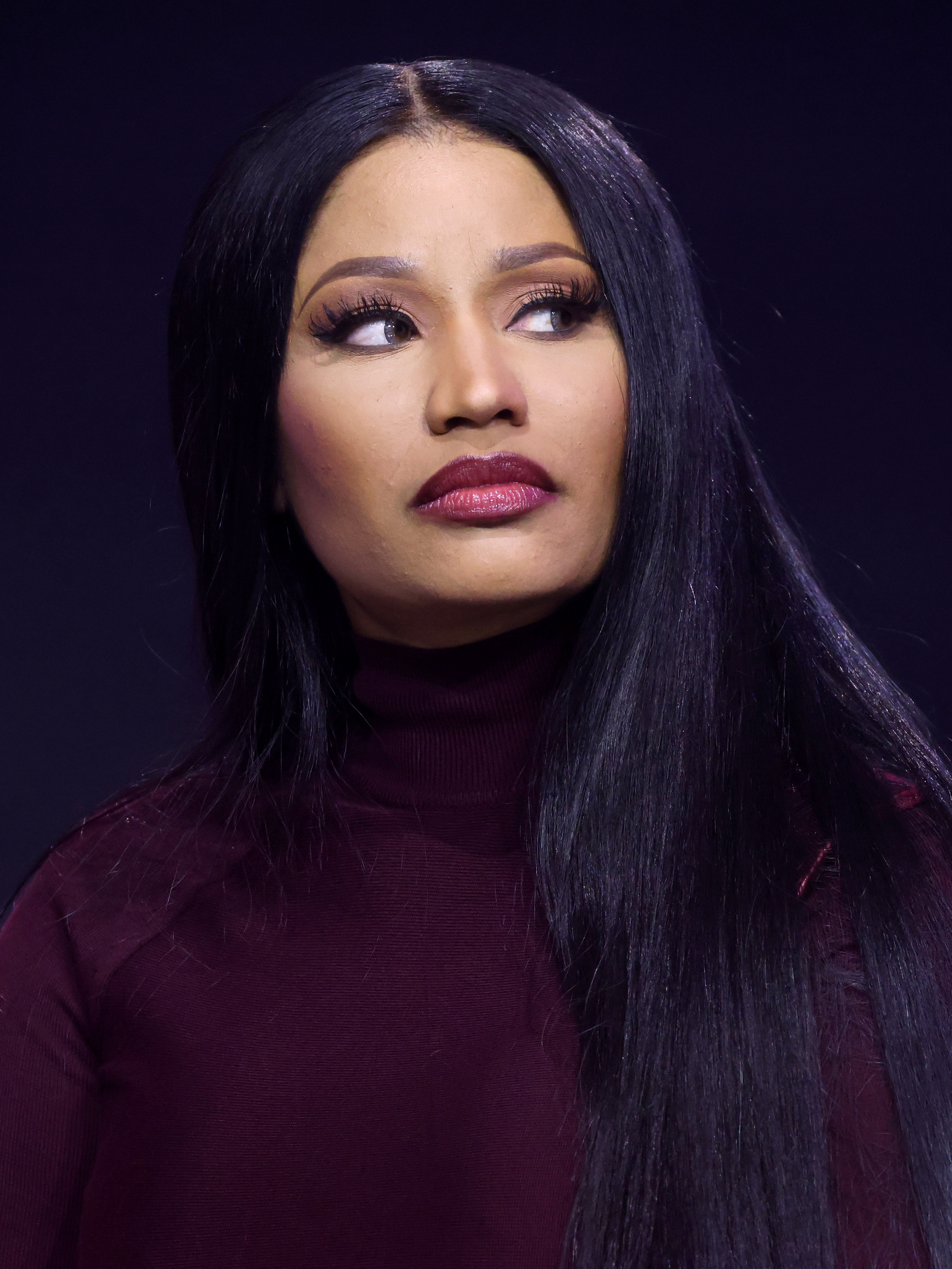
Nicki Minaj (born Onika Tanya Maraj-Petty), born in 1982 in Trinidad and Tobago, is one of the most influential rappers of the contemporary era and is widely known as the “Queen of Rap.” At age five, she moved to Queens, New York City, and grew up in a challenging family environment. She studied performance at the renowned LaGuardia High School and, in the early 2000s, began gaining recognition in the underground rap scene by joining the group Hoodstars and releasing multiple solo mixtapes (such as Beam Me Up Scotty).
In 2009, Minaj reached a major career turning point when she signed with Lil Wayne’s Young Money label. In 2010, her debut album Pink Friday broke the 21st-century record for first-week album sales by a female rapper, and the single “Super Bass” became one of her signature hits. She then continued to expand her musical range through projects including Pink Friday: Roman Reloaded, The Pinkprint, and Queen, blending hardcore rap with pop and dance influences. In 2023, her fifth studio album Pink Friday 2 made her the female rapper with the most Billboard No. 1 albums. As of 2024, she has sold over 100 million records and became the first female rapper to earn multiple RIAA Diamond certifications for solo songs.
Beyond music, Minaj has also expanded into film, television, and business. She served as a judge on American Idol, appeared in films such as The Other Woman, and voiced a character in Ice Age: Continental Drift. Commercially, she has launched personal product lines including fragrances, nail products, and sneakers, and in 2023 founded her own record label, Heavy On It. Although her candid public remarks often attract media attention and controversy, her versatility as a vocalist, incisive lyricism, and role in advancing the mainstream resurgence of women in rap have led Billboard and Vibe to rank her among the greatest female rappers of all time.
The Day Master is Yi Wood born in the Zi month: Water is abundant, Wood tends to drift, and cold Wood seeks sunlight—showing a “weak body with strong Resource” tendency. Yi Wood is like flowers, grasses, and vines. Being born in the icy lunar winter month (Zi), and surrounded by vast Water (Ren Water), suggests an innate environment that feels intensely cold, unsettled, and hard to anchor. Excess Water governs intellect and emotion: it often manifests as exceptionally fast thinking and sharp intuition, yet also a deep susceptibility to emotional overwhelm and insecurity. The overall impression can be both profound and captivating, but elusive—carrying a persistent sense of searching for support and stability.
The structure is Zheng Yin (Direct Resource). With Water overpowering the chart, it urgently needs Fire to warm and regulate the seasonal climate, and Earth to contain Water and root the Wood. Therefore, Fire (Shi Shang: Output) is the primary favorable element, and dry Earth (Cai Xing: Wealth) is supportive. Direct Resource points to maternal influence, tradition, and “inputs,” but when Resource becomes excessive it can backfire (too much Water can overwhelm and weaken Wood). The favorable element “Fire” corresponds to creative release, performance, and passion. This indicates that the native benefits from high-intensity self-expression and stage-level visibility (Fire) to vent the surplus energy and warm the chart, making worldly achievement more accessible. Without a creative/performative outlet, the heavy Water dynamic may be more likely to turn inward as low mood or self-undermining tendencies.
The chart shows a classic risk of “many Resources restricting Output,” while also hiding a counterforce where Wealth (Xu Earth, Chou Earth) checks Water and challenges Resource—creating an internal tug-of-war. “Resource” leans conservative and inward; “Output” favors rebellion and expression. This combination can shape a strongly paradoxical baseline: on one hand, profound imprinting from tradition or the family of origin (Resource), even to the point of pressure; on the other hand, a powerful inner drive to rebel, break through, and seek Fire. In career expression, this can look like repeatedly switching between contrasting public personas—using amplified, even confrontational aesthetics (Wealth/Output) to push back against a deep internal sense of constraint.
The chart carries a double Hua Gai (Artistic/Seclusion Star) in Xu and Chou, and strong Peach Blossom (Charisma/Romance) indications (Zi as the “Bathing” phase). Hua Gai is associated with artistic talent, prideful independence, and a spiritual/solitary streak; Peach Blossom points to romantic magnetism and public appeal. This helps explain global stardom: Peach Blossom supports mass attention and intense fan enthusiasm, while Hua Gai adds distinctive artistic sensibility. However, an overemphasis of Hua Gai can also suggest that behind the noise and spotlight, there may be a persistent undertone of loneliness—and a recurring feeling of being fundamentally hard to understand within close relationships.
Yi Wood as a Yin Wood Day Master is flexible, resilient, and changeable; seated on damp Earth, it can show the dual tendency of “vines clinging upward” or “going with the current.” Yi Wood is not as rigid as Jia Wood; it behaves more like a vine, with strong survival instincts and adaptability. This paints a “chameleon-like” inner portrait: to survive and climb upward, she can quickly adjust posture, voice, and even persona (alter egos). Under pressure, she is less likely to snap head-on; instead, she detours, entwines, and makes use of whatever the environment offers—even harsh icy Water—to stay afloat.
Abundant Water qi can become an unending stream of verbal agility; when supported by climate-adjusting Fire, it forms an explosive Water–Fire synergy. Water governs intelligence and “flow.” In the body it corresponds to the kidneys and hearing; in talent it often shows as rapid mental processing and strong rhythmic sense (flow). Her standout gift lies in transforming this vast—sometimes even destructive—Water energy through the mouth (Output as an outlet) into highly impactful, aggressive, and contagious rap-like expression. Once it finds a channel, it can feel like a breached dam—creating a shockwave advantage in fields that demand instant reaction and high verbal explosiveness.
The core tension is “cold Water with frozen Earth,” while the spouse/authority archetype (Guan Sha: Officer/Authority) is buried in the storage and constrained by cold dampness. Guan Sha represents partners (in a traditional framework) and authority structures. In this chart, the Metal element—linked to that archetype—is hidden inside the storage of Xu and within damp Earth (Chou). As Metal generates Water, it further strengthens Water and in turn becomes drained. In life this can project as a more difficult emotional path: partners may either struggle to match her capacity, or feel pressured by her strong presence (abundant Water). She seeks warm support (Fire/dry Earth), yet often encounters colder realities—leading to a recurring cycle of “control versus loss of control” in intimacy.
Seen as a whole, this is a vine fighting to survive through midwinter ice-water, spending a lifetime searching for the warmth of the “sun.” The overarching theme is warming the chart with Fire and blooming through adversity. The bold styling, provocative statements, and high-profile lifestyle are, at root, expressions of a deep instinctive hunger for warmth and a sense of presence—used to counter the bone-deep coldness and loneliness embedded in the chart. The more outwardly flamboyant the expression, the more it can reflect an inner scarcity of warmth.
Qi Sha (Indirect Officer) rises to the stems and presses the Day Master, while the Hai Water in the earthly branches boosts the Yin Star (Resource), forming an unstable pattern often described as “excess water causing driftwood.” Qi Sha (Indirect Officer) points to pressure from the external environment and forces beyond one’s control. When the Yin Star (water) is overly strong—especially for a winter birth chart without fire to warm the structure—it tends to signify coldness and rootlessness rather than nourishment. For a young native, the main theme of this decade is change and adaptation. Because the Yi-Wood Day Master lacks stable rooting at this stage, it is like duckweed carried by the current, implying major shifts in living circumstances and a sense of insecurity within the family. Survival skills are often learned early under demanding conditions.
Resource is too heavy with no Earth to contain it; Wealth is ungrounded, so the family’s finances tend to be extremely unstable. Resource normally indicates family protection, but in a water-dominant BaZi structure, excess water can overwhelm the “Earth” that symbolizes the father figure or financial sources. This suggests limited material support in childhood, and the father’s role may fail to provide stability for various reasons (e.g., addiction, absence, or a volatile temperament). Qi Sha (Indirect Officer) pressing the Day Master also hints that the early environment may have been challenging, with potential exposure to harshness or intimidation. While difficult, this high-pressure atmosphere can quietly forge the toughness and refusal to back down that later becomes a competitive edge in the entertainment world.
Qi Sha (Indirect Officer) restrains the self; Resource lacks strength to neutralize it, making family bonds complicated and tense. Qi Sha (Indirect Officer) can represent the shadow of authority or coercion, suggesting that domestic conflict or instability during this decade may undermine a sense of safety. The “water-abundant, wood-drifting” imagery also aligns with her immigration experience from Trinidad and Tobago to New York City, United States. Such intense cross-cultural upheaval and a downgrade in living conditions (from a grandmother’s home to the Bronx) is a classic “drifting” experience, often prompting early development of self-protection in relationships.
A chart dominated by Metal and Water—intense cold, with little to no Fire. Constitutionally this tends toward pronounced cold-damp. In the Five Elements, water corresponds to the kidneys, ears, and reproductive system; excessive water qi may indicate an innately colder constitution, susceptibility to colds, or latent respiratory considerations (as Metal is drained by Water). Emotionally, a cold configuration can correlate with inward suppression and heightened fear responses; having healthy outlets for release is important to balance psychological pressure.
Yi–Geng combines into Metal; Zheng Guan (Direct Officer) combines with the self; Xu Earth warms the structure. This decade begins to show a turning point. “Yi–Geng combination” suggests the Day Master starts seeking order, belonging, or recognition of status. Zheng Guan (Direct Officer) represents legitimate structure, discipline, and goals—often indicating entry into formal education or professional artistic training (such as LaGuardia High School). The Xu Earth branch is a “Fire storehouse,” which not only contains the original excess water, but more importantly releases hidden Ding Fire (Shi Shen), warming what was previously a cold chart. Talent begins to sprout, and life direction becomes clearer.
A wealth storehouse holds back the water; the Officer star combines with the self—talent appears, but monetization is still early. As Xu Earth functions as a wealth component (a Fire storehouse), it acts like a crucial embankment, blocking the earlier flood-like water and allowing the mind (Resource) to become more organized rather than drifting in unstructured fantasy. This matches disciplined training in an arts-focused high school, attempting to formalize raw gifts. However, with Geng Metal in the stems combining and binding Yi Wood, this “combination” can also mean constraint: early career development may be limited by contracts, institutions, or conventional expectations. There is ability, but breakthroughs and large-scale wealth are less immediate; the focus is more on skill accumulation and finding a position.
Officer star combines with the self; Peach Blossom (Charisma / Romance) begins to show. In BaZi, the Yi–Geng combination is often read as an “affectionate combination,” implying a likelihood of earlier romance, or strong longing and dependence toward partners. Zheng Guan (Direct Officer) can also reflect respect for authority figures—teachers or older men. Yet because the original water remains strong, relationships may come with heightened emotional waves and control dynamics. Socially, she may try to integrate into mainstream circles, while an inner streak of uniqueness and defiance (the chart’s output/expressive nature) can conflict with the outward desire for approval and legitimacy (Direct Officer).
Earth qi is challenged; Water and Earth contend. While Xu Earth is beneficial, the chart’s strong water interacting with Xu Earth can create turbulence (mixed water and earth). Pay attention to digestion (spleen/stomach) and stress-related endocrine imbalance. The Fire storehouse warms, but its strength is still modest—keep warm and support circulation and vitality.
Pian Cai (Indirect Wealth) appears in the stems to restrain Resource; the earthly branches form a Qi Sha (Indirect Officer) configuration. This is the most explosive decade. Ji Earth (Indirect Wealth) strongly checks the overabundant Ren Water (Resource)—often called “Wealth breaking Resource”—meaning surplus ideas, sensitivity, and talent are forcefully converted into market value and products. In the branches, You Metal and the Day Branch Chou Earth form a half-combination into Metal (You–Chou), greatly amplifying the power of Qi Sha (Indirect Officer; Metal). Qi Sha is associated with disruption, dominance, and a sharp, nonconforming edge—exactly the fuel behind creating bold alter-egos like “Roman,” and taking the world by storm through exaggerated styling and aggressive rap delivery.
Sha–Yin generate each other; Indirect Wealth disrupts Resource—a peak phase of both fame and money. Indirect Wealth points to large money and windfalls; Ji Earth successfully “builds a dike” to manage the flood of water, enabling command over massive attention and resources. With Qi Sha (Indirect Officer) gaining structure, she receives intense competitiveness and conquest drive, helping her break through in a male-dominated hip-hop landscape. In this decade she not only released Pink Friday, which established her position, but also shaped the “Queen of Rap” image through the commanding Qi Sha-style aesthetic. Financially, because Wealth effectively restrains Resource, commercial value can scale dramatically—talent converts into dollars with unusually high efficiency.
Qi Sha (Indirect Officer) presses the self; You–Chou combination activates the spouse palace. Under a Qi Sha major cycle, relationships tend to be intense and turbulent. Qi Sha can signify unconventional partners, lovers, or companions with a dangerous allure; combined with the activation of the spouse palace (the Day Branch), this points to a rich but unstable love life—easily falling into love–hate entanglements and recurring conflict (such as long-running complications with Safaree). With Qi Sha’s signature, she may show strong control and defensiveness in partnership, making it harder to build a calm, cozy family dynamic; relationships can resemble alliances or rivalries more than traditional domestic harmony.
Metal and Wood clash; liver–gallbladder strain. You Metal in the branches challenges the Yi-Wood Day Master; even with Water acting as a mediator, excessive Metal can still place pressure on the nervous system (Wood domain). This decade is prone to stress depletion, migraines, or sub-health patterns involving the liver and gallbladder due to sustained high-pressure work. Over-strong Qi Sha can also correlate with accident-proneness or surgical themes (Metal as cutting); extra care with driving and stage safety is advised.
Zheng Cai (Direct Wealth) aligns with Resource; Shen–Zi combine into Water. The major-cycle stem Wu Earth (Direct Wealth) remains prominent, continuing to restrain water (Resource). This indicates a more stabilized, commercialized, and professionally managed career phase. However, the branch Shen Metal combining with the month branch Zi Water forms a half-combination into Water (Shen–Zi), which can trigger another surge of Resource (Water). When water becomes excessive, it can overflow—meaning that despite stable status and assets, one may be more easily pulled into emotional whirlpools, public disputes, or controversy arising from protectiveness, sentimentality, or reactive communication.
Wealth becomes somewhat ungrounded; the Water configuration overflows—the business empire is steady, but controversy follows. Wu Earth (Direct Wealth) points to stable asset accumulation and expansion of business territory; in this decade she is not only an artist but also an effective business operator. Yet the Water configuration formed in the branches makes Resource overly strong; too much Resource can dampen Output (creative expression), showing up as creative bottlenecks or the need to spend significant energy resolving legacy issues (e.g., copyright disputes or brand-image controversies). A water-heavy configuration also signals talk and disputes; this decade can include multiple high-profile industry conflicts (e.g., friction with Cardi B), reflecting intensified emotional reactivity and competitive dynamics around value and recognition.
Shen–Zi combine into Water; Peach Blossom (Charisma / Romance) turns into a complication. Although Shen Metal can represent Zheng Guan (Direct Officer; spouse indicator), the Shen–Zi combination transforms that officer energy into Resource (Water). This can suggest a partner becoming more dependent on her, or a marriage dynamic marked by emotional enmeshment and lingering attachment. Toward the later part of this cycle she marries and has a child, consistent with Direct Officer symbolism; but the resulting water configuration implies the relationship requires significant tolerance and caretaking (Resource), and the partner may also bring reputational pressure or legal/administrative burdens (officer/sha transforming into Resource).
Water surges; cold-damp stagnation. The Shen–Zi water combination further intensifies the chart’s cold-damp tendency. This can be a meaningful burden for the female reproductive system (uterus/ovaries), increasing susceptibility to cold-type gynecological patterns or circulatory issues. Water excess also relates to kidney load and hearing; guard against overtaxing the kidneys. Emotionally, abundant water can correlate with rumination and worry, making periodic depression or anxiety more likely; increasing “Fire” through sunlight, movement, and warmth-based routines can help restore balance.
Shi Shen (Eating God) appears in the stems; Wei Earth warms the structure. This is the most anticipated “warm winter” major cycle. Ding Fire (Shi Shen) finally emerges above, like winter sunlight nourishing Yi Wood—often described as “Wood and Fire in clear harmony.” Shi Shen represents natural talent expression, enjoyment of life, eloquence, and favorable affinity with younger generations. Wei Earth is dry earth: it can contain water and store fire, and also functions as a “storage” for Yi Wood. The main theme of this decade is renewal and ease. She can gradually step out of relentless competition (Qi Sha) and emotional entanglement (excess Resource), entering a more composed, artistically resonant, and life-enjoying phase.
Shi Shen generates Wealth; Wood–Fire clarity—a dual elevation of artistic achievement and wealth tier. Ding Fire Shi Shen is the refined outward expression of Yi Wood, suggesting her work may become more thoughtful and artistic, no longer driven only by survival or rivalry but by authentic self-expression. Wei Earth, as a storage and wealth component, points to significant wealth consolidation. This decade is well-positioned for major returns via touring, brand collaborations, or investments. Shi Shen also relates to teaching and mentoring; she may increasingly play a “godmother” role, building her own label ecosystem and reaching peak capability in resource integration.
Shi Shen releases refined expression; the children sector is activated. Shi Shen is associated with children; the center of life may shift more toward family and parenting. The parent–child bond can become a primary source of joy and a healing force for earlier wounds. In public relationships, Shi Shen suggests warmth and approachability; her image may become softer, more humorous, and more openly maternal, reducing earlier sharp edges and attracting broader age demographics. In partnership, because Wei Earth interacts with Zi Water (Resource) through a “harm” dynamic, there may be adjustments related to family values or elder pressure, but the overall trend is constructive.
Dry Earth restrains Water; Fire gradually strengthens. With Wei (dry earth) and Ding (fire), the constitution tends to shift from cold toward warmer, with noticeably better vitality. However, the Zi–Wei “harm” dynamic can still stress the kidney system and endocrine balance. Watch for metabolic issues from overwork or indulgence (a Shi Shen tendency), such as blood sugar, lipids, or thyroid concerns. Overall health prospects are better than in the earlier major cycles.
Shang Guan (Hurting Officer) meets Guan (Officer); Zi–Wu clash. This is an exceptionally intense major cycle. Bing Fire (Shang Guan) stands prominently in the stems, and Wu Fire in the branches provides strong rooting—Fire becomes very powerful. This continues the benefit of “warming the chart,” potentially bringing fame to its peak; yet the Zi–Wu clash (month branch clashing the major-cycle branch) signals a violent conflict between the old foundation, beliefs, or social circles (Zi Water Resource) and new modes of expression, desires, or lifestyle (Wu Fire Output). It is a decade of deep worldview restructuring, often accompanied by major life changes.
Shang Guan generates Wealth; Water–Fire surging. Bing Fire Shang Guan represents amplified renown and maximal performance of stage/creative ability; she may receive lifetime-achievement-level recognition or excel in nontraditional arenas (film/TV, fashion). However, the Zi–Wu clash striking the “pivot” (the month command) suggests she may leave her established comfort zone, potentially involving a fundamental relocation of residence, nationality-related arrangements, or a shift of career base. Financially, while Shang Guan generating wealth can be powerful, a clash to the pivot also implies huge expenditures or volatile investment cycles; avoid impulsive financial decisions.
Shang Guan restrains Officer; the pivot is shaken. For women, a Shang Guan major cycle often challenges marriage dynamics—especially during periods of “Shang Guan meeting Guan (Officer)” (when Metal appears via natal structure or annual cycles). This decade may bring a strongly self-directed, freedom-first temperament that resists constraint, potentially changing marital status. The Zi–Wu clash also touches elder-related sectors; pay attention to the health of older family members. Socially, frankness and sharp speech (Shang Guan) can spark major public controversy, while also consolidating fierce loyalty from a core fan base.
Water–Fire clash; Heart and Kidney mismatch. This is the highest-risk health cycle. Zi Water (kidneys/blood) directly clashes Wu Fire (heart/eyes). Risks may include cardiovascular or cerebrovascular issues, hypertension, or eye-related conditions. Water and Fire failing to harmonize can also reflect extreme emotional polarization; guard against bipolar-spectrum instability or severe insomnia. A calmer lifestyle and reduced emotional overstimulation are strongly recommended in this decade.
Wood–Fire clarity; Bi Jian (Peer) supports the self. After the turbulence of the Zi–Wu clash, the cycle moves into Yi–Si. The stem Yi Wood is Bi Jian (Peer), strengthening the Day Master; the branch Si Fire is Shang Guan (Hurting Officer) and also a growth stage for Metal. This decade is a “staying strong with age” phase. Si Fire warms the chart without the extreme confrontation of Zi–Wu, and the mindset becomes more settled. Bi Jian represents friends and peers, suggesting a lively later life with long-standing companions and a stable social circle.
Lu–Ma in the same domain; enjoying late-life recognition. Si contains Bing Fire (Shang Guan), Wu Earth (Direct Wealth), and Geng Metal (Zheng Guan / Direct Officer), creating a rich mix of influences. This suggests she can still maintain strong commercial value and influence, with wealth more likely coming from accumulated copyrights, licensing, and other passive income streams (Output generating Wealth). Career-wise, she no longer needs to charge at the front lines, instead receiving honors as a legendary figure. With Bi Jian visible, she may also collaborate with others on philanthropy or education-related ventures.
Bi Jian as companionship; Yi Ma (Mobility Star) is active. Si is associated with Yi Ma (Mobility Star), indicating continued enjoyment of travel or living across multiple places even in later years. Bi Jian relates to sisters and friends; she may spend substantial time gathering with old friends, maintaining a rich social life. In family relationships, as the sharper edge of Shang Guan recedes, the attitude becomes more tolerant; bonds with children and partner can evolve toward a friend-like dynamic—more equal and relaxed.
Fire and Earth support each other; watch qi and blood. Warming Si Fire is beneficial, though Si can form punitive interactions with Shen Metal if activated by major/annual cycles. Pay attention to respiratory care (lungs). Overall, a warm and dry tendency supports vitality, but monitor inflammatory patterns, “heat” issues, or dental/oral health.
“Teng Luo ties to Jia”; the wealth storehouse is opened by clash. The stem Jia Wood (Jie Cai) emerges. For a Yi-Wood Day Master, Jia Wood is especially welcome—classically termed “Teng Luo ties to Jia,” implying strong support in later years (often through children, institutions, or family trusts). The branch Chen Earth clashes the natal Xu Earth (Chen–Xu clash), opening both the wealth storehouse and the resource storehouse. The theme of this decade is returning inward and distribution. Clashing a wealth storehouse often points to major asset restructuring or estate planning.
Jie Cai meets Wealth; the storehouse gate opens wide. The Chen–Xu clash mobilizes Earth (Wealth), suggesting substantial finances remain in later life; however, Jie Cai on the stem also implies large outflows—potentially for family allocation, charitable giving, or medical expenses. Professionally she is fully behind the scenes, more a symbolic spiritual leader than an operator. “Teng Luo ties to Jia” suggests her name and legacy may be anchored to a longer-lasting system (e.g., institutional recognition in music history) and endure.
Jie Cai supports the self; many around her. Popularity and company remain strong in later years, but due to Jie Cai’s nature, it is wise to guard against opportunism around money. The Chen–Xu clash also stirs the resource storehouse, potentially involving family real estate or matters tied to ancestral roots. There may be discussion within the family around distribution (wealth storehouse being clashed), but with Jia Wood providing support, the overall situation is manageable.
Earth becomes excessive and constrains Wood—monitor tumors and masses. The Chen–Xu clash can make Earth qi too strong; excess Earth can “bury Metal” and “bend Wood.” Pay special attention to deeper digestive-system issues and proliferative conditions (Earth governing flesh). Weakened Wood also relates to the liver/gallbladder and joint mobility in the limbs; take precautions against falls.
Lu Shen (Vitality Star) protects the self; Pian Yin (Indirect Resource) nourishes. Entering advanced age, the branch Mao Wood is the Yi-Wood Day Master’s Lu Shen (Vitality Star / root), and the stem Gui Water is Pian Yin (Indirect Resource) that nourishes the self. This is a variant pattern sometimes called “Ri Lu returns to time.” Lu Shen relates to the body and longevity; gaining Lu in old age suggests a sturdy constitution and clear spirit. Pian Yin points to a distinctive inner life or spiritual leaning; later years may involve deep engagement with inner cultivation or organizing memoirs and recollections.
Resource nourishes the self; a legacy etched into history. At this stage, worldly wealth is no longer the focus; the emphasis shifts to how reputation becomes finalized. Pian Yin can signify nonconventional fame; her legend as a rap icon is likely to be recorded and assessed by history. In Lu Shen territory, material needs are generally secure, supported by family provisions.
Strong Lu and a robust self—more self-directed. Mao as Lu Shen can make the Day Master more steadfast and full of life force. In later years she may be firm about routines and prefer fewer disturbances. Connections with family lean more toward spiritual and emotional exchange than daily entanglement.
Lu Shen under clash—key longevity checkpoints. Mao Wood is most challenged by You Metal clash (Mao–You). If annual cycles bring a Rooster year (You), clashing the Lu Shen may mark a major longevity checkpoint. Ongoing care should focus on liver regulation and nervous-system maintenance; emotional ease and a relaxed mindset are central to longevity.
Tian Xiang Star (Seal/Support Star). Tian Xiang corresponds to the Water element, often linked with the kidneys, urinary system, or skin. In the Health Palace, it usually indicates relatively stable health, though it can point to endocrine imbalance or skin sensitivity. Tian Xiang also relates to “appearance,” hinting that the native places great emphasis on body and image management.
Tian Xiang is influenced by its adjacent palaces. Since Tian Xiang’s qi transforms into “Seal,” health here leans more toward “image-health.” It is advisable to watch for side effects from excessive cosmetic procedures or medication.
This aligns closely with her extreme pursuit of body aesthetics (such as highly exaggerated proportions). With Tian Xiang in the Health Palace, the body is treated as a “display piece” or a personal “seal.” She invests heavily in image management; the body is not only a vessel, but also one of the most important visual symbols of her career.
Ju Men Star (Hidden Luminary / Speech & Dispute Star). Ju Men governs the “mouth.” In the Wealth Palace, it is a classic pattern of “earning through one’s words,” meaning income is primarily gained through language, voice, debate, speeches, or mouth-related industries such as food and beverage. Ju Men also brings contention, suggesting that wealth is often accompanied by controversy.
Ju Men has no annual Four Transformations (Si Hua), but it is impacted by Wu Qu’s Hua Ji (transforming to Constraint) from the Fortune Palace. This creates a tension of “seeking wealth amid risk”: money can be substantial, yet financial swings may arise from contract disputes and public spats (diss tracks). At the same time, these conflicts can drive major attention that converts into revenue.
This is one of the most textbook Wealth-Palace setups for a rapper. Her significant wealth is built squarely on the core skill of rap. Whether it’s the sharp edge in her lyrics (Ju Men’s contentious quality) or high-frequency commercial collaborations, it all reflects the profile of “opening one’s mouth and turning it into gold.” The bigger the controversy, the stronger the money flow tends to be.
Tian Liang (Protective Star / Elder Star). Tian Liang signifies status and protection. When placed in the Travel/Relocation Palace, it suggests the native is likely to meet Gui Ren (Mentors/Helpful People) when away from home, and can readily project an authoritative “big-sister” or “godmother”-like presence in unfamiliar places or in public settings. Tian Liang is also associated with the ability to turn potential crises into workable outcomes.
Tian Liang Hua Lu (Transforming to Prosperity; Ren year). This is the most prominent highlight of the entire chart. Hua Lu entering the Travel/Relocation sector points to “recognition and opportunities abroad”—significant wealth and openings are more likely to arise outside the birthplace. Public affinity is exceptionally strong, and supporters may regard the person as a spiritual leader.
Her migration from Trinidad to the United States (Travel/Relocation) and her major global success aligns closely with the favorable indication of “Tian Liang Hua Lu” in this palace. In the public eye, her image goes beyond being a singer; fans may elevate her to a leader with a “mother-goddess”-like stature. This Protective Star quality also suggests resilience—she tends to remain standing even amid intense waves of public opinion.
Zi Wei (Imperial Star) + Qi Sha / Pian Guan (Indirect Officer; warrior archetype). This is an exceptionally strong “leader taking the field” pairing. Zi Wei represents prestige and command, while Qi Sha signals sharpness, decisiveness, and high-intensity drive. Among friends, fans, or subordinates, there may be many capable, formidable individuals with strong initiative and organizing power—yet it can also imply that the group is hard to manage, and standout followers may become overly dominant.
Zi Wei Hua Quan (Transforming to Authority; Ren year). Hua Quan entering the Friends/Followers (Servants) Palace indicates the native can hold commanding influence over fans or their circle. The fanbase may function not merely as listeners, but more like a highly disciplined, high-mobilization force (Qi Sha) responding to the “empress” figure (Zi Wei).
This reflects the astrological portrait of “Barbz” (her fan community). Zi Wei Hua Quan combined with Qi Sha gives the fanbase a strong “combat-ready” tendency, often defending her aggressively online. The dynamic resembles a ruler–minister relationship: she receives intense loyalty, while also needing to sustain a high-control style of leadership—if mishandled, backlash can arise.
Tian Ji (Strategy Star) + Po Jun (Breaker / Pioneer Star). Tian Ji governs change and strategy; Po Jun governs disruption and innovation. This star pairing (note: interpreted in light of this chart’s specific configuration) suggests a career built on “breaking conventions” and “high-frequency pivots.” Career momentum may fluctuate sharply, and staying relevant often requires continual reinvention—dismantling an old image to rebuild a new one.
Impacted by Wu Qu Hua Ji (Transforming to Constraint) from the Wealth Palace. Along the career path, there can be recurring pressure on cash flow, or a need to push through aggressive reforms for sustainability. Po Jun’s “consumption” aspect implies that achieving fame may require substantial upfront costs and trade-offs.
Her career trajectory blends Tian Ji’s strategic calculation with Po Jun’s disruptive force. She challenged the old, male-dominated order in hip-hop (Po Jun), while using strong commercial intelligence (Tian Ji) to map her route—from street mixtapes to pop crossovers. Each pivot is a “rebuild after demolition,” never staying confined to convention.
Tai Yang Star (career focus / outward-radiating). Tai Yang tends to signify status more than sheer wealth. When placed in the Property & Home Palace, it suggests a bright, well-situated residence, or frequent changes in real estate. Tai Yang carries a “dispersing” quality, meaning the home often has people coming and going and can be hard to keep as a secluded, settled space—more like a stage for display than a private nest.
Tai Yang in a challenged placement or a strong palace can have a major impact; here it is influenced by Ju Men’s (Hidden Gate) shadowy tone. This implies domestic life may be more exposed to public scrutiny, or that real-estate dealings can involve opaque details or unclear information.
This reflects how her luxury-home lifestyle becomes public-facing. Her home is often part of reality TV, livestreams, or social-media presentation. With Tai Yang in the Home/Property sector, her real estate is often amplified by fame, yet it can also indicate difficulty finding true quiet at home—still living under the lingering spill of the spotlight.
Tan Lang Star (Zheng Taohua / Desire Star). With Tan Lang in the Children Palace, it suggests strong prospects around children/disciples, or an exceptionally open—sometimes hands-off—approach toward juniors and subordinates (such as newcomers in the entertainment industry). This star carries strong desire and variability, implying that the people she raises or mentors tend to have intense personalities—highly talented, yet not easy to manage.
Tan Lang in this palace has no annual Four Transformations (Si Hua). However, Tan Lang’s appetite for material resources here implies she is very willing to invest when nurturing descendants or promoting newcomers—sometimes with a “showcase” or strategic, game-like element to it.
This not only points to literal themes of childbirth, but also mirrors how she, as a “Rap Queen,” engages with the next generation of female rappers: both a code of loyalty in supporting the younger crowd and the tension of competition. The works she “gives birth to” (spiritual children) often carry Tan Lang’s wildness and allure—controversial yet vividly alive.
Tai Yin (Moon; wealth indicator / nurturing quality). Tai Yin favors stillness and containment, and it often points to a spouse who is more reserved, sensitive, or gently caring. For a female chart, Tai Yin in the Marriage palace frequently suggests the partner occupies a relatively more “receptive” or cooperative position in the relationship, or works in fields tied to the arts, real estate, or finance.
In a Ren year, Tian Liang Hua Lu in the Travel/Movement palace shines toward the Wellbeing/Spirit (Fu De) area; Tai Yin benefits indirectly. Although Tai Yin itself does not transform, the overall flow suggests that emotional life can be readily influenced by the spotlight of fame and gain, and that the partner needs the capacity to accommodate the native’s strong public aura.
This helps explain why she often takes the lead in relationships. What she needs is not an equally forceful “Sun,” but a partner who can provide emotional attunement and considerate companionship. In reality, the partner often has to stay behind the scenes—supporting the brilliance from the shadows, sometimes even taking on a “steward/manager” role within the relationship.
Tian Fu (Celestial Treasury; Southern Dipper commander / wealth storehouse). Tian Fu is a storage-and-reserve star, associated with inclusiveness and accumulation, and it tends to indicate a steady, grounded temperament. This suggests that siblings or close collaborators are often sincere, financially prudent, or conservative—able to provide logistics, stability, or an emotional “storehouse” of support while the native takes the front line.
Tian Fu does not participate in the Four Transformations, but in a Ren year it is flanked/supported by Tian Liang Hua Lu. This stable field implies a relatively solid internal structure within the core team or family system—serving as a safe harbor amid a volatile entertainment career and helping hold the bottom line.
In practice, this reflects protectiveness toward—and reliance on—the inner circle. Even if her personal style is radical, long-term partners or family around her often play pragmatic, low-profile roles, helping manage royalties or behind-the-scenes operations and forming the steady foundation of her business empire.
Lian Zhen (Integrity/Discipline Star) sitting alone (secondary Peach Blossom / Confinement motif). Lian Zhen carries both the artistic magnetism associated with a “secondary Peach Blossom (Charisma/Romance)” and the stringent self-discipline implied by the “Confinement” motif; in Five-Element terms it corresponds to Yin Fire. This tends to shape a dual profile that is at once boldly sensual yet highly rational: outwardly expressive and adept at leveraging personal allure (Peach Blossom), while inwardly driven by strong control needs and perfectionist standards (Confinement), often holding oneself to near-harsh requirements.
The palace stem’s Four Transformations should be read through major-cycle (Da Xian) timing; the natal chart is contrasted/illuminated by Tian Liang Hua Lu. Although this star does not directly receive the birth-year Four Transformations, the strong illumination from Tian Liang (Heavenly Beam) transforming to Lu (Prosperity) in the Travel/Movement palace suggests that external opportunities soften the aloof edge in the temperament, channeling personal intensity into an extreme pursuit of career excellence.
This configuration neatly captures the coexistence of “Barbie” and “Monster.” Lian Zhen’s edgy, captivating aura supports an exaggerated stage persona and ever-shifting styling, while the “Confinement” trait shows up in precise control over lyrical rhyme and the hard-nosed ability to break through a male-dominated hip-hop scene. She is not merely decorative; she operates more like a finely engineered campaign machine.
Wu Qu Star (wealth focus / solitary streak). Wu Qu in the Wellbeing (Fortune) Palace indicates that pursuing wealth and a sense of control becomes a key source of inner satisfaction. Yet this star carries a “solitary” tone, suggesting a deep inner loneliness and difficulty truly relaxing. It often describes a work-driven life—stopping can trigger anxiety.
Wu Qu Hua Ji (transforming to Constraint; Ren year). Hua Ji landing in the Wellbeing Palace is the chart’s most sensitive pressure point. It points to inner emptiness and an ongoing anxiety around money and achievement. Even with abundant resources, there can still be a profound sense of lack, and it may create hard-to-bridge psychological distance with others over finances or principles.
To the outside world she appears polished and regal, but Wu Qu Hua Ji reveals sustained inner tension. She cannot ease into life the way Tian Tong can; instead, like a perpetual-motion engine, she keeps working (Wu Qu). This underlying anxiety fuels her constant climb, and can also be why she struggles to fall asleep at night—happiness feels conditional rather than effortless.
Tian Tong Star (benefic / childlike spirit). Tian Tong in the Parents Palace often indicates parents with a gentle temperament or a youthful, childlike quality, or a relatively loose (sometimes overly permissive) parenting style. It can also suggest that the parents’ early years were more turbulent, with greater comfort coming later in life.
Tian Tong does not transform here, but is disturbed by annual challenging auxiliary stars (Shen Sha). Although Tian Tong is favorable, when challenged it can indicate that, despite emotional connection with parents, there is limited practical backing—one may need to build life through self-reliance.
This aligns with her complex family background. Although Tian Tong signifies ease, in lived experience it often shows up as a form of parental “absence” or “softness,” pushing her to mature early (Life Palace: Lian Zhen) in order to protect the family. Her strong sense of responsibility toward family grows out of this compensatory dynamic.
Generate your personal chart in under a minute. Sign up free and get 30 credits — enough for two or more AI readings. No credit card.
Generate my free BaZi chartPlease sign in to join the discussion
Sign In