Year
Bing
Zi
Shi Shen
Zheng Yin
Hidden Stems
Gui (Zheng)
- Star Luck
- Mu Yu
- Sitting Branch
- Tai
- Void
- Shen-You
- Na Yin (Elemental Sound)
- Jian Xia Shui
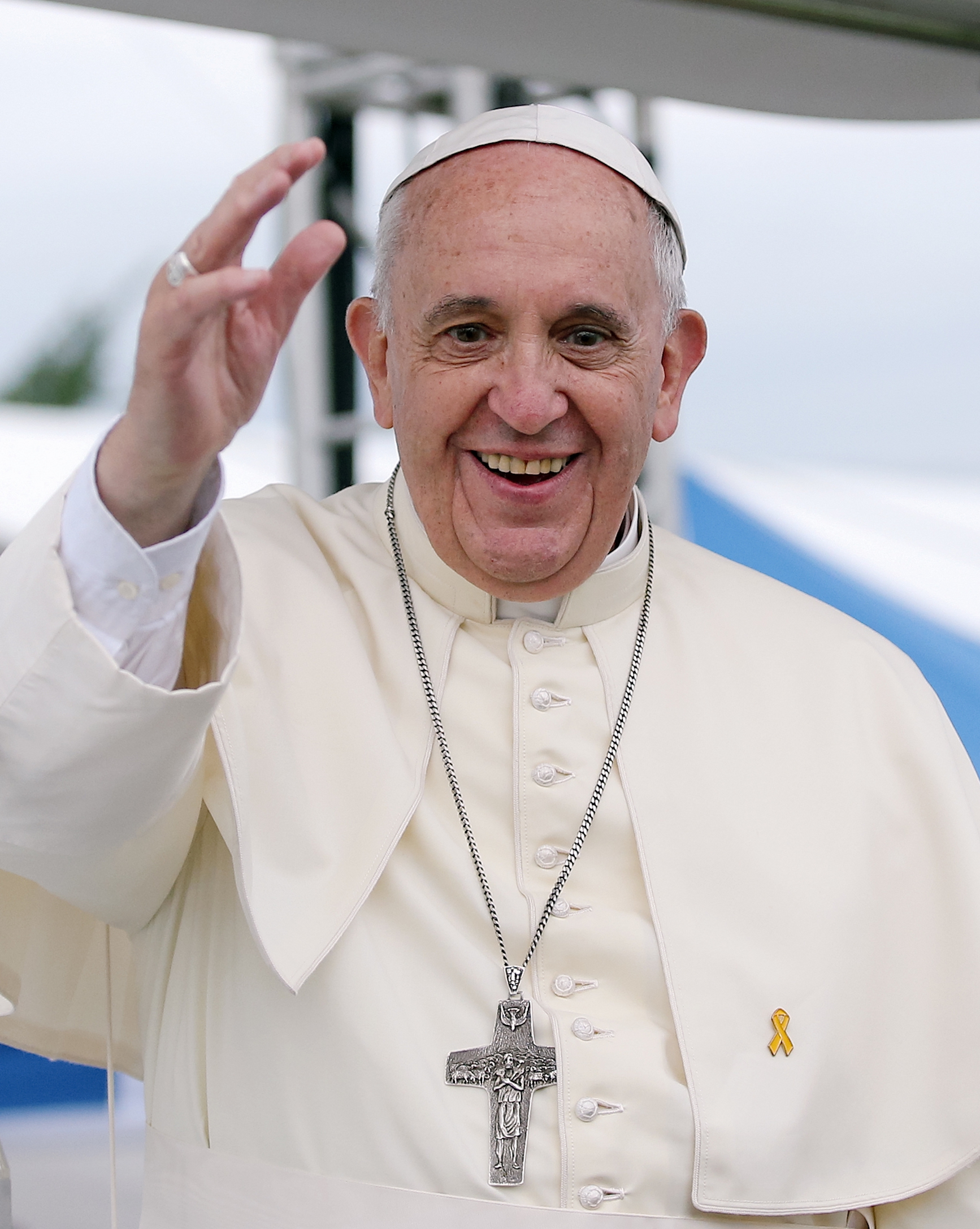
Pope Francis (born Jorge Mario Bergoglio) served as the 266th Pope of the Catholic Church and the Sovereign of the Vatican City State. Born in 1936 in Buenos Aires, Argentina, he was the first Pope from the Americas, the first from the Southern Hemisphere, and the first from the Jesuit order. His papacy spanned from March 13, 2013, until his passing on April 21, 2025. He is globally renowned for his humility, profound concern for the impoverished, and his commitment to reforming church institutions.
In his early years, Bergoglio earned a diploma as a chemical technician and worked in various roles, including laboratory work, security, and cleaning. After joining the Society of Jesus in 1958, he studied humanities, philosophy, and theology in Chile and Argentina. Following his ordination as a priest in 1969, he held key positions within the Argentine Jesuit province, including Provincial Superior and Rector of a seminary. In 1998, he became the Archbishop of Buenos Aires, where he earned the title 'Bishop of the Slums' for his frequent visits to impoverished areas and his simple lifestyle, such as using public transportation and cooking his own meals. He was elevated to Cardinal in 2001 and gained significant prestige during the 2005 papal conclave.
Upon his election as Pope, he chose the name Francis in honor of Saint Francis of Assisi, symbolizing his dedication to poverty and peace. He broke several traditions, such as declining the Apostolic Palace to reside in the Domus Sanctae Marthae and simplifying papal vestments and rituals. Regarding doctrine and social issues, he emphasized divine mercy, promoted greater inclusivity within the Church for individuals with same-sex attractions, and appointed women and laypeople to significant roles within the Roman Curia. The 'Synod on Synodality' he initiated is considered one of the most pivotal events of his papacy.
In the realm of global governance, Pope Francis was an active social advocate. He offered sharp critiques of consumerism and trickle-down economics, made addressing climate change a central theme of his tenure, and campaigned for the global abolition of the death penalty. In diplomacy, he facilitated the restoration of relations between Cuba and the United States, reached an agreement with China regarding the appointment of bishops, and actively intervened in the Israeli-Palestinian peace process. Despite facing scrutiny from conservative factions within the Church, he remained steadfast in steering the institution toward a more open, inclusive, and socially just direction. Pope Francis passed away during the Easter season on April 21, 2025, and his successor, Leo XIV, was elected in May of the same year.
The Day Master, Jia Wood, is born in the month of Zi, where the Direct Resource (Zheng Yin) is in command. This creates a profile of 'prosperous water causing wood to float' and 'cold wood seeking the sun.' Although rooted in the Xu Earth of the Day Branch, the overall chart is characterized by a strong self-element with heavy resources. Jia Wood, or Yang Wood, symbolizes a towering tree. Born in the 11th lunar month (Zi Month), the peak of winter, the environment is freezing. At this time, the Water energy (representing tradition, thought, and resources) is extremely potent—much like a great tree standing on a frozen lake. While nourished by water, the extreme cold and volume of water risk freezing the roots or washing the tree away. This energetic state creates a person with an exceptionally rich inner world and deep traditional roots, projecting an image of solemnity, depth, and immense inclusivity. His greatest strength lies in an inexhaustible supply of spiritual resources and resilient vitality, yet the potential challenge is an environment that is too cold and harsh, leading to isolation or being overwhelmed by a massive institutional system (Water). He must seek the warmth of the sun (Fire) and solid ground (Earth) for balance.
The chart falls into the Zheng Guan (Direct Resource) structure, taking the Bing Fire Shi Shen (Eating God / The Artist) in the Year Stem as the 'Tempering Useful God' (Tiao Hou Yong Shen). The Wu Earth Pian Cai (Indirect Wealth) within the Xu Day Branch serves as the 'Favorable God' (Xi Shen) to restrain water and protect fire. The Direct Resource structure typically represents compassion, faith, academia, and the successor of orthodox power, destining him for a life deeply bound to the role of a religious and spiritual leader. However, Jia Wood in winter fears the cold most; thus, the Bing Fire (the Sun) on the Year Stem is crucial. It represents not only warmth but also expression, reform, and outward care. As the Useful God, Bing Fire implies that his destiny's value is maximized only when he displays unconventional warmth, charisma, and an external voice. Meanwhile, the Xu Earth (Dry Earth) in the Day Branch acts as a levee, blocking the overflowing cold water. This explains how he could find his footing in the volatile Argentine political landscape and the complex Vatican hierarchy—he possesses not only ideals (Fire) but also a pragmatic foundation rooted in reality and concern for the poor (Earth).
The Heavenly Stems reveal the 'Eating God controlling the Indirect Officer' (Bing Fire overcoming Geng Metal), while the Earthly Branches show an overabundance of Resource stars (double Zi Water). This forms a complex combination of 'Indirect Officer and Resource producing each other,' yet one must guard against the 'Owl Stealing Food' (Indirect Resource attacking the Eating God). The 'Eating God controlling the Indirect Officer' is a combination of immense charismatic leadership: Geng Metal (Qi Sha / Indirect Officer; technically: Qi Sha (Indirect Officer)) represents strict dogma, discipline, and authority, while Bing Fire (Shi Shen / Eating God) represents gentle reform and compassionate oratory. Throughout his life, he has used the warmth of the 'Eating God' to soften the coldness of the 'Indirect Officer,' manifesting as the infusion of humanistic care into strict Jesuit discipline and Canon Law. However, the excessive Zi Water (Resource) in the branches means that too much water may extinguish the fire. This suggests he often faces suppression from conservative forces or a massive bureaucracy; his path of reform (Fire) is constantly at risk of being doused by traditional inertia (Water). This tension has defined his rise and his papacy.
The chart carries double Taiji Gui Ren (Taiji Mentors), Hua Gai (Elegant Seal / Star of Arts), and Jiang Xing (General Star), with a 'Hidden Arch' between the Zi Water and Xu Earth in the branches. Taiji Gui Ren and Hua Gai are classic Shen Sha (Auxiliary Stars) of religion, philosophy, and solitude, symbolizing high spiritual intuition and a detached temperament. This explains how he maintains spiritual sharpness and depth at his age. The Jiang Xing (General Star) grants him the ability to wield power; even in the religious sphere, he is a 'Commander' with actual authority rather than a mere hermit. While there is no direct clash or harmony between Zi Water (North) and Xu Earth (Northwest), the symbolic conflict between Water and Earth suggests a tug-of-war between the inner world and external responsibilities. Together, these Auxiliary Stars depict the image of a 'Sovereign practicing spiritual cultivation in the secular world.' The turning points in his life often occur when he must choose between 'secluded cultivation' and 'secular governance.'
The Day Master Jia Wood sits on Xu, with the NaYin 'Fire on the Mountain,' presenting a character that is outwardly benevolent and broad-minded (Wood nature) but inwardly possesses the ambition of a prairie fire (Fire Storage). Jia Wood itself represents benevolence, integrity, and upward growth, forming the foundation of his character—maintaining a tenacious vitality regardless of political storms or health crises. The Xu Earth beneath him is a Fire Storage and dry earth, meaning that beneath his gentle and humble exterior (Resource structure traits), a fire burns within, harboring a strong desire for reform and anger toward social injustice. Under pressure, he tends to accumulate strength through silent endurance (Water characteristic), and once an opportunity arises (Fire years), he pushes for change in a firm and unquestionable manner, like a pine or cypress in winter—covered in snow but quietly waiting for the sun.
The core advantage of the chart lies in 'cold wood seeking the sun,' with the Bing Fire Shi Shen (Eating God) prominently revealed, granting him immense infectiousness and spiritual guidance capabilities. The Eating God represents eloquence, talent, and giving; in a winter chart, this Bing Fire is 'charcoal in the snow.' His talent lies not in strict regulation (despite the Geng Metal Indirect Officer), but in demonstrating human warmth. He most easily exerts his influence in areas requiring the crossing of social classes, soothing hearts, and conveying hope. Breaking through high-level dogma (Geng Metal) via a 'commoner' style (rooted in the Xu Earth Wealth Star) is the key path to his global reputation. This talent allows him to translate dry theology into language the masses can understand and transform cold institutions into warm sanctuaries.
The core conflict is the structural dilemma of 'water extinguishing fire' and 'cold metal and freezing water'—a tug-of-war between institutional inertia and personal reform. The excessive Water (Resource stars) in the chart represents thousands of years of church tradition, red tape, and conservative forces. This energy is extremely powerful, constantly threatening the Bing Fire that represents his personal will and the light of reform. This dilemma recurs in his life: whenever he attempts to implement new policies or express radical views, he feels the chill and resistance from the deep-seated establishment. Character-wise, this manifests as a long-term internal struggle between 'following tradition' and 'breaking conventions.' Sometimes, to protect that flickering flame, he has had to compromise, and this restraint once led to external misunderstandings of his early political stances.
Looking at Pope Francis's chart, it is an epic of 'Winter Wood holding its resolve, raising fire to break the ice.' Born in the depths of winter, he carries the heavy burden of traditional resources (Water), yet is destined to be the one who seeks and becomes the sun (Fire). His destiny is not a smooth path but one forged in extreme cold and solitude. Through continuous self-cultivation and concern for reality (Earth), he eventually lit the torch that illuminates others. He has spent a lifetime proving that the hardest ice (the negative side of Indirect Officer/Resource) is not shattered by a hammer but melted by warmth (Eating God). This is the destiny of a wise man who cultivated Great Love within a frigid energetic structure.
Zheng Guan (Direct Officer) protruding in the stems, Wealth star nourishing Qi Sha (Indirect Officer), with Earth and Metal generating each other to establish order. The energy field of these ten years is characterized by an increase in external constraints and the establishment of secular norms. Xin Metal, acting as shears for pruning, symbolizes strict discipline from family and school, causing the naturally free-growing Jia Wood Day Master to begin adapting to social frameworks. Chou Earth, as wet soil, provides a grounding foundation for the Day Master despite dampening the Fire. This implies that while the material basis of childhood was adequate, the spiritual dimension was somewhat suppressed, marking a stage of growth through discipline.
Officer star merging with the Self, hidden Wealth storage, academic success accompanied by pressure. This period is primarily reflected in a methodical approach to studies. The Direct Officer represents the traditional education system and authoritative recognition, meaning he was a disciplined student with stable grades. Chou Earth, as a 'Metal Storage,' represents a stable family environment providing necessary resources for growth, but these resources came with high expectations, forcing him to maintain the image of a 'good child' who meets the elders' requirements.
Officer and Resource generating each other, strong affinity with elders, while peers seem distant due to a sense of boundaries. Xin Metal supports the Zi Water Resource star in the natal chart, indicating he easily gained the affection and attention of teachers and elders. However, the early appearance of the Direct Officer often causes a child to exhibit precocious and serious traits, leading to a certain stiffness in play with peers and a preference for communicating with adults or engaging in solitary reflection.
Cold Earth dampening Fire, excessive Metal and Water; caution regarding respiratory ailments. Chou Earth is cold, damp soil, which intensifies the chill of a winter birth and allows Xin Metal to restrain the Wood. During these ten years, the constitution is on the colder side, making him prone to sensitivities or inflammation in the lungs and bronchi, especially during years when Metal and Water energies are particularly strong, leading to weakened immunity.
Pian Yin (Indirect Resource) sitting on Lu (Prosperity/Root), clear Water and elegant Wood; the Day Master gains a strong root to establish ambition. Ren Water (Indirect Resource) represents non-traditional, spiritual insight, while Yin Wood is the 'Lu' (the fundamental root) of the Jia Wood Day Master. These ten years are a critical period for reshaping his worldview and spiritual awakening. The energy of the Indirect Resource creates a sense of detachment from secular fame and wealth, turning him inward to explore the soul's destination, laying the decisive psychological foundation for his future clerical path.
Resource and Root accompanying each other, abandoning the secular for the sacred; the career trajectory undergoes a fundamental shift. During a period dominated by the Indirect Resource, conventional commercial or technical careers often fail to satisfy the subject's inner needs. Yin Wood provides strong willpower and action, giving him the courage to cut off a potential path as a chemical technician and instead commit to religious service. This is a period of accumulating 'spiritual wealth'; though secular income is meager, his knowledge in theology and philosophy grows exponentially.
Bi Jian (Friend/Peer) providing support, a community of spiritual companions, and the sublimation of emotion into 'Great Love'. Yin Wood (Bi Jian) represents like-minded partners. During this period, he joined the Jesuits, surrounded not by ordinary friends but by 'brothers' with shared faith. In terms of personal emotions, the lofty and solitary nature of the Indirect Resource makes secular romance seem faint, as emotional energy is transformed into loyalty and devotion to the religious community.
Excessive Water and Wood, Wood choking the Fire, and damage to the Lung Metal. While strong Wood energy strengthens the Day Master, it can easily cause an imbalance among the Five Elements. Particularly around 1957-1958, the Metal was overwhelmed by the vigorous Wood, and the weak Fire in the natal chart could not vent the energy, leading to serious lung pathology (such as the removal of a lung lobe). This is a direct physiological projection of the 'Metal-Wood conflict' in the destiny chart.
Zheng Yin (Direct Resource) sitting on Yang Ren (Yang Blade), authority and compassion coexist. Gui Water (Direct Resource) represents orthodox religious heritage and protection, while Mao Wood is the 'Yang Ren' of Jia Wood, symbolizing extreme willpower and executive force. During these ten years, he completed the transformation from a seminarian to a priest and rapidly gained actual power within the organization. The energy of the Yang Ren gave him an unquestionable firmness beneath a gentle exterior, allowing him to shoulder heavy ecclesiastical responsibilities.
Resource star gaining ground, fame beginning to emerge, rapid promotion within the organizational structure. The Direct Resource governs documents and authority, while the Yang Ren governs the exercise of power. During this period, he was formally ordained and held important positions within the Jesuits (such as Provincial Superior). The energy of the Direct Resource brought him recognition and authorization from the church hierarchy, while the strength of the Yang Ren allowed him to maintain church operations amidst a turbulent political environment (such as the situation in Argentina). This was the formative period for establishing his 'politico-religious' influence.
Jie Cai (Rob Wealth/Peer) mindset, gentle externally but firm internally; building many connections while facing competition. Although Mao Wood (Jie Cai) represents a broad network of contacts and a base of followers, it also hints at ideological struggles within the organization. During this period, he displayed immense leadership charisma and the ability to unite people, but the Jie Cai also meant he had to face pressure and challenges from colleagues, requiring him to balance various interests within a complex interpersonal network.
Mao-Xu combining into Fire, cold Wood turning toward the sun; the overall constitution warms up. The combination of Mao Wood and the Xu Earth in the Day Branch transforms into Fire, which is a very auspicious signal. Fire serves as the 'Regulating Deity' (Tiao Hou) for the natal chart, meaning his energy and physical strength reached a peak during these ten years, allowing him to handle high-intensity workloads. Previous respiratory concerns were alleviated.
Bi Jian (Friend/Peer) sitting on Wealth, Chen-Xu clash opens the Wealth Storage; holding power amidst upheaval. Jia Wood (Bi Jian) protruding represents the strengthening of self-awareness and an independent leadership status; the Chen-Xu clash is a violent collision between two 'Earth Storages.' These ten years were the most turbulent and high-pressure period of his life, yet also the time when his prominence was most revealed. The opening of the Wealth Storage signifies the mastery of immense secular resources and power, but it was accompanied by drastic environmental changes and conflict.
Multiple Bi Jian competing for Wealth, the storage gates swing wide; crisis management becomes the main theme. Chen Earth is wet soil while Xu Earth is dry; the clash between the two causes instability in the Earthly Branches. In his career, this corresponds to his time as Provincial Superior of the Jesuits during Argentina's 'Dirty War,' where he faced extreme political pressure and moral dilemmas. While the clash of the Wealth Storage brought great resource mobilization, it also placed him at the center of the storm, where every decision was a matter of life and death—a classic sign of 'holding power in chaotic times.'
Heavy Bi Jie (Peers/Competitors), mixed reputation, and extreme interpersonal tension. The Chen-Xu clash affects the Spouse Palace (the seat of the inner world and intimate relationships). During these ten years, he had to deal not only with external political pressure but also with internal divisions within the church. Relationships with colleagues (Bi Jian) became complex, involving both brothers-in-arms and fierce opponents with differing ideologies; the sense of loneliness actually intensified despite being among crowds.
Earth energy clashing violently, mixed Water and Earth; watch for Spleen, Stomach, and emotional stagnation. The Chen-Xu clash leads to excessive and chaotic Earth energy. Since Earth governs the Spleen, Stomach, and digestive system, digestive issues are likely under high stress. Furthermore, heavy Earth 'buries' Metal, making one prone to feeling heavy and depressed emotionally; psychological counseling and decompression are particularly important during this stage.
Jie Cai (Rob Wealth/Peer) generating Shi Shen (Eating God), Wood and Fire becoming bright; a sign of biding one's time. Yi Wood (Jie Cai) represents yielding and assistance, while Si Fire (Eating God) represents the expression of talent and devotion. This Major Cycle shifts from the previous power struggles (Chen-Xu clash) toward introspection and academic pursuits (Eating God). Si Fire warms the winter-born chart. Although he lost supreme administrative power and was 'exiled' or marginalized, this was the golden age for the maturation of his personal charisma and theological thought.
Shi Shen (Eating God) venting the elegant Qi, leaving office but retaining status; deep cultivation of academia and pastoral care. The Eating God governs eloquence, thought, and education. During this period, he moved away from the center of power (no longer Provincial Superior) and turned to teaching, guiding priests, and further studies (such as his time in Germany). Although it was a 'downgrade' or adjustment in position, the 'Eating God generating Wealth' structure allowed him to accumulate immense spiritual wealth, building the deep grassroots capital for his future image as the 'Pope of the People.'
Jie Cai assisting the momentum, increased approachability, and reshaping a pro-people image. The Eating God represents gentleness, tolerance, and giving. During these ten years, he shed the shell of a strict manager and showed more of a fatherly side. While Yi Wood (Jie Cai) can imply competition, here it manifested more as blending in with the common people and ordinary believers. Interpersonal relationships shifted from high-level political maneuvering to warm interactions at the grassroots level.
Si Fire warming the chart, proper regulation of temperature; minor caution for cardiovascular health. As the Regulating Deity, Si Fire greatly improved the cold and damp condition of the natal chart, leading to generally good health and a pleasant spirit. However, as Si Fire is restrained by the strong Water in the natal chart, one should watch for minor eye issues or cardiovascular fluctuations, though overall there are no major concerns.
Output stars (Shi Shang) on the same pillar, Zi-Wu clash; the meeting of Water and Fire achieves great nobility. Bing Wu is the ultimate Yang Fire, the most precious 'Sun' for Jia Wood born in the depths of winter. The Zi-Wu clash represents a violent collision between the natal Resource star (tradition/old guard) and the Major Cycle's Hurting Officer (reform/fame). This was the period when his life's potential fully opened; like a winter tree meeting the spring sun, his reputation soared and his status rose rapidly.
Shang Guan (Hurting Officer) paired with Yin (Resource), fame spreading across the four seas; promotion to Cardinal. Bing Fire (Hurting Officer) governs fame, oratory, and reform, while the natal Zi Water (Direct Resource) governs power and tradition. The 'Hurting Officer paired with Resource' is a classic high-ranking structure, meaning his reformist ideas (Hurting Officer) were recognized and endorsed by the orthodox Church (Resource). During these ten years, he became Auxiliary Bishop and then Archbishop of Buenos Aires, until being elevated to Cardinal in 2001, reaching the pinnacle of the local church.
Output stars generating Wealth, widely beloved, but also drawing criticism from conservatives. The strong Fire energy made him charismatic and passionate, easily gaining the following of mass media and believers. However, the Zi-Wu clash also meant there was an inherent tension between him and certain rigid, conservative forces (Zi Water) within the Roman Curia. This conflict further established his public image as a 'reformer.'
Water and Fire in conflict, impacting the Heart and Kidneys; watch for sudden inflammation. The Zi-Wu clash is a fierce battle between incompatible Water and Fire. Physiologically, this corresponds to the conflict between the Heart (Wu) and the Kidneys/Urinary system (Zi). While the strong Fire is good for warming the chart, such a violent impact can lead to significant blood pressure fluctuations, arrhythmias, or sudden fevers and inflammations.
Shang Guan (Hurting Officer) generating Wealth, Wei-Xu punishment; the final test while gathering momentum. Ding Fire is like the light of a candle—not as fierce as Bing Fire, but enough to illuminate a dark room. Wei Earth is the 'Wood Storage' and also dry soil. These ten years were a stage where he hovered at the edge of the world stage before finally moving to the center. The Wei-Xu punishment represents internal refinement and waiting; he accumulated enough prestige within the core circles of the Curia, simply waiting for the right moment.
Wealth star damaging the Resource, pragmatic reform, nearly reaching the summit. Ding Fire (Hurting Officer) represents his critical thinking regarding the Church's ailments, while Wei Earth (Wealth) represents his focus on real-world issues (such as poverty). In the 2005 conclave, he was already a major contender. During these ten years, his influence crossed borders, making him a representative of 'conscience' within the Church. Although the Wei-Xu punishment brought some obstacles and delays, it was precisely to allow him to meet his destiny with a more mature posture.
Shang Guan (Hurting Officer) meeting Guan (Officer), speaking truth to power, establishing moral authority. Ding Fire (Hurting Officer) has the trait of challenging authority. During these ten years, he spoke out many times against social injustice and the wealth gap. While this may have offended some elites (Hurting Officer meeting Officer), this courage to speak out won him global moral standing, laying the foundation of public support for his future election.
Dry Earth punished into motion, flaming Fire and parched Earth; caution against dehydration and metabolic diseases. The Wei-Xu punishment increased the dryness in the chart, and Ding Fire protruding consumes the Day Master's energy. During these ten years, he was prone to insufficient body fluids, dry skin, diabetes, or metabolic system issues. As an elder, he needs to be particularly careful of 'Kidney Yin deficiency,' leading to an imbalance between Water and Fire.
Pian Cai (Indirect Wealth) nourishing Qi Sha (Indirect Officer), Shen-Zi half-combination; a sign of supreme global power. Wu Earth (Indirect Wealth) protruding represents vast territory and secular influence; Shen Metal (Qi Sha) is nourished by Earth and forms a half-water combination with the natal Zi Water (Officer-Resource generation). This is the absolute peak of power in his life. The Qi Sha represents immense authority, which, through the transformation of the Resource star (Water), becomes the sacred status of a religious leader. He ascended to the throne (as Pope) at the beginning of this cycle.
Qi Sha and Resource generating each other, governing the universe, implementing global change. Shen Metal (Qi Sha) is the source of power, and Zi Water is the source of thought; the Shen-Zi combination completely transforms power into spiritual influence. Wu Earth (Indirect Wealth) represents his reorganization of the Vatican Bank and Church assets. During these ten years, he was not only a spiritual leader but also a pragmatic reformer, successfully reshaping the image of the Catholic Church in the modern world, reaching the zenith of achievement.
Wealth nourishing a weak Sha, combining kindness with majesty, becoming a global focus. Wu Earth (Indirect Wealth) represents the masses. With a style that combined humility (Water) and decisiveness (Sha), he broke the stereotype of a religious leader being aloof. Although the Qi Sha also meant facing immense opposition and resistance to reform, his ability to resolve issues through the Shen-Zi combination allowed him to turn crises into opportunities and gain respect across religions.
Excessive Metal and Water, weak Earth and snapping Wood; an elderly body must guard against cold and dampness. The Shen-Zi Water combination greatly enhanced the energy of Water, causing the chart to become cold and damp again. At this age, excessive Water energy can severely erode the bones/tendons (Wood) and the Spleen/Stomach (Earth). Difficulty in movement (sciatica, knees) and the recurrence of old respiratory issues are inevitable physiological phenomena during these ten years. He must rely on Fire and Earth (sunlight, warm environments) to maintain balance.
Jia-Ji combining into Earth, Officer star gaining its Lu; the sunset of a successful retirement. Ji Earth (Direct Wealth) combines with the Day Master Jia Wood (Jia-Ji Combination), signifying a return, peace, and attachment. You Metal (Direct Officer) represents the final legacy and honor. The theme of these ten years is 'Legacy' and 'Destination.' His energy shifts from outward expansion to inward consolidation, focusing on securing his legacy and finding a suitable successor.
Wealth and Officer both beautiful, spiritual legacy, a smooth transition of power. You Metal (Direct Officer) represents institutionalization and order. In his career, this is no longer a time for expansion but for institutionalizing and codifying the results of previous reforms. The Jia-Ji combination shows he still cares for Church affairs, but it is a gentle concern rather than forceful intervention. These ten years will witness him completing his final historical mission and smoothly handing over the keys.
Upright and peaceful, receiving great honors, emotions returning to the source. The Jia-Ji combination carries the meaning of a 'Central and Upright Combination,' making his interactions with the world more peaceful and kind. His noble status, represented by the Direct Officer, is unshakable. In terms of relationships, he mostly receives respect and care from the world, while also facing the loneliness of losing old friends, becoming more emotionally dependent on the care of close attendants.
Metal and Wood in conflict, Mao-You clash, pain in the bones and nerves. You Metal restrains Jia Wood (though Ji Earth mediates, the Metal energy is too strong). You Metal is the 'Embryo' stage for Jia Wood and also represents metal, surgery, or bone issues. During these ten years, he must strictly guard against falls, fractures, and degenerative diseases of the nervous system. In years where Wood or Metal is particularly strong, there will be many health hurdles, requiring quiet rest to preserve his vital energy.
Tian Xiang (The Minister) stands alone, forming the 'Fu Xiang Chao Yuan' (The Treasury and Minister Greeting the Throne) structure. Tian Xiang is the 'Seal Star,' symbolizing the assisting Prime Minister who holds the imperial seal, characterized by kindness, service, and coordination. This configuration suggests the subject does not lead with aggressive dominance, but rather presents a steady 'representative' image. Those with Tian Xiang in the Life Palace usually lack strong ego-centrism, preferring to repair, refine, and execute within established frameworks. This perfectly reflects Pope Francis's humble image as the 'Servant of God' and his style of seeking balance within church tradition.
Influenced by Tian Tong Hua Lu (Prosperity) from the Travel Palace. Tian Tong Hua Lu represents the flow of blessings and interpersonal affinity. This energy projects from the external environment into the Life Palace, meaning the subject possesses strong charisma and influence in public. His 'kind elder' image transcends religious boundaries, gaining widespread emotional resonance.
The 'selfless' nature of Tian Xiang is manifested in the subject's detachment from power and adherence to duty. His life is not a pursuit of personal imperial power, but rather serving as the 'Keeper of the Seal' for the highest faith, maintaining the Church's image and order through gentle yet firm diplomacy (a strength of Tian Xiang).
Ju Men (The Great Gate) sits in the palace. Ju Men is the 'Gloom Star' or 'The Orator,' governing speech, disputes, and hidden barriers. In the Parents Palace (Palace of Authority), it usually represents a gap with parents or communication obstacles in early life. Broadly, this palace also represents direct superiors or predecessors, suggesting a profound 'generation gap' or intellectual debate between him and the previous Pope or church hierarchy.
Influenced by Tian Ji Hua Quan (Transformation to Authority). When Ju Men meets the authority of Tian Ji (The Strategist), these barriers often evolve into intellectual clashes and debates. The 'shadow' of Ju Men must be illuminated by eloquence and truth, showing that his rise to leadership was accompanied by questioning and a dialectical challenge to traditional authority.
As the first Pope from the Americas, succeeding Benedict XVI (who abdicated), Ju Men vividly depicts the 'language barrier' and 'ideological gap' between him and traditional European church authority. He must constantly use speech and communication (Ju Men) to break through these layers and establish a new paternal image.
Tian Liang (The Elder) resides here. Tian Liang is the 'Shadow/Protection Star,' but also represents legalism and inspection, carrying traits of solitude and lofty integrity. In the Siblings Palace, it often refers not to biological siblings but to the subject's peer social circle or colleagues within the clergy. This configuration shows his colleagues or partners are mostly steady, conservative elders with a critical spirit, or that he plays the role of a 'big brother' who cares for and supervises his peers.
Influenced by Tian Ji Hua Quan (Authority) from the opposite palace. Tian Ji Hua Quan increases control within change. This implies his peer circle is filled with strategic maneuvering and intellectual competition. This interaction is not purely emotional but based on shared responsibility and principles.
In his career with the Jesuits and later the Holy See, Francis's relationships with colleagues were often built on serious doctrine and discipline (Tian Liang characteristics). He is not a leader who forms cliques, but one who maintains a detached, upright, and even slightly solitary prestige among his peers.
Zi Wei (The Emperor) and Qi Sha (The Warrior / Strategist) reside together. This is a powerful 'Transforming the Warrior into Authority' combination. Zi Wei is the imperial star, and Qi Sha is the general star; their union creates a majestic momentum. For a member of the clergy, the Spouse Palace represents the object of lifelong devotion—the 'Church' or 'Faith.' This configuration shows the entity he serves possesses supreme authority (Zi Wei) and stern discipline (Qi Sha), resembling a vast and rigorous empire.
Zi Wei is supported by the 'Hundred Officials' (assumed). Although there is no direct Four Transformations trigger, the inherently strong nature of the Zi-Sha combination dictates that the subject's relationship with his 'partner' (the Church) is one of absolute obedience and responsibility. This energy field requires the subject to have immense resilience to deal with this powerful 'other half'.
Francis 'married' himself to an institution with absolute power. Zi Wei and Qi Sha suggest the weight and sanctity of this relationship. His entire life has been spent navigating the complex power structures and heavy historical burdens within the Church—a contractual relationship requiring total self-sacrifice.
Tian Ji (The Strategist) and Po Jun (The Reformer) co-reside. Tian Ji signifies change and intellect, while Po Jun represents disruption and the concept of 'breaking before building.' This is a highly unstable combination. In a spiritual leader's chart, the Children Palace represents followers, subordinates, or the younger generation. This indicates a highly mobile congregation with internal ideological shifts and demands for reform, including radical or difficult-to-manage individuals among the subordinates.
Tian Ji Hua Quan (Transformation to Authority). The Bing stem triggers Tian Ji's transformation to authority, signifying control amidst change. This explains how the subject, when facing younger or reformist followers, uses wisdom (Tian Ji) and authority (Hua Quan) to guide their radical energy (Po Jun), turning destructive potential into a catalyst for reform.
He faces a modern society with shaken faith and fragmented values (symbolized by Po Jun). His pastoral focus lies in mending fractures and attempting to reunify the faith of the younger generation through flexible wisdom (Tian Ji) amidst rapid era shifts, despite the inherent turbulence of the process.
Tai Yang (The Sun) resides here. Tai Yang prioritizes nobility over wealth, focusing on giving and sacrifice. In the Wealth Palace, it signifies money 'scattering' like sunlight rather than accumulating. This trait perfectly aligns with a spiritual leader's path of simplicity and the management of public funds rather than private assets. Wealth is often distributed for the sake of reputation or the public good.
No direct transformations within this palace, but influenced by the Happiness Palace. The solar nature of Tai Yang dictates that wealth comes from public offerings and is directed toward charity and public works. This energy field does not support personal capital accumulation but favors prestige gained through the flow of resources for the common good.
Pope Francis is known for his simplicity, living out the 'universal love' of Tai Yang. He views money as a tool for serving others rather than personal luxury. This pattern of 'money passing through hands' is the metaphysical foundation for his ability to manage vast church assets without being corrupted.
Tan Lang (The Seeker) sits in the palace. Tan Lang is often seen as the 'Star of Desire,' but when it resides in the Karma Palace (Palace of Virtue and Happiness) and encounters Void stars or auspicious transformations, it signifies spiritual pursuit, metaphysics, religion, and philosophy. Tan Lang's versatility and curiosity are transformed into a deep exploration of theology and humanity. It represents a vibrant and rich inner world that is never lonely.
Influenced by the clash of Lian Zhen Hua Ji (Transformation to Obstacle). Tan Lang and Lian Zhen (The Integrity Star) often interact; the transformation of Lian Zhen into an obstacle stimulates Tan Lang's spiritual resolve. This means his mental peace is often disturbed by external controversies, prompting him to delve deeper into faith to seek transcendence (the higher transformation of Tan Lang).
As a Jesuit, Pope Francis's spiritual world (Fu De) is deeply influenced by 'Ignatian Spirituality,' a process of transforming Tan Lang's 'desire' into 'love' for the Divine. He is not a dry ascetic, but a religious leader with a vivid interest in humanity, art, and even football (as Tan Lang also governs worldly interests and entertainment).
Tai Yin (The Moon) sits in the palace. Tai Yin is the 'Master of the Property Palace,' governing tranquility, preservation, and wealth. Having Tai Yin in the Property Palace is an auspicious alignment, signifying an elegant living environment, proximity to water, or a deep cultural heritage. It also suggests that the institution one belongs to possesses significant real estate or hidden assets.
Influenced by the gentle energy of Tai Yin. Tai Yin favors stillness, meaning the subject prefers quiet, secluded dwellings over grand, ostentatious palaces. This aligns with his choice to reside in the Casa Santa Marta rather than the Apostolic Palace, reflecting the 'introverted' and 'modest' nature of Tai Yin.
The Vatican itself is a massive 'Tai Yin' field—ancient, serene, and filled with accumulated art and wealth. Although Pope Francis is situated within it, the gentle nature of Tai Yin allows him to maintain inner seclusion and spiritual peace beneath this vast material shell.
Tian Fu (The Treasury Star) resides here. Tian Fu is the 'Leader of the Southern Dipper,' known as the 'Treasury' and the 'Deity of Sustenance.' In the Career Palace, it represents a professional nature characterized by conservatism, management, storage, and governance. Tian Fu focuses on preservation rather than pioneering, making it suitable for steady management and operation within a vast, existing foundation.
Resonating with Tian Xiang (The Minister Star). With Tian Fu in the Career Palace and Tian Xiang in the Life Palace, this forms the classic 'Fu Xiang Chao Yuan' (The Treasury and Minister Facing the Throne) configuration. This pattern destines him to be an excellent successor and manager rather than a grassroots entrepreneur. The core of his career lies in 'guarding' the traditional foundation and ensuring its continuous operation.
As the Pope, he manages one of the oldest institutions in the world. The qualities of Tian Fu allow him to navigate the complex administrative system of the Holy See. Although his personal style is simple, the position he holds (Career) is a 'Land of Abundance' (Tian Fu) that manages immense spiritual and material wealth. His work is to guard the foundation of the faith.
Lian Zhen (The Integrity/Complexity Star) resides here. Lian Zhen is known as the 'Secondary Peach Blossom' and also the 'Confining Star,' governing complex interpersonal relationships, bloodlines, or political entanglements. In the Friends and Peers Palace, it suggests that the circle of subordinates or colleagues is prone to disputes, power struggles, or even scandals. This indicates that in his governance environment, the interpersonal network is intricate and contains darker aspects.
Lian Zhen Hua Ji (Transformation to Clouding/Obstacle). The Bing Heavenly Stem triggers the transformation of Lian Zhen into Hua Ji, which is the greatest hidden danger in this natal chart. Hua Ji represents obstacles, entanglements, and disputes. With Lian Zhen Hua Ji in the Peers Palace, it points directly to the risk of scandals involving ethics or integrity (Lian Zhen) erupting among subordinates or within the organization, leaving him deeply entangled and difficult to separate from, becoming the greatest 'prison' of his life.
This palace profoundly reflects the immense distress caused by the serious bureaucracy within the Holy See and the clerical scandals. Lian Zhen Hua Ji means he must not only face disloyal subordinates but also constantly deal with heartbreaking (Hua Ji) internal corruption and scandals. This is the most difficult karmic challenge of his term.
Wu Qu (The Finance Star / The General) resides here. Wu Qu belongs to the Metal element, corresponding to the lungs, respiratory system, and bones. As a star of fortitude and rigidity, its presence in the Health Palace often suggests vulnerability in the respiratory system or injuries from metal instruments (such as surgery). It is a star with a 'stern' energy that poses physical challenges.
Although there are no direct transformations in this palace, it is susceptible to health challenges when triggered by malevolent stars in annual cycles. The solitary and harsh nature of Wu Qu manifests physically as organ removal or hardening. This energy may have been particularly evident in early life, leaving irreversible physical marks.
This analysis aligns strikingly with Pope Francis's actual medical history. In his youth, he had part of a lung removed due to a severe infection (damage to the Metal element). Wu Qu in the Health Palace not only predicted this surgery but also granted him the fortitude (a Wu Qu trait) to handle high-intensity work despite physical limitations.
Tian Tong (The Star of Blessings) resides here. Tian Tong is the star of fortune, primarily governing enjoyment, leisure, and interpersonal popularity. In the Travel Palace, it indicates that the subject exhibits excellent affinity and approachability during travel, social interactions, or public appearances, making it easy to gain the affection and care of others. This complements the serious nature of Tian Xiang (The Minister Star) in the Life Palace; in the outside world, he appears more like a kind, playful elder.
Tian Tong Hua Lu (Transformation to Prosperity). The Bing Heavenly Stem triggers the transformation of Tian Tong into Hua Lu, which is an excellent configuration. Hua Lu represents financial abundance and smoothness. This means that during overseas tours and diplomatic visits, the subject not only gains immense prestige but also brings back substantial resources and good fortune. His 'blessings' primarily stem from venturing out rather than staying confined within the Holy See.
Pope Francis's global reputation is significantly higher than his standing within the internal Curia. Tian Tong Hua Lu makes him a walking 'goodwill ambassador.' Whenever he steps onto foreign soil, his innate sense of joy (Tian Tong) helps dissolve barriers. His diplomatic success is largely attributed to the personal charisma bestowed by this star.
Generate your personal chart in under a minute. Sign up free and get 30 credits — enough for two or more AI readings. No credit card.
Generate my free BaZi chartPlease sign in to join the discussion
Sign In