Year
Xin
Mao
Zheng Yin
Shang Guan
Hidden Stems
Yi (Shang)
- Star Luck
- Si
- Sitting Branch
- Jue
- Void
- Wu-Wei
- Na Yin (Elemental Sound)
- Song Bai Mu
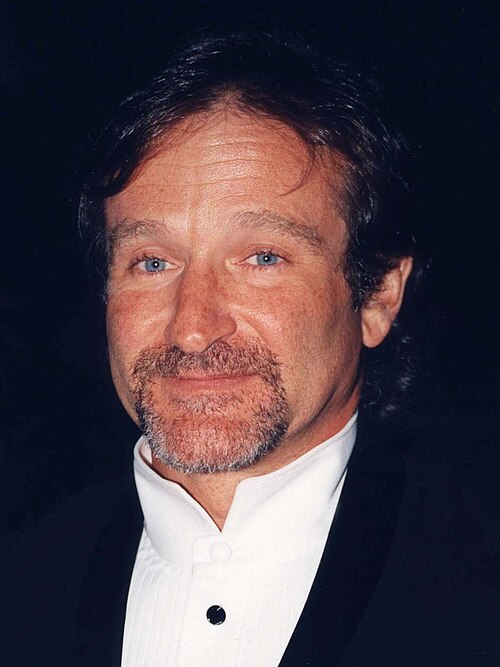
Robin McLaurin Williams (July 21, 1951 – August 11, 2014) was an American actor and comedian. Renowned for his improvisational skills and ability to embody a wide range of characters, he is considered one of the greatest comedians of all time.
Born in Chicago, Williams was the son of a Ford executive and a model. He attended public schools before transferring to a private school, and began participating in drama during high school. After graduating in 1969, he studied theater at Claremont Men’s College and the College of Marin. In 1973, he earned a full scholarship to the Juilliard School, where he was a classmate of Christopher Reeve. Leaving Juilliard in 1976, he started performing stand-up comedy in the San Francisco Bay Area, later performing at The Comedy Store in Los Angeles, where he was discovered by a television producer.
In 1978, he played the alien Mork on Happy Days, which led to his starring role in the spin-off series Mork & Mindy, catapulting him to fame. The show’s high ratings landed him on the cover of Time magazine. In 1980, he starred in the film Popeye; though a box office disappointment, it did not hamper his career. In 1987, he received an Academy Award nomination for Best Actor for Good Morning, Vietnam, followed by nominations for Dead Poets Society (1989) and The Fisher King (1991). In 1992, he voiced the Genie in Disney’s animated film Aladdin, a role that became iconic and earned him a Special Golden Globe Award. He won the Academy Award for Best Supporting Actor in 1997 for Good Will Hunting.
Williams also showcased his comedic talent in films such as Mrs. Doubtfire (1993), Jumanji (1995), and Patch Adams (1998), while taking on darker roles in Insomnia (2002) and One Hour Photo (2002). His later works included the Night at the Museum franchise and Broadway stage productions.
In his personal life, Williams was married to Valerie Velardi (1978–1988) and Marsha Garces (1989–2010), with whom he had three children. In 2011, he married Susan Schneider. He struggled for many years with substance and alcohol addiction; he received treatment for cocaine addiction and, after being sober, relapsed into alcoholism after 2003. In 2009, he underwent heart surgery. On August 11, 2014, he died by suicide at his home in California at the age of 63. An autopsy revealed he had diffuse Lewy body dementia, which had been misdiagnosed as Parkinson’s disease. His death prompted widespread mourning, with tributes from President Barack Obama and many others.
Day Master Ren Water born in the Wei month. The earthly branches form a triple Earth structure, with overwhelming Guan Sha (Direct and Indirect Officers). Wealth Star generates and supports them, while Shang Guan (Hurting Officer) protrudes on the stem to drain the Day Master. The Day Master is undoubtedly weak, favoring Metal and Water as beneficial elements. It is like a clear spring encircled by thick layers of earth; although Ren Water is naturally agile, it faces obstacles everywhere, struggling to flow freely. This energetic state signifies strong external adaptability, affability, and smoothness—always able to dissolve awkwardness—but internally he endures immense anxiety and pressure. His overall impression is that of a brilliantly talented artist, possessing both childlike innocence and the depth of a philosopher, yet behind his smile lurks an imperceptible loneliness. His greatest strengths are extraordinary creativity and empathy, capable of keenly capturing human nuances and transforming them into art; his greatest challenge lies in the overwhelming Guan Sha, which brings excessive self-criticism, burden of responsibility, and a sense of internal depletion. If not promptly relieved, this may lead to mental collapse.
The chart forms a flowing pattern of Shang Guan generating Wealth, and Wealth generating Guan Sha. Zheng Yin (Direct Seal) emerges on the year stem to protect the Day Master, but its strength is too weak to turn the tide. This belongs to a mixed structure, with Zheng Yin and Bi Jian (Companion) serving as the Temperature-Regulating Useful Gods. The Useful God Metal (Yin Star) represents nourishing knowledge, spiritual beliefs, elders, or solitary time. Through learning and introspection, he can transform external pressure and rediscover tranquility amidst clamor. The Useful God Water (Bi Jian) represents kindred spirits, self-affirmation, and vitality, helping him share heavy burdens and bolster confidence. The Annoying God Earth (Guan Sha) signifies excessive work responsibilities, public expectations, and a harsh inner judge. The Annoying God Wood (Shang Guan) represents over-dissipation of energy and emotional upheaval. The Annoying God Fire (Wealth Star) represents anxieties over material and emotional fulfillment. His life trajectory validates the importance of Useful Gods: in his early years, he stood out through cultural accumulation of Yin Star (e.g., studying literature, drama) and the innate talent of Shang Guan for mimicry; yet whenever Guan Sha Annoying Gods raged during Da Yun or Liu Nian, he sank into deep depression and addiction, eventually passing away during a cycle where Yin Star was suppressed.
The core combinations are Shang Guan Pei Yin (Shang Guan adorned with Yin), Wealth and Guan Generating Each Other, and Guan Sha Mixed (Mixed Officers). Shang Guan Pei Yin disciplines and deepens his talents; Wealth and Guan continuously push his fame higher but entail heavy burdens; mixed Guan Sha adds to the internal tearing of values. Shang Guan is his off-the-cuff humor and gift for spontaneous mimicry. Zheng Yin endows him with philosophical thinking, compassion, and cultural refinement. Together they shape a performance style that can both entertain the masses and touch the soul—like a sage jesting on stage. Wealth generating Guan Sha means that his pursuit of success and emotional connection (Wealth) constantly invites new responsibilities and public expectations (Guan Sha). The more popular he becomes, the more he feels swept into an unending marathon. Mixed Guan Sha leaves him oscillating between the roles of a “decent, kind good man” and a “rebellious, unrestrained artist,” causing hesitation in decisions and frequent self-sabotage in action. This combination manifests behaviorally: he could improvise for hours tirelessly, yet easily fall into prolonged self-reproach from a single criticism.
Three pillars carry Hua Gai (Canopy Star), with the day and hour branches forming Wei-Xu Punishment, and the year and hour branches forming Mao-Xu Harmony transforming into Fire. This strengthens Wealth Star while Punishment agitates Guan Sha. The Shen Sha and dynamic interactions depict a destiny interwoven with solitude and brilliance. Hua Gai is the star of art, also governing loneliness, psychic tendencies, and philosophical inclination. Triple Hua Gai makes him innately distanced from the mundane world, accustomed to solitary contemplation after lively film sets, sublimating observed suffering into comedy; yet it also makes him often feel “the world doesn't understand me.” Mao-Xu Harmony transforms into Fire, representing emotional and monetary cravings that drive him to ceaselessly pursue external love and validation, but also fuel the Wealth Star, which in turn oppresses the Day Master. Wei-Xu Punishment is like an inner sandstorm, punishing the Xin Metal hidden within Xu, thereby damaging the Useful God—Zheng Yin (sense of security, tranquility)—manifesting as reliance on medication or work to numb himself and escape internal friction. These symbols were all confirmed in his life: Hua Gai bestowed his unparalleled comedic perception, and the philosophical teacher in Dead Poets Society is a direct manifestation of Yin Star; the Punishments and Hurts correspond to marital turbulence, addiction issues, and the final depressive resolution.
Ren Water Day Master sits on Xu Earth (Qi Sha (Indirect Officer) / Qi Sha). Born in the late summer month where dry earth prevails, with Shang Guan prominently protruding, Yin Star weak, and Hua Gai stars widespread, these comprehensively form an artist's soul that is outwardly expansive yet inwardly restrained, sensitive and profound. He is like an ocean sealed under a crust: the surface shows no waves, calm and able to reflect all things, yet deep down dark currents surge. Mentally, he is agile, leaping, with rich associations, able to see the sorrows and joys of the entire universe from a grain of sand—thanks to the chaotic divergence of Shang Guan and the sedimentation and refinement of Yin Star. Emotionally, he desperately craves connection yet is easily wounded. The heavy pressure of Guan Sha makes him accustomed to protecting himself with laughter, wrapping his inner distress as candy for the world. Under stress, he becomes restless, self-destructive, even escaping into disguises or substance dependence; but in a safe creative zone, he flourishes like a fish in water, transforming the most vulnerable parts into stunning art. His psychological portrait: a laugh-leader dancing under the spotlight, yet in the backstage shadows, alone, licking his wounds.
The greatest energetic strength of this chart lies in the creativity and expressiveness represented by the Shang Guan star, combined with the depth of Zheng Yin on the year stem and the intuition of Shen Sha Hua Gai, forming a unique comedic philosophy. Shang Guan serves as a built-in “emotional amplifier,” capable of mimicking hundreds of voices and expressions, and rapidly weaving jokes, making him a chameleon in stand-up and on screen. Zheng Yin plays the role of “encoder,” organizing chaotic emotions into meaningful narratives, hence the warm yet ironic improvisation in Good Morning, Vietnam, or the heart-piercing “It's not your fault” scene in Good Will Hunting. Hua Gai adds another layer of spirituality—insight into life and death, the beauty of pathos—imbuing his comedy with an undertone of compassion. These talents explode with extraordinary competitiveness in fields requiring improvisation, empathy, and multidimensional character creation, enabling him to successfully transition from stand-up comedian to Academy Award-winning supporting actor.
The core inner conflict arises from mixed Guan Sha and Shang Guan clashing with Guan, as well as the excessive Wealth Star indirectly eroding the Useful God Yin Star, leading to vacillating values and mental exhaustion. Mixed Guan Sha means that internally and externally he faces multiple contradictory behavioral norms: he must maintain the provocative, boundaryless persona of a stand-up artist while also playing the model roles of good husband, good father, and philanthropist. This prolonged role conflict triggers deep anxiety. Shang Guan clashing with Guan means he has an innate hidden resistance to rules and authority; sometimes he speaks without restraint, sometimes he clashes with producers or the public, causing his career to lurch through several controversies. Although excessive Wealth Star represents abundant income, it also consumes his Yin Star (mental energy and health), manifesting as taking on many formulaic comedies to maintain fame and family, compromising artistic authenticity, and using excessive work or substances to escape dullness, ultimately forming a vicious cycle. His personality shortcomings are an inability to say no, over-burning himself, and a reluctance to truly show vulnerability; the accumulated emotions eventually imploded like a volcano.
His life is a tragicomedy jointly authored by Shang Guan and Zheng Yin: Shang Guan made him an epoch-making bringer of joy, Yin Star allowed him to touch the softest corners of humanity, and Guan Sha was the shadow running throughout. The theme of his destiny is “using joy to set off sorrow, brewing joy from sorrow.” He used ultimate creativity to digest the unbearable loneliness of ordinary people, transforming the dark forest of a depressed person's mind into laughter and tears for a global audience—but ultimately, he could not digest his own burden. His achievements stemmed from deep resonance with pain; his final curtain call was a total reckoning by the Annoying God Guan Sha in the final phase of his life. The artistic legacy left by Robin Williams is precisely the echo already destined by the Hua Gai stars in his chart: burning alone, illuminating countless similarly lonely souls.
Shi Shen produces wealth, Wood and Fire shine brightly. This cycle is dominated by the Shi Shen (Jia) and Zheng Cai (Ding and Ji within Wu), with active energy. Childhood was a budding period of creativity and expression, with a lively and active personality. A stable family environment laid the foundation for future comedic talent. The native was in a stage of growth and interest exploration; academics were adequate but attention was easily scattered.
Shi Shen emerges on the stem, the Wealth star gains ground. In early years, there was no independent career, but Shi Shen represents talent, already showing promise through imitation and humor. The Wealth star served as later material motivation; in this cycle, financial prospects were mediocre, with more focus on cultivating interests and social skills. Family economic conditions were moderate, without major upheavals.
Peach Blossom is weak, Gui Ren not yet apparent. Interpersonal relationships were simple, mostly playmates and classmates. Shi Shen emerging on the stem made him popular, but Wu Fire being the General Star gave him leadership ambitions, making him a king among children. Family relations were harmonious, with parents supporting his interests.
Fire thrives and consumes Water, Wood abundant releases the self. Energy was vigorous but easily depleted; need to watch the respiratory system and excessive internal heat (inflammation). In childhood, there was plenty of physical activity but caution against accidental bumps. Emotionally, optimistic and cheerful, no major issues.
Jie Cai emerges on the stem, Zheng Cai sits on the ground. Jie Cai (Gui) represents peer competition and financial loss; Zheng Cai (Bing, Wu, Geng within Si) provides stable income. In youth, he entered university and early career, with both collaboration and competitive pressures. Si Fire generates Wei Earth, intensifying the Guan Sha (Officer and Slayer), adding authority pressure and self-discipline. The native began attempts at stand-up comedy and acting but was not yet stable.
Jie Cai divides wealth, Si Officer controls the self. He studied drama at university while performing in small bars. Jie Cai signifies unstable income, often sharing profits with collaborators. Bing Fire within Si, as Pian Cai (Indirect Wealth), brought extra performance income, but Guan Sha (Wu Earth) controls the self, leading to heavy academic and career pressure; he was anxious when performances fell short of expectations. In the early 1970s, he started stepping onto bigger stages.
Jie Cai emerges on the stem, bringing many friends but also envy. His social circle expanded, meeting like-minded people, but Jie Cai also brought petty people and gossip. Relationships with classmates and colleagues were competitive. In romance, Si as Zheng Cai indicates a stable relationship, but Jie Cai interference made love triangles possible.
Fire and Earth flourish, severely consuming Water. Emotions were easily tense, with Guan Sha attacking the self causing frequent anxiety. Watch the heart and blood circulation. Work was tiring; guard against overwork.
Bi Jian helps the self, Qi Sha attacks the self. Ren Water as Bi Jian directly aids the Day Master, while Chen Earth as Qi Sha brings pressure. This decade was a breakout period of career rise: from comedian to TV star to film breakthrough. Qi Sha represents challenges and breakthroughs, while Bi Jian brings support from colleagues and enhances personal energy. However, Chen-Xu clash (Chen clashes with Xu) indicates underlying changes, instability in family and inner peace.
Bi Jian seizes wealth, Qi Sha forms a structure. In 1975 he appeared in "Happy Days"; in 1978 "Mork & Mindy" became a huge hit, and his career took off. Bi Jian's help led to successful teamwork but also divided profits. Qi Sha represented pressure and competition; when he transitioned to films, he faced skepticism. In 1980, "Popeye" flopped at the box office, with Qi Sha attacking the self causing setback. But Bi Jian persisted, and in 1982 came the peak with "Good Morning, Vietnam". Income exploded, but expenses were also high.
Chen-Xu clash, family changes. Marrying his first wife in 1980, but Qi Sha and the Chen-Xu clash brought marital problems. Socially, many Bi Jian peers, close ties with comedy circles. But Qi Sha led to making enemies, competitive friction with peers. Fame soared, and Peach Blossom also flourished.
Heavy Earth muddies Water, Chen-Xu clash. Emotional fluctuations were large, Qi Sha pressure led to depressive tendencies. Watch the spleen, stomach, digestion, and kidneys. Alcohol and opioid issues sprouted, addiction risks present.
Zheng Yin transforms the Sha, Shang Guan emerges on the stem. Xin Metal as Zheng Yin brings protection and support, while Mao Wood as Shang Guan enhances talent and rebellion. In this cycle, his career reached its peak: In 1987, "Good Morning, Vietnam" earned an Oscar nomination; in 1989, "Dead Poets Society" became a classic; in 1990, "Awakenings" etc. Zheng Yin resolves the pressure from Qi Sha, Shang Guan expresses brilliance, and his acting career entered a golden period. However, Shang Guan encounters Officer, leading to potential gossip and disputes.
The Resource star shields the self, Shang Guan produces wealth. Zheng Yin (Xin Metal) supports the self, gaining support from major directors and producers, greatly increasing role depth and award chances. Shang Guan (Mao Wood) produces wealth (Ding Fire); creativity surged, and his salary skyrocketed. In 1991, "The Fisher King" earned another nomination; in 1993, "Mrs. Doubtfire" was a box office hit. Income was extremely high, but Shang Guan drains the self, and work intensity was tremendous. Mao-Wei half-combination indicates large family expenses.
Shang Guan emerges, the spouse palace Wei Earth is damaged. Divorce from first wife in 1988, caused by Shang Guan controlling the Officer. Remarried in 1990, with Mao Wood Shang Guan combining with the Ding Fire within Wei, the new wife brought stability. Relations with children were good, but Shang Guan also made him outspoken, occasionally clashing with the media.
Mao Wood consumes Metal, Shang Guan drains the self. Energy was overdrawn, sustained by coffee and medication. Shang Guan governs emotions, making him prone to agitation. Watch liver and lung health; addiction issues deepened.
Pian Yin supports the self, Shi Shen expresses brilliance. Geng Metal Pian Yin and Yin Wood Shi Shen combine. Pian Yin brings unconventional thinking and role choices, while Shi Shen is full of talent. This decade continued career glory but shifted toward more genres: in 1995, "Jumanji"; in 1997, "Good Will Hunting" won the Oscar for Best Supporting Actor. Shi Shen represents joy, but his inner pressure gradually increased. Bing Fire within Yin as Pian Cai suggests mixed investment results.
Pian Yin transforms the Sha, Shi Shen produces wealth. Pian Yin supports the self, enabling a successful transformation, gaining recognition for serious roles. Shi Shen produces wealth, bringing considerable income, but Yin-Shen clash (this cycle's Yin and the year branch Shen? No, the year branch is Mao; Day branch Xu? Xu-Yin no clash. Yin-Shen clash? There is no Shen in the natal chart, but when the annual influence meets Shen, a clash occurs. Note: The Geng Yin cycle combines with the month branch Wei and hour branch Wei; no clash with the day branch Xu.) Major income sources were stable but with many investments; after 1998's "Good Will Hunting", his salary reached $20 million per film. Financial management was poor, with high expenses.
Shi Shen combines with Officer, Yin-Wei hidden combination. Relationship with his wife was good, but Shi Shen combining with Officer made him play a fatherly role at home. His fame was at its peak, with wide social connections, but Pian Yin revealed his reclusive side. Children were grown, relations harmonious.
Geng Metal controls Wood, Shi Shen drains the self. Continued overexertion affected his heart. After 2000, health declined, with tachycardia. Anxiety and depression intensified, relying on alcohol and drugs.
Double Zheng Guan emerges, heavy Earth controls the self. Both Ji and Chou stems and branches are Earth, Zheng Guan strongly restrains the Day Master. This decade saw a marked slowdown in career; Zheng Guan represents responsibility and pressure, and he chose more family life, but Guan Sha attacking the self caused inner repression. In 2006, due to an alcohol relapse, he entered rehab; in 2008, a brief career resurgence, but overall decline. The heavy Earth of Ji and Chou buries the Water, leading to emotional lows.
Zheng Guan combines with the self, the Wealth storage is clashed. Ji Earth Zheng Guan combines with the self (Ren Water being controlled and combined by Ji Earth), making his career passive, taking on some voice acting and supporting roles. Within Chou Earth, Xin Metal as weak Zheng Yin still allowed some work output, such as 2006's "Night at the Museum". Chou-Wei clash stirs the Wealth storage, leading to mixed results in property investments. Income significantly reduced but still generous.
The Officer star is strong and thriving, the spouse palace Wei Earth is clashed again. Family pressure increased, leading to another divorce in 2009. The Officer star represents children; relations with children were acceptable, but Zheng Guan made his sense of responsibility too heavy. Relationships with colleagues were distant, and his social circle shrank.
Heavy Earth dries up Water, Guan Sha attacks the self. Health severely declined, with heart disease, depression, and early Parkinson's symptoms appearing. Zheng Guan controlling the self caused relapse of substance addiction. After 2010, multiple stays in rehab centers.
Tian Xiang (Prosperous) sits in the Parents Palace, without afflictions from harmful stars, forming a 'Yin Shou Protects the Officer' pattern. Tian Xiang is the Southern Dipper's Seal Star. Its prosperous state symbolizes upright, educated parents with social standing. The native's father was a Ford Motor Company executive, and his mother a housewife; the family environment was affluent and stable. Tian Xiang also governs coordination and protection, meaning that although the parents were serious, they were open-minded and supported his artistic pursuits. However, Tian Xiang in Chou (the Ox sign) is the 'Death' position, suggesting that the parent-child relationship may have gradually become distant later due to the father's job changes (multiple relocations), or that the father had a strong authoritative presence but lacked emotional communication. Without auxiliary stars, the parents' direct influence on the native tended to follow a single path: providing material security rather than deep emotional resonance. This pattern of 'shelter but not intimacy' later manifested in his improvisational comedy as playful mimicry of authority figures and a longing for family warmth.
This palace has no Four Transformations, but the Career Palace's Tai Yang transforming into Hua Quan and the Property Palace's Wen Chang transforming into Hua Ji create Flying Star connections. Tai Yang Hua Quan (Tai Yang represents the father, Hua Quan strengthens authority) shines from the Career Palace onto the Parents Palace, intensifying the father's powerful image in his career, making him the family breadwinner and decision-maker. This pressure instead stimulated the native to defuse tension with humor. Wen Chang Hua Ji in the Property Palace (Wen Chang is scholarship, Hua Ji signifies obstacles) hints that the parents may have encountered problems in finances or estate handling, such as the father's investment failures in his later years or family document disputes, causing the native to develop ambivalent feelings about material security. In addition, the Travel Palace's Tian Ji (Prosperous) (Tian Ji is wisdom) secretly influences the Parents Palace. The father's frequent job transfers forced the native to constantly adapt to new environments, training rapid adaptability, which became the foundation of his improvisational acting.
Robin Williams's father, Robert Williams, was an executive at Ford Motor Company, leading to multiple relocations throughout his childhood—from Chicago to Detroit and then to California—causing the native to experience four moves during his childhood. The stable shelter of Tian Xiang Prosperous and the agility of Tian Ji in the Travel Palace created a tension: although the father provided material comfort (butlers, mansions), he was emotionally distant; the mother, Laura, gently supported his interest in performance. In 1964 (age 13), after his father retired, the family moved to California, living on savings. The shadow of Wen Chang Hua Ji emerged—his father's investments failed in his later years (before his death in 1987), and inheritance disputes strained family relations. In 1980, the native imitated his father's image in 'Popeye', transforming the stern father's tone into comedic material, which is precisely the 'softening' of authority by Tian Xiang Prosperous, turning repression into creation. The mother passed away in 2001, and the native honored her with humor at the funeral, demonstrating the ultimate reconciliation of a Parents Palace without afflictions: though not perfect, it gave him complete space for self-expression.
Tian Tong (Heavenly Unity, in favorable position) and Tian Liang (Heavenly Beam, in exalted position) co-locate, with Tian Yue (Celestial Battle-Axe) joining, and the Body Palace (Shen Gong) is located here. Tian Tong is a star of blessings, governing enjoyment and gentleness, but in a favorable position it is slightly weak, easily leading to laziness; Tian Liang is a star of shelter, in exalted position it is upright and compassionate, yet carries an inherent isolating quality. The two stars meeting form the 'Fortune and Shelter Interlocking' pattern, indicating the life owner harbors a desire to help the world, often actively caring for the weak. However, Tian Liang's isolating nature makes this compassion difficult to ground in intimate relationships—on stage, he brings laughter to millions, yet offstage, he silently digests the undercurrents of his mind. Tian Yue is a Benefactor Star, symbolizing guidance in the spiritual world from elders, mentors, or faith, such as his early influence from comedy seniors and his later refuge in Buddhism for peace. The Body Palace falls here, indicating that emotional states directly shape outward expression: his wild performances are an outlet for his inner turmoil, and the shadow of depression is openly exposed in the public eye.
This palace has no Four Transformations, but a Hua-Lu (Lu Transformation) from Ju Men (Great Gate) in the opposite palace penetrates here, stirring mental fluctuations. Ju Men Hua-Lu in the Destiny Palace originally signifies eloquent speech and active thought, but Ju Men, a dark star, when transformed to Lu, can instead lead to excessive rumination. This Hua-Lu directly shoots into the Fortune Palace (Fu De Gong), so the life owner's spiritual world is often drowned in words and ideas—in an interview, he admitted 'having 1000 voices in my head,' exactly the effect of Ju Men Hua-Lu. At the same time, the Spouse Palace has Tai Yin (Yin Moon, prosperous) co-entangled with Qing Yang (Halberd Ram, exalted); though there is no Four Transformation, Tai Yin's delicate emotions are cut by Qing Yang's impatience, causing compounded mental stress in intimate relationships. The ups and downs of his three marriages and the timing of his worsening depression (the divorce period in the 1990s) coincide, reflecting the erosion of the Fortune Palace by relationship issues.
The duality of inner good and evil pervades his life. In 1991 (Xin Wei year), he received an Oscar nomination for Dead Poets Society, but his father passed away the same year, activating the solitary star Tian Liang—he wrote in his autobiography 'the loneliest when successful.' After 2000, he was invited to perform for troops stationed in Afghanistan (2002), embodying Tian Liang's compassion; yet at the same time, Parkinson's disease lurked (misdiagnosed in 2008), actually a wearing down of Tian Tong's 'blessings' by Tuo Luo (Spiral Star) from the Wealth Palace. In August 2014, he hanged himself at home, corresponding to entering the Bing Chen Da Yun (Major Life Cycle for age 53-62, but he only lived to 2014, with the cycle's Destiny Palace in the Fortune Palace) after the Ding Si Da Yun (age 43-52), with the Liu Nian (Annual Influence) of Jia Wu year causing Tian Ji (Celestial Mechanism) Hua-Ji (Ji Transformation) to clash with the Da Yun Fortune Palace, leading to complete mental loss of control. He long supported St. Jude Children's Research Hospital (the essence of Tian Yue's benefactor meaning), and even made secret donations before his death—the integrity of Tian Liang never disappeared until his end.
Ju Men (Prosperous) transforming into Hua Lu (Wealth) sits in the Destiny Palace, in the Tomb position, with Longevity stage, signifying a dark star gaining light. Ju Men is the star of speech and hidden darkness. Its prosperous state combined with Hua Lu transforms obscurity into clarity, while the Tomb position suggests inner depth. This configuration grants the native outstanding verbal expression and comedic talent—the ability to turn shadows in life into humor. The Hua Lu enhancement further makes this ability a means of generating wealth and fame. Robin Williams's sharp yet warm style in stand-up comedy is a typical manifestation of Ju Men Hua Lu. The sedimentation of the Tomb position also foreshadows frequent loneliness and introspection, laying the groundwork for later-life depression.
Ju Men Hua Lu entering the Destiny Palace directly catalyzes eloquence and expressive power. Hua Lu is blessing and diffusion, enabling the native's words to touch hearts and spread far. His passionate yet empathetic performances in "Good Morning, Vietnam" and "Dead Poets Society" are the energy release of Ju Men Hua Lu. However, Hua Lu also carries a tendency towards excess, so be mindful of mental and physical exhaustion.
Ju Men Hua Lu in the Destiny Palace was the core driving force of Robin Williams's career. He started doing stand-up comedy in the 1970s and quickly stood out with explosive humor and improvisational skills. Entering the film and television industry in the 1980s, he was nominated for an Oscar for "Good Morning, Vietnam," and won the Oscar for Best Supporting Actor for "Good Will Hunting" in 1997—all confirming that Ju Men Hua Lu propelled him from the stand-up stage to the world cinema.
Lian Zhen (Fallen) and Tan Lang (Fallen) in the Sibling Palace, with Wen Qu (Prosperous) transforming into Hua Ke (Fame). Lian Zhen is a secondary Peach Blossom star, governing emotions and bonds; Tan Lang governs desires and artistic talents. Both fallen in the water of Hai (the Pig sign), like undercurrents surging silently—the Sibling Palace here does not refer to actual siblings (Robin Williams was an only child), but rather maps to peers, competitive partners, and close social circles. The combination of Lian Zhen and Tan Lang in a fallen state suggests that the native both cherished comradeship and harbored hidden rivalry and suspicion towards peers, with emotional entanglements likely. Wen Qu transforming into Hua Ke is like a flash of light in the dark night, endowing him with extraordinary comic timing and artistic expression, making him stand out among the dazzling stars of the entertainment world. However, the fallen foundation also means these relationships are hard to sustain, often accompanied by betrayal or a sense of estrangement.
Wen Qu transforming into Hua Ke enters the Sibling Palace, enhancing the display of talent and external recognition. Hua Ke governs fame, examinations, and artistic performance. When it falls in the Sibling Palace, it means the native gains professional recognition through interaction and competition with peers. For example, in the 1997 collaboration with comedy giants Steve Martin and Billy Crystal, his improvisational skills were highly acclaimed; winning the Academy Award for Best Supporting Actor in 1998 for "Good Will Hunting" was the pinnacle of Wen Qu Hua Ke's brilliance. However, the main stars in this palace lack Hua Lu (Wealth) or Hua Quan (Authority). The opposite palace (the Travel Palace) has Tian Ji (Prosperous) joined by Tian Kui and Di Jie, forming a variation of the "Ji Yue Tong Liang" pattern, suggesting he needed frequent travel and cross-industry collaborations to maintain these relationships, but Tian Ji encountering Di Jie also brings unexpected ruptures.
The Sibling Palace reveals the native's network and competitive pressure in the entertainment industry. As an only child, he had no biological siblings, but this palace corresponds to the "brothers in the jianghu" in his life—colleagues, agents, and close friends. In 1991, he bonded with his friend Robin Wright on the film 'Tianya Haijiao', but the relationship lasted only a few years; in 1996, he and his co-star Billy Crystal were in perfect harmony in 'Catch Me If You Can,' but privately they gradually drifted apart due to differing creative philosophies. In 2006, he fell out with long-time collaborator and close friend Bobcat Goldthwait over creative differences, reflecting the suspicion trait of Lian Tan both fallen. Wen Qu Hua Ke attracted a group of talented partners, but the fallen main stars made him unable to truly trust others, and the loneliness and depression in his later years (2014) were related to the contraction of this palace's energy.
Tai Yin (Moon) in prosperous sits in the Marriage Palace, with Qing Yang (Aggressor) in the same palace, the water star being scorched by the fire star. Tai Yin is the star of emotion, tenderness, and art; in prosperous position, it makes the native full of affection and tolerance toward the spouse, desiring a stable, warm marital life. Qing Yang, as a baneful star, is stern in nature, signifying sudden upheavals and quarrels. The two together create an extreme combination of emotional delicacy and violent conflict. This leads the native to crave deep connection in intimate relationships but also easily fall into intense arguments triggered by emotional dysregulation (especially his own depressive tendencies) or external stimuli (such as career pressure), ultimately heading toward separation. The spouse typically possesses Tai Yin's gentle qualities (such as consideration and artistic taste), but Qing Yang may also inject impatience or volatility into the spouse's character, or bring sudden disruptions like third-party interference.
This palace has no Four Transformations, but the opposite Career Palace with Tai Yang Hua Quan shines directly, triggering a power struggle with the spouse. Tai Yang Hua Quan in the Career Palace symbolizes career authority and a desire for control; this force shines directly onto the Marriage Palace, often making the spouse dominant in social status or family decisions, and may even create a power tilt of 'protector' and 'protected' due to the native's long-term depression and career fluctuations. At the same time, Ju Men Hua Lu in the Destiny Palace, with its gentle communication quality, influences the Marriage Palace through the Trio Harmony, but the ongoing conflict from Qing Yang continually erodes this lubrication, trapping the native in a cycle of 'craving warmth but succumbing to quarrels.' Additionally, Lu Cun and Zuo Fu in the Children Palace form a stabilizing magnetic field, hinting that children become a bond in the marriage, but Lu Cun's immobility also makes the native struggle more when facing divorce decisions.
Three marriages correspond to Qing Yang's repeated trauma and Tai Yin's longing for tenderness. The first marriage (1978–1988) with dancer Valerie Velardi: Tai Yin's prosperity manifested as initial family warmth, but due to Qing Yang's sudden conflicts (such as frequent separations and emotional instability after the native's career took off), it ended in 1988. The second marriage (1989–2008) with producer Marsha Garces: Tai Yang Hua Quan illuminated the Marriage Palace; the wife became his business partner (participating in productions like 'Mrs. Doubtfire'), and the power balance gradually tilted. At the 2008 divorce, Qing Yang triggered sharp property disputes and emotional rifts. The third marriage (2009–2014) with graphic designer Susan Schneider: Tai Yin's companionship briefly appeared in his later years, but Qing Yang ultimately caused permanent separation through death: in 2014, the native committed suicide, with his wife witnessing the tragedy. Depression and Parkinson's disease as hidden killers further intensified Tai Yin's melancholy and Qing Yang's outburst.
Tian Fu (Heavenly Treasury) in prosperous guards the Children Palace, with Zuo Fu (Left Assistant) and Lu Cun (Stable Wealth) in the same palace. Tian Fu is a Southern Dipper storage star, of Earth element, transforming as a wealth repository; in prosperous state it indicates children with steady personalities, blessed and capable of inheriting the family business or providing substantial support. Zuo Fu is a helpful star that strengthens unity among children and their practical assistance to the native, while Lu Cun endows children with material abundance, sparing them from economic hardship. This combination in Robin Williams' Children Palace forms a 'supported treasury' pattern: the children are not only emotional comfort but a solid backing outside his career. For example, his eldest daughter Zelda Williams inherited his acting talent and pursued a career in entertainment, confirming the 'generational continuity' brought by Tian Fu's prosperity. The presence of Zuo Fu and Lu Cun also suggests harmonious relationships among the children, and the native can gain wealth through them—Zelda later participated in producing a documentary about her father, extending the family's influence.
This palace has no Four Transformations, but the opposite Siblings Palace (with Lian Zhen and Tan Lang) has Wen Qu Hua Ke (Fame Transformation), and the Trio Harmony with Tai Yang Hua Quan in the Career Palace and Wen Chang Hua Ji in the Property Palace creates flying star connections. Wen Qu Hua Ke (in Hai Palace) secretly merges with the Children Palace via the Siblings Palace, imbuing the children with artistic temperament: Zelda Williams' involvement in acting and writing is the outward manifestation of this Fame Star. Tai Yang Hua Quan (in Chen Palace) in the Career Palace projects its authority into the Children Palace, granting children decisiveness and leadership in their pursuits—son Cody Williams once dabbled in music production, showing independence. However, Wen Chang Hua Ji in the Property Palace (Mao Palace) brings hidden pressure: the children experienced setbacks regarding family matters or inheritance, such as the brief discord between Robin Williams and his children over trust fund issues in his later years, but Lu Cun and Tian Fu balanced the impact of the Obstruction Star, and relationships were eventually restored.
Robin Williams had three children: Zelda (born 1989), Cody (born 1991), and Zachary (born 1992). The prosperity of Tian Fu made the children generally precocious and independent: Zelda appeared in 'Jackie Brown' at age 8, later landing roles in series like 'The Flash'; Cody and Zachary stayed away from the spotlight, working behind the scenes. Zuo Fu's effect is seen in Zelda's proactive management of her father's estate and media materials after his death, preserving the family reputation. Lu Cun manifests economically: the children maintained good financial standing after adulthood, without disputes over the father's substantial estate. However, the pull of Tai Yang Hua Quan in the Career Palace also created conflicts in career choices—Zelda initially resisted being labeled 'Robin's daughter,' and only after her father's suicide in 2014 did she openly embrace his comedic spirit, founding a charity fund. The shadow of Wen Chang Hua Ji in the Property Palace is reflected in the children's protection of family privacy: they once refused authorization for multiple biopics, only relenting after 2020.
Wu Qu (Military Music, favorable) and Qi Sha (Qi Sha (Indirect Officer), prosperous) occupy the Property Palace (Tian Zhai Gong), with Wen Chang (Literary Prosperity) Hua-Ji (Ji Transformation). Wu Qu is a star of wealth, Metal element, governing hard assets and cash flow; Qi Sha is a star of strategy, governing decisiveness and change. Their combination in prosperous position originally indicates decisive real estate investment and rapid appreciation. The life owner quickly accumulated wealth through comedic talent in early years, owning multiple luxury properties, including mansions in San Francisco and Napa Valley villas, purchasing at high prices and renovating repeatedly. However, Wen Chang Hua-Ji impacts: Wen Chang is a star of literature and contracts; when transforming to Ji, it easily triggers document disputes and property rights conflicts, forming a point of loss within the 'Sha Po Lang' (Killer, Destroyer, Wolf) paradigm. In the late 1990s, due to poor tax planning, he faced legal battles with property developers, forced to sell some properties at low prices to cover legal fees. Qi Sha's decisiveness later turned into an impulse to sell; in his later years, under depression and financial stress, he planned to sell his Napa Valley villa, but an incomplete contract caused delays, and the property value shrank.
Wen Chang Hua-Ji directly enters the Property Palace, triggering contract demolitions. Wen Chang, Metal element, is a star of academic and official auxiliary; when Hua-Ji, it indicates intellectual blindness and contractual traps. In the early 2000s, due to omissions in trust fund documents, he failed to effectively isolate personal assets, leading to his ex-wife taking a large share of properties in the divorce. Additionally, Wen Chang Hua-Ji interacts with Tian Ji (Celestial Mechanism, exalted) in the Travel Palace (Qian Yi Gong), forming a pattern of 'cleverness leads to self-deception': he repeatedly entrusted property management to friends without written contracts, suffering tenant rent defaults or property damage, losing millions of dollars. The opposite Children Palace (Zi Nü Gong) has Tian Fu (Celestial Treasury, prosperous), Zuo Fu (Left Assistant), and Lu Cun (Salary Star), which could normally protect the Property Palace, but Wen Chang Hua-Ji disperses Lu Cun's wealth storage, frustrating inheritance plans for his children and triggering family legal disputes during estate division.
Wu Qu and Qi Sha's prosperity made him dare to heavily invest in real estate, but Wen Chang Hua-Ji meant every large transaction accompanied lawsuits or financial stress. In the late 1980s, he bought a San Francisco mansion for $2.2 million, but a three-year lawsuit over a neighbor's illegal construction caused him to sell it for only $3 million, resulting in an actual loss after legal fees. In his 1995 divorce, his ex-wife took a Lake Tahoe vacation villa, which later depreciated by 40% due to market fluctuations. Before the 2008 financial crisis, he mortgaged his Napa Valley vineyard to finance a Broadway production, but Wen Chang Hua-Ji stirred Huo Xing (Fire Star) in the Career Palace, leading to the project's failure and forced sale of the vineyard at 25% below valuation to repay loans. In his final year 2013, attempting to sell his Malibu coastal villa, a title registration error (Wen Chang Hua-Ji) delayed the transaction for half a year, and the final price was only 60% of expected, accelerating his financial collapse.
Tai Yang (Yang Sun) prosperous and Hua-Quan (Quan Transformation) sits in the Career Palace (Guan Lu Gong), with Di Kong (Earth Void) and Huo Xing (Fire Star) in fallen positions co-residing, forming 'Sun Shining on Thunder Gate' but invaded by Void and Fire Sha (malefic). Tai Yang is the primary star of career, in Chen Palace it is a prosperous land; with Hua-Quan, it radiates even more brilliantly, representing a career that can reach the pinnacle, with authority and fame equal. Di Kong and Huo Xing are a double-edged sword of agitation and eruption: Di Kong makes his career trajectory unconventional, often leading to unexpected ups and downs—like leaping from TV comedy to film, or suddenly leaving peak career for niche roles; Huo Xing endows him with fiery concentration and explosive energy, capable of astonishing creative bursts in brief periods, but also brings emotional decision-making and overwork risks. This combination made him a unique improvised comedy genius, but also accompanied by a lifelong sense of 'emptiness after the climax.'
Tai Yang Hua-Quan in the Career Palace grants career control urge and pioneering will. Hua-Quan amplifies Tai Yang's expansiveness, making him unsatisfied with a single achievement but constantly challenging new fields: from the 1978 breakout sitcom Mork & Mindy, to his Oscar nomination for Good Morning, Vietnam in 1987, winning Best Supporting Actor for Good Will Hunting in 1997, and then attempting serious theater after 2002, each step was an active choice, not passive waiting. The Quan star also strengthened his leadership aura on set, often improvising lines or dominating performance rhythms. However, with Quan star meeting Huo Xing and Di Kong, his control sometimes turned into uncontrollable overdrive—in the 1990s, overwork led to substance dependency, and his post-2000 works received mixed reviews, exactly a reflection of 'Quan' being consumed by malefic stars.
Tai Yang Hua-Quan earned Robin Williams top honors: the 1979 Golden Globe for Best TV Actor (Mork & Mindy), the 1998 Academy Award for Best Supporting Actor (Good Will Hunting), and the 2005 AFI Life Achievement Award—corresponding to Tai Yang Quan's 'achieving highest success.' Di Kong and Huo Xing acted out the vertical rises and falls of his career: in the 1980s, drug use nearly destroyed his career, but in 1991 he voluntarily quit and returned with The Fisher King to renewed acclaim; post-2000, Bicentennial Man and the Night at the Museum series were global blockbusters, but artistic reviews were polarized, and after 2010 worsening depression led to his 2014 suicide. The combination of Kong-Huo (Void and Fire) made his career peaks and emotional abysses inseparable. Huo Xing in fallen position led to over-extension in helping others but draining his body and mind; he supported charities and troops, but his own health suffered from long-term bipolar disorder and medication issues.
The combination of You Bi (Right Assistant), Tian Ma (Mobility Star), and Ling Xing (Fire Sha) suggests a wide social circle but with hidden turbulence. You Bi is a helpful star, indicating that the native can gain support from friends and teams, but also implying a tendency to play a supporting role; Tian Ma governs movement and change, so friendships are often maintained through travel, activities, or work collaborations, making them unpredictable and transient; Ling Xing is a Fire Sha star, and when it is in a strong position, its explosive energy intensifies, foreshadowing sudden disputes, betrayals, or unexpected conflicts in interpersonal relationships. The tri-combination of the Career Palace with Tai Yang (Sun) transforming into authority (Hua Quan) and the Travel Palace with Tian Ji (Sky Resource) transforming into wealth (Hua Lu) brings benefactor support, but the Property Palace with Wen Chang (Literary Star) transforming into obstacles (Hua Ji) indicates that legal hidden dangers can arise from partnerships. The overall pattern suggests: the native relies on networks for advancement, but the circles are highly fluid, and interpersonal crises often arise due to career or family reasons.
This palace has no direct Four Transformations, but it is influenced by the flying stars from the Career Palace's Tai Yang Hua Quan, the Travel Palace's Tian Ji Hua Lu, and the Property Palace's Wen Chang Hua Ji. Tai Yang Hua Quan in the Career Palace suggests that the native influences their social circle through power and status at work, with subordinates or partners often coming through career development; Tian Ji Hua Lu in the Travel Palace indicates that external activities or cross-regional collaborations bring networking benefits, but Di Jie (Void Star) makes these connections prone to collapse when ideals are unfulfilled; Wen Chang Hua Ji in the Property Palace symbolizes that mistakes in family documents (such as divorce agreements, property contracts) can impact interpersonal trust, and the native may have fallen out with friends due to family disputes.
Robin Williams had extensive connections in the entertainment industry. You Bi and Tian Ma manifested in his frequent changes of performance partners and management teams (e.g., working with the director of Good Morning, Vietnam and then drifting apart). In the late 1980s, he gained fame with Dead Poets Society, but Ling Xing's strong position triggered a royalty dispute with Disney over his voice work in Aladdin (1994, both parties went to court). After winning awards for Good Will Hunting in 1997, the Travel Palace's Tian Ji Hua Lu pushed him on global tours, but Di Jie caused multiple last-minute cancellations, and some close friends (like comedian Bobcat Goldthwait) felt estranged due to scheduling conflicts. After 2000, the Property Palace's Wen Chang Hua Ji materialized: asset division in divorce proceedings affected his long-term manager, leading to a breakdown in their relationship.
Tian Ji (Sky Resource) in a temple position sits in the Travel Palace, accompanied by Tian Kui (Heavenly Leader) and Di Jie (Void Star), forming a 'Wisdom Star with Calamity' pattern. Tian Ji in a temple position represents extraordinary adaptability and intelligence. In the Travel Palace, it indicates the ability to quickly understand different cultures when abroad and transform observations into improvisational performance material. Tian Kui is a visible benefactor star, meaning that during travels, the native often meets mentors or helpers, such as director Barry Levinson who championed him for Good Morning, Vietnam against opposition. However, Di Jie acts like an undercurrent, causing frequent unexpected incidents during journeys—during a 1986 Australian tour, he was hospitalized for an asthma attack; performances were often interrupted by technical failures, yet he would weave these into comedic bits, making the audience even more engaged. Three layers of interaction: the star essence (Tian Ji's wisdom) → combined effects (benefactor support plus trials) → behavioral pattern (using humor to overcome difficulties, but long-term mental drain).
The Travel Palace has no direct Four Transformations, but the Jia stem triggers Lian Zhen (Purity) transforming into wealth (Hua Lu) in the Sibling Palace, creating a 'Lu transfer' effect. Lian Zhen Hua Lu in the Sibling Palace (Hai) with Wen Chang Ke (Literary Star Branch) indicates that friends and colleagues become a source of income when traveling—Robin Williams, while filming Mork & Mindy in 1977, built a deep friendship with producer Garry Marshall, who invited him on shows multiple times, establishing his international fame. Additionally, the opposite Destiny Palace has Ju Men (Great Gate) Hua Lu, making his public speeches highly charismatic. The Travel Palace and Destiny Palace are intertwined: Ju Men Hua Lu endows eloquence, while Tian Ji in a temple position provides spontaneous adaptability, together shining especially in overseas stand-up performances.
After skyrocketing to fame with Mork & Mindy in 1977, a globe-trotting career began. In 1987, Good Morning, Vietnam was filmed in Thailand; Tian Ji's temple position allowed him to quickly absorb the local culture, and his improvised Vietnamese-accented lines earned an Oscar nomination. In 1990, Awakenings was shot in New York, and Tian Kui manifested as the hospital granting filming privileges. Di Jie's setbacks appeared in 2006: he suddenly lost his voice during a London show and was diagnosed with early Parkinson's disease; that same year he entered rehab for alcohol, but the public didn't notice because he used Tian Ji's dissimulating skills to hide his frailty. During filming Night at the Museum: Battle of the Smithsonian in 2008, frequent commutes between North America and Vancouver saw Di Jie causing constant flight delays, yet he would improvise performances for fellow passengers at the airport, captured in a viral web short that revived his popularity.
The Wealth Palace has no main star, only Tuo Luo (Procrastinator) in fallen state, drawing on the opposite Travel Palace with Tian Ji (Strategist) in prosperous, Tian Kui (Noble Star), and Di Jie (Earth Void). Tuo Luo is of Yin Fire; in fallen state it represents delays, repetitions, and hidden losses in finances, easily leading to wealth fluctuations due to delayed decisions or unexpected expenses. Tian Ji in prosperous symbolizes adaptability, strategy, and eloquence, while Tian Kui represents help from benefactors, and Di Jie indicates unstable income sources and frequent losses. Combined, the native's wealth heavily relies on his innate improvisational and verbal talents, but behind every success lie hidden drains such as contract disputes, divorce settlements, or tax issues. The cleverness of Tian Ji and the sluggishness of Tuo Luo create a contradiction: he can instantly ignite an audience on stage, yet struggles to cut losses in personal finance, often forced to adjust only after a financial crisis erupts.
This palace has no Four Transformations, but Tian Ji (Strategist) in the Travel Palace is activated by Tai Yang (Sun) Hua Quan (Authority Transformation) in the Career Palace, creating an indirect pull of 'Authority Star illuminating Wealth.' Tai Yang Hua Quan in the Career Palace signifies professional power and control, transmitted through the Travel Palace (Tian Ji) to the Wealth Palace, meaning his high income mainly comes from public performances, film contracts, and other career achievements, with characteristics of periodic bursts. At the same time, Ju Men Hua Lu (Prosperity Transformation) in the Destiny Palace (eloquent wealth generation) and Wen Qu Hua Ke (Fame Transformation) in the Siblings Palace (artistic reputation) also inject energy into the Wealth Palace through the Trio Harmony Flying Stars: Ju Men Hua Lu enhances his ability to earn through speech and drama, while Wen Qu Hua Ke boosts his salary through awards and reputation. However, Wen Chang Hua Ji (Obstruction Transformation) in the Property Palace indicates that financial documents, contracts, or investments are prone to errors, and combined with Tuo Luo's delaying nature, it has caused multiple financial difficulties.
Robin Williams' wealth trajectory is a typical interweaving of soaring highs and plummeting lows, with periodic revivals. In 1978, he shot to fame with 'Mork & Mindy.' In the 1980s, his per-film salary exceeded one million dollars, and in the 1990s, works like 'Mrs. Doubtfire' and 'Good Will Hunting' propelled him into the ten-million-dollar club. However, the first divorce (1988) cost approximately $30 million in alimony, and the second divorce (2008) again strained his cash flow. Tuo Luo's delaying effect erupted in the early 2000s—due to excessive investments and neglect of tax planning, in 2003 he was forced to sell his mansion and return to commercial films (such as the 'Night at the Museum' series) to pay off debts. In 2009, during heart surgery, he still worked under contract pressure, and delayed financial decisions caused him to miss optimal repayment windows multiple times. Ultimately, at his death in 2014, his estate was still entangled in legal disputes over unpaid debts and tax issues.
Zi Wei (Purple Emperor) and Po Jun (Breaker Army) in a prosperous position sit in the Health Palace, with Bath (Mu Yu) and Longevity (Chang Sheng). Zi Wei is the Emperor star, Po Jun is a star of change; in a prosperous position, it suggests major sudden illnesses or drastic health fluctuations. Bath governs romance and emotional swings. The native had significant mental health issues (depression, Parkinson's disease), and Po Jun's upheavals dealt a severe blow in later years.
No Four Transformations, but the combination of Zi Wei and Po Jun itself is an image of 'breaking through', indicating sudden health deteriorations.
Robin Williams was diagnosed with Parkinson's disease in 2013 and died by suicide in 2014. Zi Wei and Po Jun correspond to such a sudden, life-altering illness. Bath and Longevity also hint at emotional fluctuations and addictions (he had early drug problems).
Generate your personal chart in under a minute. Sign up free and get 30 credits — enough for two or more AI readings. No credit card.
Generate my free BaZi chartPlease sign in to join the discussion
Sign In