Year
Ding
Chou
Shang Guan
Zheng Cai
Hidden Stems
Ji (Zheng)Gui (Zheng)Xin (Zheng)
- Star Luck
- Guan Dai
- Sitting Branch
- Mu
- Void
- Shen-You
- Na Yin (Elemental Sound)
- NaYin: Jian Xia Shui
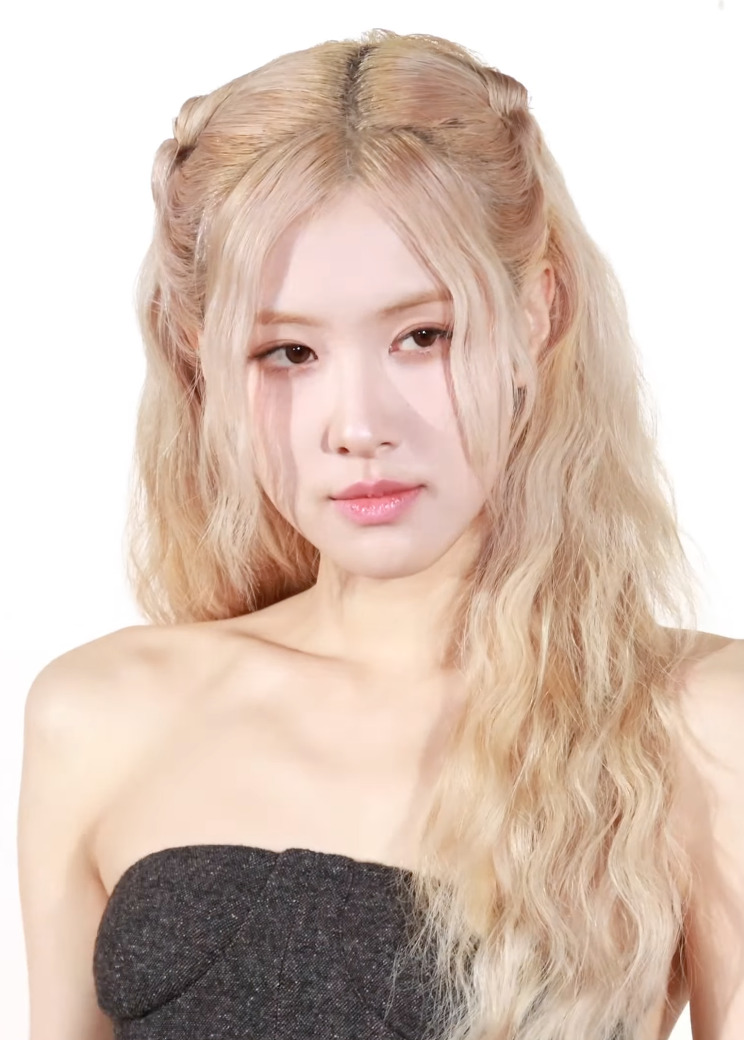
Park Chae-young (Roseanne Park), professionally known as Rosé, was born on February 11, 1997, in Auckland, New Zealand. She is a prominent Korean-New Zealand and South Korean singer-songwriter. She grew up in Melbourne, Australia, began learning guitar and piano at an early age, and sang in a church choir. In 2012, at her father’s suggestion, she entered a YG Entertainment audition in Sydney and won first place, then moved to South Korea to begin her trainee years. That same year, she also took part—uncredited—in recording for a track by G-Dragon.
In August 2016, Rosé officially debuted as a member of the girl group BLACKPINK, which went on to become one of the most influential girl groups worldwide. Known for her distinctive, airy, electronic-leaning soprano tone and highly recognizable vocal color, she is often praised as having a “golden voice.” In 2021, she launched her solo career; her debut single album R set multiple sales and streaming records for a Korean female soloist. Its lead track “On the Ground” made her the first artist to top the Billboard Global 200 both as a soloist and as part of a group.
The year 2024 marked a major turning point in her career: she ended YG Entertainment’s personal management and subsequently signed with The Black Label and Atlantic Records. In October of the same year, her collaborative single “APT.” with Bruno Mars achieved major global success, topping charts in multiple countries and making her the first Korean female singer to enter the Top 10 of the U.S. Billboard Hot 100. Her subsequent solo album Rosie also set new chart benchmarks for a Korean female soloist in markets such as the United States and the United Kingdom.
Beyond music, Rosé holds a strong presence in fashion, serving as a global ambassador for leading luxury brands including Saint Laurent (YSL) and Tiffany & Co. She has earned eight Guinness World Records, multiple MAMA Awards and MTV Video Music Awards, and became the first Korean lead artist to receive nominations in the Grammy Awards’ “Big Four” categories. In 2025, she received a commendation from the President of South Korea for her contributions to popular culture.
The Day Master is Jia Wood, born in the Yin month, seasonally strong and well-supported, yet seated on Shen Metal that “cuts the roots.” With Jian Lu (Established Prosperity) present in the month branch, this is a Jian Lu structure with a strong-to-slightly-excessive Day Master. Jia Wood is the image of a towering tree. Being born in early spring, when Wood qi is at its peak, symbolizes powerful vitality and an instinct to grow upward. This energetic profile tends to grant the native strong resilience, a straightforward and benevolent nature, and an overall impression of clarity, uprightness, and youthful drive. A strong Day Master with Lu suggests robust self-reliance: she is less inclined to depend on family resources and often thrives by building things through her own effort. However, being seated on Shen Metal that restrains the self (the “root-cutting” configuration) is like a boulder pressing on a tree’s roots: even with abundant life force, growth is accompanied by sustained pressure and self-forging. This “staying power under pressure” is a major strength, while the tendency toward over-tension (too rigid, easier to snap) is the key challenge to manage.
The chart takes Qi Sha / Pian Guan (Indirect Officer) in Shen Metal as the useful energy, to prune and shape the strong Jia Wood; it also welcomes Shang Guan (Expressive Output; technically: Hurting Officer) in Ding Fire to vent brilliance and regulate Qi Sha, showing a tendency toward “balanced self and officer” or “output regulating the officer.” For a strong Jia Wood, Metal functions like an axe: without pruning, the tree may not become fine timber. Here, Shen Metal (Qi Sha) represents strict discipline, high-intensity training, and authoritative standards. This helps explain why she can stand out in the high-pressure system of the South Korean entertainment industry: that kind of environment is not merely endured, but often becomes the very condition that shapes her into elite form. Meanwhile, Ding Fire appearing in the stems (Shang Guan) points to talent, artistic expressiveness, and a distinctive voice. Ding Fire also warms and refines the chart, tempering Metal and shaping Wood so the outcome is not “wild forest growth,” but a crafted, load-bearing pillar. This structure suggests her life path is shaped by balancing the tension between “high standards and constraint” and “free expression,” with achievement often arising through rigorous selection and intense competition.
Ding and Ren in the heavenly stems combine and, under strong Wood conditions, transform toward Wood; the earthly branches Yin and Shen clash, forming a pronounced “Metal–Wood confrontation” alongside a special dynamic of “resource transforming into self-strength.” Ding Fire (Shang Guan) combines with Ren Water (Pian Yin, Indirect Resource). With Wood strong in the Yin month, the combination tends to transform toward Wood, meaning the part that would ordinarily signal rebellion and outward venting (Shang Guan) becomes internalized and converted into self-fueling energy. This often produces a temperament that is reserved yet deeply feeling: high artistic gift remains, but expression is not flamboyant; it is processed, distilled, and released as a distinctive, textured style. The Yin–Shen clash is the chart’s most intense turbulence: Yin is Jia Wood’s Lu root (body, origin, sense of home), while Shen is Qi Sha (career demands, relocation). When the root is struck, it often correlates with early-life separation from one’s home base and a life marked by constant change and movement. This clash can also generate powerful breakout force, enabling stage presence that feels tense, unconventional, and boundary-pushing.
The chart carries a very strong Yi Ma (Mobility Star), as Yin and Shen mutually activate Yi Ma; it also contains Tian Yi Gui Ren (Heavenly Mentor) in Chou, and the Day Pillar sits with Wang Shen (Obscurity Star). The Yin–Shen clash is, in essence, Yi Ma meeting a clash, which in classical theory symbolizes extreme kinetic momentum. This not only aligns with a cross-border trajectory spanning New Zealand, Australia, and South Korea, but also suggests a life theme of being “on the move,” where too much stability can actually limit development. Tian Yi Gui Ren in the year branch indicates that support from elders or early-stage benefactors (such as senior figures, executives, or respected industry veterans) is more available than average, often helping her turn difficult situations into workable outcomes. The Day Pillar’s Wang Shen residing in the same palace as Qi Sha can add an aura of mystery and depth to artistic presence, while also implying an underlying, hard-to-name anxiety; at major turning points, psychological pressure may run unusually high.
Jia Wood Day Master seated on Shen Metal Qi Sha / Pian Guan (Indirect Officer), with NaYin of Quan Zhong Shui (Spring-in-the-Well Water), points to a baseline of “strong on the outside, soft within; disciplined and self-restraining.” Jia Wood is naturally associated with benevolence, uprightness, and compassion. Yet because the seat is the very star that restrains the self (Qi Sha), her mindset tends to include a strong habit of self-scrutiny. Like a tree constantly being pruned, she grows accustomed to living beyond the comfort zone, and her pursuit of excellence can become exacting. This configuration describes someone who strives for perfection on camera and in public, projecting a powerful presence, but who may slip into self-doubt and high-pressure reflection when alone. Emotional needs are deep and understated: the Ding–Ren combination transforming toward Wood makes her less inclined to vent feelings bluntly, and more likely to channel them into work, music, or performance, sublimating inner waves through art.
The chart’s greatest strengths lie in the “spark of Ding Fire Shang Guan (Expressive Output)” and the “momentum activated by the Yin–Shen clash.” Even with transformation through combination, Fire’s residual influence remains, and the Metal–Wood confrontation often benefits from Fire as a bridge. This energetic conversion can manifest as a distinctive vocal gift: when Metal and Wood interact and are refined by Fire, the result is often a tone that is crisp yet resonant, with high recognizability and strong projection. In highly competitive fields, the Yin–Shen clash can sharpen competitive awareness, making her stronger when facing strong opponents. She is especially suited to domains that require high self-discipline (Metal) alongside refined aesthetic sensibility and expressive originality (Fire), such as fashion and music. Qi Sha closely attached to the self can also indicate “icon” or leading-star potential: an ability to bear the solitude and weight of the spotlight, converting pressure into striking on-stage explosiveness.
The core tension is the earthly-branch conflict of Yin–Shen, a Metal–Wood confrontation: the contradiction between “root stability under strain” and “self-definition.” Yin Wood is Jia Wood’s root, linked to the body (especially limbs, liver-gallbladder functions, and the nervous system) and to a sense of belonging. Shen Metal represents external rules and career structures. This clash suggests that to build a career, she may repeatedly “cut the roots,” whether through physical moves or through psychological independence from reliance on others. A recurring difficulty can be a sense of drifting or insecurity when the root qi feels unstable, along with a tendency for the body to take strain under overwork (Metal constraining Wood). In temperament, she may be pulled back and forth between “staying true to herself” (Wood) and “adapting to external standards” (Metal), alternating between strong confidence and periods of suppression.
Overall, Park Chae-young (Rose) has a chart like a hardy pine growing from a rock crevice: only after weathering frost and repeated pruning does it reveal a uniquely powerful form. The structure of a strong self engaging Qi Sha indicates she is less like a greenhouse flower and more like someone who must define herself amid strong currents and change. Yi Ma meeting clash not only takes her across the world, it also pushes her to keep breaking artistic boundaries. Her achievements tend to come from internalizing large external pressure (Qi Sha) as forward drive, and using a distinctive artistic language (Shang Guan) to make her presence unmistakable. It is a path built from solitude, effort, and talent: volatility may be the norm, and brilliance is what emerges when that volatility is held in workable balance.
Yin Xing (Resource/Support) nourishes the self; Yang Ren (Edge/Competitive Drive) supports the self. This decade begins with the nurturing, protective influence of Yin Xing (Resource/Support), then gradually shifts into a phase that strengthens willpower and competitiveness via Yang Ren. The native benefits from solid family education and protection, yet competitive currents in the earthly branches quietly grow—suggesting she does not remain in a “greenhouse,” but starts building stamina and skills in preparation for demanding future selection processes.
Yin Shou (Proper Resource) provides cover; Bi Jie (Peers/Rivals) contests wealth. Early on, material conditions are favorable, with resources mainly supplied by family (Yin Shou) rather than self-made income. In the latter half of the cycle, competitive peer energy (Bi Jie) becomes more visible—seen, for example, in 2012 (Ren Chen) when she enters overseas selection and succeeds. This is less a period of wealth accumulation than an investment phase: exchanging intensive training (resource consumption) for an entry ticket.
Yin Xing signifies care; Peach Blossom not yet prominent. Social ties in this decade center on elders and mentors (Yin Xing), with family as the key pillar. Although a Peach Blossom indicator (Mao) appears in the branches, it reads more as early-stage popularity and audience affinity rather than concrete romantic entanglements. The social circle remains relatively simple, focused on classmates and trainee peers.
Water generates Wood; qi flow is smooth. The Five Phases circulate well, making this a prime developmental period. The main point to watch is excess Wood over-controlling Earth: an overly strong Wood tendency can strain the Earth aspect associated with digestion. Irregular diet during training may bring minor digestive issues, though overall risk is low.
Bi Jian (Peer) appears on the stems; the Wealth Storehouse feeds Qi Sha. A same-element presence on the heavenly stems (Bi Jian) signals strong involvement from a team and close peers—an astrological echo of BLACKPINK’s group formation and debut. The earthly-branch Wealth Storehouse (Chen) provides substantial commercial support. This decade marks a golden phase of moving from the individual to the collective and rapidly rising to global prominence through team power—an explosive upward trajectory.
Many peers contend for wealth; wealth nourishes Qi Sha / Pian Guan (Indirect Officer). In career matters, peers (Bi Jian) are both competitors and collaborators, expanding the overall “commercial pie.” Although income is shared and distributed (many peers contending), the Wealth Storehouse (Chen) interacting with the chart’s officer-killing sector (Shen) pushes reputation and monetizable value to a peak (wealth nourishing Qi Sha). In 2016 (Bing Shen), Shi Shen (Output/Talent) restrains Qi Sha, triggering simultaneous breakout of talent and fame and cementing top-tier industry standing.
Bi Jian as companions; Hong Luan (Romance Star) stirs. The relational focus shifts fully to teammates and collaborators. Although she is of typical marriageable age and has strong opposite-sex appeal (Hong Luan), an overly strong Qi Sha influence in the career arena (pressure and public spotlight) often eclipses private romance, or converts it into intense fan devotion.
Wood and Earth clash; the Water Storehouse gathers dampness. Heavy schedules can suppress the Earth aspect linked to digestion and muscles, making fatigue, muscle strain, or disordered eating more likely. With Chen as a Water Storehouse, also watch for suboptimal reproductive/urinary or endocrine balance.
Jie Cai (Competing Peer) sits on Shi Shen; Yin–Si–Shen Three Punishments. The overall climate shifts sharply. Shi Shen (Output/Talent/Showcase) becomes extremely strong, suggesting a move away from team shelter toward stronger personal expression. However, the Three Punishments formed between the luck pillar and the natal structure (Yin–Si–Shen) indicates that this transition comes with intense turbulence, inner conflict, and interpersonal friction. This is a painful “break-the-cocoon” transformation rather than a smooth continuation.
Shi Shen generates wealth; punishments activate Yi Ma (Mobility Star). The career mode moves from “following arrangements” to “self-directed creation” (Shi Shen), and personal commercial value (generating wealth) becomes independently visible. Yet with Yi Ma (Mobility Star) being activated through punitive interactions, travel and strain increase, and contract disputes, team reshuffles, or public quarrels (Three Punishments) become more likely. This decade is pivotal for building a personal brand and securing narrative control—high risk, but with a very high achievement ceiling.
Shang Guan (Expressive Drive) meets Zheng Guan (Direct Officer); punishments disturb partnership. The relationship sector is impacted by punitive clashes, bringing pronounced volatility in intimate life. The release of talent and personal voice (Shang Guan) often comes with rebellion against traditional constraints, potentially leading to relationships or fallouts that surprise the public. Be cautious of partnership breakdowns (including business partners) due to profit allocation or irreconcilable values.
Fire and Metal clash; Three Punishments strike the body. This is the highest-risk health decade. Fire–Metal conflict can point to respiratory and nervous-system strain; the Three Punishments can imply accidents, falls, or surgery with bleeding risk—especially involving limbs, tendons, and bones. High-intensity touring and creative output should be paired with mandatory rest.
Shi Shang (Output: Shi Shen/Shang Guan) releases brilliance; Wood–Fire becomes luminous. Strong Fire-type output energy fully ignites the chart’s Wood nature—an apex of talent and insight. By this time, she is no longer confined by the commercial idol framework, instead shifting toward producer, mentor, or pure artist. Life enters a “leaving a legacy through ideas and works” stage, where spiritual pursuit outweighs material pursuit and influence shifts from external heat to internal depth.
Shang Guan generates wealth; mastery at its peak. The ability to monetize reputation and works directly reaches a high point. Rather than relying on dense scheduling, major returns come from a few core works or sharp investment judgment (Shang Guan generating wealth). This decade favors building one’s own commercial territory in fashion, art, or education, with strong control and autonomy.
Shi Shang restrains Qi Sha; for women, excessive ‘officer’ pressure is traditionally considered unfavorable. Overstrong output energy (Shi Shang) can suppress the partner indicators represented by officer/killing stars, implying that in relationships she holds clear dominance or treats partnership as secondary. She may prioritize intellectual/spiritual resonance over conventional marital structures and could choose non-marriage or nontraditional arrangements.
Excess Fire scorches Earth; over-draining and over-leaking. Too much Fire can overconsume vitality (Wood) and “dry out” the Earth aspect linked to fluids and digestion. Pay special attention to cardiovascular strain, anxiety/insomnia, and signs of premature depletion; wellness focus should be on nourishing yin and tempering excess heat.
Shang Guan generates wealth; the Wealth Star returns to the storehouse. The aggressive Fire energy begins to converge, transforming into steadier Earth energy (Wealth Star). This is a season of harvest and consolidation: earlier fame and talent convert into tangible assets and social standing. The mindset shifts from aggressive expansion to pragmatic stewardship, with a stronger desire for inner peace and quality of life.
Wealth qi opens the gates; a strong storehouse brings abundant wealth. Finances are exceptionally stable—sustained passive income alongside asset preservation through the Wealth Storehouse (Wei). Career-wise, she may move behind the scenes to run a brand or conduct capital operations. This is a “reap the benefits” stage, where past effort compounds significantly.
Shang Guan meets wealth; ‘clearing the passage’ brings warmth. The sharper energy that once overrode partnership (Shang Guan) is softened and redirected by the Wealth Star, making temperament more gentle and accommodating. Family dynamics trend harmonious; ties with children or younger generations deepen. Social circles may shift from entertainment toward business elites, with relationships emphasizing reciprocal value and long-term stability.
Dry Earth makes Metal brittle; seasonal balancing is urgent. Wei Earth is dry, which may contribute to dry skin, weakened lungs, or bowel issues. Prioritize hydration and lung-moistening routines; avoid overly hot, arid climates, and living near water is favorable.
Wealth nourishes Qi Sha; authority and prestige stand out. The pillar’s stem-branch energy echoes the natal day pillar pattern (Pian Cai generating Qi Sha), suggesting that even later in life she retains influence, authority, or strong social impact. This is not a conventional “full retirement” cycle; rather, she may continue to play a decision-making role as a senior figure or industry leader. The life tone is dignified and forceful.
Pian Cai (Indirect Wealth) disrupts Yin; Qi Sha safeguards wealth. While substantial wealth is present (Pian Cai), larger outflows may occur through investing or supporting others (disrupting Yin). Qi Sha / Pian Guan (Indirect Officer) also represents status and titles; she may hold honorary roles in charities, arts associations, and similar bodies—gaining both name and benefit—yet should guard against legal or reputational disputes arising from money matters.
Wealth and Qi Sha generate each other; partner star gains ground. Later-life partnership luck strengthens, or she and a long-term companion provide mutual support with a close bond. Within the family she carries clear authority and becomes a respected decision-maker. Social interactions tend to be formal, high-level exchanges.
Earth and Metal support each other; Wood qi is weakened. Strong Metal (Qi Sha) can rebound and pressure the Day Master (Wood). Pay close attention to liver/gallbladder concerns, neuralgic pain, or stroke risk. This is also a decade when tendons and bones are more injury-prone; avoid strenuous exercise and prioritize restorative care.
Wealth and Zheng Guan (Direct Officer) both shine; Jia–Ji combine into Earth. Jia and Ji form a harmonious combination on the heavenly stems, and the earthly branch Zheng Guan provides protection. This is a notably steady, auspicious later-life decade. Earlier turbulence and striving settle completely, replaced by social respect and family fulfillment. The native’s mindset is calm, enjoying family blessings—classically a sign of being “virtuous and widely respected.”
Zheng Guan protects wealth; enjoying later-life blessings. Rather than pursuing new growth, she benefits from stable dividends of existing assets. Zheng Guan also indicates official or mainstream recognition; she may receive honors akin to lifetime achievement awards. Wealth management becomes highly conservative to ensure long-term security.
Officer star aligns with the self; family harmony. With Jia–Ji combining, relationships with surroundings and loved ones are exceptionally smooth—an experience of being valued and well cared for. Younger generations show devotion; the home atmosphere is warm, and social life centers on family gatherings and reunions with old friends.
Earth and Metal obscure Fire; heart qi gradually weakens. Overweight Earth–Metal can drain Fire, suggesting weaker cardiac function and circulation. Keep warm, watch for cold-triggered cardiovascular/cerebrovascular issues, and avoid extreme emotional swings.
Qi Sha presses the self; the tomb-storehouse gathers in. Luck enters a decline phase: Qi Sha (Geng) on the stems directly pressures the Day Master, while Xu Earth functions as a Fire storehouse (an Output storehouse). Physical capacity faces serious challenges and life energy turns inward. This decade relates to closure and spiritual refinement; she may begin organizing memoirs or arranging end-of-life matters.
Wealth generates a strong Qi Sha; dispersing wealth to avert trouble. Wealth may no longer hold practical meaning and could instead become a burden (wealth generating Qi Sha). Large asset division or philanthropy may occur to ease pressure. Reputation can remain, but more as a historical symbol than an active pursuit.
Heavy Qi Sha, lighter self; loneliness increases. Peers and close friends gradually pass or drift away, and a sense of solitude may rise. Although younger generations may be present, Qi Sha’s pressure can manifest as mental tension or suspicion. Psychological comfort and companionship become especially important.
Jia Wood is constrained; entering the tomb brings unrest. The Day Master Jia Wood is strongly pressured by Geng Metal, and Xu as a Fire storehouse further drains the self. Prioritize monitoring for liver failure, head-related conditions, or severe skeletal problems. This is a major life checkpoint period.
Officer and Resource generate each other; renewal after extremity. If the previous decade’s hurdle is passed, this one can bring a kind of spiritual “second spring.” Metal generating Water (Officer generating Resource) points to exceptional clarity and detachment in the inner world. The native may feel increasingly beyond worldly concerns, with a calm, benevolent life state.
Yin Xing transforms Qi Sha; remembered through history. Worldly wealth fades in importance; what remains is pure reputation (Officer) and spiritual/intellectual legacy (Resource). Her life story may be recounted or studied by later generations, becoming a cultural symbol.
Yin Shou protects the self; respected by others. As a living “pillar” of the family or industry, she receives high-level care and esteem. Social interaction becomes minimal, with more immersion in inner life or religious faith.
Water generates Wood; let things follow their course. The earthly branch Hai Water nourishes Jia Wood and is also Jia Wood’s Long Sheng (Growth) place, suggesting a slight rebound in vitality. Health at this stage depends on gentle maintenance—align with seasons and live quietly.
This palace contains Ju Men (Giant Gate), a star associated with hidden tensions—speech-related friction, disputes, and emotional distance. When Ju Men enters the Parents Palace, it often suggests communication barriers with elders or authority figures (such as management/agency), or limited time together with parents in early life. Ju Men also relates to “gateways,” hinting that the family background may include something distinctive, or an aspect that tends to be kept private.
The Ding Heavenly Stem triggers Ju Men Hua Ji (Giant Gate transforms to Obstruction), a key source of disputes. Hua Ji amplifies Ju Men’s shadow side, indicating that on the path to public recognition, she may be more prone to serious misunderstandings or verbal conflicts with authoritative institutions (companies) or elders. This “Ji” can also manifest as external rumors and speculation regarding her origins or family background.
In life events, Ju Men Hua Ji often shows up as “strict control” or “contractual disputes.” Her relationship with the company she belongs to may not be as harmonious as it appears, with substantial negotiation and strategic push-and-pull behind the scenes. Conversely, Ju Men Hua Ji can also refine her communication skills and her capacity to handle public-opinion pressure, helping her remain resilient when facing criticism.
This palace is anchored by Tian Xiang (Chancellor Star) in solo placement. Traditionally called the “Seal Star,” it symbolizes the minister who safeguards the imperial seal and assists the ruler. This star bestows strong qualities associated with refined living and steady support—suggesting naturally elegant taste and a harmonious, approachable presence. People with Tian Xiang in the Life Palace are typically neither as aloof as Zi Wei nor as aggressive as the Sha–Po–Lang pattern; instead, they establish standing through a polished public image and skillful coordination among different parties. This configuration shapes a signature idol aura that is gentle yet principled—highly refined, and consistently well-composed.
Although the Life Palace itself does not carry the main-star Four Transformations, it receives a strong projection from the opposite palace: Tian Tong (Heavenly Child) Hua Quan (Power Transformation). This surge of momentum injects outward drive into Tian Xiang’s naturally ease-seeking, agreeable baseline—indicating that her authority and presence are reinforced through effort in the external arena, and her “halo” is, in many ways, shaped in reverse by market recognition.
Tian Xiang’s “assistant-to-the-throne” style aligns well with her positioning as a core member within a group (BLACKPINK). She may not need to dominate the center spot at all times, yet she can become an indispensable “face” and stabilizing harmonizer through a distinctive tone and high-end visual image (Tian Xiang is associated with presentation, attire, and everyday resources). Her visibility often arrives together with fashion opportunities and broad, mainstream public goodwill.
This palace is governed by Tan Lang (Greed Wolf; Pleasure/Desire Star), often regarded as the strongest “desire” and “Peach Blossom (Charisma/Romance)” indicator. In the Fortune & Well-Being Palace, it is less about physical indulgence and more about inner richness and an intense pursuit of art, aesthetics, and metaphysical studies. Tan Lang signifies versatility and curiosity, implying she is unlikely to feel satisfied with a single lifestyle pattern and tends to crave variety and excitement.
With Tan Lang here, it symbolizes restlessness and vibrant abundance in the inner world. She may need ongoing artistic exploration, fashion experimentation, and even spiritual practices to address inner emptiness. This is a classic “artist’s soul” configuration: only when life feels interesting and beautiful on a deep level does she feel genuinely happy.
This helps explain why, beyond music, she also explores areas such as fashion, instruments, and photography. Her happiness threshold is high; she often needs high-intensity aesthetic experiences to feel fulfilled. Tan Lang also provides an effective stress-response pattern—counterbalancing work fatigue by cultivating diverse interests. She fits the type who “works in order to enjoy life more fully.”
The main star in this palace is Tai Yin (Moon), associated with the Water element and inherently the key indicator for property and real estate. Tai Yin is especially well-placed in the Property Palace, suggesting a refined living environment—often near water or in low-lying terrain—along with strong tendencies for saving, asset accumulation, and home ownership.
The Ding Heavenly Stem triggers Tai Yin Hua Lu (Moon transforms to Prosperity)—a top-tier auspicious sign of wealth returning to its proper place. Hua Lu indicates a steady inflow of resources into real estate and fixed assets. This points to keen judgment in property investment, or the likelihood of enjoying a highly comfortable, premium residence with strong value. Tai Yin Hua Lu also suggests substantial emotional nourishment and material support arising from the family environment.
In practical terms, this aligns with an ability to purchase high-value luxury property through earnings from the entertainment industry. Tai Yin emphasizes stillness, privacy, and storage; Hua Lu here indicates a privately abundant lifestyle with a strong preference for discretion and comfort. Real estate becomes the most important reservoir for consolidating and preserving wealth.
The palace is occupied by Tian Fu (Resource Steward / Manager), known as the “Commander of the Southern Dipper” and a storage/treasury star. Tian Fu in the Career Palace is an excellent configuration, indicating steady professional development, deep foundations, and strong abilities in resource integration and management. Unlike the dramatic surges and swings associated with the Sha-Po-Lang pattern, Tian Fu points to careful, step-by-step consolidation and long-term stability.
Tian Fu is said to “transform Qi into Virtue (Xian),” and while it does not typically participate in the Four Transformations, it is noted for mitigating difficulties. This grants strong risk resilience in career matters. Regardless of changing trends, she is likely to maintain a solid position because she holds “core assets” (such as a distinctive vocal color or a stable fashion/status platform).
This also reflects her role within BLACKPINK—functioning not only as a performer, but also more like an operator of long-term value. Her career is not limited to stage performance; it includes sustained cultivation and appreciation of personal brand equity. Tian Fu’s composed, steady temperament supports an unflustered, leader-like presence under high-pressure competition, favoring enduring career momentum.
This palace is anchored by Lian Zhen (Social Magnetism / Relationship Dynamics), often described as a “secondary Peach Blossom” type of star and a complex networking indicator. With Lian Zhen in the Jiao You Gong (Friends/Networks), it suggests her social circle is full of charm and talent, while also carrying nuanced emotional entanglements and competition. Friends, associates, or followers (fans) may easily project intense feelings onto her.
Lian Zhen’s “confinement” quality shows up here as a strong sense of attachment. This attachment can appear as fiercely loyal fan support, yet it can also develop into feelings of being bound or constrained within relationships. Her network carries a pronounced Peach Blossom (Charisma/Romance) signature—connections are maintained more through personal magnetism than purely transactional interests.
In the entertainment industry, this corresponds to a highly sticky, emotionally intense fan base. It also implies that within the industry she may be drawn into rumors, controversy, or complex interpersonal rivalries, and may need to rely on Lian Zhen’s strategic, politically astute handling to balance competing interests.
This palace is guarded by Tian Liang (Protector Star). It is also known as the “Shade/Patronage Star” and, in another tradition, a “discipline-and-standards” star—carrying both a protective quality and a tendency toward distance or strictness. In interpersonal structures, this often indicates that companions or rivals may come across as “older,” more seasoned, or more mature; or that the relationship is built on mutual oversight and a principled, rule-aware dynamic. Tian Liang’s clean, noble tone also suggests that her circle may include industry veterans or people with a quiet, mentor-like or moral-leader quality.
This area is not strongly struck by the Four Transformations, allowing Tian Liang’s naturally lofty, principled nature to remain intact. This suggests that in teamwork or close-friend dynamics, there may be less emphasis on pure transactional exchange (Lu/benefit) and more emphasis on values-based resonance or elder-like care and shelter (Yin/patronage).
This helps explain her role dynamics within a team: even when ages are similar, the emotional tone or interaction style can feel mature and mutually caring. At the same time, Tian Liang’s self-contained quality can indicate that within noisy social environments, she may internally keep a subtle distance from peers—leaning more toward depth of alignment and shared principles than surface-level bustle.
This palace gathers Zi Wei (Emperor Star) together with Qi Sha (Indirect Officer; Warrior/Strategist Star), forming a highly forceful “imperial-seat with Qi Sha” configuration. Zi Wei represents sovereign stature, while Qi Sha represents decisive command; together, they point to very high standards for a partner—someone who must carry both the dignity of leadership and the nerve of a commander. This pattern often shows attraction to strong, initiative-taking, and visibly capable types; overly mild or passive personalities may be less likely to hold her interest.
The energy here is intense. While Qi Sha does not show Hua Ji (Challenge/Obstruction Transformation) in this description, it naturally carries a dynamic, high-volatility quality. This suggests that relationships are less likely to feel completely uneventful; the bond is often formed with a strong sense of push–pull, where mutual respect is tested through tension between “leading” and “being led.”
In practical terms, this may indicate that her relationship counterpart is likely to be a top-tier figure in their field or someone with significant status and authority. Meanwhile, the Zi Wei–Qi Sha pairing can also imply a strong competitive undertone in love: both sides may be strong-minded and unwilling to yield easily. For that reason, allowing more time for emotional maturity—or moving through a few truly formative relationship shifts—can help soften the overly hard-edged friction implied by this configuration and support a more stable long-term bond.
This sector features Tian Ji and Po Jun, a pairing known for change, inventiveness, and constant renewal. Tian Ji signals intelligence and adaptability; Po Jun points to dismantling and rebuilding. In modern Zi Wei Dou Shu, the Children Palace also extends to one’s “creations” and “talent output.” This suggests her artistic work is unconventional and even disruptive in style—she dislikes staying within preset rules and keeps searching for new modes of expression.
The Ding heavenly stem triggers Tian Ji Hua Ke (Academic/Recognition Transformation)—a key indicator for visibility and reputation. Hua Ke relates to recognition, credibility, and talents being publicly acknowledged. This implies her works (whether music or stage performance) can gain broad fame through clever design and agile artistry, along with academic/professional affirmation.
This configuration aligns closely with her expressiveness as a solo artist: Po Jun brings breakthrough energy (trying different genres), while Tian Ji Hua Ke adds refined ingenuity—helping her work spread quickly in the streaming era and earn strong reviews. As for fans (a broader modern meaning of this palace), her fan base also tends to be sharp, changeable, and highly mobile.
The main star here is Tai Yang (Sun). This star emphasizes status more than hoarding wealth, often indicating “income generated through reputation.” With Tai Yang in the Wealth Palace, money needs to be in the open—earned through public-facing performance work and visibility. Tai Yang also has a dispersing quality, suggesting generous spending and less inclination toward miserly saving; wealth is more likely used to sustain one’s image or support public-benefit causes.
Although Tai Yang does not directly transform into Hua Lu here, its radiant, warming nature defines the income pattern: the brighter the Sun (the greater the fame), the stronger the wealth momentum. This is a classic “monetizing popularity” model, quite different from traditional business-based wealth building.
This helps explain her income structure as a global top-tier idol: major earnings come from high-exposure channels such as brand endorsements and world tours. Tai Yang also signifies giving, echoing generosity in spending habits and a possible inclination toward charitable involvement. Her wealth accumulation correlates positively with her public image (radiance).
The main star in this palace is Tian Tong (Blessing & Ease). It is traditionally a benefic star associated with comfort and enjoyment. Placed in the Qian Yi Gong (Travel/Outward Stage), it suggests that when living away from home or abroad, one more readily gains goodwill, connections, and supportive circumstances. However, Tian Tong in the Travel Palace often implies a “build-from-scratch” relocation pattern—progress tends to come after leaving one’s birthplace and familiar environment.
The Ding heavenly stem triggers Tian Tong Hua Quan (Empowerment/Authority). This is a pivotal turning point for the whole chart. Hua Quan signifies agency, influence, and the drive to compete and take charge. It transforms Tian Tong’s naturally relaxed tone into “active, earned good fortune.” This indicates that her growth overseas (Korea, Europe, and North America) is not simply about receiving opportunities; it comes through initiative, competition, and taking command of the stage (Hua Quan) to secure success.
This aligns closely with her rise to prominence: born in New Zealand, raised in Australia, debuting in South Korea and then expanding globally. Tian Tong Hua Quan suggests that in a foreign environment she not only adapts well (Tian Tong’s conciliatory strength), but can also gain real leverage and voice (the assertive force of Hua Quan). Her international path reflects a strong chart pattern, and it is through continual movement and expansion that she consolidates her standing.
This sector is anchored by Wu Qu, a Metal-element star associated with the lungs/respiratory system and the bones. Wu Qu is resolute and tough; in the Health Palace it often indicates a solid physical baseline, while also making one more prone to “metal-type injuries”—cuts, bruises, or impact-related strain. From an occupational-health perspective, excessive Metal emphasis can point to wear on the respiratory tract and vocal cords.
Wu Qu as a wealth-related star in the Health Palace does not form Hua Ji here, but the austere Metal quality is still notable. With high-intensity singing and dancing, it’s worth watching for overuse and abrasion affecting lung capacity as well as bones and joints. It highlights the straightforward reality of “the body as an income-producing instrument.”
For someone known for vocal strength, Wu Qu here is a clear signal: the vocal cords (often mapped to Metal) are both her most resilient tool and a more injury-prone area. In practical terms, special attention should be paid to respiratory care and preventing knocks or sprains from stage performance. This star also supports stamina and the ability to endure high-intensity training.
Generate your personal chart in under a minute. Sign up free and get 30 credits — enough for two or more AI readings. No credit card.
Generate my free BaZi chartPlease sign in to join the discussion
Sign In