Year
Bing
Chen
Zheng Yin
Zheng Yin
Hidden Stems
Wu (Zheng)Yi (Qi)Gui (Pian)
- Star Luck
- Shuai
- Sitting Branch
- Guan Dai
- Void
- Zi Chou
- Na Yin (Elemental Sound)
- Sha Zhong Tu
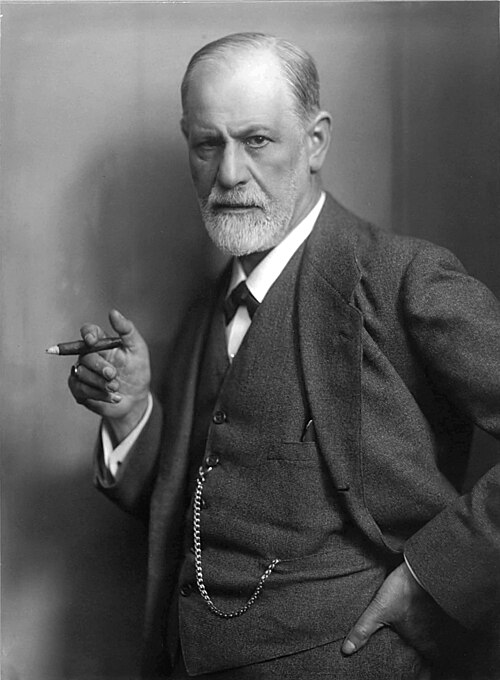
Sigmund Freud (May 6, 1856 – September 23, 1939) was an Austrian neurologist and the founder of psychoanalysis. He was born into a Jewish family in Freiberg, Moravia (now Příbor, Czech Republic). In 1873, he entered the University of Vienna to study medicine, earning his medical doctorate in 1881. He initially conducted research in neurophysiology, and in 1885 he went to Paris to study hypnosis under Jean-Martin Charcot. In 1886, he married Martha Bernays and opened a private practice specializing in neuroses.
Collaborating with Josef Breuer, Freud published "Studies on Hysteria" in 1895, introducing the "talking cure." Following his father's death in 1896, he began a self-analysis and in 1899 published "The Interpretation of Dreams," systematically expounding that dreams represent wish fulfillment, the unconscious, and the mechanism of repression. In 1902, he founded the Wednesday Psychological Society, which later evolved into the Vienna Psychoanalytic Society, marking the rise of the psychoanalytic movement. In 1909, he was invited to the United States, where he lectured at Clark University, bringing international attention to psychoanalysis.
Freud developed a series of far-reaching theories, including the unconscious, the Oedipus complex, the structural model of the psyche (id, ego, superego), stages of psychosexual development, and the life and death instincts. In his later years, he critiqued religion and culture, authoring works such as "Totem and Taboo," "The Future of an Illusion," and "Civilization and Its Discontents."
His theories sparked intense controversy in academia, and several early followers (such as Alfred Adler, Carl Jung, and Otto Rank) parted ways with him due to divergent views. In 1923, he was diagnosed with oral cancer, caused by his long-term smoking habit, and subsequently underwent numerous surgeries. After the Nazi annexation of Austria in 1938, Freud, with the help of various supporters, went into exile in London, where he died of cancer on September 23, 1939.
Freud's thought has had a profound impact on psychology, psychiatry, literature, art, philosophy, and even popular culture, earning him recognition as one of the most influential thinkers of the 20th century. However, his theories have also faced long-standing criticism for lacking scientific verifiability.
The Ji Earth Day Master, born in the Si month, receives support from the month's branch, Bing Fire Direct Seal (Zheng Yin). Sitting on the Chou (Ox) branch, and with the year pillar Bing-Chen (Bing Fire Direct Seal and Chen Earth) bringing both Seal and Friend (Bi Jian / Peer), the chart is saturated with Earth and Seal, making the Day Master unquestionably strong. This configuration makes Freud like a deep, warm, and fertile soil—capable of nurturing all things while harboring life within. The overall impression he gives is one of calmness, profundity, and great inclusivity, yet at his core he is extremely stubborn and not easily swayed. His greatest strengths are precise thinking and astonishing endurance, enabling him to systemize abstract ideas; the potential challenge is a tendency to retreat into a self-contained theoretical world, handling practical interests and emotional relationships with a degree of detachment.
The Si Fire in the month branch gives authority to the Seal, and the year stem Bing Fire Direct Seal emerges, originally forming an Indirect Seal (Yin Shou) structure. However, the month stem Gui Water Indirect Wealth (Pian Cai) hangs high, and the hour stem Gui Water also emerges, creating an Indirect Wealth breaking Direct Seal configuration. The beauty lies in the Earthly Branches: Si-You-Chou combine into a Metal triad, channeling the Indirect Wealth's energy, thus forming a sequence where Output (Shi Shen) generates Wealth, and Wealth generates Seal. The favorable elements are Metal and Water: Metal can drain Earth and generate Water, while Water can moisten the chart and control Fire. Together, Metal and Water transform the strong Earth into wisdom and wealth. This represents the path of practically utilizing one's talents (Metal) to gain fame and influence (Water). Freud's life choice to move from medicine to psychoanalysis, producing extensive writings and teachings, transforming inner contemplation (Seal) into influence (Wealth), is a perfect manifestation of using the favorable elements. Fire and Earth are unfavorable; an excessively strong self-consciousness and conservative tendency would hinder innovation. His repeated splits with disciples throughout life also reflect the stubbornness and exclusivity brought by the unfavorable Fire and Earth.
The core combination is Output (Shi Shen) generating Wealth: the You Rooster branch at the hour is the root of Output, forming a three-harmony combination with the Si branch of the month and the Chou branch of the day, giving extremely strong Output energy that generates the Gui Water Indirect Wealth appearing on the stems, forming an excellent structure of talent producing wealth. This combination shapes a character of sharp thinking, adept at using words and language to create value. Output represents meticulous observation, analysis, and expression, while Indirect Wealth is the ability to convert these inner resources into fame and profit. In decision-making, he leans towards rational deduction and can delve deeply into the subconscious realm; in interpersonal situations, due to the overbearing Seal, he appears aloof, preferring solitary thinking and lacking skill in smooth social maneuvering. In career choice, psychoanalysis is a classic "Output" industry—delving into the mind, deconstructing symbols, and constructing theories.
The chart carries double Hua Gai and double Tai Ji Nobleman (Tai Ji Gui Ren). The hour pillar gathers Tian Yi Nobleman (Gui Ren), Wen Chang (Literary Star), Peach Blossom, and Jiang Xing (Leadership Star) into one furnace. Most crucially, the Si-You-Chou Metal triad is key: it transforms Seal into Output, redirecting the energy. Hua Gai and Tai Ji Nobleman symbolize a tendency toward solitary research and sensitivity to mystical knowledge, naturally drawing him to fringe fields like dreams and the subconscious. Peach Blossom and Wen Chang bring extraordinary personal magnetism and literary eloquence, while Jiang Xing bestows a leader's aura, enabling his theories to attract numerous followers. The Si-You-Chou triad transforms the excess Seal (stubbornness, conservatism) into Output (innovation, expression), precisely the fateful trigger for his shift from neuropathology to psychology—a life turning point thus triggered.
Ji Earth is the soil of fields and gardens—gentle, inclusive, yet inwardly tenacious. Born in the Si month and supported by Seal, it gains an even stronger idealistic hue. The three-harmony Output and emerged Indirect Wealth constitute a composite personality of intricate thoughtfulness and pragmatic pursuit of fame. Freud's mind is like a precise endoscope, incessantly probing inward to unearth deep motivations and structures. Emotionally, he craves recognition and remembrance (Indirect Wealth), yet due to the overprotection of the Seal, he finds it hard to truly open up (Hua Gai, Solitude Star). Under pressure, he retreats into the fortress of theory, defending himself with ever more complex explanations; in his comfort zone, he displays astonishing focus and productivity, like a thinking machine that never shuts down.
Extremely strong Output, capable of generating Wealth, combined with Wen Chang and Jiang Xing, endows him with a transcendent ability to transform abstract insights into systematic knowledge and thereby establish authority. Output represents deep analysis and fluent expression, while Indirect Wealth represents mass influence—such a combination is the standard equipment of a born scholar-communicator. He displayed rare creativity in constructing theories of psychological structures and the unconscious, and his capacity for writing and publishing books was unmatched by his peers. This talent, in an era when psychology was not yet formalized, helped him quickly seize a commanding height in the field. His literary cultivation (Wen Chang) also rendered his abstruse theories charming.
In the chart, Wealth and Seal clash: Gui Water Indirect Wealth fights with Bing Fire Direct Seal, representing the conflict between the pursuit of fame and profit and the ideal of pure scholarship. The Si Fire in the earthly branch is combined away, damaging the Seal, which further suggests that his theoretical foundations are prone to being shaken. This contradiction kept him vacillating throughout his life between "appeasing the masses" and "holding fast to truth." In his early years, financial pressure forced him to emphasize clinical practicality, while in his later years, he grew increasingly rigid in his opinions. Hua Gai plus Solitude Star caused interpersonal alienation—his breakups with Jung, Adler, and others are clear proof: he could neither tolerate deviations from his theories nor endure the exposure that comes with close collaboration. The overly strong Output also led to excessive rumination; his later-life oral cancer may be related to long-term overconsumption of mental energy.
Sigmund Freud's life chart takes Output generating Wealth as the main line of success, and Wealth and Seal clashing as the source of suffering. With unparalleled insight, he pried open the dark box of the human unconscious, sublimating his own loneliness, sensitivity, and contemplativeness into a globally renowned discipline. The Si-You-Chou triad transformed the excessive Seal, preventing him from becoming a pedantic scholar and instead making him a revolutionary thinker. However, the never fully reconciled battle between Wealth and Seal kept him struggling all his life between the fever for reputation and the solitude of truth. In the end, he won immortal fame, but also tasted the full bitterness of betrayal and isolation—a classic reward and punishment that the chart gives to a genius.
Zheng Guan & Zheng Yin Mutually Generate, Output Stars Restricted. During this decade, the Guan star (Jia Wood) appears in the Heavenly Stems, rooted in Zheng Yin (Wu Fire), symbolizing a stable family environment with parents valuing education. However, Wu Fire over-generates Earth, making the Day Master Ji Earth slightly dry. The Heavenly Stem Jia Wood combines with Ji Earth, auspiciously indicating a good learning atmosphere in early years. The Day Master is in an enlightenment phase, receiving rigorous German-style education, laying the academic foundation.
Guan Star Merges with Self, Yin Star Protects Self. Jia Wood (Zheng Guan) merges with Ji Earth, symbolizing early recognition and support from father or authority figures. Bing Fire (Zheng Yin) is the academic star, but Wu Fire combines with the month branch Si Fire, causing Fire to blaze and Earth to dry, hindering the free expression of talent. Family finances are passable; father is a merchant, but not wealthy. This luck period focuses on educational investment, no independent wealth.
Guan and Yin Harmonious, Simple Relationships. Jia Wood (Zheng Guan) acts as Gui Ren (Helpful Person), but its merger with self also indicates restraint. In the family, father is relatively strict, mother gentle. Relationships with siblings are average. In this period, interpersonal connections are mainly family and schoolmates; social circle is narrow.
Excessive Fire Scorches Earth, Metal and Water Imbalanced. With Fire blazing and Earth dry, prone to skin and digestive system issues. Wu Fire represents heart fire, so watch for emotional fluctuations. Metal and Water are weak, respiratory system slightly delicate. Advice: drink plenty of water, avoid overly hot environments.
Qi Sha Attacking Self, Bi Jian Supporting Self: Pressure and Growth Coexist. Yi Wood (Qi Sha) appears in the Stems, rooted in Wei Earth (Bi Jian), indicating increased academic pressure and intense competition. Qi Sha symbolizes authority and exams, Bi Jian peers. During this luck, the Day Master enters university preparatory and medical school, facing rigorous academic assessments. Yi Wood dredges Earth, conducive to breakthroughs in thinking, but also brings tension and anxiety.
Sha and Yin Mutually Generate, Academic Advancement. Yi Wood (Qi Sha) receives transformation from the year stem Bing Fire (Zheng Yin), forming Sha-Yin mutual generation, signifying academic success and ability to convert pressure into achievement. In 1876, entered Leipzig University; in 1881, received M.D. degree. Bi Jian Wei Earth represents friends and colleagues, collaborating in medical discussions; financially still relying on family support. No income generated in this period, but accumulated professional knowledge.
Qi Sha as Unfavorable Star, Interpersonal Conflicts Emerge. Yi Wood (Qi Sha) overcomes self, prone to conflicts with authority. During youth, tense relationship with father due to career choice disagreements. Bi Jian Wei Earth represents classmates, but as unfavorable element, friends offer limited help. Peach Blossom not evident, romantic life low-key.
Wood and Earth Battle, Digestive System Vulnerable. Yi Wood overcomes Wei Earth, Earth energy damaged, prone to indigestion, gastrointestinal neurosis. Qi Sha governs nervous tension, migraines and anxiety occur periodically. Advice: maintain regular routines, regulate emotions.
Yin Star Protects Self, Shang Guan Generates Wealth, Career Launch. Bing Fire (Zheng Yin) appears in Stems, Shen Metal (Shang Guan) with hidden Xin Metal (Shi Shen), Shang Guan generating wealth, signifying integration of professional knowledge and expression, beginning clinical work and research. Shen Metal is Yi Ma (Mobility Star), indicating changes and travel. In this luck period, Day Master enters Vienna General Hospital for internship, later opens private practice, establishing neurology research direction.
Zheng Yin Transforms Sha, Shang Guan Generates Wealth: Fame and Fortune Gradually Rise. Bing Fire (Zheng Yin) resolves residual Qi Sha (Yi Wood), enhancing academic status. Shen Metal (Shang Guan) generates wealth; in 1886, opened private practice, income from patients. 1891 publication 'On Aphasia' established initial academic reputation. However, Shen Metal combines with Si Fire to form Water, nourishing wealth star, leading to stable but not sudden riches.
Zheng Yin Merges with Wealth, Stable Marriage. Bing Fire (Zheng Yin) merges with month stem Gui Water (Indirect Wealth), romantically meeting future wife Martha Bernays. Engaged in 1886, married in 1887, harmonious family. Shen Metal acts as Peach Blossom link to hour branch You Metal, expanding social circle, collaborating with seniors like Breuer.
Excessive Metal Weakens Fire, Lungs and Throat. Shen Metal (Shang Guan) brings strong Metal energy, prone to respiratory inflammation, coughing. Bing Fire drained by Shen Metal, heart blood deficiency, neurasthenia. Advice: moderate exercise, be careful with vocal strain.
Pian Yin Seizes Shi Shen, Intellectual Upheaval. Ding Fire (Pian Yin, Indirect Resource) represents depth of thought, You Metal (Shi Shen) expression and creativity. Ding Fire born in You month (its sickness location), overstrong Pian Yin oppresses Shi Shen, indicating theoretical innovations and breakthroughs met with criticism. This period is the birth of psychoanalysis: in 1896 first used the term 'psychoanalysis', 1900 published 'The Interpretation of Dreams'. You Metal as Peach Blossom, reputation gradually rises.
Pian Yin Seizing Shi Shen: Bearing Humiliation and Burdens. Ding Fire (Pian Yin) supports self, but makes Earth even drier, causing poor digestion. You Metal (Shi Shen) connects to hour stem Gui Water (Indirect Wealth), signifying income through writing. After publication of 'The Interpretation of Dreams', initial response was cold, royalties meager. Nevertheless, academic status solidified, clinic patients increased, income improved. In 1902 founded the 'Wednesday Psychological Society', strengthening academic circle.
Abundant Peach Blossom, Interpersonal Gatherings and Separations. You Metal is the Peach Blossom star in command, but being Shi Shen, attraction of followers through talent. Collaborated with people like Fliess, later split. Family-wise, wife Martha supportive, but many children (six), large household expenses. Father's death in 1896 triggered self-analysis.
Fire and Metal Clash, Heart and Lungs. Ding Fire overcomes You Metal, heavy heart burden, prone to arrhythmia. You Metal is lungs, excessive smoking requires attention to respiratory tract. Pian Yin flourishing, excessive thinking, neurasthenia worsens. Advice: quit smoking, relax.
Jie Cai Extremely Strong, Bi Jie Competing for Wealth, Fierce Competition. Wu and Xu are both Jie Cai, Earth energy extremely heavy, Bi Jie standing in numbers, signifying peer competition and disputes over interests. During this period, internal splits occur in psychoanalytic school: Adler, Jung and others leave successively. Jie Cai also governs social expansion, international influence rises. However, thick Earth buries Metal, Shi Shang constrained, creativity declines.
Jie Cai Seizes Wealth, Financial Fluctuations. Wu Xu Jie Cai mixes with Bi Jian in chart, income substantial but expenses large, often paying out of pocket for academic activities. In 1909 invited to lecture in the US, gained prestige, but travel costs self-funded. In 1910 International Psychoanalytic Association founded, served as president, but internal factional struggles drained energy. Jie Cai uncontrolled, investments prone to loss.
Multiple Bi Jie, Trust Crisis. Wu Xu are unfavorable, relations with disciples tense. Met Jung in 1907, initially cooperated well, later split in 1913 due to theoretical differences. Parted ways with Adler in 1911. Jie Cai also signifies friends turning against each other, increasing loneliness. Family: children growing up, wife's health poor.
Heavy Earth Breaks Wood, Digestive Burden. Wu Xu layered Earth, spleen-stomach transformation dysfunction, prone to constipation, bloating. Earth overcomes Water, kidney water constrained, lower back soreness. Jie Cai as unfavorable, emotional irritability. Advice: light diet, increase exercise.
Bi Jian Supports Self, Wealth Star Gains Grounding, Pragmatic Shift. Ji Earth (Bi Jian) helps self, Hai Water (Direct Wealth) as useful, indicating transition from theoretical disputes to practical application. Hai Water clashes with Si Fire, tempering Fire's blaze and Earth's dryness, favorable for thinking. This period experiences World War I, clinic affected, but academic harvest abundant. 1917 'Introductory Lectures on Psychoanalysis', 1920 'Beyond the Pleasure Principle'.
Wealth Star Breaks Yin, Academic Deepening. Hai Water (Direct Wealth) clashes with year branch Bing Fire (Zheng Yin), shattering old theoretical frameworks, proposing new concepts like death instinct. During war, patients reduced, income declined, but recovered after war. Hai Water as wealth brings stable royalties from lectures and publications. In 1920 founded International Psychoanalytic Press, solidifying career foundation.
Wealth Star Combines with Bi, Interpersonal Easing. Ji Hai, Bi Jian sitting on wealth, relationships with colleagues shift to collaboration, e.g., joint research with Anna Freud (daughter). Jia Wood within Hai merges with Ji, receiving help from Gui Ren. Peach Blossom no longer active, family harmonious. During war, sons conscripted, causing worry but not overall family stability.
Water and Fire Achieving Balance, Physical Improvement. Hai Water clashing Si Fire balances Yin and Yang, health improves compared to before. However, Hai Water as wealth nourishes kidney water, guard urinary system. Ji Earth Bi Jian, watch digestion. Emotions tend to stabilize.
Shang Guan Generates Wealth, Surge of Creativity, yet Zi Water Clashes Wu Fire, Foundation Shaken. Geng Metal (Shang Guan) appears in Stems, rooted in Zi Water (Indirect Wealth), Shang Guan generating wealth, representing peak academic innovation. However, Zi-Wu clash strikes year pillar Bing-Wu, damaging Fire energy, conflict with authority. In this period, Freud consolidates his theories: 1926 'Inhibitions, Symptoms and Anxiety', 1930 Goethe Prize. Zi Water as Peach Blossom, reputation reaches zenith in later years.
Shang Guan Encounters Guan, Constant Turbulence. Geng Metal (Shang Guan) overcomes month branch Si's hidden Bing Fire (Zheng Guan), challenging traditional medical circles, great academic controversy. Zi Water (Indirect Wealth) generates Shang Guan, books sell well, income substantial. 1928 'Humour', 1930 became member of German Academy of Sciences. But Nazi power rises, books burned in 1933, career setback.
Zi-Wu Clash, Social Relations Turbulent. Zi Water clashing Wu Fire deteriorates relations with German government. In 1933 Nazis took power, family and disciples persecuted, some friends advised leaving Vienna. At home, daughter Anna becomes assistant, but other children emigrate abroad. Friends like Ernest Jones support, but environmental pressure great.
Water Overcomes Fire, Oral and Cardiac. Zi Water clashes Wu Fire, heart fire subdued, prone to cardiac issues. Metal and Water flourishing, salivary gland cancer worsens (diagnosed 1923), multiple operations after 1926. Geng Metal (Shang Guan) warns against wound infection. Emotions chronically suppressed.
Shi Shen Generates Wealth, Bi Jian Supports Self, yet Earth and Metal Mutually Generate, Illness Clings. Xin Metal (Shi Shen) appears in Stems, Chou Earth (Bi Jian) as storage, Shi Shen indicates expression of talent, Bi Jian perseverance. However, Xin Metal is unfavorable, worsening cancer pain. This period is the final stage of life: in 1936 celebrates 80th birthday, academic honors bestowed, but health declines steadily. In 1938 Nazis occupy Austria, forced to flee to London, dies in 1939.
Shi Shen Produces Elegance, Exile End. Xin Metal (Shi Shen) represents writings, but Chou Earth as storage indicates summary of achievements. 1936 'Autobiography', 1939 'Moses and Monotheism'. Chou Earth (Bi Jian) supports self, income still reliant on royalties, but medical expenses high. After 1938 exile, property confiscated, financially strained. Shi Shen drains self, energy waning.
Bi Jian as Tomb, Family and Friends Surround. Chou Earth (Bi Jian) as grave storage symbolizes declining vitality. In 1938, helped by disciple Princess Marie Bonaparte to raise ransom to leave Vienna. Most children present, but family scattered by war. Chou Earth contains Ji Gui Xin, Peach Blossom gone, reputation at peak, but inner circle shrinks.
Earth and Metal Bury Fire, Terminal Illness Irreversible. Xin Chou, Earth and Metal vigorous, aggravating cancer toxins, oral cancer worsens, multiple operations ineffective. Chou Earth is damp soil, prone to edema. Shi Shen Xin Metal is lungs, respiratory failure. Died on September 23, 1939. No advice, this is destiny.
Wen Chang (Literary Star) Hua Ke (Transformed into Scholar Star), Wen Qu (Artistic Star) in strong position, both in the same palace, with auxiliary stars and no Sha stars. Wen Chang and Wen Qu, the double literary stars, guard this palace, indicating academic circles and fame from writings. Hua Ke adds official or positive recognition, while Wen Qu strong represents the spread of talent and artistry. Freud's disciples and colleagues were mostly intellectuals, doctors, and writers; he held the 'Wednesday Psychological Society' every Wednesday evening, which is precisely the 'literati gathering' of Wen Chang and Wen Qu. Wen Chang Hua Ke gave his theories academic status (despite controversy); students like Jung and Adler, although later deviated, were initially attracted by Wen Qu's charm.
Wen Chang Hua Ke in the Friends Palace. Hua Ke brings fame enhancement to Freud's academic group—his students, by disseminating psychoanalysis, also brought glory to the school. However, the Hua Ke star also represents the difficulty of 'official recognition': Freud did not gain international recognition until his later years, and frequently saw academic awards elude him. This Hua Ke is essentially 'the literary star manifesting, reputation passed down through generations'.
A group of outstanding talents gathered around Freud, and they established the Psychoanalytic Society in Vienna. Wen Chang Hua Ke allowed him to produce a voluminous body of work, but Wen Qu's 'superficial glamour' also reflected that some disciples only learned on the surface. The most prominent was Jung's break with him, which, although due to conceptual conflicts, in destiny terms belonged to the unstable manifestation of the Wen Chang and Wen Qu Peach Blossom stars. Overall, this palace indicates that Freud established himself through academic circles rather than power institutions.
Tai Yang (Sun) in a favorable position, Ju Men (Giant Gate) prospering (borrowed from Destiny Palace), with Tian Ma (Sky Horse) and Di Kong (Earth Void) co-residing; Shen Gong (Body Palace) is here. The Qian Yi Gong (Migration Palace) is an empty palace, borrowing Tai Yang and Ju Men from the opposite palace, with Tian Ma and Di Kong added. Shen Gong amplifies the later years' fortune and external development. Tai Yang and Ju Men represent influencing distant places through words and thoughts. Tian Ma governs long-distance travel and hectic movement. Di Kong governs drifting and a sense of emptiness. Freud gave multiple international lectures (such as the 1909 Clark University lectures in the U.S.), and in his later years, he moved from Vienna to London to escape the Nazis. The combination of Tian Ma, Di Kong with Tai Yang and Ju Men reflects a wide dissemination of ideas accompanied by exile and loneliness.
There are no Four Transformations stars in this palace. However, the borrowed Tai Yang and Ju Men carry their own energy, and with Tian Ma's mobility and Di Kong's emptiness, although the Four Transformations do not reside in this palace, they are transformed through Shen Gong (Body Palace) from the Destiny Palace's absence of Four Transformations into 'manifestation through travel' — Freud's influence abroad in his later life far exceeded that in his homeland, which is exactly the symbolism of the Body Palace borrowing stars.
Freud did not travel much in his life, but the key relocations changed his destiny: his 1909 visit to the U.S. gained him international fame (Tai Yang and Ju Men illuminating); his forced departure from Vienna to London in 1938 (Tian Ma's urgent movement, Di Kong's forced void). In London, he continued writing until his death. The Body Palace here means his identity in later life shifted from 'Vienna doctor' to 'global thinker,' but he also experienced the bleakness of dying in a foreign land.
Zi Wei (Emperor Star) in prosperous state, Qi Sha (Indirect Officer) in balanced state, Tian Kui (Celestial Chief), and Huo Xing (Mars) enter the Career Palace (borrowed from the Property Palace), an empty palace borrowing stars. Zi Wei is the Emperor Star, Qi Sha is the General Star, forming the 'Zi Sha' pattern, indicating pioneering, transformative, and authoritative professions. Tian Kui is a benefactor star, while Huo Xing signifies impatience and breakthrough. Freud's founding of the psychoanalytic school perfectly matches Zi Wei's 'kingship' and Qi Sha's 'innovation'. However, Huo Xing brings intense debates, and Tian Kui points to early benefactors such as Ferenczi. The borrowing of stars indicates that his career and home were inseparable (seeing patients at home), and that his career was interrupted by war in his later years.
No Four Transformations in this palace, and the borrowed Property Palace also has no Four Transformations. Therefore, the Career Palace's strength comes entirely from the Zi Sha combination itself, without auspicious transformations to stimulate it, meaning his career achievements were mainly due to his own pioneering efforts rather than opportunities of the era. Zi Wei and Qi Sha inherently suggest 'fighting alone', and the absence of Hua Quan (Transformation to Power) or Hua Ke (Transformation to Scholar) further highlights the difficulty of his path.
Freud's professional identity was a neurologist and psychotherapist. The Zi Sha combination with Huo Xing is reflected in his radical methods (free association, the couch) and combative writing style (debating with colleagues). Tian Kui helped him gain early support from his mentor Breuer, and later had loyal disciples. But Huo Xing caused him to make many enemies in academia. The borrowed Property Palace also hints that his clinic was set up at home (Berggasse 19, Vienna), truly a 'home office' as a Zi Wei throne.
Zi Wei (Emperor Star) in prosperous state, Qi Sha (Indirect Officer) in balanced state, Tian Kui (Celestial Chief), and Huo Xing (Mars) are in the same palace, forming the pattern of 'Zi Sha (Emperor and Indirect Officer) with Sha stars'. The Property Palace governs foundations and real estate. Zi Wei and Qi Sha are inherently strong generals, but with the Sha star Huo Xing entering, the home is prone to disturbances. Tian Kui provides assistance, but Huo Xing gives the residence a 'fire element'—Freud's home was both a haven and a workplace. In 1938, after the Nazi occupation of Vienna, his home was searched and his books burned, exactly the violent destruction of 'Qi Sha with Huo Xing'. The prosperous Zi Wei indicates that he owned a quite dignified residence during his lifetime (Berggasse 19), and it later became a sacred site for psychoanalysis.
No Four Transformations in this palace. However, the direct power of Zi Wei and Qi Sha, Tian Kui symbolizes a female helper in the family (mother, wife managing the household), while Huo Xing portends damage to the home due to political or revolutionary events. This aligns with the history of Freud's property being confiscated by the Nazis.
Freud rented an apartment on Berggasse in Vienna for decades, with many wealthy Jewish merchants as neighbors in the same building. The prosperous Zi Wei shows the prominence of this residence (patients included celebrities); the balanced Qi Sha represents his being at the center of academic and political turmoil. Tian Kui indicates that his mother Amalia lived with him for a long time, while Huo Xing corresponds to the Gestapo raiding his home in 1938 and his hasty flight to London to rent a new residence. The ups and downs of the Property Palace epitomize the stability and upheaval in Freud's life.
Tian Ji (Intelligence Star) transforms into Authority (Hua Quan), and Tian Liang (Heavenly Beam) is flourishing in the same palace, forming the 'Shan Yin Chao Gang' (Virtuous Shelter Over Authority) pattern. Tian Ji Hua Quan governs strategic control, while Tian Liang is a protector star; when flourishing, it bestows profound blessings. Reflected in the spiritual realm: Freud excelled at using rationality to manage deep emotions (Tian Ji Hua Quan), and in his later years, when facing illness and death, his contemplations on 'Mourning' and the 'Id' embodied Tian Liang's transcendence and resolution. His writing of "Civilization and Its Discontents" was precisely Tian Liang flourishing's critique of the ills of civilization.
Tian Ji Hua Quan is in the Fortune Palace. The Transformation of Authority enabled Freud to actively adjust his mindset and sublimate pain into thought. His refusal of anesthetics to remain clear-headed while studying his own illness exemplifies the controlling desire of Tian Ji Hua Quan. The robust Tian Liang flourishing kept him mentally resilient despite his fated oral cancer.
In his later years, Freud's thought turned to the origins of religion and the death instinct. Tian Ji Hua Quan addressed his melancholy, while Tian Liang flourishing made him believe reason would triumph over superstition. He wrote, "Where id was, there ego shall be," an extension of Tian Ji Hua Quan. After his diagnosis in 1923, he continued working for 15 years; the 'sheltering' of Tian Liang flourishing allowed him to find meaning.
Tian Xiang (Minister Star) is fallen, Tian Yue (Auxiliary Star) is in the same palace, with few malefic stars. Tian Xiang is an authority star and an assistant; when fallen, it indicates a weak connection with the father and insufficient support. Tian Yue is a female benefactor star, indicating a strong connection with the mother. Freud's father, Jacob Freud, was a Jewish fur merchant who was relatively weak and unsuccessful in business (Tian Xiang fallen); his mother, Amalia, was young, strong-willed, and doted on Freud (Tian Yue). The fallen Tian Xiang also hints at the father's business failures, causing fluctuations in the family's finances.
There is no Four Transformations in this palace. However, Tian Yue is manifested, with the mother playing a key role in Freud's life — he declared himself his mother's favorite son, and this emotional support became the foundation of his confidence. The fallen Tian Xiang is reflected in his father being insulted by anti-Semites because of his Jewish identity, an event that greatly affected Freud.
In his autobiography, Freud mentioned witnessing the insult to his father as a child, which inspired his courage to challenge authority (rebellion from fallen Tian Xiang). His mother's favoritism led to a deep attachment to her in adulthood and frequent visits. The fallen Tian Xiang also manifested in Freud's ambivalence toward his father — he wished his father were more successful, and his father's simple honesty contrasted with Freud's own ambitious nature.
Lian Zhen (Upright Officer) level Hua Ji (Transformed into Danger), Po Jun (Destroyer) sunken co-residing, extreme malefic energy. Lian Zhen governs blood, psyche, and tumors; Hua Ji exacerbates pathology. Po Jun governs destruction and surgery; sunken indicates aggressive illness. This combination directly points to susceptibility to oral or head malignant tumors requiring multiple surgeries. Freud developed jaw cancer from 1923 (age 67), underwent 33 surgeries, and ultimately died of the disease. Lian Zhen Hua Ji is precisely the shadow of psychological depression, and Po Jun sunken corresponds to the destructiveness of surgeries.
Lian Zhen Hua Ji in the Ji E Gong (Health Palace) is the most critical malefic sign in the chart. Hua Ji materializes Lian Zhen's 'bloodshed' and 'mental stress,' while Po Jun sunken accelerates the worsening of the disease. Freud was a lifelong heavy smoker (up to 20 cigars a day); Lian Zhen Hua Ji corresponds to his tobacco dependence and carcinogenic outcome; Po Jun sunken reflects the spread of cancer cells and repeated excisions.
In his later years, Freud endured excruciating pain from oral cancer, used a prosthetic jaw that affected eating and speaking, yet persisted in writing. Po Jun's destructiveness prevented him from enjoying family happiness, while Lian Zhen Hua Ji's mental anguish manifested in his philosophical reflections on death. He refused painkillers, believing suffering could temper the will—exactly the intertwining of Lian Zhen Hua Ji's 'obsession' and Po Jun sunken's 'ravage.' He ended his suffering through euthanasia in 1939.
Tian Ji (Heavenly Machine) Hua Quan (Transformed into Authority), Tian Liang (Heavenly Beam) prospering enters Cai Bo Gong (Wealth Palace) (borrowed from opposite Fu De Palace), with Tuo Luo (Spiral) prospering co-residing. Tian Ji Hua Quan governs generating wealth through intellect, monetizing wisdom; Tian Liang governs honorable wealth and handling crisis-related finances; Tuo Luo signifies slow financial turnover and a tortuous accumulation process. Freud's main income came from consultation fees at his clinic and book royalties, which perfectly matches Tian Ji Hua Quan's 'earning through intellect,' while Tuo Luo corresponds to his early financial strain and the later frozen assets by the Nazis.
Tian Ji Hua Quan (borrowed from Fu De Gong) activates the Wealth Palace, endowing strategic and controlling power in earning money. Freud earned handsomely from royalties, but the 'Hua Quan' is more reflected in his proactive pricing and insistence on cash payments—this reflects his obsession with controlling financial lifelines. Tuo Luo's delay also manifested: his early book sales were poor, only becoming bestsellers after the 20th century.
In the early days of his clinic, Freud's income was meager, relying on support from his wife Martha's family (Tuo Luo's slow accumulation). The first edition of 'The Interpretation of Dreams' sold only a few hundred copies. But Tian Ji Hua Quan enabled him to reverse the situation through lectures and new books. After middle age, psychoanalysis became popular, and his royalties and lecture fees flowed in steadily (Tian Liang's 'honorable wealth'). In his later exile in London, he lived on royalties and support from distant relatives. Overall, it is a wealth trajectory of 'brain-based wealth, financial obstacles, and ultimate honored prosperity.'
Tian Fu (Treasure Star) is in its proper place, and Lu Cun (Wealth Star) is in the same palace, with no challenging stars opposing. Tian Fu is a star of storage and treasury, while Lu Cun is a star of wealth. They beneficially transform the Children Palace, indicating children who are steady, blessed with good fortune, and stable in number. Freud had three sons and three daughters; among them, Anna Freud inherited his mantle and became a master of child psychoanalysis. Tian Fu and Lu Cun correspond precisely to the children's trait of 'safeguarding legacy'—Anna steadfastly preserved her father's heritage, and the other children mostly pursued medicine or academia, reflecting strong family continuity.
This palace has no Four Transformations. However, Tian Fu and Lu Cun themselves form a combination of blessings. The children required little worry and could even support their father materially and spiritually. Anna accompanied Freud in his later years and assisted him with affairs during his exile in London, exemplifying the stability of Lu Cun.
Freud was open-minded about his children's education, encouraging academic interests. Among the children, Anna remained unmarried, devoting herself entirely to safeguarding her father's theories and archives (Tian Fu's treasury). The eldest son, Jean Martin, became a lawyer; the second son, Oliver, became an engineer. Lu Cun ensured each child had a stable career, so Freud did not need to provide financial support, allowing him to focus on his research.
Tian Tong (Blessing Star) is in a fallen state and transforms into Hua Lu (Prosperity Transformation), Tai Yin (Moon Star) is also in a fallen state, and Qing Yang (Conflict Star) is in a fallen state, forming a pattern of 'Blessings Disrupted'. Tian Tong is a blessing star, and Hua Lu governs marital happiness, but being in a fallen state is like honey with hidden thorns. Tai Yin in a fallen state indicates that delicate emotions are prone to change. Qing Yang is an injury star, often causing conflicts. Freud's marriage to Martha Bernays lasted 53 years; Tian Tong Hua Lu brought deep affection, but Qing Yang's fallen state manifested through financial strain and the pressure of raising six children. Tai Yin's fallen state reflects Martha's academic detachment—she focused more on the family while Freud devoted himself entirely to work.
Tian Tong transforms into Hua Lu and enters the Spouse Palace. Hua Lu strengthens the marriage's stability and emotional bond, but Tian Tong's fallen state discounts its blessings—Freud often neglected his family due to work, and Martha worried about unstable income. The combination of auspicious transformation with a malefic star perfectly reflects a marriage of 'deep affection yet constant trials'.
Freud fell deeply in love with Martha at the age of 27, but due to immature finances, they were engaged for four years before marrying (Tian Tong Hua Lu causing delay). After marriage, Martha managed the household while Freud shifted from neurology to psychoanalysis, leading to periods of financial strain. The conflict of Qing Yang's fallen state manifested as Freud's distance from his children (his workaholic tendency), and Tai Yin's fallen state reflected Martha's later reservations about her husband's self-analysis (such as the Oedipus complex).
Tai Yang (Sun) is well-placed, Ju Men (Great Gate) is flourishing in the Destiny Palace, and Di Jie (Earth Void) casts an aspect, forming the 'Ju Ri Tong Gong' (Sun and Gate Conjunction) pattern. Tai Yang in the Shen position is 'Ri Zhao Lei Men' (Sun Illuminating the Thunder Gate), signifying universal love and brightness; Ju Men is a dark star, governing verbal expression and deep thinking. Their combination symbolizes using speech or writing to illuminate the hidden 'darkness' of the human subconscious; Di Jie brings academic isolation and intellectual avant-gardism. Freud, through psychoanalytic theory, brought the 'dark side' of sexual instincts and the unconscious into the light, sparking immense controversy — this is precisely the astrological manifestation of Tai Yang shining on Ju Men and Di Jie breaking conventions.
There is no Four Transformations (Si Hua) activation in this palace. However, the combination of Tai Yang and Ju Men itself already activates verbal and illuminating qualities; additionally, with the Migration Palace borrowing the same star group for the Body Palace, the energy of the Destiny Palace projects outward through the Body Palace, creating a pattern of constantly outputting ideas throughout life yet often being misunderstood.
Freud was born the eldest son in a Jewish family. Tai Yang and Ju Men endowed him with extraordinary insight and a desire for expression — he initially studied medicine but turned to psychology, writing works such as "The Interpretation of Dreams" in German, reflecting Ju Men transforming speech into the pen and Tai Yang illuminating the subconscious. Di Jie manifested in his theories being long rejected by mainstream medicine, and in his later years fleeing Nazi persecution to exile in London, spending his life in a struggle with 'dark forces' (academic prejudice, political persecution), and only being hailed as a master after his death.
Wu Qu (Finance Star, also a General Star) is exalted, Tan Lang (Desire Star) is exalted, both in the same palace, flanked by Zuo Fu and You Bi (Assistants), and Ling Xing (Alarm Star) is present. Wu Qu is a wealth and Wealth Star, while Tan Lang is a charm and talent star. Both stars in their exalted states, accompanied by Zuo Fu and You Bi, indicate that among siblings or peers there are many capable and pioneering individuals, but Ling Xing hints at hidden conflict. Freud had two biological brothers and half-siblings from his father's side; in the family, his father valued his talent (Wu Qu), and there was competition among brothers (Ling Xing)—especially with his younger brother Alexander, with whom there was both cooperation and tension in career.
This palace has no Four Transformations. However, the Wu Qu-Tan Lang combination itself is said to 'not bloom in youth,' needing later-life stimulation; the Assistants provided support—Freud received financial help from his brother in his early medical career, and later his writings gained backing from younger colleagues (like Jung), but ultimately splits occurred, highlighting the effect of Ling Xing.
Among Freud's siblings, his younger brother Alexander became a key organizer of the psychoanalytic movement, reflecting Zuo Fu and You Bi; but the Ling Xing (hidden injury) also foreshadowed the later rifts with 'academic brothers' like Jung and Adler. The Siblings Palace does not represent only blood relations; it also mirrors the gatherings and dispersals of his academic circle—the interplay of Wu Qu and Tan Lang's desire and talent, with Zuo Fu and You Bi as early helpers, and Ling Xing as later cracks.
Generate your personal chart in under a minute. Sign up free and get 30 credits — enough for two or more AI readings. No credit card.
Generate my free BaZi chartPlease sign in to join the discussion
Sign In