Year
Ding
Hai
Indirect Wealth
Direct Resource
Hidden Stems
Ren (Direct)Jia (The)
- Star Luck
- 帝旺
- Sitting Branch
- 胎
- Void
- Wu / Wei
- Na Yin (Elemental Sound)
- 屋上土
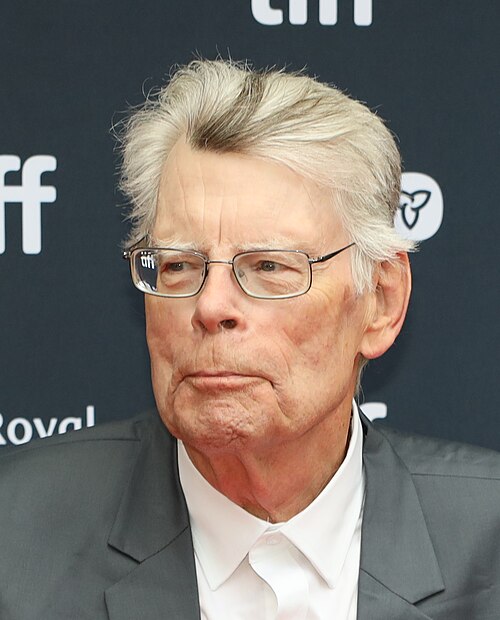
Stephen King (Stephen Edwin King, born September 21, 1947) is a renowned American author. He is hailed as the "King of Horror," known for his horror themes, though his works also span suspense, crime, science fiction, fantasy, and other genres. He was born in Portland, Maine, and had a difficult childhood after his father left the family when King was young. King loved writing and reading from an early age. He entered the University of Maine in 1966, graduated in 1970, and married Tabitha Spruce in 1971.
King's career began with short stories, and his debut novel Carrie was published in 1974 to great success. Since then, he has written prolifically, with notable works including The Shining, Pet Sematary, It, The Stand, and The Green Mile. He also published five novels under the pseudonym Richard Bachman between 1977 and 1984, exploring darker themes. He struggled with alcohol and drug addiction in the 1980s, achieving recovery in the late 1990s. In 1999, he was severely injured in a car accident but resumed writing after recovery.
King's works have been widely adapted into films and television series, such as The Shawshank Redemption, The Shining, Stand by Me, and Misery. He has received numerous honors, including the National Book Award Medal for Distinguished Contribution to American Letters in 2003, the Mystery Writers of America Grand Master Award in 2007, and the National Medal of Arts in 2014. His nonfiction book On Writing: A Memoir of the Craft is regarded as a classic on the craft of writing. In recent years, he has continued to publish new works and actively engages in political and philanthropic causes. King has three children, including sons Joe Hill and Owen King, who are also writers.
The Day Master is Gui Water born in the You month, receiving support from the Month's Indirect Resource, with a Peer and Yang Ren (Blade Star) in the Hour Pillar, and the Hai Water in the Year Branch as its root—clearly a strong Day Master. The Month Stem reveals Ji Earth Qi Sha (Indirect Officer), which is nourished by the Year Stem’s Ding Fire Pian Cai (Indirect Wealth), forming a composite structure where a strong Day Master meets a mild Qi Sha, with Shi Shen (Talent Star) controlling the Qi Sha, and Qi Sha and Pian Yin generating each other. This energetic state indicates innate vitality and a strong inner drive. The native is acutely sensitive to external stimuli and reacts intensely, skillfully transforming pressure and fear into profound inner experiences. The overall impression is one of outward gentleness, perhaps even shyness, but with turbulent, dramatic inner currents. The greatest strengths are extraordinary creativity and resilience under pressure, capable of alchemizing personal suffering into artistic works; the potential challenge lies in mental tension, requiring vigilance against over-immersion in the imaginary world that could lead to dissociation from reality.
The Month Branch You Metal is Pian Yin (Indirect Resource), with Ji Earth Qi Sha and Ding Fire Pian Cai emerging, forming a Qi Sha structure. With a strong Day Master, Shi Shen controlling Qi Sha is the primary Useful God. Wealth Stars that nurture the Qi Sha are favorable to enhance prestige, while Resource Stars that dissolve the Qi Sha and snatch the Shi Shen are taboo, as are Peers that compete for Wealth and overly reinforce the Shi Shen. The Useful God Shi Shen represents writing, creativity, and expression, directly corresponding to Stephen King’s literary talent—only through ceaseless output can he channel the anxiety and fear brought by Qi Sha into valuable cultural products, thus “controlling the Qi Sha to gain authority” and achieving social status (Qi Sha also symbolizes power and fame). The Wealth Star Ding Fire, a weak Pian Cai, indicates an innate commercial sensibility in his creativity, enabling him to become one of the best-selling novelists. If the taboo Resource Star were too strong, it would stifle imagination (Resource protects but also confines); fortunately, the Day Branch’s Mao Wood Shi Shen powerfully controls the Qi Sha, so from an early age the native learned to break spiritual cages through writing. With Da Yun (Major Life Cycles) traversing Shi Shen, Shang Guan, and Wealth phases, he rose from nothing to amass great wealth.
The core combination is the coexistence of “Shi Shen Controlling Qi Sha” and “Qi Sha and Pian Yin Generating Each Other”: the Day Branch Mao Wood, pure Yi Shi Shen, controls the Year Stem’s Ji Earth Qi Sha; concurrently, the Month Branch You Metal Pian Yin (Xin) can drain the Qi Sha (Ji Earth generates Xin Metal), transforming its aggressive edge. Additionally, the Year Pillar’s Ding Fire Pian Cai nourishes the Qi Sha, forming “Wealth Nourishing Weak Qi Sha.” This combination forges a deeply contradictory yet unified character: Shi Shen Controlling Qi Sha endows him with a light-handed narrative skill, adept at handling violent, horrific themes in a gripping way; Qi Sha and Pian Yin Generating Each Other provides philosophical contemplation, allowing him to distill social criticism and human nature reflections from his stories—far surpassing typical genre literature in depth. Wealth Nourishing Qi Sha signifies that his writing motivation has always included a desire for material success and worldly recognition, driving him to produce bestsellers. In decision-making, he is both bold (the courage of Shi Shen Controlling Qi Sha) and circumspect (the cunning of Qi Sha and Pian Yin); interpersonally, he tends toward reclusiveness (Pian Yin) yet possesses keen observational power (Qi Sha), adept at capturing subtle everyday fears.
The Day Pillar Gui Mao features Tian Yi Gui Ren (Heavenly Virtue Mentor), Wen Chang Gui Ren (Literary Mentor), Xue Tang (Academy), and Jiang Xing (General Star)—a confluence of Auxiliary Stars denoting exceptional wisdom and benefactors. The Hour Pillar Gui Chou carries Yang Ren (Blade Star), while the Year Pillar Ding Hai shows Tian Yi Gui Ren and Jie Sha (Calamity Star) (Hai-Mao half-he combination to Wood, but from Yin-Wu-Xu, Hai is a Calamity Star; here Hai is the Year Branch, and checking from the Day Pillar, no Calamity Star is seen, though Hai itself has its own Shen Sha). The Month Pillar Ji You has Zai Sha (Disaster Star), indicating frequent sudden crises. The Earthly Branches show a Hai-Mao half-he Shi Shen combination, Mao-You clash, and Chou-You half-he, creating a Shi Shen combination that is struck and then released, implying latent turmoil and reconstructive power. The repeated appearance of Gui Ren and Wen Chang explains how, despite poverty, he encountered opportunities (e.g., encouragement from teachers, recognition from editors). Jiang Xing, Yang Ren, and Shi Shen together infuse his works with a commanding aura and raw passion. The Mao-You clash is Shi Shen clashed by Pian Yin; throughout life, he must balance external real-world pressures (You Metal Pian Yin) with inner creative impulses (Mao Wood Shi Shen). This ongoing conflict becomes a wellspring of inspiration. Zai Sha and Yang Ren correspond to major accidents like car crashes, but the Shi Shen Controlling Qi Sha structure ultimately enables him to turn danger into safety.
Gui Water Day Master, born in the You month when Metal is clear and Water pure, with Shi Shen expressing elegance and Qi Sha pressing close, creates an inner sensitivity paired with outward restraint. Gui Water is like dew or rain—highly pervasive—and combined with Qi Sha, fosters an uncanny crisis intuition and ability to probe dark psychology. He is like a psychic radar, constantly receiving signals of malice and insecurity from the environment, compelled to release them through writing. His thinking is highly imagistic: Qi Sha triggers jumpy fear associations, while Shi Shen organizes them into progressively unfolding suspense stories. Emotionally, he craves solitude (Pian Yin) yet deeply resonates with the collective unconscious, explaining why his horror so often strikes collective fears. Under pressure, he directly confronts (Shi Shen Controlling Qi Sha), with writing itself serving as an anxiety-relief mechanism; in comfort, he becomes restless, needing to constantly challenge new thriller genres for fulfillment.
The greatest energetic advantage lies in the narrative genius catalyzed by “Shi Shen Controlling Qi Sha.” Shi Shen is the star of art, Qi Sha represents pressure and danger, and together they transform fear into stories; coupled with Wen Chang Gui Ren and Xue Tang, his technique is polished and creativity overflows. These talents propel success in two ways: on one hand, he can precisely replicate readers’ nightmares, making them addictive (psychologically, a safe fear experience), thereby capturing the mass market; on the other hand, by packaging Qi Sha’s brutality with Shi Shen’s mildness, his works combine entertainment value with literary merit, easily winning mainstream acclaim. Across novels, screenplays, and criticism, he excels wherever crafting suspense, pacing, and emotional payoff are required. The weak Pian Cai also gives him a keen nose for money, enabling him to turn words into commercial IPs.
The core conflict lies in the coexistence of “Shi Shen Controlling Qi Sha” and “Qi Sha and Pian Yin Generating Each Other,” representing two internal methods of handling fear: the former is outward expression and conquest, the latter inward digestion and forbearance. The Wealth Star Ding Fire, weak and robbed by Peers (Gui Water Bi Jian), leads to early financial struggles and often forced writing for money, compromising purity. This results in a recurring dilemma: during creation, he swings between the unrestrained Shi Shen and the strictly controlling Qi Sha, sometimes leading to works that feel overstuffed in pursuit of effect. His character flaws and blind spots include difficulty trusting others (the suspicion of Qi Sha and Pian Yin), periodic estrangement in relationships, and, with Yang Ren’s impulsiveness, occasional outlandish actions. He must continually adjust the rhythm of writing and life to avoid mental exhaustion (the drawback of strong Pian Yin snatching Shi Shen), otherwise risking the kind of self-referential madness depicted in The Shining.
Stephen King’s chart is a quintessential example of using fear as nourishment and turning pressure into legend. His life resembles one of his own stories: full of accidents (Mao-You clash, Zai Sha), yet always transformed by astonishing willpower (strong Day Master, Shi Shen Controlling Qi Sha). Rising from the bottom, he wielded the very “Qi Sha” sword that could both wound him and carve masterpieces. His success is not the fluke of a genius but the inevitable dark aesthetic unleashed by Shi Shen guiding Qi Sha. He has lived the highest state of the Qi Sha structure—not devoured by fear, but becoming fear’s master, and making the world pay for his fear.
Guan Yin Xiang Sheng (Zheng Guan (Direct Officer) and Direct Resource mutually producing): The Sha Yin (Indirect Officer - Indirect Resource) structure begins to take shape. This decade is a period of character and foundation building. Wu Earth (Zheng Guan (Direct Officer)) restrains the nature, while Shen Metal (Direct Resource) provides learning talent. The flow from Officer to Resource indicates a stable external environment, with support from family and education, but the Shen-Hai harm (mutual affliction) brings a slight sense of oppression. Overall, it is a stage of accumulating strength, fostering observation and logical ability for future creativity.
The Indirect Resource star protects the self, and the Zheng Guan (Direct Officer) star is useful. Academics go smoothly, and a strong interest in stories and writing develops. With a robust Shen Metal Direct Resource, learning ability is strong, especially a love for reading (Resource star). The Officer star controls the Peer stars (Bi Jie), enabling adherence to rules, but the Wealth star is not apparent, so no special financial performance. Begins trying to write short stories, planting the seed of creativity.
With a flourishing Resource star and Officer star combination, social life is simple. Family relationships are harmonious, and parents (especially the mother) encourage reading. Friends are few, but long-term friendships can be maintained. With Indirect Resource (Pian Yin) showing in the Heavenly Stem, there is a sense of solitude and a preference for being alone.
Metal flourishes while Water is secondary, tending toward a cold constitution. Pay attention to the respiratory system (strong Metal overcomes Wood) and the digestive system (weak Earth). Emotions are easily sensitive; cultivate an optimistic mindset.
Wealth Killing attacking the self, with Food God controlling the Killing. Ding Fire Indirect Wealth emerges, and Wei Earth Indirect Officer (Qi Sha) hides Ding Fire. The Indirect Officer represents pressure, challenges, and breakthroughs. Ding Fire Wealth star generates the Killing, multiplying pressure (such as financial difficulties, rejected submissions). However, the Month Branch You Metal Indirect Resource transforms the Killing, turning pressure into writing motivation. Wei Earth forms a half-wood union with Mao Wood (Food God), and the Food God controls the Killing, resolving difficulties with talent and creativity. This decade is a cocoon-breaking period, seeking a way out through writing.
Wealth star is insubstantial, Indirect Officer is unfavorable. At this time, mainly part-time writing with meager income (Ding Fire Indirect Wealth drained by Wei Earth). The Indirect Officer overcomes the self, leading to multiple rejections, but Indirect Resource (You) protects the self, persisting in creation. In 1965 (Yi Si year, Food God and Direct Wealth), begins publishing short stories. In 1970 (Geng Xu year, Direct Resource and Zheng Guan (Direct Officer)), gets married and finds a teaching job, stabilizing finances.
Indirect Officer clashes with Resource, interpersonal tensions. Met his wife on campus, relationship stable (Wei Earth Indirect Officer harmonized by Mao Wood). But financial pressure causes anxiety and occasional arguments. A writers' circle gradually forms among friends.
Fire, Earth, Metal are in conflict; watch for digestive and nervous exhaustion. Poor sleep quality (Indirect Officer attacks the self), need to manage stress.
Extreme Wealth star, self too weak to handle wealth. Bing Wu pillar is pure Fire from stem to branch, Wealth star extremely strong. Day Master Gui Water is weak and cannot bear the strong wealth, manifesting as sudden success and huge income bringing pressure. Wu Fire clashes with the Month Branch You Metal (Indirect Resource), but the original chart has Chou Earth, Mao Wood forming Wu-Mao break, Chou-Wu harm, causing energy conflicts. This decade is a breakout period of fame, but accompanied by huge psychological and physical drain.
Wealth flourishes generating Killing, reputation soars. In 1974 (Jia Yin year, Hurt Officer / Hurt Officer), the annual branch Yin forms a half-fire union with Wu, Wealth star even stronger; publishes 'Carrie' and becomes famous overnight. In 1977 (Ding Si year, Indirect Wealth / Direct Wealth), 'The Shining' is published, wealth energy flowing freely. Royalty income surges, but Chou-Wu harm (Peer / Wealth) brings tax and contract disputes.
Peach Blossom (Charisma) is strong, easily stirring up affairs. Wu Fire is Peach Blossom, breaking with Mao Wood, the marriage faces tests. But You Metal Indirect Resource restrains it, so no major issues. Close ties with publishing figures, establishing long-term collaborations.
Fire blooms while Water dries up; watch for heart and blood pressure issues. Overwork, alcoholism (Wealth star represents wine and sex). Need to pay attention to heart and blood pressure; emotions easily irritable.
Food God generating Wealth, Si-You-Chou forms Metal Union. Yi Wood Food God emerges, generating Si Fire Direct Wealth. But Si Fire combines with Month Branch You and Hour Branch Chou to form a triple Metal union, Metal flourishing generates Water, and the self becomes strong. Food God releases brilliance, creativity erupts. The Metal union represents collaboration and teamwork. Career enters the most productive phase, with works heavily adapted into films. But too much Metal clouds the Water, leading to burnout later.
Wealth sources widen, works adapted for screen. In 1981 (Xin You year, Indirect Resource / Indirect Resource), the luck pillar's Si-You-Chou Metal union completes; Metal Resource protects the self, the 'Dark Tower' series begins. In 1987 (Ding Mao year, Indirect Wealth / Food God), Mao-You clash (Food God clashes Resource), a severe car accident occurs the same year; a narrow escape. This event prompts reflection and a shift in creative style.
Union is auspicious, fans widespread. Fame reaches its peak, becoming a bestselling author. Family-wise, his wife supports him through rehabilitation. Friendships with film directors are established.
Metal excessive damages Wood; watch for liver and limbs. The 1987 car accident was a manifestation of the Mao-You clash, Wood was damaged. After recovery, quit smoking and drinking.
Hurt Officer meeting Zheng Guan (Direct Officer), Water and Earth are murky. Jia Wood Hurt Officer emerges, Chen Earth is Zheng Guan (Direct Officer). Hurt Officer overcomes Officer, representing rebellion against authority and tradition, prone to disputes and legal problems. Chen-You alloy, Zheng Guan (Direct Officer) and Resource mutually producing looks auspicious on the surface, but Jia Wood drains Water, Chen Earth overcomes the self. This decade, although career remains high, management is chaotic, disputes with publishers, and personal mood is low.
Hurt Officer generates Wealth, but entangled in legal troubles. In 1991 (Xin Wei year, Indirect Resource / Indirect Officer), publishes 'Needful Things' etc. In 1997 (Ding Chou year, Indirect Wealth / Indirect Officer), Chou Earth combines with You, financial issues. In 1999 (Ji Mao year, Indirect Officer / Food God), Mao-You clash, another car accident, Hurt Officer meeting Officer triggers lawsuits.
Gossip and disputes increase. Relationships with some collaborators become strained. Slight friction at home due to work stress. Sons become adults, relationships gradually distant.
Earth overcomes Water; watch for kidneys and urinary system. Old wounds recur, depressed mood, need psychological adjustment.
Peer helps the self, Food God releases brilliance. Gui Water Peer assists the self, Mao Wood Food God is a Fu Yin (repetition) with the Day Branch, and Mao-You clash. Food God represents expression and creativity, clashing the Resource (You), meaning letting go of traditional frameworks and exploring new styles. This decade is a transformation period, experimenting with non-horror genres and pursuing spirituality. Peer helps the self, collaborations increase.
Food God generates Wealth, but clashing Resource changes the path. In 2003 (Gui Wei year, Peer / Indirect Officer), publishes the final volume of 'The Dark Tower'. In 2007 (Ding Hai year, Indirect Wealth / Peer), 'Lisey's Story' is published, changing style. Career is stable but voluntarily reduces workload.
Reunions with old friends, family bonds. Reconnects with childhood friends. Wife's health issues arise, valuing family more. Mao Wood Fu Yin, nostalgic emotions.
Mao-You clash, Metal-Wood battle. Liver, gallbladder, and lungs are vulnerable. Beware of old car accident injuries. Emotional fluctuations large, practice meditation.
Rob Wealth and Hurt Officer, Yin-Hai combine to Wood. Ren Water Rob Wealth assists the self, Yin Wood Hurt Officer releases brilliance. Yin-Hai combine to Wood, transforming Water-Wood Qi, strengthening Hurt Officer. Rob Wealth represents new collaborations and competition, Hurt Officer represents innovation and criticism. This decade creativity revives, starts writing short stories again and tries digital publishing. Hurt Officer meeting Officer (Yin-Shen clash), but with the original chart Hai combination, Water and Wood mutually generate, mental state remains youthful.
Collaboration and innovation, both fame and fortune. In 2013 (Gui Si year, Peer / Direct Wealth), publishes 'Revival' etc. In 2015 (Yi Wei year, Food God / Indirect Officer), receives the National Medal of Arts. In 2017 (Ding You year, Indirect Wealth / Indirect Resource), 'Mr. Mercedes' wins the Edgar Award. New collaborations with publishers, e-book income grows.
Old friends reconnect, mentoring the new. Interacts frequently with young writers, establishes scholarships. Family harmonious, enjoying later years.
Water and Wood flourish; watch for rheumatism and nervous system. Energy is still decent, but beware of falls. Maintaining writing habit benefits brain health.
Killing and Resource mutually producing, Earth and Metal heavy and turbid. Xin Metal Indirect Resource, Chou Earth Indirect Officer. Killing and Resource mutually producing is originally a noble pattern, but the original chart has too much Metal clouding the Water, and Chou Earth combines with You, meeting Si, Metal extremely strong. This decade energy and health decline, but influence continues. Indirect Officer represents external pressures (like pandemic, peer challenges), Resource star transforms the Killing, responding with wisdom.
Conservative and steady, works reprinted. In 2022 (Ren Yin year, Rob Wealth / Hurt Officer), publishes a new short story collection. In 2026 (Bing Wu year, Direct Wealth / Indirect Wealth), old works adapted for screen again. Income mainly from royalties. Chou Earth is a Wealth vault, but being combined, wealth accumulation slows.
Support from younger generations, lasting reputation. Spending time with family, writing memoirs. Accepts documentary interviews, achievements remembered by the world.
Earth and Metal excessive, Water is suppressed. Watch for kidneys, blood pressure, heart failure. Regular check-ups. Mentally accepting aging.
Resource and Peer help the self, Water force vast. Geng Metal Direct Resource, Zi Water Peer, pillar is pure Metal-Water. Self extremely strong, but original chart Fire and Earth weak, Wealth and Officer without roots. This decade mainly quiet cultivation, honors bestowed. If previous accumulation was sufficient, then a peaceful old age; if health was overdrawn, then prone to illness. Zi Water clashes Wu Fire (Bing Wu luck pillar), watch the heart.
Resource star protects the self, fame and wealth insubstantial. No new works, old works continue to generate income. Zi-Mao punishment (Peer punishes Food God), possibly minor disputes over copyrights. Overall fading from public view.
Sense of loneliness increases. Peer stars flourish, friends gradually pass. Later generations take care.
Water flourishes, Fire extinguishes; risk of heart failure. Cold and damp constitution, keep warm. Emotions indifferent, need family companionship.
The Servants Palace is an empty palace without a main star, with Chang Sheng (Life Stage) in Death, and the opposite Health Palace contains only You Bi (Right Assistant), forming a pattern of 'Feeble Borrowed Stars, Isolated and Helpless.' An empty palace by itself lacks stellar strength and must borrow stars from the opposite palace, but the Health Palace also has no main star, only the auxiliary star You Bi. You Bi is a supportive star, symbolizing hidden aid or benefactors, but its strength is weak and passive. Chang Sheng in Death indicates a lack of vitality in interpersonal networks; the native is not prone to actively expanding social circles, and subordinates or friends tend to be transient or superficial, making it difficult to form a stable long-term team. This combination causes Stephen King to exhibit 'selective aloofness' in relationships—he is not entirely without need for others, but is only willing to build deep connections with very few people, and these connections mostly arise from work or family rather than proactive socializing. At the same time, the empty palace means that when leveraging connections, he often feels 'powerless,' and in collaborations, he easily ends up waiting passively or relying on unilateral effort.
The Gui stem of this palace triggers Po Jun Hua Lu into the Travel Palace, Ju Men Hua Quan (Authority) into the Siblings Palace, Tai Yin Hua Ke (Reputation) into the Children Palace, and Tan Lang Hua Ji (Obstruction) into the Spouse Palace, but the power of the Four Transformations does not directly enter this palace, creating an indirect effect of 'borrowing energy.' Hua Lu in Travel indicates gaining helpful friends during external encounters; for example, when Stephen King was publishing Carrie in 1974, he accidentally sent the manuscript to Doubleday and met editor Bill Thompson, who became an important early promoter—this corresponds to Po Jun Hua Lu in Travel bringing sudden, groundbreaking friendships. Hua Quan in Siblings Palace shows that among siblings or peers, there are those who exert control or motivation; his wife Tabitha King (also a writer) often influenced his writing as a 'critic.' Hua Ke in Children Palace suggests that younger generations or fans contribute to his reputation; for instance, in the 1980s, massive fan pursuit elevated his literary status, but because the Ke star is in Children Palace, this support carries an idealistic tint and is unstable. Hua Ji in Spouse Palace (trine with Servants) reflects that due to excessive devotion to writing, he sacrificed non-spousal socializing, even causing tension in some friendships due to his spouse's involvement.
The empty palace without afflicting stars ensures that his interpersonal network always revolves around a very small core of people, and at key turning points he relies on single point breakthroughs rather than group strength. Before Carrie's publication in 1974, Stephen King was a typical 'lone wolf' writer, repeatedly rejected; it was the benefactor Bill Thompson (Po Jun Hua Lu in Travel) who accidentally discovered his talent and helped him to fame. In 1979, he collaborated with writer Peter Straub on The Talisman series, which could have expanded his cooperative circle, but the two actually maintained only short-term partnership, then returned to independent creation, confirming the insufficient depth of collaboration under an empty palace. In the 1980s, when he fell into alcoholism, the only continuous support was his wife Tabitha (Ju Men Hua Quan in Siblings), who not only urged him to quit drinking but also helped manage copyrights, embodying the 'control force' of Hua Quan in Siblings. After his severe car accident in 1999, letters of prayer from readers and fans (Tai Yin Hua Ke in Children) gave him spiritual strength, but those who truly helped contact hospitals and handle affairs were still a few family members and lawyers, fully matching the empty palace characteristic of 'relying on very few people.' In his later years, he opened the 'Castle Rock Foundation' to donate to local communities, but always refused to join mainstream literary associations, maintaining social detachment.
Po Jun (Pioneer/Destroyer Star) occupies the Migration Palace in its 'gained' phase, forming the dynamic pattern of 'Po Jun Roaming.' Po Jun represents pioneering, destruction, and innovation. When in a gained phase, it brings frequent changes and sudden turns in external encounters, along with effort and risk. The Migration Palace governs external development, social opportunities, and environmental adaptation. With Po Jun in a gained phase, the native's life focus shifts toward the distance: every relocation becomes a watershed for creation or life itself. For example, Po Jun belongs to Water, and with Wu Qu (Metal) and Tian Xiang (Water) in the Destiny Palace, Metal generates Water, suggesting ease in finding mentors and benefactors when away from home. However, Po Jun's inherent characteristic of 'breaking the old to establish the new' also implies a price: wandering, accidents, and even estrangement from one’s hometown.
This palace has no Four Transformations, but the Children Palace’s Tai Yin transformed into Lu (+ Wen Qu and Tian Ma) secretly harmonizes with the Migration Palace, creating the allure of ‘Lu Ma Jiao Chi’ (Wealth and Mobility Interplay). Tai Yin transformed into Lu governs asset growth, while Tian Ma governs movement. Together, they enable the native to gain wealth and fame in foreign lands through writing (Wen Qu). At the same time, the opposite palace of Migration—the Destiny Palace—contains Wu Qu and Tian Xiang (Finance Star + Minister Star), reinforcing the imagery of 'seeking wealth away from home.' Additionally, the Career Palace’s Zi Wei and the Migration Palace’s Po Jun form a variant of the 'Zi Po' pattern; though not a formal configuration, Po Jun's pioneering nature is guided by Zi Wei’s authority, leading the native to often break career bottlenecks through travel or relocation (e.g., writing The Shining after moving in 1974).
Real events confirm the opportunities and risks brought by Po Jun in a gained phase. In 1966, leaving Maine for college (Po Jun’s initial movement); after graduation in 1969, teaching in Colorado, where he conceived and published Carrie (1974), launching the peak of horror fiction; in 1974, the family moved back to Bangor, Maine, and subsequently wrote The Shining (inspired by a stay at the Stanley Hotel in Colorado in 1977); in June 1999, he was struck by a vehicle while returning from a trip to England (Po Jun’s destructive side manifesting), narrowly escaping death, after which his writing turned darker; from 2000 onward, frequent travel between Florida, Maine, England, etc., Po Jun’s ‘wandering’ trait kept his creativity alive through constant movement.
Zi Wei (Emperor Star) sits in level state in the Career Palace, with Di Jie (Calamity Star) in the same palace, forming a 'Zi Wei Meets Void' success-and-failure pattern. Zi Wei is the Emperor Star of the Northern Dipper, symbolizing leadership ambition, authority, and career foundation, but in level state its radiance is subdued, requiring hard work to manifest its dignity. Di Jie is a destructive star of emptiness and loss, signifying interrupted plans, unexpected losses, and subversion of norms. Together, they create a tension where the native possesses both kingly ambition and many setbacks in career: Zi Wei's sense of dignity drives one to be unwilling to be mediocre, always striving to carve out a domain; Di Jie constantly creates unexpected twists—rejections, industry prejudice, even life-threatening crises—forcing the native to rebuild from ruins. Stephen King's writing career is exactly like this: in his early years, he submitted countless times, being repeatedly rejected (Di Jie's negation), but Zi Wei's imperial aura made him persist, even resubmitting the Carrie manuscript multiple times. Ultimately, this novel, rejected 30 times, became a blockbuster (Zi Wei's coronation). Afterwards, he successively published The Shining, The Stand, etc., each pushing the psychological limits of readers; Di Jie's 'pattern-breaking' trait made him a disruptor in the horror genre rather than a conformist literary craftsman. Zi Wei in level state also means he is not a natural-born leader, but through persistence and output (several novels per year) he gradually secured the throne of 'King of Horror.'
Although this palace has no direct Four Transformation flying stars, the opposite Parents Palace contains Tai Yang (Sun) and Tian Liang (Heavenly Beam) forming the embryonic 'Yang Liang Chang Lu' pattern, and the trine palaces contain Tian Ji Hua Ke and Tan Lang (Desire Star) with Lu Cun (Thriving Star) creating indirect traction. Tai Yang in fallen state and Tian Liang in favorable earth constitute a variant of 'Yang Liang Chang Lu'—Tai Yang's dimness yet Tian Liang's purity indicates that career achievements do not come from a prominent background but through dissemination of knowledge (Tai Yang and Tian Liang govern education and publishing) to gain fame; Wen Chang (Literary Star) and Tian Yue (Heavenly Chop) in the same palace intensify literary brilliance and benefactor recognition. In the trine, Property Palace's Tian Ji in level state with Hua Ke, plus Zuo Fu and Tian Kui, shows clever ideas (Tian Ji Hua Ke) and behind-the-scenes supporters (Zuo Fu, Tian Kui) in the career pattern. The Spouse Palace's Tan Lang in prosperous state with Lu Cun brings cross-boundary collaboration and wealth accumulation (Tan Lang for sociability and art, Lu Cun for stable wealth). Tracing the Four Transformation trajectories: the chart has Tai Yin Hua Lu in the Children Palace, making creation an emotional projection (children as works), and Hua Lu also triggers Tian Ma (Heavenly Horse) and Tuo Luo (Spiral), causing works to circulate rapidly (Tian Ma) while encountering controversy (Tuo Luo). The Travel Palace has Po Jun (Vanguard Star) in favorable earth, without Four Transformations, but Po Jun inherently possesses destructive and reconstructive kinetic energy, echoing Di Jie's 'innovative destruction' in the Career Palace. Overall, King's career is not directly blessed by the Career Palace's own Four Transformations, but through the interaction of stars in multiple palaces—Tai Yang and Tian Liang's publishing serendipity, Tian Ji Hua Ke's intellectual breakthrough, Tan Lang and Lu Cun's market acumen—all jointly propelling him to become a literary giant.
The 'disruptive innovation' of Zi Wei and Di Jie is imprinted on his life trajectory, especially evident in two iconic events: the 1999 car accident and post-2000 digital publishing explorations. On June 19, 1999 (Ji Mao year, with the major cycle under Po Jun in the Travel Palace), King was struck by a truck while walking and nearly died—this is exactly the manifestation of Di Jie in the Career Palace: 'career interruption and life-and-death test.' At that time, he had just announced his retirement from writing in the late 1990s, but the accident made him re-examine the meaning of life (Zi Wei level state's 'rebirth'); only months after surgery, he wrote On Writing and launched books like Dreamcatcher in 2000, entering a second creative peak. Moreover, Di Jie's subversive nature also reflected in his innovation of the publishing industry: in 2000, he abandoned traditional publishers and debuted the e-book Riding the Bullet, pioneering digital publishing (Di Jie breaking old models), and later founded the small press 'Philtrum Press' to control his works (Zi Wei's desire for dominance). Meanwhile, Tai Yang and Tian Liang in the Parents Palace influenced his early submission experiences: his mother supported his writing (Tai Yang and Tian Liang's warmth), but publishers repeatedly rejected him (Tai Yang in fallen state meets Wen Chang and Tian Yue but without practical help), until 1973 when Carrie was spotted by Bill Thompson (Tian Liang as benefactor), opening the path to mastery. In his later years, he remains highly productive, publishing new works every year; Zi Wei in level state manifests its majesty through long-term cultivation, while Di Jie keeps his works always carrying a sense of insecurity, as seen in Bag of Bones and Under the Dome exploring the struggle between control and collapse.
The Property Palace contains Tian Ji (Skilled Star) in level state, with Hua Ke (Refinement), flanked by Zuo Fu (Left Assistant) and Tian Kui (Heavenly Chief) as benefactor stars, and Ling Xing (Bell Star) in beneficial phase in the same palace, forming a 'Wisdom Residence Brings Fame' pattern. Tian Ji is a star of movement and change; in level state in the Property Palace, it indicates frequent relocation, renovation, or functional adjustments of the living space. Hua Ke gives it cultural and symbolic significance, such as a study or the residence itself becoming a source of creativity. Zuo Fu and Tian Kui are supportive stars, suggesting that during property purchases or repairs, the native often receives behind-the-scenes advice from relatives, friends, or professionals. Ling Xing hints at sudden disruptions, but because it is in a prosperous phase, the native can turn danger into safety, and even transform accidents into writing material. Overall, this palace shows that although the native does not inherit a fixed grand estate, every residence carries strong personal imprinting and public exposure.
Tian Ji Hua Ke is the core dynamic of the Property Palace, linking real estate to reputation. Tian Ji Hua Ke does not merely indicate an elegant home; it actually propelled Stephen King's writing career. In 1980, he purchased a Victorian mansion at 47 West Broadway in Bangor; he turned the basement into a writing room, where books like It and Pet Sematary were born. In 1990, the mansion caught fire—Ling Xing manifested—but Hua Ke enabled a swift reconstruction, and the house became a pilgrimage site for fans. Furthermore, Tai Yin (Lunar Yin) in the opposite palace (Children Palace) forms Hua Lu (Prosperity), which flies into the opposing palace of Property, enhancing the investment attribute of real estate: he profited from property buying and selling (e.g., selling a Florida villa in 2000 at a doubled profit). Meanwhile, Ju Men (Great Gate) forms Hua Ji (Obstruction) in the Siblings Palace, which is in a trine with Property, suggesting that siblings once disputed over property (his brother once demanded a share of the house from the parents' estate).
The trajectory of his real estate is deeply intertwined with his writing career; every move corresponds to a shift in writing themes. In the 1970s, while living in a trailer, Tian Ji Hua Ke had not yet manifested, but Zuo Fu and Tian Kui enabled him to persist in writing despite low rent (Carrie was born in a rented place). In 1980, with the purchase of the Bangor mansion, Hua Ke officially manifested: the building itself became a horror novel setting (the inspiration for the corridor in The Shining partly came from its eerie depth). After 2000, he moved to Lovell, Maine; Tian Ji in level state was verified again—the new home was converted into a 'writing castle,' and Ling Xing's effect showed in a storm that damaged the roof, which led him to write the opening of Under the Dome. Real estate was never purely an investment but an incubator of stories.
Qi Sha (Indirect Officer) temple sits in the Fu De Palace (also the Body Palace), with Di Kong (Void Star) and Huo Xing (Fire Star) temple in the same palace, forming an explosive mental pattern of 'Sha-Kong-Huo'. Qi Sha is a star of severity and pioneering; when temple, it denotes a fierce and determined mind. Di Kong causes unconventional thinking, while Huo Xing brings passion and impatience. With the Body Palace here, it indicates that in later life or at the core of his spiritual world, this influence is strong—manifesting as a natural affinity for horror and dark themes, with creative impulses erupting like a volcano.
This palace has no Four Transformations, but the combination of Qi Sha temple, Huo Xing, and Di Kong inherently carries 'powerful energy'. Stephen King's creative wellspring is indeed a product of this 'Qi Sha - Kong - Huo' configuration—he can transform inner fears and violent tendencies into words. Di Kong allows the stories to break through conventional patterns, while Huo Xing endows the writing with intense rhythm and pressure. He once said in an interview, 'When I write, I feel like I'm going crazy,' which is a sign of Huo Xing.
The Qi Sha temple in the Fu De Palace also explains his dependency on alcohol and drugs in the 1980s: Qi Sha, Di Kong, and Huo Xing require high stimulation to find peace, but they also cause great internal friction. After quitting in the 1990s, he turned to disciplined writing and meditation to satisfy his spiritual needs. With the Body Palace here, he continued writing even after age sixty, and after the car accident he cherished writing even more, as Qi Sha's 'fighting spirit' persisted throughout his life.
Tai Yang (Sun) fallen, Tian Liang (Heavenly Beam) attained, Wen Chang (Literary Star) temple, Tian Yue (Auxiliary Star) auspicious, forming an early hardship pattern of 'Sun and Moon in adverse positions'. The fallen Sun represents the absence or inability of the father figure; Tian Liang, being a Sheltering Star, governs protection from the mother and elders. Wen Chang and Tian Yue ensure that the native receives support in education and the arts. Overall, this indicates weak fatherly ties but strong maternal bonds, with maternal support enabling early education.
This palace has no Four Transformations, but the fallen Tai Yang contrasts with the temple Wen Chang. Stephen King's father left home when he was two, and his mother raised him alone, which aligns precisely with the absent father indicated by the fallen Tai Yang. The attained Tian Liang made his mother (and her sister) his earliest encouragers on the literary path—his mother often gave him pocket money to buy books and praised his stories. The temple Wen Chang foretold his childhood love of reading and writing, with his talents recognized and nurtured.
After his mother's death in 1978, King experienced a period of depression; the fallen Tai Yang also reflects his complex feelings toward his father (projected in his novel The Stand). The Tian Yue in the Parents Palace suggests that his mother supported his college education through part-time nursing work, even sending him money while he was in university. The temple Wen Chang enabled him to write short stories and submit them at age 11, and by 14 he was regularly submitting to magazines—these early experiences laid the foundation for his reputation as a 'story machine'.
The Health Palace has no main star, only You Bi (Helper Star) alone, forming a ‘You Bi guards health’ configuration. You Bi is a secondary helper star, Yin Water, indicating that the body needs external assistance to resolve health issues. With no main star, the innate physical foundation is somewhat weak, prone to neurasthenia, kidney-water insufficiency, or accidental injuries. You Bi itself does not govern illness but is an 'auxiliary' star, so the native's health characteristic is: major injuries are usually not borne alone; doctors, family, or friends always intervene to help. At the same time, You Bi's 'hidden support' also means that some ailments are initially subtle and hard to detect (e.g., liver damage from alcoholism, latent for years before being acknowledged). From the triadic view, the opposite palace—the Parents Palace—has Tai Yang (Sun) in decline and Tian Liang (Protection) in gained phase; Tai Yang in decline in the You position suggests cardiovascular weakness, while Tian Liang gained brings the ability to avert disaster, but Tai Yang’s decline also hints at vision decline in old age. The Wealth Palace’s Lian Zhen and Tian Fu suggest chronic inflammation, and the Virtue Palace’s Qi Sha, Huo Xing, and Di Kong indicate a tendency toward heart-lung fire hyperactivity and sudden accidents. Overall, an empty palace with You Bi makes health entirely dependent on Da Yun movements, leading to great fluctuations in the native’s life—usually manageable, but when harmful energy rushes in, severe injuries can occur; fortunately, You Bi always brings a thread of survival.
This palace has no Four Transformations, but transformations fly in from the opposite and triadic palaces. The Siblings Palace’s Ju Men transforms into Ji (Ding stem Ju Men Ji), Ju Men is Yin Water, same element as You Bi. Ji entering the Siblings Palace rushes into the Health Palace, forming an image of 'hidden water invading the body'—indicating the native had gastrointestinal issues in early years (childhood to youth) due to overindulgence or irregular diet, which later turned into alcohol addiction in adulthood (Ju Men Ji represents oral karma, food, drug addiction). Stephen King's severe alcoholism in the 1990s was the eruption of this latent Ji. The Children Palace’s Tai Yin transforms into Lu (Yi stem Tai Yin Lu), Tai Yin is Yin Water, Lu entering the Children Palace illuminates the Health Palace, strengthening You Bi's 'nurturing' force, suggesting that the native receives emotional support from children and younger generations during recovery (e.g., his daughter’s company after the 1999 accident), but also implies that excessive water energy may cause bodily fluid circulation issues. The Property Palace’s Tian Ji transforms into Ke (Xin stem Tian Ji Ke), Tian Ji is Wood, Ke entering the Property Palace allows Wood to loosen Earth, soothing the 'emptiness' of the Health Palace’s lack of main star. It represents the native recovering body and mind through home rest and study writing (e.g., after the accident, recovering at home and writing On Writing). The Career Palace’s Zi Wei and Di Jie have no transformation, but Di Jie’s 'emptiness' can occasionally be activated, temporarily disrupting You Bi’s protective power. In 1999, the hit-and-run driver (Di Jie governs sudden interruptions), but Zi Wei’s imperial reorganization power, along with You Bi’s aid, finally returned things to normal.
The Health Palace’s You Bi and the four transformation stars precisely matched three critical health turning points in Stephen King’s life. First, the alcoholism from the mid-1980s to early 1990s: Ju Men Ji flew in from the Siblings Palace. He relied on alcohol to write, trapped in a cycle of sobriety and intoxication. You Bi’s 'assistance' manifested as his wife Tabitha’s intervention and hiding of alcohol, leading to successful sobriety around 1992, but with mild pancreatic damage (You Bi without main star prevented a fatal crisis). Second, the severe car accident on June 19, 1999: at age 52, the Health Palace’s Da Yun was triggered by Po Jun in the Migration Palace. He was struck by a van, causing a collapsed lung and multiple fractures. You Bi’s 'helpful people and medical aid' became evident—passersby rushed him to the hospital, his wife pieced together his memory during recovery, and a neurosurgeon performed precise surgery. Third, vocal nodule surgery in 2015: long-term writing and early teaching career caused vocal strain. Tai Yin Lu in the Children Palace led him to choose surgery over conservative treatment, and You Bi again facilitated a quick resolution by the medical team. Later-life diabetes and sleep apnea (after 2018) reflect You Bi’s 'hidden drain' without a main star, but he combated aging with writing, remaining prolific until age 77. The entire trajectory shows: You Bi always provided backup, but without a main star, he could not rely solely on his own strength.
Lian Zhen transforms into Lu and Tian Fu (Wealth Vault) sits in the Wealth Palace in its waxing phase, forming a 'Lian Zhen Pure Frame' auspicious wealth configuration. Lian Zhen is a secondary peach blossom star and also a 'imprisonment' star, possessing both artistic and legal dualities. With transformation into Lu, its artistic nature is greatly enhanced, indicating wealth from creativity, reputation, and social networks. Tian Fu is the main wealth repository star; when waxing, it manages money without leaks, as solid as a national treasury. Together, they form a clear path of 'using fame to generate wealth and using the vault to guard it': the native gains widespread social reputation through literary creation, then uses rigorous business methods (such as establishing independent companies to manage copyrights) to convert reputation into consistent cash flow, never relying on speculation or high-risk channels. Lian Zhen's discipline avoids common industry tax or legal disputes, and Tian Fu ensures wealth is not lost due to unforeseen events (like medical expenses after the 1999 accident). With no afflicting stars in the Wealth Palace, the entire earning and saving chain is exceptionally smooth, without dramatic ups and downs.
This palace’s Lian Zhen transforms into Lu (Jia stem triggered), and Tian Fu in its waxing phase carries inherent 'vault-strengthening' energy, with no afflictions. Lian Zhen Lu directly activates the monetization ability of literary creation—Stephen King sold the rights to Carrie in 1973 for a $400,000 advance (equivalent to about $2 million today), his 'first pot of gold,' entirely ignited by the wealth energy of Lu. Thereafter, Lu continued to drive: from 1975 to 1985, books like The Shining and The Stand each brought in millions of dollars; in the 1990s, film and TV adaptation rights (e.g., Stand by Me, The Shawshank Redemption) amplified Lu’s energy into the Hollywood system. The opposite Career Palace has Zi Wei and Di Jie, hinting at career creative droughts or adaptation failures (like some poorly received films in the 1990s), but the Wealth Palace’s powerful Lu always outweighed the disruptions. The triadic Destiny Palace’s Wu Qu and Tian Xiang (steady management) and the Migration Palace’s Po Jun (breakthrough pioneering) indirectly enhance Lu’s channel diversity—Po Jun led King to try new media like e-books and audiobooks, while Wu Qu and Tian Xiang helped him launch the 'Dollar Baby' program, licensing adaptations to students at low cost, which cultivated a long-term fan economy.
Stephen King’s wealth trajectory perfectly matches the configuration of Lian Zhen Lu and Tian Fu in its waxing phase. In 1973, upon receiving the $400,000 advance for Carrie, he immediately quit teaching to write full-time—a manifestation of Tian Fu’s wealth-preserving instinct: he calculated that this sum plus future royalties would cover family expenses, rather than spending recklessly. In 1974, he founded the independent ‘Philtrum Press’ to issue limited edition pamphlets, and later established multiple copyright management entities (like ‘Stephen King’s Library’), distributing income across various 'vaults,' showcasing Tian Fu’s 'multi-repository management' function. By 1987, his annual income exceeded $10 million, yet he never engaged in stock market or real estate speculation; all funds came from writing and licensing—a pure expression of Lian Zhen Lu’s 'fame-generating wealth.' After the 1999 accident, media attention boosted sales of his back catalog, and his royalty income in 1999–2000 was even higher than before, with Lu’s power amplifying in adversity. From 2010 onward, he experimented with 'digital-only' releases (The Plant as an e-book) and 'simultaneous film release' (Under the Dome), each new venture bringing in tens of millions, with Po Jun’s pioneering nature from the triadic palace transformed into real money by Lu. By 2020, his net worth was approximately $500 million, debt-free and lawsuit-free, the ultimate embodiment of the Lian Zhen Pure Frame and Tian Fu waxing wealth vault.
Tai Yin (Lunar Yin) in decline with Hua Lu (Transformation into Prosperity), together with Wen Qu (Literary Star) in thriving, Tian Ma (Heavenly Horse), and Tuo Luo (Delay Star) in decline, forms the pattern 'Moon Descending, Literary Grace Racing, Entwined Obstacles and Bonds.' Tai Yin is yin water, governing gentleness, emotions, and maternal qualities. When in decline, its strength is insufficient, but Hua Lu extends its warmth and tenderness; Wen Qu thriving enhances artistic and literary talent, Tian Ma governs movement and changes, while Tuo Luo in decline brings delays and inner struggles. This combination indicates that children are innately sensitive and possess artistic talent. The bond between the native and children is deep, but the nurturing process involves many twists and turns and emotional exhaustion—such as children's frequent illnesses in early years or stubborn temperament requiring repeated communication and accommodation. Tuo Luo's stagnation also reflects possible rebellious phases or academic setbacks during key growth stages (like adolescence), but ultimately resolved through the blessings of Tai Yin Hua Lu.
Tai Yin Hua Lu directly injects the energy of 'gentle accomplishment' into the Children Palace. Hua Lu is one of the most auspicious transformations in Zi Wei Dou Shu, symbolizing automatic blessings and harvest. Here, it means the children themselves become beneficiaries of the native's emotional and material support, while also representing the deep nourishment and life turning points the native gains from parent-child interaction. Stephen King's two sons, Owen and Joe, both followed their father's footsteps to become novelists, each publishing critically acclaimed works (Owen's Double Feature, Joe's The Dragon's Scale, etc.), exemplifying Tai Yin Hua Lu transforming literary talent into actual achievement. However, Tai Yin's decline suggests the power of Hua Lu is somewhat diminished—King once neglected his children due to alcoholism and obsessive writing, until his eldest son Owen asked him in the late 1980s, 'Dad, are you an alcoholic?' This question struck him like a thunderbolt, prompting him to quit drinking and reexamine his role as a father. This parent-child dialogue represents the clash between Tuo Luo's 'entanglement' and Tai Yin Hua Lu's 'emotional redemption.'
The combination of Tian Ma, Tuo Luo, and Wen Qu in the Children Palace manifests in life as children leaving their homeland early and making a living through arts and literature. After the massive success of It in 1985, King moved his family to Bangor, but his two sons chose different paths during adolescence: Joe stayed in Maine to attend school locally, while Owen moved to California to study creative writing and settled on the West Coast. Tian Ma governs long-distance travel, Tuo Luo governs bonds—Owen's long-term departure reflects the former, and Joe's rootedness in his hometown the latter. Wen Qu thriving indicates the children's literary paths were relatively smooth: Joe published his debut novel The Spider in 1994, and Owen released Double Feature in 2012—King admitted in his memoirs that seeing his sons write sentences more mature than his own early work filled him with 'complex emotions interweaving pride and unease' (precisely the inner pull of Tuo Luo in decline). Moreover, Tai Yin Hua Lu brought King exceptionally close relationships with his children in his later years: after his severe car accident in 2019, his two sons took turns keeping vigil and assisting him in completing subsequent manuscripts, becoming his emotional pillars during recovery.
Tan Lang (Desire Star) in prosperous yet fallen state in the Spouse Palace, with Lu Cun (Prosperity Reserve) in the same degree, forms the 'Boundless Peach Blossom' pattern with 'Wealth Star Protecting Seal.' Tan Lang governs talent, social skills, and desires. In its prosperous position, it radiates charm and strong emotional needs; Lu Cun acts like a currency reserve, stabilizing emotional fluctuations while providing material resources. Tan Lang's 'peach blossom' nature is restrained by Lu Cun, meaning the native is passionate but not promiscuous, and the spouse often possesses both artistic appreciation and practical management skills—just as King's wife Tabitha both understood his writing and managed the family finances. Tan Lang + Lu Cun also forms a variant of 'Lu Ma Jiao Chi' (Prosperity and Horse Interacting), as Tan Lang belongs to wood and Lu Cun to earth, wood generating earth, suggesting the marriage brought career capital and network accumulation. After King married in 1971, Tabitha not only supported his writing (Tan Lang's talent collaboration) but also worked in a factory to sustain the household during their struggling days (Lu Cun's material security). This symbiosis of 'artistry and pragmatism' perfectly embodies the Spouse Palace combination.
This Palace has no birth-year Four Transformations star, but Lu Cun acts as a 'static Hua Lu,' and the Children Palace's Tai Yin Hua Lu (Ding Stem) creates a 'Tai Yin Lu illuminating the Spouse Palace' attraction. Tai Yin Hua Lu in the Children Palace affects the Spouse Palace through 'adjacent palace hidden resonance'—children become the emotional bond in the marriage. Stephen King has three children: after the birth of his eldest daughter Naomi, he wrote more diligently (Tai Yin Hua Lu's 'moonlight nourishment'), while his daughter and younger son played key roles in his process of quitting alcohol. Additionally, the opposite house, the Travel Palace, has Po Jun (Vanguard Star) in attainment. Po Jun is water, Tan Lang is wood; water nourishes wood, creating an implicit 'Po Jun transforming into Authority' push—the Travel Palace's stem Ren causes Zi Wei (Imperial Star) to transform into Authority (in Career Palace), but Po Jun itself does not transform. However, Po Jun's 'change' essence is stabilized by Lu Cun, leading to a marital relationship where mobility retains its core: King faced multiple near-breakdowns from car accidents, alcoholism, etc., but his wife never gave up, and after each crisis, the marriage grew stronger. The Siblings Palace's Ju Men (Great Gate) transforming into Taboo (Wei Palace) is adjacent to the Spouse Palace (Wu Palace); Ju Men transforming into Taboo's 'communication barriers' are mitigated by Lu Cun, but once caused mother-in-law and daughter-in-law conflicts—King's mother had a tense relationship with Tabitha during her lifetime, with Ju Men Taboo symbolizing verbal friction, yet the couple faced it together, and ultimately it did not affect the overall situation.
The substantive influence of Tan Lang and Lu Cun in the Spouse Palace manifests in Stephen King's life as the biographical thread of 'spouse as savior.' In 1971, he married Tabitha when he had just graduated, making a living by washing sheets and writing. In 1973, King threw the manuscript of Carrie into the trash; Tabitha retrieved it and encouraged him to finish it—this action directly changed his career trajectory (Tan Lang's 'discovering talent' and Lu Cun's 'preserving resources'). In the 1980s, King fell deep into alcohol and cocaine addiction; Tabitha gave him an ultimatum in 1987 and arranged for him to enter rehab, an intervention that saved King's life and marriage. Afterward, King quit completely, and the marriage entered a stable period (Lu Cun's long-term guardianship). After King's severe car accident in 1999, Tabitha provided full-time nursing during recovery and compiled his writing manuscripts for publication. These turning points all confirm the Spouse Palace combination: Tan Lang's 'talent outburst' and Lu Cun's 'crisis cushioning.' Compared to other writers like Hemingway (who divorced multiple times), the stability of King's marriage is exceptional—precisely the credit of Lu Cun rooting out Tan Lang's peach blossom.
Wu Qu (Finance Star) attained, Tian Xiang (Seal Star) temple sit in the Destiny Palace, forming a 'Wu Qu - Tian Xiang' pattern combining firmness and flexibility. Wu Qu is a General Star, governing resoluteness, action, and pragmatism; Tian Xiang is a Seal Star, governing coordination, support, and reputation. With both stars in the same palace, the native possesses both the decisiveness for daring ventures and the ability to garner support through wisdom and strategic planning. In Stephen King's writing career, this combination manifests as: he can both bury himself in crafting sensational horror stories (Wu Qu's solitary dedication and hard work) and accurately grasp the publishing market and reader psychology (Tian Xiang's social intelligence), thereby transforming personal imagination into commercial success.
The Destiny Palace has no influence from the Four Transformations, but Wu Qu, being a Wealth Star, is attained in the Shen Palace, indicating steady accumulation of wealth. Although the Four Transformations do not directly land in the Destiny Palace, the 'attained' energy of Wu Qu already grants him the ability to continuously produce works of high value. He did not rely on sudden windfalls but gradually built his fortune and fame through over thirty years of uninterrupted high output (more than 60 novels), which exemplifies the typical path of Wu Qu's 'wealth through labor'.
Stephen King often claimed he 'wrote to pay the bills,' and this simple motivation perfectly reflects the realistic orientation of Wu Qu and Tian Xiang. He grew up in poverty, his father left early, and his mother struggled to support the family, which led him to set the goal of 'making a living by writing' from an early age. Before the publication of Carrie in 1974, he had quietly written short stories for years, with Wu Qu's perseverance sustaining him through countless rejections. Even after becoming famous, he maintained the discipline of writing 2,000 words a day; even after a severe car accident in 1999, he continued writing without fail. The resolute quality of the Destiny Palace runs throughout his life.
Tian Tong (Heavenly Sameness) not transforming into Authority, Ju Men (Great Gate) transforming into Taboo, with Qing Yang (Sheep Blade) in the same degree, forms a 'clash of Authority and Taboo' and 'Fire and Bell clamping' configuration. Tian Tong is a blessing star, inherently gentle; after transforming into Authority, it develops a desire to lead, but Ju Men transforming into Taboo brings communication barriers and misfortunes from words, while Qing Yang's sharpness further intensifies conflicts. In sibling relationships or peer networks, a state of intertwined intimacy and conflict easily emerges—surface harmony with underlying friction over interests or ideas.
Tian Tong transforming into Authority aims to enhance leadership, while Ju Men transforming into Taboo triggers verbal disputes and trouble. Authority and Taboo share the same palace in Tian Tong Ju Men, meaning the native in sibling or close partner relationships both wants to take care of everyone (Tian Tong) and causes rifts due to sharp words or suspicion (Ju Men Taboo). Stephen King's relationship with his brother David reflects this: the two once collaborated on writing, but grew apart due to differences in creative philosophy and lifestyle, with David later fading from the public eye.
The Siblings Palace also represents 'peer interactions.' King has many friends in the writing circle, but relationships with certain peers (e.g., partners who collaborated then drifted apart) confirm the complexity of Tian Tong Ju Men Authority and Taboo. Additionally, Qing Yang symbolizes sudden rifts—he once had arguments with family and friends due to alcoholism, repairing these relationships only after quitting drinking in the late 1980s. This experience mirrors the Palace's stars: Tian Tong transforming into Authority's 'desire to be good' was sabotaged by Ju Men transforming into Taboo's 'saying the wrong things and doing the wrong things,' only easing when the annual influence activated auspicious transformations.
Generate your personal chart in under a minute. Sign up free and get 30 credits — enough for two or more AI readings. No credit card.
Generate my free BaZi chartPlease sign in to join the discussion
Sign In