Year
Yi
Wei
Zheng Yin
Shang Guan
Hidden Stems
Ji (Shang)Ding (Jie)Yi (Zheng)
- Star Luck
- Shuai
- Sitting Branch
- Yang
- Void
- Chen-Si
- Na Yin (Elemental Sound)
- Sha Zhong Jin
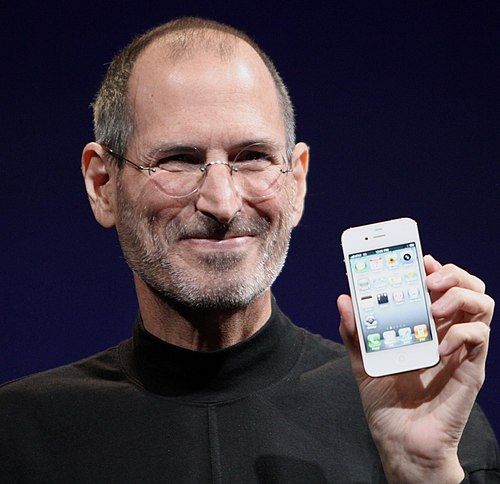
Steve Jobs (February 24, 1955 – October 5, 2011) was an American entrepreneur, inventor, and investor, co-founder and former CEO of Apple Inc., widely recognized as a pioneer of the personal computer revolution.
Jobs was born in San Francisco and adopted by Paul and Clara Jobs. He attended Reed College for one semester before dropping out, and in 1974 he traveled to India seeking spiritual enlightenment. In 1976, he co-founded Apple Computer in his family garage with Steve Wozniak, and the following year they launched the Apple II, which was a huge success. In 1984, he led the development of the Macintosh, the first mass-market computer with a graphical user interface. In 1985, after a power struggle with the board and CEO John Sculley, Jobs was forced out of Apple and subsequently founded NeXT Inc., and in 1986 he acquired the computer graphics division of Lucasfilm, which became Pixar Animation Studios.
In 1997, Apple acquired NeXT, bringing Jobs back as interim CEO, later made permanent. He guided Apple to launch revolutionary products such as the iMac, iPod, iPhone, and iPad, reshaping the music, mobile phone, and personal computing industries. Meanwhile, Pixar, under distribution with Disney, produced multiple classic animated films including Toy Story; after Disney acquired Pixar in 2006, Jobs became Disney's largest individual shareholder.
Jobs was diagnosed with a pancreatic neuroendocrine tumor in 2003. Initially he refused surgery and tried alternative therapies, but underwent surgery in 2004. He stepped down as CEO in August 2011 and passed away on October 5, 2011, due to respiratory arrest related to the tumor, at the age of 56. He held over 450 patents during his lifetime and was posthumously awarded the Presidential Medal of Freedom.
The Bing Fire Day Master is born in the Yin month, receiving the support of growth, but the overall chart has an excess of Earth energy, with four instances of the Eating God (Shi Shen) Wu Earth emerging on the heavenly stems, forming a pattern of 'Excessive Eating God Draining the Body Too Much', and the Day Master is clearly weak. Although the Wood Qi of the Yin month could serve as the Resource Star (Yin Star) to generate the Day Master, in the natal chart, the Resource Star is the Yi Wood floating weakly on the Year Stem, sitting on Wei Earth which drains it, so its nurturing force is insufficient. In contrast, the Eating God Wu Earth appears twice on the heavenly stems, and the clash between Chen and Xu in the earthly branches intensifies the Earth momentum. It is as if a genius's mind is infinitely magnified but lacks stable spiritual support. This creates a personality of extreme focus, with energy easily consumed by his own thoughts—he possesses an endless stream of creativity and passion to change the world, but often exhausts himself physically and mentally due to excessive pursuit of perfection. From an energy perspective, he is like a flame divided by countless outlets; although brilliant, it is hard to sustain. The core challenge of his life lies in how to concentrate energy and find a lasting 'fuel' to keep burning.
The month branch Yin contains Jia Wood, but instead of Jia, Wu Earth emerges on the heavenly stem, so the structure is defined as the 'Eating God (Shi Shen) Pattern'. However, because the Eating God is overly strong and uncontrolled, it approaches 'Excessive Eating transforming into Hurting'. The primary Useful God is Wood (Yin Star) to control the Eating God and generate the Day Master. Next in preference is Fire (Companions) to assist the body and resist draining. Aversion falls to Earth (Eating God and Hurting Officer), Metal (Wealth Star), and Water (Officer and Qi Sha (Indirect Officer)). This means the most beneficial resources for him are studies, teachers, spiritual mentors, or introspective learning (Yin), and like-minded partners and personal conviction (Companions). Over-consuming inspiration, pursuing material rewards, or submitting to external norms would all lead him into difficulty. In his life trajectory, this orientation of the Useful God confirmed: in his early years, he was absorbed in Eastern philosophy and Zen meditation, seeking spiritual mentors (such as Kobun Chino Otogawa), which is a manifestation of the Resource Star. Technical partners like Steve Wozniak (Companions) helped share the concrete work. When he attempted to pursue short-term business interests (Metal) or was fettered by corporate bureaucracy (Officer), poor decisions or creative blockages occurred. His eventual return to Apple and attainment of peak performance coincided with Da Yun (Major Life Cycles) entering Wood and Fire territories, where the Useful God became strong.
The most prominent Shi Shen (Ten Archetypes) combination in the chart is 'Eating God Accompanying Resource' but the Resource Star is extremely weak, and 'Eating God Controlling Killing' but the Qi Sha (Indirect Officer) is faint. Eating God represents thought, talent, and expression; Resource Star represents learning, shelter, and inner belief. With double Wu Earth appearing on the heavenly stems, it means his mind has an inexhaustible stream of innovative ideas, but the weak Resource makes it difficult for him to systematically consolidate these ideas. Hence, his creativity often manifests as intuitive flashes rather than step-by-step academic accumulation. This shaped his core character of pursuing simplicity yet being extremely demanding: he yearns to present his thoughts through products (Eating God), yet instinctively rejects traditional educational frameworks (weak Resource), so he turns to a Zen-like 'direct pointing at the mind'. In decision-making, he deeply trusts his intuition (the freedom of Eating God) and cannot tolerate doubt from others, stemming from 'Eating God without control leads to arrogance'—a person of great talent often sees external rules as constraints. Interpersonally, he intensely 'focuses' on goals and is indifferent to people and matters that don't interest him, which is the manifestation of heavy Eating God and weak Resource unable to nourish emotional intelligence.
The Day Pillar contains the Yue De Gui Ren (Moon Virtue Noble Star), which resolves many calamities; the Chen-Xu clash and repeated appearances of Hua Gai (Canopy) indicate solitary dedication and innovation. The Yue De Gui Ren is an auspicious star that resolves crises, evident in his several near-death rebounds: after being ousted from the company he founded, he could rise again, and despite severe illness, he repeatedly defied death omens—all showing the protection of this star. The Hua Gai star appears in both the Year and Day Pillars, granting him extraordinary concentration and artistic temperament, but also brings spiritual loneliness, which aligns with his maverick nature and self-absorption. The clash between Chen and Xu is the most intense conflict in the chart, representing drastic changes and self-subversion, symbolizing his repeated acts of breaking industry norms. This clash also opens a little Gui Water (Zheng Guan (Direct Officer)) stored in Chen's vault, indicating that although he despises authority, he can redefine 'authority' as a disruptor. The Gua Su (Loneliness Star) adjacent to the Day Pillar confirms his detachment in intimate relationships; despite having a family, there is always an unreachable island in his heart.
The Bing Fire Day Master, like the sun's fire, shines on all things, yet sits atop Chen Earth, like a blazing sun obscured by thick clouds, creating the image of 'Bing Fire meeting Chen, radiance hard to manifest.' By nature, he is open and upright, embracing grand visions (Bing Fire), but the heavy Eating God (Earth) makes him internalize all his heat into a thirst for 'intellectual output.' Outwardly cold and even detached, inwardly he burns with passion. This shaped an extreme perfectionist: in thinking, he is absolutely intuitive, trusting snap judgments over logical analysis (driven by Eating God and Hurting Officer); emotionally, he longs for understanding and resonance but is reticent or unable to express it, so he projects all his fervor into creation, attempting to 'communicate' with people through products. Under pressure, he becomes more stubborn and picky (heavy Earth smothering Fire), protecting his ideas with excessively demanding standards; in his comfort zone (such as the design studio or meditation cushion), he shows a childlike focus and purity, as if only the inspiration of the moment exists. This is a classic 'inner burning self' personality.
The Eating God Wu Earth in his chart is his most prominent talent—immense creativity, extraordinary imagination, and the ability to transform abstract concepts into exquisitely simple concrete forms. Eating God represents the ability to 'create,' manifested in the tech field as an almost superhuman insight into user experience; he seemed inherently to know how to eliminate the superfluous and strike to the core. This energy also gave him powerful persuasiveness and a 'reality distortion field,' because Eating God is good at touching others through emotion and imagery. In the fiercely competitive tech industry, his advantage lay not in technical details (though he understood them), but in defining the playing field and aesthetic standards, which is a superior manifestation of Eating God as the body and Resource Star as the application. His greatest potential was unleashed when he combined Eastern Zen with Western technology, creating products with religious-like appeal; behind this was the cross-boundary integration brought by the Chen-Xu clash and the artistic spirituality bestowed by Hua Gai.
The core conflict lies in 'Excessive Eating causing Body Weakness,' leading to mental overdraft, and 'Weak Resource Star' causing insufficient inner nourishment. In life, this manifested as an extreme workaholic tendency (driven by Eating God to pursue perfection) repeatedly tugging with intermittent existential crises (weak Resource unable to provide sustained spiritual nourishment). His sharpness and coldness in interpersonal relationships stem from the straightforwardness of heavy Eating God overriding Officer and Killing energies, but lacking the lubricating inclusiveness of Resource, thus offending people without realizing it. Health-wise, the weak Bing Fire with heavy Earth indicates vulnerability to digestive and immune system issues; ultimately, he died of pancreatic cancer (which in Chinese medicine belongs to Earth-spleen diseases, where weak Fire fails to warm Earth). A deeper blind spot was that he consistently used creation to combat inner loneliness, and when creation was blocked or his body declined, his spirit lost its anchor. This pattern of 'only by burning life can one survive' was both the root of his greatness and the seed of his tragedy.
He is a Prometheus-like fate archetype—with a weak Fire body, carrying excessive talent; by the faint light of the Resource Star (spiritual belief), he burned a flame that illuminated an era. His life theme was 'reshaping reality with thought,' at the cost of persistent loneliness and an early death. From an abandoned childhood (weak Resource Star and tenuous maternal bond), to disrupting multiple industries, to exiting at his peak, every step confirmed the explosive power of the Eating God and the dragging feeling of the Resource Star in his chart. What he left unfinished was the task of truly integrating his internal conflicts, while his legacy is precisely that countless people see the possibility of transcending the mundane. This is a destiny fable of Bing Fire obscured by Earth yet shining all the more brilliantly.
Jie Cai (Rival Wealth) emerges in the Stems, Shang Guan (Innovation Star) generates wealth, Yin Star (Resource Star) is restrained. The main theme of this decade is early enlightenment and budding personality. The native is in an exploratory phase, with family environment changes (the fact of adoption gradually clarifies), and an awakening of inner independence. Ding Fire as Jie Cai strengthens his self, but the Earthly Branch Chou Earth as Shang Guan drains his talent, manifesting as cleverness and rebelliousness, dislike of constraints, laying the foundation for future innovative spirit.
Jie Cai vies for wealth, Shang Guan generates wealth but the Wealth Star is not prominent. During his teenage years, there was no formal career, but technical interests and hands-on ability had already surfaced. The family's financial situation was average; he earned pocket money through odd jobs. Cooperating with classmates (Jie Cai) in small ventures (such as selling second-hand parts), he showed early business acumen. Jie Cai also brought competition, so one must be cautious about resource struggles with siblings or classmates.
Jie Cai is unfavorable, Yin Star is clashed. Family relations are tense. His adoptive parents supported him, but he harbored feelings of abandonment. The relationship with his adoptive father was delicate (Yin Star restrained), and he valued privacy. He had many friends, but mostly playmates, with few close friends. In terms of reputation, he was known among classmates for being clever and eccentric.
Earth flourishes and drains Fire, Wood is weak and insufficient to generate Fire. His constitution is relatively weak, prone to respiratory illnesses (Bing Fire drained by Earth). Emotions are irritable, and he should watch for gastrointestinal issues (Chou Earth as Shang Guan, burden on spleen and stomach).
Bi Jian (Peer) helps the self, Zheng Guan (Zheng Guan (Direct Officer)) combines with the self, Water and Fire are in balance. This decade is a period of entrepreneurship and rapid growth. Bing Fire as Bi Jian strengthens his own strength, and Zi Water as Zheng Guan brings goals and order. Jobs cooperated with Wozniak (Bi Jian) to found Apple. Zheng Guan symbolizes industry standards and leadership. Launching Apple I in 1976 and the hugely successful Apple II in 1977 represents Bing Fire strengthening the self to overcome the Officer, transforming innovation into market success.
Zi Water as Zheng Guan generates Mao Wood, Yi Wood as Zheng Yin (Direct Resource) is effective. In his career, Jobs rose as a technology innovator. Zheng Guan represents standards and business cooperation; he attracted investment (e.g., Markkula) to turn his personal technical ideals into corporate products. In terms of wealth, Apple II brought huge income, and the company went public in 1978, making him a millionaire. Bi Jian also brought arrogance, leading to conflicts with colleagues, sowing the seeds for his later ouster.
Zheng Guan combines with the self, Bi Jian competes. His relationship with Wozniak was close but each had their own strengths (Bi Jian and Guan). He had a daughter with his girlfriend Brennan, but initially denied paternity (Zheng Guan controlling the self creates conflict). In terms of reputation, he became a rising star in technology, with media attention. Family-wise, relations with his adoptive parents were harmonious, but his biological father never acknowledged him.
Water and Fire are in balance, but there is the Zi-Mao Penalty. His physical condition was good, and he was energetic. However, the Zi-Mao Penalty affects the liver (Wood), so he needed to watch for neural headaches caused by overwork. Emotionally, Bi Jian brought stubbornness and irritability.
Zheng Yin resolves Qi Sha (Indirect Officer), Qi Sha and Yin generate each other, Hai Water clashes with Si. This decade is a transition period of both peaks and troughs. Yi Wood Zheng Yin resolves the pressure from Qi Sha, but Hai Water Qi Sha secretly clashes with the Wei storage in the year branch, triggering internal power struggles. The 1984 Macintosh launch (creativity and paranoia) was followed by his ousting from Apple in 1985 (Qi Sha attacking the self, Yin Star weak). This Luck first rose then fell, marking his transformation from founder to wanderer.
Zheng Yin generates the self, but Qi Sha destroys wealth. In his career, Jobs led the Mac project; Yi Wood Yin Star represents the creative team, but Hai Water Qi Sha brought internal power struggles (conflict with Sculley). The Lisa failure in 1983, and his expulsion by the board in 1985. In terms of wealth, his stock options were diluted, but he still profited from selling shares. He founded NeXT (Yi Wood regenerates) and acquired Pixar (Yin Star shifted to new industry), paving the way for his second rise.
Yin Star is favorable, Qi Sha attacks the self. His relationship with Sculley went from honeymoon to rupture (Qi Sha representing opponents). His relationship with his daughter Lisa improved (Zheng Yin representing responsibility). Reputation-wise, he was portrayed as a dictator in the media, damaging his image. Maritally, he married and divorced his first wife in 1985. Family-wise, his adoptive mother passed away (Wei Earth being clashed).
Hai Water clashes with Si, Fire is weak. His health began to decline; he was easily fatigued and had slight digestive issues. Qi Sha attacks the self, causing high emotional stress and anxiety. Attention was needed for heart (Bing Fire) and kidney (Hai Water) balance.
Pian Yin (Indirect Resource) generates the self, Shi Shen (Talent) controls Qi Sha, Earthly Branches clash and penalize. This decade is a period of recovery and resurgence after the trough. Jia Wood Pian Yin brought learning and innovation, while Xu Earth Shi Shen drained the talent and controlled Qi Sha. Jobs accumulated technology at NeXT and Pixar (Pian Yin). In 1996, Apple acquired NeXT (Shi Shen generating wealth), bringing him back to Apple. The 1997 iMac launch reversed the decline, transforming his image from exile to savior.
Pian Yin exerts strength, Shi Shen generates wealth. In career, NeXT was a commercial failure but technologically advanced (Pian Yin). Pixar went public following Toy Story (Shi Shen bringing fame). After returning to Apple in 1997, he cut excess product lines and launched the iMac (Shi Shen new ideas), turning the company from loss to profit. In wealth, Pixar's stock soared, making him a billionaire. Apple options also brought huge gains. This Luck marks his turnaround from loss to profit.
Pian Yin leads to aloofness, Shi Shen combines with Guan. His relationships with colleagues improved, but he remained domineering. In 1991, he married Laurene (Jia Wood combines with Ji, Guan star stabilizes). Reputation-wise, he shifted from being seen as a failure to a disruptor, with media beginning to praise him. Family harmony, with children born. Relations with his adoptive father were repaired (Jia Wood Yin Star).
Xu Earth penalizes and opens the Fire storehouse, Wood and Earth clash. There were hidden health risks. Jia Wood overcomes Xu Earth, causing decline in stomach and spleen function. In 1996, a pancreatic neuroendocrine tumor was discovered (Fire storehouse penalized). Emotionally, Pian Yin brought a tendency towards depression, but Shi Shen's optimism counteracted it. He needed to maintain regular eating habits.
Zheng Guan combines with the self, Zheng Cai (Direct Wealth) breaks Yin, Wealth and Guan generate each other. This decade is the peak period of achievement. Gui Water Zheng Guan brought global influence, and You Metal Zheng Cai strengthened execution. Jobs launched the iPod (2001) and iPhone (2007), building the Apple empire. Zheng Guan represents industry leadership, and Zheng Cai brought enormous wealth. However, You Metal clashes with Mao Wood Yin Star, so his health began to decline; he had surgery in 2004 and a liver transplant in 2009.
Zheng Cai breaks Yin, Guan Star protects. In career, Apple integrated the music industry through iTunes (Guan Star), and the iPhone (Wealth and Guan) disrupted the mobile industry. In wealth, Apple's market value soared, making him one of the world's top billionaires. But Zheng Cai broke Yin, so he delegated power to Cook (Guan Star), focusing on products. This Luck brought peak wealth but consumed his health.
Guan Star combines with the self, Wealth Star harms Yin. His relationship with family grew closer, but he had a workaholic tendency (Zheng Guan controls). Reputation-wise, Time magazine named him one of the most influential people. His relationship with Disney (Pixar) was good (Wealth and Guan). Family harmony, but health issues worried his loved ones.
You Metal clashes with Mao Wood, Metal and Wood are at war. His health seriously deteriorated. You Metal overcomes Mao Wood Yin Star (liver); he was diagnosed with pancreatic cancer in 2003, had surgery in 2004, and a liver transplant in 2009. Emotionally, Zheng Guan brought self-discipline, but illness caused anxiety. He needed rest and attention to his immune system.
Qi Sha attacks the self, Pian Cai (Indirect Wealth) breaks Yin, strong Metal overcomes Wood. This decade only lasted until Jobs' death in 2011. Ren Water Qi Sha brought immense pressure, and Shen Metal Pian Cai worsened wealth breaking Yin. He resigned as CEO in August 2011 (Qi Sha forcing him), and passed away in October. This Luck is predominantly inauspicious. Although the iPad launched in 2010 (still at the end of the Gui You Luck), as soon as the Ren Shen Luck began, his health collapsed rapidly, and wealth and officer turned into death warrants.
Qi Sha overcomes the self, Pian Cai abandons the self. In his career, he still guided product concepts (such as iCloud), but his body could not sustain it. Wealth had become meaningless; legacy distribution (Pian Cai) became the focus. He concentrated on his final moments, his life's splendor drawing to a close.
Qi Sha attacks the self, Yin Star is exhausted. He was deeply attached to his family, but death separated them. After making his illness public, the world mourned. His biography was published, as he wanted to leave his final story. His family was complete, but death took everything.
Sha flourishes and overcomes the self, Metal and Water overflow. His health deteriorated extremely; cancer cells spread. He passed away on October 5, 2011. Emotionally, he was calm and accepted reality.
Zi Wei (Miao) Hua Ke and Po Jun (Wang) sit in the Wealth Palace, with Di Kong co-present, and this is also the Body Palace. Zi Wei and Po Jun are a "pioneering great wealth" combination. Zi Wei is in the Heavenly Trap and Earthly Net (Chou Palace) but is at its strongest, and Po Jun in a prosperous location is bold in destruction and creation. Di Kong makes wealth flow without accumulation, but with Hua Ke enhancing it, wealth brings fame. This is the strongest palace in Jobs' chart: through Po Jun's disruptive innovations (Mac, iPhone) and Zi Wei's leadership charisma, he turned technological creations into billions; Di Kong explains his poverty at one point due to stock dilution (ousted in 1985), but ultimately Hua Ke brought both fame and substance.
Zi Wei Hua Ke enters the Wealth Palace. Po Jun's nature is to consume, but Zi Wei restrains it. Hua Ke makes wealth not just money, but a symbol of status and influence. After Jobs returned to Apple, he took no high salary, only a symbolic $1 annual salary, but through stock options he became a billionaire—a classic case of Po Jun's "first consume, then gain" and Zi Wei Hua Ke's "symbolic compensation." Di Kong made him always reinvest at the peak of wealth accumulation (such as putting all funds into new projects), without hoarding cash.
The Wealth Palace being the Body Palace means the life focus is on wealth creation. Zi Wei and Po Jun are revolutionary product creators, and Di Kong is the attitude of "not holding onto old money." Jobs founded Apple in a garage (Po Jun initial creation), and after going public, his wealth skyrocketed (Zi Wei Hua Ke). But in 1985 he was ousted by the board, and as the stock price fell he sold his shares, drastically reducing his net worth (Di Kong). He returned in 1997, using NeXT technology (Po Jun restructuring) to save Apple, and after the iPhone launch in 2007, he reached the peak of personal wealth—the entire journey validates Po Jun's ups and downs and Zi Wei's return as the king.
Wen Qu (stable) and Tuo Luo (declining) guard the Children Palace, with no main star. Wen Qu is a talent star, in stable status signifying intelligent children but with academic fluctuations; Tuo Luo is a chronic malefic star, suggesting delays or entanglements in parent-child relationships. Steve Jobs' long entanglement with his illegitimate daughter Lisa (refusal to acknowledge, delaying child support) precisely reflects the 'talent bond' of Wen Qu and Tuo Luo—Lisa later became a writer, fulfilling Wen Qu.
No Four Transformations in the Children Palace. However, the adjacent Health Palace has Tian Ji with Hua Lu, indicating the father's (Jobs) intelligence and illness (cancer) will affect the children. Tian Ji Hua Lu allowed Lisa to inherit her father's sharp mind, but his early death (Hua Ji in the Siblings Palace triggering health issues?) caused a lack of companionship during her growth. The absence of Four Transformations entering the Children Palace explains Jobs' 'laissez-faire' attitude toward child matters: not a lack of care, but a lack of proactive engagement.
The Children Palace has plain stars but with a malefic presence, corresponding to Jobs' three children: the eldest (legally recognized) Reed Jobs, born to his wife, with a good relationship; but the illegitimate daughter Lisa was born out of wedlock, and Jobs refused paternity testing for years until court-ordered. Tuo Luo's 'chronic torment' manifested in the child support lawsuits. However, later when Lisa published her memoir 'Small Fry,' Jobs expressed pride—Wen Qu's talent ultimately resolved Tuo Luo's worldly ties.
Tian Ji (Miao) Hua Lu guards the Health Palace, with Wen Chang (De) and Tian Kui co-present. Tian Ji Hua Lu governs active wisdom and a lively nervous system. Wen Chang in its landed position increases mental efficiency, and Tian Kui is a star of helpful people. This combination indicates extraordinary intelligence, but Tian Ji also represents nervous tension and susceptibility to insomnia, and Hua Lu hints that health issues are related to "mental overuse." Jobs was brilliant from a young age, often forgetting to eat or sleep when designing products. In middle age he developed pancreatic cancer. Tian Ji, in the Five Elements, corresponds to Wood and governs the liver, gallbladder, and pancreas. Hua Lu, paradoxically, suggests an overabundance of energy in that area leading to imbalance. The "slowness" of Wen Chang and the "savior" aspect of Tian Kui manifested in his insistence on surgery and alternative therapies after falling ill, prolonging his survival.
Tian Ji Hua Lu directly enters the Health Palace, assisted by Wen Chang and Tian Kui. Hua Lu enhances wisdom and communication, but in terms of health, "overuse leads to harm." Jobs' pancreatic cancer was a neuroendocrine tumor (Tian Ji relates to nerves). He initially refused surgery and opted for a vegan diet therapy (the stubbornness of Wen Chang and the self-rescue of Tian Kui). Later, though he had surgery, the cancer had metastasized. The "excessive thinking" of Tian Ji Hua Lu has a metaphorical connection to the "abnormal cell proliferation" of cancer.
The Health Palace with Tian Ji Hua Lu corresponds to Jobs' precocious intelligence and health tragedy. In his youth he was full of energy, sleeping only 4 hours a day (accelerated by Tian Ji Hua Lu). At 20 he was self-taught in Zen and typeface design (Wen Chang). After returning to Apple in 1997, his work intensity was extreme. In 2003 he was diagnosed with pancreatic cancer, and passed away in 2011—the "versatility" of Tian Ji Hua Lu manifested as a rare form of disease. The Tian Kui nobleman star symbolizes the top medical resources he obtained (such as the top American doctors found by his wife Laurene), but Wen Chang in its landed position also implies that his insistence on alternative therapies delayed the optimal treatment window.
The Migration Palace is empty and borrows stars from the opposite Health Palace—Tian Ji Hua Lu with Wen Chang and Tian Kui shining in. An empty palace must borrow stars. The Migration Palace is essentially the "Destiny Palace of the outside world." With Tian Ji Hua Lu borrowed in, it indicates wisdom generated during long journeys and movements. Steve Jobs had his spiritual journey to India, multiple Zen meditation trips to Japan, and his famous Stanford commencement speech ("Stay hungry, stay foolish" stemmed from the insight of Tian Ji Hua Lu). The borrowing of Wen Chang and Tian Kui meant that his travels were often accompanied by learning or helpful people.
The Migration Palace itself has no Four Transformations, but borrows Tian Ji Hua Lu. Tian Ji Hua Lu entering Migration represents gaining inspiration and opportunities in a foreign land. Jobs went to Reed College in Oregon at 17 (migratory learning), and on a pilgrimage to India at 19 (spiritual migration)—experiences that shaped his Zen aesthetics and minimalist product philosophy. Hua Lu makes journeys to faraway places full of gains.
The Migration Palace, empty and borrowing Tian Ji Hua Lu, shows Jobs' travels were not mere leisure: in 1974 he went to India searching for a spiritual teacher, ultimately bringing back Buddhist "meditation" and the life philosophy of "less is more," directly empowering the design philosophy of the Macintosh. The wisdom nature of Tian Ji Hua Lu led him to contract dysentery in India (the illness aspect of Tian Ji), but through it he gained insight into impermanence. Additionally, he practiced Zen at Suzuki Roshi's temple in Japan, and upon returning practiced "beginner's mind." The Migration Palace was the crucible for his personality transformation.
Tai Yang (Dim) sits in the Servants Palace, with no auxiliary stars. When Tai Yang is dim, its light is obscured in interpersonal relations, making it hard for subordinates or friends to shine. Tai Yang is also a ruler of career, and when dim, mentors are not apparent, and collegial cooperation has barriers. Jobs was often known for being demanding, even ruthless in relationships: he harshly criticized early Apple employees, and with partners like Microsoft and Google, competition outweighed collaboration. The 'insufficient vitality' of Dim Tai Yang was evident when he lacked the board's trust early on and was pushed out of his own company.
The Servants Palace has no Four Transformations. However, the dim Tai Yang itself represents a 'loss of transformative ability' — an inability to gain assistance from subordinates or social circles through Hua Lu, Hua Quan, or Hua Ke. Jobs' second venture, NeXT, had an elite team but failed commercially, reflecting how the dim Tai Yang does not illuminate subordinates. After returning to Apple, he reconstructed his influence through controlling the supply chain and retail outlets (Tian Liang with Hua Quan in the Property Palace).
With Dim Tai Yang and no favorable transformations, Jobs almost never relied on traditional networks: he despised business schools, distrusted market research (the dimming of Tai Yang), and was driven by his own intuition. His friendship with Steve Wozniak (early tech partner) broke due to Apple stock option issues; with John Sculley, they initially got along but ended in a power struggle; in his later years, Tim Cook became complementary, but more as an executor than a friend. The Dim Tai Yang gave him a pronounced 'lone star' trait in relationships, but this also kept him from external distractions and allowed him to remain product-focused.
Wu Qu (Advantageous) and Qi Sha (Flourishing) sit in the Career Palace, accompanied by You Bi and Di Jie. Wu Qu is a finance star, Qi Sha is a warrior star, and the combination of Flourishing/Advantageous forms the 'Wu Sha' pattern, signifying a career built on boldness, innovation, and transformation. You Bi is an assistant star, while Di Jie brings setbacks and illusory gains. Jobs' career matches this: inventing the personal computer (Wu Qu's wealth), disrupting the mobile phone industry (Qi Sha's sword), but Di Jie caused multiple crises — being ousted from Apple, the failure of NeXT, early conflicts with Disney. The Wu Sha combination also implies that his career had a characteristic of 'breaking before building'.
The Career Palace has no Four Transformations, but Zi Wei in the Wealth Palace transforms into Ke (Reputation), remotely illuminating, and Tian Ji in the Health Palace transforms into Lu (Prosperity), converging. Both Hua Ke and Hua Lu indirectly infuse his career with fame and wisdom, but the absence of direct transformations into the Career Palace indicates that Jobs' career peak was not about official positions or titles (his CEO role was once stripped), but rather 'the work itself is the brand' — the iPhone and Mac, transformed by Zi Wei Hua Ke, made him an icon of the era. Wu Qu and Qi Sha themselves are not fond of favorable transformations; too much smoothness would reduce their combative edge. It is precisely this 'absence of transformation' that preserved his primal disruptive power.
With Wu Qu and Qi Sha in the Career Palace, Jobs' career path was full of confrontation: founding Apple in 1976, launching the Apple II (Wu Qu, the finance star); the 1984 Macintosh release (Qi Sha's revolution); but being ousted by the board in 1985 (the calamity of Di Jie). Returning in 1997, turning things around with the iMac (the resurgence of Wu Sha); consecutive disruptions with the iPod in 2001 and iPhone in 2007 (Qi Sha at its prime). Di Jie was ever-present: the dot-com bubble in 2000, the 2008 financial crisis, and his own cancer recurrence, but each time he broke through with 'the next product'. The role of You Bi is seen in his early partnership with Steve Wozniak and his design team with Jony Ive.
Tian Fu (prosperous) sits in the Spouse Palace, with Lu Cun in the same degree. Tian Fu is a storage star, in prosperous status being steady and family-oriented; Lu Cun is a wealth star, bringing material security. But with no auspicious transformation from a main star, and no malefic stars stirring, it hints at a stable but passionless marriage. Steve Jobs' marriage to Laurene Powell was relatively low-key and long-lasting; Laurene is strong-willed and supportive of his career, embodying the 'virtuous partner' image of Tian Fu and Lu Cun.
No Four Transformations in the Spouse Palace, but the empty Travel Palace borrows Tian Ji Hua Lu from the opposite palace, suggesting the spouse may carry a changeable nature. Jobs' wife Laurene was not an industry insider; she ran a natural food business (Tian Ji as movement, Hua Lu as financial independence). They met through a Stanford lecture, with the Travel Palace triggering a 'campus encounter' foreshadowing. Tian Fu and Lu Cun made the marriage a stable rear base for his career, but without passionate romance; Jobs' earlier love life (e.g., Brennan) was a side effect of Lian Zhen and Tan Lang in the Destiny Palace.
The Spouse Palace's Tian Fu and Lu Cun reflect Jobs' marriage: married to Laurene in 1991 until his death; Laurene managed the family foundation and educational projects, allowing Jobs to focus on products. Tian Fu itself belongs to the career lord, indicating the spouse's help in his career (Laurene participated in Apple Store design discussions). But Lu Cun also implies a certain 'realism'; Jobs' coldness to his partner in his youth (refusal to acknowledge Lisa) also reflects the lack of Peach Blossom auspicious transformation in this palace.
Tai Yin (declining) with Hua Ji sits in the Siblings Palace, accompanied by Qing Yang. Tai Yin with Hua Ji, the moon is dusted, hinting at weak sibling bonds and emotional deficits; Qing Yang is a malefic star, bringing conflict and separation. This combination often appears in charts of only children or those with discordant siblings. Jobs had a biological sister, Mona Simpson, but after being adopted in infancy, they were estranged for a long time, only meeting in adulthood; his relationship with his adoptive sister was also tense. Hua Ji's 'sense of lack' runs throughout.
Tai Yin Hua Ji directly falls into the Siblings Palace, with Qing Yang intensifying the conflict. Hua Ji represents an 'irreparable regret,' while Qing Yang is an open severance. Jobs had complex feelings toward his biological parents and sister—both a desire to find his family and anger at being abandoned. This contradiction led to his early neglect of his illegitimate daughter Lisa—the energy of the Siblings Palace can project onto one's own views on children.
Tai Yin Hua Ji in the Siblings Palace corresponds to Jobs' background as an adoptee: his biological parents couldn't raise him at the time, and his adoptive parents gave him a family, but the severance of blood ties was always a hidden pain. Qing Yang is like a knife, cutting off the natural early connection with his biological sister. Later he funded his sister's education, and the relationship warmed, but the shadow of Hua Ji remained—on his deathbed, he told his sister 'I owe you,' which is the redemption of the Siblings Palace's regret.
Lian Zhen (Fallen) and Tan Lang (Fallen) sit in the Destiny Palace, accompanied by Zuo Fu and Tian Ma. Lian Zhen is a secondary Peach Blossom star; when fallen, it governs talents and passions but easily causes twists and turns; Tan Lang is a star of desire, when fallen, desires are hard to satisfy but creativity is strong. Zuo Fu is an assisting star, and Tian Ma governs movements and rush, combining into the pattern of 'Gold Sifting in Turbulent Waves' — the native is born with artistic sensitivity and adventurous spirit, but emotional and desire fluctuations are high, with a lifelong collision between ideals and reality. Steve Jobs' bursts of inspiration, obsessive pursuit of perfection, and the early Silicon Valley wanderer temperament are precisely the reflection of Lian Zhen and Tan Lang in fallen states.
The Destiny Palace has no Four Transformations, but the Wealth Palace's Zi Wei Hua Ke (Transformation of Reputation) and the Health Palace's Tian Ji Hua Lu (Transformation of Wealth) form supporting illumination. This means the native's talent and fame (Hua Ke) does not directly come from the Destiny Palace, but is indirectly manifested through wealth creation and health wisdom (Tian Ji Hua Lu, representing agile thinking and physical action). Steve Jobs did not reveal himself through the qualities of the Destiny Palace directly, but was remembered by the world through products (Wealth) and speeches (Health's eloquence).
The Destiny Palace's Lian Zhen and Tan Lang in fallen state without transforming auspiciously, yet under the urging of Zuo Fu and Tian Ma, forms a life theme of 'venturing out into the world.' Steve Jobs was adopted as a child; his adoptive father was a mechanic, giving him hands-on ability (Zuo Fu); Tian Ma made him restless, dropping out of college after the first year, traveling to India, and starting a business in a garage. The Destiny Palace's 'restless Peach Blossom star' granted him extreme aesthetics and wild ambition, but also brought confusion in interpersonal relationships — the early ruptures at Apple with Steve Wozniak and John Sculley are all manifestations of the negative sides of Lian Zhen and Tan Lang.
Ju Men (Prosperous) sits in the Parents Palace, without accompanying stars. Ju Men is a star of secrecy and dispute; when prosperous, it indicates eloquence and erudition, but also suggests concealment or generation gap in parental relationships. Steve Jobs' adoptive parents were blue-collar workers who loved him deeply (Ju Men's prosperity can transform into teaching), but his biological parents were graduate students (Ju Men's wisdom) who gave him up for adoption due to being unmarried. Ju Men in the Parents Palace also hints at an absent or complicated father figure: the adoptive father was a mechanic (Ju Men belongs to the Earth element, corresponding to honest craftsmanship), and the biological father was of Syrian descent and never met.
The Parents Palace has no Four Transformations. Lack of auspicious transformation means the parents did not directly help or hinder the native's career, but more influenced indirectly through thought. Steve Jobs' adoptive father taught him mechanical and electronic basics (Ju Men's practical knowledge), and his biological parents' academic background (Ju Men's knowledge attribute) passed down wisdom genetically, but without auspicious transformation, there was no direct financial or network support. Ju Men's prosperity also explains Jobs' fondness for debate and straightforward communication style, originating from the Parents Palace's communication genetics.
The Parents Palace's Ju Men in prosperous state corresponds to Steve Jobs' mystery of origin: adoptive parents Paul and Clara, though not biological, fully supported him (the enduring love of Ju Men's prosperity); biological parents Abdulfattah Jandali and Joanne Schieble, one a Syrian political science PhD, the other a speech therapist, reflecting Ju Men's highly intellectual nature. Jobs was always troubled by being abandoned, and Ju Men as a shadow star shadowed parent-child relationships — he refused to meet his biological father until 2005 when he eased the knot through his sister. Ju Men's prosperity also caused his later emotional contradictions with his biological daughter Lisa in a similar way.
Tian Tong (Prosperous), Tian Liang (Diminishing) with Hua Quan jointly sit in the Property Palace, accompanied by Tian Yue and Ling Xing (Diminishing). Tian Tong is a blessing star, when prosperous it represents contentment; Tian Liang is a protector star, when diminishing its sheltering ability is insufficient, while Hua Quan intensifies personal control. Tian Yue is a mentor star, and Ling Xing is a fire star. This combination reveals polarities in Jobs' family and property matters: he owned multiple luxury homes (the blessing of Tian Tong), yet had an obsession with estate planning (Tian Liang with Hua Quan). Ling Xing brought inner-family tensions (such as the equity dispute with the purchased Pixar studio). The mentor star Tian Yue manifested when he bought a historic mansion and meticulously restored it.
Tian Liang Hua Quan enters the Property Palace. Hua Quan represents a strong desire for control over real estate and family relationships. Jobs insisted on keeping Apple's headquarters in Cupertino (maintaining the base), and built a minimalist home in Palo Alto (the design rigor of Tian Liang with Hua Quan). He also invested in a Spanish Revival mansion and spent 10 years renovating it, showing the coexistence of Hua Quan's 'project control' and Tian Tong's 'enjoyment of life'. Ling Xing nearby brought many frictions during the renovation process (conflicts with designers).
With Tian Tong and Tian Liang Hua Quan in the Property Palace, Jobs defined 'home' as a minimalist and perfect creation: his home had very little furniture, was full of Zen, and visitors had to remove shoes. After buying Pixar, he linked real estate equity to the Disney acquisition (the business acumen of Tian Liang with Hua Quan). In his later years, he participated in designing Apple's new headquarters, Apple Park (Hua Quan extended to corporate property), personally overseeing everything from the curved glass to the landscaping, even leaving behind videos explaining the design philosophy. The mentor Tian Yue enabled him to receive advice from the master architect I.M. Pei.
Tian Xiang (Attained) guards the Fortune Palace, with Huo Xing (Beneficial) accompanying. Tian Xiang is a Seal star; when attained, the inner heart is just and principled. Huo Xing is a fierce fire star, bringing irritability and impulsiveness. This combination fills Steve Jobs' spiritual world with contradictions: he pursued the calm of Buddhism and Zen simplicity, but Huo Xing made him prone to anger, irascible, and he yelled at employees (e.g., the Macintosh team). Tian Xiang's 'seal' attribute also gave him an obsession with 'perfectionism,' requiring every detail to match his inner standard.
The Fortune Palace has no Four Transformations. Lack of auspicious transformation makes the spiritual world relatively lonely — Jobs rarely opened up to others, and meditation was his only way of regulation. Huo Xing's 'lack of transformation' means a lack of outlet for conversion, so his emotional fluctuations often erupted in intense ways. But Tian Xiang attained gave him a moral compass: he opposed piracy and valued intellectual property; even though he himself 'borrowed' technology from Xerox PARC in his youth, he later fiercely defended Apple's patents.
Tian Xiang and Huo Xing in the Fortune Palace: Jobs' inner world was between the cracks of meditation and rage. At 19, he went to India seeking enlightenment, and after returning, was a lifelong vegetarian and meditator (Tian Xiang's cultivation aspect), but in the workplace was known for the 'Reality Distortion Field': using anger and passion to drive teams to accomplish superhuman tasks (Huo Xing). His pursuit of minimalist product aesthetics was spiritual order (expression of Tian Xiang), while his unvarnished criticism of employees (Huo Xing) was also a manifestation of this duality. Tian Xiang's attainment allowed him, when looking back on life near the end, to speak with calm and wisdom in the Stanford commencement address: 'Remembering that you are going to die.'
Generate your personal chart in under a minute. Sign up free and get 30 credits — enough for two or more AI readings. No credit card.
Generate my free BaZi chartPlease sign in to join the discussion
Sign In