Year
Ren
Chen
Qi Sha
Shi Shen
Hidden Stems
Wu (Shi)Yi (Zheng)Gui (Zheng)
- Star Luck
- Guan Dai
- Sitting Branch
- Mu
- Void
- Wu-Wei
- Na Yin (Elemental Sound)
- Chang Liu Shui
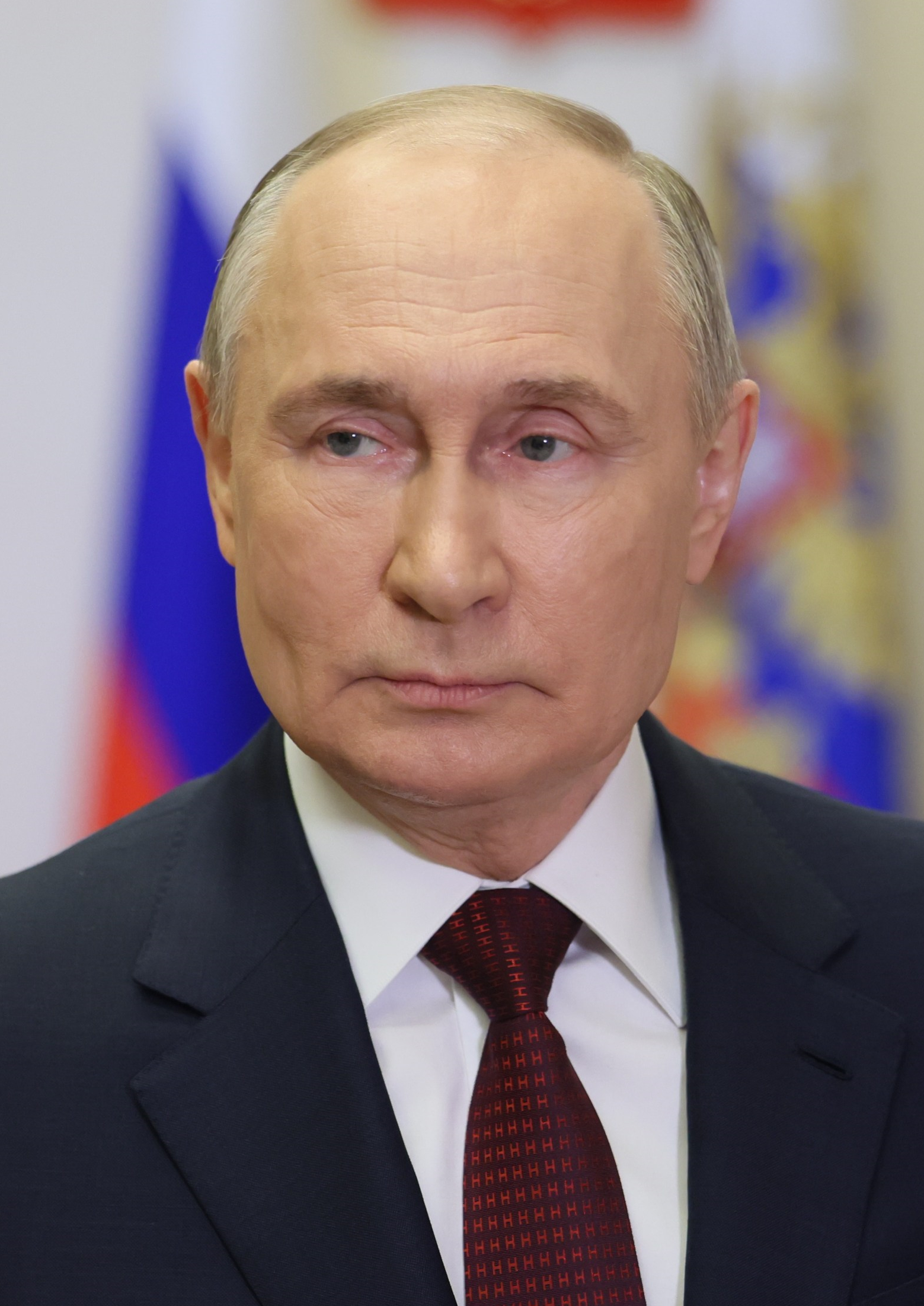
Vladimir Vladimirovich Putin was born on October 7, 1952, in Leningrad, Soviet Union (now Saint Petersburg, Russia). His family background is deeply rooted in the Soviet era; his grandfather served as a private chef for Lenin and Stalin, while his father served in the Soviet Navy's submarine fleet and the NKVD's sabotage battalion. Putin's childhood was overshadowed by the aftermath of World War II, during which his two older brothers passed away. During his youth, he showed a keen interest in combat sports, beginning Sambo and Judo at the age of 12, and he became fluent in German. In 1975, Putin graduated from the Law Department of Leningrad State University and subsequently joined the KGB, embarking on a 16-year career in intelligence.
During his intelligence career, he was stationed in Dresden, East Germany, from 1985 to 1990, working under the cover of a translator and rising to the rank of Lieutenant Colonel. During the 1991 Soviet coup attempt, he resigned from the KGB and returned to Saint Petersburg to enter politics, serving as an advisor to Mayor Anatoly Sobchak and Chairman of the Committee for External Relations. Following Sobchak's failed re-election bid in 1996, Putin moved to Moscow to join the Yeltsin administration, serving successively as Deputy Chief of the Presidential Property Management Directorate, Director of the Federal Security Service (FSB), and Secretary of the Security Council. In 1997, he earned a Candidate of Sciences degree in Economics from the Saint Petersburg Mining University, although his dissertation was later accused of plagiarism by Western scholars.
In August 1999, Putin was appointed Prime Minister and designated as Yeltsin's successor. Following Yeltsin's resignation at the end of that year, Putin became Acting President and was officially elected in 2000. During his early presidency, the Russian economy experienced significant growth driven by rising international oil prices and economic reforms, while the federal government re-established control over the Chechen region. Between 2008 and 2012, due to constitutional term limits, he served as Prime Minister while Dmitry Medvedev held the presidency, though Putin remained the de facto supreme leader. In 2012, Putin returned to the presidency and subsequently extended his potential tenure through constitutional amendments.
Putin's later years in power have been marked by significant international conflict and domestic controversy. The 2014 Crimean crisis, military intervention in Syria, and the full-scale invasion of Ukraine launched in 2022 have led to severe international sanctions. In 2023, the International Criminal Court issued an arrest warrant for him regarding his actions in the war in Ukraine. Domestically, Putin's rule has been described as authoritarian, characterized by the suppression of political opposition, strict media censorship, and questions regarding the fairness of elections. In March 2024, he was re-elected with a high percentage of the vote amidst controversy, beginning his fifth presidential term. His leadership has not only reshaped Russia's internal structure but has also profoundly altered the global geopolitical landscape of the 21st century.
The Bing Fire Day Master was born in the month of You (Rooster), a stage of low vitality. With the Ren Water Qi Sha (Indirect Officer) in the Year Stem exerting pressure and the Ji Earth Shang Guan (Output Star) in the Month Stem draining energy, combined with the Chen-Xu Clash in the branches, the chart is identified as a 'Weak Self' (or 'Pseudo-Follower') structure. However, the Xu Earth in the Day Branch serves as a Fire Storage (Root), creating a complex 'Weak Self with Heavy Pressure' and 'Talent Expression' configuration.
Bing Fire symbolizes the sun. Born in the twilight of late autumn, the solar energy has receded, which signifies a transformation of energy rather than a lack of capability. This configuration of a weak self with a 'Fire Storage' (energy reservoir) suggests the subject is not a 'Midday Sun' born with effortless brilliance, but a setting sun lingering on the edge of cold and darkness. This state shapes a deep, restrained, and highly resilient character. The overall impression is 'burning within coldness'—outwardly as stern and calm as Autumn Metal, while the core is constantly surging with a sense of crisis and survival instinct. His greatest strength lies in the combination of endurance and explosive power—capable of lying low like fire in storage during troughs, and reflecting immense authority through the environment (Metal and Water) when in power.
The pattern is identified as the 'Qi Sha (Indirect Officer) Pattern' combined with 'Output Star Generating Wealth.' According to the Qiong Tong Bao Jian, for Bing Fire born in the month of You, the primary requirement is Ren Water (Indirect Officer) to reflect its brilliance, creating the imagery of 'Sunlight over Rivers and Lakes.' The Key Elements (Yong Shen) are the manifestation of Ren Water's authority and the Jia Wood Resource Star to regulate the Earth.
In metaphysics, the Qi Sha / Pian Guan (Indirect Officer; archetype: The Strategist) represents authority, paramilitary institutions, and extreme pressure. For Bing Fire, Ren Water (representing vast bodies of water) is the ideal partner; the sun only reveals its noble brilliance when shining over a vast expanse of water. This 'Key Element' explains why his life path is closely linked to the KGB, intelligence work, and iron-fisted politics—all environments characterized by the stern nature of the 'Indirect Officer.' Only in the midst of upheaval, crisis, and high-pressure political maneuvering (the Ren Water environment) can his Bing Fire achieve its maximum sense of presence and accomplishment. The Unfavorable Element is excessive Damp Earth (Chen Earth), as too much earth clouds the fire's light and muddies the water's clarity, corresponding to periods in his career where bureaucracy (Earth) attempted to hinder his centralization of power.
The core combination is 'Output Star Combining with Indirect Officer' and 'Hidden Resource Generation.' The Year Pillar (Ren Chen) and Month Pillar (Ji You) form a smooth flow of Earth-Metal-Water, yet there is a hidden risk of 'Ji Earth Muddying Ren Water' (Output Star conflicting with the Officer).
Shang Guan (Output Star) represents strategy, rebellion, and non-traditional methods, while Qi Sha (Indirect Officer) represents power and decisiveness. This combination shapes a classic 'Machiavellian' character: possessing both the means to break the old order (Output Star) and the iron fist to establish a new one (Indirect Officer). In decision-making, this manifests as extreme pragmatism—not bound by moral dogma, but focused solely on results. Ji Earth (Output Star) attempts to restrain Ren Water (Indirect Officer), which in interpersonal patterns shows his skill in using intelligence and tactics (Output Star) to manage originally uncontrollable and dangerous forces (Indirect Officer). However, 'Ji Earth Muddying Ren Water' also implies a 'turbid water' chart; he is destined not to follow a 'pure' path in his career, but must use iron-blooded means to clear the muddy waters and establish his status amidst complex interests and conflicts.
The chart carries a double 'Hua Gai (Star of Arts & Solitude)' (Chen in the Year and Xu in the Day), with the 'Tian Yi Gui Ren (Nobleman Star)' in the Month Pillar. The branches form a dynamic structure of 'Chen-You Metal Combination' and 'Chen-Xu Clash.'
'Hua Gai' is the star of solitude, philosophy, and religious art. Its double presence deeply reveals his inner sense of loneliness and religious sentiment. This Auxiliary Star (Shen Sha) symbolizes 'The Loneliness of the Emperor,' meaning he is often spiritually closed and finds it difficult to truly trust others. The Chen-Xu Clash represents the clash of the 'Net of Heaven and Earth,' as well as the collision between Water and Fire storages. In his life, this corresponds to several violent environmental changes and power reshuffles—his rise often accompanied the collapse of the old system (clashing open the tombs). Meanwhile, the 'Tian Yi Gui Ren (Mentor / Helpful People)' in the Month Pillar indicates that key figures (such as the promotion during the Yeltsin era) always appear as stepping stones during turmoil, helping him rebuild order upon the ruins of the clash.
Bing-Xu Day Pillar, sitting on a Fire Storage, with the NaYin 'Earth on the Roof.' The personality is defined as 'Fire in the Tomb'—a defensive personality of 'Cold Exterior, Warm Interior' combined with the crisis awareness of the Indirect Officer.
Bing Fire is naturally passionate and exuberant, but sitting on Xu (the Tomb of Fire) is like confining a fierce fire within a furnace. This character base depicts a deeply profound psychological portrait: he possesses the idealism of Bing Fire and a desire for attention, but all of this is tightly wrapped in a thick layer of shrewdness (the Storage). Under pressure, he does not vent impulsively like a typical Bing Fire; instead, he retreats into his 'Storage' to perform cold calculations and defense. His emotional needs are secret and intense, released only to a few 'insiders,' while he presents a defensive posture to the outside world—lofty, hard, and unapproachable, like 'Earth on the Roof.'
His talent lies in the tactical flexibility brought by 'Output Star Generating Wealth' (Ji You) and the macro-deterrence of 'Leveraging the Indirect Officer' (Ren Water), particularly excelling at capturing opportunities within the turbulence of the 'Chen-Xu Clash.'
Shang Guan (Talent/Strategy) generating Wealth (Resources/Economy) gives him a strong intuition for political economy, allowing him to quickly gather national resources (Wealth Star) through non-traditional means (Output Star). However, his greatest potential lies in mastering 'Momentum'—Bing Fire born in autumn lacks its own energy and must rely on reflecting off 'Ren Water' (the stage of great power play) to manifest its value. In the game of geopolitics (Ren Water Indirect Officer), he best utilizes his competitive advantage: using external threats and confrontations to inversely consolidate his central position. In other words, 'the deeper the water, the brighter the sun's reflection'—the stronger the opponent, the stronger his command.
The core conflict lies in 'Heavy Earth Clouding the Fire' and the 'Water-Earth Conflict'—meaning the excessive Output Stars (Earth) obscure the Day Master's brilliance and obstruct the flow of the Indirect Officer (Water).
In life's difficulties, this manifests as the 'Quagmire Effect.' Earth represents the deeply rooted bureaucratic systems, oligarchic forces, and heavy historical burdens. While these 'Earth' elements are his own output (Output Stars), they also constantly drain his energy and even attempt to sever his connection with the outside world (Ren Water). A blind spot in his character is that an excessive defensive mindset (Thick Earth) can easily lead to an information cocoon, preventing the light of Bing Fire from penetrating the mist, resulting in decision-making isolation. His lifelong challenge is how to 'dredge the earth and lead the water'—how to continuously clear internal stagnation to maintain the fluidity of power and the purity of deterrence.
Overall, this is a destiny of 'Sunlight over Rivers and Lakes, Clearing the Turbid and Elevating the Pure.' It succeeds through the authority of the Indirect Officer and is constrained by the weight of the Output Stars.
Vladimir Putin's destiny path is a history of a Bing Fire struggling to maintain light and heat in the cold night of late autumn. His achievements do not stem from following the flow, but from powerful control over chaos (Chen-Xu Clash) and effective utilization of crisis (Indirect Officer). He is destined not to be a gentle, conservative ruler, because his chart requires the agitation of 'Ren Water' to prove the existence of 'Bing Fire.' The ultimate direction of his life depends on whether he can continue to carve out water channels through layers of thick earth (complex domestic situations), ensuring the authority of the Indirect Officer is not blocked. This is a lonely 'Hua Gai' path that requires maintaining a combat stance at all times.
This period presents a pattern of Cai (Wealth Star) overcoming Yin (Resource Star) and Shi Shen (Eating God / Talent Star) expressing talent. The emergence of Geng Metal Pian Cai (Indirect Wealth) represents a realistic and volatile material environment in early years. The Xu Earth in the earthly branches serves as a Fire Storage; while it provides weak support, it primarily acts as the Shi Shen (Eating God) draining the Day Master's energy. These ten years were not an easy childhood; the subject was in a stage of tempering their character in a harsh environment. Pian Cai also symbolizes the father or external instability, implying the family had to seek survival amidst turbulence, laying the foundation for a resilient character.
Shi Shang (Output Stars) generating Wealth, yet the weak self cannot sustain it. The Day Master, Bing Fire, is inherently weak, and encountering a Wealth cycle in early years actually increased the burden. This means that while the family struggled to make a living (Wealth Star), resources were scarce, failing to provide superior material enjoyment. This luck often manifests as 'a child from a humble background taking on responsibilities early,' needing to use their own intelligence (Shi Shen) to cope with environmental scarcity rather than enjoying inherited fortune.
Hua Gai (Star of Arts and Solitude) entering the life path, with the Resource Star restricted. Xu Earth is the Hua Gai star, symbolizing solitude and introspection. During these ten years, the subject's personality may have been introverted or solitary, not as social as typical children. The Yin (Resource Star, representing the mother or protection) was suppressed by the Wealth Star, suggesting limited care or protection, or a need to face social challenges independently at an early age. This sense of solitude was the early soil that nurtured their future potential as an operative.
Fire and Earth are parched, while Metal energy restricts Wood. The Xu Earth is dry and hot, and Geng Metal restricts the weak Wood energy (representing the liver, gallbladder, and nervous system) in the original chart. During youth, attention should be paid to the respiratory system and physical trauma. Dry Earth draining Fire also implies high physical exertion and potential deficiencies in nutrient absorption (Wood).
A prelude to Wealth nourishing a weak Qi Sha (Indirect Officer) and the mixing of Officers. Xin Metal Zheng Cai (Direct Wealth) supports the Hai Water Qi Sha (Indirect Officer). Qi Sha represents strict discipline, authority, and compulsion. For a weak Bing Fire, the Qi Sha attacking the self usually means immense pressure, but if one can adapt to this pressure, it transforms into incredible execution. These ten years were a critical period for establishing life ambitions; in this 'suppressed' luck, they found a release—martial arts and the dream of becoming an operative, actively seeking institutionalized restraint.
The Qi Sha (Indirect Officer) is in command, using the Sha to protect the Yin (Resource). Although the Hai Water Qi Sha restricts the self, it also represents an affinity for martial roles, the military, police, or powerful departments. During this time, the subject did not pursue worldly wealth (Zheng Cai was merely auxiliary) but focused entirely on building the 'power' represented by the Qi Sha. By learning Judo (a high-confrontation activity matching Qi Sha traits) and aspiring to join the KGB, they were actually resolving the pressure of the luck cycle by 'submitting to the Qi Sha,' accumulating capital for entry into powerful departments.
Peach Blossom (Charisma / Romance) meeting a combination, while Officers restrict the Peer Stars. Hai Water contains Jia Wood (Pian Yin / Indirect Resource), which is the subject's Gui Ren (Mentor / Helpful People), though it remains hidden. This means that despite the harsh environment, they began to encounter organizations or mentors capable of changing their destiny. Socially, Qi Sha carries an aura of sternness; the subject's social circle consisted mostly of like-minded 'comrades-in-arms' rather than casual acquaintances.
Conflict between Water and Fire, with cold energy pressing the body. Hai Water restricts the Day Master Bing Fire, where strong Water extinguishes Fire. This was a period of physical testing, requiring particular attention to vision, the heart, and the circulatory system. High-intensity physical training (like Judo) was actually a way to 'seek hardship' to balance the excessive Water energy.
Guan Sha Hun Za (Mixing of Direct and Indirect Officers), like Water flooding a golden mountain. Ren Water Qi Sha (Indirect Officer) emerges in the stems, while Zi Water Zheng Guan (Direct Officer) sits in the branches, with a Zi-Chen Partial Water Combination. This is the decade where Water (Officer/Power) is strongest. For the Bing Fire Day Master, it is like the sun being obscured by dark clouds and torrential rain, its light completely withdrawn. This represents not only immense professional pressure but also the subject being completely hidden within the deep sea of the system and organization (KGB), in a stage of lurking, learning, and being forged.
Weak self following the Qi Sha (Indirect Officer), surviving in a desperate land. In an extremely strong Officer/Sha cycle, individual will (Day Master) must completely submit to the collective will (Officer/Sha). During these ten years, the subject officially entered the KGB. Although the position was not high, it perfectly matched the 'endurance' trait of the luck. While 'Guan Sha Hun Za' is usually seen as challenging, for those in special professions like espionage and intelligence, this complex and volatile energy field is actually the optimal professional environment.
Officers restricting the self, leading to weak family ties. Because the Officer/Sha energy was too overwhelming, the subject dedicated the vast majority of their energy to the organization, leaving personal life extremely compressed. Under this luck, interpersonal relationships carried strong utilitarian and task-oriented qualities, making it difficult to establish relaxed emotional connections. It was a lonely cultivation, surrounded by competition and assessment.
Strong Water extinguishing Fire, with excessively cold Kidney Qi. Extreme Water energy severely restricts the Fire nature. Great attention must be paid to heart health and mental pressure. In an extremely cold luck cycle, keeping the inner 'spark' (conviction) alive is the key to mental health; otherwise, one may easily fall into depression or a cold psychological state.
Shang Guan Jian Guan (Hurting Officer meeting Direct Officer), with damp Earth dimming the Fire. Gui Water is the Zheng Guan (Direct Officer), and Chou Earth is the storage of the Shang Guan (Hurting Officer). 'Shang Guan Jian Guan' usually signifies institutional turmoil, reform, or the subversion of positions. These ten years were the most drastic turning point in the subject's life; not only did their personal career face a cliff-like change, but the national environment also underwent earth-shattering shocks (the dissolution of the Soviet Union). Chou Earth dims the Fire, making the Day Master feel obscured and the future uncertain.
The Officer Star enters the tomb, breaking the old to establish the new. In the first five years, Gui Water was in charge, and the subject was still performing missions in East Germany (continuation of the Officer luck). In the latter five years, Chou Earth took effect, with the Hurting Officer restricting the Officer, and the old system (KGB/USSR) collapsed. The Hurting Officer represents rebellion and innovation, forcing the subject to transition from a guardian of the old system to a participant in the new order. Their transformation in Saint Petersburg (from operative to government advisor) is a classic manifestation of the 'Hurting Officer' (strategy/means) restricting the 'Direct Officer' (old bureaucratic system).
Hidden Mentors amidst constant disputes. Although Chou is damp Earth, it can combine into a Metal (Wealth) frame, meaning they began to accumulate new networking resources during the turmoil, especially partners in the economic field (the prototype of oligarchs). Under Hurting Officer luck, there are many verbal disputes and controversies, yet this also led to meeting key political mentors like Sobchak.
Heavy Earth and stagnant Water, leading to disharmony in the Spleen and Stomach. Excessive damp Earth can easily lead to digestive issues and heavy internal dampness. Furthermore, the mental anxiety brought by 'Shang Guan Jian Guan' is immense, requiring vigilance against neurasthenia. This was a painful period of reshaping one's outlook on life, where psychological resilience was severely tested.
Sha Yin Xiang Sheng (Indirect Officer producing Resource), like dry wood meeting spring. This was the most critical 'turnaround luck' of the subject's life. Jia Wood (Pian Yin / Indirect Resource) emerged strongly to support the Bing Fire Day Master. Pian Yin represents political maneuvering, non-traditional support forces, and power obtained through strategy. The 'Qi Sha' (pressure/crisis) that previously ravaged the chart was perfectly resolved by the 'Yin' (Resource/Power), forming the noble pattern of 'Sha Yin Xiang Sheng'—where pressure transforms into motivation and crisis into authority.
Resource Star protecting the self, reaching the pinnacle. In a very short time, the subject rose from Deputy Mayor of Saint Petersburg to President. This is because the Wood (Resource) of the luck cycle bridged the Water (Sha) of the chart and the Fire (Self) of the Day Master. All previous pressures (KGB experience, political struggles) now became credentials. The Resource Star also represents seals and actual power; during these ten years, they not only grasped power but also stabilized their position, completing the transformation from a technical bureaucrat to a supreme leader.
Mentors revealed, winning the hearts of the people. Pian Yin is the star of Gui Ren (Mentor / Helpful People). During these ten years, the subject received promotion from political heavyweights like Yeltsin. Simultaneously, the Resource Star represents reputation; their tough image (Qi Sha), refined by the Resource Star, became a 'savior' image in the eyes of the public, garnering extremely high popular support.
Wood and Fire are bright, but Liver Fire is too strong. Strong Wood energy generating Fire leads to extremely high energy levels, marking a physical peak. However, one must watch for Liver-Yang rising, high blood pressure, and related issues. Excessive Wood energy may also lead to emotional stubbornness and autocracy.
Zheng Yin (Direct Resource) is dominant and deep-rooted. Following the previous Pian Yin cycle, this decade is governed by Zheng Yin. Yi Wood is soft but extremely resilient; Mao Wood is the 'Bathing' stage (Mu Yu) for the Bing Fire Day Master, but also a place of Peach Blossom. These ten years were a period of consolidation and enjoyment of power. Zheng Yin represents legitimacy, orthodoxy, and widespread support. The subject's ruling status transitioned from 'taking orders in a crisis' to 'unshakeable'.
Resource protecting the Officer, steady steering. If the previous cycle was about 'conquering the realm,' this cycle was about 'ruling the realm.' Zheng Yin emphasizes stability; even with the 'tandem leadership' interlude with Medvedev, actual power remained firmly in hand. Regarding wealth, the Resource Star represents absolute control over resources; the state-capitalism model took shape during this period, with national resources being re-concentrated.
Peach Blossom affecting the leader, image management. Mao Wood is a Peach Blossom star and combines with the Xu Earth in the natal chart (Mao-Xu Fire combination). During these ten years, the subject's personal charisma reached its peak, though it was accompanied by changes in family relationships (divorce). The Zheng Yin luck made them focus more on public image branding, such as the 'tough guy' PR promotion, which was highly popular among female voters.
Wind and Wood stirring, leading to ailments of the bones and nerves. High purity of Mao Wood may trigger muscle aches or neuralgia. The Mao-You clash (luck cycle clashing with the month branch) suggests being cautious of limb injuries or traffic accidents, while also implying a constant mental tension that makes it difficult to truly relax.
Bi Jian (Friend / Peer Star) assisting the self, while the Qi Sha (Indirect Officer) repeats. The Bing Fire Bi Jian emerges in the stems, seemingly bringing allies and friends, but the Chen Earth in the branches triggers a Fu Yin (Repeating Pillar) with the 'Ren Chen' year pillar (self-doubt, repetition). Chen is a Water Storage, and its damp Earth dims the Fire. During these ten years, the subject appears strong on the surface (aided by Bi Jian) but is actually mired in a swamp (Chen Earth). Decisions began to fluctuate, and the external environment became highly aggressive as the 'Qi Sha' was triggered.
Multiple Peers competing for Wealth, while Shi Shen (Eating God) controls the Qi Sha. Bi Jian represents allies but also competitors. During this period (Crimea crisis, outbreak of the Russia-Ukraine conflict), the subject attempted to counter external pressure (Qi Sha) through alliances (Bi Jian), but the Chen-Chen self-punishment and damp Earth led to a war of attrition. Career-wise, it was no longer the smooth 'Sha Yin Xiang Sheng' but a fierce confrontation of 'Shi Shen controlling the Sha,' where every victory required a massive cost in resources.
Bi Jie (Peers) snatching Wealth, leading to a solitary leader. Bi Jian luck often implies 'restricting the spouse' or interpersonal alienation. During this period, the divorce was announced, and the inner circle began to solidify and close off. Although there are supporters on the surface (Bi Jian), true confidants decreased, replaced by ties of interest. Isolation in international relations is also a manifestation of the negative traits of 'Bi Jian' (self-centeredness).
Heavy Earth burying Metal, burdening the heart and brain. Excessive Chen Earth dims the Fire and buries the Metal. One must strictly guard against cardiovascular diseases (Fire being dimmed) and respiratory issues (Metal being buried). Excessive dampness also easily triggers the recurrence of old injuries, and physical stamina begins to decline significantly.
Yang Ren (Sheep Blade / Peak Vitality) adding might, while Jie Cai (Competitor / Rob Wealth) meets the Sha. Ding Fire is the Jie Cai (Competitor / Rob Wealth), and Si Fire is the strong root (Lu / Prosperity) of the Bing Fire Day Master, as well as the 'Growth' stage of Metal (Wealth). This luck cycle carries extremely strong energy, with Fire rising to the heavens. 'Jie Cai' represents plunder, risk, and extreme competition. For a weak Bing Fire, entering a Lu (Prosperity) land signifies a 'last burst of strength'—the subject will show unprecedented toughness and stubbornness, attempting to solve all problems through radical means (Jie Cai).
Lu (Prosperity) and Yang Ren (Blade) together, a final stand. Si Fire easily combines with the You Metal and Chou (in certain years) to form a Metal (Wealth) frame, or Si Fire directly clashes with Hai Water. This is a 'high-stakes gamble' luck cycle. In career, balance is no longer sought; instead, absolute victory or defeat is the goal. Jie Cai implies massive expenditure and loss (war consumption) but also represents extremely strong pressure resistance. These ten years will be the most intense and turbulent final chapter of their political career.
Jie Cai (Competitor / Rob Wealth) restricting the spouse, becoming isolated. Excessive Jie Cai is a massive restriction on those close to them (Wealth Star/subordinates). They may face purges or betrayals within the core team (Jie Cai snatching). Interpersonal relationships will become completely militarized and polarized, with no middle ground remaining.
Flaming Fire and parched Earth, prone to sudden acute illness. Excessive Fire energy can easily trigger acute inflammation, bleeding, or cardiovascular ruptures. The Si-You partial Metal combination also warrants attention to lung pathology. Emotionally, they are prone to extreme irritability and anxiety, needing to guard against 'excessive internal heat attacking the heart'.
Day Master's Yang Ren (Blade) being clashed, with Shi Shen (Eating God) draining energy. Wu Fire in the branches is the Yang Ren (extreme energy) of Bing Fire, and Wu Earth in the stems is the Shi Shen (Eating God). This luck cycle sees both Fire and Earth reaching their peak. 'Yang Ren' represents strength but also danger; especially in late years, a Yang Ren cycle often signifies a sudden collapse of health or the situation. While Shi Shen represents late-life blessings, sitting atop a Yang Ren, it manifests more as a struggle for and definition of one's historical legacy (Shi Shen as output).
Returning to the dust, a final verdict. The career has reached its end; the focus is on historical positioning (Shi Shen). The Wu Fire Yang Ren not only supports the Day Master but may also trigger fierce internal conflicts (Zi-Wu clash, if Water is encountered in certain years). These ten years are more about the liquidation and organization of past legacies, with power being handed over in a non-peaceful or sudden manner.
Solitude in the final years, seeking spiritual solace. Yang Ren luck is unfavorable for close relatives; the final years may be quite lonely, or followed only by a few die-hard loyalists. With Shi Shen emerging, they may turn to religion, philosophy, or the writing of memoirs, seeking spiritual liberation.
Parched Fire and Earth, the lamp running out of oil. Wu Fire is extremely strong; from a medical perspective, it easily triggers serious cardiovascular accidents or eye diseases. Fire and Earth are too dry, and the Kidney Water (the source of life) is completely dried up—this is the natural law of vitality coming to an end.
Tai Yin (The Moon) resides here, representing maternal and feminine energy.
Tai Yin governs wealth, tranquility, and concealment. This configuration suggests that descendants are likely to be daughters, characterized by introverted and quiet temperaments. Tai Yin favors those born at night and prefers stillness, implying the subject will go to great lengths to keep their children hidden from the public eye, providing them with high-density protection and material support.
The energy of Tai Yin is influenced by Tian Ji (The Strategist) in the Property Palace.
Tai Yin in the Children Palace typically signifies deep but secretive bonds with the younger generation. In terms of destiny, this manifests as children not becoming part of the subject's political assets, but rather being strictly sequestered as pure family privacy.
This aligns perfectly with the reality of Vladimir Putin's extreme protection of his two daughters' privacy. The 'Concealment' essence of Tai Yin is exercised to its limit, making it difficult for the outside world to glimpse the true lives of his children. It also suggests that among subordinates (the broader meaning of the Children Palace), women or administrative staff often play crucial auxiliary roles.
Tian Fu (The Treasury) sits in position; the Star of Command and Storage.
Tian Fu is the Southern Dipper Sovereign Star, governing storage and stability. This configuration suggests the spouse (or broad partners) possesses the ability to manage affairs independently, with a steady or even conservative personality, capable of handling the 'rear guard' or keeping secrets. The trait of Tian Fu is 'never showing weakness,' but it can also lean towards being plain or distant.
Opposed by Zi Wei (The Emperor) transforming into Hua Quan (Authority).
Radiated by the powerful authority from the Career Palace, Tian Fu in the Spouses Palace, though noble, exists in a suppressed state. In terms of fortune, the spouse must submit to the subject's grand vision, with their personal light overshadowed by the subject's power.
This validates Lyudmila's image during her time as First Lady: dignified and low-profile (the storage characteristic of Tian Fu), dutifully playing the role the state required, but ultimately choosing to withdraw due to the immense pressure of power (the clash from Zi Wei Hua Quan). The 'separation' trait of Tian Fu also foreshadowed emotional distancing.
Tan Lang (The Opportunist) resides here, acting as a hub of desire.
Tan Lang is the primary star of Charisma (Peach Blossom) and also an Indirect Wealth star, governing fortune, misfortune, desire, and social interaction. This configuration indicates that wealth sources are extremely complex, often accompanied by the exchange of power, integration of resources, and operations within gray areas. Tan Lang excels at 'leveraging resources with minimal capital,' meaning the subject possesses a powerful ability to mobilize resources rather than simply accumulating personal savings.
Influenced by the hidden combination with Wu Qu Hua Ji (The Finance Star transformed by Obstacle) in the Parents Palace.
Although Tan Lang is naturally adept at social maneuvering, the hidden connection with Wu Qu Hua Ji suggests pressure from national fiscal deficits (represented by the Parents/Authority Palace). In terms of destiny, this manifests as the necessity to redistribute resources through forceful means (such as cracking down on oligarchs) to satisfy Tan Lang's immense appetite for resource control.
This provides a profound analysis of the 'crackdown on oligarchs' during his early administration. With Tan Lang in the Wealth Palace, he deeply understands the logic that wealth and power are two sides of the same coin. He does not seek the accumulation of personal book wealth, but rather absolute control over the nation's vast resources, such as energy and minerals (the 'Great Desire' of Tan Lang).
Ju Men (The Great Gate) resides here; a 'Dark Star' governing disputes and hidden ailments.
Ju Men belongs to the Water element and governs verbal disputes, internal channels, and obscurity. In the Health Palace, besides representing potential issues in the respiratory or digestive systems, it deeper represents a profound sense of doubt and insecurity within the subject's heart. Ju Men acts as an 'Isolating Barrier,' meaning the subject is accustomed to wrapping their true self in layers, possessing a deep and inscrutable inner world.
Ju Men transforms into 'Darkness' and is influenced by the alignment with Tian Liang Hua Lu (The Guardian transformed by Prosperity) in the Peers Palace.
This combination suggests that physical or mental pressure often stems from external interpersonal disputes. In terms of lifestyle, high-intensity exercise is required as a 'catharsis' to balance the gloomy energy brought by Ju Men.
The presence of this 'Dark Star' in the Health Palace explains why he consistently maintains a cold, inscrutable poker face. His devotion to combative sports like Judo and Ice Hockey is not just for physical fitness, but a survival instinct to combat inner suppression (the darkness of Ju Men) and release his inherent sense of suspicion.
Tian Xiang (The Minister) sits in this palace; the Seal Star governs reputation and image.
Tian Xiang is the star of the Prime Minister, representing assistance, justice, and refined living. In the Travel Palace, it signifies that the subject presents a decent, principled, and mediatory 'public servant' image to the outside world. This complements the gentleness of Tian Tong (The Child) in the Life Palace, creating a perfect 'diplomatic' mask.
Influenced by Zi Wei Hua Quan (The Emperor's Authority) from the Career Palace.
Although Tian Xiang represents peace, it is backed by imperial power. In terms of fortune, this manifests on the international stage: he often uses diplomacy first (Tian Xiang) but yields no ground (the underlying will of Zi Wei).
This accurately corresponds to his image management in international diplomacy: being able to communicate fluently in German and show gentlemanly grace, while instantly switching to a hardline stance. Tian Xiang allows him to use 'form' and 'procedure' to safeguard national dignity and interests.
Tian Liang (The Elder) sits in this palace; the Blessing Star governs elders and regulations.
Tian Liang represents seniors, supervision, and systems. This configuration suggests the subject's social circle or supporters are mostly elders, veterans, or figures at the core of the establishment. Tian Liang possesses the quality of 'turning misfortune into blessing,' meaning there is always a Mentor (Gui Ren) or old guard providing support at critical moments.
The Ren Stem triggers Tian Liang Hua Lu (Prosperity).
This is one of the most critical auspicious transformations in the chart. Tian Liang Hua Lu signifies 'inheriting ancestral legacy' or 'receiving gifts from elders.' In terms of fortune, this directly points to the source of the subject's legitimacy—he was actively chosen and granted power by the old power system (the Yeltsin family and security agency veterans).
This is the decisive code for Putin's rise. He did not seize power through revolution but was supported by the 'Old Emperor' (Yeltsin) as a protector (Tian Liang). Tian Liang Hua Lu ensured his smooth takeover of the massive state apparatus and secured the die-hard support of the 'Siloviki' (KGB/FSB veterans).
Lian Zhen (The Integrity Star) sits in position; the Secondary Charisma Star transforms into 'Confinement'.
Lian Zhen possesses precise, sensitive, and slightly unconventional traits. Located in the Siblings Palace (representing colleagues and competitors), it suggests an environment filled with complex maneuvering and calculation. This configuration indicates that partners or competitors are mostly deep-thinking and strategic, while also implying strict discipline or a 'collective responsibility' style of tight-knit interest binding.
No direct transformations; influenced by Tan Lang (The Opportunist) in the opposite palace.
This structure reinforces the transactional nature of interpersonal relationships. In terms of fortune, it reflects a 'treacherous power environment' among colleagues, requiring constant vigilance and the use of Lian Zhen’s sharpness to distinguish allies from enemies.
This corresponds to his St. Petersburg period and his entry into the Moscow power center, surrounded by powerful colleagues from the intelligence community (the precision and shadow side of Lian Zhen)—the Siloviki group. This also explains why his inner circle is extremely closed and governed by harsh internal discipline.
Tian Tong (The Harmonizer) sits alone; the Star of Blessing resides in the Life Palace.
Tian Tong is known as the 'Star of Blessing,' governing coordination, integration, and enjoyment, usually giving an impression of being gentle, harmless, or even slightly leisurely. This configuration suggests the subject possesses strong camouflage and adaptability. In early career stages, this 'non-threatening' trait (the smoothness of Tian Tong) served as the ultimate protective shield, allowing survival within the complex KGB system without premature purging, demonstrating a survival wisdom of 'appearing unassuming while being strategically astute' or 'flowing with the momentum.'
The Ren Stem triggers Tian Liang (The Guardian) to transform into Hua Lu (Prosperity) in the Friends Palace, indirectly influencing the Life Palace trine.
Although the Life Palace lacks direct transformations, the overall energy is heavily influenced by external factors (Peers and Travel Palaces). This implies the subject's early fortune did not rely on forced breakthroughs, but on being 'the chosen one' and 'inheriting legacy.' The opening of destiny was often passive, waiting for the right moment to be pushed to the forefront.
Putin's early 'gray' characteristics perfectly align with his KGB career. He was not a leader who showed his edge from the start; like Tian Tong, he excelled as a 'cog' within the system. This low-profile nature, even perceived as 'mediocre' by outsiders, was precisely why he was chosen by the Yeltsin family as a successor—appearing safe and controllable.
Wu Qu (The Martial Star) resides here, the resolute star of finance.
Wu Qu belongs to the Metal element, governing fortitude and decisiveness, but also associated with 'severance' (Xing Ke). In the Parents Palace (representing the original family, superiors, and the state apparatus), it implies that the subject's relationship with the previous generation or the state machinery is cold, pragmatic, and lacking in warmth.
The Ren Stem triggers Wu Qu Hua Ji (Transformation to Obstacle/Clouding).
Wu Qu Hua Ji is the most significant pain point of the entire chart. It represents a 'break in the capital chain' or a 'systemic collapse.' In terms of fortune, this symbolizes that the 'state parent' he inherited was a mess of financial bankruptcy and systemic rigidity, or that there was a profound estrangement or regret in his early relationship with his father.
This accurately depicts the Russia Putin inherited: the economic collapse following the disintegration of the Soviet Union (Wu Qu Hua Ji). His entire life has been an attempt to repair this 'Hua Ji' in the Parents Palace—namely, rebuilding the nation's economic sovereignty and military hardness. This 'sense of deprivation' drives all his subsequent logic of hardline power.
Tai Yang (The Sun) resides here, the star of altruism and tireless toil.
Tai Yang governs radiation, visibility, and nobility. In the Happiness Palace (Palace of Spirit), it indicates that the subject's spiritual satisfaction comes from 'being needed' and 'shining upon others.' This configuration suggests that while his methods may be iron-fisted, there is a deep-seated sense of mission and a messiah complex, a willingness to burn himself for the sake of the greater good.
No primary transformations, but influenced by the shadow of Ju Men (The Great Gate).
Although Tai Yang is radiant, it is prone to 'solitary self-admiration' or over-exhaustion. In terms of fortune, this means the subject can never truly stop to enjoy life; his spiritual pillar is the revival of the nation (the brilliance of the Sun). Should this grand narrative be lost, his spiritual world might collapse.
He deeply binds his own fate with that of the nation. The oath 'Give me twenty years, and I will give you a strong Russia' is the quintessential manifestation of Tai Yang in the Happiness Palace. He enjoys the glory of power but also endures the immense spiritual depletion brought by the Sun 'burning itself,' remaining forever in a state of combat readiness.
Zi Wei (The Emperor) and Qi Sha (The Warrior) reside in the same palace; the Imperial Throne transforms into Authority to command.
This is the most formidable combination in the chart, known as 'Transforming the Warrior into Authority.' Zi Wei is the monarch, and Qi Sha is the general; their presence in the same palace signifies 'the Emperor leading the charge.' This configuration represents absolute initiative and a desire for control in one's career, with a tough and unquestionable style. While Tian Tong in the Life Palace is the mask, the Zi-Sha combination in the Career Palace is the soul.
The Ren Stem triggers Zi Wei Hua Quan (Authority).
Zi Wei Hua Quan pushes imperial energy to its peak, representing absolute monopoly of power and executive force. In terms of fortune, this predicts that the subject will continuously centralize power during his reign, transforming a loose federal system into a vertically managed power pyramid.
From the iron-fisted measures in the Chechen War to the clipping of regional governors' wings and constitutional amendments for re-election, all are reflections of 'Zi Wei Hua Quan' in reality. He does not need negotiation; he only needs obedience. This is a classic 'Tsar' pattern: career is battle, and power is life.
Tian Ji (Heavenly Machine) and Po Jun (The Destroyer) reside here; volatile stars enter the vault.
Tian Ji governs change and movement, while Po Jun governs destruction and reconstruction. This stellar configuration in the Property Palace is rare and intense, representing territory, home, or a base of operations that is in a state of constant flux, repair, and expansion. It suggests a process of 'breaking the old to establish the new,' where territorial boundaries remain unstable.
Influenced by the Triple Harmony of Tian Liang Hua Lu (Heavenly Beam transformed to Prosperity), yet the dissipative nature of Po Jun remains difficult to alter.
In terms of fortune, this manifests as drastic shifts in national borders or the living environment. With Po Jun in the Property Palace, it often means achieving 'construction' through 'destruction' or seeking a new foothold amidst turbulence.
This strikingly confirms the geopolitical state of Russia under his rule: from the scorched-earth policy in Chechnya to the annexation of Crimea and the conflict in Ukraine. His 'concept of home and country' (Property Palace) is not a static preservation, but a dynamic Tian Ji-Po Jun style gambit of 'constantly redrawing boundaries for the sake of security.'
Generate your personal chart in under a minute. Sign up free and get 30 credits — enough for two or more AI readings. No credit card.
Generate my free BaZi chartPlease sign in to join the discussion
Sign In