Year
Geng
Wu
Pian Yin
Zheng Cai
Hidden Stems
Ding (Zheng)Ji (Zheng)
- Star Luck
- Tai
- Sitting Branch
- Mu Yu
- Void
- Xu-Hai
- Na Yin (Elemental Sound)
- Lu Pang Tu
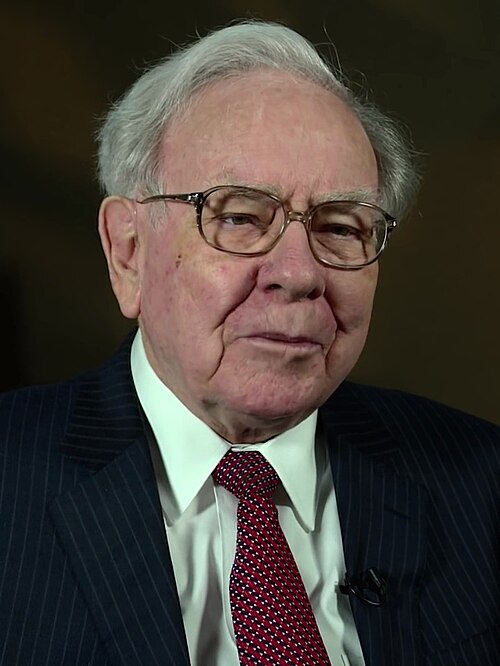
Warren Edward Buffett (born August 30, 1930) is a renowned American investor, philanthropist, chairman and former CEO of Berkshire Hathaway, known as the "Oracle of Omaha." He was born in Omaha, Nebraska, to Howard Buffett, a congressman and businessman. Buffett displayed business acumen from a young age, buying his first stock at 11 and purchasing farmland with his savings at 14. In the 1950s, he studied value investing under Benjamin Graham, founded Buffett Partnership Ltd. in 1956, took control of Berkshire Hathaway in 1965, and transformed it from a textile company into a diversified investment holding group. He became chairman in 1970, and together with Charlie Munger (appointed vice chairman in 1978) built a vast investment empire, with classic holdings in Coca-Cola, GEICO, The Washington Post, and others.
Buffett adheres to value investing and frugal living despite his immense wealth. In 2006, he pledged to give away 85% of his fortune, and in 2010, he co-founded the "Giving Pledge" with Bill Gates and others, encouraging billionaires to donate at least half their wealth. As of early 2026, his net worth was approximately $148.9 billion, ranking ninth globally. In 2025, he named Greg Abel as CEO successor while retaining the chairman role. In his later years, Buffett has been deeply involved in philanthropy, donating over $60 billion cumulatively, primarily to the Gates Foundation and foundations managed by his children.
His investment philosophy emphasizes margin of safety, long-term holding, and resisting market fluctuations, opposing gold and cryptocurrencies, and supporting index funds. Politically, he supported Barack Obama and Hillary Clinton, advocated for progressive taxation and estate taxes, and criticized economic inequality. Buffett lives a simple life, residing in the same Omaha house purchased in 1958, doesn't carry a mobile phone habitually but switched to an iPhone in 2020. He enjoys bridge, ukulele, and Coca-Cola.
The Day Master Ren Water is born in the Shen month, obtaining the life-giving Qi of the monthly branch. It is further supported by the year pillar's Geng Metal Indirect Resource and the hour branch's Shen Metal. The earthly branches form a Shen-Zi half combination of the Water frame, and the Day Branch sits on the Yang Blade. The chart is dominated by Metal and Water, clearly indicating a strong Day Master. A person with this energy configuration is like a great river, full of vigor, highly adaptable, and possessing an inexhaustible inner drive, yet prone to overconfidence and decisive actions. Warren Buffett exudes an overall impression of steadiness with sharpness. His greatest strengths are an extraordinary capacity for learning and absorption, along with sustained focus. Potential challenges include stubbornness and an unwillingness to compromise.
The month stem reveals Jia Wood as the Eating God, and the hour stem reveals Wu Earth as the Indirect Officer (Qi Sha), forming the structure of 'Eating God Controlling the Indirect Officer.' However, with a strong Day Master and weak Officer, the Eating God's control is excessive, thus requiring the Wealth Star (Fire) to support and strengthen the Indirect Officer, balancing the Eating God's power. The primary Useful God is Fire (Wealth Star), using Fire to drain Wood and generate Earth, bringing balance to the chart. The Supportive God is Earth (Officer/Indirect Officer), which can reinforce the authority of the Officer. The Annoying Gods are Metal and Water, which further bolster the Day Master's strength. Throughout his life, Buffett has focused on investment, precisely using Fire (vision, value discovery) to acquire wealth, while his caution and patience (Earth nature) have helped him avoid many risks. This aligns perfectly with the logic of the Useful God.
The Eating God Jia Wood is revealed, forming a potential conflict with the Indirect Resource Geng Metal—known as 'Indirect Resource seizing the Eating God.' However, the earthly branches show a clash of Shen Metal against Yin Wood; in practice, Jia Wood sitting on Shen Metal is in a position of exhaustion, indicating the Eating God is constrained. Fortunately, the Day Master's companion Ren Water is revealed, which can transform Metal to generate Wood, creating a mitigating cycle. This combination has shaped Buffett's character foundation: exceptionally intelligent and analytical (Eating God), yet also conservative, valuing experience and being somewhat stubborn (Indirect Resource). In decision-making, he relies on extensive information analysis (Eating God) while also heavily depending on his intuition and principles (Indirect Resource), culminating in his unique 'value investing' philosophy.
The Day Pillar Ren-Zi carries the Monthly Virtue Star and the Yang Blade. The Hour Pillar carries the Traveling Star (Yi Ma). The Year Pillar carries the Leadership Star (Jiang Xing). The Zi-Wu clash and the Shen-Zi half combination of the Water frame intensify the Water element. The Monthly Virtue Star signifies the ability to turn misfortune into blessing. The Yang Blade confers extraordinary boldness and competitiveness. Yi Ma indicates mobility and change. Jiang Xing reflects commanding talent. In his investment career, Buffett has acted decisively during market panics (Yang Blade’s boldness) and has often reaped enormous returns through long-term holdings (Jiang Xing’s endurance). While his success is sometimes attributed to 'good luck' (Monthly Virtue), it is essentially the synergy between his chart’s energies and timing.
The Day Master Ren Water is Yang Water, inherently fluid and wise. Combined with the Eating God Jia Wood’s meticulous thinking and the Indirect Resource Geng Metal’s deep shrewdness, his nature is complex. In public, Buffett appears cheerful and humorous (outward Ren Water), but in investment decisions, he is extremely calm, even detached (Indirect Resource traits). He needs ample information and a controlled environment (Resource star protection). Under pressure, he may show stubbornness, yet in his comfort zone, he can display astonishing focus and creativity.
Although the Eating God Jia Wood has a weak root, it appears on the month stem, representing outstanding analytical ability and business acumen. The Wealth Star Fire is hidden within the year branch’s Wu Fire, awaiting activation by luck cycles. From a young age, Buffett has been exceptionally sensitive to numbers and commerce (Eating God), a talent that enables him to rapidly assess a company's intrinsic value. Concurrently, the learning and absorbing capacity from the Indirect Resource Geng Metal allows him to continuously compound knowledge, building an unmatched competitive advantage in investing.
The potential conflict of 'Indirect Resource seizing the Eating God' (Geng Metal restricting Jia Wood) causes him to oscillate between innovation and conservatism. Excessive Peer energy (the Ren-Zi Water frame) also leads to strong subjectivity and difficulty in trusting others. Early in his career, Buffett missed the tech stock wave due to being overly conservative, reflecting the Indirect Resource’s suppression of the Eating God. He has also made occasional investment mistakes by over-trusting his own judgment (strong Peer element), but overall, robust risk control (the Indirect Officer Wu Earth) has compensated for these.
Warren Buffett's natal chart functions like a precision value-investing machine: the Day Master is strong enough to bear Wealth and Officer; the Eating God controlling the Indirect Officer provides a unique decision-making framework; the Indirect Resource reinforces long-term conviction; the Wealth Star’s activation has forged a legendary wealth story. His life precisely illustrates the chart’s path, where the Useful God is Fire (value discovery) and Earth is the Supportive God (patience and preservation). Ultimately, he reached his peak in his later years during the Ren Shen Major Life Cycle, becoming an evergreen figure in the investment world.
Shang Guan (Output) expresses talent, Zheng Yin (Direct Resource) protects the self, and Metal generates Water. This decade is a period of learning initiation and character shaping. Shang Guan represents intelligence and expressiveness, while Zheng Yin symbolizes elder protection and knowledge transmission. During this Da Yun, Buffett displayed acumen with numbers and business, and influenced by his father, formed the embryo of value investing. Overall, a stage of knowledge accumulation and interest cultivation.
Shang Guan generates Wealth, Yin Star (Resource) is resonant. The Shang Guan Yi Wood controls the natal chart's Geng Metal Pian Yin (Indirect Resource), stimulating creativity. The Zheng Yin You Metal is unfavorable but receives support from the month branch, representing a good educational environment provided by the family. During this phase, Buffett started small businesses like delivering newspapers and collecting golf balls, early commercial attempts with modest income but honed his business acumen. Resources came from family support and initial networking.
Yin Star (Resource) is in command, social life is simple. Zheng Yin represents care from elders, and family relationships are close. Shang Guan emerges, showing precocious speech and leadership among peers. His reputation first appeared in the local community, favorably regarded for his work-study activities. Family-wise, his father Howard Buffett's political career shaped his sense of responsibility.
Metal is abundant and Water is assisting, Wood and Fire are suppressed. Strong Metal controls Wood, so watch respiratory system and liver Qi stagnation. Excessive Water should guard against cold-dampness affecting joints. Emotionally, heavy Yin Star (Resource) may cause introversion; encourage more expression and outdoor activities.
Pian Cai (Indirect Wealth) emerges in the stem, Qi Sha (Indirect Officer) attacks the self, Fire and Earth aid the useful. Pian Cai Bing Fire is a favorable useful god, bringing investment opportunities and wealth consciousness; Qi Sha Xu Earth is useful, stimulating fighting spirit and risk-taking. This Da Yun was a critical transition from adolescence to youth for Buffett; he accumulated his first pot of gold from newspaper delivery and began stock investments. Overall, a rising period of career budding and rapid growth.
Pian Cai exerts force, Qi Sha controls Jie. The Bing Fire Pian Cai combines and controls the natal chart's Xin Metal Zheng Yin (unfavorable), unleashing wealth potential. Qi Sha Xu Earth controls Jie Cai Zi Water, reducing competitive attrition. During this phase, Buffett founded his first investment partnership (prototype of Buffett Partnership), appreciating assets through buying a farm and pinball machines, with annual income far exceeding peers. Resources came from his own frugality and investment wisdom; networking began under Graham.
Sha (Officer) and Yin (Resource) mutually generate, Gui Ren (Helpful People) provide guidance. Qi Sha Xu Earth generates Zheng Yin, representing guidance from authoritative figures (e.g., Benjamin Graham). Pian Cai Bing Fire and the month stem Jia Mu Shi Shen mutual generate, leading to active social life and cooperation with like-minded individuals. His reputation grew in investment circles; family relations with his father were harmonious, supporting his venture.
Fire and Earth are strong while Metal and Water recede, constitution gradually strengthens. Bing Fire warms the chart, Xu Earth controls Water, making bodily energy ample. Watch for Fire excess and Earth dryness causing gastrointestinal inflammation; under pressure of Qi Sha, guard against overexertion. Maintain regular routine and light diet.
Zheng Cai (Direct Wealth) emerges in the stem, Bi Jian (Companion) sits in the branch, wealth star coexists with competition. Ding Fire Zheng Cai is a favorable useful god, representing stable career income; Hai Water Bi Jian is unfavorable, symbolizing interest entanglements in cooperation and strong rivals. This Da Yun was the crucial decade for Buffett to establish his partnership; he studied under Graham and struck out on his own, achieving average annual returns over 30% by investing in undervalued stocks. Overall, a fluctuating period of career foundation and model exploration.
Zheng Cai combines Sha, Bi Jie snatch wealth. Ding Fire Zheng Cai combines with the year stem Geng Metal Pian Yin, transforming unfavorable into useful, turning knowledge into wealth. Hai Water Bi Jian and the day branch Zi Water meet, intensifying competition. Buffett founded the partnership, initially facing redemption pressure and market fluctuations, but achieved excess returns through concentrated investments (e.g., Sanborn Map, Dempster). Resources came from reputation build-up and partner trust; income structure shifted from commissions to management fees and profit sharing.
Wealth star damages Yin, Officer star is hidden. Ding Fire controls Geng Metal Yin Star, diluting authority constraints and increasing independence. Hai Water Bi Jian represents peer competition; Buffett met Munger and others but also had divergences. Family-wise, he married and had children; wife Susan supported his career. His reputation spread in Omaha circles due to excellent performance.
Fire and Water battle, heart and kidneys lack communication. Ding Fire clashes with Hai Water, watch cardiovascular issues and insomnia. Bi Jian is too strong, emotionally prone to anxiety and competitiveness. Suggest balancing stress through meditation and family time.
Qi Sha (Indirect Officer) emerges in the stem, Jie Cai (Competitor) sits in strong position, pressure and opportunity coexist. Wu Earth Qi Sha is useful, providing career drive and decisiveness; Zi Water Jie Cai is unfavorable, bringing personnel disputes and financial risks. This Da Yun was the crucial period for Buffett to take control of Berkshire Hathaway, marking his entry into industrial investment. Overall, a struggling period of transformation pains and power consolidation.
Qi Sha controls Jie, Wealth and Yin war. Wu Earth Qi Sha controls Zi Water Jie Cai, reducing financial drain. But the natal chart's branches Shen and Zi half-combine into Water, making Jie Cai strong; after Buffett acquired Berkshire Hathaway, the textile business kept losing money, pressuring investment returns. Meanwhile, he achieved some gains through investments in American Express, Disney, etc. In resource utilization, he learned to use insurance float (Wealth and Sha mutual generate), shifting income structure from partnership fees to long-term holdings.
Qi Sha is unchecked, interpersonal tension. Wu Earth Qi Sha directly controls the day master, leading to domineering decisions and friction with partners and management. Jie Cai Zi Water governs covert struggles, such as discord with Berkshire's original management. Family-wise, he neglected his wife due to busy work. His reputation rose amid acquisition controversies, gradually establishing the image of a "troubleshooter."
Water and Earth are mixed, spleen and stomach under pressure. Wu Earth Qi Sha attacks the self, chronic fatigue from overwork. Zi Water Jie Cai aggravates kidney burden. Control work intensity and exercise appropriately. Emotionally, Qi Sha triggers irritability; cultivate patience.
Zheng Guan (Zheng Guan (Direct Officer)) appears doubly, Earth strong aids Sha, Officer star protects self. Ji Earth Zheng Guan is useful, representing norms, laws, and stable status; Chou Earth Zheng Guan reinforces the natal chart's Qi Sha, as career enters institutionalized operation. This Da Yun was the golden period for Buffett's shift from "speculator" to "investor"; he acquired Washington Post, GEICO, etc., and fame soared. Overall, a rising period of steady expansion and brand building.
Guan (Officer) and Yin (Resource) mutually generate, Wealth Vault is clashed. Ji Earth Zheng Guan generates the year stem Geng Metal Pian Yin, transforming management knowledge into wealth. Chou Earth Zheng Guan clashes with the natal chart's Wei Earth Wealth Vault (triggering asset reorganization). Buffett invested in Washington Post (1973), GEICO (1976), etc., leveraging the legal and regulatory advantages brought by Guan Star to achieve long-term value. Income structure became holding company dividends and stock price appreciation; resources came from board seats and networks.
Guan Star merges with self, reputation grows. Ji Earth Zheng Guan merges with the day master Ren Water, making behavior more socially acceptable and gaining mainstream recognition. Chou Earth half-combines with Shen and Zi, expanding social circles, and forming deep friendships with Katharine Graham and others. Family-wise, children gradually grew up, wife Susan engaged in charity. Fame extended from Wall Street nationwide.
Earth strong controls Water, Kidney Water restrained. Ji Chou damp Earth obstructs, watch edema and urinary system issues. Under Officer Star pressure, prone to overthinking; guard against neurasthenia. Suggest drinking more water and moderate exercise like walking.
Pian Yin (Indirect Resource) sits on Shi (Talent), Metal and Wood battle, Yin Star unfavorable and Shi Shen useful coexist. Geng Metal Pian Yin is unfavorable, representing conservatism and old patterns; Yin Wood Shi Shen is useful, symbolizing innovation and renewal. This Da Yun was the pinnacle of Buffett's investment career; he bought Coca-Cola and started global investment layout. Overall, a glorious period of breaking through bottlenecks and sublimating style.
Shi Shen controls Sha, Yin Star obstructs the useful. Yin Wood Shi Shen controls the natal chart's Wu Earth Qi Sha, stimulating investment wisdom and market timing. Geng Metal Pian Yin controls Shi Shen, necessitating breakthroughs beyond personal empiricism. Buffett bought Coca-Cola before the 1987 crash (invested $1 billion, later worth over $10 billion) and invested in Salomon Brothers (later encountering crisis). Income structure was dominated by insurance float and stock dividends; resources came from brand effect and global influence.
Yin and Shen clash, Yi Ma (Mobility Star) is activated. Yin Wood clashes with the month branch Shen Metal, representing environmental changes and long-distance travels. Buffett traveled frequently, engaging in international acquisitions. Shi Shen governs talent; he began writing shareholder letters with humorous style, enhancing his reputation. Family-wise, he separated from wife Susan but remained in contact with children. His fame became synonymous with the "Oracle of Omaha."
Metal and Wood war, liver and gallbladder susceptible. Geng Metal controls Yin Wood, watch for hepatobiliary diseases and migraines. Shi Shen suppressed by Yin, emotionally prone to depression. Suggest harmonizing through relaxing activities like Tai Chi and gardening.
Zheng Yin sits on Shang, Mao Wood Shang Guan and Xin Metal Zheng Yin control each other, clash of thought and reality. Xin Metal Zheng Yin is unfavorable, representing traditional inertia; Mao Wood Shang Guan is useful, symbolizing reform and criticism. This Da Yun Buffett experienced the temptation and steadfastness during the Internet bubble, investing in Disney, General Re, etc., but performance was relatively mediocre. Overall, an adjustment period of consolidation and reflection.
Shang Guan generates Wealth, Yin Star covers the head. Mao Wood Shang Guan generates the year stem Ding Fire Zheng Cai (in the natal chart, month stem Jia Wood generates Ding Fire, Mao is Jia's root), wealth continues to grow. But Xin Metal Zheng Yin suppresses Mao Wood, limiting innovation. During this Da Yun, Buffett invested in Disney (1995) and acquired General Re (1998), but missed the tech wave. Income mainly from insurance revenues and dividends; resources from a solid partner network.
Mao and You clash, family changes. Mao Wood Shang Guan interacts with the original chart's Shi Shen Jia Wood, activating lively thinking; Buffett continued learning in old age and became good friends with Bill Gates. Family-wise, his wife Susan passed away in 1997, and he remarried in 2006. Reputation remained illustrious but criticisms increased.
Wood strong Fire fades, heart blood insufficient. Mao Wood consumes Water, Xin Metal helps Water, heart Fire is controlled. Watch cardiovascular disease and low mood. Shang Guan triggers overthinking, easy insomnia. Suggest maintaining social activities and practicing calligraphy to calm the mind.
Bi Jian (Companion) emerges in stem, Qi Sha sits in base, Water and Earth war, Bi Jie and Guan Sha intermingle. Ren Water Bi Jian is unfavorable, representing competition and attrition; Chen Earth Qi Sha is useful, providing action power and reform. This Da Yun was Buffett's period of dealing with the financial crisis and late-life transition; he invested in BYD, Goldman Sachs, etc., demonstrating bottom-fishing wisdom. Overall, a closing stage of risk management and philanthropic sublimation.
Qi Sha controls Jie, Wealth star gains ground. Chen Earth Qi Sha controls the current Da Yun's stem Ren Water Bi Jian, reducing competition. Within Chen, Wu Earth is Qi Sha, Yi Wood is Shang Guan, Gui Water is Jie Cai, complex energies. Buffett invested in Goldman Sachs ($5 billion preferred shares) and General Electric before the 2008 financial crisis, and bought BYD (2008). Income structure mainly dividends and preferred stock interest; resources from government relations and global credibility.
Chen Earth combines with Shen, team is stable. Chen Earth and the month branch Shen Metal half-combine into Water, strengthening cooperation. Bi Jian Ren Water emerges in stem, close relationships with assistants (e.g., Munger, Abel). Family-wise, remarried life harmonious, engaging in charity with children. Reputation reached its peak, hailed as the "Oracle of Omaha."
Water and Earth mixed, dampness traps spleen earth. Ren Water overflows, Chen Earth waterlogged, watch gastrointestinal damp-stagnation and joint soreness. Bi Jian too strong, emotionally prone to stubbornness. Suggest more sun exposure and warm supplement in diet, like ginger tea.
Jie Cai (Competitor) emerges in stem, Pian Cai sits in base, Fire and Water mutually complement, Wealth star exerts force. Gui Water Jie Cai is unfavorable, representing competition and expenditure; Si Fire Pian Cai is useful, symbolizing wealth appreciation and investment opportunities. This Da Yun is Buffett's sustained active late-life period; he invested in Apple, IBM, and committed to donating 99% of his wealth. Overall, a period of both fame and fortune and succession planning, culminating in fulfillment.
Pian Cai generates Sha, Jie Cai snatches wealth. Si Fire Pian Cai generates the natal chart's Wu Earth Qi Sha, enhancing action. Gui Water Jie Cai controls Fire, guard against partners splitting profits. Buffett heavily invested in Apple (since 2016), largest holding, with handsome returns. Meanwhile, reduced some traditional stocks; income mainly capital gains. Resources from long-accumulated cash flow and brand effect.
Si and Shen combine, wide connections. Si Fire and month branch Shen Metal Six Harmony, beneficial for cooperation and new fields. Jie Cai Gui Water emerges, frequent interaction with allies like Bill Gates. Family-wise, children take over the foundation, orderly succession. Reputation immortal, the legend of "Stock God" has become history.
Fire blazes Water dries, Yin-Yang imbalance. Si Fire Pian Cai consumes Water, watch high blood pressure and dry eyes. Jie Cai Gui Water triggered, prone to mood swings. Suggest light diet and moderate exercise like swimming.
Destiny Palace in Chou lacks a main star; borrowing Tai Yang and Tai Yin from the Travel Palace, Tai Yang receiving Hua Lu (Prosperity), Tai Yin receiving Hua Ke (Recognition), aided by Tian Yue (Celestial Helpfulness), with Tuo Luo (Twists) in temple dragging. Tai Yang Hua Lu symbolizes radiance, reputation, and expansive drive; Tai Yin Hua Ke signifies refined financial touch and scholarly aura; Tian Yue indicates noble assistance, but Tuo Luo suggests repetitive delays and slow accumulation in the early stages. This combination does not signify innate centralized authority, but rather establishes self-worth through outward expansion, reliance on collaboration and learning. Warren Buffett showed sensitivity to numbers and obsession with business logic from a young age, buying his first stock at 11, later studying under Benjamin Graham. This is the embodiment of Tai Yang Hua Lu (seeking external recognition) and Tai Yin Hua Ke (mentorship from authority, delving into knowledge). Tuo Luo explains the twists in his early investment career, e.g., experiencing stock market declines before founding the partnership in 1956, yet ultimately achieving glory through patience and the compounding philosophy.
Tai Yang Hua Lu and Tai Yin Hua Ke in the Travel Palace directly illuminate the Destiny Palace, forming a pattern of double Lu and double Ke intersection. Hua Lu strengthens the native's energy to expand outward and acquire resources; Hua Ke adds a scholarly or actuarial tint to the reputation. Buffett's 'value investing' theory is a product of this quality—elevating investment from speculation to quantifiable science, driven by Tai Yang Lu's dissemination power and Tai Yin Ke's logical force. The Destiny Palace itself has no Four Transformations, but draws power from borrowed stars, implying his life achievements lie not in self-awareness but in leveraging the external environment.
This pattern of 'borrowing stars to settle the Destiny Palace' determined Buffett's life trajectory not as a lone wolf, but by binding to platforms (like Berkshire Hathaway) and absorbing wisdom (Graham, Munger). His early partnership model and later insurance float leverage are manifestations of borrowing and accumulation. The heaviness of Tuo Luo is reflected in his extremely cautious decision-making pace—an acquisition could be observed for decades, a numerological proof of 'slowness is speed'.
Parents' Palace: Lian Zhen in Miao. Lian Zhen is a secondary Peach Blossom star and its Qi transforms into 'Imprisonment'; in Miao position, it indicates parents who are dignified, upright, and of certain social standing. Buffett's father, Howard Buffett, was a stockbroker and U.S. Congressman, which corresponds to Lian Zhen Miao's dual roles of politics and finance. His mother, Leila Stahl, was more strict, and Lian Zhen's 'imprisonment' trait is reflected in her emotional control over him during childhood. Lian Zhen also governs legal disputes; his father was involved in controversies during his congressional career, but the Miao position ultimately rendered them harmless.
Parents' Palace has no Si Hua. Lian Zhen in Miao without auspicious transformation or destructive afflictions indicates that parental influence was profound but not dramatic in his early years—steadily providing values and education. His father encouraged him to read 'The Intelligent Investor', while his mother urged him to be diligent; the 'sense of rules' from Lian Zhen Miao became internalized as Buffett’s commitment to business ethics.
Lian Zhen Miao in Parents' Palace shaped Buffett's upbringing: he learned stockbroking from his father and discipline (such as waking up at 5 a.m.) from his mother. Lian Zhen's Peach Blossom nature made the Buffett family active in Omaha social circles. His father's political career also exposed him to public speaking (the humor at shareholder meetings). His mother's strong personality (Lian Zhen's 'imprisonment') caused some estrangement during adolescence, but they reconciled later in life.
Qi Sha (Indirect Officer) in prosperity, solitary in the Siblings Palace, without supporting or malefic stars. Qi Sha is a star of leadership and solitude; in prosperity, it indicates that among siblings or friends, there will be a strong, competitive role. Without benefic stars to moderate, it hints at a distanced relationship or latent competition. Buffett had one older sister and one younger sister; Qi Sha in prosperity corresponds to his limited interaction with them in early years, and his father Howard Buffett ran a stock brokerage, fostering an environment that emphasized independence and business acumen. Qi Sha also represents early business partners (like associates) who initially required him to make decisions alone, before long-term partners like Charlie Munger appeared.
No Four Transformations activations in the Siblings Palace. Pure Qi Sha in prosperity, without involving transformations like Hua Quan (Authority) or Hua Lu (Prosperity), suggests sibling relationships neither propelled nor hindered his life direction, serving more as background.
With Qi Sha in the Siblings Palace, Buffett was the second child; his father had far greater influence than his siblings. In his youth, he was not close to his older sister Doris, while his younger sister Roberta was closer to their mother. The solitude of Qi Sha in prosperity made him focus more on self-development than family relationships. In his career, early partners like Charles Peterson eventually parted ways, reflecting Qi Sha's 'transient' nature. It was only when teaming up with Munger that Qi Sha was tempered—Munger was more a Benefactor from the Travel Palace than a sibling bond.
Tian Liang (Heavenly Beam) in decline in the Spouse Palace, Wen Qu (Literary Star) in prosperity. Tian Liang is a star of protection; in decline, its sheltering ability weakens. Wen Qu, associated with water, in prosperity represents talent and communication. Tian Liang in decline suggests that the 'elder', 'sheltering' traits in the spouse or marriage are not prominent; the spouse may not have a large age gap, or may have a conservative personality but not a traditional caregiver. Wen Qu in prosperity endows the spouse with artistic temperament and excellent social eloquence. Combined effect: His wife, Susan Thompson, is cheerful, loves singing and charity—a clear manifestation of Wen Qu in prosperity; Tian Liang in decline reflects her gradual detachment from family affairs in the later stages of marriage, pursuing personal value rather than being a traditional helpmate. The essence of the marital relationship is a combination of 'talent attraction' and 'independent personality', not reliance or shelter.
No Four Transformations in this palace, but the opposite Career Palace has Tian Tong transforming to Ji (Jealousy), creating a pull. Tian Tong transforming to Ji indicates emotional distress and career setbacks; projecting onto the Spouse Palace implies that marital rifts arise due to career pressure or emotional issues. In the 1970s, Buffett's career expanded rapidly; the 'mentally taxing' quality of Tian Tong Ji drove him to focus intensely on work, while Susan, lacking companionship, chose separation (1977). Meanwhile, Tai Yang transforming to Lu (Prosperity) in the Travel Palace (opposite the Spouse Palace) reinforced Susan's social activity; her external participation in charity work indirectly intensified physical separation. The tension between transforming Lu and Ji created a marital trajectory where 'career achievement' and 'emotional detachment' coexist.
Married Susan Thompson in 1952; Wen Qu in prosperity manifested as Susan's singing talent and social skills. She helped Buffett integrate into Omaha high society and encouraged him to leave Graham's firm to start his own business. In the 1960s, as Buffett's wealth surged, Susan provided family support, but the 'weak sheltering' of Tian Liang in decline showed as she gradually felt stifled by the domestic role. In the late 1970s, she moved to San Francisco, focusing on charity and performance; the couple separated but maintained their marital status. After Susan passed away in 2004, Buffett married Astrid Menks the following year—she was introduced by Susan as a 'successor', continuing family life. The communicative resilience of Wen Qu in prosperity ensured the marriage persisted through friendship and tacit understanding.
Zi Nu Gong (Children Palace) has Zi Wei (Emperor Star) De, Tian Xiang (Minister Star) De, Zuo Fu (Left Assistant), and Ling Xing (Bell Star) Miao. Zi Wei is the imperial star, Tian Xiang is an assistant, Zuo Fu is a supporting force, and Ling Xing is a fire malefic star in Miao state. The structure of the Children Palace is noble, indicating that the native wields authority in managing projects, investment targets, or subsidiaries. The combination of Zi Wei and Tian Xiang often appears in large corporations or listed groups. After acquiring Berkshire Hathaway, Buffett transformed it into a holding company, with numerous subsidiaries (such as GEICO, See's Candies) forming an imperial structure of 'Zi Wei in command, Tian Xiang in execution'. Zuo Fu represents abundant assistance, while Ling Xing hints at occasional conflicts or accidents, such as encountering management resistance during acquisitions.
Zi Nu Gong has no Si Hua transformations. Zi Wei, Tian Xiang, and Zuo Fu are all auspicious stars, and Ling Xing Miao does not transform into Hua Ji (misfortune), indicating that his investment empire, though occasionally turbulent at the offspring or subordinate level, generally receives support from people. In particular, Zuo Fu corresponds to the excellent managers within Berkshire Hathaway.
The Children Palace directly reflects Buffett's 'child'—Berkshire Hathaway. Zi Wei De symbolizes him as the absolute controller, Tian Xiang De indicates that he delegates operations to subordinates, and Zuo Fu shows his emphasis on talent (e.g., Ajit Jain, Greg Abel). Ling Xing Miao represents thorny moments in acquisitions: for instance, the eventual failure of the Dexter Shoe investment, or the bond scandal with Salomon Brothers, both of which were outbursts of Ling Xing's fire malefic. But Zi Wei controls the malefic, ultimately turning peril into safety.
Cai Bo Gong (Wealth Palace) has Tian Ji (Heavenly Scheme) Wang, Ju Men (Great Gate) Miao, and Qing Yang (Anger Star) Xian. Tian Ji governs wisdom and planning, Ju Men governs hidden wealth and eloquence, and Qing Yang is a malefic star in a trapped state. Tian Ji Wang represents Buffett treating investment as an intellectual game, emphasizing data analysis and logical deduction. Ju Men Miao corresponds to his skill in discovering undervalued assets (hidden wealth) and reinforcing his reputation through shareholder letters and speeches (eloquence). Qing Yang Xian, however, brings sudden financial losses or intense competition, such as the loss incurred when acquiring Berkshire's textile factory in the 1960s and the litigation risk when buying The Washington Post in 1973.
Cai Bo Gong has no Si Hua transformations, but Tai Yang (Sun) Hua Lu from the Qianyi Gong (Travel Palace) shines into this palace. Tai Yang Hua Lu represents wealth opportunities brought by outsiders or distant places, echoing Buffett's extensive investments in global brands (Coca-Cola, Gillette, etc.) and globalization gains. Tian Ji Wang and Ju Men Miao already enable astute maneuvering, and the illumination from Tai Yang Hua Lu expands the scope of profitable 'battlefields'.
The core model of Buffett's wealth accumulation is 'value investing', i.e., using Tian Ji's calculation to find a margin of safety, and Ju Men's concealment to buy low and sell high. Qing Yang Xian explains his several major early mistakes: such as buying Berkshire at $7.5 per share in 1962, then nearly losing everything due to the company's deteriorating operations; and the huge subsequent loss after acquiring General Reinsurance in 1998. However, Tai Yang Hua Lu pushed him onto the world stage, for example, the investment in Coca-Cola in 1988, which yielded hundreds of times returns thanks to its global brand power. The Wealth Palace having no primary Si Hua also indicates that his wealth does not rely on sudden windfalls but comes from long-term compound interest.
Fu De Palace: Wen Chang in Li, and Shen Gong is located here. Wen Chang is the star of literature; in Li position, it represents wisdom, knowledge, and analytical ability. Shen Gong governs spiritual pursuits after middle age and the final destination in later years. Wen Chang with Shen Gong means Buffett's inner world centers on reading, learning, and rational thinking. He spends much time each day reading annual reports and books (a manifestation of Wen Chang), and relies on logic rather than emotion in investing. Fu De Palace has no main star and borrows from the opposite palace (is it Ji E Palace? No, Fu De's opposite is Ji E Palace, but Ji E Palace contains Tan Lang, etc. Actually, Fu De Palace is in the Mao branch, an empty palace, and borrows from the opposite palace—Sun and Moon? No, the opposite is Chen branch, which is Tian Zhai Palace with Po Jun. Actually, Fu De's opposite is Cai Bo Palace? No, in the twelve palaces, Fu De's opposite is Cai Bo Palace. Cai Bo Palace has Tian Ji and Ju Men. So Fu De Palace, having no main star, would technically borrow from Tian Ji and Ju Men of the opposite palace. However, here only Shen Gong and Wen Chang are present, making Wen Chang independently strong. Shen Gong in Fu De Palace indicates a lifetime of inner cultivation.
Fu De Palace has no Si Hua, but Wen Chang in Li forms an indirect connection with Tai Yang Hua Lu and Tai Yin Hua Ke in Qian Yi Palace (because Shen Gong is here). Wen Chang's love of learning combined with Tai Yang and Tai Yin's power of dissemination enabled him to turn his investment philosophy into widely read 'Shareholder Letters' (Wen Chang + Tai Yin Hua Ke). The great significance of Shen Gong is that in his later years he donated 99% of his wealth (corresponding to the spiritual elevation of Shen Gong in Fu De), and Wen Chang kept him learning continuously—even into his 90s he was studying new tech stocks like Apple.
Buffett's joy and wisdom come from reading and thinking (Wen Chang); he once said 'I tap dance to work every day.' With Shen Gong in Fu De, after middle age he viewed wealth as a social resource, and co-founded the 'Giving Pledge' with Bill and Melinda Gates. This spiritual height perfectly aligns with the Shen Gong positioning of Wen Chang in Fu De. He simplified his life (living in his old house, eating fast food) and pursued inner peace.
Tian Zhai Palace: Po Jun in Wang, plus You Bi and Di Kong. Po Jun is the Vanguard and Reform star; in Wang position, it represents major upheaval and reconstruction in regards to home or property; You Bi is an assistant star, Di Kong signifies illusion and setbacks. Po Jun Wang corresponds to Buffett selling properties multiple times and changing offices (such as moving from a small office in Omaha to Kiewit Plaza, and later expansions), as well as his home which, though modest, was continually renovated. You Bi indicates help from assistants or family in managing affairs, while Di Kong suggests he does not treat real estate as his main wealth (most of his funds are in stocks). Po Jun also refers to his purchase of the Berkshire Hathaway textile mill building, later converted into headquarters.
Tian Zhai Palace has no Si Hua. Po Jun Wang with You Bi but trapped by Di Kong indicates his residential fortune is stable but not windfall—he still lives in the Omaha house purchased in 1958 (Di Kong prevents extravagant appreciation), but Po Jun's 'change' is seen in his purchase of a vacation home in Laguna Beach, California in the 1970s, which he eventually sold.
Buffett's attitude toward real estate confirms the characteristics of Tian Zhai Palace: he only bought three properties in his life and insisted on staying in Omaha. The 'movement' of Po Jun Wang is mainly in office spaces, not private mansions. You Bi represents trusted caretakers or assistants looking after the house. Di Kong aligns with his public stance that 'buying a house is not necessarily the best investment'—this stems from a rational view of wealth (Di Kong).
Career Palace: Tian Tong (Harmony Star) in Exalted but Transformed into Affliction (Hua Ji). As a star of blessings and harmony, Tian Tong in its exalted state yet afflicted suggests that the work itself carries pressure, repetition, and internal friction, but Tian Tong's nature makes him skilled at resolving conflicts and maintaining harmony. Buffett's work is not high-intensity execution but high-level decision-making and resource allocation. Tian Tong Hua Ji corresponds to his long-term psychological drain from facing market fluctuations and shareholder doubts (such as being criticized for conservatism during the 1999 tech bubble). However, he turns affliction into advantage, transforming pressure into the philosophy of 'margin of safety'—buying stocks must have sufficient buffer.
Tian Tong Hua Ji in Career Palace, Siblings Palace with Qi Sha (Indirect Officer) in Exalted position shining from afar. Tian Tong Hua Ji indicates career repetitions and self-doubt, but the competitive environment of Qi Sha's strength forces him to be more cautious. Buffett once evaluated his greatest ability as 'patience,' which stems from the tempering of Tian Tong Hua Ji—he would rather miss opportunities than make mistakes. The foundation of Tian Tong's exalted state allows him to remain optimistic even when facing affliction (such as the humor at annual shareholder meetings).
The career trajectory validates Tian Tong Hua Ji: delivering newspapers in the 1940s, working at Graham's company in the 1950s (Qi Sha competition), establishing the partnership in 1956 (Tian Tong Hua Ji, worrying about performance), Berkshire Hathaway sinking into textile losses in the 1970s (the trough of Hua Ji), but he turned around using insurance float. After the 1980s, the blessings of Tian Tong's exalted state manifested with major investment successes, but Hua Ji always kept his crisis awareness—'never lose money' is his lifelong creed.
Servants/Friends Palace: Wu Qu (Wealth Star) in Exalted and Transformed into Authority (Hua Quan), Tian Fu (Wealth Treasury) in Exalted, and Di Jie (Loss Star). Wu Qu, being a wealth star and general star, in its exalted position with Hua Quan represents absolute control and execution power over partners or subordinates; Tian Fu is a wealth treasury, exalted indicating abundant resources; Di Jie is a star of depletion. The Servants/Friends Palace corresponds to management, shareholders, and allies. Wu Qu Hua Quan explains how Buffett oversees more than 80 subsidiaries under Berkshire Hathaway—he grants managers high autonomy (Tian Fu's treasury) but retains the authority over capital allocation (Wu Qu's power). Di Jie points to traps in cooperation, such as early losses in a Texas Instruments deal or involvement in the Salomon Brothers scandal.
Wu Qu Hua Quan in Servants/Friends Palace, Tian Fu in Exalted. Hua Quan strengthens his leadership and decision-making power; even when shareholding decreases, he still controls the company through board seats. Di Jie indicates that not all collaborations are perfect; for instance, there were disagreements with Munger during acquisitions (Di Jie represents temporary discord), but Wu Qu Hua Quan ultimately can steer the direction.
The Servants/Friends Palace corresponds to Buffett's 'management philosophy': Wu Qu Hua Quan lets him select elite CEOs and delegate fully (like Thompson at GEICO), while Tian Fu's exuberance manifests as the enormous float he accumulated (insurance float resembling Tian Fu's granary). Di Jie's depletion appears in several failed acquisitions, such as purchasing minority stake in Nike in 2000 which became stuck, and the 2015 lawsuit with Kraft Heinz in cooperation with 3G Capital. Yet Wu Qu Hua Quan allows him to decisively end partnerships or adjust strategies.
Ji'e Gong (Health Palace) has Tan Lang (Desire Star) Ping, Lu Cun (Prosperity Star), Tian Ma (Heavenly Horse), and Huo Xing (Fire Star) Xian. Tan Lang governs desires and pleasures; in the Ping state, its energy is insufficient. Lu Cun governs wealth accumulation and defense, Tian Ma governs traveling and mobility, and Huo Xing Xian represents weakened Fire energy. The Health Palace indicates that health is indirectly influenced by lifestyle rhythm and financial management. Buffett is known for his self-discipline, and Tan Lang Ping suggests he does not overindulge in culinary desires. However, Tian Ma plus Huo Xing Xian hint at long-term work stress and travel fatigue. Before retirement, he frequently attended shareholder meetings and interviews, expending significant physical energy, but Lu Cun provided strong resilience.
Ji'e Gong has no Si Hua transformations. Lu Cun and Huo Xing Xian oppose each other, indicating no dramatic ups and downs in health. However, Huo Xing Xian may cause minor inflammation or sleep issues—Buffett has publicly mentioned his long-term habit of staying up late and waking up early, and his fondness for junk food (such as cola and hamburgers like cough syrup), which precisely reflects Tan Lang Ping and Huo Xing Xian (desires are restrained but small indulgences exist).
At 92, Buffett still runs the company, and the credit largely goes to Lu Cun in the Health Palace. Tan Lang Ping keeps him away from vices like alcoholism and gambling, but his high-sugar, high-fat diet is his 'minor Tan Lang'. Huo Xing Xian brings regular health checkups and occasional lifestyle adjustments (such as reducing red meat in recent years). Tian Ma, in conjunction with his identity as a global investor, ensures that years of flying have not caused serious health crises—Lu Cun acts like an insurance policy.
Travel/External Palace: Tai Yang (Sun) in its proper position and Transformed into Wealth (Hua Lu), Tai Yin (Moon) not undergoing Hua Ke, Tian Yue (Noble Star), and Tuo Luo (Twisting Star) in Exalted. Tai Yang Hua Lu signifies ultimate fame and expansion; Tai Yin, even without Hua Ke, bestows financial wisdom and artistry; Tian Yue is a benefactor star; Tuo Luo in exalted indicates persistence and stick-to-itiveness. The Travel Palace is opposite the Destiny Palace and also the location of the Body Palace (since Fu De Palace is in Mao), but the Travel Palace itself is strong. Tai Yang Hua Lu explains how Buffett went from small-town Omaha to the world, becoming a global investment icon; Tai Yin corresponds to the precise judgment demonstrated in acquiring quality companies (such as Coca-Cola, Apple) – though without Hua Ke, its inherent qualities still shine. Tian Yue indicates lifelong guidance from key figures: early from Graham, mid-career from Munger, later from Bill Gates. Tuo Luo in exalted corresponds to his famous principle of 'long-term holding' and 'not selling,' unwavering even when stock prices fall.
Travel Palace: Tai Yang Hua Lu and Tai Yin Hua Ke, two transformations in the same palace. Tai Yang Hua Lu makes his reputation shine like the sun, drawing over 40,000 attendees to annual meetings; Tai Yin Hua Ke makes him viewed as the 'Sage of Omaha,' with annual letters revered as investment scriptures. The 'slowness' of Tuo Luo in exalted contrasts with the 'expansion' of Hua Lu; Buffett once said, 'I like a business with enduring competitive advantages,' embodying Tuo Luo's patience.
The Travel Palace almost summarizes Buffett's rise to fame: founding the partnership in Omaha in the 1950s (Tai Yang Hua Lu rising), collaborating with Munger in the late 1960s (Tian Yue benefactor appears), acquiring Berkshire Hathaway to transform into a holding company in the 1970s (Tai Yin Hua Ke manifesting), investing in GEICO and Coca-Cola in the 1980s (fame eruption), and investing in Apple in the 21st century (Tai Yin Hua Ke further elevated). Tuo Luo helped him endure several peaks and troughs, such as being ridiculed during the 1999 internet bubble (Tuo Luo's heaviness), but ultimately he had the last laugh.
Generate your personal chart in under a minute. Sign up free and get 30 credits — enough for two or more AI readings. No credit card.
Generate my free BaZi chartPlease sign in to join the discussion
Sign In