Year
Jia
Xu
Zheng Cai
Zheng Guan
Hidden Stems
Wu (Zheng)Xin (Bi)Ding (Qi)
- Star Luck
- Guan Dai
- Sitting Branch
- Yang
- Void
- Shen-You
- Na Yin (Elemental Sound)
- Shan Tou Huo
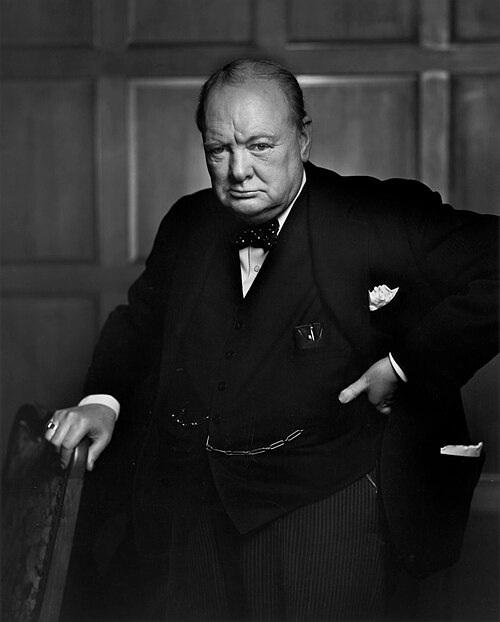
Winston Churchill (30 November 1874 – 24 January 1965) was a British statesman, military man, and writer who served as Prime Minister of the United Kingdom twice (1940–1945 and 1951–1955), best known for leading Britain against Nazi Germany during World War II. He was born into an aristocratic family, enlisted in the army at an early age, fought in colonial wars in India, Sudan, and South Africa, and first gained prominence as a war correspondent. Elected as a Conservative MP in 1900, he defected to the Liberal Party in 1904, holding posts such as Under-Secretary of State for the Colonies, President of the Board of Trade, Home Secretary, and First Lord of the Admiralty. During World War I, he suffered a political setback after the failed Dardanelles Campaign, but later rejoined the cabinet as Minister of Munitions and other roles. He returned to the Conservative Party in 1924, serving as Chancellor of the Exchequer and implementing the gold standard policy. In the 1930s, Churchill found himself on the political margins for opposing Indian self-government and criticizing the threat of Nazi Germany, yet he accurately foresaw the danger of Hitler.
After the outbreak of World War II, Churchill replaced Neville Chamberlain as Prime Minister in May 1940 and formed a coalition government. With resolute will and stirring oratory, he inspired the British military and public, rejected proposals for peace talks with Hitler, and led Britain through the Dunkirk evacuation and the Battle of Britain. He fostered the alliance with the United States (e.g., the Lend-Lease Act). He participated in formulating major Allied strategies, including the North African Campaign and the Normandy landings, and held numerous summit meetings with Roosevelt and Stalin (such as the Tehran and Yalta conferences). After the war, although Churchill was unexpectedly defeated in the 1945 general election, he remained Leader of the Opposition. In 1946, he delivered the 'Iron Curtain' speech in the United States, which became a defining moment of the Cold War. He became prime minister again in 1951, focusing mainly on foreign affairs, promoting the special relationship with the United States and European unity. He was awarded the Nobel Prize in Literature in 1953, but his health deteriorated due to a stroke that same year, and he resigned in 1955.
Churchill is one of the most influential political figures of the 20th century, yet also highly controversial. His staunch imperialism and attitude toward the colonies have drawn criticism, such as the perceived slow response to the Bengal famine; he also supported eugenics and made racist remarks. Nevertheless, his wartime leadership, literary achievements, and defense of democratic and liberal values have made him one of the most revered figures in British history. Churchill died in 1965 at the age of 90, and was accorded a state funeral.
Day Master Xin Metal born in the month of Hai, lacking seasonal support; the Earthly Branches Hai and Mao form a partial Wood combination, with Heavenly Stems Jia and Yi appearing prominently, making the Wealth stars extremely strong; the Day Master is only supported by the Hour Pillar's Ji Chou (moist Earth) and the distant Year Branch Xu Earth, a classic pattern of excessive Wealth with a weak Day Master. This means Churchill's innate energy state was like a gemstone in a dense forest, his essence continuously absorbed and drained by the surroundings, difficult to dominate. His overall impression is: inwardly sharp and delicate, yet outwardly often burdened with heavy pressure, especially in his early years, when every step seemed arduous. His greatest advantage is extreme tenacity—the weak Day Master clinging to the Resource star (Yin), becoming more courageous with each setback; the potential challenge lies in easily falling into difficulty due to excessive desires and limited resources, requiring resilient will and postnatal accumulation to break through. The Hour Pillar's Pian Yin (Indirect Resource) transforms Qi Sha (Indirect Officer), forming 'Sha Yin Xiang Sheng' (the synergy of Officer and Resource: Qi Sha's pressure and challenges are transformed into wisdom and authority through Pian Yin's learning and strategy), laying the foundation for his unconventional strategies in responding to external crises.
This chart is a Wealth structure using the Resource star; the favorable element is Metal (Bi Jian / Companions) to support the Day Master, the primary beneficial element is Earth (Yin / Resource star) to transform the Officer and support the Day Master, while the unfavorable elements are Wood (Wealth) and cold Water (Shi Shen & Shang Guan). In simple terms, Earth and Metal are the most needed energies in Churchill's chart: Earth represents solid knowledge, mentorship, and inner stability; Metal represents action power, peer support, and execution boldness. Wood Wealth (money, material), though tempting, drains the self; Water Creative Output (talent expression, unorthodox) must be used with moderation to avoid dissipating energy. His life choices clearly confirm this: early academics suppressed by the Wealth star (mischievous, poor grades), had to turn to military academy (military belongs to Metal); politically, he rose to prominence precisely after midlife when entering Earth and Metal Da Yun (decadal cycles), along with support from his wife Clementine (symbolizing the stable base of the Resource star), allowing his strategies (Pian Yin) to be put into practice. When unfavorable Water and Wood were rampant (e.g., during World War I), he was prone to rash decisions and setbacks.
The chart's core combinations are 'Wealth Structure with Resource', 'Officer-Resource Mutual Production', along with 'Shi Shen Venting Show' and 'Shang Guan Adorned with Resource'. These professional overlays shape an extremely complex character: strong Wealth makes him highly value practical interests and material foundations, but the Resource star as the beneficial element prevents him from becoming mercenary; Officer-Resource Mutual Production grants him the ability to transform pressure into strategy, remaining lucid in extreme fear; Shi Shen (Gui Water in the Hour Branch) represents gentle expression and artistic sensitivity, while Shang Guan (Jia Wood in the Month Branch) brings rebellious spirit and creative sparks, and when constrained by the Resource star, they don't become wanton but instead form a unique and powerful speaking style. In decision-making, he can win by surprise with intuition and also convince others with rigorous logic. Interpersonally, he relies on a few confidants (weak Companions), needing yet keeping distance from crowds; in his career, from military to writing to politics, every step reflects the pattern of 'using Resource to transform Wealth' (using knowledge and reputation to transform material pursuits).
The Day Branch carries 'Peach Blossom' (Charisma) and 'Jiang Xing' (Leadership Star); the Hour Pillar encounters 'Tian Yi Gui Ren' (Noble Guardian); the Year and Hour Branches Chou and Xu are in mutual punishment, while the Month Branch has 'Jie Sha' (Calamity Star) and 'Gu Chen' (Star of Solitude). Peach Blossom represents innate charisma and romantic disposition, Jiang Xing bestows command ability and appeal, and the combination makes Churchill highly skilled in personal oratory and public mobilization; but Peach Blossom seated on the Day Branch also affects marriage. Tian Yi Gui Ren appearing in the Hour indicates that in times of crisis there is always helpful noble support (e.g., opportunities and key allies during WWII). The Chou-Xu punishment is a punishment of strong Earth, triggering constant inner conflicts, yet also fostering breakthroughs—his many turnarounds from danger throughout life are related. Jie Sha brings youthful adventures (his famous prison escape in South Africa), and Gu Chen suggests a weak bond with father and children, and often a sense of loneliness in emotions. The Hai-Mao semi-combination gathers Wealth stars, indicating that though wealth opportunities are plentiful, they are not easily obtained and require twists and turns. Overall, these Shen Sha (Auxiliary Stars) are not direct gifts of good luck but instead set various challenges, forcing him to resolve them one by one using the Resource star (intellect) and Bi Jian (perseverance), ultimately turning inauspicious stars into powerful personal charisma.
Xin Metal is the essence of pearls and jade, delighting in moist Earth nourishing and clear Water moistening; the Day Master is weak, requiring thick Earth to support its roots, while Pian Cai (Indirect Wealth) appears in the stems and Pian Yin (Indirect Resource) clings to the body, forming the image of 'inner refinement, outer seeking'. Churchill's psychological portrait is like a treasured curio kept in a velvet box: superficially fragile and vulnerable, yet actually forged by fierce fire, extremely hard. His thinking mode is extremely pragmatic yet not lacking flashes of inspiration; he can grasp the core practical interests while adeptly packaging visions into epics with ornate rhetoric. Emotionally, he yearns for a stable and warm family (the Chou Earth in the Hour Branch as home), but due to heavy Wealth and weak Resource, early family support was insufficient (father died young, mother distant), forming a deep-rooted insecurity that he constantly compensates by controlling situations. Under pressure, he erupts with astonishing focus and courage, which is precisely the manifestation of 'Qi Sha being controlled' (authoritative pressure harnessed by intellect); in comfort zones, he shows stubbornness and indulgence in pleasures (cigars, whiskey).
The strongest energy in the chart concentrates in the original strategies represented by Pian Yin (Ji Earth) and the literary expressive ability bestowed by Shi Shen (Gui Water). Pian Yin is not ordinary knowledge, but unconventional, penetrating insight beyond appearances, enabling him to see the crucial point at a glance in chaotic situations and propose bold strategic visions. Shi Shen venting its show (inner ingenuity expressed through elegant works) makes him a first-class orator and historical writer, sublimate political struggles into linguistic art. These talents erupt with astonishing competitive advantage in fields requiring extraordinary charisma and narrative control—such as parliamentary debates, international diplomacy, and historical writing. His memoirs of World War I and World War II winning the Nobel Prize was no accident; it's precisely the combination of Shi Shen continuously venting its show and Pian Yin providing depth and mastery of historical materials. In action, Bi Jian (Xin Metal, hidden in the branches) brings him substantial executive power and military courage, making him not just an armchair scholar but a warrior who personally fought.
The core conflict comes from 'War between Wealth and Resource' and 'Weak Day Master unable to withstand Wealth'. The clash of Wealth and Resource is like a tug-of-war between material desire and moral ideals: the Year Pillar's Jia Wood (Zheng Cai) overcomes the Xu Earth (Zheng Yin), overshadowing the family in early years due to political entanglement (father's political setbacks), and he himself was once trapped by money, having to write frantically to maintain expenses. The weak Day Master unable to bear Wealth made him often feel inadequate; several rises and falls in his early career (removal as First Lord of the Admiralty due to failure) depict being crushed by heavy responsibilities (Wealth producing Qi Sha). A character shortcoming is lack of flexibility; prone to isolation by peers (Bi Jian / Companions) due to arrogance and dictatorial ways, especially evident under the structure of 'weak Companions but much Wealth' (insufficient peer support yet needing to handle vast resources). He needs strong control but does not necessarily gain heartfelt following. An internal blind spot is over-reliance on intuition, sometimes underestimating detailed execution (Water Creative Output overly dispersed), requiring constant reminders and corrections from Clementine and others.
Churchill's destiny is a typical model of 'the weak Day Master pattern achieving nobility after obtaining the favorable element'. His life is like an epic sailing against the current: early years dim in starlight, midlife sinking deep to refine gold, only in his later years, with unshakable will and unparalleled linguistic power, reaching the summit at the moment of national peril. His core theme is 'forging a legend with intellect under worldly pressure': excessive Wealth and a weak Day Master forced him into a lifelong struggle with material and political high pressure, yet thus tempered into extraordinary endurance; Pian Yin transforming Qi Sha allowed him to turn every crisis into a stepping stone to higher ground; Shi Shen venting its show made his voice a symbol of the free world. Ultimately, not by luck, but by a life full of scars, he proved that when a person transforms inner fragility into an indestructible belief, they can awaken the collective soul and turn the tide of history. This is precisely 'The pearl kept in a casket, its glow shines at night' (Even though the pearl is hidden, its radiance is not concealed).
The Zheng Guan (Zheng Guan (Direct Officer)) stem emerges, while Shi Shen (Talent) vents brilliance; a weak Day Master encounters the beginning of Zheng Guan (Direct Officer) and Indirect Resource mutually generating. This decade marks childhood enlightenment and character formation. The Officer Star represents discipline and responsibility, while the Talent Star governs talent and expression, suggesting that under strict discipline Churchill displayed precocious intelligence. However, the Day Master Xin Metal is inherently weak, and the Officer Star restrains the self, possibly leading to physical frailty or significant pressure. Yet the Da Yun cycle of Bing Fire as Zheng Guan (Direct Officer) resonates with the hidden Ding Fire (Qi Sha / Indirect Officer) in the Year Branch Xu, forming the rudiments of Qi Sha generating Resource, planting seeds for his later resilient character. Overall, this is a rooting stage, laying the foundation for his indomitable will.
Zheng Guan (Direct Officer) and Resource mutually generate initially, but Wealth Star harms Resource, causing academic setbacks. Although this cycle is not a substantive career period, the emergence of Zheng Guan (Direct Officer) indicates early paternal influence (his father, Lord Randolph Churchill, was a politician) and initial exposure to the political atmosphere. Shi Shen (Talent) generating Wealth shows a strong interest in history, military affairs, etc. However, the Month Pillar Yi Hai (Pian Cai / Indirect Wealth harming Resource: Yi Wood overcomes Ji Earth) leads to an uneven academic path; he even had to transfer schools due to stubborn behavior. The family was well-off, but the Officer Star restraining the self and a strict father created external pressure. This decade was a value-shaping period, with no wealth accumulation—more a reserve of spirit and knowledge.
Zheng Guan (Direct Officer) represents the father, while Shi Shen (Talent) represents the child; family ties are complex. Bing Fire as Zheng Guan (Direct Officer) combines with Xin Metal: his father had high expectations but little communication. Shi Shen (Talent) appearing through Zi Water implies a closer bond with his mother. The Year Pillar Jia Xu (Direct Wealth) suggests a wide family social circle, but due to introversion or stubbornness, he had few childhood playmates. Servants gave much care (Hour Pillar Ji Chou as Pian Yin / Indirect Resource). Overall, the family atmosphere was serious, yet it cultivated an aristocratic sense of responsibility in him.
Water is strong and Shi Shen drains the self; Metal is cold and Water is chilly, prone to colds. Xin Metal born in the Hai month has strong Water and weak Metal; the Da Yun cycle Bing Zi brings Zi Water adding more cold, while Bing Fire provides limited warming. The constitution is relatively weak, prone to respiratory illnesses or digestive issues. Attention to keeping warm and nutritional supplementation is needed. Emotionally, there may be sensitivity, but the venting of Shi Shen (Talent) also brings a measure of optimism.
Qi Sha (Indirect Officer) attacks the self, and Pian Yin (Indirect Resource) transforms the threat; the configuration of Qi Sha producing Resource takes shape. This decade is a period of harsh refinement. Ding Fire as Qi Sha represents fierce competition and dangerous challenges, while Chou Earth as Pian Yin transforms the threat and supports the self, symbolizing resolving crises through wisdom and strategy. During this period, Churchill entered the Royal Military College, Sandhurst, and served in the military, participating in colonial wars in Cuba, India, and Sudan. The pattern of Qi Sha producing Resource means he could learn and grow amid danger, transforming pressure into motivation, forming his bold and adventurous personality. This decade marks the first major turning point in his life, evolving from a stubborn boy into a soldier and war correspondent.
Qi Sha (Indirect Officer) governs career, Pian Yin (Indirect Resource) represents diplomas; military career begins. Ding Fire as Qi Sha represents military achievements and adventure, Chou Earth as Pian Yin represents military academy education. In 1893, Churchill was admitted to Sandhurst; after graduating in 1895, he joined the army and simultaneously began writing to earn fees (Shi Shen generating Wealth). The Da Yun branch Chou Earth half-combines with the original chart’s Hai and Mao to form a Wood frame, strengthening the Wealth Star. However, Qi Sha restrains the self, so income mostly came from high-risk activities (such as battlefield reporting). He accumulated fame in his career but did not become truly wealthy, as the strong Wealth drained the Day Master. This decade gave him the essential capital for future political clout: military experience and public visibility.
Qi Sha (Indirect Officer) represents male authority, Pian Yin (Indirect Resource) represents elder protection. Ding Fire as Qi Sha reflects the father figure (his father died in 1895, corresponding to Qi Sha’s restraining influence), while Chou Earth as Pian Yin indicates support from his mother and family. Interpersonally, he befriended military colleagues, but due to Qi Sha’s assertive nature, he had friction with superiors. In romance, Qi Sha also indicates opposite-sex attraction; he had brief affairs during this period but did not marry (he married in 1908). The loss of his father was a heavy blow, yet it spurred his independence.
Qi Sha (Indirect Officer) restrains the self; Metal and Fire clash, prone to external injuries. Ding Fire overcomes Xin Metal, susceptible to cuts and accidental injuries (Churchill faced danger on the battlefields of Cuba and India). Chou Earth is damp soil that dims Fire, but overall Fire is strong and depletes Metal. Be mindful of heart and blood circulation issues. Emotionally, he is easily irritable, but Pian Yin (Indirect Resource) aids calm thinking. Balance work and rest to avoid excessive risk-taking.
Zheng Yin (Direct Resource) emerges, but Wealth Star harms Resource; ideals wrestle with reality. Wu Earth as Zheng Yin represents stability, academia, and government work, but its branch Yin Wood as Direct Wealth sees Wealth overcoming Resource, meaning he must balance profit and reputation. In the first five years of this cycle, Wu Earth caps the stem, bringing relative steadiness; in the latter five years, Yin Wood exerts force, with strong Wealth harming Resource and intensifying conflicts. Churchill entered the House of Commons as a Conservative MP in 1900 and stepped into politics, but in 1904 he split with the party leader over trade issues and crossed the floor to the Liberal Party—exactly manifesting Wealth harming Resource: economic interests (Wealth) shook his political stance (Resource). Overall, it is a period of political ascent, but marked by shift and controversy.
Resource Star represents authority, Wealth Star represents profit; office and income rise together. Wu Earth as Zheng Yin (Direct Resource) stands for parliamentary seats and ministerial posts; Yin Wood as Direct Wealth represents salary and royalties. In 1900, Churchill entered the Commons; in 1905, he gained his first cabinet post (Under-Secretary of State for the Colonies); and in 1908, he joined the Cabinet as President of the Board of Trade. His income from writing and speeches grew substantially, but Yin Wood overcoming Wu Earth also meant his outspokenness made enemies (e.g., opposing women’s suffrage, supporting free trade). In 1911, he became First Lord of the Admiralty, reaching a career peak. With Wealth and Resource in conflict, he valued both political ideals and personal interest, but the Wealth Star dominated, leading to occasional financial controversies (such as early rumors of purchasing offices).
Zheng Yin (Direct Resource) signifies mentors, Zheng Cai (Direct Wealth) signifies spouse; marriage and family established. Wu Earth as Zheng Yin represents the elders who advanced him (e.g., Prime Minister Asquith); Yin Wood as Direct Wealth represents his wife Clementine (married in 1908). The marriage was harmonious, and his wife strongly supported his career. Jia Wood as Direct Wealth inside Yin combines with the Day Master, indicating focused affection. Socially, the emerging Wealth Star caused him to mingle widely with financial circles, but because Wealth harmed Resource, old Conservative friends grew distant. Family-wise, children were born (eldest daughter in 1911). Overall, his interpersonal relations centered on professional alliances.
Wood is strong, Earth is weak; Metal is weak, Fire adjusts the environment. Yin Wood overcomes Wu Earth, causing excessive Wood qi, prone to digestive disorders and nervous headaches. With Zheng Yin (Direct Resource) weakened, he overexerts his energy. During this period, Churchill was a workaholic, neglecting rest. Maintain regular meals and avoid overwork. Emotionally, he tends toward anxiety, yet Zheng Yin (Direct Resource) also has a calming effect.
Pian Yin (Indirect Resource) transforms threat, Pian Cai (Indirect Wealth) harms Resource; an eventful period. Ji Earth as Pian Yin (Indirect Resource) emerges, which could transform threat and support the self, but its branch Mao Wood as Pian Cai (Indirect Wealth) sees Wealth overcoming Resource, weakening the Resource Star. The core of this cycle is the contest between Pian Yin and Pian Cai, manifesting as Churchill’s radical political reforms and resource struggles. As First Lord of the Admiralty (1911–1915), he pushed naval modernization, but the 1915 Gallipoli campaign failed, forcing him to step down—exactly showing how Wealth harming Resource left the Resource Star unable to protect the self. Pian Yin represents unconventional strategies, Pian Cai represents risky investments; in these ten years, he boldly innovated but also paid a price for recklessness, experiencing his first major setback.
Pian Yin (Indirect Resource) brings creativity, Pian Cai (Indirect Wealth) brings speculation; career sees dramatic ups and downs. Ji Earth as Pian Yin stands for planning, Mao Wood as Pian Cai stands for funding. During his Admiralty years (1911–1915), he reformed shipbuilding and developed aviation, wielding immense power; but the 1915 Dardanelles campaign defeat forced his resignation, and he transferred to the Western Front as a soldier (1916). Pian Cai also indicates income sources: his writing income was considerable (e.g., The World Crisis), but Wealth harming Resource damaged his political reputation. In 1917, he returned to government as Minister of Munitions, with Pian Yin playing a part in successfully organizing munitions production. Overall, it was a rise, then fall, then rise again, but with Pian Cai dominating, the fluctuations were severe.
Pian Yin (Indirect Resource) brings solitude, Pian Cai (Indirect Wealth) brings socializing; interpersonal dynamics are complex and changeable. Ji Earth as Pian Yin represents his maverick nature, causing rifts with both Conservatives and Liberals; Mao Wood as Pian Cai represents wide social contacts, but many were interest-based. When he fell politically in 1915, colleagues kicked him while he was down, showing Pian Cai’s ruthlessness. In the family, his wife supported him through the ordeal, but Pian Yin also caused low moods and occasional depression. During this time, he befriended the painter Sir Lancelot and took up painting as therapy (Pian Yin transforming threat).
Wood is strong and overcomes Earth; Earth is weak and Metal gets buried. Mao Wood as Pian Cai (Indirect Wealth) overcomes Ji Earth as Pian Yin (Indirect Resource); digestive function is weak, prone to indigestion. Metal is drained by Wood, so lung qi is insufficient, leading to fatigue. Emotionally, the movement of Pian Cai brings alternating excitement and anxiety; mental health needs attention. Churchill thought of suicide during his 1915 depression but later regulated himself through painting.
Bi Jian (Peer) supports the self, Zheng Yin (Direct Resource) protects; a comeback. Geng Metal as Bi Jian (Peer) represents fellows and partners, Chen Earth as Zheng Yin (Direct Resource) represents actual power and office. This cycle’s stem and branch are uniformly Metal and Earth, supporting the Day Master—a classic case of a weak Day Master receiving Peer and Resource assistance. Churchill climbed out of his trough during this cycle, serving successively as Minister of Munitions, Secretary of State for War, and Secretary of State for the Colonies. He briefly lost his seat in 1922 due to a cabinet reshuffle but returned to the Conservative Party in 1924 and became Chancellor of the Exchequer. Bi Jian represents cooperation and competition, Zheng Yin represents official recognition; with his tough style and political finesse, he gradually restored his influence. However, Chen contains hidden Yi Wood as Pian Cai (Indirect Wealth)—the Wealth Star draining in secret. After the 1929 Great Depression, the Conservatives were ousted, and he entered a ten-year “political wilderness.” Overall, it was an upward period, but the latter part was affected by the Wealth Star.
Bi Jian (Peer) competes for wealth, Resource Star wields power; career holds multiple posts but with turbulence. Geng Metal as Bi Jian supports the self, allowing him to stand out among peers: in 1919 he became Secretary of State for War and Air; Chen Earth as Zheng Yin (Direct Resource) governs official business: in 1921 he became Colonial Secretary. But Bi Jian also represents rivalry: in 1922 he lost his seat due to a policy misstep on Turkey. In 1924 he returned as Chancellor of the Exchequer—a post matching Chen Earth as Zheng Yin, in charge of finances. Yet the hidden Yi Wood as Pian Cai (Indirect Wealth) within Chen caused him to blindly restore the gold standard (1925), creating economic contraction and sowing seeds for his later downfall. Income-wise, Bi Jian supporting the self brought high-salaried positions, but the hidden Wealth Star drained, leading to investment losses.
Bi Jian (Peer) represents friends, Zheng Yin (Direct Resource) represents mother; interpersonal circles reorganize. Geng Metal as Bi Jian represents political colleagues (e.g., Lloyd George); Chen Earth as Zheng Yin represents older-generation politicians (e.g., Baldwin). After breaking with the Liberals, he rejoined the Conservatives—a manifestation of Peers gathering and dispersing. In the family, his mother remarried and died in 1919 (Zheng Yin being drained), and his wife’s health fluctuated. His social circle changed with his political shifts, but with Bi Jian supporting the self, he always had loyal followers.
Bi Jian (Peer) supports the self, Metal qi is strong, constitution improves. The Geng Chen pillar of Metal and Earth boosts the Day Master, enhancing stamina and reducing illness. But Chen is damp earth containing hidden Yi Wood; Wood and Earth clash, carrying a risk of rheumatism or skin irritations. Emotionally, Bi Jian brings competitive pressure, but the Resource Star steadies the mind. Overall health is better than the previous cycle. Watch diet and avoid obesity.
Bi Jian (Peer) aids, Zheng Guan (Zheng Guan (Direct Officer)) nears peak; a political comeback and political wilderness. Xin Metal as Bi Jian (Peer) supports the self, Si Fire as Zheng Guan (Zheng Guan (Direct Officer)) combines with the self; Zheng Guan (Direct Officer) represents office and power. In the first five years of this cycle, Xin Metal emerges, giving the Day Master a strong root, but Si Fire combines with and overcomes Xin Metal, so Officer pressure is great. From 1927–1929 he was still Chancellor of the Exchequer, but in 1929 the Conservatives lost the election, and Churchill lost office, not returning to the cabinet until the outbreak of WWII in 1939—a decade-long “political wilderness.” Zheng Guan (Direct Officer) being combined means power is constrained; though Bi Jian helps, there is no Resource to transform, so although he kept his parliamentary seat, he was far from the center of power. This decade was a latent period where he lived by writing and painting, while fiercely criticizing appeasement.
Bi Jian (Peer) but no Resource, Zheng Guan (Direct Officer) is combined; career low but accumulating strength. Xin Metal as Bi Jian is support from like-minded colleagues, but without Resource to nourish, the Zheng Guan (Direct Officer) Si Fire is weakened by combining with Xin, leading to limited authority. From 1929–1939, he was not in the cabinet, focusing on writing (e.g., Marlborough: His Life and Times) and speeches, mainly earning from royalties. Bi Jian generating Talents, he continuously published warnings about the Nazis, his influence great but ignored by those in power. Financially, he relied on writing royalties and invested in real estate (e.g., Chartwell), but Bi Jian also competes for wealth, so expenses were huge, and he occasionally had debts. His career seemed stagnant, but it was storing wisdom and prestige for his future leadership role.
Bi Jian (Peer) represents peers, Zheng Guan (Direct Officer) represents superiors; interpersonal alienation. Xin Metal as Bi Jian refers to fellow backbencher MPs, while the Zheng Guan (Direct Officer) Si Fire represents Conservative leaders (e.g., Baldwin, Chamberlain). Because he opposed Indian self-government and criticized the Nazis, he was at odds with the party mainstream, in an isolated state. In the family, his wife was always by his side, and his children grew up. Socially, he drew closer to scholars and artists (Bi Jian generating Talents), but with the Zheng Guan (Direct Officer) being controlled, relations with high political circles were tense. In these ten years, he was inwardly lonely but gritted his teeth and held to his views.
Fire strong controls Metal; Xin Metal is constrained, prone to respiratory inflammation. Si Fire combines with and overcomes Xin Metal; Metal is melted by Fire, susceptible to bronchitis and pneumonia (Churchill had multiple bouts of pneumonia). Xin Metal also governs the lungs, so keeping warm is important. Emotionally, the Zheng Guan (Direct Officer) restraining the self brings pressure, but Bi Jian helping allows venting. During this period he developed the cigar habit, further harming the lungs.
Shang Guan (Talent Transformed) emerges, Qi Sha (Indirect Officer) attacks the self; the hero ascends. Ren Water as Shang Guan represents eloquence, reform, and anti-traditionalism; Wu Fire as Qi Sha (Indirect Officer) represents war, crisis, and supreme power. In this cycle, Shang Guan generates Wealth (Ren Water nourishes Yin and Mao Wood), but Qi Sha hangs overhead—the nation’s fate hangs by a thread. Churchill became Prime Minister in 1940 in a time of crisis, a perfect combination of Shang Guan controlling Qi Sha (Ren Water overcomes Wu Fire) and Qi Sha producing Resource (Wu Fire generates Ji Earth, Ji Earth generates the Day Master). Shang Guan represents his piercing oratory and bold decisions, while Qi Sha represents the pressure of war; he rallied the nation to fight and ultimately win. This decade was the pinnacle of his life, but Shang Guan also sowed seeds for his later political downfall.
Shang Guan (Talent Transformed) generates Wealth, Qi Sha (Indirect Officer) wields power; career reaches zenith. Ren Water as Shang Guan brings creativity and inspiration, Wu Fire as Qi Sha gives the marshal’s baton. In May 1940 he became Prime Minister, formed a coalition government, and led WWII. With Shang Guan controlling Qi Sha, he united the nation through rousing speeches and employed bold strategies (e.g., Lend-Lease, Normandy invasion) to turn the tide. Qi Sha also represents the enemy (Nazis), whom he successfully defeated. Financially, his salary was fixed during the war, but post-war writing royalties swelled enormously (e.g., The Second World War). The 1945 election loss was exactly Shang Guan clashing with Zheng Guan (Direct Officer) (Wu Fire overcoming Ren Water forms Shang Guan seeing Officer), causing his unexpected defeat. In 1951 he again became Prime Minister, but with age, Shang Guan carrying Qi Sha, his political achievements were limited.
Shang Guan (Talent Transformed) represents subordinates, Qi Sha (Indirect Officer) represents opponents; interpersonal relationships are polarized. Ren Water as Shang Guan stands for his brains trust (e.g., Beaverbrook), Wu Fire as Qi Sha stands for political rivals (e.g., Attlee). He recruited wide talent, but his assertiveness also caused clashes with colleagues. The 1945 election defeat, Shang Guan clashing with Officer: the public no longer wanted a war leader. In the family, his wife was supportive, but due to busyness, relationships with his children were distant. Internationally he was deeply respected late in life, but domestic political allies gradually dwindled.
Water and Fire clash intensely, Metal is overcome by Fire; health deteriorates sharply. The Ren Wu cycle sees Water and Fire at war; Wu Fire overcomes Xin Metal, Shang Guan drains the self, putting immense pressure. From 1940–1945, he fell ill several times (pneumonia, heart issues) yet persisted in work. In 1953 he suffered a stroke affecting his mobility—exactly the outcome of Fire conquering Metal. Emotionally, Shang Guan brings excitement, Qi Sha brings anxiety; there was a tendency toward depression late in life. The cardiovascular system needs attention.
Shi Shen (Talent) vents brilliance, Pian Yin (Indirect Resource) transforms threat; twilight afterglow. Gui Water as Shi Shen (Talent) represents enjoyment, art, and blessings; Wei Earth as Pian Yin (Indirect Resource) represents research and memoirs. Shi Shen generates Wealth, Pian Yin represents reflection. In this cycle, Churchill resigned as Prime Minister (1955) and devoted himself to writing and painting, receiving the Nobel Prize in Literature in 1953. Shi Shen controls threat (Gui Water overcomes Wu Fire), and in later years he gradually withdrew from political strife, enjoying tranquility. But Wei Earth as Pian Yin hides Ding Fire as Qi Sha (Indirect Officer), so old ailments still troubled him; he received U.S. honorary citizenship in 1963 and passed away in 1965, when the hidden Qi Sha in Wei re-emerged. Overall, it was a dignified retirement in comfort, but longevity was influenced by the hidden Qi Sha in Wei.
Shi Shen (Talent) generates Wealth, Pian Yin (Indirect Resource) represents writing; both wealth and honors come. Gui Water as Shi Shen showcases talent, Wei Earth as Pian Yin brings royalty income. He completed the six-volume The Second World War, won the Nobel Prize, and earned substantial royalties. Shi Shen also signifies leisure; he spent much time at Chartwell painting and breeding racehorses. Although he held no real power, as a spiritual leader his speaking fees were high. Pian Yin also stands for legacy; in his later years, his assets were ample. His second premiership (1951–1955), with Shi Shen venting brilliance, was administratively uneventful but a smooth handover.
Shi Shen (Talent) represents descendants, Pian Yin (Indirect Resource) represents old friends; interpersonal harmony. Gui Water as Shi Shen signifies children and grandchildren clustering around, a warm family scene. Wei Earth as Pian Yin stands for old friends and advisors; he often gathered with figures like Snow and Montgomery. After retiring in 1955, his social circle centered on cultural figures, while also being consulted by younger-generation politicians (e.g., Macmillan). His public prestige was extremely high, but Shi Shen also brought a tendency toward comfort, and he was unwilling to face controversy.
Earth overcomes Water, Fire and Earth are dry and hot; chronic illnesses entangle. Gui Water as Shi Shen is overcome by Wei Earth; Water weak, Earth dry, prone to diabetes and kidney problems. The hidden Ding Fire as Qi Sha in Wei means heart disease risk persists. Churchill had multiple strokes in his later years, with deafness and impaired eyesight, yet his habits persisted (cigars, whisky). Emotionally, Shi Shen brings cheerfulness, but Pian Yin makes him ponder heavily. Strict dietary discipline is needed.
Wealth Star harms Resource, Jie Cai (Rival Wealth) seizes Wealth; life span nears end. Jia Wood as Zheng Cai (Direct Wealth) emerges, Shen Metal as Jie Cai (Rival Wealth) sits on the branch; the pillar is Jie Cai overcoming Wealth. This cycle sees Shang Guan clashing with Officer (Jia Wood overcomes Ji Earth) and Jie Cai competing with the Day Master for wealth, creating chaotic energy. Churchill died in 1965, fitting the Jia Shen cycle. Shen Metal as Jie Cai signifies depletion and competition; Wealth harming Resource also indicates declining physical function (Resource represents longevity). In his last years, after a stroke, he was long bedridden and eventually died of a cerebral thrombosis. Wealth harming Resource made his spirit weary, while Jie Cai seizing wealth exhausted his vitality.
Wealth Star harms Resource, Jie Cai (Rival Wealth) defeats wealth; career ends. Jia Wood as Zheng Cai (Direct Wealth) represents income, but Shen Metal as Jie Cai overcomes Jia Wood, meaning wealth was rapidly consumed (inheritance disputes, medical expenses). By this time, he had retired from politics with no substantive career. In 1963, he received U.S. honorary citizenship—a final glory—but Wealth harming Resource meant the honor brought no material benefit. His savings dwindled, though still enough to cover expenses. Overall, it was life’s curtain call with no major undertakings.
Wealth Star harms Resource, Jie Cai (Rival Wealth) seizes affection; an image of abandonment. Jia Wood as Zheng Cai (Direct Wealth) represents elders and reputation; being overcome by Shen Metal as Jie Cai, he became stubborn in late years, with occasional friction with family. Jie Cai also signifies younger generations fighting over inheritance (children discontent with asset distribution). In fact, although he died in 1965, his children were largely dutiful, but tensions existed. Socially, old friends gradually passed away, and he grew increasingly lonely.
Metal and Wood clash, Earth and Water are both weak; life force wanes. The Jia Shen pillar sees Metal and Wood at war: Shen Metal overcomes Jia Wood, while Jia Wood also overcomes Earth, causing total collapse of the digestive and hepatobiliary systems. Shen Metal as Jie Cai also governs lung infections; he finally died of pneumonia combined with kidney failure. Emotionally, he was gloomy and joyless, with Shi Shen destroyed. Any strain in this cycle could have been fatal.
Tian Xiang in Miao (exalted) sits in the Property Palace, accompanied by Zuo Fu, You Bi, Tian Kui, and Tuo Luo in Miao, forming a prosperous configuration of 'Stars Surrounding the Minister.' Tian Xiang is the Seal Star, representing stability and management; with Zuo Fu, You Bi, and Tian Kui all gathered, it indicates rich ancestral inheritance and extensive properties. Tuo Luo in Miao brings persistent maintenance but also hints at protracted processes in inheritance. Winston Churchill, born into nobility, inherited rights to the Blenheim Palace estate, yet invested heavily in construction, often incurring debt for renovations.
This palace has no Four Transformations, but Zuo Fu, You Bi, and Tian Kui form the 'Three Terraces' of nobility. All are helper stars; Churchill gained early political capital due to his family status, but Tuo Luo in Miao suggests property disputes with his brother and the later forced sale and repurchase of Chartwell—a manifestation of Tuo Luo's 'delay and repetition.'
With many auspicious stars in the Property Palace, Churchill owned multiple residences throughout his life: the ancestral Blenheim Palace, Chartwell, and the official residence at 10 Downing Street. He was passionate about architecture and gardening, even building stone walls himself at Chartwell. However, Tuo Luo in Miao often led to financial difficulties from housing expenses, at times forcing him to sell properties; only Tian Xiang's stability prevented him from becoming homeless. His family repeatedly advised him to economize, but he ignored them, fitting Tian Xiang's 'stubborn traditionalism' side.
Tian Tong (Peaceful Star) in Li and Tian Liang (Star of Blessings) in Miao jointly occupy the Career Palace, assisted by Lu Cun (Wealth Reserve) and Huo Xing Miao (Vigorous Mars), forming the pattern of 'Blessed Fortune and Longevity'. Tian Tong governs blessings, while Tian Liang, as a protective star, represents refined nobility and deliverance from adversity. Lu Cun provides stability, and Huo Xing Miao energizes drive. Churchill's political career experienced dramatic rises and falls, yet he ultimately achieved great success in his later years, exemplifying Tian Liang's ability to 'transform calamity into auspiciousness'. Huo Xing Miao gave him the audacity to break conventions, such as championing Operation Overlord under immense pressure during WWII.
This Palace has no Four Transformations (Si Hua), but Lu Cun brings protective blessings, while Huo Xing adds boldness. Lu Cun ensured that even in political troughs, Churchill always had a fallback — his wartime premiership perfectly exemplifies Lu Cun's theme of 'finding life in desperate situations'. Huo Xing Miao made his style forceful, such as in 1940 when he risked his position to persist in aiding France against Germany, eventually gaining support after the Dunkirk evacuation. Tian Liang also governs longevity, and Churchill served as Prime Minister twice, separated by 20 years.
The Tian Tong-Tian Liang combination explains Churchill's career resilience: elected MP in 1900, cabinet member in 1905, but marginalized for a decade after losing influence in 1929 over opposition to Indian self-government. During this 'wilderness period', he wrote and painted (reflecting Tian Tong's ease), only returning to the Admiralty after war broke out in 1939. Tian Liang Miao ensured he was chosen in the nation's crisis, while Huo Xing Miao allowed him to boldly criticize appeasement policy, ultimately becoming a wartime leader.
Ju Men in Wang (prosperous) occupies the Fortune Palace, with the Body Palace here and Di Jie as an auxiliary, forming an image of 'Dark Luminary Illuminating the Mind.' Ju Men governs eloquence and critical thinking; its prosperous state sharpens keen insights, while Di Jie deepens spiritual emptiness and doubt. Churchill's profound thinking and love of debate are reflections of this. His 'black dog' depression is a realistic portrayal of Ju Men with Di Jie. The Body Palace here indicates that throughout his life he pursued spiritual fulfillment rather than material comfort.
This palace has no Four Transformations, but it borrows from the opposite palace where Tai Yang transforms into Ji, creating a 'Ju-Tai Distant Gaze.' The interference of Tai Yang Hua Ji often shrouded his thinking in a tragic sense; his memoirs repeatedly mention pessimism about a 'war without victory,' but it also sharpened his vigilance to prevent disasters.
With Ju Men in Wang and Di Jie, Churchill's spiritual world was complex: he loved history and literature, winning the Nobel Prize in Literature—this is the positive talent of Ju Men in the Fortune Palace. Yet he suffered from severe depression, at times contemplating suicide, relying on family and painting (Ju Men represents darkness, painting offsets it with brightness) to maintain balance. In his later years, he was prone to excessive sleep and drinking; Di Jie gave him a sense of detachment from life's details but granted a vision that could penetrate the currents of history.
Lian Zhen in Xian (fallen) transforms into Lu, and Tan Lang in Xian co-occupy the Parents Palace, forming a 'Lian-Tan Fallen' combination. Lian Zhen is the Prison Star, symbolizing complexity and confinement; Tan Lang is the Desire Star (also called Desire Star). When fallen yet transforming into Lu, it indicates a complicated parental relationship, or a romantic reputation for one parent. Winston Churchill's father, Lord Randolph Churchill, was a British politician who died young; his mother, Jennie Jerome, was an American socialite whose marriage was often on the verge of collapse. Lian Zhen in Xian with Hua Lu suggests a mother who spoiled him but offered little discipline, while Tan Lang in Xian reflects a father with a speculative personality, leading to discord between them.
Lian Zhen Hua Lu in the Parents Palace is one of the overall 'Lu' stars in the chart. Hua Lu provided him with excellent educational resources (such as Harrow School), but emotional distance remained. Lord Randolph died early (when Churchill was 21), and his mother remarried, perfectly matching the 'first sweet then bitter' pattern of Lian Zhen in Xian with Hua Lu—early blessings, later self-reliance.
Churchill's parental relationships profoundly shaped his character: his mother was a facilitator in political socializing, cultivating his eloquence and social skills; his father was both strict and distant, yet Churchill admired his father his entire life and aspired to a political career to prove himself. The financial support from Lian Zhen in Xian with Hua Lu was a double-edged sword—he used his mother's connections to enter the military, yet felt guilt over his father's opposition to his abandoning the military for writing. His father's early death forced him into early independence and established a pattern of confronting authority (such as Chamberlain).
Tai Yin (Moon) in its prosperous state sits in the Destiny Palace, assisted by Di Kong (Void), creating the image of "Moon Shining on a Cold Pond." Tai Yin is a star of wealth and maternal qualities; its prosperous position enhances sensitivity, subtlety, and strategy, but Di Kong causes ideals to easily fall into emptiness, often bringing a sense of loneliness. Churchill appeared gentle on the outside but was resolute inside. Neglected by his father in his early years, he rose through self-effort. Di Kong instead became a source of inspiration, lending his speeches poetic and transcendent power, as in his WWII call for "blood, toil, tears, and sweat."
The Destiny Palace has no direct Four Transformation influences, only indirectly drawing on the Hua Quan (Transformation of Authority) of Ju Men (Giant Gate) in the opposite palace, the Fortune Palace. Ju Men with Hua Quan adds a critical and aggressive edge to Tai Yin's strategy. Churchill was known in politics for his sharp rhetoric and decisive action, opposing appeasement and advocating resistance, embodying the "sword of the mouth" quality bestowed by Ju Men Hua Quan.
The interweaving of Tai Yin and Di Kong shaped Churchill's unique leadership style: though of aristocratic descent, he often rebelled against tradition—joining the Conservative Party, then switching to the Liberal Party, and back to the Conservatives. Di Kong gave him the courage to cross party lines, while Tai Yin's endurance sustained him through political lows. His diaries often revealed moments of pessimism, reflecting the yin softness of Tai Yin and the emptiness of Di Kong, but he always overcame through action, confirming the astrological principle that "a star in prosperity fears no void or calamity."
Tian Fu (Heavenly Storehouse) in its prosperous state sits in the Siblings Palace, assisted by Wen Chang (Literature Star) in its temple position, with no malefic stars interfering. Tian Fu, a star of storage, signifies stability and tolerance, while Wen Chang, a literary auxiliary star, represents cultural refinement. The relationship between siblings is harmonious but lacks competitive motivation. Churchill had only one younger brother, John, with whom he had a close bond, but John was relatively mediocre and did not provide substantial assistance, which aligns with the "plain harmony" of Tian Fu and Wen Chang rather than "mutual support in power."
There are no Four Transformations in this palace, only Wen Chang in its prosperous position. Wen Chang strengthens the literary and artistic atmosphere among siblings, but without Hua Lu (Transformation of Wealth) or Hua Ke (Transformation of Reputation), it indicates that no substantial resources or fame were gained through siblings.
Churchill's family was large, but he had only one brother, John, who worked in law and did not get involved in politics. The combination of Tian Fu and Wen Chang is reflected in both benefiting from an aristocratic education, but there was no significant conflict or reliance in their relationship. In his autobiography, Churchill mentioned warm childhood memories with his brother, but they went their separate ways as adults, consistent with Tian Fu's attribute of "maintaining the status quo."
Wu Qu (Finance Star) in Li with Hua Ke (Fame Transformation) and Qi Sha (Indirect Officer) in Wang reside in the Servants/Friends Palace, assisted by Qing Yang (Lamb) in Xian, forming a subordinate pattern of 'Killing Wolf'. Wu Qu and Qi Sha are militaristic stars, governing authority and execution; Hua Ke adds a quality of reputation or professionalism to subordinates. Churchill gathered fierce talents like Montgomery and Keyes, yet Qing Yang Xian suggests internal conflict and betrayal. He relied on his people but was strict, and Wu Qu Hua Ke led him to promote many military geniuses, while Qi Sha and Qing Yang also created interpersonal tensions.
Wu Qu Hua Ke in the Servants Palace is the sole Hua Ke star in this Palace. Hua Ke meant that Churchill's subordinates were often valued for their professional reputations — he favored scientists (like Lindemann) and tacticians over mere seniority. Yet Qing Yang Xian indicates that some, like Montgomery at times, disagreed with his strategies, exemplifying Wu Qu Qi Sha's 'clear rewards and punishments, yet difficult to tame'.
When forming his wartime cabinet, Churchill appointed Labour leader Attlee as Deputy Prime Minister, a Conservative rival, reflecting Wu Qu Hua Ke's 'appointing by merit'. Qi Sha Wang made his approach tough, as he directly replaced commanders in North Africa. Qing Yang Xian manifested in long-standing conflicts with certain generals, such as Colonel Booker publicly criticizing him. In his later years while writing, his subordinates often became controversial figures, illustrating that 'subordinates are a double-edged sword' in this Palace.
Tai Yang (Sun) in Wang with Hua Ji (Adversity Transformation) occupies the Migration Palace, assisted by Ling Xing (Spark) in Xian, forming a pattern of 'Obscured Sun'. Tai Yang governs brightness and diplomacy, while Hua Ji makes external journeys prone to setbacks and disputes; Ling Xing Xian adds sudden conflicts. Early on, Churchill ventured to India and South Africa for warfare, repeatedly finding himself in danger (such as being captured in the Boer War); even in old age, his visits to America often stirred controversy. Yet with Tai Yang in Wang, Hua Ji still retained some strength, and his travels often became turning points.
Tai Yang Hua Ji is the sole Four Transformation in this Palace and the only Ji star in the chart. Hua Ji infused Churchill's long journeys with a dramatic quality of 'turning peril into opportunity': his escape from South Africa in 1899 launched his fame, and multiple secret transatlantic meetings with Roosevelt in the 1940s, though arduous, laid the foundation of the alliance, exemplifying Tai Yang Hua Ji in the Migration Palace's theme of 'hardship first, achievement later'.
Tai Yang Hua Ji explains why Churchill's life 'on the road' was so eventful: he contracted malaria while serving in India, escaped captivity in South Africa, and experienced artillery barrages on the French front in WWI. Yet each time, he used public opinion and oratory to turn crisis into opportunity. Ling Xing Xian brought sudden dangers, like a car accident during a 1927 US visit, fortunately without major injury. The Migration Palace also foretells his passion for travel in later years, even vacationing in France at age 90.
In the Ji E Palace (Health Palace), Wen Qu (Literary Arts Star) sits alone in its exalted state, with no main star. Wen Qu belongs to the Water element, governing the nervous and respiratory systems; when exalted, it indicates sensitivity yet resilience. Wen Qu's exalted state suggests a highly developed nervous system—deep contemplation, intense emotional fluctuations, but also the ability to release stress through artistic channels. The absence of a main star means the body's resistance lacks the protection of a dominant star, making one vulnerable to external environmental factors. Wen Qu forms an indirect combination with Tai Yang Hua Ji (Sun Transforming into Obstacle) in the Qian Yi Palace (Travel/External Palace), leading to long-term overexertion of both mental and physical energy. Churchill's health was exactly like this: throughout his life, he battled severe depression (which he called the 'Black Dog'), relied on cigars (smoking up to 15 a day) and alcohol (drinking brandy with every meal) as self-medication, and in his later years suffered multiple bouts of pneumonia (in 1943, 1950, and 1955), each time barely pulling through due to the recovery power of Wen Qu's exalted state. At the same time, Wen Qu's exalted state also gave him the instinct to seek solace in art—painting became his core outlet for relieving nervous tension, and he left behind over 500 oil paintings in his lifetime.
There are no Four Transformations in this palace, but Tai Yang Hua Ji in the Qian Yi Palace directly clashes into the Ji E Palace, and Lian Zhen Hua Lu in the Fu Mu Palace forms an indirect combination with this palace. Tai Yang Hua Ji in the Qian Yi Palace (in the Chen position) indicates that excessive external labor depletes Yang energy. Churchill's constant cross-border travels, personal presence on battlefields, and high-intensity work led to reduced immunity, and the 'body-harming' effect of Tai Yang Hua Ji manifested in his recurrent pneumonia and pre-stroke symptoms. Lian Zhen Hua Lu in the Fu Mu Palace (in the Hai position) transmits its energy into the Ji E Palace through an indirect combination. Lian Zhen is the Blood Star, and Hua Lu alleviates blood-related diseases—although Churchill was a heavy drinker, he did not suffer from liver cirrhosis, and his later-life blood pressure issues were controlled with medication. Wen Qu in its exalted state is originally a talent star, but without the empowerment of the Four Transformations, his mental distress had to be managed through self-regulation rather than external resolution, so he was never able to completely cure his depression.
Wen Qu exalted combined with Tai Yang Hua Ji's clash forms a pattern of 'healing through artistic talent but exhausting one's lifespan through overwork'. The most dangerous periods for Churchill's health were concentrated around World War II: in 1941 (age 67), he had a high fever of 40°C due to pneumonia but still persisted in directing military operations; in 1953 (age 79), he suffered a sudden right-brain stroke causing hemiplegia, but miraculously regained his speaking ability a year later. A landmark event in his health history was in 1929 (age 55) when he was diagnosed with a 'mild stroke'; doctors forced him to rest, and he began painting extensively, calling painting his 'weapon against the Black Dog'. In his later years (after age 80), deafness, arteriosclerosis, and heart failure gradually worsened, and he passed away in January 1965 from a cerebral thrombosis. All of this corresponds to the mental stress release of Wen Qu (through painting) and the accumulated overexertion from Tai Yang Hua Ji.
Tian Ji (Celestial Strategist) in its exalted state sits alone in the Cai Bo Palace (Wealth Palace) without malefic or auxiliary stars, indicating wealth generation through intellect rather than physical industry. Tian Ji is a star of strategist, planner, and mobility; when exalted, it brings agile thinking and continuous creativity, with wealth coming from mental rather than physical labor. Churchill earned enormous royalties throughout his life mainly from writing articles, speeches, and publishing memoirs, which perfectly matches Tian Ji's characteristic of 'acquiring wealth through intelligence.' However, Tian Ji's nature is inherently fluctuant and lacks the stable force to safeguard wealth—he repeatedly failed in stock investments, suffered heavy losses in the 1929 stock market crash, and was also addicted to horse racing and the construction of Chartwell Manor, frequently falling into financial crises, a classic manifestation of Tian Ji being 'good at gathering but not keeping.' The absence of malefic stars in the Wealth Palace meant he never faced real destitution due to money; there was always other income or helpful people to rescue him, such as rehabilitating his finances in the 1930s by writing works like 'Marlborough: His Life and Times'.
This palace's Geng Stem has no main star undergoing transformation, but the Triadic Harmony positions and the opposite palace strongly trigger transformations. The Geng Stem causes Tian Tong in the Guan Lu Palace to transform into Ji (Obstacle), directly clashing the Triadic position of the Cai Bo Palace, bringing a drain on wealth due to career responsibilities—Churchill for many years poured large sums of money into political activities (such as campaigns, banquets, and maintaining his estate), even falling into heavy debt. Meanwhile, Tai Yin in the Ming Palace transforms into Ke (Fame) from the Geng Stem; Tai Yin is a wealth star associated with tranquility, and when transforming into Ke, it enhances the ability to monetize literary talent and reputation, with his Nobel Prize in Literature being the ultimate expression of this symbolism. Tai Yang in the Qian Yi Palace transforms into Lu (Prosperity) from the Geng Stem, shining into the Cai Bo Palace. Tai Yang is a star associated with dissipating wealth, but when transforming into Lu, it brings great gains from travel, social interactions, and transnational activities (such as visiting the US during the war and lecture tours)—in the 1940s, he gained aid by lobbying the United States, and after the war, his royalties depended on global distribution. The interweaving of these transformations gave his wealth trajectory the characteristic of 'dramatic rises and falls but always with helpful people'.
Churchill's Cai Bo Palace with Tian Ji exalted meant his financial lifeline was tightly linked to 'monetizing speech.' In his early years, he became famous after escaping from South Africa in 1899 as a war correspondent and was in constant demand for articles; in middle age, he relied on speaking fees from his political career and royalties from books (such as 'The World Crisis' which was a bestseller in the 1920s); in his later years, he won the Nobel Prize in Literature in 1953 for his 'Second World War Memoirs', and the royalties continuously supported his luxurious lifestyle. However, his wealth came and went: he lost heavily in stocks in 1929, nearly went bankrupt in 1938 due to estate renovations, and was saved by assistance from friends like Brendan Bracken; after his election defeat in 1945, he again depended on writing to cover expenses. Tian Ji's fluctuant nature led to careless money management and often lavish spending (e.g., horse racing, art collections), but Tian Ji's exalted intellect always enabled him to find new sources of income—for example, profiting from film rights deals in the 1950s. Tai Yang Hua Lu in the Qian Yi Palace further manifested on the international stage: during WWII, his speeches in the US gained political and economic support, and after the war, his global book distribution brought annual earnings exceeding £100,000 (a huge sum at that time).
In the Spouse Palace, there is no major star, only Tian Ma (Heavenly Horse), and the opposite palace, the Career Palace, is illuminated by Tian Tong and Tian Liang. Tian Ma indicates a life of movement and change, suggesting a spouse often connected with travel or a different location, or frequent separations in marriage. Churchill married Clementine Hozier, who was not from a powerful family but had a resilient character. The support from Tian Tong and Tian Liang brings qualities of blessings and protection; indeed, Clementine provided great support during Churchill's political lows, and their marriage lasted 56 years.
There are no Four Transformations in this palace, but it borrows the stable star nature of Tian Tong and Tian Liang from the Career Palace. Tian Liang is a star of protection, capable of transforming disasters and resolving misfortunes. The Churchills remained together through the early death of their son and political setbacks, embodying Tian Liang's quality of "sharing hardships."
Churchill and Clementine's meeting was full of serendipity (Tian Ma). After marriage, he was deeply involved in politics, shuttling between London and the country estate, often apart. Clementine once suffered an emotional breakdown due to stress, yet they did not divorce; instead, she became Churchill's most trusted advisor. The Tian Ma star also explains the contradiction of Churchill's emotional dependence on his wife coexisting with physical distance.
Zi Wei (Purple Emperor) and Po Jun (Breaker / Revolutionary) in a prosperous palace with Hua Quan (Authority Transformation), assisted by Tian Yue (Celestial Assistance), forms a powerful 'Zi Po Hua Quan' configuration. Zi Wei is the Emperor star, Po Jun is the general of change, and Hua Quan further strengthens decisiveness and control. Children are independent, pioneering, but subject to strict discipline. Churchill had five children; the eldest son, Randolph, was rebellious and inherited his political aspirations (Po Jun) but did not develop smoothly; the second daughter, Mary, was more even-tempered. The Zi Po Hua Quan made him extremely assertive in his children's education, with very high expectations, often straining parent-child relationships.
Po Jun Hua Quan directly falls into the Zi Nu Palace, being the only 'Quan' star in this palace in the entire chart. Hua Quan transforms Po Jun's destructiveness into constructiveness, making the children energetic but also prone to rebelling against authority. In his youth, Randolph joined the military and entered politics, imitating his father but repeatedly failing; later he succumbed to alcoholism and died young, a classic manifestation of Po Jun Hua Quan's 'rise then fall' pattern.
Zi Wei Po Jun Hua Quan sought to mold the children into elites; Churchill personally supervised his eldest son's studies, but Randolph was wild and unruly, leading to many heated quarrels between father and son. The second daughter, Mary, chose art and family life, less involved in politics, echoing Tian Yue's 'helpful people' leaning towards daughters. Zi Po Hua Quan also manifested in Churchill's protective instinct toward his children—during WWII, he secretly arranged his family's evacuation, demonstrating the guardian instinct of the Emperor star afterward.
Generate your personal chart in under a minute. Sign up free and get 30 credits — enough for two or more AI readings. No credit card.
Generate my free BaZi chartPlease sign in to join the discussion
Sign In