Year
Gui
You
Pian Yin
Qi Sha
Hidden Stems
Xin (Qi)
- Star Luck
- Jue
- Sitting Branch
- Bing
- Void
- Xu-Hai
- Na Yin (Elemental Sound)
- Jian Feng Jin
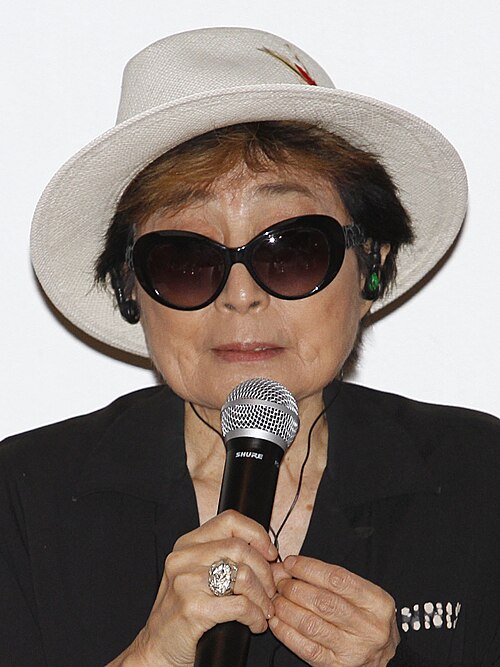
Yoko Ono (born February 18, 1933) is a Japanese artist, musician, activist, and filmmaker born in Tokyo. In 1952, she moved to New York and enrolled at Sarah Lawrence College, but later dropped out to pursue avant-garde art. In the early 1960s, she became involved in the downtown New York art scene and the Fluxus movement, becoming known for her conceptual art and performance pieces, notably her work "Cut Piece" (1964). She met John Lennon in 1966, began collaborating with him in 1968, and they married in 1969. Together, they staged the "Bed-In for Peace" anti-war protests.
Their collaboration extended to music, forming the Plastic Ono Band and releasing avant-garde albums. In 1970, she released her debut solo album, "Yoko Ono/Plastic Ono Band". The couple had one son, Sean Lennon. After Lennon was assassinated in 1980, Ono dedicated herself to preserving his legacy, creating commemorative works and promoting peace initiatives. In 1981, she won the Grammy Award for Album of the Year for "Double Fantasy", a collaboration with Lennon.
Ono's artistic career spans music, film, installation art, and performance art. In her later years, she achieved commercial success in dance music, topping the Billboard Dance chart multiple times since 2003. She has long been active in peace and environmental movements, funding public projects such as the Strawberry Fields memorial and the Imagine Peace Tower. In 2009, she received the Golden Lion for Lifetime Achievement at the Venice Biennale, and in 2012, she was awarded the Oskar Kokoschka Prize. Her avant-garde style was once controversial, with some in the public and media blaming her for the breakup of the Beatles, but her creative partnership with Lennon and her own artistic contributions later gained wider recognition. In 2024, a retrospective of her work was held at the Tate Modern.
Day Master Yi Wood, born in the Yin (Tiger) month, receives the monthly pillar Jie Cai (Peer Rival) Jia Wood penetrating the Heavenly Stem to assist, sitting on Mao Wood as the Lu (Robust Root), resulting in extremely flourishing Wood energy—undeniably a strong constitution. This signifies the native’s vitality is exceedingly robust, like a vine growing in the wilderness with deep roots and extending tendrils, giving an impression of resilient stubbornness and inexhaustible inner energy. However, the annual branch You Metal (Qi Sha / Indirect Officer) directly clashes with the day branch Mao Wood, forming a Qi Sha–Lu clash, a powerful signal of upheaval—life feels like riding a bumpy carriage, forever confronting sudden challenges and ruptures, imbuing her character with an innate sense of tension and an uncompromising edge. A strong constitution favors controlling, draining, and consuming elements: the Yong Shen (Essential Elements) are Fire and Earth, while Water and Wood are Ji Shen (Unfavorable). Fire can vent her surplus elegance, Earth can stabilize her abundance, Metal is usable but insufficient in strength, while Water and Wood would only fuel her untamed growth. Her greatest strengths are creative explosiveness and artistic perception; her potential challenges lie in emotional volatility and a tendency to destabilize close relationships.
This natal chart exemplifies a classic Shang Guan (Expressiveness/Talent Star) venting surplus elegance (Xiu Qi), with the Bing Fire Shang Guan in the hour stem remotely combining with the Xin Metal (Qi Sha) in the Hour Branch Xu’s hidden stem, forming a Shang Guan He Qi Sha (Shang Guan merging with Indirect Officer) configuration. Shang Guan represents intelligence, talent, skill, and unconventional expression. Shang Guan piercing the hour stem means her talents manifest in highly personal—even shocking—ways, and can bring real reputation and wealth (Bing Fire producing Xu Earth Zheng Cai / Direct Resource). The Yong Shen are Fire (talent, expression) and Earth (wealth, grounding); Xi Shen (Favorable Element) is Metal (pressure, discipline) but Metal is weak; Wood and Water are Ji Shen. Fire is the sole outlet to channel her overwhelming Wood energy, so she must continually create and vocalize to achieve physical and mental balance. Earth stabilizes the restlessness brought by Fire, allowing inspiration to take solid form. Qi Sha is inherently a malefic star, but being merged by Bing Fire is like transforming aggression into artistic language, enabling her to both confront conflict head-on and use her work to upend conventions. Her life success is built entirely on a trajectory of “the more controversy, the more she blossoms.”
Jie Cai (Peer Rival) governs the month, Shang Guan pierces the stem, creating a forceful “Jie generating Shang” combination, further linked by “Shang Guan generating Zheng Cai.” The month stem Jia Wood Jie Cai represents peers, competition, and self-assertion; it vigorously produces the hour stem Bing Fire Shang Guan, meaning a powerful “I want to have my own say” drive infuses her artistic impulses, unwilling to be bound by any tradition, rule, or partner. Bing Fire produces Xu Earth Zheng Cai—talent directly links to commercial models, enabling her to translate the most avant-garde performance art into commercial value. The year stem Gui Water Pian Yin (Indirect Resource) technically could regulate the chart’s temperature (spring Wood still has residual cold, needs Fire to warm; Gui Water instead becomes an obstruction), but it retreats to the background, symbolizing that she will inwardly cultivate certain philosophical or mystical leanings, occasionally revealing an obscure, inscrutable side. Overall, her character is unique, avant-garde; decision-making style relies on intuition and emotion; in relationships she craves dominance and can easily wound others with excessive directness.
The Mao–You clash is the chart’s acute stress point, yet the day–hour Mao–Xu combination produces Fire as a salvific response, creating a complex picture of “clash amid combination.” The Mao–You clash is a clash involving Peach Blossom (Xian Chi / Charisma Star) and impacts the Spouse Palace, inevitably causing repeated marital turbulence. Partnerships flicker like candles in a storm, but this same clash energy fuels tremendous creativity—many of her works revolve around the tearing apart and reconstruction of intimate bonds. The day branch Mao Wood carries Tian Yi Gui Ren (Noble Star) and Jiang Xing (Commander Star); even amid conflict she maintains a leader-like poise and always receives help at critical moments from Mentors (often fellow artists). The hour branch Xu Earth carries Yue De Gui Ren (Lunar Virtue Star), endowing her with a talent for defusing aggression, transforming hostility into something akin to compassionate provocation. The Yin–Mao–Chen Wood Frame (Hui Mu Ju) is incomplete due to the absence of Chen, yet the Wood momentum still floods; the Xu Earth’s combination to produce Fire and consume Wood is thus especially welcome. This hints that her life theme is to burn herself up (through creation) to dissolve her inner restlessness and solitude.
Day Stem Yi Wood—flowering grass, supple and graceful—yet obtains strong roots from Yin and Mao, presenting as outwardly soft but inwardly steely, her core like a gnarled, intertwined ancient vine. Her first impression may be gentle, artistic, but when principles are touched, a fierce “though ten thousand oppose me, I go forward” solitude instantly appears. Bing Fire Shang Guan hangs high in the mind–spirit palace; her thoughts flash like lightning, words sting; she deeply detests convention and requires massive intellectual stimulation and mental exchange. In intimate relationships she craves soul resonance, yet due to the Mao–You clash falls repeatedly into cycles of passionate union and fierce conflict; emotional needs are extremely intense and undisguised. Under pressure she bursts with astonishing creativity; in comfort she easily slips into emptiness and restlessness. She must always be “on the road,” eternally provoking and rebuilding to confirm her existence.
Her core talent lies in the perfect fusion of “Shang Guan venting elegance” and “Shang Guan merging Qi Sha”—creativity that combines subversive force with integrative power. A strong Shang Guan makes a born avant-garde artist: her senses are acute, capturing sonic-optical imagery overlooked by others, and expressing it through minimalist or extreme means—her performance ‘Cut Piece’ exemplifies Shang Guan art at its extreme. Bing Fire Shang Guan also represents eloquence, text, and momentum; her lyrics, installations, even peace campaigns carry a fire-like burning contagion. Shang Guan merging Qi Sha allows her to face attacks and controversies, turning outside hostility into part of the work. This talent keeps her artistic life synchronized with the era’s pulse, dominating the avant-garde scene. To succeed, she must perpetually maintain a “rebel” posture—that is the pivot of her Yong Shen.
The core conflict is the Mao–You clash striking the Spouse Palace, combined with Jie Cai piercing the month stem—romantic paths are fated to turbulence and prone to third-party intrusion. With the Spouse Palace under clash, every intimate relationship becomes a revolution, fierce and brief. Jie Cai represents competition, others; there will always be people trying to seize her affections or achievements, and she may also unconsciously compete for others’. Another contradiction: excessively strong Shang Guan covertly harms the Yin star (Indirect Resource), causing potential tension with children (Shang Guan represents a child’s rebelliousness) or elders; she is rarely assimilated by others’ thinking. A character blind spot is reluctance to compromise; her sharp tongue easily makes enemies. Although internally powerful, she often feels isolated. This contradiction threaded through her marriage and artistic collaboration with John Lennon.
Her fate is a lightning bolt that “uses the self as a blade, cleaving stillness.” A Wood–Fire resplendent chart is destined to illuminate the era’s dark corners through ultimate self-expression, yet must also bear the cost of burning away normal affection. The clash in the Spouse Palace forged the shocking art of her love with Lennon, and planted the seeds of tragic foreshadowing. Her whole life enacted the script of “Shang Guan merging Qi Sha”: transforming violence, pain, and controversy utterly into beauty, using her work to forgive the world. In the end, she ceased to be anyone’s wife and became the embodiment of “avant-garde art” and “peace concept”—her life theme is ceaselessly deconstructing rules, then living on as a symbol.
Repeated Bi Jie (Peer Stars), Wood qi excessively strong, self-strong without restraint. This decade spanned her childhood, but the energy field leaned toward competition and self-focus. Wood too strong overcame Earth, indicating scarce family resources, and the wartime environment heightened instability. The Day Master experienced the Great Tokyo Air Raid, family relocation, and early developed an independent, resilient character. Sibling or peer relationships were complex, but it was also the stage where her self-awareness emerged.
Bi Jian (Peer) seizing wealth, Yin Xing (Resource Star) damaged, no financial support. The family economy collapsed in the war, father unemployed, mother overworked. The Day Master had no stable material conditions, and education was frequently interrupted. However, Bi Jian also represents peer cooperation; she supported her younger siblings and participated in labor from childhood, laying a foundation for future independence.
Bi Jian with Jie Cai tendency, Qi Sha (Indirect Officer) clashed, fluctuating kinship. The father was often away due to war or emotionally distant; You Metal Qi Sha was clashed by Mao Wood, indicating separation events between father and family. The mother was anxious and strict. Sibling relationships involved both competition and reliance. During the Great Tokyo Air Raid in 1945, the whole family was urgently evacuated, testing their bonds.
Wood strong overcoming Earth, weak spleen and stomach, prone to allergies. Malnourishment in childhood, digestive system weak. Emotionally, excessive Wood energy can lead to stubbornness, needing guidance for release. Be mindful of accidental bumps to bones and joints.
Shang Guan (Hurting Officer) generating wealth, Wood-Fire brilliance, emerging talent. This decade was a critical period for personality formation. Bing Fire Shang Guan represents artistic talent and rebellion, Chen Earth Zheng Cai represents stable foundation. The Day Master moved to the United States, entered university to study philosophy and art, and began creating performance art pieces. The strength of Shang Guan allowed her to challenge traditions, while Chen Earth helped her transform creativity into tangible works.
Shang Guan paired with wealth, skill generating metal, economic independence. Earned income through part-time jobs and art exhibitions. She participated early in the Fluxus movement, staging 'Events' performances; though not mainstream, she built connections. In 1955, her first solo exhibition sold small works, becoming self-supporting. Chen Earth is a wealth vault, also foreshadowing her potential to accumulate assets in the future.
Shang Guan overcomes Guan, good romantic prospects but hard to last. Had emotional entanglements with university professors or older men, but Bing Fire Shang Guan's innate freedom made her unwilling to be bound. Met artist Toshi Ichiyanagi and married in 1956, but the marriage was brief (divorced in 1962). Her friends were mostly avant-garde circle companions, mutually inspiring creativity.
Bing Fire Shang Guan, heart fire hyperactive, prone to insomnia and anxiety. High stress from artistic creation, irregular routines. Pay attention to eye and heart health. Chen Earth dampness, joints susceptible to cold.
Shen (Eating God) and Shang Guan expressing talent, Fire blazing Earth dry, artistic eruption. In this decade, the Fire element reached its peak, with Shen Ding Fire and Shang Guan Si Fire double force, marking a creative peak. The Day Master held iconic performances like 'Cut Piece' in New York, using the body as an artistic medium. Ding and Si also represent a strong desire for expression and a spirit of innovation; she ventured into film and music simultaneously, but finances remained tight.
Shen generating wealth, income grew with fame. Earned income through gallery sponsorship and performance tickets. In 1964, she published the instruction book 'Grapefruit', which became a classic of conceptual art. However, excessive Fire also led to high expenses; she was often in a state of making ends meet until meeting Lennon.
Ding Fire Peach Blossom, Si Fire Yi Ma (Mobility Star), rich love life. Gave birth to son (with Toshi Ichiyanagi) in 1962 but raised him alone after divorce. Married gallerist Anthony Cox in 1964, separated in 1965. Had ambiguous relationships with many artists during this period. Strong Shen and Shang Guan also made her open-minded about sexuality, sparking controversy.
Fire prospering burns Wood, cardiovascular pressure high. Mood easily swings between excitement and depression; pay attention to mental health. Si Fire intense, prone to skin inflammation or allergies.
Cai Xing (Wealth Star) in position, Shen generating wealth, fame and fortune both reaped. This decade was the most brilliant phase of her life. Wu Earth Zheng Cai represents stable resources and reputation, Wu Fire Shen represents art and social activities. In 1968, she fell in love with John Lennon, married in 1969, formed the 'Plastic Ono Band'. Through Bed-In for Peace, the album 'Double Fantasy', etc., she became a global cultural icon. Wealth, status, and influence all reached their zenith.
Zheng Cai dominating, income surged, copyright value soared. After partnering with Lennon, record sales, performance fees, and art prices skyrocketed. The 1971 album 'Imagine' was a commercial miracle. She also began investing in real estate and galleries. But Cai Xing also represents desire, and the lavish lifestyle came with huge expenses.
Wu Fire Peach Blossom, passionate love, also bringing gossip. Her love with Lennon amazed the world, but her intervention in Lennon's previous marriage drew public criticism. Conflicts with Lennon's ex-wife Cynthia over inheritance, and tensions with other Beatles members, all stemmed from the clash of Cai Xing and Jie Cai in this period.
Fire and Earth excessively strong, lack of moisture, liver fire abundant. Watch out for gallbladder and eye problems. Emotional swings large; Lennon's drug addiction also caused her psychological stress.
Pian Cai (Indirect Wealth) multiple, Earth heavy breaking Wood, major upheaval test. This decade was a turning point of fate. Ji Wei Pian Cai represents unexpected wealth and sudden events; Wei Earth brittles Metal, Qi Sha under restraint. In 1980, Lennon was assassinated, and the Day Master became a widow. Afterwards, she handled a huge inheritance while embroiled in legal battles and cultural interpretation rights with Lennon's heirs. In her career, she released tribute albums and held touring exhibitions, but her emotions and health were severely impacted.
Pian Cai main inheritance, endless financial disputes. After Lennon's death, she controlled his music copyrights, but inheritance controversies lasted for years. Meanwhile, her own art prices soared in anticipation of her eventual passing. Wei Earth is a wealth vault but also clashed, meaning drastic money inflows and outflows.
Pian Cai nature unfocused, interpersonal complexity. The relationship with her son Sean became closer after Lennon's death, but tensions with Lennon's ex-wife and other children persisted. Wei Earth clashed Chou Earth, connections with her original family also waned. Public image shifted from artist to the label 'Lennon's widow'.
Earth heavy trapping Wood, spleen and stomach damp stagnation, prone to depression. Apparent post-traumatic stress disorder, requiring psychological counseling. Wei Earth conceals Qi Sha, chronic conditions like asthma, hypertension latent.
Zheng Guan (Zheng Guan (Direct Officer)) controlling Bi, Metal and Wood battling, regulatory pressure. This decade Zheng Guan flourished, representing responsibility, rules, and external pressure. Geng Shen Metal overcomes Yi Wood, forcing the Day Master to face lawsuits, tax issues, cultural management institutions. She established the 'Lennon Foundation' to manage charity, but fought with various parties attracted by the inheritance. Guan also brought prestige; she received multiple lifetime achievement awards in the arts.
Zheng Guan protecting wealth, career institutionalized, yet money comes and goes. Incorporated copyright management, income stabilized. However, Geng Shen Metal mixed Guan and Sha, legal expenses high. Won a lawsuit against Lennon's former business partner in 1988, published 'Lennon Archives' in 1995 for profit. Wealth structure shifted from personal art to long-term copyright earnings.
Shen Metal clashing Yin Wood, interpersonal tensions. Conflict with son Sean during his teenage rebellious phase. Discord with newcomers in the music industry, feeling marginalized. Geng Shen represents new social circles, mostly professionals like lawyers and agents.
Metal overcoming Wood, liver-gallbladder system vulnerable. Neuralgia, migraine attacks. Watch lung health, avoid smoking environments. Shen Metal large intestine, pay attention to digestion and absorption.
Qi Sha (Indirect Officer) attacking the body, oppressive energy, crises looming. This decade was the most perilous phase. Xin You Qi Sha Fu Yin on the year pillar, activating the original chart's Qi Sha without restraint, signifying major disasters, lawsuits, health deterioration. Arrested in 2003 for illegal drug possession, embroiled in an employee embezzlement case in 2005. Suffered serious illness, temporarily paralyzed. Public opinion also turned negative.
Qi Sha breaking wealth, investment mistakes, reputation damaged. Music career stalled, mainly relying on early royalties. Attempted to invest in a museum in Lennon's hometown Liverpool, but poorly managed. Xin You Metal akin to blades, assets seemingly cut. After 9/11 in 2001, her peace activism drew attacks from conservatives.
Qi Sha overwhelming the self, betrayal and isolation. Relationship with son Sean reached freezing point; he even published a book criticizing her. Fell out with long-time assistants. Qi Sha also represents petty people; those around coveted her property.
Qi Sha attacking body, heart and lung crisis. Heart attack in 2002, collarbone fracture in 2006. Severe depression, requiring antidepressants. Xin You Metal robust, recurring skin ulceration and allergies.
Yin Xing (Resource Star) transforming Qi Sha, Wealth and Seal aiding each other, stable later years. This decade's energy warmed up. Ren Water Zheng Yin emerged to diffuse Qi Sha's violence, Xu Earth Zheng Cai as foundation. The Day Master recovered from storms, regaining reputation. Published memoir 'Memories and Oblivion', held retrospectives, participated in documentary 'Lennon and Yoko'. Public perception returned to positive, viewing her as an art pioneer.
Yin Xing governing literature, Cai Xing preserving achievements, income steady. Royalties and estate management back on track. Won the Golden Lion at Venice Biennale in 2009, art auction prices rebounded. Ren Water Yin Xing also made her more focused on spiritual legacy than pure commerce.
Yin Xing protecting body, familial bonds repaired. Reconciled with son Sean, jointly promoting peaceful ideas. Met new partners or capable assistants, but mostly work relationships. Public appearances were warm, reversing the previous harsh image.
Ren Water regulating with cold-dampness internal, watch kidney water. Aging, bones easily brittle, avoid falls. Xu Earth dry heat, guard against constipation and diabetes. Emotionally much calmer.
Yin Xing converging, Water flourishing Wood floating, declining vitality. This decade Yin Xing excessively heavy, water abundance causing Wood to drift, signifying spiritual sustenance but physical weakness. Gui Hai Gan Zhi pure water, completely soaking the chart's Wood energy. The Day Master at advanced age, largely withdrew from public activities, but still voiced opinions on social media. Yin Xing also represents reputation; she was posthumously awarded multiple lifetime achievement awards. After 2023, health worsened, needing care.
Yin Xing prosperous, high reputation but modest finances. No substantive commercial operations; copyright income continued but grew slowly. Hai Water as Yin, partially combined with Mao Wood, strengthening virtual assets like digital collectibles and archive value. However, expenses largely on medical and caregiving.
Yin Xing benevolent, mainly family companionship. Son Sean often by her side, close to grandchildren. Old friends mostly passed away, social circle shrunk. Gui Hai also suggests distant friends, like artist Zenichiro Ono, but seldom met.
Water prospering extinguishing Fire, heart and circulatory failure. Edema, breathing difficulties common. Watch for low mood and loneliness, needing family emotional support. Hai Water dampness, susceptible to pneumonia, flu.
Wu Qu (Star of Finance and Determination) and Tan Lang (Star of Talent and Desire; literally: Desire Star) are in an exalted state but with Tan Lang Hua Ji (Transformation of Obstruction); combined with Huo Xing (Fire Star), Qing Yang (Confrontation Star; literally: Ram), and Di Kong (Earth Void Star), they form the 'Fire Meets Void and Erupts' (Huo Kong Ze Fa) variant pattern. Wu Qu is a wealth star, governing material resources and decisiveness; Tan Lang is a Peach Blossom star, representing talent and desires. Both stars are strong in their exaltation, but Tan Lang Hua Ji causes internal dissipation of energy. The gathering of Huo Xing, Qing Yang, and Di Kong—three aggressive stars—on one hand catalyzes extreme bursts of power: 'Huo Kong Ze Fa' means that under the stimulation of adverse stars, unconventional artistic or commercial breakthroughs may occur. On the other hand, these aggressive stars also bring intense conflicts and sudden interruptions. The birth of Yoko Ono's son Sean Lennon (1975) occurred during a period of reconciliation with John Lennon after a separation. Exposing the child to the media spotlight exemplifies the turbulent parent-child relationship indicated by Wu-Tan Hua Ji and the public conflicts brought by aggressive stars. Later, Sean became a musician but lived in the shadow of his parents' fame; the ups and downs of his career, along with his mother's strong involvement, created an 'adversity-driven' mother-son dynamic.
This palace has Tan Lang Hua Ji as a direct star transformation. Meanwhile, the Children Palace's Yi Stem triggers Tian Ji Hua Lu (Transformation of Prosperity) and Tian Liang Hua Quan (Transformation of Authority) into the Destiny Palace. Tan Lang Hua Ji turns children into a burden of projected desires—Yoko Ono partially transferred her unfulfilled artistic ambitions onto Sean. The Yi Stem flying stars: Tian Ji Hua Lu entering the Destiny Palace means that children prompt the native to be adaptable and engage in knowledge dissemination (Yoko Ono, because of her son, was prompted to publish parenting books and expand parent-child themes in performance art); Tian Liang Hua Quan entering the Destiny Palace represents children conferring a sense of authority and protectiveness (she fiercely defended her son's privacy and sued media for infringement multiple times). Tai Yin Hua Ji in the Wealth Palace, triggered by the Yi Stem, shows that children caused suppression in both financial and emotional values (she temporarily reduced artistic output while raising Sean).
After Sean Lennon's birth in 1975, Yoko Ono put her radical art activities on hold and focused on childcare for three years. The suddenness brought by Huo Xing and Qing Yang: In 1980, John Lennon was assassinated, and she raised her 8-year-old son alone. Di Kong, as an Earth Void star, also forced her to transform grief into artistic power (the album 'Season of Glass' featured a cover with blood-stained glasses). In the 1990s, as Sean started his music career, Yoko Ono used her resources (Wu Qu as wealth star) to produce his debut album 'Into the Sun' (1998), but Tan Lang Hua Ji led to polarized reviews. Sean once publicly mentioned pressure from his mother's controlling tendencies. After 2000, she pushed Sean to participate in art exhibitions (e.g., a 2018 New York exhibition). The aggressive stars in the Children Palace turned into intense obsession in her later years: she insisted on defending Sean's public image, even when it sparked controversy.
Sun in prosperous state, Ju Men (Giant Gate) in temple state transforms into Quan (Authority), with Wen Qu (Literary Talent) in balanced state in the same house. The Sun represents radiance and illumination, while Ju Men represents eloquence and hidden darkness. Their combination in the same house forms the "Giant Sun Synergy" pattern, and the transformation into Quan strengthens communication skills and dominance. Wen Qu, a star of artistic talent, in balanced state enhances artistic expression. With such a configuration in the Spouse Palace, the spouse is often a person with public influence, and the relationship is dramatic. The marriage of Yoko Ono and John Lennon exemplifies this: Lennon was a superstar, and their artistic and musical collaborations (highly expressive Ju Men with Quan) brought her avant-garde vision to the world, yet Ju Men's hidden darkness also attracted controversy, with the public viewing her as a "destroyer of Lennon."
Ju Men (Giant Gate) transforms into Quan (Authority) in the Spouse Palace. The transformation into Quan turns Ju Men's speech into authoritative discourse. Through her collaboration with Lennon, Yoko Ono promoted her artistic ideas globally, but her assertiveness also sparked disputes.
In the Spouse Palace, Sun, Ju Men, and Wen Qu converge. With the Sun in prosperous state, her fateful encounter with Lennon (1966) was at its zenith; Lennon left the Beatles and transformed. Wen Qu brought artistic resonance; they co-created albums like "Unfinished Music No.1: Two Virgins." However, Ju Men's hidden nature led to media misinterpretation of their relationship, and their marriage was filled with public debates and reconciliations.
Tian Tong (Star of Blessings) is strong, Tai Yin (Moon Star / Wealth Star) in a exalted state with Hua Ke, while Wen Chang (Star of Literature) is accompanied by Lu Cun (Stable Wealth Star). Tian Tong is a star of blessings, and Tai Yin a wealth star; Hua Ke enables income to come through fame and cultural achievements. Wen Chang enhances knowledge-based income, and Lu Cun ensures stable savings. The Wealth Palace also being the Body Palace indicates that her attitude toward wealth is to enjoy it without obsessive pursuit, and she adeptly uses money to support her artistic ideals. Yoko Ono's avant-garde art was not commercially popular, but she accumulated wealth through Lennon's resources and her own copyright management.
Tai Yin Hua Ke enters the Wealth Palace. Hua Ke causes wealth to come from literary and artistic creation, as well as from enhanced reputation. Yoko Ono's artworks appreciated in value after the 1990s, and she also profited from Lennon's estate and her own copyrights.
With Tian Tong, Tai Yin Hua Ke, Wen Chang, and Lu Cun in the Wealth Palace, she earned a meager income from performance art in her early days. After marrying Lennon, she had access to resources but remained restrained in personal spending. In her later years, she managed Lennon's legacy and accumulated wealth through exhibitions and music royalties, embodying Tai Yin Hua Ke's 'gentle wealth generation'.
Tian Fu (Wealth Repository Star) favorably situated in the Health Palace, while Tuo Luo (Delay Star; literally: Grinding) is in a debilitated state and aligned with Tian Ma (Mobility Star). Tian Fu belongs to the Earth element, functioning as a Treasury Star, signifying internal storing and conservation. In the Health Palace, it indicates a constitution that tends toward stability, with capacities for self-regulation and recovery, yet also a propensity to accumulate metabolic waste or fat. Tuo Luo is a dark star associated with delay and chronicity; when debilitated, it suggests recurring minor ailments or hidden long-term strain. Tian Ma represents ceaseless movement, and its alignment here directly links health issues to busyness, travel, and fatigue. In Yoko Ono's case, after middle age she experienced eye problems, and Tuo Luo contributed to slow post-surgery recovery. Her lifetime of frequent international travel, exhibitions, and lectures perfectly embodies the influence of Tian Ma. The combination of Tian Fu and Tuo Luo also implies a tendency to suppress discomfort, maintaining a facade of vitality through willpower, while latent issues gradually accumulate.
The Health Palace has no direct Four Transformations, but it is influenced by Tian Tong (Star of Blessings) and Tai Yin (Moon Star / Wealth Star) in the Wealth Palace which carries Hua Ke (Transformation of Fame), and by You Bi (Right Support Star) in the Travel Palace. Although this palace has no Self Hua Lu (Prosperity), Hua Quan (Authority), Hua Ke (Fame), or Hua Ji (Obstruction), the Wealth Palace—which is also the Body Palace—has Tai Yin Hua Ke. Ke Star belongs to Water, signifying nourishment and soothing; it provides hidden support to the Health Palace. She often heals body and mind through artistic creation (the Hua Ke influence), such as after her 1964 performance 'Cut Piece', where she released suppressed emotions. You Bi in the Travel Palace is a supportive star, resonating with Tian Ma, suggesting that travel or relocation can unexpectedly alleviate health stress. For example, during her London period (1960s), she relieved neurotic migraines through avant-garde art exchanges.
Health trajectory confirms the star combinations: ① Childhood weakness (Tuo Luo debilitated): In 1930s Tokyo, amid war turmoil, she often suffered from colds and indigestion, with Tian Ma initially manifesting. ② Middle-age eye problems: During seclusion with Lennon in the 1970s, she had a glaucoma flare-up in the left eye (Tuo Luo caused delayed treatment); surgery in 1973 but recovery took half a year; Tian Fu prevented it from worsening completely but left hidden risks. ③ Late-life energy: After the 2000s, in her 80s, she still toured globally (Tian Ma). In 2015, while participating in the 'Imagine Peace' project, she experienced sudden hypertension (due to accumulated fatigue), but Tian Fu helped her quickly regain balance. ④ Chronic ailments: Tuo Luo plus Tian Fu, she had arthritis and cervical spondylosis (from prolonged desk work as an artist), but it did not impair her core activities.
Migration Palace has no major stars, borrows Tian Ji and Tian Liang from the opposite palace, guarded solely by the auxiliary star You Bi (Right Assistant), in the Guan Dai (Adolescence) position. Tian Ji and Tian Liang govern wisdom and blessings, You Bi is a supporting star, forming the combination of 'Ji Liang good at discourse' plus 'Fu Bi Chang Qu.' This means Yoko Ono did not passively adapt in foreign lands but opened up situations through wisdom and strategy, always encountering key guides unexpectedly. You Bi's 'hidden assistance' quality made her appear to venture alone when abroad, but behind her there were often invisible pushers—for example, early in New York, Fluxus founder George Maciunas proactively invited her to participate in exhibitions, a classic You Bi benefactor effect. The 'wisdom' and 'integrity' of Tian Ji and Tian Liang also integrated into her behavior: using avant-garde art as a medium, she frequently gave transnational speeches during Lennon's anti-war campaign, with each migration becoming a springboard for disseminating ideas. The Guan Dai position suggests her gradual growth from newcomer to a presence with status abroad; for instance, after her 1966 London solo exhibition, she transformed from a Japanese artist into an international cultural symbol.
This palace has no Four Transformations, but is influenced by Ju Men Hua Quan from the Spouse Palace. Ju Men Hua Quan in the Spouse Palace represents gaining authority through partnership and debate. Its influence on the Migration Palace: her overseas interpersonal connections are often related to deep dialogue, rights, and responsibilities—her marriage to Lennon was both an emotional bond and an artistic alliance, with Lennon's public image giving her more transnational mobility. Meanwhile, the Wealth Palace's Tai Yin Hua Ke (with Tian Tong, Tai Yin, Wen Chang, Lu Cun) forms a Triad with the Migration Palace; Tai Yin Hua Ke enhances a virtuous cycle of artistic aesthetics and money; during her ventures abroad, her economic sources largely depended on artwork collections and copyright revenues, such as the global tour of 'Cut Piece' in 1970. Additionally, the Children Palace's Tan Lang Hua Ji (with Wu Qu, Tan Lang, Di Kong, Huo Xing, Qing Yang) impacts the Migration Palace, hinting that child-related issues (rearing her son Sean) once limited her travel rhythm, but later turned into creative themes.
Real-life verification: In 1966 in London, introduced by Maciunas, she joined Fluxus; after marrying Lennon in Gibraltar in 1969, she frequently traveled between New York and the UK; in 1971, she moved to New York with Lennon, participating in anti-war activities; after giving birth to their son in 1975, she slowed down tours, but after Lennon's assassination in the 1980s, she regained migration momentum with global exhibitions (such as the 1989 Tokyo large-scale retrospective). In 2003, she reperformed 'Cut Piece,' covering 12 cities including Paris, Berlin, Tokyo, demonstrating the eruption of the Migration Palace's Guan Dai stage in maturity.
Lian Zhen average, Po Jun in fall with Hua Lu, Di Jie (Earth Void) in the same degree. Lian Zhen is the star of imprisonment, governing strategy and entanglement; Po Jun is the star of consumption, governing breaking the old and establishing the new. Their average and fallen states weaken their positive forces; Hua Lu provides some relief, but Di Jie brings emptiness. This combination fills Yoko Ono's social circle with avant-garde rebels; her friends are mostly artists and revolutionaries, but relationships are prone to fission. Her union with John Lennon was both the most intimate collaboration and a whirlpool of public opinion. The Plastic Ono Band's members frequently changed; collaborators like George Harrison fell out with her, due to the conflictual nature of Lian Zhen and Po Jun intertwined with the short-term benefits of Hua Lu. Di Jie also makes friendships ephemeral, like a flash in the pan; many early allies later parted ways over ideological differences.
Po Jun Hua Lu enters the Friends/Servants Palace. Hua Lu brings tangible benefits or opportunities from friends, but Po Jun is unstable, so gains are not lasting. For example, Lennon brought artistic fame and commercial success (such as the 'Double Fantasy' album), but after his death, the collaborative benefits abruptly ended. Additionally, in the Wealth Palace, Tian Tong and Tai Yin Hua Ke, through friendships, obtains cultural prestige; in the Children Palace, Wu Qu and Tan Lang Hua Ji, conflicts easily arise in collaborations due to children or creative philosophy, such as strained relations with Lennon's ex-wife Cynthia and eldest son Julian.
In 1968, Yoko Ono and Lennon collaborated to form the 'Plastic Ono Band,' with members including keyboardist Klaus Vormann, but the band's lineup changed drastically, often new people for each performance. In 1971, she moved to New York with Lennon, and during the recording of 'Imagine' with George Harrison, conflicts broke out; Harrison later called her a 'witch.' After Lennon's assassination in 1980, she disputed over inheritance with Lennon's ex-wife Cynthia, and most old friends distanced themselves. After 2000, her collaboration with Lennon's second son Sean was intimate, but her relationship with Julian remained cold, precisely reflecting Lian Zhen, Po Jun, Hua Lu plus Di Jie—intimacy coexists with rupture.
Tian Xiang (Heavenly Minister) in fallen state in Mao Palace, with Tian Kui (Heavenly Chief) in the same degree, forms a pattern of 'Noble Patron in Decline.' Tian Xiang is the seal star, representing coordination, fairness, and support. In fallen state, it is as if the seal is blurred; the willingness and ability of siblings to help one another greatly diminish, easily leading to drifting apart due to differing stances or practical barriers. Tian Kui, the Heavenly Yi Noble (Gui Ren), though located in the original palace, is dragged down by the fallen Tian Xiang, causing the noble force to be 'suspended' — among siblings, there may be someone (or a peer) with resources or reputation, but it cannot truly transform into substantial support for the native; it is more of a symbolic presence or a fleeting opportunity. Behaviorally, this combination shows a pattern of both reliance on family ties and maintaining distance: in early years, the native tried to leverage family connections (Tian Kui), but in actual interactions, deeply felt communication obstacles (Tian Xiang fallen), eventually forming a detached yet not severed sibling relationship.
The palace stem Yi triggers Tai Yin (Great Yin) transforming into Ke (Reputation) in the Wealth Palace (opposite palace). Although the Siblings Palace has no direct Four Transformations, the 'Ke Star shining in' creates a hidden pull. Tai Yin transforming into Ke represents reputation, elegance, and indirect assistance. It shines from the Wealth Palace upon the Siblings Palace, implying that through career or financial achievements (such as avant-garde art exhibitions in the 1960s), the native's rising personal fame indirectly improved the frequency of interactions with siblings — for example, her younger brother once gained passive social attention due to her artistic influence. Furthermore, the combination of Tian Xiang and Tian Kui in this palace, met by the opposite palace's Tai Yin transforming into Ke, reinforces the 'Ke Star illumination' effect: although siblings did not directly bestow money or opportunities, their existence (especially the implicit blessing of family background) became one of the native's identity cards in establishing herself.
Yoko Ono's Siblings Palace reflects her 'distant cousins' pattern with her younger brother, Toshio Ono (born 1935). After their father's early death and mother running a banking family, Yoko and her brother attended different boarding schools in childhood. As adults, Yoko went to America, while Toshio remained in Japan to manage the family business. The key event of Tian Xiang's fallen state occurred in 1969: after Yoko married John Lennon, Toshio publicly criticized her for 'bringing disgrace to the family,' leading to a decade-long silence between them (a communication breakdown caused by Tian Xiang's fall). However, in the 1980s, when Yoko needed family documents for the 'Imagine' copyright dispute, Toshio sent a full set of materials within three days (Tian Kui's emergency noble effect). In 2007, when Yoko returned to Japan for an exhibition, Toshio attended the opening as a 'family representative' but did not speak throughout — Tian Xiang's fall results in 'physical presence without spiritual connection.'
Tian Ji (Heavenly Secret) and Tian Liang (Heavenly Beam) in Chen Palace govern the Destiny Palace, with Zuo Fu (Left Assistant) in the same degree. The native's Soul Stem is Lian Zhen (Upright Truth), and the Body Stem is Tian Tong (Heavenly Unity). Tian Ji is the star of strategy, and Tian Liang is the star of protection. Together they guard the Destiny Palace, forming the "Ji Moon Yang Liang" pattern, but Tian Ji is in fallen state while Tian Liang is in temple and prosperous, blending intelligence with a stable, elder-like temperament. Zuo Fu aids interpersonal connections. This combination implies an innate sharp analytical ability and insight into mass psychology, but Tian Ji's nature of change makes her constantly seek spiritual breakthroughs and artistic innovation. As an avant-garde artist, Yoko Ono's performance art and conceptual works often challenge conventions, corresponding to the 'intellectual vanguard' trait of Tian Ji and Tian Liang.
The original palace lacks direct Four Transformations, but borrows the Quan (Authority) transformation of Zi Wei (Purple Star) and Qi Sha (Qi Sha (Indirect Officer)) from the opposite Parents Palace to exert remote influence. Quan bestows authority and dominance. Under this remote influence, Tian Ji and Tian Liang tend to gain authoritative positions or influence in the intellectual sphere. Tian Ji's inherent changeability, with Quan's augmentation, leads to greater transformative power, easily becoming a group leader. Yoko Ono's consistent role as a trailblazer in the avant-garde art movement aligns with this experience.
In the Destiny Palace, Tian Ji, Tian Liang, and Zuo Fu converge. Zuo Fu, as an assistant star, signifies that supporters or believers often backed her early art collectives and later works such as 'Cut Piece.' Tian Liang's protective nature also shielded her amid controversies; for instance, though her 1966 'Cut Piece' performance caused a sensation, it was not completely suppressed. Overall, the Destiny Palace lays the foundation for her life's theme: 'challenging tradition through intellect.'
Zi Wei flourishing, Qi Sha balanced, with Tian Yue in conjunction, forming a 'Zi Sha' pattern with a noble star. Zi Wei, the Emperor Star, in a flourishing state signifies parents with authority, social status, or a desire for control; Qi Sha, the General Star, in a balanced state indicates a resolute but somewhat solitary and restrictive character, prone to separation or early loss; Tian Yue, the Mentor Star, suggests that parents play a supporting role in the native's life, though indirectly. Under this combination, the parent-child relationship is often stern and authoritative; the mother may be relatively gentle (Tian Yue), while the father is strict (Qi Sha), and the native experiences family upheavals early in life. Yoko Ono was born into Japanese aristocracy—her father was a banker, and her mother was highly educated. However, her father strongly opposed her artistic pursuits, while her mother secretly supported her, reflecting the clash between Zi Wei's nobility and Qi Sha's rebelliousness. Her parents passed away when she was twenty-six (her father died of illness in 1945, her mother in 1950), verifying Qi Sha's solitary and restrictive nature when balanced.
This palace has no Four Transformations, but it is influenced by You Bi in the Travel Palace and Tai Yin Hua Ke in the Wealth Palace. You Bi in the Travel Palace is a supportive star. Through the 'Flying Stars' method, You Bi's invisible support allows parents to indirectly establish social connections or cultural resources for the native—for example, although her father was a banker, he allowed her access to aristocratic education such as piano lessons. Tai Yin Hua Ke in the Wealth Palace, where Ke represents reputation and literacy, transmits its energy through the Trio Palaces to the Parents Palace, enhancing the mother's emphasis on cultural cultivation and explaining why her mother supported her studies of poetry and painting. Additionally, the combination of Tian Ji, Tian Liang, and Zuo Fu in the Destiny Palace—Tian Ji being the Wisdom Star, Tian Liang the Blessing Star, and Zuo Fu an Auxiliary Star—forms a 'Ji Liang Fu' collaborative thinking pattern, enabling the native to distill artistic inspiration from parental conflicts rather than merely opposing them.
The combination of Zi Wei and Qi Sha in the Parents Palace directly manifested when the native left Japan in 1956 (at age 23) to study in the United States, against the backdrop of family opposition to her artistic path after her father's death. Her father died of illness in 1945, just before the end of World War II (when the native was 12), and her mother managed the household alone but passed away in 1950 (at 17). The early loss of both parents forced her to become independent early; Qi Sha's 'solitude' transformed into a pioneering spirit. After marrying John Lennon in 1969, she often created works themed around 'family trauma,' such as the performance art piece 'Cut Piece,' which resonates with the deconstruction of authority implied by Zi Wei and Qi Sha. Tian Yue's mentoring effect is reflected in her later reflection that her mother secretly left her some money to support her art, and the Western art books her father collected during his lifetime (Tian Yue's cultural transmission) laid the foundation for her aesthetic sensibility.
The Fortune Palace is empty, borrowing energy from the opposite palace Tian Ji (favorable) and Tian Liang (exalted), supported by Zuo Fu. Tian Ji governs wisdom and change, Tian Liang, the Blessing Star, governs relief and lofty ideals. With an empty palace, the spiritual world needs to be filled by external forces, and Zuo Fu brings helpful people. This combination forms the 'Wisdom and Blessing Interplay' pattern: Yoko Ono's spiritual pursuits are highly intellectualized, with lifetime artistic experimentation and peace activism serving as her spiritual outlets. Tian Ji's agility allowed her to continually break formal boundaries in avant-garde art (such as the performance piece 'Cut Piece'), while Tian Liang's protective nature drove her to engage in anti-war campaigns in her later years (such as promoting the 'Imagine' series). The empty palace characteristic creates a persistent tension of 'needing to be filled' in her spiritual world—the 1969 'Bed-In for Peace' with Lennon was the ultimate expression of transforming private intimate experience into a public spiritual manifesto. Zuo Fu suggests that her spiritual pursuits can always be amplified through others' influence (such as Lennon's public influence), but the empty palace also hides the risk of over-relying on external feedback, as seen in the spiritual crisis after Lennon's death in the 1970s.
This palace has no Four Transformations, but the opposite palace's Tian Ji and Tian Liang are influenced by You Bi in the Travel Palace (stem Gui) and Tai Yin Hua Ke in the Wealth Palace (stem Gui). You Bi in the Travel Palace (stem Xin) transforms to Ke and flies into this palace (according to Yi Gan Four Transformations, does You Bi transform to Ke? Need to check the table: under stem Bing, Lian Zhen transforms to Ji; under stem Ding, Tai Yin transforms to Ji. According to Zi Wei Dou Shu complete works, Tian Ji Hua Lu, Tian Liang Hua Quan, etc., depend on the annual stem. In the actual chart, the year stem is Gui You: Four Transformations: Po Jun Hua Lu, Ju Men Hua Quan, Tai Yin Hua Ke, Tan Lang Hua Ji. Thus, Tai Yin Hua Ke in the Wealth Palace acts directly, while this palace has no Four Transformations. However, we can consider that the opposite palace's Tian Ji and Tian Liang are indirectly illuminated by Tai Yin Hua Ke, enhancing the spiritual world's cultural taste and artistic refinement. Meanwhile, Tan Lang Hua Ji in the Children Palace (stem Gui) clashes with the Fortune Palace, bringing excessive desires and anxiety in the spiritual realm—Yoko Ono's repeated self-reproach and creative blockages due to emotional entanglements with her ex-husband and Lennon in the late 1960s exemplify Tan Lang Ji.
Spiritual pursuits drive life transitions: The 1965 premiere of 'Cut Piece' at Carnegie Hall (where audiences cut pieces of her clothing) was an early manifestation of Tian Ji's transformation and Tian Liang's relief—she exchanged vulnerability for spiritual freedom. The 1970 collaboration with John Lennon, 'Imagine,' advocating borderless peace, with Tai Yin Hua Ke giving her spiritual products high dissemination aesthetics. After Lennon's assassination in 1980, Tian Liang, the Blessing Star, played its role, and she decisively channeled personal grief into the peace movement, such as establishing the 'Tears of Joy' foundation in 1984. In her later years (after 2000), she continued to engage in social issues through performance art (e.g., 'See, It's Them' in 2018); the empty palace makes her never satisfied with existing spiritual achievements, always seeking new forms. Financially, the Hua Ke in the Wealth Palace feeds back into the Fortune Palace, allowing her art to maintain spiritual purity while being commercially viable, avoiding the poverty common among avant-garde artists.
Ling Xing (Bell Star; a volatile star) falls in the Shen Palace, the Career Palace lacks major stars, relying solely on this malefic star to support the situation. Ling Xing belongs to Fire, a turbulent star in Zi Wei Dou Shu, representing sudden, intense, shocking events; its fallen state means this force is unstable, easily attracting criticism, but its explosive power remains undiminished. Yoko Ono's Career Palace has no major stars, entirely driven by this fallen Ling Xing as her career engine, indicating her career path was not a steady rise but a series of all-or-nothing moments, each like lighting a fuse. The strategic wisdom and blessings of Tian Ji (Wisdom Star) and Tian Liang (Blessings Star) from her Destiny Palace transmit through palace energies, ensuring every action is carefully considered, yet Ling Xing compels her to present it in the sharpest way. Zuo Fu (Left Assistant) in the Destiny Palace also enhances her ability to network in the art world and ignite her work through collaboration.
This palace has no Four Transformations, but the Triad Palaces and the opposite palace have strong transformative influences. In the Wealth Palace (Zi position), Tian Tong and Tai Yin, with Tai Yin Hua Ke. Tai Yin Hua Ke governs artistic reputation and official recognition of talent. Wen Chang (Literary Star) in a strong state adds literary grace; her performance art often includes poetry, diaries, and written works, such as her instruction book 'Grapefruit.' In the Spouse Palace (Yin position), Ju Men Hua Quan, with Tai Yang prosperous. Ju Men Hua Quan enhances fame through eloquence and controversy; Tai Yang prosperous represents visibility. Her marriage to Lennon and their collaborative creations turned romantic relationship into a career spotlight. In the Children Palace (Chou position), Tan Lang Hua Ji. Tan Lang Hua Ji is a distortion and breakthrough of talent; her son Sean with Lennon became the focus of her later music creation, but Hua Ji also signifies sacrifices in parent-child relationships and a shift in career direction. In the Friends/Servants Palace (You position), Lian Zhen and Po Jun, with Po Jun Hua Lu. The Hua Lu energy flows to subordinates and partners; Lian Zhen and Po Jun Hua Lu represents obtaining resources through disruptive cooperation, as seen in her collaborations with Lennon and the avant-garde art circle. Although these Four Transformations do not directly fall in the Career Palace, through the linkage of stars between palaces, they shape her career pattern of 'controversy brings profit, collaboration sparks the fire.'
Ling Xing's explosive power recurred many times in her life. In 1964, she first performed 'Cut Piece' in New York, where the audience could cut off pieces of her clothing, causing huge controversy. Ling Xing turned her from a fringe artist into an international focus overnight. In 1969, the 'Bed-In' peace protest with John Lennon, combining honeymoon and politics, shocked the world again; the Spouse Palace with Tai Yang and Ju Men Hua Quan provided the propagation power and storm of words for this action. In 1970, after Lennon went solo, their collaborative album "John Lennon/Plastic Ono Band" was nominated for a Grammy, with Tai Yang Hua Quan and Tai Yin Hua Ke working together, gaining mainstream recognition. After Lennon's assassination in 1980, her career dipped, but in 2003 she re-performed 'Cut Piece,' once again igniting the topic, symbolizing her rising from trauma with Ling Xing's power. Throughout, her career never followed the conventional path; Ling Xing in fall constantly accompanied by both criticism and glory.
No main star in Wei. The Property Palace is empty, borrowing energy from the opposite palace Zi (the Wealth Palace) with Tian Tong and Tai Yin shining in. This suggests average property luck, relying on spouse or partnerships. Yoko Ono and Lennon purchased multiple properties, but she sold many after his death.
No Four Transformations. The Property area is unremarkable.
Without a main star in the Property Palace, her residence in New York with Lennon became iconic, but she personally owned few properties.
Generate your personal chart in under a minute. Sign up free and get 30 credits — enough for two or more AI readings. No credit card.
Generate my free BaZi chartPlease sign in to join the discussion
Sign In